FC Barcelona is ripping apart the most iconic stadium in European football and putting it back together while people are still sitting in it. That’s not a metaphor. The Espai Barca project is a live surgical operation on a 68-year-old concrete giant, and the results will either cement Barcelona’s place at the top of world football or become the most expensive cautionary tale in sports history.
Here’s what’s actually happening.
What Is Espai Barca?
First, let’s clear up a common misconception. Espai Barca isn’t just the Camp Nou renovation. It’s a complete overhaul of the entire district surrounding the stadium — a reimagining of the club’s physical footprint in the Les Corts neighborhood of Barcelona.
The project includes the stadium expansion, yes. But it also covers a new Palau Blaugrana (the arena where Barcelona’s basketball, handball, and futsal teams play), redesigned public plazas, commercial spaces, a modernized club museum, and improved pedestrian access throughout the area. Think of it as Barcelona building a sports city within a city.
That said, the stadium is the centerpiece. And it’s where the real drama lives.
The Numbers: From 99,354 to 105,000
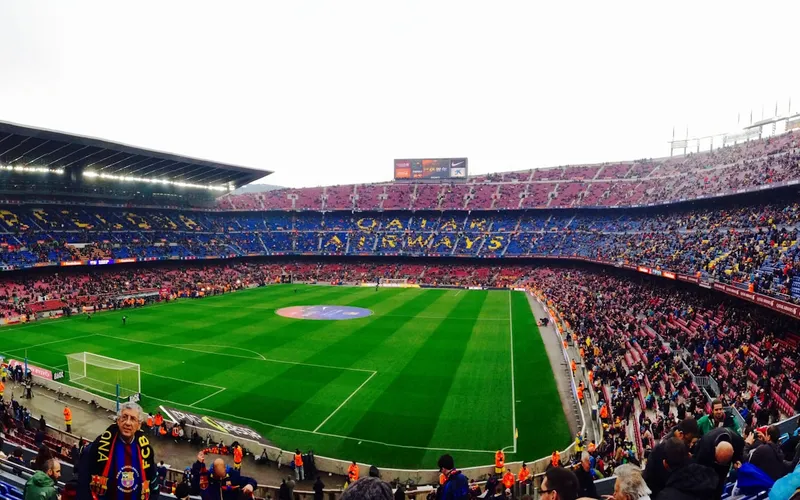
Camp Nou has been Europe’s largest stadium since it opened in 1957. Its official capacity of 99,354 made it the only ground on the continent that could genuinely claim six figures worth of atmosphere. But the bones of the structure were showing their age. Narrow concourses, outdated hospitality areas, limited accessibility, no roof — the place was massive but increasingly behind the curve compared to newer venues.
The renovation pushes capacity to approximately 105,000. That number matters. It doesn’t just maintain Camp Nou’s status as the biggest in Europe — it puts distance between Barcelona and every competitor. The Bernabeu tops out at around 85,000. Wembley sits at 90,000. Signal Iduna Park holds 81,365. At 105,000, Camp Nou won’t just be the biggest. It’ll be in a category of its own.
105,000 seats — when complete, Camp Nou will be the largest stadium in Europe by a margin of 15,000 over its nearest rival.
The extra seats come primarily from a new third tier being added to the structure. The original two-tier bowl is being extended upward, adding roughly 5,600 seats while also reconfiguring existing sections to improve sightlines and add premium areas. Every single seat in the stadium is being replaced.
The Roof Changes Everything
Here’s the thing that will alter Camp Nou’s identity more than anything else: the roof.
For nearly seven decades, Camp Nou has been an open bowl. Rain-soaked Champions League nights. Summer sun beating down during early-season matches. The open sky was part of the character — but it was also a limitation. Modern stadium economics demand covered venues. Concerts, corporate events, and premium hospitality all work better under a roof. And fans, frankly, prefer not getting soaked.
The new roof is a sweeping, undulating canopy designed by Nikken Sekkei that will cover every seat while still allowing natural light and airflow into the bowl. It draws inspiration from Mediterranean light patterns, and the renderings show something that looks organic rather than industrial. Translucent panels will let sunlight filter through during day matches, keeping the natural grass pitch viable while protecting supporters from the elements.
It won’t be fully retractable in the traditional sense — this isn’t a convertible like SoFi Stadium or the Bernabeu’s sliding cover. But portions of the structure are designed to allow ventilation control and adaptable coverage. The key point is simple: every seat covered, for the first time ever.
For purists who loved the open-air Camp Nou, this is bittersweet. But the financial logic is undeniable. A covered Camp Nou can host concerts, international events, and premium experiences that the old open bowl simply couldn’t support.
What It Costs: The 1.5 Billion Euro Question
The estimated price tag is north of 1.5 billion euros. Let that sink in. That’s billion with a B, for a renovation — not a new build.
€1.5 billion+ — the Espai Barca project is the most expensive stadium renovation ever undertaken in Europe, exceeding even the cost of most new-build stadiums.
To put it in context: Tottenham Hotspur Stadium, which was built from scratch as one of the most advanced stadiums on the planet, cost approximately 1.2 billion pounds (roughly 1.4 billion euros at the time). The Bernabeu’s renovation came in at around 900 million euros. Camp Nou’s project dwarfs both.
Barcelona is financing the work through a combination of mechanisms. A reported loan arrangement with Goldman Sachs provides the backbone of the funding. The club is also counting on significantly increased matchday revenue once the renovated stadium is operational — more premium seats, better hospitality, naming rights potential, and the ability to host non-football events are all part of the business case.
But here’s where it gets uncomfortable.
The Financial Controversy
Barcelona’s finances have been under intense scrutiny for years. The club posted debt figures exceeding 1.3 billion euros in 2021. The Messi departure — a moment that still stings for every Cules — happened because the club literally could not register his contract under La Liga’s financial fair play rules. Player salaries were restructured through the controversial “palancas” (economic levers), which involved selling future revenue streams to generate immediate cash.
So the question a lot of people are asking: can Barcelona actually afford this?
The club’s position is that the renovation is an investment, not an expense. The logic goes that a modernized Camp Nou will generate significantly more revenue per matchday — estimates suggest the figure could double or even triple compared to the pre-renovation stadium. Premium seating alone could add hundreds of millions in annual income. Naming rights for the stadium, which Barcelona has historically resisted, could bring in another 200-300 million euros over a multi-year deal.
Critics point out that this is exactly the kind of optimistic projection that got the club into financial trouble in the first place. Revenue projections are not revenue. Construction costs tend to escalate. And borrowing heavily against future income is precisely what “palancas” were — a strategy that many financial analysts view as mortgaging tomorrow to pay for today.
The truth probably lives somewhere in the middle. A 105,000-seat, fully covered Camp Nou with modern hospitality infrastructure will absolutely generate more money than the aging open bowl it replaces. Whether it generates enough to justify 1.5 billion euros in spending is the gamble Barcelona is making.
Timeline: When Does It Actually Open?
The renovation kicked off in earnest in 2023. Here’s how the phasing has worked.
2023-24 season: FC Barcelona relocated entirely to the Estadi Olimpic Lluis Companys on Montjuic hill, the venue built for the 1992 Barcelona Olympics. The smaller ground (capacity around 49,000) was a jarring step down for a club used to 99,000-seat matchdays. The atmosphere was different. Revenue dropped. Players and fans endured it as a necessary sacrifice.
2024-25 season: Barcelona returned to Camp Nou with a partially completed stadium. Approximately 60,000 seats were available as construction continued around the occupied sections. Matches were played with cranes visible, construction barriers in place, and portions of the ground clearly mid-build. It was surreal — like watching a Champions League match inside an active construction site.
2025-26 season: Capacity has been gradually increasing as more sections come online. The club has been opening newly completed tiers in phases, with the goal of reaching the full 105,000 by the time the project wraps up.
Full completion target: The entire Espai Barca project — stadium, Palau Blaugrana, surrounding district — is targeted for completion across 2026. Whether that deadline holds is anyone’s guess. Major construction projects of this scale almost always run over schedule. The phased approach, where the stadium is usable while work continues, has at least kept the club playing at home throughout the process.
Life at Montjuic: The Year in Exile
Barcelona’s temporary stint at the Estadi Olimpic deserves its own mention because it was genuinely strange. One of the five biggest clubs in world football, playing in a 49,000-seat athletics stadium on top of a hill.
49,000 seats at Montjuic — Barcelona lost over 50,000 seats per match during their year in exile, a staggering revenue hit for a club already navigating financial turbulence.
The atmosphere was intimate in a way Camp Nou rarely is. Fans were closer to the pitch. The acoustics were different — tighter, more compressed. Some supporters actually preferred it. But the economics were brutal. Nearly 50,000 fewer seats per match meant significantly less ticket revenue, fewer hospitality packages, and a diminished matchday experience for corporate partners.
The logistics were also challenging. Montjuic isn’t as well-connected by public transit as Camp Nou’s Les Corts location. Parking was limited. The surrounding infrastructure wasn’t designed for regular football crowds of that size. Barcelona made it work, but nobody was sad to leave.
What the New Matchday Experience Looks Like
When the renovation is fully complete, the matchday experience at Camp Nou will be fundamentally different from what long-time visitors remember. Here’s what’s changing.
Premium and VIP areas: The number of premium seats and hospitality boxes is increasing dramatically. This is where the revenue math lives. Modern stadiums make their money from the top end — suites, clubs, all-inclusive packages. The old Camp Nou was relatively spartan in this regard. The new version will have multiple tiers of premium experience, from pitch-side seats to sky-level suites with private terraces.
Concourses and circulation: One of the old stadium’s worst features was its cramped internal circulation. Getting a beer at halftime was an exercise in patience and crowd management. The renovated concourses will be wider, with more food and beverage points, better wayfinding, and modern concession technology (mobile ordering, cashless payments, the works).
Technology integration: Big screens, enhanced Wi-Fi and 5G connectivity, an integrated stadium app for navigation and ordering, augmented reality features for seat-level statistics — the full suite of modern stadium tech is being baked into the infrastructure. Whether fans actually use all of it is debatable, but the capability will be there.
Accessibility: The old Camp Nou was not great for accessibility. The renovation brings it up to modern standards with improved wheelchair access, sensory rooms, accessible restrooms throughout the venue, and dedicated viewing platforms at multiple levels.
The atmosphere question: This is the one everybody worries about. Will a covered, modernized, premium-heavy Camp Nou still feel like Camp Nou? History suggests it can. Tottenham’s new stadium is widely considered one of the best atmospheres in English football despite being a thoroughly modern, hospitality-rich venue. The Bernabeu’s renovation hasn’t killed its matchday intensity. But Camp Nou’s atmosphere has always been tied to its raw, open, slightly rough-around-the-edges character. The transformation is a leap of faith.
How It Compares to Other Major Renovations
Camp Nou’s renovation exists in a specific context. It’s not happening in isolation — there’s a wave of major stadium projects reshaping European football right now.
Real Madrid’s Bernabeu renovation is the most direct comparison. Completed at a cost of roughly 900 million euros, the Bernabeu added a retractable roof, a 360-degree video screen, a retractable pitch system, and dramatically expanded hospitality areas. The result is stunning and widely praised. But the Bernabeu started from a different point — it was already a more modern structure with better bones. And it cost significantly less than what Barcelona is spending.
Tottenham Hotspur Stadium is the other reference point, though it was a complete demolition and new build rather than a renovation. At roughly 1.2 billion pounds, Tottenham built a 62,850-seat stadium that is arguably the most technologically advanced football venue in the world, with a retractable pitch (for NFL games), a microbrewery, and hospitality spaces that generate revenue on non-matchdays. It’s a masterclass in modern stadium design, though at a much smaller scale than Camp Nou.
What makes Camp Nou’s project unique is the combination of scale and constraint. They’re building the largest stadium in Europe while preserving the existing structure and playing matches in it simultaneously. No other project has attempted anything quite like this. The ambition is remarkable. So is the risk.
Historical Context: Why Camp Nou Matters
To understand why this renovation carries so much emotional weight, you need to understand what Camp Nou represents.
The stadium opened on September 24, 1957, replacing the Camp de Les Corts, which had become too small for Barcelona’s growing fanbase. Architects Francesc Mitjans, Josep Soteras, and Lorenzo Garcia-Barbon designed a structure that was radical for its time — a massive concrete bowl that prioritized sightlines and proximity to the pitch.
68 years old — Camp Nou has stood since 1957, making this renovation a transformation of one of the longest-serving major stadiums in world football.
During the Franco dictatorship, Camp Nou became something more than a sports venue. It was one of the few public spaces where Catalan could be spoken freely. The club’s identity fused with the Catalan independence movement. “Mes que un club” isn’t a slogan you stick on merchandise — it’s a declaration that survived fascism.
The stadium has hosted some of the most significant moments in football history. The 1992 Olympic ceremonies. Cruyff’s Dream Team era. Ronaldinho’s standing ovation from the Bernabeu crowd (okay, that was away). Messi’s 672 goals. The 6-1 against PSG. These moments are embedded in the concrete.
Tearing apart that concrete and rebuilding it is an act that requires either tremendous confidence or tremendous desperation. Barcelona would argue it’s the former. Their financial situation suggests elements of the latter. Either way, the result will define the club’s next half-century.
The Bottom Line
The Espai Barca renovation is the most audacious stadium project in European football history. A 1.5 billion euro bet that Camp Nou can be transformed from an aging — if beloved — concrete cathedral into a 105,000-seat, fully covered, revenue-generating machine that keeps Barcelona competitive with the wealthiest clubs in the world.
The risks are real. The costs are enormous. The financial questions are legitimate.
But if Barcelona pulls it off, they’ll have a venue that no club in Europe can match. Not in size. Not in atmosphere potential. Not in cultural significance. A stadium that honors 68 years of history while preparing for the next 68.
That’s the bet. And right now, the cranes are still swinging.