The Final Is Coming to New Jersey — and Nothing About That Is Simple
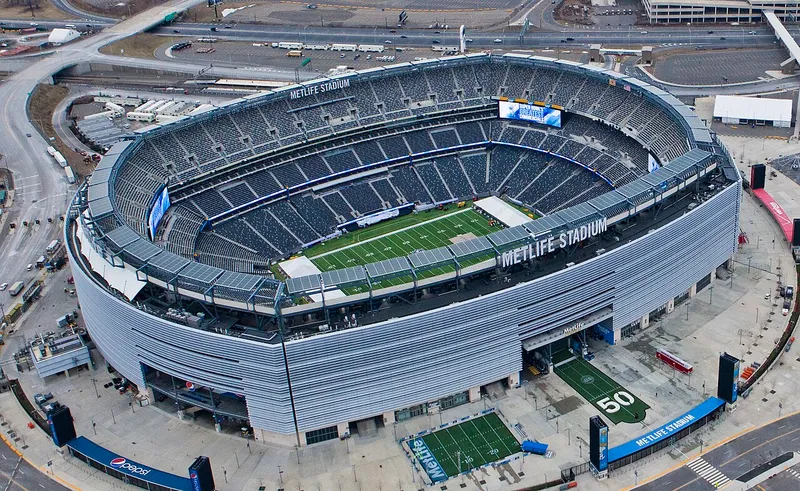
On July 19, 2026, somewhere around 1.5 billion people will tune in to watch two teams fight for the World Cup trophy. The venue for that moment won’t be some purpose-built soccer cathedral in Europe or South America. It’ll be an 82,500-seat open-air colossus that normally hosts the New York Giants and New York Jets, sitting in the Meadowlands of East Rutherford, New Jersey, about 8 miles west of Times Square.
MetLife Stadium has hosted Super Bowls, WrestleMania, Taylor Swift, Beyonce, and Copa America matches. But none of that compares to what’s coming. The World Cup Final is the single most-watched sporting event on earth — bigger than the Super Bowl, bigger than the Champions League Final, bigger than anything the Olympics puts on in a single session. And pulling it off requires transforming an NFL fortress into a world-class soccer venue in a matter of months.
Here’s what that actually looks like.
Ripping Out the Turf: Why Natural Grass Changes Everything
If you’ve watched a Giants or Jets game at MetLife, you’ve watched football played on FieldTurf — a synthetic surface that NFL teams prefer for durability and low maintenance across a 17-game season (plus preseason, plus playoffs, plus the occasional concert that tears up the field). It works great for football. FIFA won’t touch it.
FIFA mandates natural grass for all World Cup matches. No exceptions. The reasoning isn’t arbitrary: natural grass plays differently than artificial turf. The ball rolls truer. Players’ joints take less punishment. And from a broadcast perspective, natural grass simply looks better on camera — greener, more textured, more alive.
So MetLife has to convert. The FieldTurf comes out and a natural grass system goes in, built on modular trays that can be installed and later removed once the tournament wraps. This isn’t the stadium’s first time doing this. For Copa America 2024, MetLife successfully laid natural grass over its synthetic base, and the reviews from players and coaches were positive. That experience is essentially a dress rehearsal for 2026.
Natural grass, no exceptions. FIFA mandates real turf for every World Cup match — and MetLife’s open-air design gives it an edge over domed venues that struggle with sunlight.
But the World Cup Final demands a higher standard than a Copa America semifinal. FIFA’s pitch requirements specify exact dimensions, drainage rates, grass height, and even the color profile of the turf under broadcast lighting. The grass will be grown off-site at a sod farm — likely starting cultivation months before it needs to be installed — then transported and laid in sections. Think of it like assembling a massive living jigsaw puzzle on a tight deadline.
Here’s the thing. MetLife’s open-air design actually helps with grass quality. Natural turf needs sunlight and airflow to stay healthy, and a roofless stadium in the Meadowlands gets plenty of both during a New Jersey summer. Retractable-roof stadiums that host World Cup matches face a tougher challenge keeping their grass alive under artificial conditions. MetLife won’t have that problem.
$100 Million+ in Upgrades: What’s Actually Changing
MetLife Stadium cost $1.6 billion to build in 2010. It was the most expensive stadium in the world at the time, and it was done without a single dollar of public funding — a rarity in American sports. The Giants and Jets ownership split the bill.
Now, ahead of the World Cup, another $100 million-plus is flowing into the building. That figure covers a broad range of improvements, and it’s worth breaking down where the money goes.
$100 million+ in upgrades on top of the original $1.6 billion build cost — funded without a single dollar of public money.
Concourse and fan experience upgrades. The concourses are getting wider food and beverage areas, upgraded restroom facilities, and better wayfinding signage — much of it multilingual, reflecting the international audience that’ll fill the building. FIFA events attract fans from every continent, and the stadium needs to function for someone who’s never set foot in New Jersey just as smoothly as it does for a season-ticket holder from Bergen County.
Technology and connectivity. The stadium’s WiFi and cellular infrastructure is being overhauled to handle the density of a World Cup crowd. An NFL game generates enormous data traffic, but a World Cup Final — where nearly every one of those 82,500 fans will be streaming, posting, and video-calling simultaneously — pushes the network to a different level. New distributed antenna systems and WiFi 6E access points are part of the plan.
Broadcast infrastructure. FIFA’s broadcast requirements are staggering. The World Cup Final feed reaches over 200 countries, and the host stadium needs camera positions, commentary booths, and production facilities that go far beyond what an NFL broadcast demands. MetLife is adding dedicated broadcast compounds, expanding its media center, and installing additional camera platforms to give FIFA’s production partners every angle they need.
Accessibility improvements. ADA-compliant upgrades and enhanced accessibility features are part of the renovation scope. This includes improved accessible seating positions with clear sight lines to the pitch, upgraded elevator access, and sensory rooms for fans who need them.
Exterior and arrival experience. The areas around the stadium — plazas, pedestrian pathways, entry gates — are being refreshed. First impressions matter when the world is watching, and FIFA wants the arrival experience to feel like an event in itself, not a march through a parking lot.
These aren’t cosmetic touch-ups. They’re structural investments that will serve the stadium for years after the World Cup ends. The Giants and Jets will inherit a better building, which is part of why ownership agreed to fund the improvements.
Getting 82,500 People to East Rutherford: The Transit Challenge
This might be the single biggest logistical question surrounding the Final: how do you move tens of thousands of international visitors to a stadium in the New Jersey Meadowlands?
For NFL games, the answer has always been straightforward — most fans drive. MetLife sits on 28,000+ parking spaces, and tailgating culture means people show up hours early with grills, coolers, and folding chairs. The parking lots are practically a venue unto themselves.
But that’s not all. The World Cup audience is different. Many ticket holders will be international visitors staying in Manhattan hotels. They won’t have cars. They won’t know the local roads. They need public transit to work — reliably and at scale.
NJ Transit’s Meadowlands Rail Line is the primary public transit link. On event days, trains run from Secaucus Junction directly to a platform at the stadium’s doorstep. The ride takes about 10 minutes. From Manhattan’s Penn Station, you take NJ Transit to Secaucus and transfer — total trip roughly 30 minutes.
For the World Cup, NJ Transit is planning expanded service with higher-frequency trains, longer consists (more cars per train), and extended operating hours. The agency has committed to making rail the preferred option for World Cup attendees, and they’re investing in platform upgrades at Secaucus Junction to handle the surge.
Bus service is also being expanded. NJ Transit and private charter operators will run dedicated bus routes from key hubs — Port Authority Bus Terminal in Midtown Manhattan, Newark Penn Station, and potentially satellite parking locations where fans can park remotely and shuttle in.
PATH train connections are part of the broader transit picture. While PATH doesn’t run directly to MetLife, it connects Manhattan to Hoboken and Newark, where fans can transfer to NJ Transit services. For visitors staying in lower Manhattan or downtown Jersey City, PATH is often faster than getting to Penn Station.
The 30-minute promise. Organizers are targeting a 30-minute travel time from Midtown Manhattan to the stadium gates for the majority of fans using public transit. That’s ambitious but achievable if the expanded rail service runs on schedule. For context, getting to many European World Cup stadiums from a city center takes just as long or longer.
The 30-minute target — organizers are planning transit service from Midtown Manhattan to MetLife Stadium gates in under half an hour using expanded NJ Transit rail.
Road closures and traffic management. On match days — especially the Final — expect significant road restrictions around the Meadowlands. Route 3 and sections of the NJ Turnpike will have managed traffic flow with dedicated lanes for buses and authorized vehicles. If you’re planning to drive, arrive absurdly early or don’t drive at all.
What Match Day Will Actually Feel Like
Picture this. It’s July 19, 2026. A Sunday. The temperature in East Rutherford is hovering around 82 degrees. The sky is hazy, the way Jersey summers get. By 3 PM, the Meadowlands is already buzzing — fan zones in the parking areas are packed with supporters from two nations, flags draped over shoulders, drums pounding, songs echoing off the asphalt.
Inside MetLife Stadium, the transformation from NFL venue to soccer theater is complete. The pitch is pristine — natural grass, perfectly striped, FIFA-regulation dimensions of 105 by 68 meters carved into a space that usually holds a 100-yard football field. The sight lines are excellent. MetLife’s bowl design means even upper-deck seats have a clear, unobstructed view of the entire pitch. There are no pillars, no overhangs blocking your angle. Every seat sees the whole field.
The open-air roof means you feel the weather — the sun, the breeze off the Meadowlands, the temperature. For a summer evening kickoff, that’s not a hardship. It’s an atmosphere. The stadium will feel alive in a way that climate-controlled domes can’t replicate.
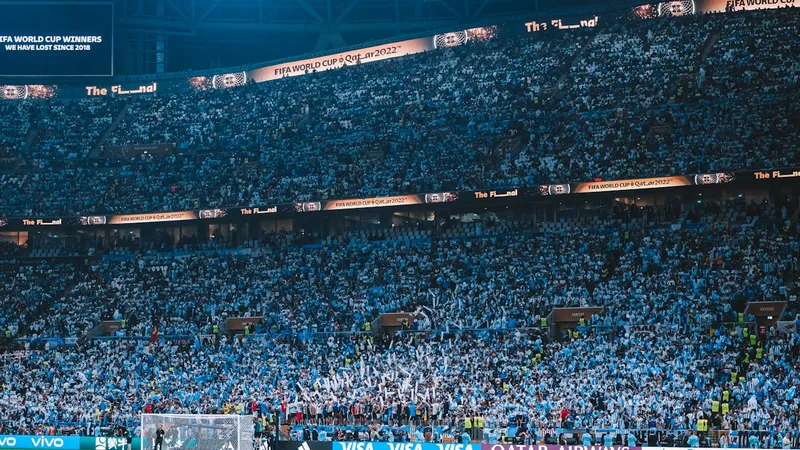
Capacity for the Final will be right around 82,500, though the exact number depends on FIFA’s configuration for VIP areas, media positions, and the pitch-side perimeter. For reference, the 2022 World Cup Final at Lusail Stadium in Qatar held 88,966, while the 2018 Final at Luzhniki in Moscow held 78,011. MetLife falls comfortably in that range.
The atmosphere will be unlike anything MetLife has hosted before. NFL games are loud, sure — but they’re a different kind of loud. A World Cup Final crowd is relentless. Ninety minutes of continuous singing, chanting, and roaring from supporters who’ve traveled thousands of miles and waited four years for this moment. There are no TV timeouts, no commercial breaks, no halftime entertainment acts stretching the pause to 30 minutes. The energy doesn’t stop.
Concessions will skew international for the tournament — expect options beyond the standard NFL hot dogs and chicken tenders. FIFA typically requires host stadiums to offer diverse food and beverage choices, and MetLife’s food service partners are planning menus that reflect the global nature of the event. Beer will be available inside the stadium (FIFA’s sponsorship deal with AB InBev ensures that), which is a contrast to Qatar 2022 where alcohol sales were restricted at the last minute.
MetLife’s Unique Position in American Sports
It’s worth pausing on what makes MetLife Stadium unusual. No public money built it. In an era where NFL owners routinely extract hundreds of millions in taxpayer subsidies for new stadiums, the Giants and Jets paid the full $1.6 billion themselves. That’s partly because New Jersey politicians wouldn’t play ball on subsidies, and partly because two teams splitting the cost made private financing viable. Either way, it means MetLife doesn’t carry the political baggage that follows publicly funded stadiums.
It’s also the only venue in the NFL shared by two franchises. The Giants and Jets each play their home games here, which means MetLife hosts a minimum of 16 regular-season NFL games per year — more than any other stadium in the league. Add preseason, potential playoffs, concerts, soccer matches, and special events, and this building works harder than almost any stadium in the world.
That heavy usage is both an asset and a challenge for World Cup preparations. MetLife’s operations staff knows how to turn this place around between events at speed. They’ve managed back-to-back-to-back weekends of NFL games, concerts, and international soccer. But the World Cup window — roughly five weeks from mid-June to late July — requires the stadium to be dedicated exclusively to FIFA. That means the NFL schedule has to accommodate it, and both the Giants and Jets have to complete their offseason activities well before the tournament begins.
The Meadowlands: Not Manhattan, But Close Enough
Let’s address the elephant in the room. The World Cup Final isn’t technically in New York City. It’s in East Rutherford, New Jersey, a town of about 10,000 people that most Americans couldn’t find on a map. When FIFA awarded the Final to the “New York/New Jersey” bid, some soccer purists rolled their eyes. Where’s the iconic urban setting? Where’s the Champs-Elysees or Copacabana Beach?
But here’s the reality: MetLife Stadium is 8 miles from Midtown Manhattan. You can see the Empire State Building from the upper deck on a clear day. The New York metro area — 20 million people strong — wraps around this stadium in every direction. More hotel rooms, more restaurants, more international flights, and more media infrastructure than any other metro area on the continent. Arguably, on earth.
The Meadowlands itself has been a sports hub since the 1970s. Giants Stadium stood on this exact site from 1976 to 2010. The Meadowlands Racetrack has hosted horse racing since 1976. The American Dream mega-mall, sitting literally one mile from the stadium, offers an indoor water park, ski slope, and hundreds of shops — a bizarre but genuinely useful amenity for visiting fans looking to kill time before a match.
For the 2026 World Cup, the New York/New Jersey metro area is hosting more matches than any other region. MetLife’s 8 games anchor the schedule, and the surrounding infrastructure — airports (three major ones within 30 miles), transit, hospitality — makes it the obvious choice for the tournament’s biggest moment.
Why This Final Matters More Than the Last Few
The 2026 World Cup is already the largest in history. Forty-eight teams, up from 32. More matches, more venues, more fans. It’s spread across three countries — the United States, Mexico, and Canada — in a format that’s never been attempted before.
And the Final at MetLife is the capstone. It’s the moment FIFA has been building toward since awarding the tournament to the United 2026 bid back in 2018. The bet is that a World Cup Final in the heart of the American media market will generate more viewership, more revenue, and more cultural impact than any previous Final.
The numbers support that bet. The 2022 Final between Argentina and France drew an estimated 1.5 billion viewers. With a Final kicking off in a U.S. time zone — accessible to audiences across the Americas, Europe, and Africa without requiring a 3 AM alarm — viewership projections for 2026 are even higher. Some estimates put it north of 2 billion.
For MetLife Stadium, it’s the biggest day in the building’s history. Bigger than Super Bowl XLVIII. Bigger than any concert, any NFL game, any event that’s ever been held in the Meadowlands. The stadium that two NFL owners built with their own money, in a swampy patch of New Jersey 8 miles from Manhattan, will host the most-watched single sporting event on earth.
The preparations are massive. The stakes are higher. And when the final whistle blows on July 19, 2026, MetLife Stadium will have earned its place in global sports history.