About NRG Stadium
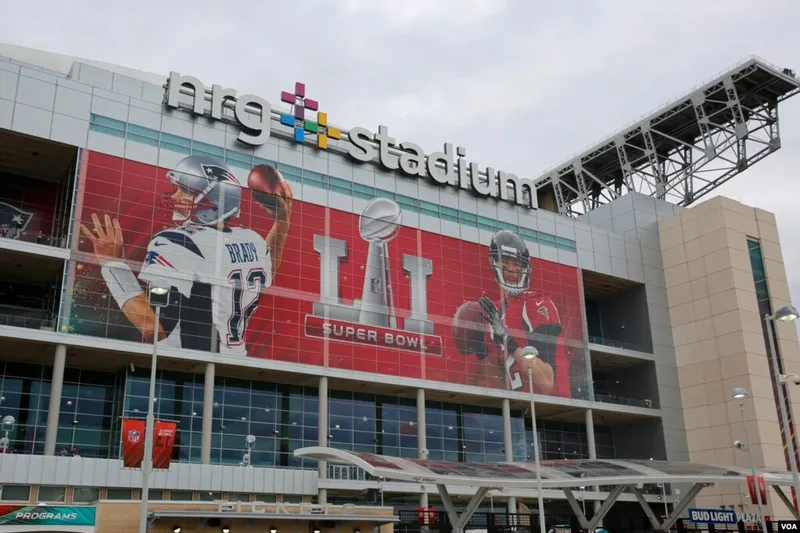
NRG Stadium sits at the heart of NRG Park, a sprawling entertainment complex about 9 miles south of downtown Houston. Opened in 2002 as Reliant Stadium, it was a genuine first: the first NFL stadium ever built with a retractable roof. That might sound like a gimmick until you’ve experienced a Houston summer. When it’s 98°F with 90% humidity outside, the ability to close a roof and crank up the air conditioning isn’t a luxury — it’s a survival strategy.
The stadium holds 72,220 fans in its standard NFL configuration and serves as the home of the Houston Texans. For the 2026 FIFA World Cup, it’s been assigned group stage duties, hosting 5 matches starting June 13. It’s one of two Texas venues in the tournament, alongside AT&T Stadium in Arlington, which will handle the bigger-ticket semi-final rounds. NRG gets fewer matches, but Houston’s massive and passionate Latin American population will make every one of them feel like a home game.
The construction cost was $352 million — a figure that seems almost quaint compared to modern stadium budgets. By comparison, AT&T Stadium cost $1.3 billion seven years later, and SoFi Stadium cost $5.5 billion. What Houston got for that $352 million was a versatile, functional stadium that’s hosted two Super Bowls, NCAA Final Fours, international soccer matches, mega-concerts, and the world’s largest rodeo. Not a bad return on investment.
NRG Stadium is part of a larger campus that includes NRG Center (one of the biggest convention facilities in the country), NRG Arena, and — sitting right next door in quiet retirement — the Astrodome. The “Eighth Wonder of the World” hasn’t hosted a major event since 2009, but it remains a powerful presence on the landscape, a reminder of Houston’s pioneering role in stadium architecture. The retractable roof on NRG Stadium is, in many ways, the Astrodome’s legacy made better.
Getting to NRG Stadium
Public Transit
Houston isn’t known as a transit city, but the METRORail Red Line is a genuine bright spot — and it runs directly to NRG Stadium.
METRORail Red Line: Board at any station along the Red Line corridor, which runs from Northline Transit Center through downtown Houston to the NRG Park/Fannin South station. The ride from the downtown Main Street Square station takes about 20 minutes. On event days, METRO runs extended hours and increases train frequency. Fares are $1.25 per ride. The station drops you within a short walk of the stadium gates — no shuttle required.
Bus service: Several METRO bus routes also serve NRG Park, including Route 25 (Richmond) and Route 8 (South Main). On event days, additional express bus service runs from Park & Ride lots around the city.
Pro tip: The Red Line gets packed before and after major events. Board a few stops north of NRG Park if possible to secure a spot. After the game, the wait for trains can run 20-30 minutes.
Driving + Parking
Houston is a car city — roughly 90% of Texans fans drive to games — and NRG Stadium is well-positioned for highway access. GPS: “One NRG Park, Houston, TX 77054.”
→ From downtown Houston: Take US-59 South (Southwest Freeway) to the Kirby Drive exit, or take Main Street south directly to NRG Park. Approximately 9 miles, 15-30 minutes depending on traffic.
→ From the west side (Katy/Energy Corridor): I-10 East to I-610 South Loop, exit at Kirby Drive or Fannin Street. Approximately 20-30 miles, 30-50 minutes.
→ From the north (The Woodlands/IAH area): I-45 South to I-610 West Loop, then south to NRG Park exits. Approximately 30 miles, 35-55 minutes.
NRG Park has over 26,000 parking spaces spread across massive surface lots and garages. Parking runs $20-40 depending on lot proximity and the event. Lots open early — for NFL games, tailgating starts 4-5 hours before kickoff. The NRG Park tailgating scene is one of the best in the NFL: brisket smokers, cold beer, and Texas hospitality at full volume. For World Cup matches, expect modified tailgating rules.
Rideshare
Uber and Lyft operate designated pickup and drop-off zones around NRG Park. Drop-off is generally smooth before events, but post-event pickups can involve 20-40 minute waits as 72,000 people all request rides simultaneously. A ride from downtown Houston costs $15-30; from the Galleria area, $12-25. Surge pricing is common after major events, so consider walking to a nearby staging area to reduce wait times and fares.
From the Airport
→ William P. Hobby Airport (HOU): Just 8 miles away — by far the closer option. A 15-25 minute drive or rideshare ($15-25). Hobby serves Southwest Airlines and several other carriers with domestic routes and flights to Latin America. If you’re coming specifically for a match, fly into Hobby.
→ George Bush Intercontinental Airport (IAH): 22 miles north of NRG Stadium. The larger of Houston’s two airports, IAH handles most international flights and United Airlines hub operations. Allow 30-50 minutes by car depending on traffic. There’s no direct rail link to NRG Stadium from IAH, so rideshare or rental car is your best bet ($35-55 by rideshare).
FIFA World Cup 2026 at NRG Stadium
NRG Stadium will host 5 group stage matches during the 2026 FIFA World Cup, with the first match on June 13. The group stage assignment makes sense — NRG is a strong venue without the sheer scale of AT&T Stadium’s 94,000 seats — but don’t mistake “group stage” for “unimportant.” Some of the most memorable World Cup moments happen in the group phase, and Houston will bring the energy.
The heat question: This is the big one. Houston in June and July is brutal — average highs of 95°F+ with humidity that makes it feel over 100°F. The retractable roof is NRG Stadium’s trump card. Close it, seal the bowl, and air-condition 72,000 people in comfort. It’s the same advantage that made Houston an attractive host in the first place. While open-air venues in other cities wrestle with weather contingencies, NRG just closes the roof and moves on.
Pitch conversion: Like most NFL venues in the tournament, NRG Stadium will swap its FieldTurf synthetic surface for natural grass installed on modular trays. The stadium has hosted international soccer before — Copa America 2016 matches, CONCACAF Gold Cup games, and high-profile friendlies — so the conversion process isn’t new territory. The closed-roof environment actually helps grass health by controlling temperature, humidity, and light with supplemental grow systems.
Soccer culture: Houston has the fourth-largest Hispanic/Latino population of any U.S. metro area. Mexican, Salvadoran, Honduran, and Colombian communities here run deep, and soccer isn’t a niche sport — it’s a way of life. When Mexico or a Central American team plays at NRG, the atmosphere will rival anything you’d find in Latin America. Houston also has its own MLS team, the Houston Dynamo, so the infrastructure for organized soccer fandom already exists.
Texas gets two World Cup venues — NRG Stadium in Houston for group stage matches and AT&T Stadium in Arlington for matches through the semi-finals. Together, they’ll host 13 matches across the state. For fans traveling between the two, it’s about a 250-mile drive (roughly 4 hours) on I-45 and I-35.
History of NRG Stadium
NRG Stadium opened on August 24, 2002, as Reliant Stadium, and it immediately made history as the first NFL stadium built with a retractable roof. The timing was perfect: the Houston Texans, the NFL’s newest expansion franchise, needed a home, and the city of Houston needed a worthy successor to the Astrodome.
The Astrodome — the “Eighth Wonder of the World” when it opened in 1965 — sits literally next door to NRG Stadium. It was the first fully enclosed, air-conditioned sports stadium, and it changed how the world thought about indoor sports. By the late 1990s, though, it was outdated, and the Texans wanted something modern. NRG Stadium took the Astrodome’s core innovation (playing sports indoors in Houston’s miserable climate) and improved on it with a retractable roof that could open on the rare pleasant Texas day. The two structures sitting side by side tell the full story of Houston’s stadium ambitions across six decades.
The name game: The stadium was built as Reliant Stadium, named after Reliant Energy in a 32-year, $300 million naming rights deal. In 2014, Reliant’s parent company NRG Energy rebranded, and the stadium became NRG Stadium. The entire surrounding complex — NRG Park, NRG Center, NRG Arena — followed suit.
Super Bowls: NRG Stadium has hosted two Super Bowls, both memorable for very different reasons. Super Bowl XXXVIII in February 2004 featured the Patriots edging the Panthers 32-29 in a wild game — though it’s mostly remembered for the Janet Jackson halftime show controversy. Super Bowl LI in February 2017 produced arguably the greatest comeback in NFL history: the New England Patriots trailed the Atlanta Falcons 28-3 in the third quarter before storming back to win 34-28 in overtime. Tom Brady threw for 466 yards and earned his fifth ring. The “28-3” meme will outlive us all.
The Rodeo: Every spring, the Houston Livestock Show and Rodeo takes over the entire NRG Park complex for more than three weeks. Rodeo competitions, livestock auctions, a carnival midway, barbecue cook-offs, and nightly concerts transform the stadium into something completely different. Artists like George Strait, Beyonce (who’s from Houston), and Garth Brooks have headlined the rodeo concert series. With 2.5 million+ attendees annually, it’s the largest livestock show and rodeo on earth, and it’s not particularly close. The event is to Houston what Carnival is to Rio — a cultural defining moment that shuts down normal life.
Beyond football and rodeo: NRG Stadium has hosted NCAA Final Four basketball tournaments (2011, 2016, 2023), international soccer (Copa America 2016, Gold Cup matches, friendlies drawing 60,000+ fans), monster truck rallies, concerts from Beyonce to U2, and Wrestlemania. It’s a workhorse venue that earns its keep year-round. The $352 million construction cost has been repaid many times over in economic impact and cultural significance to Houston.
Photo Gallery
Fun Facts
When it opened in 2002, NRG Stadium (then Reliant Stadium) was the first NFL stadium ever built with a retractable roof — a fitting successor to the Astrodome next door, which pioneered the indoor stadium concept in 1965.
The Houston Livestock Show and Rodeo takes over NRG Stadium for more than three weeks every spring, drawing 2.5 million+ attendees and making it the largest livestock show and rodeo in the world.
NRG Stadium hosted one of the most dramatic finishes in Super Bowl history: Super Bowl LI in 2017, where the Patriots erased a 28-3 deficit against the Falcons to win 34-28 in the first-ever Super Bowl overtime.
Stadium Location
Frequently Asked Questions
- What is the seating capacity of NRG Stadium?
- NRG Stadium has a seating capacity of 72,220 for standard NFL configuration. For major events like the Super Bowl, capacity has been expanded to over 70,000 with premium floor seating. For FIFA World Cup 2026, the soccer-specific configuration will be determined by FIFA's pitch and seating layout requirements.
- Where is NRG Stadium located?
- NRG Stadium is located at One NRG Park, Houston, Texas 77054, within the NRG Park complex about 9 miles south of downtown Houston. The stadium sits adjacent to the historic Astrodome along the I-610 South Loop.
- How many FIFA World Cup 2026 matches will NRG Stadium host?
- NRG Stadium will host 5 FIFA World Cup 2026 matches, all in the group stage. The first match is scheduled for June 13, 2026. Houston's large Latin American community is expected to create an electric atmosphere for these games.
- How do I get to NRG Stadium by public transit?
- Take the METRORail Red Line, which runs from downtown Houston directly to the NRG Park/Fannin South station. The ride from downtown takes about 20 minutes. On game days, METRORail runs extended service with increased frequency. The station is a short walk from the stadium gates.
- Is there parking at NRG Stadium?
- Yes, NRG Park has over 26,000 parking spaces across multiple surface lots and garages surrounding the stadium. Parking typically costs $20-40 depending on the event and lot location. Many lots are cash-only, but pre-paid options are available through the NRG Park website for major events.
- Does NRG Stadium have a retractable roof?
- Yes, NRG Stadium was the first NFL stadium built with a retractable roof when it opened in 2002. The roof consists of two steel panels that slide apart in about 7 minutes. For World Cup matches in June and July, the roof will almost certainly stay closed due to Houston's extreme summer heat and humidity, with average highs above 95°F.
- What is the Houston Livestock Show and Rodeo?
- The Houston Livestock Show and Rodeo is the world's largest rodeo and livestock exhibition, held at NRG Stadium and NRG Park every spring for more than three weeks. It draws over 2.5 million attendees annually and features rodeo competitions, livestock auctions, a massive carnival, and nightly concerts by major artists on the NRG Stadium floor.
- How far is NRG Stadium from the airport?
- NRG Stadium is about 8 miles from William P. Hobby Airport (HOU), which takes 15-25 minutes by car. George Bush Intercontinental Airport (IAH) is approximately 22 miles north, about 30-50 minutes by car depending on traffic. Hobby Airport is the significantly more convenient option for stadium visitors.
Last updated: 2026-02-14