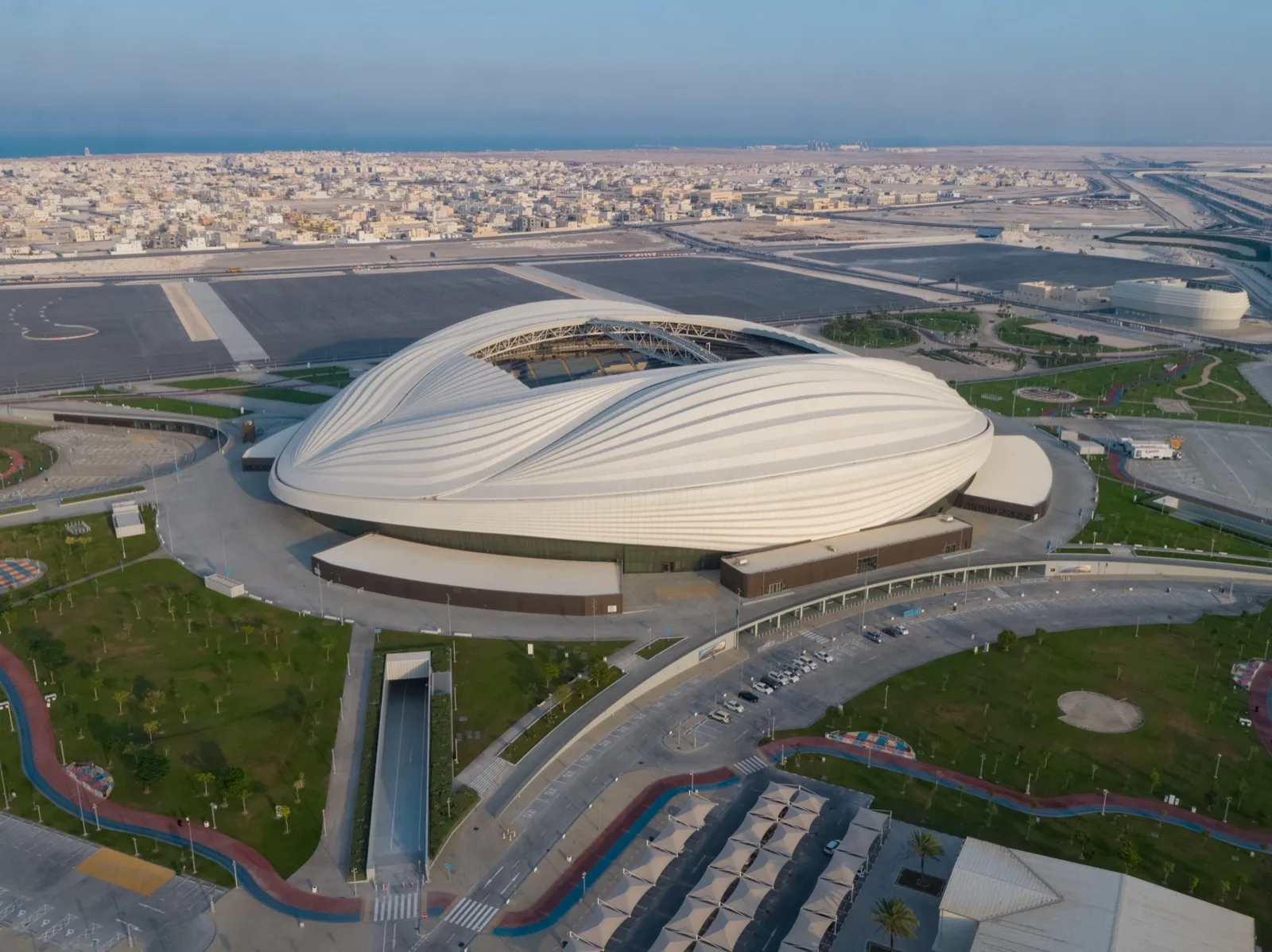
About Al Janoub Stadium
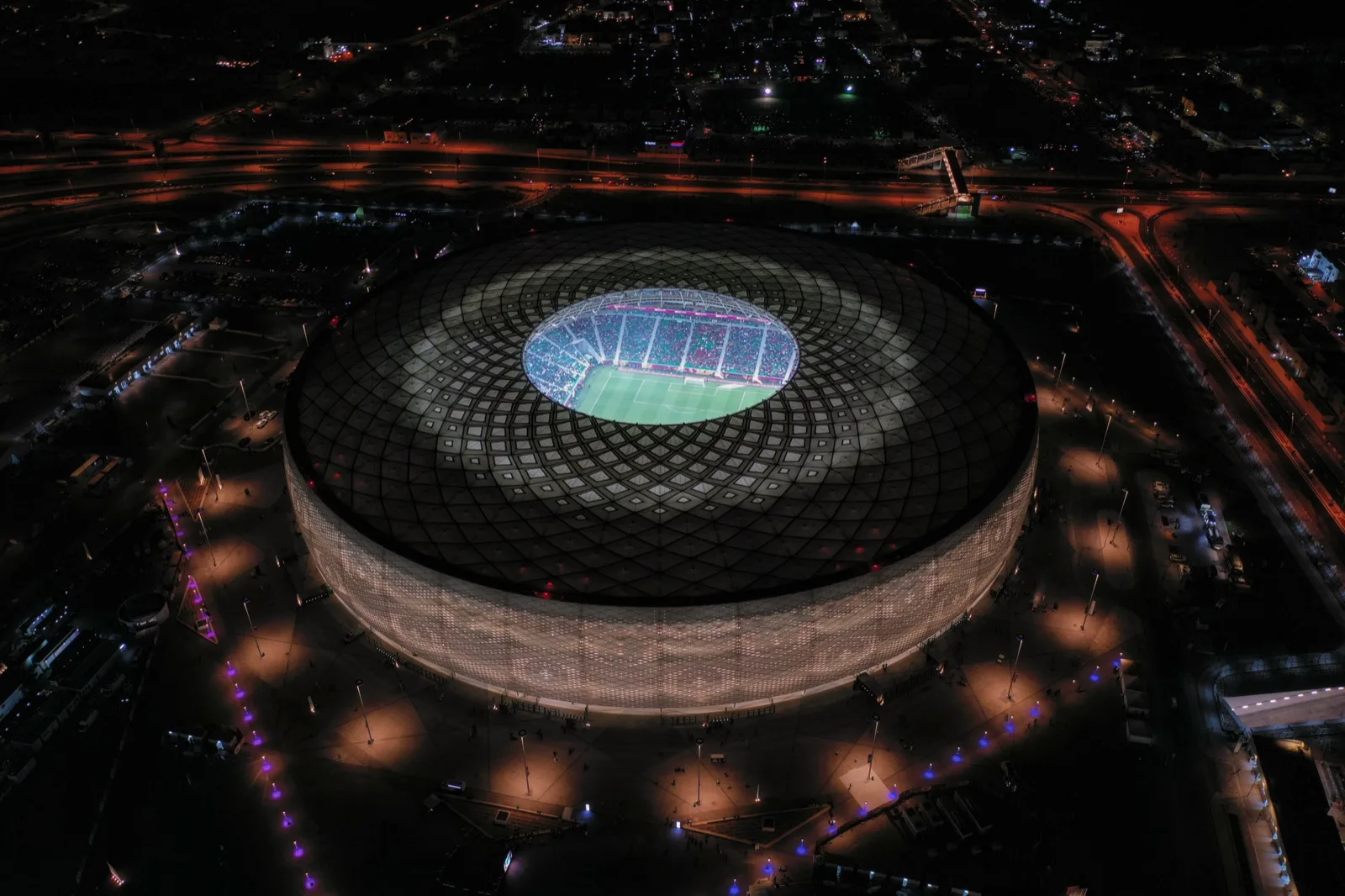
Zaha Hadid never saw Al Janoub Stadium open. The architect died in 2016, three years before her curving, sail-shaped venue in Al Wakrah became the first purpose-built stadium completed for the 2022 World Cup. It is one of the last designs finished under her name, and it carries her signature: flowing lines, no hard corners, a roof that looks more like something blown by the wind than bolted together.
Al Janoub sits in Al Wakrah, a coastal city about 25 kilometres (16 miles) south of central Doha. Before the oil era, Al Wakrah was a pearl-diving and fishing town, and the stadium is built as a tribute to that past. The roof and the hull-like beams are drawn from the dhow, the wooden sailing boat that local divers once took out to the oyster beds. The shape is unmistakable up close, a white vessel rising out of a green park.
It is also the stadium that launched a thousand jokes. When the design was unveiled, plenty of people thought the curving opening looked like female anatomy, and the comparison followed the building around. Hadid called it embarrassing and ridiculous, and she was right about the source: the form comes straight from the sails of Al Wakrah’s boats. Designed with AECOM and built by a joint venture of Midmac, Six Construct, and PORR, it opened in May 2019, well ahead of the rest.
After the World Cup, Al Janoub did what the other new venues did and shrank. The upper tier came out, dropping capacity from about 44,000 toward 20,000, and the removed seats were set aside for reuse abroad. What is left is a right-sized home for Al-Wakrah SC, wrapped in a park with running tracks and 800 new trees.
Getting to Al Janoub Stadium
Public Transit
The Red Line reaches Al Wakrah, but not quite to the stadium door.
→ From central Doha: Ride the Red Line south to Al Wakra, the final station, about 30 minutes. From there an event-day shuttle bus covers the remaining 4.5 km to the stadium in roughly 15 minutes.
→ From the airport: The Hamad International station is just one stop north of Al Wakra, so fans landing for a match can reach the area without going into the city.
After the whistle, the shuttle queues build quickly. A short wait, or a drink nearby first, takes the edge off the rush back to the station.
Driving + Parking
Al Wakrah is reached from Doha along the main coastal highway south, a quick and direct run.
→ From central Doha (~25 km): Head south on Al Wakrah Road, about 25-30 minutes outside peak traffic.
→ From the airport (~15 km): A short drive south from Hamad International, roughly 15-20 minutes.
The stadium has its own parking, and for a regular Al-Wakrah SC fixture driving is the easy choice. For a sold-out international, the park-and-ride and shuttle setup keeps the worst of the traffic away from the gates.
Rideshare
Uber, Careem, and the metered Karwa taxis all serve Al Wakrah. The distance from central Doha makes a one-way fare add up, and after a big match you should expect surge pricing and a queue.
Pro tip: Head a little way from the stadium toward the souq or the beach before requesting a ride. You will clear the immediate crowd and shorten the wait.
From the Airport
→ Hamad International Airport (DOH): About 15 km (9 mi) north, roughly 15-20 minutes by car. On the Red Line, the airport station is a single stop north of Al Wakra, which is often the quickest way in on a match day.
→ Straight off a flight: The short distance made Al Janoub an easy first stop for fans flying in, with the airport almost on the doorstep.
The 2022 World Cup at Al Janoub Stadium
Al Janoub hosted seven matches, six in the group stage and one in the Round of 16, and it served up plenty of goals.
France get going: On the opening weekend, the defending champions France beat Australia 4-1 here, shaking off an early scare. It set the tone for a run that would take them all the way back to the final.
Suárez and Ghana: The group stage brought a loaded rematch. Uruguay beat Ghana 2-0 in front of the stadium’s record 43,443, a fixture haunted by Luis Suárez’s handball against Ghana in 2010. This time Uruguay won the match but went out on goals scored, and both sides left the tournament that night.
Australia’s run: Al Janoub became something of a base for Australia, who played three group games here. They lost to France but beat Tunisia 1-0 and then Denmark 1-0 on the same pitch, scrappy, vital wins that carried them into the knockout rounds for only the second time in their history. Switzerland’s 1-0 win over Cameroon and Cameroon’s wild 3-3 draw with Serbia were also staged here.
Knockout drama: In the Round of 16, Japan and Croatia drew 1-1 before Croatia won on penalties, ending another bright Japanese run and sending the 2018 finalists deeper into the bracket. Dominik Livaković saved three spot-kicks, the kind of goalkeeping performance that decides tournaments.
Construction & Design
Al Janoub was the stadium that arrived early. While the rest of Qatar’s venues were still rising, this one opened in May 2019, the first purpose-built ground finished for the tournament. It was also a Zaha Hadid Architects design, completed after Hadid’s death in 2016, which gives it a particular weight: a late work from one of the most distinctive architects of her era.
The form is pure Al Wakrah. The roof and the great curving beams are modelled on the sails and hulls of the dhow boats that local pearl divers once sailed, so the building reads as a vessel beached in the desert. It is beautiful and a little strange, which is the point. The retractable PTFE fabric roof rides on arches that span around 230 metres (755 feet) and can close over the pitch, while a cooling system can hold the stands near 18C and the pitch around 20C even in a Gulf summer.
The engineering was shared between schlaich bergermann partner, who handled the roof, and Jain and Partners, with AECOM as architect of record and a construction joint venture of Midmac, Six Construct, and PORR. Reported costs sit around $576 million, the figure cited by AECOM, though Qatar never published official per-stadium budgets. The bowl was shaped aerodynamically and paired with an energy-recovery system, helping it earn a four-star design rating and a top construction certificate under Qatar’s Global Sustainability Assessment System.
Like its neighbours, Al Janoub was built to come apart. The upper tier was always meant to be removed afterward, and once the tournament ended that is exactly what happened, leaving a 20,000-seat ground wrapped in a park of 800 new trees.
History of Al Janoub Stadium
Al Janoub was conceived as the southern venue of the tournament, serving Al Wakrah, and it set the pace by finishing first among the new builds.
- Groundbreaking (2014): Construction began on the site in Al Wakrah, to a Zaha Hadid Architects design developed with AECOM.
- Official opening (May 16, 2019): The stadium, briefly called Al Wakrah Stadium, opened with the Amir Cup final, won by Al Sadd, in front of 38,678. It was the first purpose-built Qatar 2022 venue completed.
- Renamed Al Janoub (2019): Soon after opening, the venue took the name Al Janoub, meaning the south, reflecting its place at the southern end of the country.
- World Cup (November-December 2022): Al Janoub hosted seven matches, including France’s 4-1 win over Australia and Croatia’s penalty win over Japan in the Round of 16.
- Legacy (2023 onward): The upper tier was removed and the stadium settled into its 20,000-seat configuration as the home of Al-Wakrah SC.
Years on, Al Janoub remains the most sculptural of Qatar’s stadiums, a Zaha Hadid vessel moored beside a town that once lived by the sea.
Sources & Further Reading
- Zaha Hadid Architects project page: zaha-hadid.com. The architects’ account of the dhow-sail concept and the retractable roof.
- Wikipedia entry on Al Janoub Stadium: en.wikipedia.org/wiki/Al_Janoub_Stadium. Capacity, contractors, the matches, and the legacy plan.
- Visit Qatar stadium guide: visitqatar.com. Visitor information, design background, and getting there.
- Doha Metro and event-day transport (Qatar Rail): qr.com.qa. Red Line service to Al Wakra and connecting shuttles.
Quick Facts
Everything you need at a glance.
Stadium specs
- Capacity
- 44,325
- Opened
- 2019
- Cost
- reported around $576 million (AECOM; Qatar did not publish official per-stadium costs)
- Roof
- Retractable (PTFE fabric)
- Surface
- Natural Grass
- Tenants
- Al-Wakrah SC, Qatar National Team (selected matches)
Construction & location
- Groundbreaking
- 2014
- Architects
- Zaha Hadid Architects, AECOM
- Engineering
- schlaich bergermann partner (roof); Jain & Partners
- General contractor
- Midmac / Six Construct / PORR joint venture
- Address
- Al Janoub Stadium, Al Wakrah, Qatar
- GPS
- 25.1597°N, 51.5742°E
Photo Gallery
Fun Facts
Al Janoub was the first of Qatar's purpose-built World Cup stadiums to be completed, opening in May 2019, more than three years before the tournament kicked off.
Zaha Hadid, who designed it, died in 2016 and never saw it finished, making Al Janoub one of the last stadium designs completed under her name.
The curving roof was inspired by the sails of the dhow boats that Al Wakrah's pearl divers once sailed, and its retractable fabric arches span about 230 metres (755 feet).
Stadium Location
Frequently Asked Questions
- What is the seating capacity of Al Janoub Stadium?
- Al Janoub held 44,325 for the 2022 World Cup. After the tournament the upper tier was removed, cutting permanent capacity to about 20,000 for its tenant, Al-Wakrah SC, with the removed seats earmarked for donation abroad.
- Where is Al Janoub Stadium located?
- Al Janoub is in Al Wakrah, a coastal city about 25 km (16 mi) south of central Doha, Qatar. It is reached via the Red Line metro to Al Wakra station, then a short shuttle, and sits close to Hamad International Airport.
- Who designed Al Janoub Stadium?
- It was designed by Zaha Hadid Architects with AECOM. The flowing, sail-shaped form was one of the last stadium designs completed under Zaha Hadid's name, as she died in 2016, three years before it opened.
- What is Al Janoub Stadium's design based on?
- The curving roof and hull-like beams are inspired by the sails of the traditional dhow boats that Al Wakrah's pearl divers and fishermen used, a nod to the town's maritime heritage. The retractable roof arches span about 230 metres.
- Why was Al Janoub Stadium controversial?
- When the design was unveiled, many observers joked that the curving form resembled female anatomy. Zaha Hadid dismissed the comparison as embarrassing and ridiculous, pointing out that the shape came from the dhow sails of Al Wakrah's seafaring past.
- What 2022 World Cup matches did Al Janoub Stadium host?
- It hosted seven matches: six group games and one Round of 16. France beat Australia 4-1 here, Uruguay beat Ghana 2-0 in a charged rematch, and Croatia knocked out Japan on penalties in the Round of 16.
- Was Al Janoub the first Qatar 2022 stadium finished?
- It was the first purpose-built World Cup stadium completed, opening on May 16, 2019 with the Amir Cup final. Khalifa International Stadium reopened earlier, in 2017, but as a renovation of an existing venue rather than a new build.
- How do I get to Al Janoub Stadium by metro?
- Take the Red Line south to Al Wakra, its final station, about 4.5 km from the stadium, then ride the event-day shuttle bus for the last stretch. The airport station is one stop north, so arriving fans can reach it quickly.
- Does Al Janoub Stadium have a retractable roof?
- Yes. A pleated PTFE fabric roof can close over the pitch on its large arches, and a cooling system can bring the stands to around 18C and the pitch to about 20C, designed for comfort in the Gulf climate.
- Who plays at Al Janoub Stadium now?
- Al-Wakrah SC, the local club, plays its home matches here in the Qatar Stars League. At its legacy capacity of about 20,000, the stadium fits domestic football well, and it also hosts Qatar national team games.
- How far is Al Janoub Stadium from the airport?
- Hamad International Airport (DOH) is only about 15 km (9 mi) north, roughly 15-20 minutes by car. On the metro, the airport station is just one stop north of Al Wakra on the Red Line, making this an easy venue for arriving fans.
- When did Al Janoub Stadium open?
- It opened on May 16, 2019, hosting the Amir Cup final between Al Sadd and Al-Duhail in front of 38,678 fans. It was briefly called Al Wakrah Stadium before being renamed Al Janoub, which means the south.
- What happened to Al Janoub Stadium after the World Cup?
- The modular upper tier was removed, dropping capacity from about 44,000 toward 20,000 for Al-Wakrah SC. The removed seats were set aside, in coordination with FIFA, for reuse in countries that lack sporting infrastructure.
- How sustainable is Al Janoub Stadium?
- It earned a four-star rating for design and build under Qatar's Global Sustainability Assessment System, plus a top construction-management certificate. An energy-recovery system and an aerodynamic bowl cut cooling demand, and around 800 trees were planted in the surrounding park.
Last updated: 2026-07-10