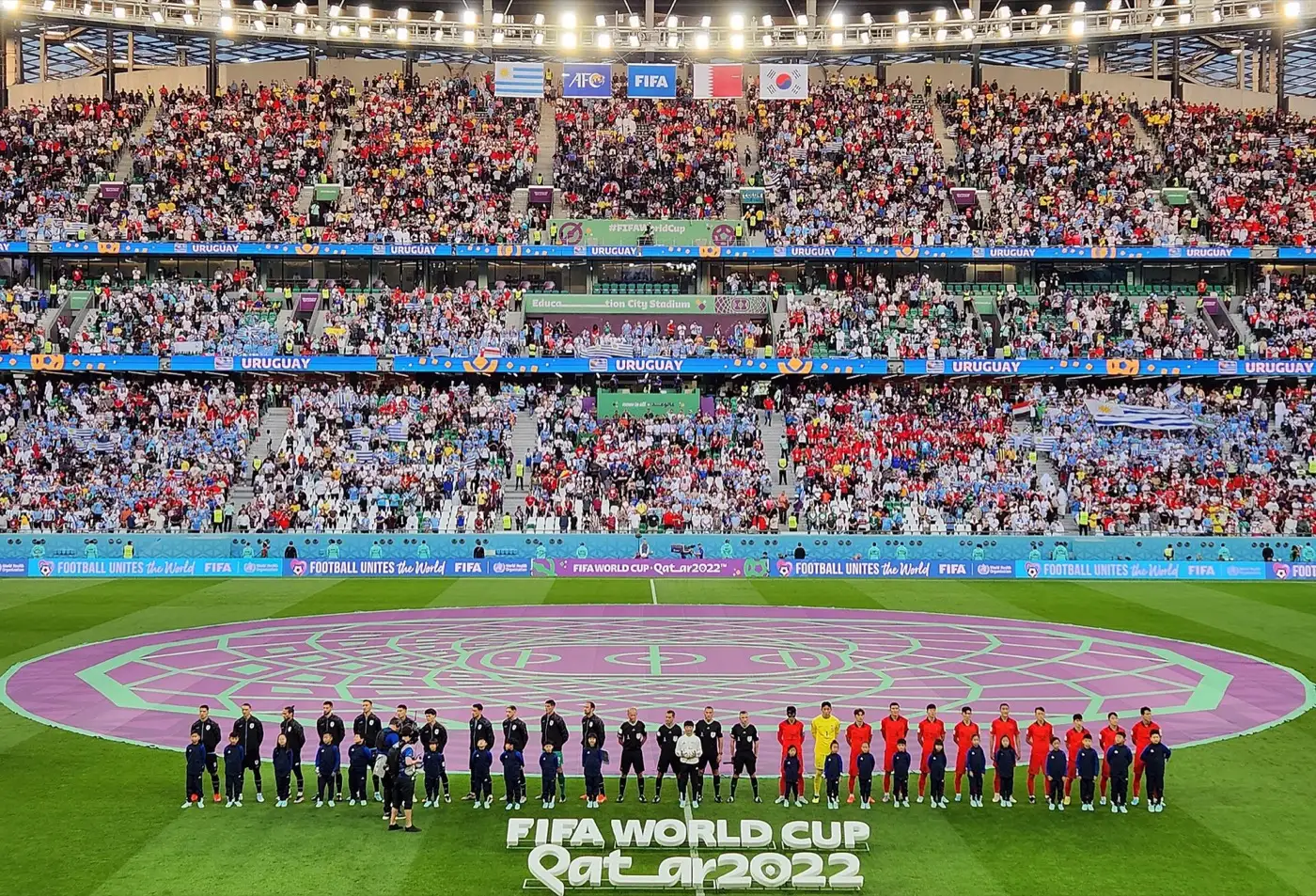
About Education City Stadium
Education City Stadium opened to no one. On June 15, 2020, with the pandemic shutting down crowds everywhere, Qatar inaugurated its fourth World Cup venue with a digital ceremony and dedicated it to the frontline health workers getting the country through COVID-19. It was a strange, quiet debut for a building nicknamed the Diamond in the Desert, and in hindsight an oddly fitting one for a venue built around an idea bigger than football.
The stadium sits inside Education City, the sprawling Qatar Foundation campus in Al Rayyan that houses branch campuses of universities from around the world, about 7 kilometres (4 miles) northwest of central Doha. That setting shapes everything about it. This was never going to be a club ground. It was built as the centerpiece of an academic campus, a venue for students, community sport, and the national team, wrapped in a design meant to belong among libraries and lecture halls.
The nickname does the work. The facade is a skin of triangular panels arranged into a faceted, diamond-like pattern drawn from traditional Islamic geometry, and the angled surfaces catch the sun so the whole building seems to change color through the day. Designed by Fenwick Iribarren Architects with Pattern Design and engineered by Buro Happold, it is the most jewel-like of the Qatar 2022 stadiums, sharp where the others are soft.
After the tournament, Education City became a study in reuse. About half the seats were demountable, and roughly 20,000 of them were pledged for donation to build stadiums in developing countries, cutting capacity to around 25,000. The diamond stayed, smaller and quieter, back among the universities it was built to serve.
Getting to Education City Stadium
Public Transit
This is one of the easiest Qatar venues to reach by train, with a tram to finish the job.
→ From central Doha: Take the Green Line to Education City station, about 20 minutes. From there it is a 15-minute walk across the campus, or you can ride the free Education City tram, which stops near the stadium.
→ Around the campus: The driverless tram loops the Qatar Foundation site, linking the metro, the universities, and the stadium, which makes the last stretch easy in the heat.
Because the venue sits on a calm campus rather than in a dense district, the crowds disperse more gently here than at the city-center stadiums.
Driving + Parking
Education City is reached from Doha along the Dukhan Highway, with signposted campus entrances leading to the stadium.
→ From central Doha (~7 km): Head northwest on the Dukhan Highway, about 12-20 minutes depending on traffic.
→ From Mall of Qatar (~5 km): A short drive east from the Al Rayyan area, roughly 10 minutes.
The campus has parking, and for university or community events driving is simple. For a major international, the metro-and-tram combination is usually quicker than negotiating campus access by car.
Rideshare
Uber, Careem, and the metered Karwa taxis all serve Education City. The campus is well organized for drop-off and pickup, though after a big match you should expect surge pricing and a short queue as the crowd clears.
Pro tip: Use one of the campus tram stops or a building entrance as your pickup point rather than the stadium gate. The roads flow better and the wait is shorter.
From the Airport
→ Hamad International Airport (DOH): About 20-27 km southeast, roughly 25 minutes by car. By metro it is around 45 minutes, changing at Msheireb in central Doha onto the Green Line.
→ From West Bay or the city: Education City is a short, well-signed drive from the western side of Doha, making it convenient for visitors based downtown.
The 2022 World Cup at Education City Stadium
Education City hosted eight matches, climbing from group games to a quarter-final, and it became the home of the penalty shootout.
Morocco stun Spain: On December 6, Morocco and Spain played out a goalless Round of 16 before Morocco won the shootout, goalkeeper Bono saving twice. The record crowd of 44,667 watched the Atlas Lions take another giant step on their historic run to the semi-finals.
Croatia end Brazil: Three days later, on December 9, the quarter-final pitted Croatia against a Brazil side many had tipped to win the whole thing. Brazil scored first in extra time through Neymar, Croatia equalized late, and then Croatia won the shootout 4-2. It was the tournament’s biggest upset, and it happened here.
The campus stage: Set among the universities, the diamond facade made a striking backdrop on television, glinting in the desert light. Both knockout nights here were part of the same story, Morocco’s against the odds and Brazil’s collapse, and both ran to the cruelty of penalties. For a stadium built for students rather than a storied club, hosting two of the tournament’s most memorable shootouts was a remarkable haul. Two of Qatar 2022’s most dramatic nights ended with Education City’s scoreboard showing a shootout.
Construction & Design
Education City had a different brief from the other stadiums. It was not built for a club or a city, but for a campus, the Qatar Foundation’s Education City, and the design had to sit comfortably among world-class libraries and university buildings. Fenwick Iribarren Architects, working with Pattern Design, answered with the sharpest concept of the eight: a diamond.
The facade is a skin of triangular metal panels arranged into a faceted geometric pattern that draws on traditional Islamic architecture. The angles are not random. They catch and reflect sunlight, so the building reads differently through the day, glowing warm at sunset and cool at midday, which is where the Diamond in the Desert nickname comes from. The diamond was chosen as a symbol of quality and durability, and as a deliberately academic kind of beauty.
Underneath the styling, the stadium was built for the heat and for reuse. A partial canopy shades the bowl, an advanced cooling system manages the climate, and the upper tier sits on a lightweight modular structure designed to be taken apart. Around a fifth of the building materials were certified green, and the venue earned a five-star rating under Qatar’s Global Sustainability Assessment System.
The donation plan is worth pausing on. Demounting seats and shipping them abroad sounds simple, but it shaped the engineering from the beginning: the upper tier had to be a modular structure that could be unbolted without wrecking the bowl below. Roughly 20,000 seats, close to half the total, were built to leave. That is a different way of thinking about a stadium, designing the demolition before the opening.
The build ran from 2016 to a 2020 completion, delivered by a joint venture of Conspel Qatar and Joannou & Paraskevaides at an estimated cost of around US$700 million. The program was managed by ASTAD, and the plan to donate the demountable seats was baked in from the start, which is why the diamond could shrink so cleanly once the tournament left town.
History of Education City Stadium
Education City Stadium was built as part of the Qatar Foundation’s campus expansion, and its timeline runs right through the strangest period of recent years.
- Groundbreaking (2016): Construction began on the Education City campus in Al Rayyan, to a Fenwick Iribarren and Pattern Design scheme.
- Pandemic opening (June 15, 2020): The stadium was inaugurated digitally during the COVID-19 lockdown and dedicated to frontline workers, with no crowd present.
- First competitive match (September 2020): The venue staged its first Qatar Stars League fixtures once domestic football resumed.
- World Cup (November-December 2022): Education City hosted eight matches, including Morocco’s shootout win over Spain and Croatia’s quarter-final upset of Brazil.
- Legacy (2023 onward): About half the seats were removed for donation, and the stadium settled into its role as a campus and community venue at roughly 25,000.
Years on, Education City remains the academic of the group, a faceted diamond among the universities that built it, equally at home hosting a continental tournament or a campus fixture.
Sources & Further Reading
- Qatar Foundation stadium page: qf.org.qa. The owner’s account of the design, the campus setting, and the legacy plan.
- Wikipedia entry on Education City Stadium: en.wikipedia.org/wiki/Education_City_Stadium. Capacity, architects, the matches, and the seat-donation legacy.
- Visit Qatar stadium guide: visitqatar.com. Visitor information and design background.
- Doha Metro and Education City tram (Qatar Rail): qr.com.qa. Green Line service to Education City station and the campus tram.
Quick Facts
Everything you need at a glance.
Stadium specs
- Capacity
- 44,667
- Opened
- 2020
- Cost
- estimated around US$700 million
- Roof
- Partial (cantilevered canopy)
- Surface
- Natural Grass
- Tenants
- Qatar Foundation (community & university sport), Qatar National Team (selected matches)
Construction & location
- Groundbreaking
- 2016
- Architects
- Fenwick Iribarren Architects, Pattern Design
- Engineering
- Buro Happold
- General contractor
- Conspel Qatar / Joannou & Paraskevaides (JPAC) joint venture
- Address
- Education City Stadium, Education City, Al Rayyan, Qatar
- GPS
- 25.3108°N, 51.4244°E
Photo Gallery
Fun Facts
Education City is nicknamed the Diamond in the Desert because its angular facade of triangular panels catches the sunlight and appears to change color as the sun moves across the sky.
It opened on June 15, 2020, in the middle of the pandemic, with a digital ceremony dedicating the stadium to frontline health workers rather than a crowd.
Around half of the stadium's seats were demountable, and roughly 20,000 of them were pledged for donation to build sporting venues in developing countries.
Stadium Location
Frequently Asked Questions
- What is the seating capacity of Education City Stadium?
- Education City held 44,667 for the 2022 World Cup, the figure set as its record attendance. After the tournament about half the seats were removed, leaving a legacy capacity of roughly 25,000 for university and community sport.
- Where is Education City Stadium located?
- It sits inside Education City, the Qatar Foundation campus in Al Rayyan, about 7 km (4 mi) northwest of central Doha. The Green Line metro stops at Education City station, with a free campus tram covering the final stretch.
- Why is it called the Diamond in the Desert?
- The nickname comes from the facade. Triangular panels form a faceted, diamond-like geometric pattern drawn from Islamic architecture, and the angled surfaces catch sunlight so the stadium appears to shift color through the day.
- Who designed Education City Stadium?
- It was designed by Fenwick Iribarren Architects with Pattern Design, and engineered by Buro Happold. The diamond motif was chosen to represent quality and durability, and to root the building in traditional Islamic geometric patterns.
- What 2022 World Cup matches did Education City Stadium host?
- It hosted eight matches: six group games, a Round of 16, and a quarter-final. The Round of 16 saw Morocco knock out Spain on penalties, and the quarter-final saw Croatia eliminate Brazil, also on penalties.
- What happened at Education City in the 2022 World Cup?
- Two penalty shootouts defined it. On December 6, Morocco beat Spain on penalties in front of a record 44,667. Three days later, Croatia stunned Brazil the same way, ending the tournament favorites' run in the quarter-final.
- How do I get to Education City Stadium by metro?
- Take the Green Line to Education City station, then either walk about 15 minutes across the campus or ride the free Education City tram, which has stops near the stadium. It is one of the more straightforward Qatar venues to reach.
- When did Education City Stadium open?
- It opened on June 15, 2020, during the COVID-19 pandemic. With crowds impossible, the inauguration was held digitally and dedicated to frontline health and essential workers, a first among the Qatar 2022 venues.
- Who owns Education City Stadium?
- It is owned by Qatar Foundation and sits within Education City, the campus that houses branch campuses of several international universities. After the World Cup it became a hub for university and community sport, alongside Qatar national team matches.
- What happened to Education City Stadium's seats after the World Cup?
- About half the seats were demountable. Roughly 20,000 of them were pledged for donation to build stadiums in developing countries that lack sporting infrastructure, cutting Education City's capacity to around 25,000.
- How far is Education City Stadium from the airport?
- Hamad International Airport (DOH) is about 20-27 km away by road, roughly a 25-minute drive. By metro it is around 45 minutes, changing at the Msheireb interchange in central Doha onto the Green Line.
- Does Education City Stadium have a roof?
- It has a partial cantilevered canopy that shades the seating bowl, with the pitch open to the sky. An advanced cooling system handles the climate, and the demountable upper tier sits on a lightweight modular structure.
- How sustainable is Education City Stadium?
- It earned a five-star rating under Qatar's Global Sustainability Assessment System. Around a fifth of its building materials were certified green, its upper tier was designed for reuse rather than demolition, and it sits within a campus built around sustainability.
- Who plays at Education City Stadium now?
- Since the World Cup it has served as a sports venue for the Education City and Qatar Foundation campus, hosting university and community football, Qatar national team matches, and major events including the 2023 AFC Asian Cup.
Last updated: 2026-07-10