About Estadio Akron
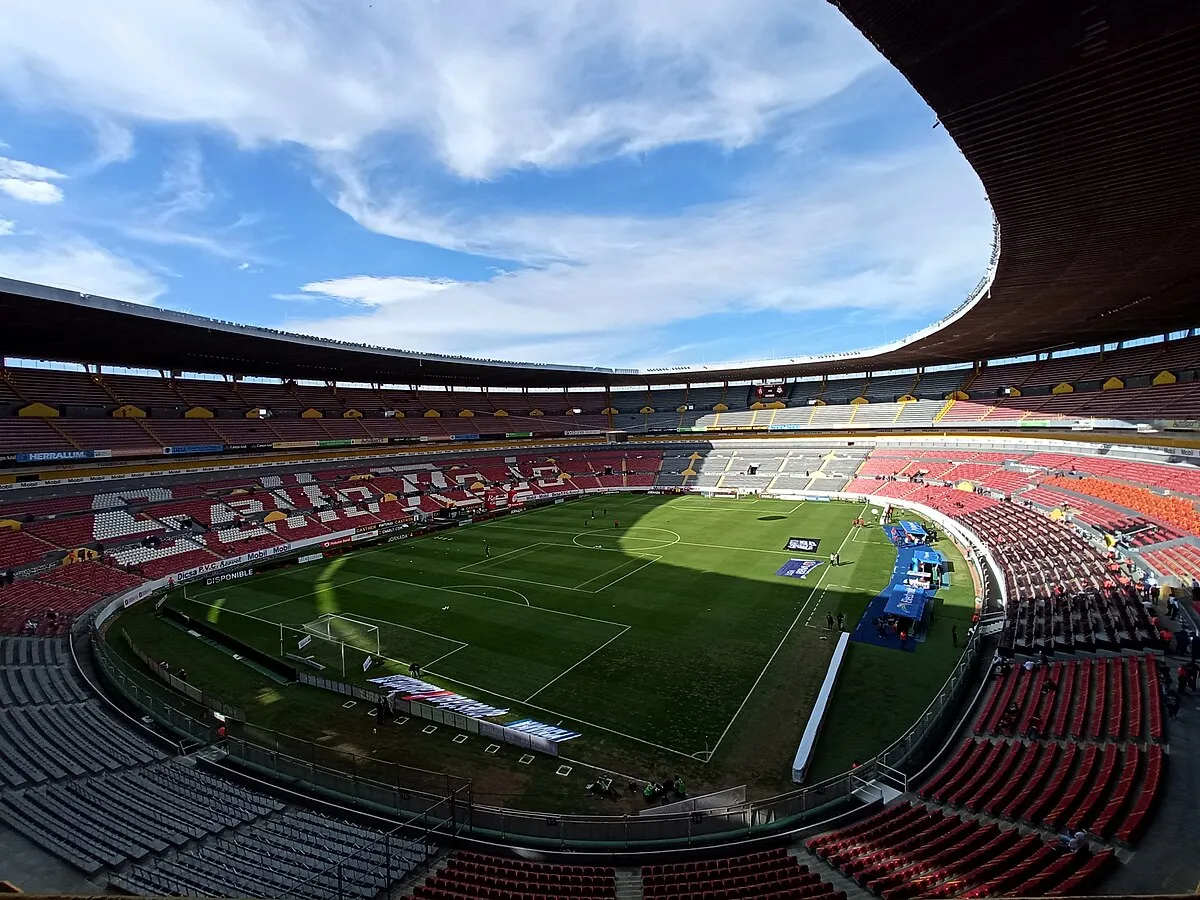
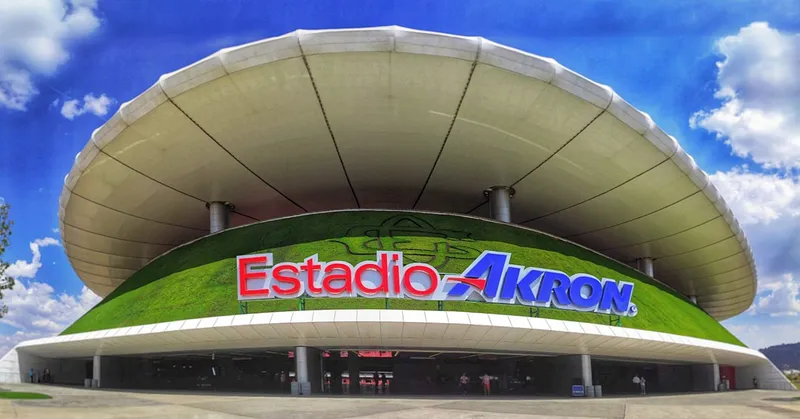
There is no stadium in the world that looks like Estadio Akron. From the outside, it barely looks like a stadium at all. Designed by French architect Jean-Marie Massaud, the venue rises from the western outskirts of Guadalajara like a grass-covered hill — 70,000 square meters of living turf draped over a concrete shell, with the seating bowl sunken below ground level like a volcanic crater. The locals call it “The Volcano.”
Opened in 2010 as the home of CD Guadalajara — universally known as Chivas, one of Mexico’s most beloved and storied football clubs — Estadio Akron holds 49,850 spectators beneath a circular tensile membrane canopy that covers the stands while leaving the pitch open to the Jalisco sky. Chivas fans have christened it “El Templo Mayor” (The Great Temple), and on match days the name feels earned.
The approach to the stadium is unlike any other. Spectators walk up the grassy slopes of the exterior berm, ascending what genuinely feels like a hillside, before descending into the bowl. The effect is intentional — Massaud wanted the stadium to emerge from the landscape rather than impose upon it, connecting the built environment to the Bosque La Primavera forest reserve that stretches out to the west.
Chivas is one of the most distinctive clubs in world football, famous for their policy of fielding only Mexican-born players — no foreign imports allowed. This philosophy of pure Mexican identity resonates deeply with their enormous fanbase, and Estadio Akron is the cathedral of that tradition.
Getting to Estadio Akron
Public Transit
Guadalajara has been expanding its transit system, and several options now serve the stadium area.
BRT (Bus Rapid Transit): The Mi Macro Periferico line has a station called Estadio Chivas located near the stadium. This is the most direct public transit option and connects to the broader Guadalajara transit network.
Bus: Routes A12, T02, and C109 serve the stadium area. The closest bus stop is approximately 450 meters (a 7-minute walk) from the stadium entrance.
Light Rail: The TL-3 line runs from Arcos de Zapopan station to Periferico Belenes station, from which a short connecting bus ride reaches the stadium.
Important for World Cup visitors: Transit to the stadium will be significantly enhanced during the World Cup with dedicated shuttle services. Check FIFA’s official transport page for tournament-specific routes closer to June 2026.
Driving + Parking
The stadium is accessible via the Periferico ring road and Avenida Aviacion. From downtown Guadalajara, the drive takes 12-30 minutes depending on traffic.
Parking is available in the stadium’s lots, but fills up quickly on match days. Arrive early if you plan to drive. Traffic around the stadium can be heavy, particularly on the Periferico, so budget extra time.
Rideshare
Uber and DiDi both operate in Guadalajara. A ride from downtown to the stadium costs approximately 100-180 pesos ($6-11 USD) under normal conditions. Surge pricing on match days is expected.
Pro tip: Have your driver drop you on the Periferico side of the stadium to avoid the worst congestion at the main entrance. After the match, walk 10-15 minutes away before requesting a pickup.
From the Airport
→ Miguel Hidalgo y Costilla International Airport (GDL): Approximately 19 miles from the stadium, about 30 minutes by car via the Periferico toll road. Taxis and rideshares are available from the airport. Budget around 250-350 pesos ($15-20 USD) for a taxi or rideshare to the stadium.
FIFA World Cup 2026 at Estadio Akron
For the 2026 World Cup, Estadio Akron will be renamed Estadio Guadalajara per FIFA’s commercial naming policy. The stadium will host 4 group stage matches, making it one of the tournament’s dedicated group stage venues.
Match schedule:
- June 11: South Korea vs. UEFA Playoff D Winner (Group A)
- June 18: Mexico vs. South Korea (Group A)
- June 23: Colombia vs. Intercontinental Playoff 1 Winner (Group K)
- June 26: Uruguay vs. Spain (Group H)
The June 18 match between Mexico and South Korea will be one of the most electric atmospheres of the group stage. As a host nation playing in Guadalajara — a city with deep football passion — the crowd will be overwhelmingly behind El Tri. The June 26 Uruguay vs. Spain clash is a genuine heavyweight showdown that could decide Group H.
Playing surface: The natural grass pitch will be prepared to FIFA’s exacting standards. The stadium replaced its original artificial turf with natural grass in 2012, and the surface has been well-maintained since.
Climate note: June marks the beginning of Guadalajara’s rainy season. Expect warm temperatures (70-85°F / 21-29°C) with the possibility of afternoon thunderstorms. Evenings are generally pleasant. The Volcano’s open-field design means rain will reach the pitch but not most of the seating under the canopy.
History of Estadio Akron
The story of Estadio Akron begins with Jorge Vergara Madrigal, the visionary owner of Chivas who in 2003 commissioned French designer Jean-Marie Massaud to create a stadium unlike anything in the Americas. Massaud, working with fellow designer Daniel Pouzet, conceived what he called the “Volcano Stadium” — a venue that would emerge from the earth itself.
February 2004: Construction began on the site in Zapopan, on the western edge of the Guadalajara metropolitan area. The project was ambitious: sink a 50,000-seat bowl below ground level, surround it with grass-covered slopes, and crown it with a floating circular canopy. Financial difficulties stretched the timeline considerably.
July 30, 2010: After six years of construction, the stadium opened with a friendly between Chivas and Manchester United. Over 70,000 fans packed the venue — exceeding its official capacity — to witness the inauguration of their new home.
October 2011: Estadio Akron hosted the opening and closing ceremonies of the 2011 Pan American Games, bringing international attention to the venue and to Guadalajara as a sporting city.
2011 FIFA U-17 World Cup: The stadium hosted matches in the U-17 tournament, which Mexico won on home soil — a moment of enormous national pride.
2012: After persistent complaints from players about injury risk, the stadium’s original artificial turf was removed and replaced with natural grass, resolving one of the venue’s most criticized features.
The stadium has gone through several names — opening as Estadio Omnilife (after Vergara’s nutritional supplement company), becoming Estadio Chivas in 2016, and taking its current name Estadio Akron in 2017. Through all the rebranding, Chivas fans have simply called it El Templo Mayor.
In recent years, the stadium has hosted major events beyond football, including Canelo Alvarez boxing matches and concerts by The Weeknd and Shakira. But its soul remains with Chivas and their unique all-Mexican roster policy — a tradition that makes every home match a celebration of Mexican football identity.
Photo Gallery
Fun Facts
The stadium exterior is covered by 70,000 square meters of living grass planted on a concrete shell, making the building look like a dormant volcano from the outside — spectators literally walk up and over a grassy hill to enter the sunken seating bowl.
When the stadium opened in 2010, it featured artificial turf that drew such fierce criticism from players and coaches that it was ripped out and replaced with natural grass just two years later.
The inauguration match on July 30, 2010 drew over 70,000 spectators for a Chivas vs. Manchester United friendly — exceeding the stadium's official capacity through temporary seating and standing areas.
Stadium Location
Frequently Asked Questions
- What is the seating capacity of Estadio Akron?
- Estadio Akron has an official capacity of 49,850. For FIFA World Cup 2026, the stadium will operate at approximately 48,000 under FIFA's seating configuration standards.
- Where is Estadio Akron located?
- Estadio Akron is located in Zapopan, on the western edge of the Guadalajara metropolitan area in Jalisco, Mexico. It's approximately 7 miles west of downtown Guadalajara, near the Bosque La Primavera forest reserve.
- What World Cup 2026 matches will be played at Estadio Akron?
- Estadio Akron (renamed Estadio Guadalajara for the tournament) will host 4 group stage matches: South Korea vs. UEFA Playoff D Winner (June 11), Mexico vs. South Korea (June 18), Colombia vs. Intercontinental Playoff 1 Winner (June 23), and Uruguay vs. Spain (June 26).
- How do I get to Estadio Akron by public transit?
- The Mi Macro Periferico BRT has a stop at 'Estadio Chivas' station near the stadium. Bus routes A12, T02, and C109 also serve the area. The Light Rail TL-3 line reaches Periferico Belenes station, from which a short bus ride connects to the stadium.
- Why is Estadio Akron shaped like a volcano?
- French architect Jean-Marie Massaud designed the stadium to blend into the natural landscape. The seating bowl is sunken below ground level like a volcanic crater, surrounded by a grass-covered concrete berm. The design was inspired by the volcanic geography of the Jalisco region.
- What is the weather like in Guadalajara in June?
- June is the start of the rainy season in Guadalajara, with warm temperatures of 70-85°F (21-29°C) and afternoon thunderstorms common. Bring rain gear and stay hydrated. Evenings are generally pleasant.
Last updated: 2026-02-18