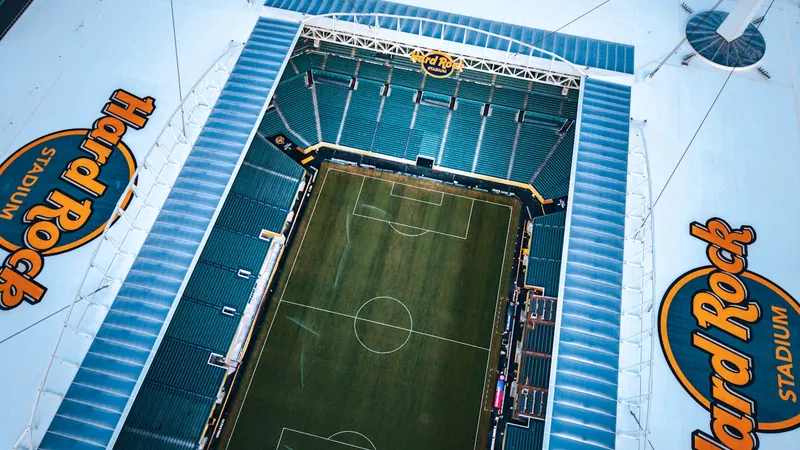
About Hard Rock Stadium
Hard Rock Stadium sits in Miami Gardens, Florida — about 17 miles north of the Art Deco towers and beach umbrellas that most people picture when they hear “Miami.” With a capacity of 65,326, it’s not the biggest venue in the 2026 World Cup lineup, but it might be the most versatile. This is where the third-place match will be decided, along with 6 group stage games, bringing its World Cup total to 7 matches starting June 12, 2026.
The stadium’s primary tenant is the Miami Dolphins, who’ve played here since opening day in 1987. But football is only part of the story. The Miami Open, one of tennis’s biggest tournaments outside the Grand Slams, moved here in 2019 and uses a purpose-built tennis complex on the stadium grounds. During the Open, temporary courts rise where tailgaters normally set up, and the main stadium court seats 14,000 fans under the canopy.
What transformed Hard Rock from a aging football stadium into a genuine showpiece was a $550 million renovation orchestrated by Dolphins owner Stephen Ross between 2015 and 2016. The centerpiece is the canopy — a sweeping, angular shade structure that covers the upper deck and most of the lower bowl. It blocks up to 90% of direct sunlight and channels breezes through the stadium, addressing the single biggest complaint fans had for three decades: Miami’s punishing heat. Ross essentially built a new stadium within the bones of the old one, adding premium club spaces, wider concourses, and updated luxury suites without ever demolishing the original structure.
Hard Rock Stadium’s event resume is staggering. Six Super Bowls (tied with New Orleans for the all-time record), multiple BCS National Championship and College Football Playoff games, two WrestleManias, the 2024 Copa America final between Argentina and Colombia, and — since 2022 — the Formula 1 Miami Grand Prix, run on a temporary street circuit built in the stadium’s parking lots with the F1 paddock literally inside the lower bowl. No other venue in America juggles NFL, F1, professional tennis, and international soccer at this level.
Getting to Hard Rock Stadium
Public Transit
Let’s be honest: public transit to Hard Rock Stadium is not great. Miami-Dade County’s transit system wasn’t designed around this location, and most fans have always driven. That said, you have options.
Miami-Dade Transit Bus Route 99: This is the primary bus line serving the stadium, running along NW 199th Street. It connects to Tri-Rail’s Opa-Locka station, which has commuter rail service from Miami, Fort Lauderdale, and West Palm Beach.
Bus Route 27: Runs along NW 27th Avenue, stopping within walking distance of the stadium on game days. Connects to the Metrorail system at the Dr. Martin Luther King Jr. station.
Game day express shuttles: For NFL games, Dolphins events, and major matches, special express buses run from designated park-and-ride locations and Tri-Rail stations. Expect FIFA to significantly expand shuttle service for the World Cup — details will be announced closer to the tournament.
Bottom line: If you don’t have a car, rideshare is your most reliable option. Plan extra time if using transit, and check schedules carefully since off-peak service is limited.
Driving + Parking
Driving is how the vast majority of people get to Hard Rock Stadium, and the highway access is straightforward. GPS: “347 Don Shula Drive, Miami Gardens, FL 33056.”
→ From I-95 (east approach): Exit at NW 199th Street (Exit 12B) and head west. The stadium is about 2 miles from the highway. This is the most direct route from downtown Miami, Miami Beach, and Fort Lauderdale.
→ From the Florida Turnpike (west approach): Exit at NW 199th Street (Exit 54) and head east. About 1.5 miles to the stadium. Best route from western suburbs and central Florida.
→ From downtown Miami: Take I-95 North for about 15 miles, exit at NW 199th Street. Without traffic, it’s 20 minutes. On game day, allow 45-60 minutes.
→ From Fort Lauderdale: I-95 South for about 20 miles. Exit NW 199th Street. 25-30 minutes without traffic, 40-60 minutes on event days.
Hard Rock Stadium has over 25,000 parking spaces spread across multiple lots. General parking typically costs $40-60 for NFL games, with premium lots running higher. Buy parking passes online in advance — prices increase at the gate and close-in lots sell out early. Lots open 4-5 hours before kickoff for tailgating, which is a serious institution here.
Rideshare
Uber and Lyft are heavily used for stadium events. Designated pickup and drop-off zones are located at the southeast corner of the stadium property, clearly signed on event days. A ride from downtown Miami costs roughly $25-40; from Miami Beach, $30-50; from Fort Lauderdale, $40-65. After the game, expect 20-40 minute surge pricing and wait times. Walking a few blocks from the stadium to residential streets can cut your wait significantly.
From the Airport
→ Miami International Airport (MIA): 17 miles south — the primary airport for most visitors. Drive north on I-95 or the Palmetto Expressway (SR 826). Allow 25-40 minutes without event traffic, 45-70 minutes on match days. Rideshare costs $25-40.
→ Fort Lauderdale-Hollywood International (FLL): 30 miles north. Often cheaper for flights and less chaotic than MIA. Take I-95 South. 35-50 minutes normally, up to 75 minutes on game days. Rideshare costs $40-65.
→ Palm Beach International (PBI): 70 miles north. Only practical if you’re already in the Palm Beach area. About 75-90 minutes by car via I-95 or the Turnpike.
FIFA World Cup 2026 at Hard Rock Stadium
Hard Rock Stadium earned one of the tournament’s marquee assignments: the third-place match, plus 6 group stage games for a total of 7 World Cup matches. It’s a fitting choice for a venue that already knows how to handle high-pressure international soccer.
Natural grass advantage: Unlike several other World Cup 2026 venues that need to temporarily install grass over synthetic turf, Hard Rock Stadium already plays on natural grass year-round. The Dolphins have maintained a natural surface since the stadium opened, and the warm Miami climate means the pitch will be in peak condition for June and July matches. That’s one less variable for FIFA to worry about.
The canopy makes the difference. Summer in South Florida means temperatures regularly hitting 90-95°F with brutal humidity. The $550 million canopy renovation was designed specifically to combat this — it shades the majority of seats and redirects airflow through the bowl. For World Cup fans sitting through 90+ minute matches in June and July, that shade isn’t a luxury, it’s a necessity.
Copa America 2024 was the dress rehearsal. Hard Rock hosted multiple Copa America matches in 2024, including the chaotic final between Argentina and Colombia that saw security breaches and overcrowding at entry gates. The lessons learned from that event — improved ingress protocols, better crowd management, and enhanced perimeter security — will directly inform World Cup planning. FIFA and local organizers have explicitly cited Copa America as their operational blueprint for what to fix.
South Florida’s soccer culture: Greater Miami has one of the largest Latin American populations in the United States, with deep roots in Colombian, Argentine, Brazilian, Venezuelan, Cuban, and Honduran communities. World Cup matches here won’t feel like neutral-site games — every group stage draw will have a passionate, knowledgeable fan base within driving distance. The atmosphere will be electric.
History of Hard Rock Stadium
Hard Rock Stadium opened on August 16, 1987, as Joe Robbie Stadium — named for the Dolphins’ founding owner who privately financed the $115 million construction. That was a big deal at the time: Robbie built it without a single dollar of public money, which was virtually unheard of for a major sports venue in the 1980s. The trade-off was that naming rights became essential to recoup costs, launching a revolving door of corporate branding that continues to this day.
The name changes tell a story of corporate America’s relationship with sports. Joe Robbie Stadium became Pro Player Park in 1996 when the Fruit of the Loom subsidiary bought the rights. It then became Pro Player Stadium (1997), Dolphins Stadium (2005 after the deal expired and nobody new stepped up), Dolphin Stadium (2006 — yes, they dropped the “s”), Land Shark Stadium (2009, named after Jimmy Buffett’s beer brand), Sun Life Stadium (2010), New Miami Stadium (2016 during renovations), and finally Hard Rock Stadium when the guitar-themed casino chain signed a $250 million, 18-year naming rights deal.
Through all the name changes, the stadium quietly built an extraordinary event portfolio. Six Super Bowls: XXIII (1989), XXIX (1995), XXXIII (1999), XLI (2007), XLIV (2010), and LIV (2020). That ties New Orleans for the most Super Bowls hosted by any city. Add multiple BCS National Championships, College Football Playoff games, and two WrestleMania events, and Hard Rock Stadium has hosted more mega-events than nearly any venue in the country.
The turning point came when Stephen Ross purchased the Dolphins in 2008 and committed to a vision that went far beyond football. The $550 million renovation from 2015 to 2016 was transformative. The canopy roof, designed by architecture firms HOK and Populous, gave the stadium a modern identity. The four soaring canopy structures — supported by columns at the stadium’s corners — provide shade, capture breezes, and house speakers and LED lighting. Ross didn’t stop there: the Dolphins partnered with the Miami Open tennis tournament (relocated from Crandon Park in 2019) and brought Formula 1 to the venue starting in 2022, building a temporary race circuit through the parking lots with the paddock inside the stadium itself.
Today, Hard Rock Stadium is arguably the most multi-purpose major venue in North America. NFL on Sundays, Grand Slam-level tennis in the spring, Formula 1 in May, college football in the fall, and now the World Cup in 2026. For a stadium that opened almost four decades ago as a straightforward football bowl, it’s had one of the most remarkable reinventions in sports architecture history.
Photo Gallery
Fun Facts
Hard Rock Stadium has hosted 6 Super Bowls — tied with New Orleans for the most of any city. The most recent was Super Bowl LIV in 2020, when the Chiefs beat the 49ers.
Owner Stephen Ross spent $550 million on a massive renovation from 2015 to 2016, adding the signature canopy roof structure, new luxury suites, and a complete reimagining of the concourses — essentially building a new stadium inside the old one.
The Formula 1 Miami Grand Prix is held on a temporary track built in the parking lot around the stadium, with the F1 paddock located inside the stadium's lower bowl. It's the only venue in America that hosts NFL, F1, and a major tennis tournament.
Stadium Location
Frequently Asked Questions
- What is the seating capacity of Hard Rock Stadium?
- Hard Rock Stadium has a seating capacity of 65,326 for standard NFL games. For major events like the Super Bowl, capacity can be expanded to approximately 75,000 with temporary seating. FIFA World Cup 2026 capacity will depend on FIFA's specific pitch and seating configuration requirements.
- Where is Hard Rock Stadium located?
- Hard Rock Stadium is located at 347 Don Shula Drive, Miami Gardens, Florida 33056. It's about 17 miles north of downtown Miami, situated between I-95 and the Florida Turnpike in the city of Miami Gardens.
- How many World Cup 2026 matches will Hard Rock Stadium host?
- Hard Rock Stadium will host 7 FIFA World Cup 2026 matches, including group stage games and the third-place match. The first match is scheduled for June 12, 2026.
- Does Hard Rock Stadium have a roof?
- Hard Rock Stadium has a partial roof — a massive open-air canopy structure added during the $550 million renovation completed in 2016. The canopy provides shade over the upper deck and much of the lower bowl, reducing direct sun exposure by up to 90%, but the stadium is not fully enclosed. The design allows natural airflow while shielding fans from rain and South Florida sun.
- How do I get to Hard Rock Stadium by public transit?
- Public transit options to Hard Rock Stadium are limited. Miami-Dade Transit bus routes 99 and 27 serve the stadium area, but service is infrequent. On game days and major events, special express bus shuttles typically run from Tri-Rail stations and key park-and-ride locations. Most fans drive or use rideshare services.
- How much is parking at Hard Rock Stadium?
- Parking at Hard Rock Stadium typically costs $40-60 for NFL games, with premium lots closer to the stadium costing more. The stadium complex has over 25,000 parking spaces across multiple lots. Pre-purchasing parking online is recommended, as prices increase on game day and popular lots sell out.
- What was Hard Rock Stadium previously called?
- Hard Rock Stadium has had more name changes than any major stadium in America. It opened in 1987 as Joe Robbie Stadium, then became Pro Player Park (1996), Pro Player Stadium (1997), Dolphins Stadium (2005), Dolphin Stadium (2006), Land Shark Stadium (2009), Sun Life Stadium (2010), New Miami Stadium (2016), and finally Hard Rock Stadium in 2016.
- How far is Hard Rock Stadium from Miami International Airport?
- Miami International Airport (MIA) is approximately 17 miles south of Hard Rock Stadium, about a 25-40 minute drive depending on traffic. Fort Lauderdale-Hollywood International Airport (FLL) is roughly 30 miles north, about 35-50 minutes by car.
Last updated: 2026-02-14