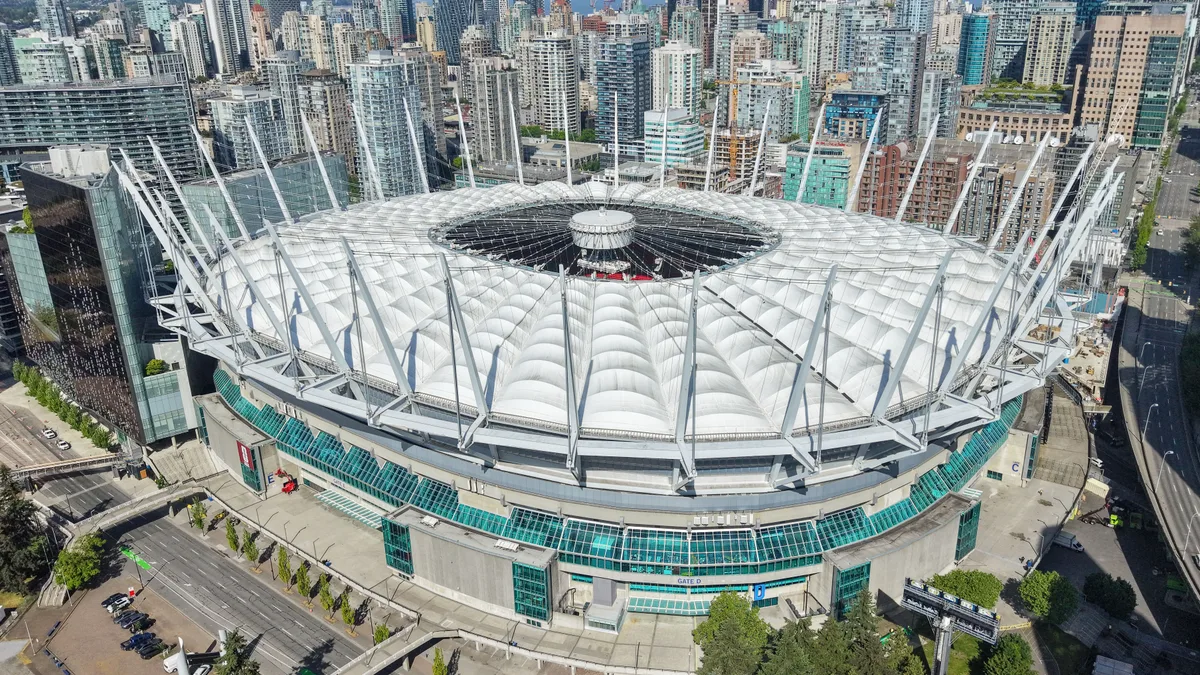
On the morning of January 5, 2007, the snow on top of BC Place started to feel heavier than usual. A tear formed in the Teflon-coated fabric near Gate G. Stadium operators saw what was about to happen and made a call most architects would never want to make on their own building. They deflated the roof. On purpose.
Air gushed out of the membrane. Snow and rainwater poured down into the empty seats. The 1983 marshmallow dome that had defined the Vancouver skyline for 24 years was over.
Nineteen years later, Vancouver is hosting seven FIFA World Cup matches at BC Place. That’s more than any other Canadian venue. The straight line from that collapsed roof in 2007 to the World Cup schedule in 2026 runs through a $514 million renovation that nobody in 2007 would have predicted. Without the collapse, no retrofit. Without the retrofit, no FIFA. Causation isn’t usually that clean.
7 matches: BC Place hosts the most World Cup 2026 matches of any Canadian venue. Five group-stage games, one Round of 32, one Round of 16.
What the 1983 marshmallow was, and why it was always going to fail
BC Place opened on June 19, 1983, as the first covered stadium in Canada and one of the first air-supported domes in the world. The roof was a Teflon fiberglass membrane, held up by air pressure pumped continuously by industrial fans. Stand outside in the wrong wind and you could hear them.
From the outside it looked like an enormous bag of marshmallow. Most Vancouverites at the time thought it was hideous. The Globe and Mail called it a giant blister. The original construction cost was $126.1 million, which is about $356 million in 2025 dollars. For 1983, that was a serious commitment to a technology that had only been proven at a handful of stadiums worldwide.
Air-supported roofs have a fundamental design problem: they require continuous, perfectly maintained pressure. Lose pressure for any reason (a tear, a power failure, a single weak panel) and the whole thing comes down. Snow load makes it worse. Wind makes it worse. Time makes it worse. The membrane materials degrade. The mechanisms wear out.
By the mid-2000s, engineers were quietly warning that BC Place’s roof was past its design life. The Province of British Columbia was studying replacement options. Nothing was moving fast enough.
Then it snowed.
January 5, 2007: the collapse and the controlled deflation
The morning of January 5 brought heavier snowfall than usual to downtown Vancouver. Combine that with what investigators later called an accidental rapid pressurization event, light wind gusts, and previously undetected damage to one of the panels, and the membrane started to give. A tear opened near Gate G on the south side.
Stadium operators had two options. Let the roof fail on its own schedule (with unpredictable consequences for whatever fabric was still intact, plus the structural ring beam). Or deflate it intentionally, in a controlled way, sacrificing the rest of the membrane to save the supporting infrastructure.
They went with the controlled deflation.
The roof came down. Snow and rain poured into the bowl. Crews spent the following weeks pumping the venue out. By February, BC Place was unusable for major events. The province had been planning incremental upgrades and now had to choose between a similar replacement (more Teflon membrane, same air-supported design, same long-term risk) or a fundamental redesign.
Within months the choice was made. Build a new roof. Make it retractable. Use cables, not air pressure.
$514 million: total final cost of the BC Place revitalization, announced August 2012. The figure covers both the 2010 Olympics interior upgrades and the new cable-supported retractable roof.
The $514 million revitalization, in two phases
The renovation wasn’t a single project. The provincial government split it into two phases for budget and scheduling reasons.
Phase 1 cost about $65 million and ran through October 2009, finishing in time for the 2010 Vancouver Winter Olympics. The work covered seating, washrooms, concessions, luxury suites, and structural reinforcement of the ring beam at the top of the bowl. None of it was visible from the outside. All of it was prerequisite work for what came next.
Phase 2 started in May 2010, immediately after the Olympics ended. This was the big one. The old air-supported roof came off in panels. Steel cables, anchored to the reinforced perimeter ring, started going up. A new Polytan artificial turf replaced the playing surface for $1.2 million. The second-largest center-hung high-definition scoreboard in North America (after the one at AT&T Stadium) was installed.
The retractable roof design itself came from Germany. The first cable-supported retractable roof was at Commerzbank-Arena in Frankfurt, completed in 2005. BC Place’s version, finished in 2011, scaled the concept up. When it was completed, it was billed as the largest cable-supported retractable roof of its kind in the world.
The total final cost ran to $514 million by the time the government announced final numbers in August 2012. That’s about five times the early budget estimates, which the Liberals later argued were never official.
Both an engineering achievement and a public-finance saga. Vancouverites get to argue about which is the more enduring legacy.
How the roof actually works
The retractable roof at BC Place is one of the more interesting mechanical structures in North American sports. Worth a closer look at what’s actually up there.
The opening measures 100 by 85 meters (109 by 93 yards). That’s not a coincidence. The opening was sized to exactly match the dimensions of the playing surface below, so when the roof retracts the entire field sees open sky. No shadow line cutting across the pitch. No acoustic dead zone where the membrane still hangs.
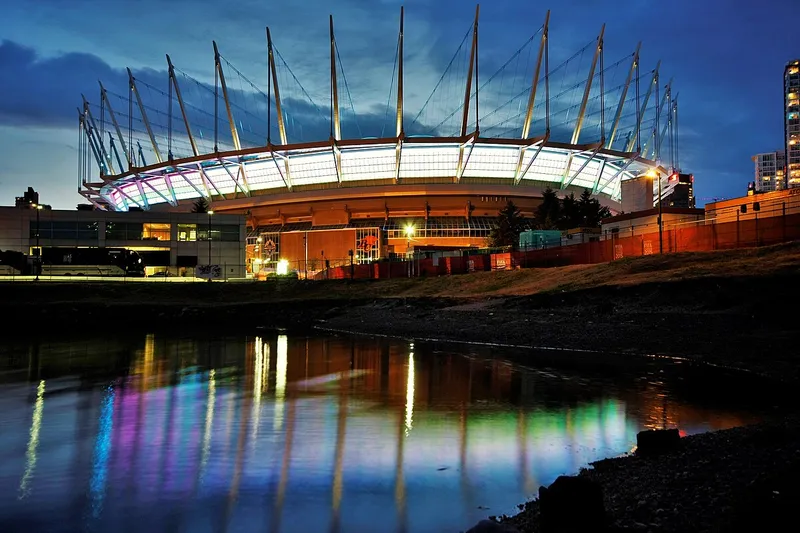
The supporting structure uses 22 miles (35 kilometers) of 5.25-inch-diameter steel cables, woven into a web anchored to a central node above the field. Thirty-six tensioned cables drive the actual opening and closing motion, pulled by electric winches mounted around the perimeter.
The full open-or-close cycle takes about 20 minutes. There’s a practical limitation: the roof can’t operate in rain or high winds. So during a Pacific Northwest summer thunderstorm, the roof stays in whatever configuration it was in when the weather rolled through. Stadium operators close it before known storm windows, not during them.
For FIFA matches specifically, the roof gives Vancouver an operational advantage that BMO Field in Toronto doesn’t have. Pacific Northwest summer weather can produce afternoon thunderstorms with lightning, which would force delays at an open-air venue. BC Place can simply close the roof and play through anything short of structural risk. That weather-proofing matters in a tournament where broadcast schedules are unforgiving.
22 miles (35 km) of steel cable hold up the BC Place retractable roof. The opening is exactly the dimensions of the playing field below: 100 by 85 meters.
Why FIFA picked BC Place over the alternatives
FIFA’s decision to assign seven matches to BC Place (the most of any Canadian venue) wasn’t about size. BC Place is the smallest North American FIFA host except for BMO Field. It came down to readiness.
Three things made it easy for FIFA:
The 2015 Women’s World Cup. BC Place hosted the 2015 Women’s World Cup Final on July 5, 2015 (USA 5-2 Japan, attendance 53,341). That tournament gave the stadium a track record with FIFA tournament operations. The broadcast infrastructure, accessibility systems, and security choreography were already battle-tested. FIFA didn’t have to imagine BC Place hosting; they could check the post-tournament reports.
The Whitecaps’ MLS history. Vancouver Whitecaps FC have played their home matches at BC Place since 2011 (their first season in MLS after promotion). Major League Soccer requires FIFA-standard pitches, so BC Place has been running games on the right pitch dimensions for fifteen years. The Whitecaps’ regular-season operations doubled as a long-running FIFA-readiness rehearsal.
The roof. Most North American summer venues are open-air. BC Place’s retractable roof means Vancouver isn’t trading risk for atmosphere; FIFA can schedule matches confidently knowing weather won’t intervene.
Combined, those three factors made BC Place one of the most operationally proven world cup 2026 stadiums in the host portfolio. The 54,500-seat capacity is below the 80,000-tier American venues but above the FIFA-mandated 40,000 minimum, with room to spare.
The 7-match schedule
The matches assigned to BC Place cover Groups B, D, and G, plus two knockout-round games. Here’s the slate:
| Date | Time | Match | Stage |
|---|---|---|---|
| June 13 | 22:00 PDT | Australia vs Turkey | Group D |
| June 18 | 18:00 PDT | Canada vs Qatar | Group B |
| June 21 | 21:00 PDT | New Zealand vs Egypt | Group G |
| June 24 | 15:00 PDT | Switzerland vs Canada | Group B |
| June 26 | 23:00 PDT | New Zealand vs Belgium | Group G |
| July 2 | 17:00 PDT | Group B winner vs 3rd Place | Round of 32 |
| July 7 | 20:00 PDT | Round of 16 qualifier | Round of 16 |
The two Canada matches are obviously the headline draws. Switzerland on June 24 will be the loudest match in the building’s history. Vancouver Whitecaps fans, plus Canadian national team supporters from the broader province, plus whatever neutral fans the country attracts during a home World Cup. If you’re going to be inside BC Place for one match, that’s the one.
The two New Zealand fixtures (against Egypt and Belgium) probably got assigned to Vancouver for geographic reasons. Vancouver International Airport handles direct flights from Auckland, Brussels, and Cairo without complicated transit. FIFA tends to assign matches to cities that minimize team-travel logistics, and Vancouver is the easiest North American host for those specific federations.
The Round of 16 fixture on July 7 is the most prestigious assignment. One of eight Round of 16 matches in the entire tournament, and the only one in Canada.
How BC Place compares to BMO Field
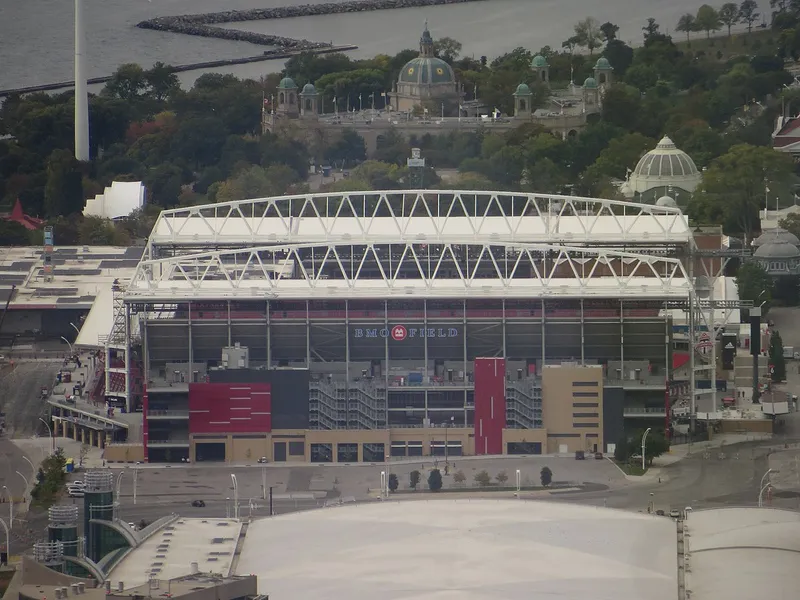
The other Canadian host is BMO Field in Toronto, which gets six matches. Both venues had to work to host the World Cup, but the work happened on different schedules.
BC Place was already FIFA-compliant for international matches before WC2026 hosting was announced. The 2011 retrofit included accessibility upgrades, broadcast-quality lighting, and the retractable roof. The 2015 Women’s World Cup tested it all in tournament conditions. By the time WC2026 site selection happened, BC Place needed standard FIFA tournament-prep work and nothing structural.
BMO Field was a different situation. Its base configuration of 30,000 seats falls below the FIFA-mandated 40,000+ minimum for World Cup matches. The venue is undergoing temporary expansion to 45,000 with modular tribunes at the south end. Once the tournament ends, the temporary seating gets removed and BMO returns to MLS scale for Toronto FC.
| Stadium | City | WC2026 capacity | Matches | Roof | FIFA hosting history |
|---|---|---|---|---|---|
| BC Place | Vancouver | 54,000 | 7 | Retractable | 2015 Women’s World Cup Final |
| BMO Field | Toronto | 45,000 (temp expansion) | 6 | Open-air | None at FIFA tournament level |
Vancouver’s larger match count reflects that readiness gap. FIFA assigns matches based on operational complexity along with capacity. BC Place’s existing infrastructure made it the easier choice for the heavier rotation.
What seven matches means for the province
BC government projections estimate the World Cup will attract roughly 1 million additional out-of-province visitors between 2026 and 2031, with tourism spending rising by over $1 billion CAD and tourism industry output by $1.7 billion. FIFA’s own pre-tournament economic assessment suggests $1.7 billion in economic benefits for British Columbia overall, with a $980 million increase to provincial GDP and $610 million in labor income.
Roughly 18,000 jobs are projected to be generated province-wide during the preparation and tournament window.
Worth being honest about the uncertainty here. Independent economists have been clear that tournament economic impact projections are notoriously hard to verify after the fact. As one expert put it to BNN Bloomberg, it’s “nearly impossible for anybody to know” whether the projected figures will actually materialize. The tournament is also displacing other summer events and overlapping with what would already be peak tourist season in Vancouver, which makes the incremental impact harder to measure cleanly.
So the headline numbers are the official projections. The honest take is that the real economic impact will be somewhere in the same ballpark, give or take a few hundred million, and we’ll know more precisely sometime in 2028.
$1.7 billion CAD: BC government and FIFA pre-tournament economic impact estimate for British Columbia. Independent economists note the projection is hard to verify and may shift significantly after the fact.
After the tournament
BC Place’s post-tournament life looks much like its pre-tournament life. Vancouver Whitecaps return for MLS matches starting in late July 2026 (their schedule was adjusted to clear the venue for FIFA hosting). BC Lions resume CFL games in August. The Whitecaps and Lions share the field through the rest of the calendar, with concert bookings filling in around them.
The retractable roof and Polytan surface stay. The venue keeps its FIFA-preferred status for major women’s and men’s international fixtures going forward.
The 1983 air-supported dome is gone. What’s left is a 21st-century retractable-roof venue that earned its World Cup hosting role by going through one of the more expensive stadium retrofits in Canadian history. The path from a snowy morning in 2007 to seven World Cup matches in 2026 is a strange one, but it’s the path BC Place actually walked.
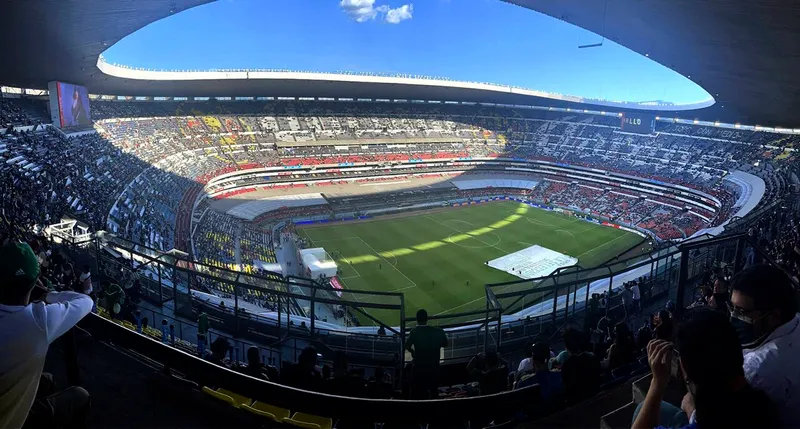
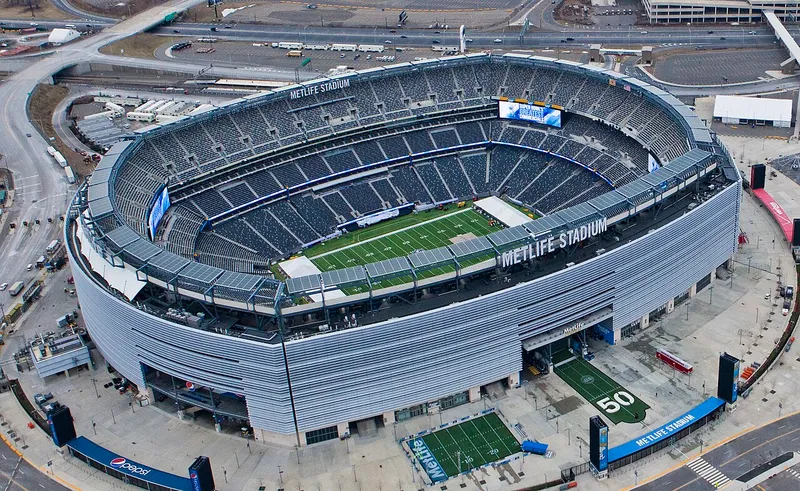
For the 16 World Cup 2026 host stadiums and the dates and matches assigned to each, see the tournament hub. For Toronto’s BMO Field, Canada’s other host venue, see the venue page. For the Estadio Azteca opener on June 11 and the MetLife Stadium final on July 19, see the venue pages.
Sources
- Wikipedia: BC Place (1983 opening, January 5 2007 roof collapse, 2010-2011 retrofit, 2015 Women’s World Cup hosting, capacity, technical specifications)
- Business in Vancouver: BC Place renovation final costs ($514M final taxpayer-funded amount, August 2012)
- The Tyee: Inside the $514-Million BC Place Boondoggle (phase breakdown, original budget vs final cost)
- BC Place official site: The Roof (technical specifications, 22 miles of cable, 36 tensioned cables, 20-minute operation, weather restrictions)
- Government of BC: FIFA World Cup 2026 economic projections (1M visitors, $1.7B output)
- BNN Bloomberg: World Cup economic impact uncertainty (caveats on projection accuracy)
- FIFA: World Cup 2026 host stadiums and schedule
- Wikipedia: 2026 FIFA World Cup (announced WC capacities, match schedules)
- MeetStadium internal data: BC Place fan guide, BMO Field fan guide, World Cup 2026 hub
- Hero image: “BC Place (Vancouver)” by Quintin Soloviev, licensed under CC BY 4.0 via Wikimedia Commons
.jpg)