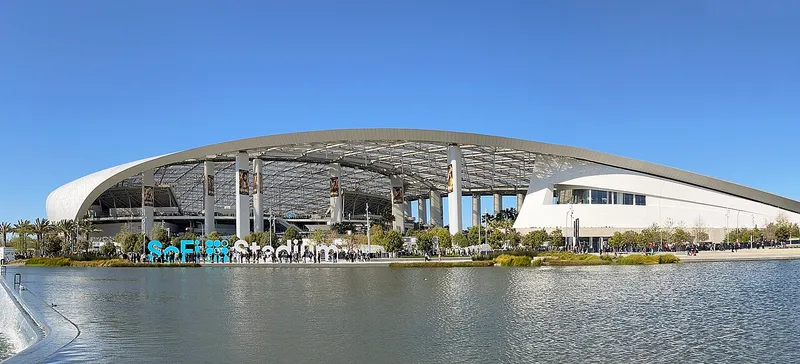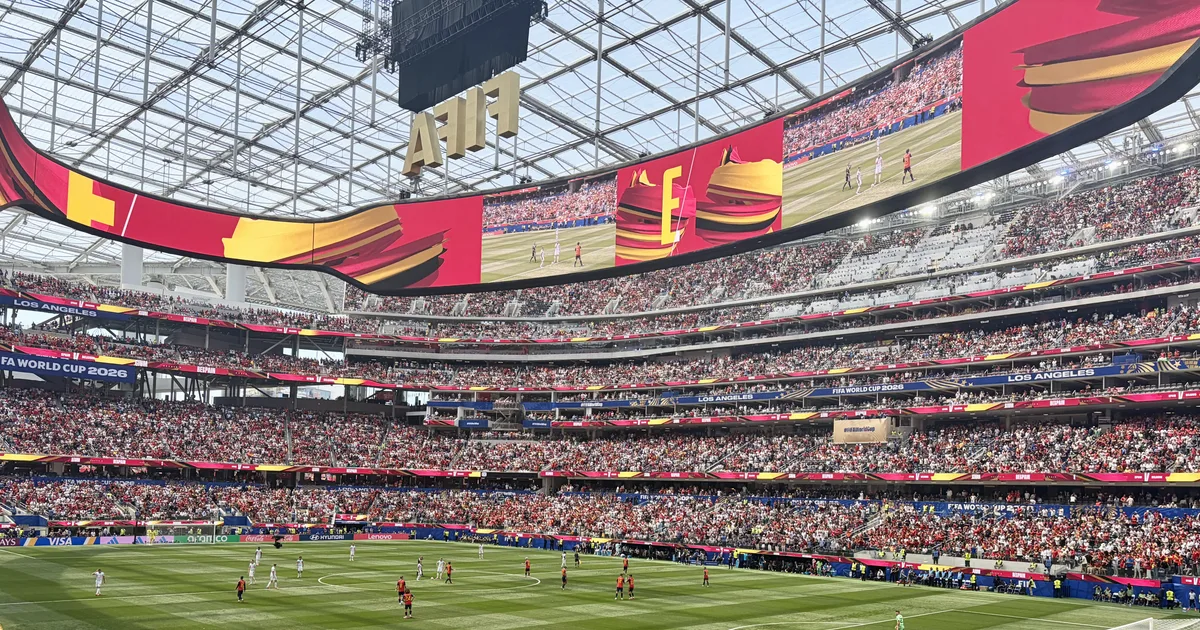
Under a 2015 agreement, Inglewood could collect no more than an inflation-adjusted $15 million a year in admissions tax from SoFi Stadium and the Hollywood Park campus around it, however many tickets the building sold. On September 1, Superior Court Judge David Reinert voided that agreement, and the city says the ceiling went with it. The stadium’s developer, Hollywood Park Land Company, says it didn’t. On November 3, Inglewood asked its voters to settle the question, and the count is under way.
$15 million The annual ceiling the 2015 agreement put on Inglewood’s admissions tax from the Hollywood Park campus, adjusted each year for inflation, and void by court order since September.
What the judge actually voided
The 2015 Development Agreement between Inglewood and Hollywood Park Land Company underpins SoFi Stadium and the 300-acre development around it. Reinert’s reasoning, as LAist reported, was about process. State law expects a development agreement to be negotiated between the parties and left open to a voter referendum. This one was created through a signature-gathering initiative, which the judge held didn’t meet that standard. California courts have voided comparable agreements since the 1990s.
Two money clauses in that agreement matter here, and they’re different things. The first is the cap: $15 million a year in admissions tax from the campus, adjusted annually for inflation, a figure NBC Los Angeles also reported. The second is a reimbursement trigger. The city wasn’t obliged to repay the developer for city-related amenities such as roadways and streetlights until the development generated $25 million in tax revenue in a given year, at which point it would start paying down that debt. Two clauses, two thresholds.
With the agreement gone, city staff say there’s no longer any limit on how much admissions tax Inglewood can collect. Hollywood Park’s lawyers say the tax burden reverts to the city’s municipal code, which they read as no more than $15 million a year. Hollywood Park also says the city owes it about $400 million, and that the development has cleared the $25 million threshold every year since 2022. Skip Miller, Inglewood’s lead counsel, says the city now owes the developer nothing. “This decision has huge repercussions for the 300-acre SoFi Stadium/Hollywood Park development,” he said in a press release. Hollywood Park’s lawyers, in court filings, put it differently: “Its announcement that the Development Agreement is void comes only after the Project was painstakingly built.”
One number nobody has: the city hasn’t estimated how much admissions tax it went without while the agreement was in effect.
What the ceiling was sitting on
Inglewood’s admissions tax is 10% of every ticket. So what the $15 million ceiling capped wasn’t a flat levy. It was the city’s share of exactly the nights when the building is at its biggest and its tickets cost the most. SoFi seats 70,240 and expands by about 30,000 for major events, which is about 100,000 people, by our calculation. It cost about $5.5 billion, the most expensive stadium ever built, and it hosted eight matches of the 2026 World Cup, including a quarterfinal.
| Figure | |
|---|---|
| What SoFi cost to build | About $5.5 billion |
| What the 2015 agreement capped the Hollywood Park campus at | $15 million a year, inflation-adjusted |
| What Inglewood’s admissions tax has averaged since SoFi opened | About $20 million a year |
| What the city says uncapping is worth | Up to about $50 million more a year |
| The city’s projected deficit | $30.8 million |
The city’s own analysis puts the uncapped take at up to about $50 million more a year. Against a projected deficit of $30.8 million, Inglewood’s largest in at least two decades, that’s roughly 1.6 times the shortfall, by our calculation. Against the $5.5 billion build cost, it’s roughly 0.9% of that figure, every year, by our calculation.
$50 million The extra admissions tax a year the city says it could collect without the cap, against a projected deficit of $30.8 million.
What happens next
First, the audit. In October, a month after the ruling, an audit sponsored by Mayor James Butts and District 4 Councilwoman Dionne Faulk passed unanimously, at $325,000 from the General Fund. The city attorney must hire an accounting firm, which must report its findings publicly within 30 days. It covers the city’s whole financial relationship with the development since 2015, what Inglewood received against what it was owed, across everything from admissions and parking to signage and permit fees. The city plans quarterly tax audits from here on.
Second, the court. A Hollywood Park spokesperson said by email that the company respectfully disagrees with the ruling, which leaves the question of what Inglewood may charge unsettled.
Third, the vote. Measure AT, on the November 3 ballot, asks whether to amend the city’s admissions tax on large venues “to establish tiered rates of 10% and 2.5% based on venue seating capacity, and to remove the existing annual cap on admissions tax revenue, resulting in increased general fund revenues,” in the official ballot text published by the Los Angeles County Registrar-Recorder. It passes on a majority of votes cast. The official record names three opponents, Lisa Collins, Edna Cabrera and 77th St. Block Club Captain Krystal Alexander, and under supporters reads “None submitted.” Polls closed at 8pm Pacific with Los Angeles County yet to publish figures in any contest, and the count is under way.
The vote fell 103 days, by our calculation, before Super Bowl LXI at SoFi on Sunday, February 14, 2027. Then, on July 14, 2028, SoFi co-hosts the LA28 opening ceremony with the Los Angeles Memorial Coliseum, the first Olympic opening staged across two stadiums at once. If the ceiling has come off, it came off immediately before the two biggest ticketed events in the building’s life.
The building itself, and what it’s hosting through 2028, is on our SoFi Stadium page.