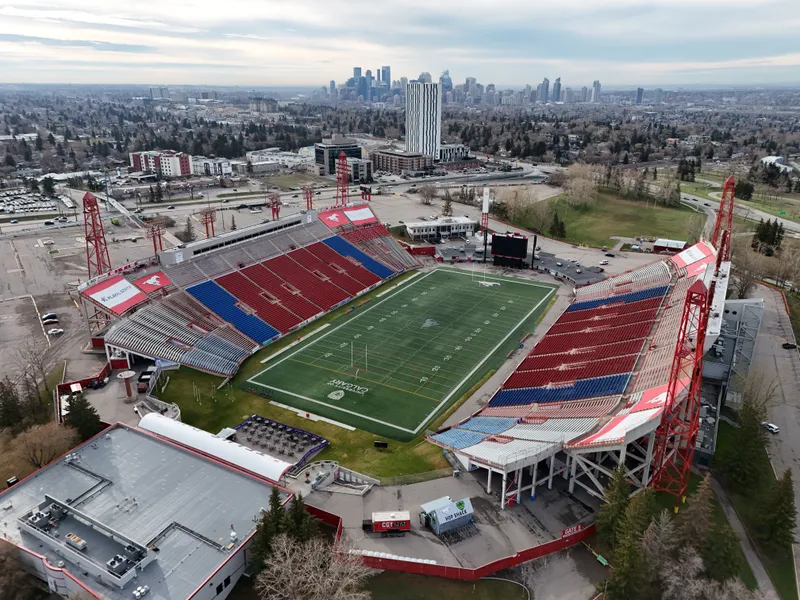
About McMahon Stadium
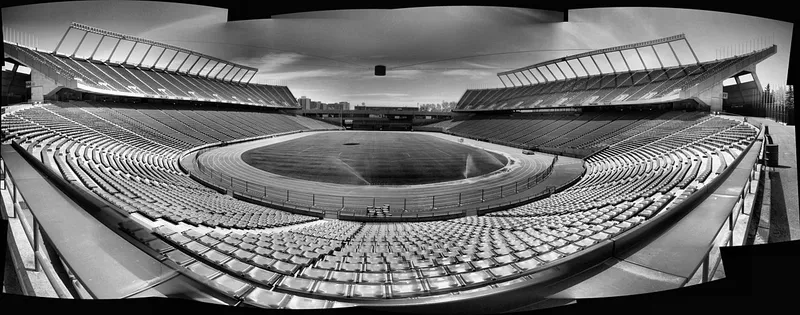
Every fall on the University of Calgary campus, the crowd gathers for something that has happened here since 1960: Calgary Stampeders football, played open to the prairie sky with the Rocky Mountain foothills on the western horizon. McMahon Stadium seats 35,650, and it was built in just 103 days, funded in part by a $300,000 donation from petroleum brothers Frank and George McMahon. It is one of the oldest and most enduring professional sports venues in Western Canada.
The stadium went up at extraordinary speed, breaking ground on April 4, 1960 and opening on August 15, ready for the CFL season. The McMahon brothers’ contribution was one of the largest private sports donations in Canadian history at the time, and their name has been on the stadium ever since. The venue has been expanded and renovated repeatedly, growing from about 22,000 seats to its current 35,650, with synthetic turf replacing the original grass in 1975 and FieldTurf arriving in 2006.
McMahon Stadium achieved international recognition as the venue for the 1988 Winter Olympics opening and closing ceremonies, the Games that gave the world Eddie the Eagle Edwards, the Jamaican bobsled team, and some of the most memorable moments in Olympic history. Temporary seating swelled the stadium to a record crowd of about 60,000 for the ceremonies, and the Olympic legacy remains visible in the surrounding infrastructure, including the nearby Canada Olympic Park (now WinSport).
The Stampeders have been one of the most successful franchises in CFL history, winning eight Grey Cup championships, most recently in 2018. McMahon Stadium is the center of Calgary’s football culture, a place where fans endure November snow games, celebrate Grey Cup victories, and tailgate on a university campus that turns into a sea of red on game days. The CTrain’s Banff Trail station sits directly across the road, giving it one of the best transit connections of any CFL venue.
Construction & Design
Calgary wanted a stadium and did not want to wait. Ground broke on April 4, 1960, and the first CFL game kicked off 103 days later, on August 15, a build so fast it still reads as improbable. The design came from Peter Rule of the Edmonton firm Rule Wynn and Rule, and the concrete went up under the Burns and Dutton Concrete and Construction Company. The total cost was about $1.05 million in 1960 dollars, roughly $10 million today. Of that, petroleum brothers Frank and George McMahon put up $300,000, one of the largest private sports gifts in Canadian history at the time, and the university carried the rest.
The original bowl seated about 22,000. It has grown in stages ever since, to 35,650 permanent seats, with temporary stands pushing capacity past 46,000 for the biggest occasions. The playing surface tells its own chronology: natural grass from 1960, AstroTurf from 1975, and FieldTurf since 2006. No roof, by design. This is open-air prairie football, snow and chinook wind included.
The stadium is owned by the University of Calgary and run by the non-profit McMahon Stadium Society, an arrangement that has kept a 1960 venue alive and in use for more than six decades. Not glamorous. Durable, and cheaply so, which is exactly why it has outlasted flashier plans.
Getting to McMahon Stadium
Public Transit
McMahon Stadium has one of the best transit connections in the CFL. The CTrain stops directly across the street.
→ Via CTrain Red Line: Banff Trail station is directly across Crowchild Trail from the stadium, a 3-minute walk. From downtown Calgary (City Hall station), the ride takes about 10 minutes. Fare is $3.60 CAD. Service runs frequently on game days.
→ Via Bus: Calgary Transit bus routes 9 and 20 serve stops near the stadium on Crowchild Trail and 24th Avenue NW.
The CTrain is the best way to reach McMahon Stadium. Parking is limited, and Crowchild Trail traffic on game days is heavy. Take the Red Line. It is fast, cheap, and drops you at the gates.
Driving + Parking
The stadium address is 1817 Crowchild Trail NW, Calgary, AB T2M 4R6. Crowchild Trail and 16th Avenue NW (Trans-Canada Highway) are the primary approaches.
→ From Downtown Calgary (~6 km): Crowchild Trail North or 14th Street NW to University Drive. About 10–15 minutes without traffic.
→ From South Calgary (~15 km): Crowchild Trail North from Glenmore Trail. About 20 minutes.
→ From Airdrie (~30 km): Highway 2 South to 16th Avenue NW (Trans-Canada) to Crowchild Trail. About 25 minutes.
Limited on-site parking is available. University of Calgary lots cost $10–$20 on game days. The surrounding Banff Trail neighborhood has free street parking, but it fills early and residents are protective of their spaces. The CTrain is strongly recommended over driving.
Rideshare
Uber operates in Calgary, along with local rideshare services. From downtown Calgary hotels, expect $12–$18 CAD. From the Beltline, $10–$15 CAD. Post-game surge is moderate. Walk to Kensington Village for a postgame drink and a quicker pickup.
From the Airport
→ Calgary International Airport (YYC): 12 kilometres northeast, about 15–20 minutes by car. Major domestic hub for WestJet and Air Canada with international service. No direct CTrain connection as of 2026 (Green Line extension planned). Rideshare runs $25–$35 CAD. Rental car is practical for visitors planning Rocky Mountain excursions to Banff.
History of McMahon Stadium
McMahon Stadium was built in 1960 for about $1.05 million (in 1960 dollars), a total that included a $300,000 donation from petroleum brothers Frank and George McMahon, with the University of Calgary carrying the balance. Designed by Peter Rule of the firm Rule Wynn and Rule and built by the Burns and Dutton Concrete and Construction Company, the stadium went up in just 103 days, an extraordinary timeline that reflected Calgary’s frontier spirit and the urgency of having a proper CFL venue ready for the season.
First Game (August 15, 1960): The Calgary Stampeders hosted the first CFL game at McMahon Stadium before a crowd of over 20,000. The venue replaced Mewata Park Stadium, which had been the Stamps’ home since the 1940s.
1988 Winter Olympics (February 1988): McMahon Stadium hosted the opening and closing ceremonies of the XV Olympic Winter Games, with the opening ceremony on February 13. Temporary seating expanded the stadium to a record crowd of about 60,000 for the ceremonies. The organizers even moved the closing ceremony here from the Saddledome, which held only half as many. The Games themselves, from Eddie the Eagle to the Jamaican bobsled team to Katarina Witt, became cultural touchstones.
Grey Cup Championships: McMahon Stadium has hosted the Grey Cup five times: 1975, 1993, 2000, 2009, and 2019. The Stampeders have won eight Grey Cup championships in their history, most recently in 2018, when Calgary defeated Ottawa 27–16. Grey Cup in Calgary means snow, cold, and tailgating on the university campus, Canadian football at its most authentic.
Renovations and Modern Era: The playing surface has changed with the eras: natural grass from 1960, AstroTurf from 1975, and FieldTurf since 2006. Renovations have added video boards and upgraded seating over the decades. The stadium also stepped outside football in February 2011, hosting the NHL Heritage Classic, an outdoor hockey game headlined by the Calgary Flames. While Calgary has periodically discussed building a new stadium or event centre, McMahon has endured, sustained by its location, its CTrain access, and a community attached to a venue that has served the city for more than 60 years.
From the 103-day build to the Olympic ceremonies to November Grey Cup snow games, McMahon Stadium is where Calgary’s football identity lives, a venue built by philanthropy, tested by weather, and sustained by a city that loves its Stampeders.
Sources & Further Reading
- McMahon Stadium Society: mcmahonstadium.com. Official operator: history, capacity, and event information.
- Calgary Stampeders: stampeders.com. Primary tenant, game-day and stadium details.
- Canadian Football League: cfl.ca. Grey Cup history and records.
- McMahon Stadium on Wikipedia: en.wikipedia.org. Construction cost, surface history, and the 1988 Olympic ceremonies.
Quick Facts
Everything you need at a glance.
Stadium specs
- Capacity
- 35,650
- Opened
- 1960
- Cost
- $1.05 million (1960 CAD; includes the McMahon brothers' $300,000 donation) (~$10 million (2025 dollars) today)
- Roof
- Open
- Surface
- FieldTurf (Synthetic)
- Tenants
- Calgary Stampeders (CFL)
Construction & location
- Groundbreaking
- April 4, 1960
- Architects
- Peter Rule (Rule Wynn and Rule)
- General contractor
- Burns and Dutton Concrete and Construction Company
- Address
- 1817 Crowchild Trail NW, Calgary, AB T2M 4R6, Canada
- GPS
- 51.0689°N, 114.1195°W
Photo Gallery
Fun Facts
McMahon Stadium was built in just 103 days in 1960, an extraordinarily fast construction timeline made possible by the McMahon brothers' donation and Calgary's can-do spirit, opening on August 15, 1960 as one of the first major sports venues in Western Canada.
McMahon Stadium hosted the opening and closing ceremonies of the 1988 Winter Olympics in Calgary, the Games that introduced Eddie the Eagle and the Jamaican bobsled team to the world, making it one of the few stadiums that has hosted both a major football league and an Olympic ceremony.
The stadium is named for Frank and George McMahon, petroleum industry brothers who donated $300,000 toward its construction in 1960, a gift that represented one of the largest private sports philanthropy contributions in Canadian history at the time.
Stadium Location
Frequently Asked Questions
- What is the seating capacity of McMahon Stadium?
- McMahon Stadium seats 35,650 for CFL games. The stadium has been expanded and renovated multiple times since its original capacity of about 22,000 in 1960. For major events, temporary seating has pushed capacity past 46,000.
- Where is McMahon Stadium located?
- McMahon Stadium is at 1817 Crowchild Trail NW in Calgary, Alberta T2M 4R6. It sits on the University of Calgary campus in northwest Calgary, about 6 kilometres from the downtown core, adjacent to the Foothills Medical Centre.
- How do I get to McMahon Stadium by public transit?
- Calgary Transit's CTrain Red Line stops at Banff Trail station, directly across Crowchild Trail from the stadium, one of the best transit connections for any CFL venue. From downtown Calgary (City Hall station), the ride takes about 10 minutes. Fare is $3.60 with a Calgary Transit pass.
- Is there parking at McMahon Stadium?
- The stadium has limited on-site parking. University of Calgary lots cost $10–$20 on game days. The Foothills Medical Centre parkade is nearby but restricted on weekdays. Street parking in the surrounding Banff Trail neighborhood is free but fills early. The CTrain is strongly recommended.
- Did McMahon Stadium host the Olympics?
- Yes. McMahon Stadium hosted the opening and closing ceremonies of the 1988 Winter Olympics in Calgary, the Games that introduced Eddie the Eagle, the Jamaican bobsled team, and some of the most memorable moments in Olympic history. Temporary seating expanded the stadium to a record crowd of about 60,000 for the ceremonies.
- Has McMahon Stadium hosted the Grey Cup?
- Yes, five times: 1975, 1993, 2000, 2009, and 2019. The Calgary Stampeders have won eight Grey Cup championships in their history, the most recent in 2018, when Calgary defeated Ottawa 27–16.
- What surface does McMahon Stadium use?
- McMahon Stadium has a FieldTurf synthetic surface, installed in 2006. The field has changed with the eras: natural grass from 1960, AstroTurf from 1975, and FieldTurf since. The open-air stadium has no roof, so prairie snow and chinook wind are part of the late-season experience.
- How far is the airport from McMahon Stadium?
- Calgary International Airport (YYC) is 12 kilometres northeast of the stadium, about 15–20 minutes by car. There is no direct CTrain connection to the airport as of 2026, though the Green Line extension is planned. Rideshare runs $25–$35 CAD. Rental car is practical for visitors also planning trips to Banff.
Last updated: 2026-07-10