About Nou Mestalla
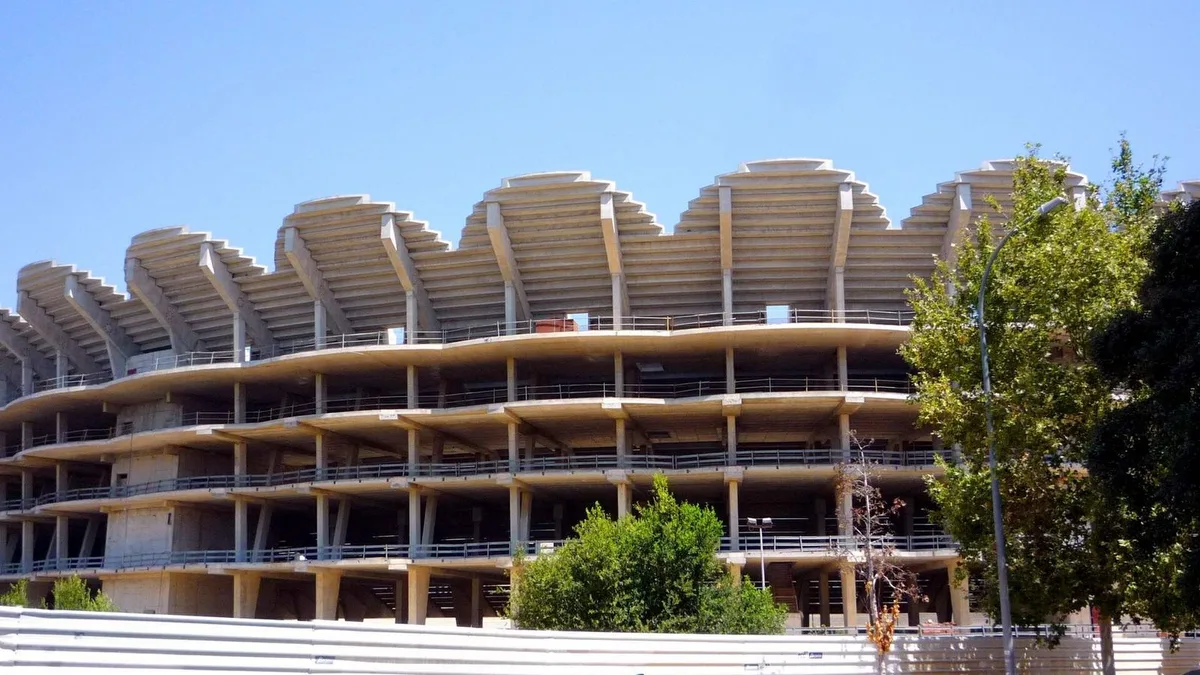
For most of two decades, the most famous thing about Nou Mestalla was that it did not exist. A gray concrete shell stood in the Benicalap district in the north of Valencia, roofless, seatless, open to the weather, the abandoned skeleton of a stadium that broke ground in 2007 and then simply stopped. Locals called it the ghost, or worse. It became a landmark for all the wrong reasons, a monument to a football club that ran out of money.
That is the ground this page is really about, because as of 2026 the finished stadium is still a plan rather than a place. The published figure for the resumed project is 70,044 seats, which would make Nou Mestalla one of the largest stadiums in Spain and roughly 20,000 bigger than the old Mestalla it is meant to replace. Valencia CF, the club it belongs to, still plays across the city at that older ground, opened in 1923, and will keep doing so until the new one is ready.
There is a reason the work restarted when it did. Valencia broke ground in August 2007, halted in February 2009 as the financial crisis and the club’s debts bit, and left the shell untouched for almost sixteen years. Then, in January 2025, the machines came back, with a completion target of summer 2027 and a place on the list of Spanish venues for the 2030 World Cup that Spain co-hosts.
For now it is scaffolding and cranes wrapped around a fifteen-year-old frame. Everything below is the plan on paper and the work in progress, not a stadium you can yet walk into.
Getting to Nou Mestalla
The site sits in northern Valencia, well served by the city’s metro even now, though the stadium itself is closed to the public as a construction zone. Here is how arrival is shaping up.
Public Transit
Valencia’s Metrovalencia network reaches the northern districts directly, which is a rare luxury for a stadium still being built.
→ Nearest station: Beniferri, on Metro Lines 1 and 2, is a short walk from the site. It is a straightforward ride out from the center with no transfer on Line 1.
→ From the airport in one hop: Line 1 links Valencia Airport to Beniferri without changing trains, a useful quirk of the network’s layout.
Driving + Parking
The northern location keeps the ground close to Valencia’s ring roads, away from the tight streets around the old Mestalla downtown.
→ From central Valencia: North on the main avenues to Benicalap, roughly 15 minutes clear of traffic.
→ From out of town: The V-21 and the city’s northern ring roads feed the district. Parking provision for the finished stadium forms part of the wider Benicalap plan and is not public yet.
Rideshare
Ride-hailing apps such as Uber, Cabify and Bolt all operate in Valencia alongside the regular white taxis, and a car up to Benicalap from the center is quick and cheap. For a match at the old Mestalla, and eventually the new one, it is the simplest door-to-door option, especially on the way back when the metro fills up.
From the Airport
→ Valencia Airport (VLC): The city’s airport at Manises lies about 9 kilometres west, some 20 minutes by road. Metro Lines 3 and 5 connect it to the city, and Line 1 reaches Beniferri near the site.
→ Alicante (ALC): The larger southern airport is about 170 kilometres away, an option for international arrivals, roughly 90 minutes by road or rail into Valencia.
Watching Valencia While the Nou Mestalla Waits
There is no matchday to describe at Nou Mestalla yet. No seats, no chants, no worn concourses, because the bowl is an empty frame. What there is, instead, is one of the most vivid backstories in European football and a ground across town where the real thing still happens every other week.
The shell itself became part of Valencia’s landscape. For close to sixteen years it loomed over Benicalap, a skeleton of raw concrete with weeds in the stands and graffiti at the base, photographed by groundhoppers and urban explorers as a curiosity rather than a stadium. That long abandonment, the stops and the restarts and the broken promises of an opening date, is the story no capacity figure can flatten. It is the thing Valencia fans have lived with.
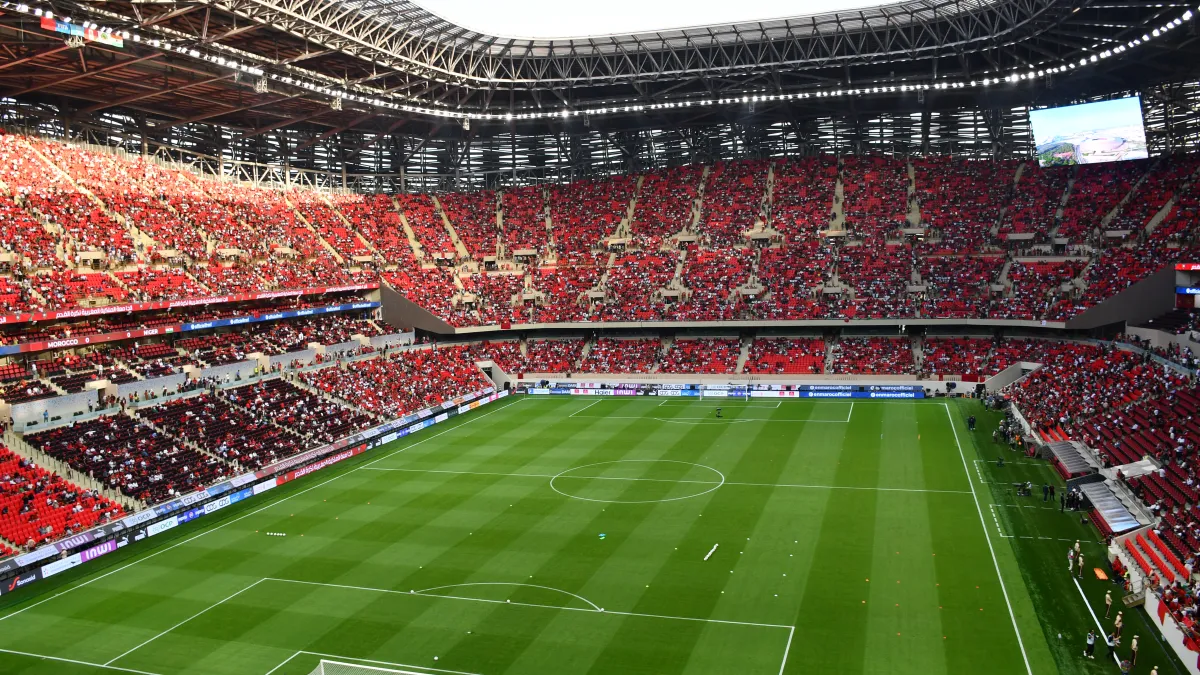
Meanwhile the football stays at the old Mestalla, and that is where a visitor should go. Opened in 1923, it is one of the steepest grounds in Europe, its upper tier pitched at around 35 degrees, near the limit the game allows, so that the back rows feel as if they are hanging over the pitch. Regulars and traveling fans describe the same two things: how close the stands sit to the grass, and how loud the home support gets on a European night, an intensity often set alongside the Bernabéu and Camp Nou. Away supporters go in the northeast corner and tend to grumble about the queues and thin facilities, the price of an old ground that has never been modernized. That steep, close, vocal character is exactly what the club hopes to carry north to the new stadium. Whether a 70,000-seat bowl can bottle it is the open question hanging over the whole project.
Construction & Design
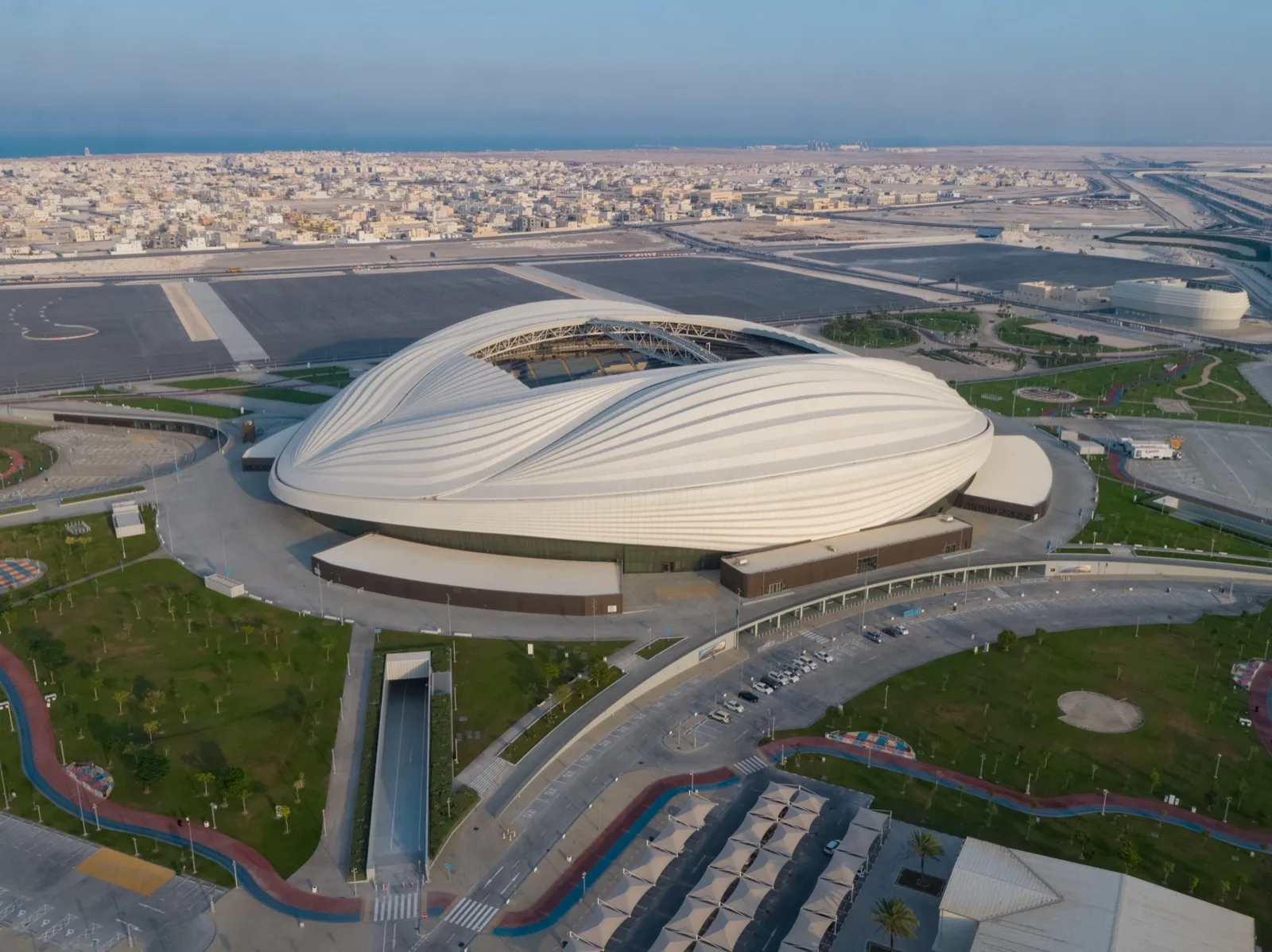
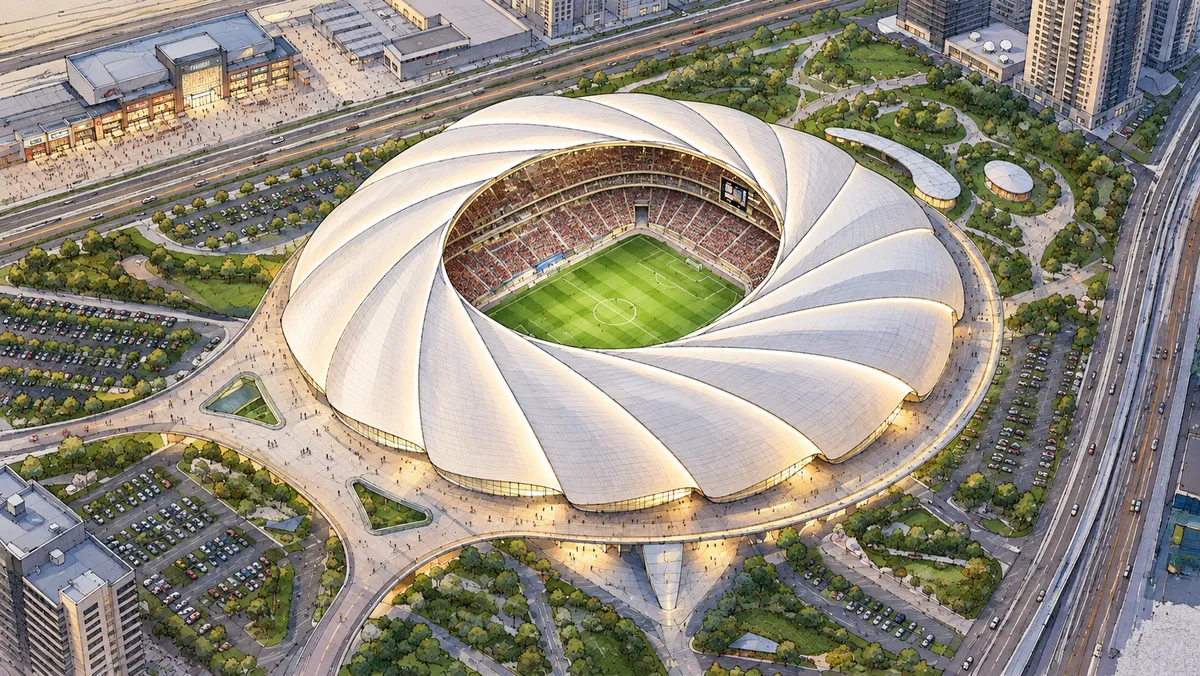
The design story runs on two clocks. The original vision came from Reid Fenwick Asociados working with Arup Sport as engineers, a futuristic exterior clad in aluminum wrapped over an interior lined in wood, drawn up in the mid-2000s when Valencia were flush and ambitious. That is the concept the concrete you see today was poured to hold. The resumed project keeps the bones but is being carried forward by Fenwick Iribarren Architects, the practice behind three of Qatar’s 2022 World Cup grounds, with the Spanish firm FCC Construcción, builder of the Metropolitano and a Bernabéu renovator, as main contractor.
The engineering brief now is unusual: not to raise a stadium from nothing, but to finish one that has been weathering in the open air since 2009. Crews returned in January 2025 to a frame more than fifteen years old, and the work is as much completion and certification as fresh building. The plan calls for 70,044 seats, more than 6,500 of them hospitality places, a jump from the leaner redesigns that had cut the target as low as the mid-40,000s while money was short. A pitch of the standard 105 by 68 metres will sit at the base of the bowl.
The money is the part that finally moved. In 2025 Valencia closed a financing package of about €322 million, a €237 million note with a 28-year maturity plus an €85 million five-year loan, to be repaid from selling the old Mestalla site once the club has left it. That figure sits above the original €250 to €300 million estimate, which is what almost two decades of delay costs. Completion is targeted for the summer of 2027. That date matters most, because it is the one Valencia has broken before, and the one the 2030 World Cup now depends on.
History of Nou Mestalla
The idea was a statement of intent. In the mid-2000s Valencia, twice Spanish champions in three years and a Champions League finalist, wanted a bigger home than the cramped old Mestalla and set out to build one in Benicalap. Ground was broken on 1 August 2007, and for eighteen months the concrete rose fast.
Then it stopped. The 2008 financial crisis collided with the club’s own mounting debts, and in February 2009 construction was suspended with only the structural bowl standing. What followed was the long limbo. The shell sat exposed for years while Valencia changed hands, sold players to survive, and floated redesign after redesign, the capacity shrinking from an original target near 80,000 to 61,500 in 2013, then 54,000 in 2017, then a range as low as 43,000 in a 2021 proposal, each version a smaller ambition than the last.
The turn came under the ownership of Singaporean businessman Peter Lim, whose Meriton group had bought the club in 2014. After years of pressure from fans and the city, financing was finally secured, and on 10 January 2025 work restarted, this time at the fuller 70,044-seat scale.
Notable milestones:
- Groundbreaking (1 August 2007): Construction begins in Benicalap on a stadium first planned for around 80,000 seats.
- The halt (February 2009): Work is suspended amid the financial crisis and club debt, leaving a bare concrete shell.
- The lost years (2009 to 2024): The unfinished structure stands abandoned through multiple redesigns and ownership changes; Valencia is left off Spain’s final 2030 World Cup venue list in July 2024.
- The restart (10 January 2025): Construction resumes on the 70,044-seat plan, targeting completion in summer 2027.
- World Cup place (March 2026): With work underway and terms agreed between club and city, Nou Mestalla is added back as a 2030 World Cup venue.
The chapters that count are still unwritten. No seat has been fixed, no crowd counted, no match played in the new bowl. A stadium begun for one era of Valencia and due to open in another, its most famous days so far are the ones it spent empty. Everything until 2027, if the date holds this time, is the work of finishing what was abandoned.
Sources & Further Reading
- Wikipedia entry on Nou Mestalla: en.wikipedia.org/wiki/Nou_Mestalla. Capacity history, architects, cost, construction timeline and the 2030 World Cup status.
- Valencia CF official announcement: valenciacf.com. The club’s own account of the January 2025 restart, the 70,044 capacity and the 2027 target.
- LaLiga on the construction restart: laliga.com. Restart date, design team, contractor and hospitality figures.
- Wikipedia entry on the old Mestalla: en.wikipedia.org/wiki/Mestalla_Stadium. The 1923 ground Valencia still use, its steep stands and 1982 World Cup role.
- Football España on the 2027 move: football-espana.net. The financing package, the timeline and the club’s commitment to the project.
Quick Facts
Everything you need at a glance.
Stadium specs
- Capacity
- 70,044
- Opened
- 2027
- Cost
- About €322 million (2025 financing package); originally estimated at €250 to €300 million
- Roof
- Canopy
- Surface
- Grass
- Tenants
- Valencia CF (La Liga)
Construction & location
- Groundbreaking
- 1 August 2007
- Architects
- Reid Fenwick Asociados, Fenwick Iribarren Architects, Arup Sport
- Engineering
- Arup
- General contractor
- FCC Construcción
- Address
- Avinguda de les Corts Valencianes 17, 46015 València, Valencian Community, Spain
- GPS
- 39.4894°N, 0.3964°W
Photo Gallery
Fun Facts
The concrete skeleton of Nou Mestalla stood unfinished for almost sixteen years, from the day work stopped in February 2009 to the day it restarted in January 2025.
At a planned 70,044 seats the new ground would be among the largest football stadiums in Spain, and around 20,000 bigger than the old Mestalla it replaces.
The old Mestalla, where Valencia still play, is one of the steepest stadiums in Europe, its upper tier raked to roughly 35 degrees, close to the 37-degree limit UEFA allows.
Stadium Location
Frequently Asked Questions
- Is Nou Mestalla finished?
- No. As of 2026 it is a building site. The basic concrete structure was built between August 2007 and February 2009, then abandoned for financial reasons. Work resumed in January 2025, with completion targeted for the summer of 2027 so Valencia can move in for the 2027-28 season. The 70,044-seat figure and the design described here are the current published plans, not a finished, measured building.
- Why did Nou Mestalla take so long to build?
- Valencia broke ground in 2007, but the 2008 financial crisis and the club's own heavy debts halted the project in February 2009 with only the concrete bowl standing. The half-built shell then sat exposed on the Valencia skyline for almost sixteen years, through several ownership changes and redesigns, before financing was finally secured and work restarted in January 2025.
- Where does Valencia CF play now?
- At the old Mestalla, their home since 1923, in the center of the city on Avenida de Suecia. Valencia will keep playing there until Nou Mestalla is ready, and the sale of the old Mestalla site is what pays back much of the loan financing the new stadium.
- How big will Nou Mestalla be?
- The plan for the resumed project is 70,044 seats, including more than 6,500 hospitality seats. That would make it one of the largest stadiums in Spain and roughly 20,000 seats bigger than the old Mestalla. The capacity has been revised several times over the years, from an original target near 80,000 down through 61,500 and 54,000 in earlier redesigns.
- Will Nou Mestalla host the 2030 World Cup?
- It is set to. Valencia's new stadium was left off Spain's final list of 2030 venues in July 2024 while it sat unfinished, then added back in March 2026 once construction had restarted and the city and club agreed terms. Spain co-hosts the 2030 tournament with Portugal and Morocco, and FIFA confirms exact fixtures closer to the event.
- How much is Nou Mestalla costing?
- Valencia secured a financing package of about €322 million in 2025 to complete the stadium, made up of a €237 million note with a 28-year maturity and an €85 million five-year loan, repaid using proceeds from selling the old Mestalla site. The original build was estimated at €250 to €300 million before it stalled.
- Who designed Nou Mestalla?
- The original concept came from Reid Fenwick Asociados with Arup Sport as engineers, featuring a futuristic exterior clad in aluminum over a wood-lined interior. The resumed project is led by Fenwick Iribarren Architects, the practice behind three of Qatar's 2022 World Cup stadiums, with FCC Construcción as the main contractor.
- Can I visit or tour Nou Mestalla?
- Not yet. It is an active construction site with no public access or tours. Fans wanting a Valencia matchday should head to the old Mestalla in the city center, which runs stadium tours and is where the club plays all its home games until the new ground opens.
- How do you get to the Nou Mestalla site?
- It is in the Benicalap district in northern Valencia, on Avinguda de les Corts Valencianes. The nearest Metrovalencia station is Beniferri on Lines 1 and 2, a short walk away, and the same Line 1 connects to Valencia Airport. By car the V-21 and northern ring roads serve the area.
Last updated: 2026-07-27