A hundred years ago, in a brand new stadium in Montevideo, thirteen teams played the first World Cup. Uruguay won it on home soil. In 2030, the tournament comes back to that exact stadium for its opening match, and then it does something no World Cup has ever done. It gets on a plane and crosses an ocean.
The 2030 World Cup is the strangest hosting arrangement in the tournament’s history. Six countries. Three continents. Two of them, Spain and Portugal, sharing a border, one more, Morocco, just across the strait, and three more, Uruguay, Argentina, and Paraguay, five thousand miles away in South America. It’s part celebration, part logistical puzzle, and part climate headache. And the stadiums tell the whole story.
So here’s who hosts the 2030 World Cup, which stadiums they’ll use, and why one of them might end up the biggest on the planet.
The 2030 World Cup hosts, at a glance:
- Spain, Portugal, and Morocco stage the tournament proper, across roughly 20 stadiums.
- Uruguay, Argentina, and Paraguay each host one opening “centenary” match, marking 100 years since the first World Cup in 1930.
- The Grand Stade Hassan II near Casablanca, planned at 115,000 seats, is on track to be the largest football stadium in the world.
- The final is undecided, a three-way race between Madrid’s Bernabeu, Barcelona’s Camp Nou, and Casablanca’s Hassan II, with FIFA’s decision expected around December 2026.
Six countries, three continents. The 2030 World Cup is the first ever spread across six host nations and three continents, a format no tournament had attempted before.
How the 2030 World Cup works: six countries, three continents
The 2030 World Cup is hosted mainly by Spain, Portugal, and Morocco, with three additional opening matches staged in Uruguay, Argentina, and Paraguay. FIFA appointed the hosts on December 11, 2024, at an Extraordinary Congress, awarding the tournament by acclamation to the sole Spain-Portugal-Morocco bid. The same session handed the 2034 World Cup to Saudi Arabia.
The structure is unusual. The three South American nations each host one “centenary” opening match, scheduled for the weekend of June 8 to 9, 2030, before the tournament proper unfolds across Spain, Portugal, and Morocco. It keeps the 48-team format introduced at the 2026 World Cup. There’s a live proposal from South American football’s governing body to expand the centenary edition to 64 teams, but that’s still under discussion and has not been adopted, so treat the 48-team field as the baseline.
Across the three main hosts, the bids propose around 20 stadiums: 11 in Spain, six in Morocco, and three in Portugal, plus the three South American venues. That’s roughly 23 stadiums in total. One caveat worth holding onto through this whole article: FIFA has not yet formally ratified the individual venues. The final host-stadium list is expected around December 2026, and until then, every venue below is a bid proposal, not a signed contract. With the 2026 World Cup now finished, that December decision is the next milestone on the road to 2030.
It begins in South America: the three centenary matches
The tournament opens where the World Cup itself began. In 1930, Uruguay hosted and won the first World Cup, beating Argentina 4 to 2 in the final at the Estadio Centenario in Montevideo, a stadium built specifically for that inaugural event. For 2030, three South American nations get one opening match each to mark the hundred-year milestone, and then the teams fly to Europe and Africa for the rest of the competition.
Uruguay hosts the very first match at the Estadio Centenario, the site of that 1930 final. Just as Estadio Azteca opens the 2026 World Cup, the Centenario opens 2030. It’s getting a renovation of around 160 million dollars, adding a roof over most of the stands while preserving the iconic Torre de los Homenajes, with capacity rising toward 63,000. Argentina stages its opener at River Plate’s Estadio Monumental in Buenos Aires, the country’s largest ground at roughly 85,000 and the site of the 1978 final, with a planned expansion toward 100,000. Paraguay hosts at a brand new stadium in Asuncion, the Estadio Osvaldo Dominguez Dibb, a roughly 46,000-seat build replacing Club Olimpia’s old ground and set to become the largest in the country.
100 years. The 2030 tournament marks a century since the first World Cup, held in Uruguay in 1930, which is why the opening matches return to South America.
Spain: eleven stadiums, and a list that keeps shifting
Spain carries the largest share of the tournament with 11 proposed venues, and it’s the messiest list of the three main hosts, because it keeps changing. The Spanish federation announced its original 11 in July 2024, but two cities have since dropped out: Malaga withdrew in July 2025, choosing to protect its club over the roughly 270 million euro renovation, and A Coruna pulled out in March 2026 over hosting costs. To fill the gaps, the federation formally asked FIFA to add Valencia’s long-delayed Nou Mestalla and Vigo’s Balaidos.
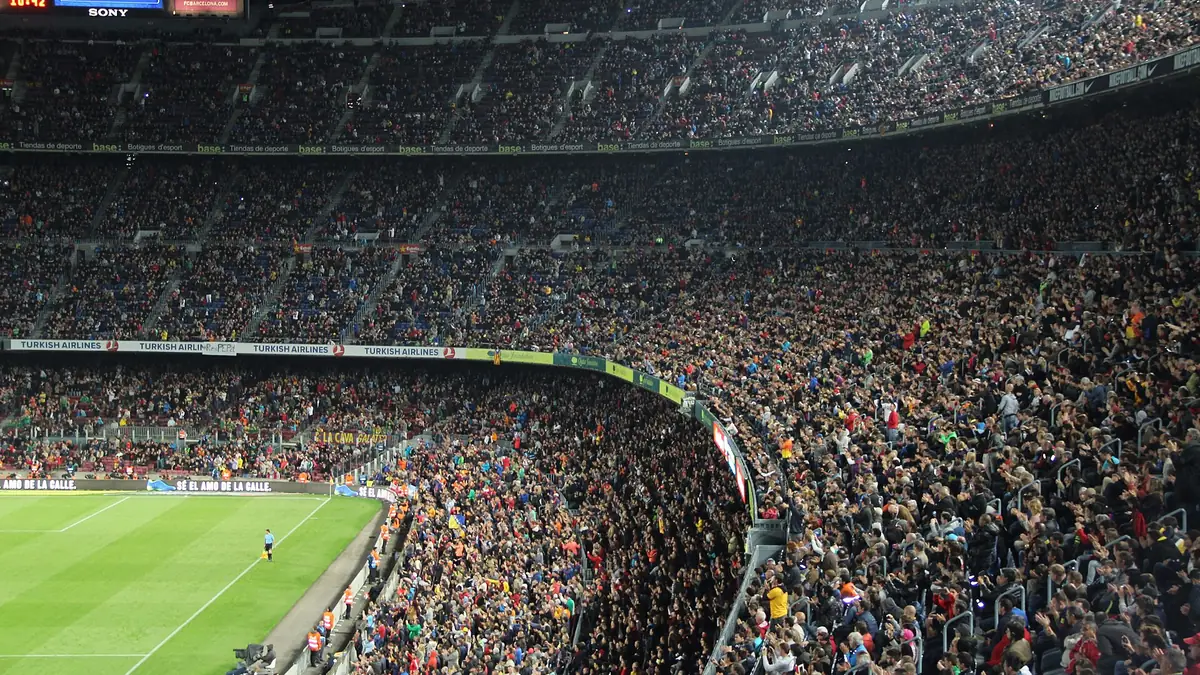
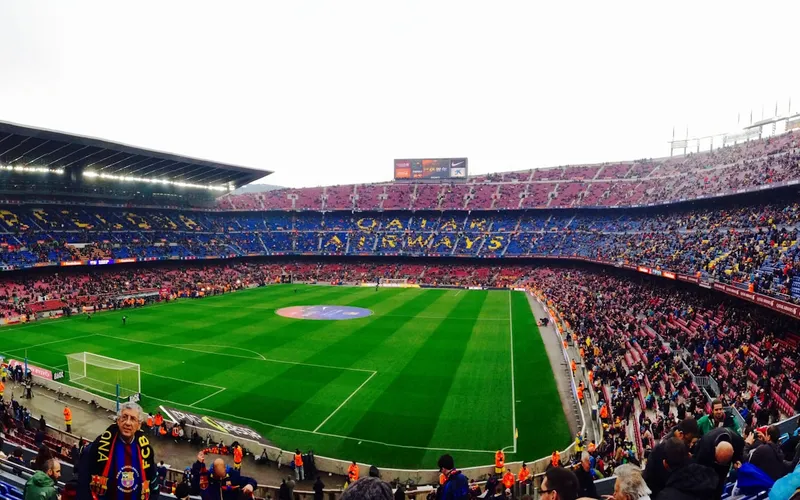
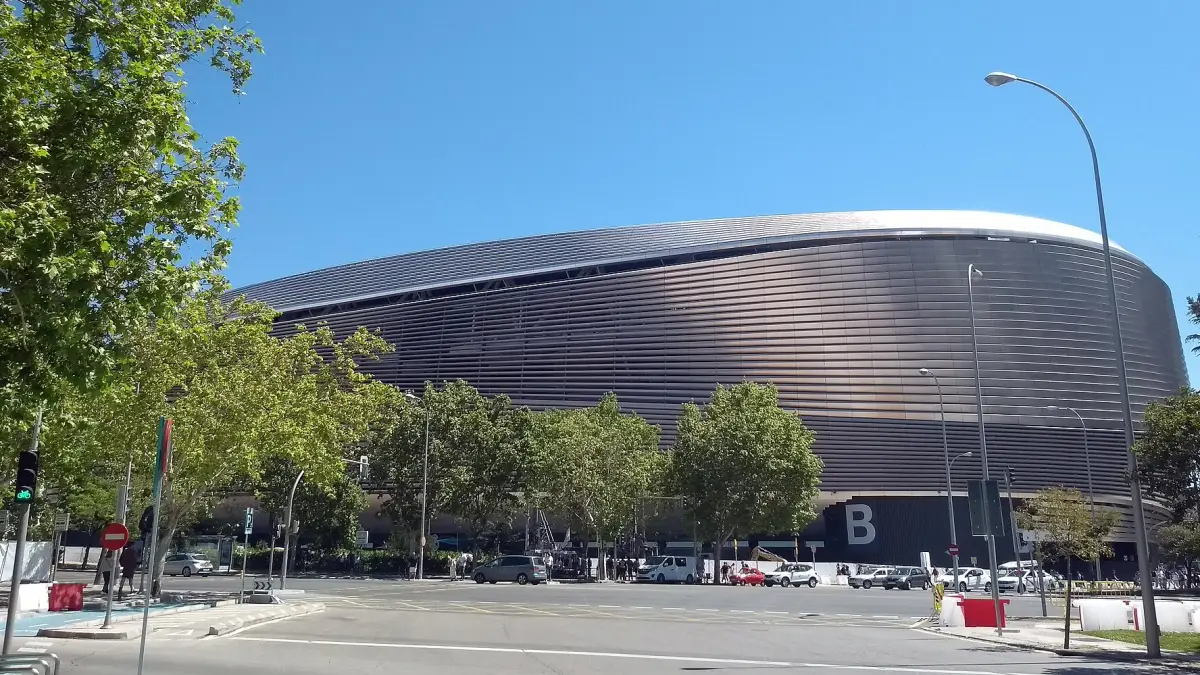
The headline venues are the ones you’d expect. The Santiago Bernabeu in Madrid, freshly rebuilt and seating around 85,000, and Spotify Camp Nou in Barcelona, targeting roughly 105,000 once its Espai Barca reconstruction finishes, are both leading candidates for the final. Behind them sit Madrid’s Metropolitano at around 70,000, Seville’s La Cartuja, Bilbao’s San Mames, San Sebastian’s Anoeta (the former Reale Arena, renamed in 2025), and Barcelona’s second ground, the RCDE Stadium. Two venues would need serious work: Las Palmas’s Gran Canaria expands to clear FIFA’s 40,000 minimum, and Zaragoza replaces its old La Romareda with a new build. Almost every expanded or rebuilt capacity here is a projection tied to construction that has to finish first.
Portugal: three Euro 2004 grounds, used as they are
Portugal is the simplest host to summarize. It brings three stadiums, all in two cities, and all of them already exist. There are no new builds and no major expansions planned. Portugal is essentially reusing the grounds it built for the 2004 European Championship, which have aged well.
Lisbon supplies two: Benfica’s Estadio da Luz, the largest at roughly 65,000, and Sporting’s Estadio Jose Alvalade at around 50,000. Porto adds FC Porto’s Estadio do Dragao, also near 50,000. All three opened in 2003 for Euro 2004, and all three are modern, tested, big-match venues that need little more than operational upgrades. It’s the low-drama corner of a very dramatic tournament. Whether any of them lands a marquee knockout fixture is a question for FIFA’s late-2026 decision.
Morocco: the boldest builder, and the planned biggest stadium on Earth
Morocco is the story of this World Cup. It’s the country’s first time hosting after a long history of near-misses, five failed bids across 1994, 1998, 2006, 2010, and 2026 before this success on the sixth attempt. And it’s building with real ambition. Morocco brings six venues, most of them heavily rebuilt or renovated for the 2025 Africa Cup of Nations, and one of them is on another scale entirely.
The Grand Stade Hassan II, rising near Casablanca, is planned at 115,000 seats. If it’s built to that figure, it becomes the largest football stadium in the world, ahead of anything in Europe or the Americas. Designed by Populous, it broke ground in 2024 and is targeted for completion around 2027 to 2028. That capacity is a projection on a construction site, so it comes with the usual caveat, but the intent is unmistakable. Around it, Morocco fields Tangier’s expanded Ibn Batouta Stadium at roughly 75,500, Rabat’s completely rebuilt Prince Moulay Abdellah at around 69,000, and renovated grounds in Fez, Agadir, and Marrakesh. For a first-time host, it’s a remarkable swing, and it doubles as the first World Cup matches ever played in North Africa.
Who gets the final? A three-way race
The single biggest open question of 2030 is where the final lands, and it’s a genuine three-way contest with no decision yet. The Santiago Bernabeu, Spotify Camp Nou, and Grand Stade Hassan II are all in the running, and reporting suggests they scored nearly identically in FIFA’s stadium evaluation.
Each has a case and a flaw. The Bernabeu is Madrid’s showpiece and Spain’s federation has publicly pushed for a Spanish final, but its World Cup configuration sits below 80,000, which is on the low side for a final. Camp Nou clears 105,000 once its rebuild is done, and Hassan II is designed for 115,000 and is widely described as built for exactly this occasion, though it has to be finished and proven first. Spanish media through 2025 and 2026 have openly treated the Moroccan stadium as a serious threat to keep the final in Spain. FIFA is expected to settle it around December 2026, so for now, the biggest match of the tournament has no confirmed home. For how 2026 sorted out its own final and semifinal venues, we broke that down separately.
December 2026. When FIFA is expected to ratify the 2030 stadium list and name the venue for the final.
Every 2030 World Cup stadium location at a glance
Here’s the full picture as it stands in mid-2026, capacities included where they’re projected for the tournament. Read the expanded and new-build numbers as targets, not finished counts, and the whole list as proposed rather than ratified.
| Country | Stadium | City | Capacity (2030 target) | Type |
|---|---|---|---|---|
| Spain | Santiago Bernabeu | Madrid | ~85,000 | Existing (renovated) |
| Spain | Spotify Camp Nou | Barcelona | ~105,000 | Renovation |
| Spain | Metropolitano | Madrid | ~70,000 | Existing |
| Spain | La Cartuja | Seville | ~70,000 | Expansion |
| Spain | San Mames | Bilbao | ~53,000 | Existing |
| Spain | RCDE Stadium | Barcelona | ~40,500 | Existing |
| Spain | Anoeta | San Sebastian | ~40,000 | Existing |
| Spain | Gran Canaria | Las Palmas | ~42,000 | Expansion |
| Spain | Nueva Romareda | Zaragoza | ~43,000 | New build |
| Spain | Nou Mestalla | Valencia | ~70,000 | New build (proposed) |
| Spain | Balaidos | Vigo | ~44,000 | Renovation (proposed) |
| Portugal | Estadio da Luz | Lisbon | ~65,000 | Existing |
| Portugal | Estadio Jose Alvalade | Lisbon | ~50,000 | Existing |
| Portugal | Estadio do Dragao | Porto | ~50,000 | Existing |
| Morocco | Grand Stade Hassan II | Casablanca | ~115,000 | New build |
| Morocco | Ibn Batouta | Tangier | ~75,500 | Renovation |
| Morocco | Prince Moulay Abdellah | Rabat | ~69,000 | Rebuild |
| Morocco | Fez Stadium | Fez | ~55,800 | Renovation |
| Morocco | Adrar | Agadir | ~46,000 | Renovation |
| Morocco | Marrakesh Stadium | Marrakesh | ~45,900 | Renovation |
| Uruguay | Estadio Centenario | Montevideo | ~63,000 | Renovation |
| Argentina | Estadio Monumental | Buenos Aires | ~100,000 | Expansion |
| Paraguay | Estadio Osvaldo Dominguez Dibb | Asuncion | ~46,000 | New build |
See the whole map. Explore all 23 venues across the six host nations on our interactive 2030 World Cup hub, with host cities, capacities, the centenary openers, and the three-way race for the final.
The catch: a World Cup that has to fly
For all the celebration, the 2030 format has drawn hard criticism, and it centers on distance. Spreading a tournament across three continents means teams and fans have to fly between South America and Europe, and environmental groups have called it a step backward. Carbon Market Watch labeled the geographic spread “unfortunate,” Fossil Free Football’s founder called the decision “outrageous but not surprising,” and sport ecologist Madeleine Orr noted it clashes directly with FIFA’s own pledge to cut emissions in half by 2030. One academic went further, calling the tournament an “ecological aberration.”
The travel math is the sticking point. A team playing its opener in Buenos Aires or Montevideo then boards a transatlantic flight to continue the competition in Madrid or Casablanca. At the last comparable case, Qatar 2022, transport was already the single largest source of the tournament’s emissions, and 2030’s continental spread is expected to be worse. It’s the tension at the heart of this World Cup: a beautiful idea, returning to Uruguay for the centenary, wrapped inside a format that guarantees a lot of jet fuel.
That’s the 2030 World Cup in full. A hundred-year homecoming in South America, a familiar European core in Spain and Portugal, a bold first-time host in Morocco chasing the biggest stadium on Earth, and a final still up for grabs. The stadiums are being poured and rebuilt right now, and the map will only get clearer when FIFA ratifies the list at the end of 2026. Then comes 2034, and a very different kind of host. But that’s another story.
Sources
- FIFA: Extraordinary Congress appoints hosts of 2030 and 2034 World Cups. The December 11, 2024 decision, awarded by acclamation, and the centenary structure.
- FIFA’s bid evaluation report for the 2030 World Cup. FIFA’s own assessment of the Morocco, Portugal and Spain bid: 17 host cities and 20 stadiums proposed, with the Bernabeu, Camp Nou and the Grand Stade Hassan II all put forward for both the opening match and the final.
- Olympics.com: 2030 World Cup stadiums list. Stadium-by-stadium capacities across Spain, Portugal, and Morocco.
- CNN: Morocco’s showpiece World Cup stadium design. The Grand Stade Hassan II, its 115,000 projected capacity, and its designers.
- Football Espana: Spain’s 11 venues and the later changes. The Malaga and A Coruna withdrawals and the Valencia and Vigo replacements.
- Inside World Football: Estadio Centenario upgrade. The Montevideo renovation for the opening match.
- Carbon Market Watch: criticism of the 2030 format. The environmental case against a three-continent tournament.
Venue details were cross-referenced across FIFA releases, official stadium and federation sources, and reputable news. Every expanded or new-build capacity (Hassan II, Camp Nou, La Cartuja, the Monumental, and others) is a pre-construction projection and is labeled as such; the venue list itself is a bid proposal awaiting FIFA ratification expected around December 2026, and where sources disagreed the figure was stated generally.
Hero photo: Santiago Bernabeu by Luis García (Zaqarbal), CC BY-SA 4.0, cropped.