There’s a record in world football that hasn’t been broken in 96 years of FIFA tournaments, and on June 11, 2026, it gets pushed further out of reach.
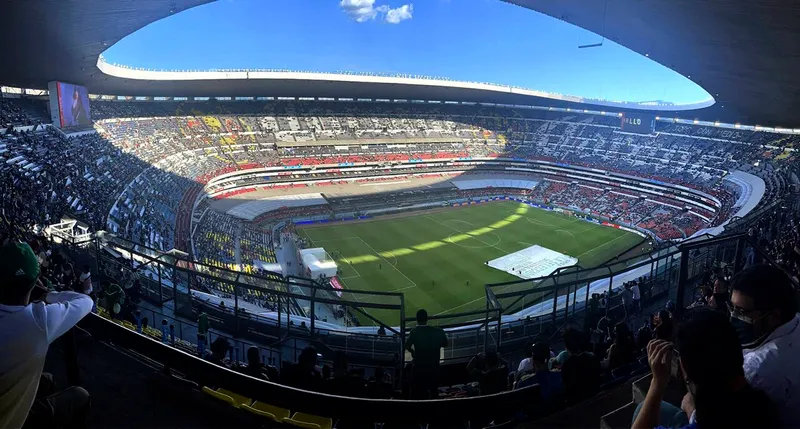
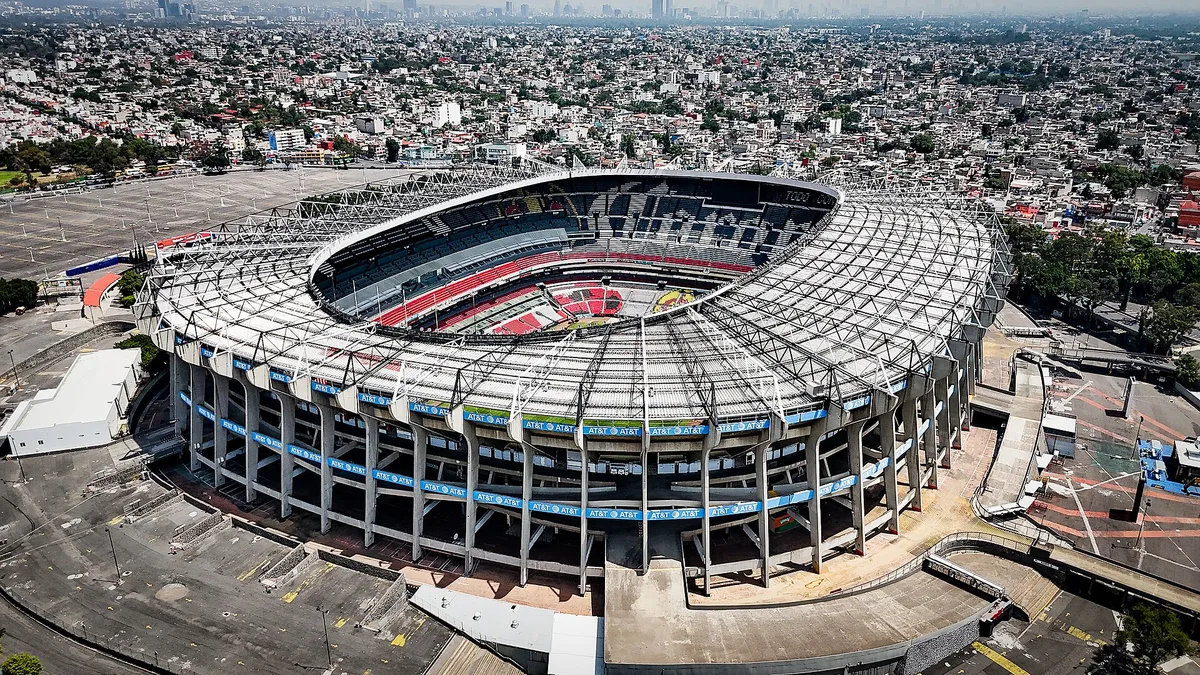
Estadio Azteca will host the World Cup opening match for the third time. Mexico vs South Africa, 3 PM local, in front of roughly 87,000 people sitting at 7,200 feet of altitude. Pelé played the opener here in 1970. Maradona did the same in 1986. Now Hugo Sánchez’s grandkids’ generation gets the third version.
No other stadium has hosted a World Cup opener twice. Azteca is about to do it for the third time.
3 World Cup openers: 1970, 1986, 2026. No other stadium in the world has hosted even two.
What makes Estadio Azteca’s record unique among world cup 2026 stadiums
Estadio Azteca is the only stadium in history confirmed to host three FIFA World Cup tournaments, and the only one to host three opening matches. That’s not the same as hosting three World Cups: France’s Stade Vélodrome and Italy’s San Siro have each hosted multiple tournaments at the venue level. But neither has hosted the actual opening kickoff three times. Among the 16 world cup 2026 stadiums, Azteca’s record is unmatched and effectively un-matchable. To equal it, another venue would need to be selected as the opener for tournaments in roughly 2042, 2058, and 2074 with no break in continuity. The three-opener record sits on its own.
The opener matters more than other group-stage matches for one specific reason: visibility. Roughly 1.5 billion people watch the opening match worldwide, the highest single-game audience until the final. FIFA awards it to host nations as a status play. Mexico has now received that honor three times.
87,523: Estadio Azteca’s official capacity, the largest in Mexico and the largest World Cup 2026 host venue in Latin America.
1970: Pelé, the first televised final in color, and a Brazil team most still call the greatest
The 1970 World Cup wasn’t supposed to be transformative. It became the tournament that defined how the world would watch football for the next half-century.
Estadio Azteca opened in 1966, four years before kickoff. Architect Pedro Ramírez Vázquez, who would later design Mexico City’s Anthropology Museum, drew it as a steep concrete bowl with sightlines optimized for football specifically, not for the multi-purpose stadium hybrids that were standard in North America at the time. The single-tier upper deck rises at an angle that puts the back row physically closer to the action than at most modern stadiums.
The 1970 opening match was Mexico vs the Soviet Union, 0-0 on May 31. The decisive Azteca games came later: a quarterfinal against Italy that Brazil won 4-1, and the final on June 21 in front of 107,412 people, when Brazil beat Italy 4-1 to win their third World Cup outright.
Pelé scored the opener of the final by jumping straight up, hanging in the thin Mexico City air, and heading the ball past Italy’s goalkeeper Enrico Albertosi. It was his last World Cup goal. Three weeks later he was 30 and had decided not to play in another. The image of Pelé in the white-and-green Brazil shirt, lifted onto Tostão’s shoulders with the trophy, came out of Azteca.
According to FIFA’s tournament archive, the 1970 tournament was also the first one televised in color, with live satellite broadcasts reaching audiences across Europe and beyond. The atmosphere of Estadio Azteca, packed and screaming at altitude, became the visual signature of what a World Cup looked like.
1986: Maradona, England, and the most famous five minutes in World Cup history
The 1986 World Cup wasn’t supposed to happen in Mexico. Colombia had won the original hosting rights and pulled out in 1982, citing the cost. FIFA gave the tournament to Mexico on short notice, a country still rebuilding from the devastating September 1985 earthquake. The stadium itself sustained only minor damage and was deemed structurally sound after inspections.
Azteca hosted the opening on May 31, 1986: Italy 1-1 Bulgaria, in front of roughly 95,000 spectators (FIFA’s official report on Mexico 1986). The legendary game came in the quarterfinal on June 22.
Argentina vs England. Four minutes between two goals from Diego Maradona that defined his career and arguably the entire decade of football. The first, in the 51st minute, was the so-called “Hand of God,” a ball Maradona punched into the net with his fist while jumping for a header against goalkeeper Peter Shilton. The Tunisian referee Ali Bin Nasser allowed the goal (FIFA’s match record for the quarter-final). Argentina led 1-0.
Four minutes later, in the 55th minute, Maradona collected the ball in midfield, dribbled past four England players plus Shilton, and scored what FIFA officially designated the “Goal of the Century” in 2002. Argentina won 2-1, then beat West Germany 3-2 in the final at Azteca on June 29 to win the tournament.
The quarterfinal happened at altitude on a baking-hot afternoon in front of an official 114,580 spectators, one of the largest figures ever recorded for an Azteca match.
114,580: official attendance for Argentina vs England on June 22, 1986, per FIFA records. One of the highest figures recorded for any Estadio Azteca match.
Why Mexico keeps getting opening matches
There’s a pattern that explains all three Azteca openers, and it’s not sentimental. FIFA picks opening venues by a combination of three factors.
The first is prestige: a host country at the center of the football world. Mexico in 1970 was a reasonable pick on its merits, but the timing also helped. Brazil’s emergence as a global football culture during that tournament made the choice look strategic in retrospect. By 1986, Mexico was a known quantity for the federation. By 2026, the country had hosted twice already and built decades of institutional knowledge around running tournaments at altitude.
The second is stadium quality: a venue that meets the FIFA technical standard and can host the surrounding ceremony, broadcast operations, and security perimeter. Azteca’s specific advantage here is that it was purpose-built for football. The bowl is steep, the sightlines work, and the stadium has now been retrofitted three times for FIFA standards. Most NFL conversions among the world cup 2026 stadiums in the United States required temporary natural-grass installations and pitch-dimension adjustments. Azteca didn’t.
The third is the opening match’s commercial value: the host federation wants the host nation playing, and FIFA wants a venue that delivers a guaranteed full house with strong domestic and international viewership. Mexico vs anyone draws roughly 1.5 billion viewers worldwide. The math works for FIFA, the host federation, and broadcast partners.
The 2026 tournament is co-hosted by the United States, Mexico, and Canada. Mexico got three host stadiums (Azteca, Estadio Akron in Guadalajara, Estadio BBVA in Monterrey). Canada got two (BMO Field in Toronto and BC Place in Vancouver). The US got the other 11 venues including the final at MetLife Stadium. The opener’s allocation to Mexico, and specifically Azteca, was the politically and logistically coherent answer.
How Azteca compares to other world cup 2026 stadiums
Among the 16 world cup 2026 stadiums, Azteca is one of only three host venues older than 50 years. The other two are SoFi-adjacent Rose Bowl history aside, the only directly comparable old-bowl venues hosting matches are also exceptions to the rule.
| Stadium | Year built | Capacity | WC2026 role | Altitude |
|---|---|---|---|---|
| Estadio Azteca (Mexico City) | 1966 | 87,523 | Opening Match + 5 total | 7,200 ft |
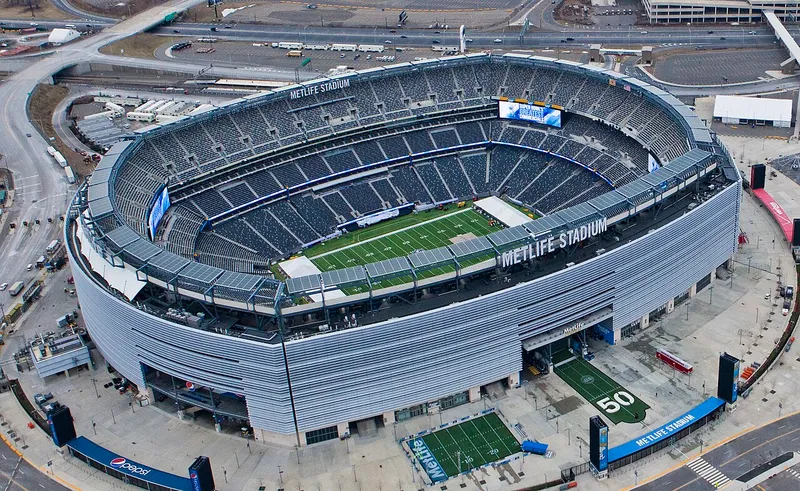
| MetLife Stadium (East Rutherford, NJ) | 2010 | 82,500 | Final + 8 total | 7 ft |
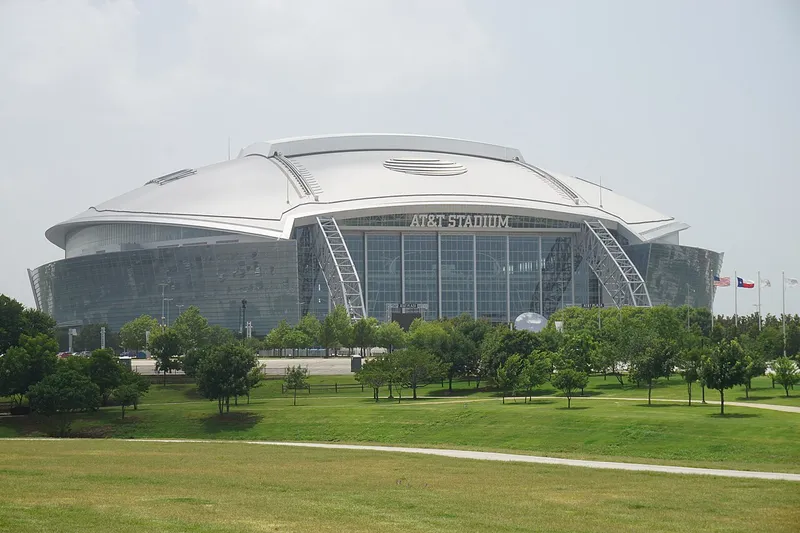
| AT&T Stadium (Arlington, TX) | 2009 | 80,000 | 9 matches | 600 ft |
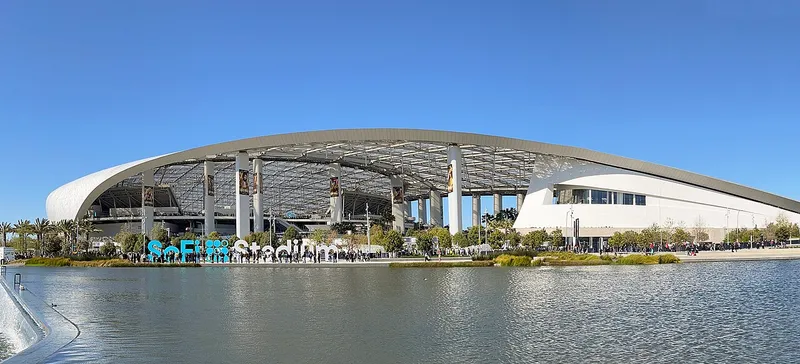
| SoFi Stadium (Inglewood, CA) | 2020 | 70,240 | 8 matches | 100 ft |
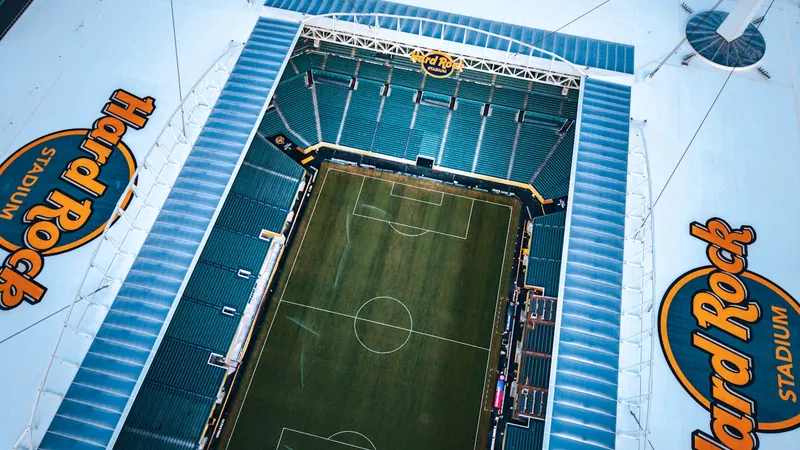
| Hard Rock Stadium (Miami Gardens, FL) | 1987 | 65,326 | Third-Place + 7 total | 10 ft |
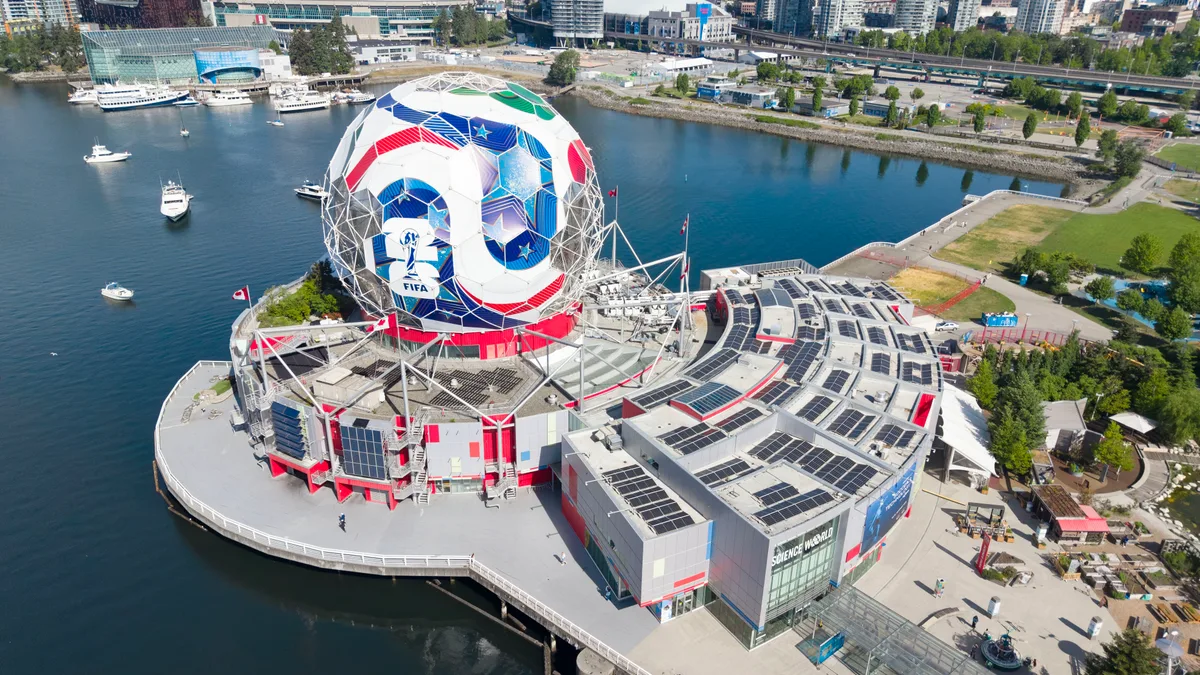
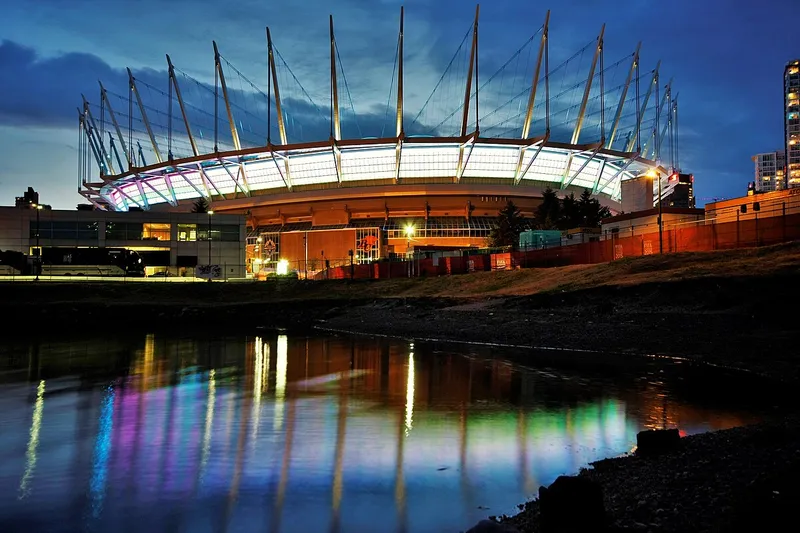
| BC Place (Vancouver, BC) | 1983 | 54,500 | 7 matches | 0 ft |
Azteca is the oldest, the highest, and the only one with a record of hosting prior World Cup openers. It’s also the only one with a confirmed history of altitude as a competitive factor, which has been documented in three independent studies of player performance at venues above 6,000 feet.
The altitude detail is unusually load-bearing in this case. At 7,200 feet, the air is roughly 24% less dense than at sea level. Visiting players experience reduced aerobic capacity for the first 7-10 days of acclimatization, and the ball flies further at the same kick velocity. Mexican teams play home matches at this altitude regularly. Most of their World Cup opponents do not.
24% less dense air: at 7,200 feet, atmospheric pressure is roughly three-quarters of sea level. Both ball flight and player aerobic capacity are measurably affected.
What’s new at Azteca for the 2026 World Cup
The stadium closed for major renovation in May 2024 and reopened on March 28, 2026, ahead of the tournament. The big changes were structural and operational, not cosmetic.
The seats came out and went back in. Capacity actually went up rather than down, from 81,070 in the 2016 configuration to the current 87,523, with new fixed seats throughout the bowl, refurbished facade, new locker rooms, and expanded accessibility. The headline upgrades the 2026 visitor will notice are a hybrid turf pitch (combining natural grass with synthetic fibers for durability), a new LED lighting system, and updated video screens.
Broadcast and press infrastructure also expanded. FIFA tournament matches require considerably more camera positions than Liga MX or Mexico national-team fixtures, so the renovation added new gantries, cable runs, and an expanded press tribune.
Pitch-side LED perimeter advertising was installed throughout the bowl. Azteca had hosted World Cups for 56 years before adopting LED perimeter boards, mainly because Mexican broadcast standards never required them. FIFA does.
The playing surface was relaid as part of the hybrid-turf installation, but the pitch dimensions didn’t change. Azteca’s pitch has measured 105 by 68 meters for decades, which sits within FIFA’s standard tolerance and matches what the international game uses everywhere else.
What June 11 will actually look like
The opening match is Mexico vs South Africa, June 11, 2026, 15:00 local time (Mexico City Time, UTC-6). It’s the first match of the entire tournament.
There’s an opening ceremony first. FIFA has not released the running order at time of writing, but past openers ran roughly 20 minutes of pre-match performance, then the parade of teams, then anthems, then a brief speech sequence (FIFA president, host federation president, head of state of the host country), then kickoff. Total elapsed time from gates-open to first whistle is usually around four hours.
Mexico City weather for June 11 historically averages 70-75°F at kickoff time with a 40% chance of late-afternoon thunderstorms common to the rainy season. The stadium is open-air, no roof, no covered seating except for the press tribune.
The Mexican team enters as group favorites in Group A alongside South Korea, the Czech Republic, and South Africa. The opening match isn’t the toughest fixture on the schedule for Mexico, but it carries the weight of a country that’s hosted the tournament three times and now needs to make a real run at the trophy. Here’s the historical context: Mexico has reached the Round of 16 in seven consecutive World Cups (1994 through 2018) but lost in that round every time, a streak Mexican fans bitterly call “el quinto partido” (the fifth game). They’ve reached the quarterfinals only twice in their history, both as host (1970 and 1986). Whether the 2026 squad breaks the round-of-16 ceiling at home is the season’s narrative thread.
For fans attending, the transit options to Estadio Azteca include Mexico City Metro Line 2 directly to the Estadio Azteca station, the Tren Ligero light rail from Tasqueña, and Metrobús Line 1 down Insurgentes Avenue. Driving to the stadium on opening day is not realistic. The surrounding road network can’t handle it, and neither can the parking.
Why no other stadium will ever match this record
Three opening matches at the same venue requires three things to align across roughly 60 years: the host country has to be selected, the country has to choose this specific stadium for the opener, and the stadium has to still exist in usable condition. The math gets harder with each cycle.
Most major stadiums don’t survive 60 years in their original form. Wembley was demolished in 2003 after 80 years; the new Wembley opened in 2007 on the same site but is technically a different venue. The original Maracanã in Rio was renovated so extensively in 2013 that the listed capacity dropped from over 200,000 (1950) to 78,838 (current), and the entire roof structure was rebuilt. The Rose Bowl in Pasadena is older than Azteca and has hosted World Cup matches (1994 final, no opener), but the United States has only hosted one World Cup, in 1994.
The next World Cup is 2030, jointly hosted by Spain, Portugal, and Morocco with single matches in Argentina, Uruguay, and Paraguay (a 100-year anniversary tribute to the 1930 tournament). The 2034 tournament is in Saudi Arabia. None of those host countries have a single venue with prior World Cup opening match history. The earliest a venue could conceivably match Azteca’s three-opener record is 2042, and only if it had hosted in 1970 or 1986 plus an unbroken sequence after.
The record is functionally unbreakable. Azteca isn’t just a host stadium for the 2026 tournament; it’s the closing chapter on a 60-year story that no other venue will replicate.
June 11, 2026, 15:00: kickoff of Mexico vs South Africa, the first match of FIFA World Cup 2026 and the third opening Azteca has hosted.
For more on how the venues in the United States compare, the final at MetLife Stadium closes the tournament on July 19. For the full list of 16 World Cup 2026 host stadiums, see the tournament hub. And if you’re attending the opener, the Estadio Azteca fan guide has the transit, parking, and surrounding-area details you’ll actually need.
Sources
- FIFA’s official report on the 1970 tournament, and the 1986 official report’s match records. FIFA’s own account of Mexico 1970, and for 1986 the 31 May opener at the Azteca, Bulgaria 1-1 Italy before 95,000 spectators, and the 22 June quarter-final, Argentina 2-1 England before 114,580, with both Maradona goals and the referee named.
- FIFA’s match record for the 1970 final. Brazil 4-1 Italy at the Estadio Azteca on 21 June 1970, attendance 107,412, read from an Internet Archive capture because FIFA has since retired the page.
- FIFA: the history of curtain-raising hosts. How host nations have fared in World Cup opening matches, including the goalless draw in Mexico City in 1970.
- FIFA: World Cup 2026 host stadiums and schedule. The 2026 venue list and the 11 June opening match at the Azteca.
Everything above is FIFA’s own record of its own tournaments. Capacity, renovation and transit details for the stadium itself come from its page on this site, linked inline. Two claims carry no citation and are flagged as such in our worksheet: Mexico’s run of Round of 16 exits from 1994 to 2018, and the exact minute of Maradona’s second goal, which FIFA’s report puts a minute earlier than the article does.