Size isn’t everything. But it sure is something.
There’s a specific feeling you get walking into a 100,000-seat stadium for the first time. It’s not awe exactly. More like disbelief. Your brain doesn’t quite accept that a space this large was built by humans, for humans, to watch other humans play a game.
But here’s the thing most “biggest stadiums” lists get wrong: they treat capacity as a simple number. It’s not. A stadium’s official capacity changes over time. Seats get added, sections get converted to premium suites, standing areas get replaced with bucket seats. The number you see on Wikipedia today might be different from the one you’d see next year.
So here’s our 2026 ranking of the largest stadiums in the world by capacity: not just the numbers, but the stories behind them.
The 18 largest stadiums in the world by capacity (2026 ranking):
- Narendra Modi Stadium: 132,000 (Ahmedabad, India)
- Rungrado May Day Stadium: 113,281 (Pyongyang, North Korea)
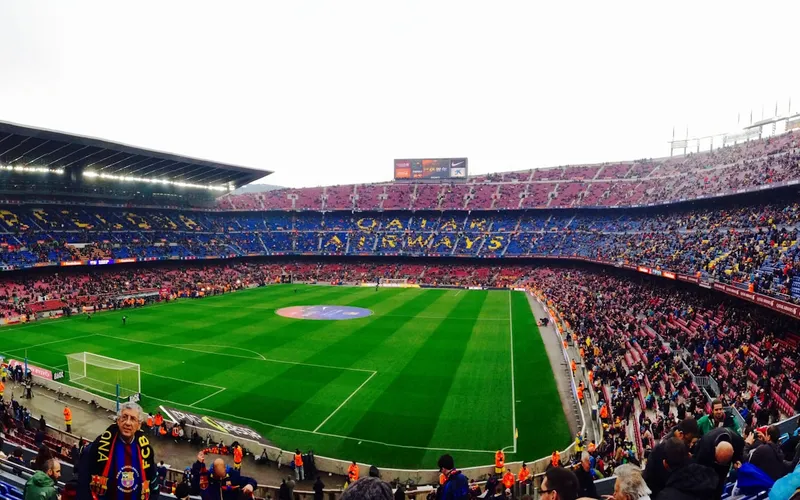
- Camp Nou: 105,000 post-expansion / 99,354 current (Barcelona, Spain). Europe’s largest after the 2026 Espai Barça expansion.
- Michigan Stadium: 107,601 (Ann Arbor, Michigan, USA)
- Beaver Stadium: 106,572 (University Park, Pennsylvania, USA)
- Ohio Stadium: 102,780 (Columbus, Ohio, USA)
- Kyle Field: 102,733 (College Station, Texas, USA)
- Tiger Stadium: 102,321 (Baton Rouge, Louisiana, USA)
- Neyland Stadium: 101,915 (Knoxville, Tennessee, USA)
- Darrell K Royal-Texas Memorial Stadium: 100,119 (Austin, Texas, USA)
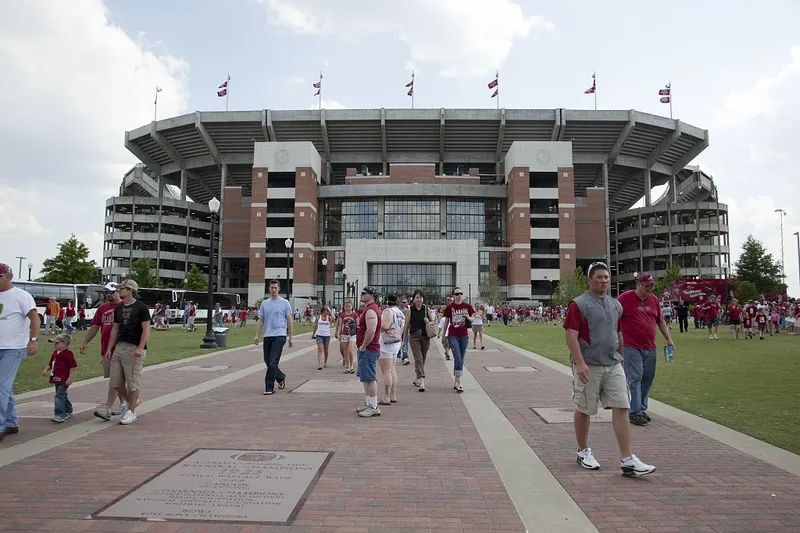
- Bryant-Denny Stadium: 100,077 (Tuscaloosa, Alabama, USA)
- Melbourne Cricket Ground: 100,024 (Melbourne, Australia)
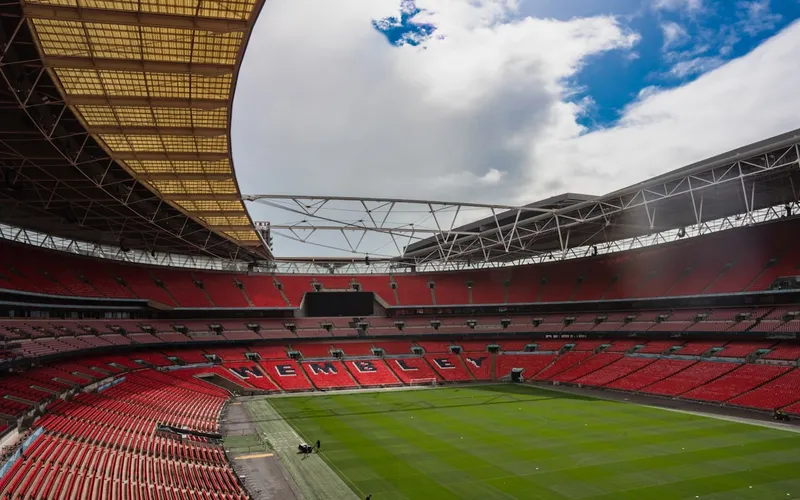
- Wembley Stadium: 90,000 (London, England)
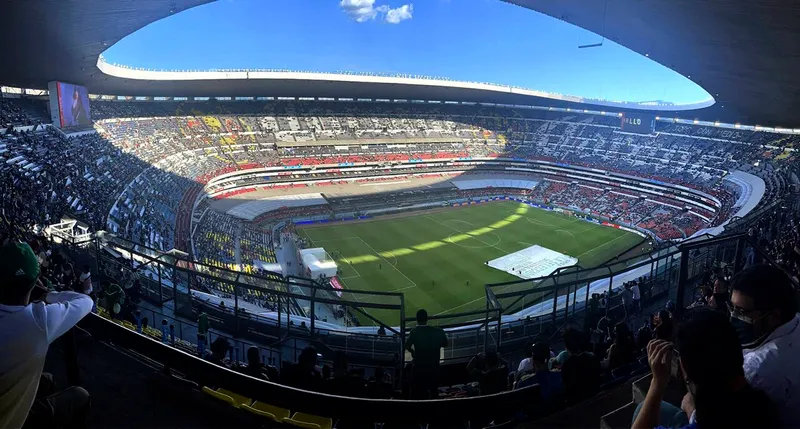
- Estadio Azteca: 87,523 (Mexico City, Mexico). Latin America’s largest, hosting the 2026 World Cup opener.
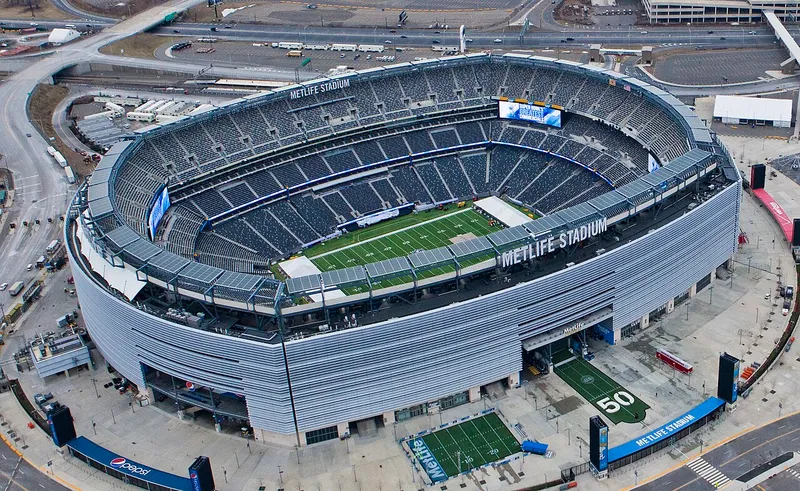
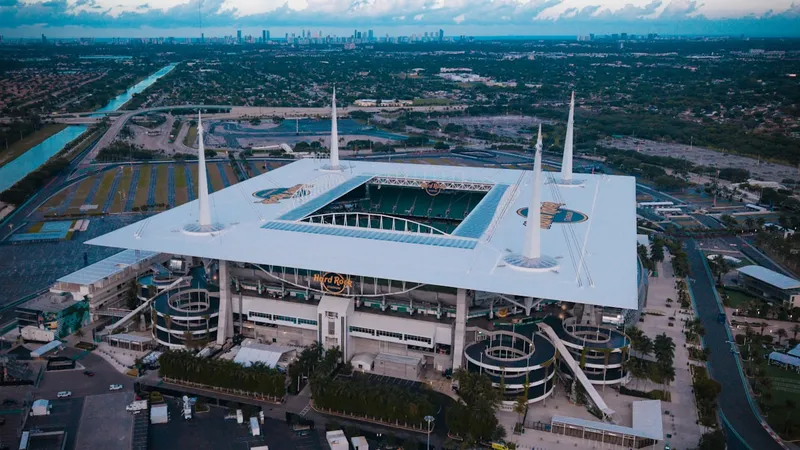
- MetLife Stadium: 82,500 (East Rutherford, New Jersey, USA). Hosting the 2026 World Cup Final.
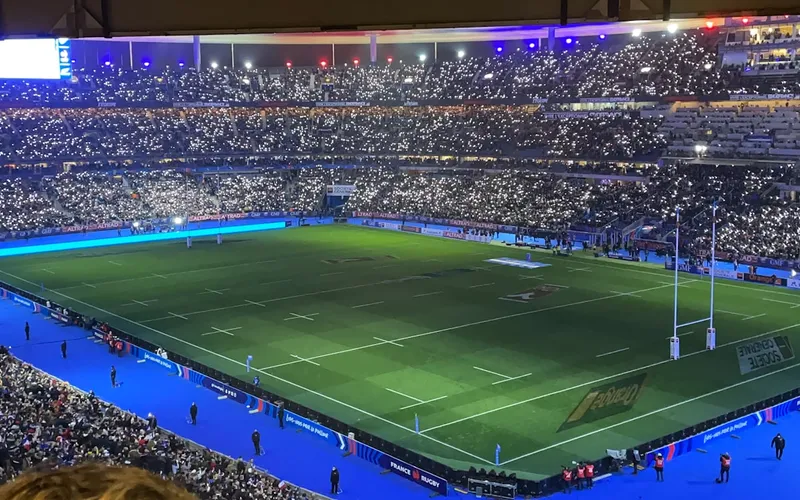
- Stade de France: 80,698 (Saint-Denis, France)
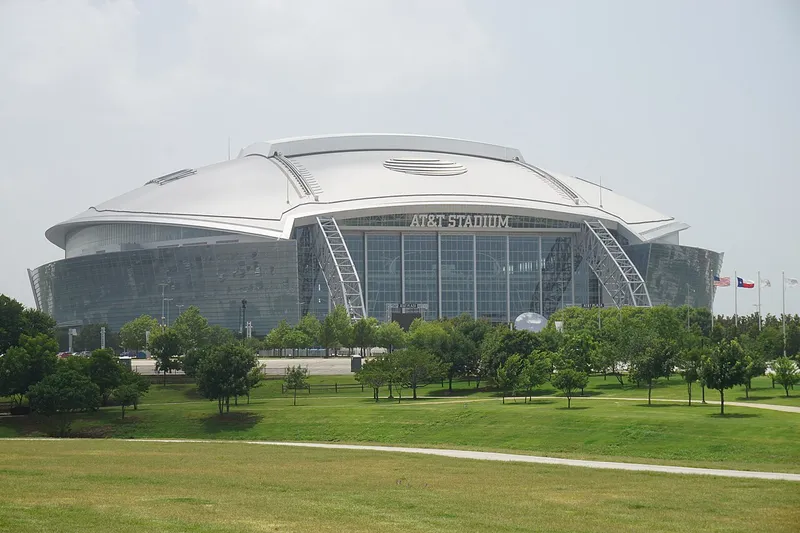
- AT&T Stadium: 80,000 (Arlington, Texas, USA). Expandable to over 100,000 for major events.
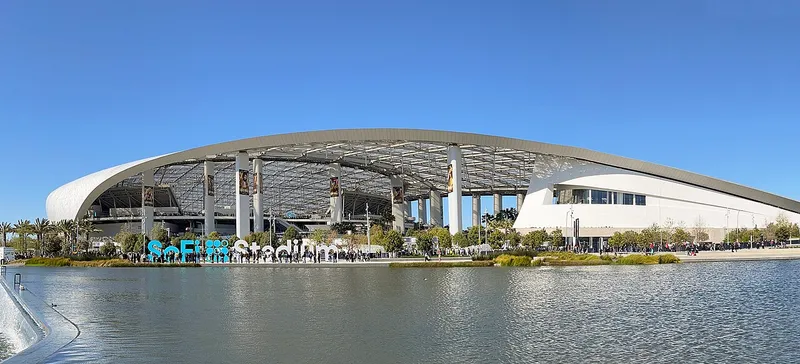
- SoFi Stadium: 70,240 (Inglewood, California, USA)
Full rankings with construction, fan culture, and 2026 context below.
1. Narendra Modi Stadium — 132,000 (Ahmedabad, India)
The world’s actual largest stadium isn’t a football venue. It’s a cricket ground.
Narendra Modi Stadium in Ahmedabad holds 132,000 spectators, which makes it not only the world’s largest cricket stadium but the world’s largest stadium of any kind. It opened in its current rebuilt form in 2020, replacing the older Sardar Patel Stadium that occupied the same site since 1982. The complete rebuild was driven by the Gujarat Cricket Association at a cost of around $114 million, and the result is a venue that genuinely changes how you think about what “big” means for a sports facility.
The architecture is striking. A modern oval bowl with two tiers all the way around, an LED-illuminated exterior, four dressing rooms that can host two simultaneous matches, and a 55-meter-wide playing field. When it’s full for an India vs Pakistan cricket match, the noise level is documented to rival anything in football.
Most Western readers underestimate this stadium because cricket coverage in North America and Europe is limited, and the stadium’s name change in 2021 (to honor India’s prime minister) generated political coverage that overshadowed the sporting story. But by capacity, Narendra Modi Stadium sits comfortably above every other stadium on Earth, about 19,000 seats clear of the next-largest venue.
132,000 seats — Narendra Modi Stadium is the largest sports venue in the world by capacity, roughly 19,000 seats above Rungrado May Day Stadium at #2.
2. Rungrado May Day Stadium — 113,281 (Pyongyang, North Korea)
The biggest stadium in the football world is one almost nobody reading this will ever visit.
Rungrado May Day Stadium in Pyongyang has held the top football-capacity spot since it opened in 1989. Its official capacity is 113,281, though some sources have questioned whether that number reflects reality. The stadium was originally built for the 13th World Festival of Youth and Students, and its scalloped roof design (16 arches meant to resemble a magnolia blossom) is genuinely striking.
Here’s what makes it strange, though. Rungrado isn’t really used as a sports venue anymore. It hosts the Mass Games, North Korea’s massive choreographed propaganda spectacle, and the occasional political rally. Satellite imagery suggests it’s gone through periods of disrepair. Football matches have been played there, but irregularly.
So yes, it’s technically the second-largest stadium in the world and the largest football venue. But it’s also arguably the least accessible and least active stadium on this entire list. Make of that what you will.
113,281 seats — Rungrado May Day Stadium in Pyongyang has held the world’s largest football-stadium spot since 1989, though its actual regular attendance remains a mystery.
3. Camp Nou — 105,000 post-expansion (Barcelona, Spain)
Here’s where it gets interesting for 2026.
Camp Nou has historically held around 99,354 seats, making it the largest stadium in Europe (our full ranking of the biggest stadiums in Europe covers the rest). The Espai Barça renovation (a massive, years-in-the-making project that’s cost north of 1.5 billion euros) is pushing that number to approximately 105,000 upon full completion, targeted for 2026.
The renovation adds a full roof for the first time (Camp Nou’s been an open bowl since 1957), modernizes every corner of the facility, and turns the entire surrounding area into a sports and entertainment district. FC Barcelona played the 2023-24 season at the Estadi Olimpic Lluis Companys while the work progressed, and phased reopening began in 2024. As of mid-2026, the venue is operating with reduced temporary capacity (~60,000-80,000 depending on phase) while construction continues around live matches.
When it’s done, Camp Nou won’t just be Europe’s largest stadium. It’ll be one of the most modern. Whether the economics of the project make sense for a club carrying Barcelona’s debt load is a separate conversation. But from a pure “wow factor” standpoint, the new Camp Nou is going to be something.
We position Camp Nou at #3 in this ranking based on its post-expansion 105,000 capacity. By current capacity (99,354), it sits at #12, below the row of US college football venues that fill the middle of this list.
99,354 to 105,000 — Camp Nou’s Espai Barca renovation adds over 5,600 seats, a full roof, and a price tag north of 1.5 billion euros, making it the largest and most expensive stadium overhaul in European football history.
4. Michigan Stadium — 107,601 (Ann Arbor, Michigan, USA)
“The Big House” earns its nickname every single Saturday in the fall.
Michigan Stadium’s capacity of 107,601 makes it the largest stadium in the Western world and the third-largest on Earth. And unlike Rungrado, this place actually fills up. Regularly. Michigan Wolverines football games routinely draw crowds that exceed the official capacity, with the all-time on-campus attendance record sitting at 115,109 (set during a 2013 game against Notre Dame).
What’s wild about Michigan Stadium is how it achieves its size. The bowl sits mostly below ground level, so from the outside, it doesn’t look nearly as massive as it is. You walk in at what feels like ground level and realize you’re standing near the top of the upper deck. It’s a clever bit of engineering from 1927 that still works beautifully.
The Big House is also a reminder that American college football operates on a scale that baffles most of the world. A university (not a professional franchise, not a national team) fills a 107,000-seat stadium eight times a year. That’s just how it works in Ann Arbor.
5. Beaver Stadium — 106,572 (University Park, Pennsylvania, USA)
Penn State’s Beaver Stadium is in the middle of its own renovation story, but even before the current project, it held 106,572 fans. That puts it in a dead heat with some of the other American college giants.
What makes Beaver Stadium distinctive is the atmosphere. “White Out” games, where the entire stadium wears white, are genuinely one of the most visually striking things in all of sports. Over 100,000 people, all in white, in a stadium surrounded by nothing but central Pennsylvania farmland. It’s surreal.
The ongoing renovation is expected to reduce capacity somewhat while adding modern amenities. That’s a trend we’ll talk about more at the end of this list.
6. Ohio Stadium — 102,780 (Columbus, Ohio, USA)
“The Horseshoe” opened in 1922, and Ohio State has been packing it ever since.
With 102,780 seats, Ohio Stadium is another college football cathedral that would rank among the largest professional venues in the world if it were used for anything other than Buckeyes games. The open end of the horseshoe shape gives it one of the most recognizable silhouettes in American sports.
Ohio State has sold out every home game since 1964. That’s six decades of 100,000+ attendance. Every. Single. Game.
7. Kyle Field — 102,733 (College Station, Texas, USA)
Texas A&M’s Kyle Field is loud. Unreasonably loud.
At 102,733, it’s the largest stadium in the SEC (Southeastern Conference) and one of the most intimidating environments in college football. The “12th Man” tradition, where the entire student section stands for the full game, creates a wall of noise that visiting teams genuinely dread.
Kyle Field got a massive renovation in 2015 that pushed its capacity past the 100,000 mark. The Aggies spent over $450 million on it, and the result is a stadium that combines old-school college atmosphere with modern infrastructure.
8. Tiger Stadium — 102,321 (Baton Rouge, Louisiana, USA)
“Death Valley” at LSU sits at 102,321, putting it eighth in the world by capacity. Tiger Stadium is known for producing some of the highest decibel readings ever recorded at a sporting event.
When LSU plays a night game (and it’s always better at night in Baton Rouge), the noise literally registers on seismographs. That’s not an exaggeration. Geologists at LSU have measured it.
9. Neyland Stadium — 101,915 (Knoxville, Tennessee, USA)
Yes, another American college stadium. I know. But the numbers don’t lie.
Neyland Stadium holds 101,915 for Tennessee Volunteers football, and its location on the banks of the Tennessee River makes it one of the most scenic major stadiums anywhere. The “Vol Navy” (fans who arrive by boat and dock along the river) is one of the best tailgating traditions in college football.
The stadium’s capacity has actually decreased from its peak. At one point, Neyland held over 104,000. The reduction came from adding wider seats and more premium areas. Again, a trend worth noting.
12 stadiums above 100,000 — Of the world’s top 12 stadiums by capacity, eight are American college football venues. The remaining four span North Korea, Spain, India, and Australia, in sports ranging from football to cricket.
10. Darrell K Royal-Texas Memorial Stadium — 100,119 (Austin, Texas, USA)
The University of Texas at Austin plays football at DKR-Texas Memorial Stadium, which holds 100,119 after the most recent expansion. Named for legendary coach Darrell K Royal, the stadium opened in 1924 and has been expanded multiple times to its current capacity.
Texas joined the SEC in 2024, which intensified rivalry games that already drew capacity crowds. The atmosphere on a fall Saturday in Austin combines college football scale with the city’s broader live-music energy. The result is one of the more distinctive game-day experiences in the sport.
The stadium underwent another expansion in the late 2010s that added premium seating in the south end zone. The headline capacity sits at 100,119, but the venue has hosted 102,000+ crowds for marquee matchups.
11. Bryant-Denny Stadium — 100,077 (Tuscaloosa, Alabama, USA)
Bryant-Denny Stadium holds 100,077 and is the home of Alabama Crimson Tide football. Named for legendary coach Paul “Bear” Bryant and former university president George H. Denny, the stadium opened in 1929 and has been expanded continuously over nearly a century.
What makes Bryant-Denny remarkable isn’t just its size. It’s the sustained success the program has had inside it. Alabama has won multiple national championships in the 21st century alone, and home games regularly run at full capacity even for non-conference opponents.
The atmosphere at a night game against an SEC West rival is among the most intense in American sports. The combination of Southern football culture, decades of accumulated tradition, and the team’s modern-era dominance creates a venue experience that visiting programs talk about for years.
12. Melbourne Cricket Ground — 100,024 (Melbourne, Australia)
Finally, a non-American entry (aside from Narendra Modi, Rungrado, and Camp Nou).
The MCG is the spiritual home of Australian rules football and cricket, and its 100,024 capacity makes it the largest stadium in the Southern Hemisphere. It hosted the 1956 Olympics, the 2006 Commonwealth Games, and it’s where the Boxing Day Test (one of cricket’s most storied annual events) takes place every December.
What separates the MCG from the college football stadiums above is its versatility. This isn’t a single-sport facility. It transitions between cricket and AFL footy seamlessly, hosts international football (soccer) matches, and has even staged concerts that fill every last seat.
The MCG also has something most mega-stadiums lack: a genuine connection to its city’s identity. Melbourne without the MCG would be like London without the Thames. It’s that embedded.
13. Wembley Stadium — 90,000 (London, England)
The new Wembley Stadium opened in 2007 and holds 90,000 for football matches, making it the largest stadium in the UK and the second-largest in Europe (third, once Camp Nou’s renovation is complete).
Wembley’s capacity is actually modest compared to the American giants listed above, but its cultural weight punches way above its numbers. FA Cup finals, England internationals, Champions League finals, NFL London games, massive concerts. Wembley is where events go when they want to feel historic.
The arch is iconic. The atmosphere can be electric. And as a venue, it’s far more modern and comfortable than the old Wembley it replaced.
Is it overrated? Maybe slightly. The corporate hospitality takes up a huge chunk of the stadium, and the sightlines from the upper tier are genuinely far from the pitch. But for sheer prestige, nothing in European football touches it.
14. Estadio Azteca — 87,523 (Mexico City, Mexico)
Estadio Azteca is the only stadium in the world that’s hosted two FIFA World Cup finals (1970 and 1986). At 87,523, it’s not the biggest anymore, but its history is unmatched.
This is where Maradona scored the “Hand of God” goal and the “Goal of the Century” in the same match. This is where Pele lifted the World Cup for the third time. The altitude (2,200 meters above sea level) makes it one of the most physically demanding places to play on Earth.
And here’s the big news: Azteca is set to host matches during the 2026 FIFA World Cup, including the opening match. It’ll become the first stadium to feature in three World Cups. That’s a record that may never be broken.
For more on Azteca’s unique three-World-Cup record, see our journal piece Estadio Azteca: The Only Stadium to Host Three World Cup Openers.
15. MetLife Stadium — 82,500 (East Rutherford, New Jersey, USA)
MetLife Stadium is the home of two NFL teams (Giants and Jets), holds 82,500, and will host the 2026 World Cup Final.
Let that sink in. The biggest game in the world’s biggest sport will be played in a stadium in New Jersey. Not Paris. Not London. Not Rio. East Rutherford.
MetLife is a perfectly functional modern stadium. It’s not going to take your breath away architecturally. It’s basically a concrete bowl with a nice interior. But its location in the New York metro area and its sheer size made it the logical choice for the final. It’s underrated in the sense that it does everything well without any single feature that makes you go “wow.”
For more on how MetLife is preparing for its biggest match ever, see our journal piece on MetLife Stadium’s World Cup Final preparations.
16. Stade de France — 80,698 (Saint-Denis, France)
Stade de France was built for the 1998 World Cup and has been France’s national stadium ever since. At 80,698, it’s hosted World Cup finals, Rugby World Cup finals, Champions League finals, and the 2024 Olympic ceremonies.
The thing about Stade de France is that it’s almost annoyingly good at being a multi-purpose stadium. The athletics track can be covered for football, the lower tier can retract. It just works for everything. It’s not the most atmospheric venue for club football (neither PSG nor any rugby club has ever moved there permanently), but for one-off events, it delivers.
17. AT&T Stadium — 80,000 (Arlington, Texas, USA)
AT&T Stadium changed the game when it opened in 2009. Jerry Jones spent $1.15 billion (at the time, a record) to build a stadium with a retractable roof, a 60-yard-long video board, and a base capacity of 80,000 that can expand to over 100,000 for major events.
It’s a 2026 World Cup venue, and it’ll be one of the most visually spectacular settings of the tournament. But here’s a hot take: AT&T Stadium is slightly overrated as a fan experience. The video board is so dominant that many fans end up watching it instead of the live action below them. When a screen is more compelling than the actual event happening 50 yards away, something’s a little off.
That said, for pure spectacle (concerts, WrestleMania, the Final Four), there’s nothing quite like it.
18. SoFi Stadium — 70,240 (Inglewood, California, USA)
SoFi Stadium cost approximately $5.5 billion. Five-point-five. Billion. Dollars. That makes it the most expensive stadium ever built, and at 70,240 (expandable to around 100,000), it’s technically one of the smaller venues on this list.
But SoFi represents where stadium design is heading. The translucent ETFE roof, the massive Infinity Screen, the Hollywood Park entertainment district surrounding it. This is a stadium built for the content era. Every seat is designed to look good on camera. Every angle is Instagram-ready.
SoFi will host 2026 World Cup matches and already hosted Super Bowl LVI. It’s a glimpse of the future, and that future prioritizes experience over raw capacity.
Honorable mentions
A few stadiums that deserve a nod but didn’t crack the top 18:
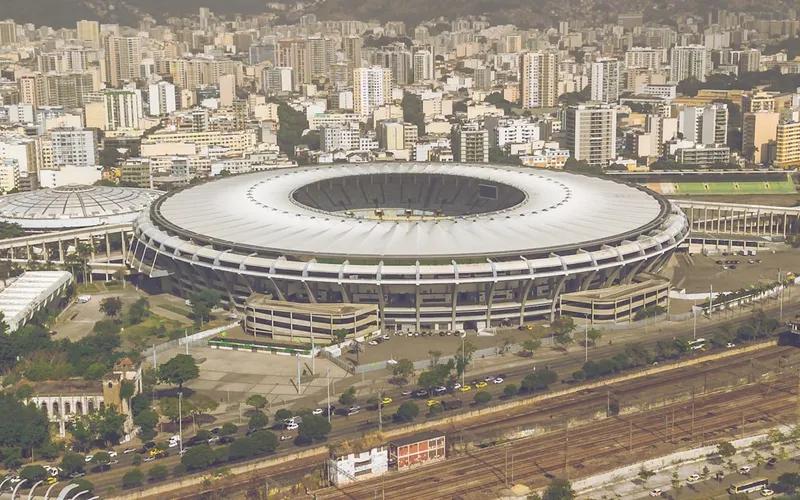
- Maracana in Rio de Janeiro once held nearly 200,000 people. The 1950 World Cup final’s official paid attendance was 173,850, with FIFA’s total attendance figure of 199,854 including non-paying entries. That’s the most-attended football match in history by either measure. Today it’s down to about 78,838 after multiple renovations. Still one of the most famous stadiums on the planet.
- Bukit Jalil National Stadium in Kuala Lumpur holds 87,411 and is one of the largest stadiums in Asia, though it rarely fills to capacity.
- FNB Stadium (Soccer City) in Johannesburg holds 94,736 and hosted the 2010 World Cup final. It’s the largest stadium in Africa, and its calabash-inspired design is genuinely beautiful.
- Misr Stadium in Egypt’s New Administrative Capital holds 93,940 and is one of the largest stadiums in Africa, completed as part of Egypt’s effort to bid for major continental tournaments.
Nearly 200,000 — The Maracana once held close to 200,000 fans for the 1950 World Cup final, the most-attended football match in history. Today it seats under 79,000, a reminder that stadium capacity almost always shrinks over time, not grows.
The trend nobody talks about
Here’s what’s actually happening in stadium design right now: stadiums are getting smaller.
Not the old ones. Those are staying put. But new stadiums being built today rarely push past 70,000 seats. Tottenham Hotspur Stadium holds 62,850. Allegiant Stadium in Las Vegas holds 65,000. The new Everton stadium at Bramley-Moore Dock will hold 52,888.
Why? Because the economics have changed. A 60,000-seat stadium with 8,000 premium seats, 200 suites, and a massive hospitality program generates more revenue than a 100,000-seat stadium with basic seating. The old model was: pack in as many bodies as possible and sell hot dogs. The new model is: fewer fans, higher spending per head, better broadcast product.
SoFi Stadium is the proof. It cost $5.5 billion and holds 70,000. Michigan Stadium cost the equivalent of about $50 million in today’s dollars and holds 107,000. The revenue difference between those two venues isn’t even close. SoFi generates vastly more per event despite having 37,000 fewer seats.
So this list of the world’s largest stadiums might not change much in the coming decades. The mega-stadiums already exist, and the trend has shifted toward smaller premium venues.
There is one major exception worth noting. In March 2025, Manchester United announced plans for a new 100,000-seat stadium designed by Foster + Partners, with a budget of approximately £2 billion and a target opening date of the 2030-31 season. If delivered at full capacity, it would be the largest stadium in the United Kingdom and the first new 100,000+ venue announced anywhere in over a decade. The Old Trafford Regeneration project formally launched its development corporation in 2026. Whether the stadium actually opens at 100,000 seats, given how often stadium budgets balloon and capacities get trimmed to make the math work, is the open question that the next five years will answer.
That doesn’t make the existing mega-stadiums less special. If anything, it makes them more so.
$5.5 billion for 70,000 seats — SoFi Stadium costs roughly 100x more per seat than Michigan Stadium did (inflation-adjusted), yet generates vastly more revenue. The economics of modern stadiums have been completely inverted.
Why stadium capacity rankings matter in 2026
This year is unique because of the World Cup. Three countries (the United States, Mexico, and Canada) are hosting the tournament across 16 venues, and several of them appear on or near this list. AT&T Stadium, MetLife Stadium, Estadio Azteca, and SoFi Stadium will all host World Cup matches, putting them in the global spotlight.
Stade de France and Wembley won’t be involved this time around, but they’ve both hosted recent major tournaments and remain two of the most important stadiums in Europe. And Camp Nou will be welcoming fans back to a completely transformed experience.
The largest stadiums in the world aren’t just buildings. They’re places where collective memory gets made. A hundred thousand strangers screaming at the same moment, watching the same thing, feeling the same feeling. There’s nothing else in modern life that replicates it.
These are the places that make it possible.
Sources
- FIFA — World Cup 2026 Stadiums — Official venue capacities and host city details
- Wikipedia — List of Stadiums by Capacity — Global capacity rankings with historical data
- Michigan Athletics — Michigan Stadium — Official capacity and renovation history; 115,109 on-campus attendance record (Sept 7, 2013 vs Notre Dame)
- FC Barcelona — Espai Barça Project — Camp Nou expansion plans and projected capacity
- Individual team and university athletic department media guides — Stadium-specific capacity figures for college football venues
- Maracanã Stadium — Historical attendance data, 1950 World Cup Final, post-renovation capacity
- Guinness World Records — Largest Attendance at a Football Match — Confirmed 173,850 paid attendance for the 1950 World Cup Final
- New Trafford Stadium — Wikipedia — Manchester United’s planned 100,000-seat stadium, announced March 2025