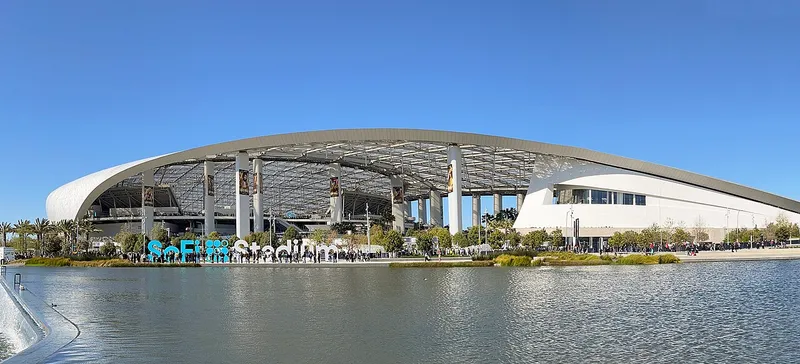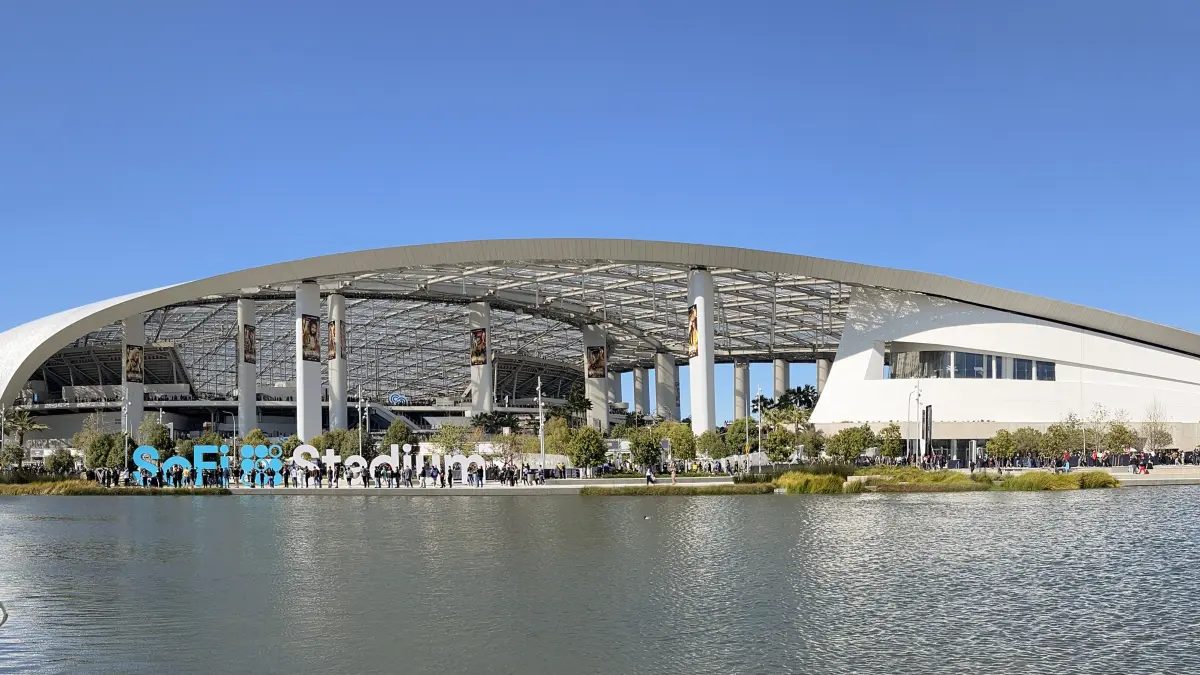
Look across the lake outside SoFi Stadium in Inglewood, at the translucent roof floating over a bowl sunk nearly 100 feet into the California dirt, and you are looking at roughly 5.5 billion dollars of stadium. That is not a typo. SoFi cost more than the next two most expensive stadiums on Earth combined, and it did so without a dollar of public money to blame.
Stadiums have always been expensive. What changed this century is the ceiling. A generation ago, a billion-dollar stadium was a scandal. Today the newest builds sail past two billion before anyone blinks, and the record holder is closing on six. So which stadiums cost the most ever, why did the numbers explode, and does spending that kind of money actually pay off? Here is the ranking, and the cost-per-seat math that tells you which spends were truly the wildest.
5.5 billion dollars: the approximate cost of SoFi Stadium, the most expensive sports venue ever built.
The most expensive stadiums ever built, ranked
These are the priciest completed stadiums in the world, ranked by their reported construction cost. Figures are nominal, meaning the dollars of the year each one was built, not adjusted for inflation. Foreign costs are converted to US dollars at the commonly cited rate, and where sources disagree, the note flags it.
| Rank | Stadium | Cost (nominal) | Opened | Capacity |
|---|---|---|---|---|
| 1 | SoFi Stadium (Los Angeles) | ~$5.5 billion | 2020 | 70,240 |
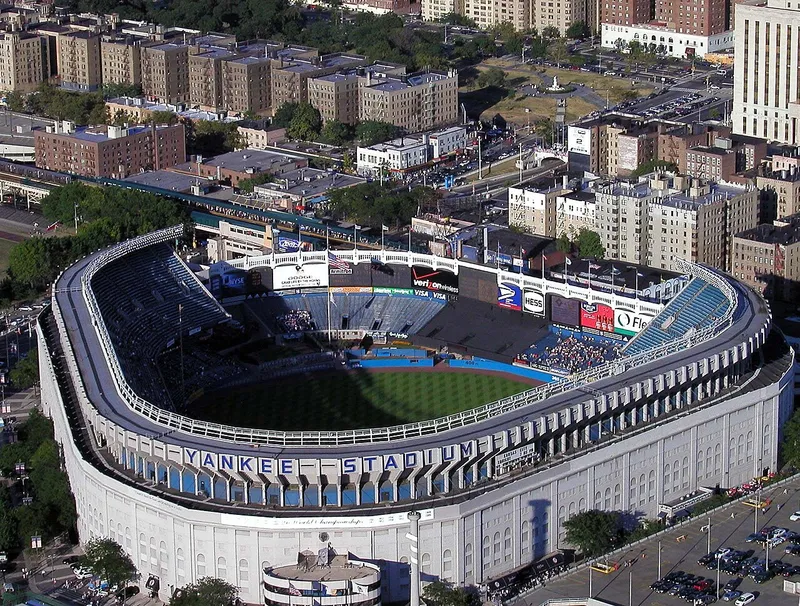
| 2 | Yankee Stadium (New York) | ~$2.3 billion | 2009 | 46,537 |
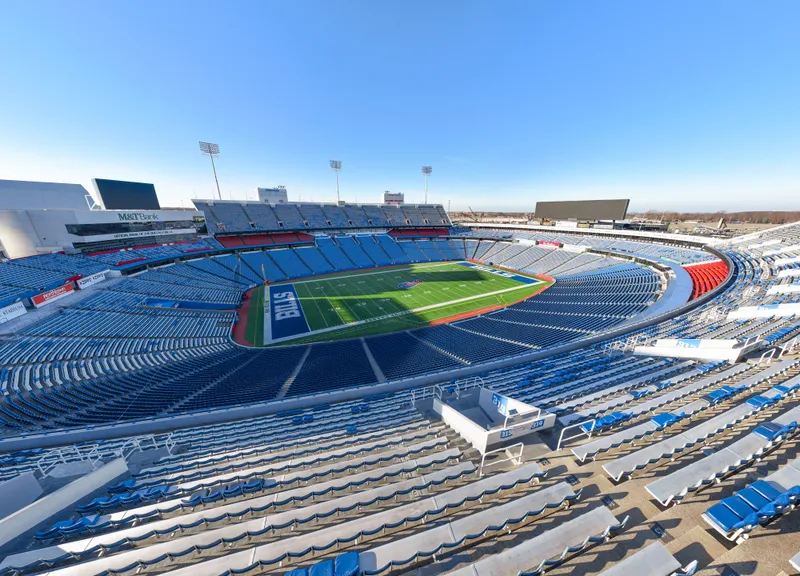
| 3 | Highmark Stadium (Buffalo) | ~$2.1 billion | 2026 | 60,108 |
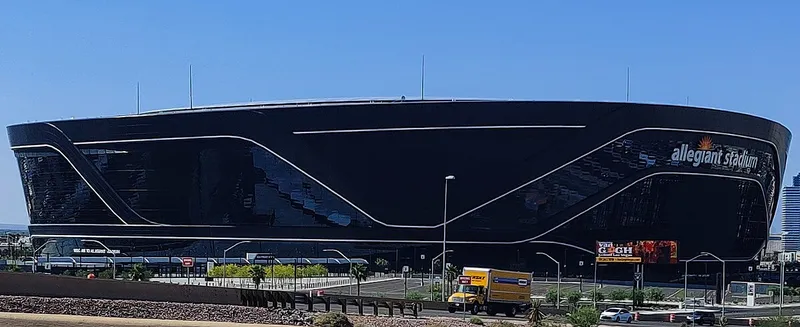
| 4 | Allegiant Stadium (Las Vegas) | ~$1.9 billion | 2020 | 65,000 |
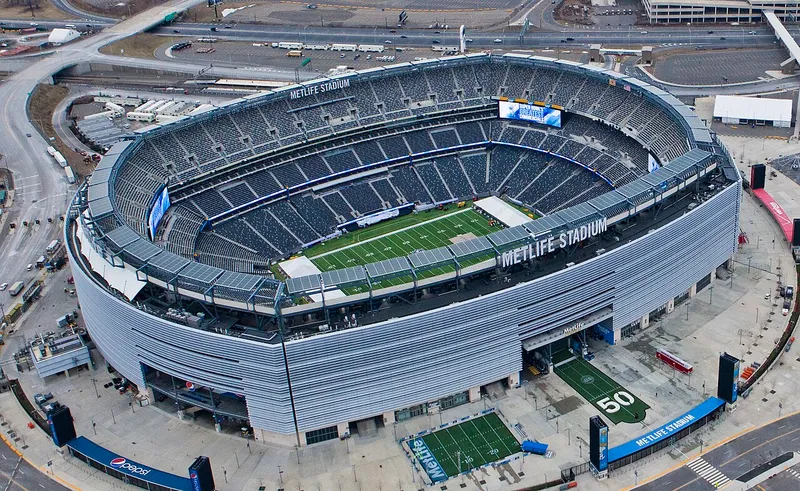
| 5 | MetLife Stadium (New Jersey) | ~$1.6 billion | 2010 | 82,500 |
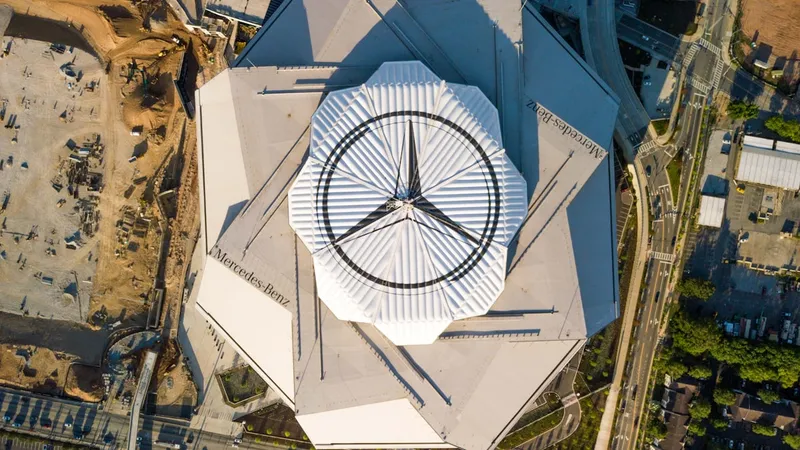
| 6 | Mercedes-Benz Stadium (Atlanta) | ~$1.6 billion | 2017 | 71,000 |
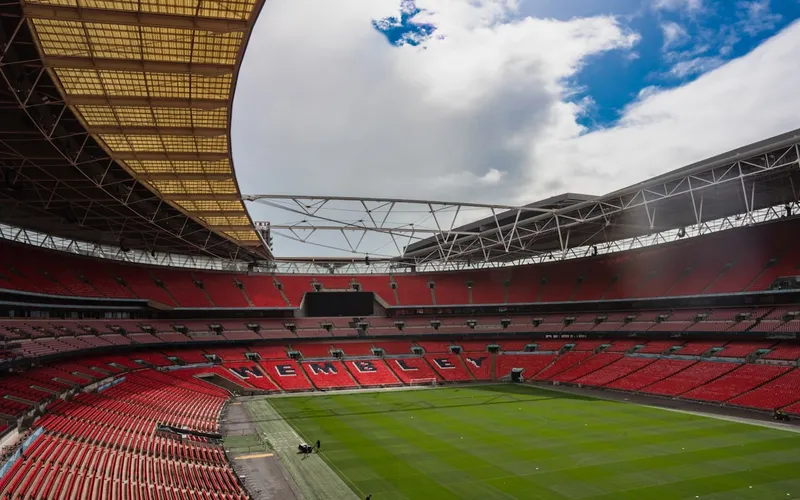
| 7 | Wembley Stadium (London) | £798M (~$1.5 billion) | 2007 | 90,000 |
| 8 | Tottenham Hotspur Stadium (London) | 2019 | 62,850 | |
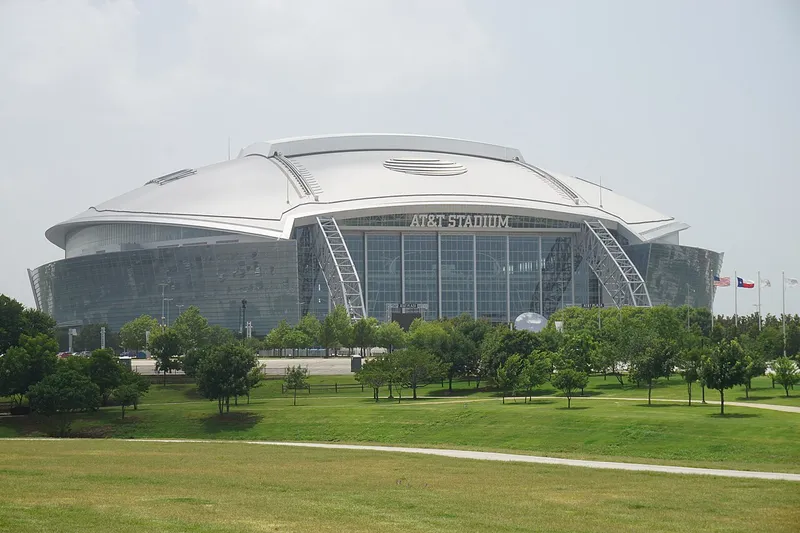
| 9 | AT&T Stadium (Dallas) | ~$1.2 billion | 2009 | 80,000 |
A few things jump out of that list right away. The most expensive stadium ever built is more than twice as costly as anything else. A baseball park sits at number two, and a brand-new open-air stadium in Buffalo lands at number three, ahead of far bigger domes, because it opened in 2026 when construction prices had climbed. Several of these nine opened within the last decade, which tells you the spending curve is bending upward, not flattening. And the under-construction projects further down this article are already pushing past most of this table.
One caveat before going further. These are nominal figures, the dollars of the year each stadium was built, and inflation reshuffles them. Adjust for inflation and the older builds climb: an analysis by Front Office Sports put SoFi near 6.75 billion in current dollars, but also lifted MetLife and Mercedes-Benz above 2.2 billion and AT&T to about 1.7 billion. It does not change the top of the list, SoFi is untouchable either way, but it is a reminder that a 1.6 billion dollar stadium from 2010 was a far bigger swing than the same number looks like today. Where possible, compare stadiums built in the same era, or use the cost-per-seat math below to level the field.
SoFi Stadium and the 5 billion dollar ceiling
SoFi Stadium is not just the most expensive stadium ever built. It is the most expensive by a margin that makes the rest of the list look thrifty. The final cost of around 5.5 billion dollars is roughly what you would pay for MetLife, Mercedes-Benz, and Wembley combined, with change left over.
It did not start there. When Rams owner Stan Kroenke broke ground, the estimate was about 2.66 billion dollars. Then the number climbed. In March 2018 the project’s debt ceiling was raised to nearly 4.96 billion. In May 2020, NFL owners approved another 500 million on top. By the time the Rams and Chargers moved in, the bill had more than doubled from its starting point.
Two things drove the overrun. First, the site sits directly under the flight path into Los Angeles International Airport, which capped how tall the building could rise. So the architects went down instead, excavating the seating bowl nearly 100 feet into the ground. Digging a hole that big under those conditions is brutally expensive. Second, the signature ETFE canopy roof, a translucent shell that shades the open-sided bowl without fully enclosing it, is a piece of engineering with no cheap equivalent.
The last ingredient was the money itself. Kroenke financed SoFi privately, through his own capital, private bank loans, and league financing. There was no city council, no bond measure, no public budget ceiling forcing discipline. When the person paying the bill is a billionaire building a monument, the number tends to find its own level.
From 2.66 billion to 5.5 billion: SoFi’s cost more than doubled between groundbreaking and opening day.
The cost-per-seat problem
Total cost is the headline, but it hides something. A stadium that costs 5.5 billion and seats 70,000 is a very different bet from one that costs 1.6 billion and seats 82,500. Divide the money by the seats and the ranking scrambles.
Run the numbers on the biggest spenders and a pattern appears:
- SoFi Stadium: about 78,000 dollars per seat (5.5 billion over 70,240 seats)
- Yankee Stadium: about 49,000 dollars per seat (2.3 billion over 46,537 seats)
- Highmark Stadium: about 34,900 dollars per seat (2.1 billion over 60,108 seats)
- Allegiant Stadium: about 29,000 dollars per seat (1.9 billion over 65,000 seats)
- Mercedes-Benz Stadium: about 22,500 dollars per seat (1.6 billion over 71,000 seats)
- MetLife Stadium: about 19,400 dollars per seat (1.6 billion over 82,500 seats)
- AT&T Stadium: about 15,000 dollars per seat (1.2 billion over 80,000 seats)
- Wembley Stadium: about 13,300 dollars per seat (798 million pounds over 90,000 seats)
Here is what that math is really saying. The cheapest stadiums per seat are the big, open-air bowls: MetLife, AT&T, and Wembley all sit at the bottom because they pack tens of thousands of people into a design without an enclosing roof. The most expensive per seat are the enclosed, single-tenant, or small-capacity venues. SoFi’s roof and its below-grade bowl push its per-seat cost past 78,000 dollars. Yankee Stadium’s baseball layout seats far fewer people than a football bowl, so even a 2.3 billion price tag spreads thin.
Buffalo’s Highmark is the exception that proves the rule. It is an open-air bowl, the kind that should sit near the bottom, yet it costs almost 35,000 dollars a seat. The difference is not a roof. It is timing. Highmark opened in 2026, when construction, labor, and materials cost far more than they did when MetLife or Wembley went up a decade or more earlier. Build the same open-air stadium today and the per-seat number climbs no matter what is over your head.
The extreme cases are not even stadiums. The Las Vegas Sphere cost about 2.3 billion dollars and seats fewer than 18,000, which works out past 100,000 dollars per seat. Intuit Dome, the Clippers’ 2 billion dollar arena in Inglewood, lands around 111,000 per seat. Roofs and small crowds are what make a building expensive per head. Open sky and big crowds are what make it cheap.
Why a baseball park is second
The presence of Yankee Stadium at number two surprises people, because a baseball park should not out-cost most NFL stadiums. It did, for reasons that have little to do with the building and a lot to do with New York.
The new Yankee Stadium opened in 2009 at roughly 2.3 billion dollars, and about 1.2 billion of that came in public subsidies, one of the largest packages ever assembled for a sports venue. Land in the Bronx is not cheap, the design leaned heavily on premium seating and a replica of the original’s frieze, and the whole thing was built next to the ballpark it replaced. A baseball stadium also seats far fewer than a football bowl, which is why its per-seat cost, near 49,000 dollars, ranks second only to SoFi among the giants.
It is a useful reminder that a stadium’s price is not really about square footage. It is about land, subsidies, luxury inventory, and ambition. Two buildings of similar size can cost a billion dollars apart depending on where they sit and who is paying.
What actually makes a stadium cost billions
Strip away the individual stories and the same cost drivers show up again and again. If you want to understand why the newest stadiums cost what a small country’s budget once did, these are the levers.
Roofs and domes. This is the big one. Compare the per-seat costs above and the roofed venues cluster at the top while the open bowls sit at the bottom. A fixed dome, a retractable roof, or even a partial canopy is the single largest multiplier over a simple open-air design. It is also why so many new builds are covered, a shift covered in our look at why the NFL’s newest stadiums all have roofs.
Below-grade construction. When a site cannot go up, it goes down, and digging is expensive. SoFi sank nearly 100 feet under the LAX flight path. The Cleveland Browns’ planned dome will sit about 80 feet below grade near an airport for the same reason. Every foot of excavation adds cost.
Luxury and premium seating. Modern stadium economics run on suites, clubs, and premium inventory, not general admission. Building that inventory to a standard that justifies six-figure memberships is not cheap, and it adds to the headline figure.
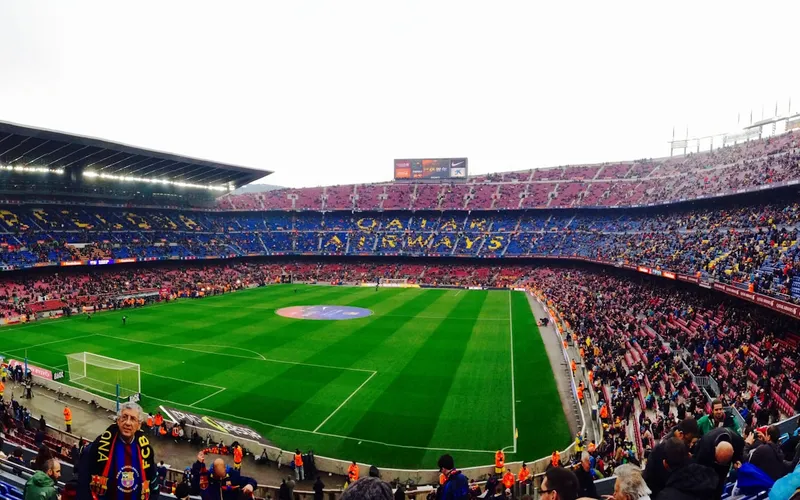
Mixed-use districts. SoFi’s cost sits inside the larger Hollywood Park development. FC Barcelona’s roughly 990 million euro Camp Nou rebuild is part of a 1.5 billion euro district programme. Singapore’s National Stadium was the centerpiece of a 1.33 billion Singapore dollar Sports Hub. When a “stadium” figure quietly includes the neighborhood around it, the number balloons.
Private money. Public financing comes with a budget ceiling, because taxpayers and councils push back. Private financing does not. SoFi and Intuit Dome, both privately funded, are two of the most expensive venues ever, and neither had a public brake on its ambition.
About 22,500 dollars per seat at Mercedes-Benz Stadium, versus 78,000 at SoFi: the roof and the bowl, not the size, explain the gap.
The next 2 billion dollar club
The list above is already being overtaken, and fast. Highmark Stadium in Buffalo only opened in June 2026 and it already ranks third all-time, remarkable for an open-air bowl seating just over 60,000, the smallest in the NFL. Behind it, a wave of stadiums still under construction is about to make the two billion dollar stadium routine, and the numbers keep climbing.
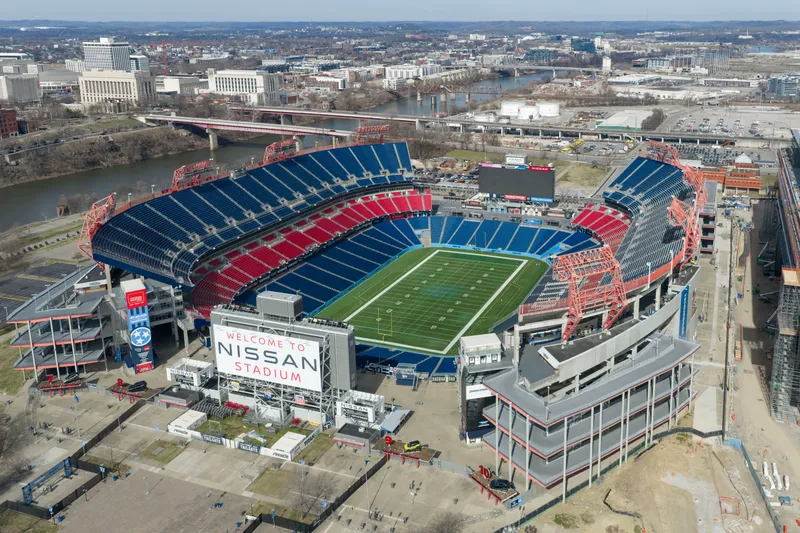
The Tennessee Titans’ new domed Nissan Stadium, targeted for 2027, runs about 2.1 billion dollars, and it includes roughly 1.26 billion in public money, the largest stadium subsidy in US history. The Cleveland Browns broke ground on a domed stadium in Brook Park with a total project cost near 2.4 billion, aiming to open in 2029.
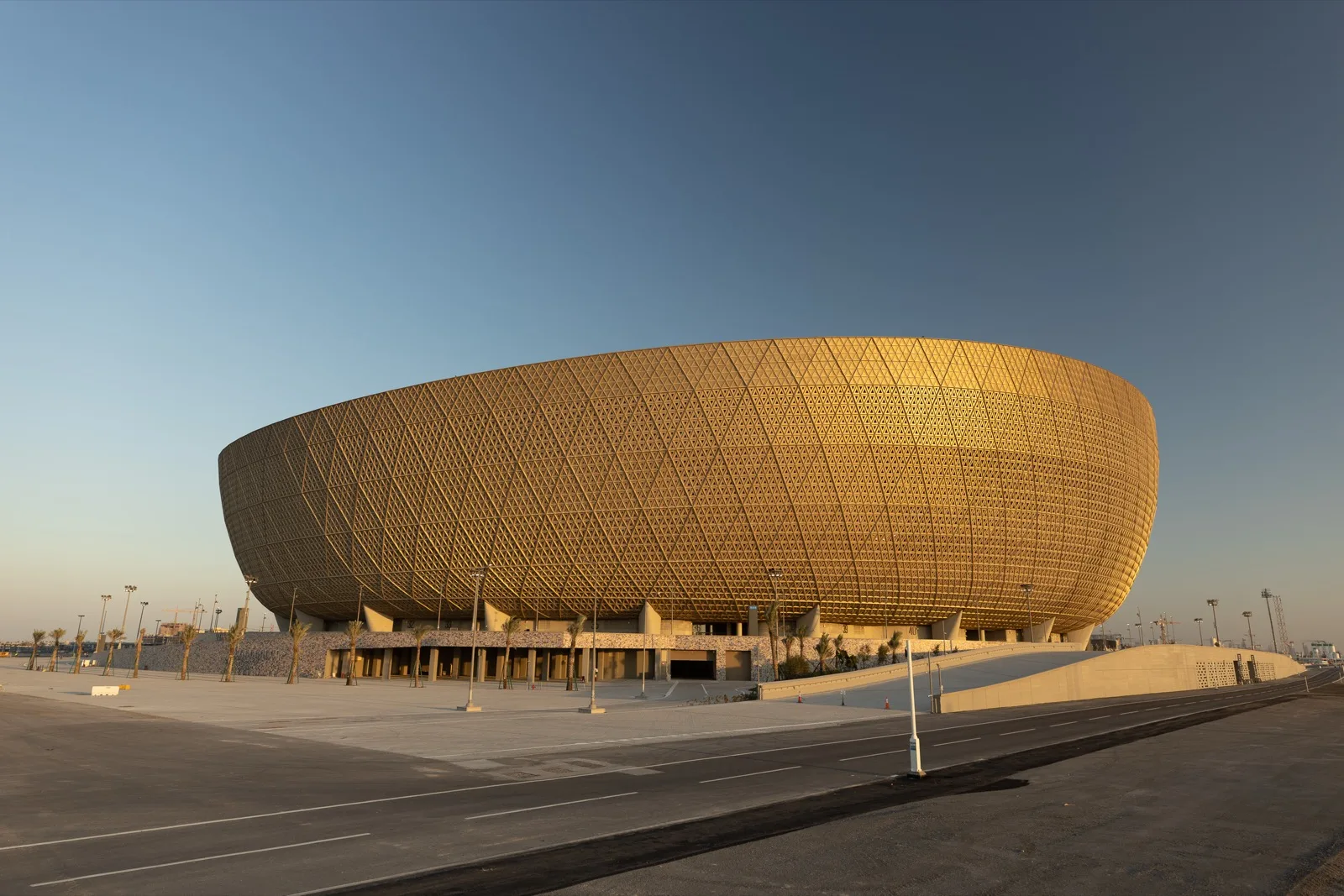
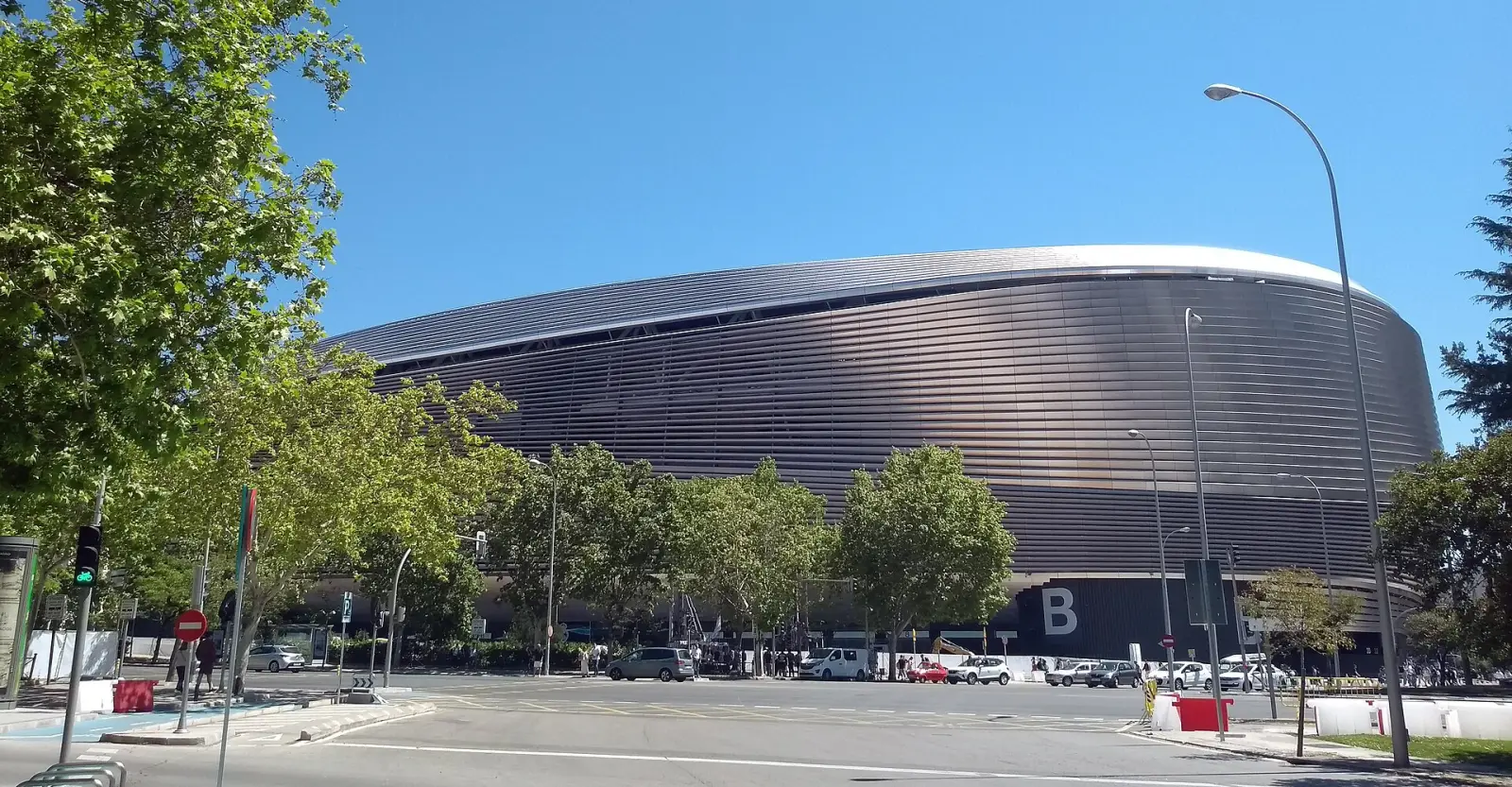
The spending is not just an American habit. Real Madrid’s renovation of the Santiago Bernabeu, with its retractable pitch and wraparound metal skin, reached about 1.76 billion euros once loan interest is counted. Barcelona’s Camp Nou rebuild runs close to a billion euros for the stadium alone. And the venues of the last World Cup, from the 767 million dollar Lusail Stadium that hosted the 2022 final to Al Bayt’s roughly 847 million, were built as part of a national infrastructure spend that dwarfed the stadiums themselves.
Put the current builds against the all-time table and the trend is obvious. What was once a record is now a mid-tier budget.
The wild card: Saudi Arabia’s 2034 stadiums
Everything above has a price tag. The venues most likely to rewrite this entire list do not have one yet.
Saudi Arabia is building or rebuilding all 15 of its stadiums for the 2034 World Cup, 10 of them brand-new, and the showpieces are unlike anything on the current list. The King Salman International Stadium in Riyadh, a roughly 92,000-seat venue designed by Populous to host the opening match and the final, is targeted for around 2029. The Prince Mohammed bin Salman Stadium in Qiddiya is planned as a three-sided bowl perched on the edge of a 200-metre cliff, reportedly with a retractable roof and pitch. And the NEOM Stadium is designed to place its pitch about 350 metres in the air, inside the upper levels of a planned linear megacity, a concept with no precedent anywhere.
Here is the honest part. Saudi Arabia has not released official construction budgets for any of them, so there is no figure to rank. What is safe to say is that stadiums this ambitious, built at this pace by a state with effectively unlimited capital, are widely expected to cost enormous sums, potentially enough to push past SoFi at the top of this table. It is also worth a note of caution: The Line, the megacity that would house the NEOM Stadium, has already been scaled back, and as of mid-2026 several of these venues are designs on paper rather than buildings. We will put a number on them when Saudi Arabia does, and not before. For the full slate, see our guide to the 2034 World Cup stadiums.
Do the billions pay off?
A stadium is not just a place to play 8 or 10 home games a year. That is the argument owners make when the cost climbs, and it is not entirely wrong. A modern roofed stadium is a year-round machine: Super Bowls, College Football Playoff finals, WrestleMania, and the concert tours that now gross more than the sports do. SoFi and Mercedes-Benz host Super Bowls precisely because they are covered and climate-controlled. The same roofs that inflate the construction cost are what let the building earn money 200 nights a year instead of 10, a point we dig into in our look at how the biggest concerts took over the stadium.
Whether the math works depends on who is counting. For a privately financed owner like Kroenke, a 5.5 billion dollar stadium anchoring a real-estate district may pencil out over decades. For a city handing over 1.26 billion in subsidies, the return is far more debatable, and economists have spent years arguing that public stadium financing rarely pays back what it costs.
What is not in doubt is the direction. The most expensive stadium ever built today will not hold the title for long. Somewhere, a rendering already exists for the one that beats it. For the current giants of capacity rather than cost, see our ranking of the largest stadiums in the world, and for the venues built for the tournament ahead, the World Cup 2026 hub.
Sources
- SoFi Stadium, Wikipedia. Construction cost history, the below-grade bowl, and financing.
- Allegiant Stadium, Wikipedia and BetMGM. Las Vegas cost and public/private split.
- Costs of New York’s stadiums, City & State New York. The new Yankee Stadium cost and public subsidy.
- MetLife Stadium, BetMGM. Cost and capacity.
- AT&T Stadium, Wikipedia. Cost range and retractable roof.
- Mercedes-Benz Stadium cost, DAZN. Projected versus final cost.
- Wembley Stadium, Wikipedia. The 798 million pound cost and 90,000 capacity.
- Tottenham Hotspur Stadium, Wikipedia. The cost revised from about 1 billion to 1.2 billion pounds.
- Browns break ground on domed stadium, NFL.com and Highmark Stadium completion, NY Governor’s office. The current build wave.
- Real Madrid’s Bernabeu cost, SI.com and Lusail Stadium cost, FourFourTwo. International spends.
- ESPN on the NEOM “sky stadium”. The reality check on Saudi Arabia’s 2034 venues; construction budgets for them have not been officially released.
Construction costs are reported inconsistently across sources, and figures differ depending on whether they include land, infrastructure, financing, and surrounding development, and whether they are adjusted for inflation. All figures here are nominal build costs at the commonly cited value, with conflicts noted in the text. Cost-per-seat figures are our own calculations from the cited cost and capacity.
Hero photo: SoFi Stadium by Troutfarm27, CC BY-SA 4.0, via Wikimedia Commons, cropped.