The best stadium for a concert is not automatically the biggest one. It’s the one where you can actually see the stage, hear the music, stay dry, and get home afterward without a two-hour parking crawl. Size gets a tour in the door. Everything after that decides whether it’s a night you remember or an expensive disappointment from the wrong seat.
That distinction matters more than ever, because the stadium tour is now the biggest business in live music. The largest acts skip arenas entirely and book two, three, even five nights at a single stadium. So which buildings are actually built for it? This is what separates a great concert stadium from a merely large one, along with the venues that get it right.
70,000+ is the crowd a modern stadium can hold for a concert, often several thousand more than it seats for a football game.
What makes a stadium great for a concert
A great concert stadium comes down to five things, and capacity is only one of them. The roof matters most: a retractable roof or a canopy means the show happens rain or shine, in comfort. Then the stage setup, because concert layouts add floor seating and end-stage sections that change how many people fit and how close they get. Then the production tech: the video boards and speaker arrays that let someone in the 500th row still feel front-row. Then sightlines, since a bowl designed for a 100-yard field has to work for a stage on one end. And finally access, because 70,000 people leaving at once is its own event.
The shortlist below is ranked by how well each venue balances all five. These are the stadiums touring acts fight to book, and the ones fans remember.
| Stadium | City | Capacity | Roof |
|---|---|---|---|
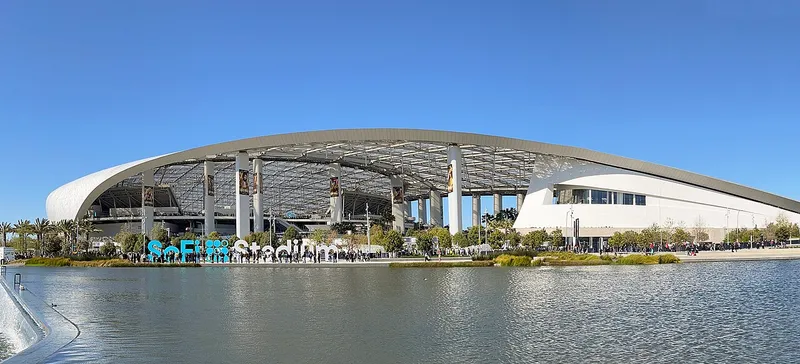
| SoFi Stadium | Inglewood, CA | 70,240 | Fixed ETFE canopy |
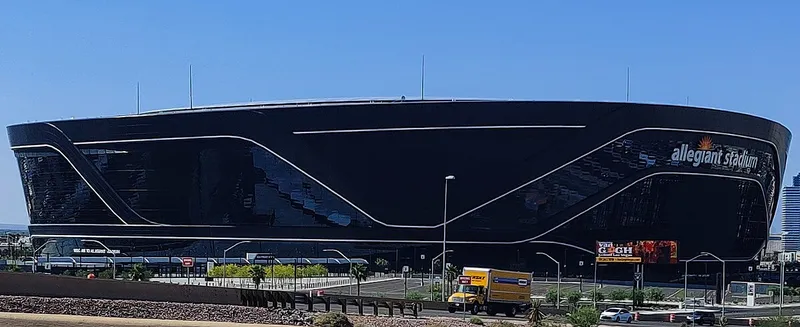
| Allegiant Stadium | Las Vegas, NV | 65,000 | Fixed dome |
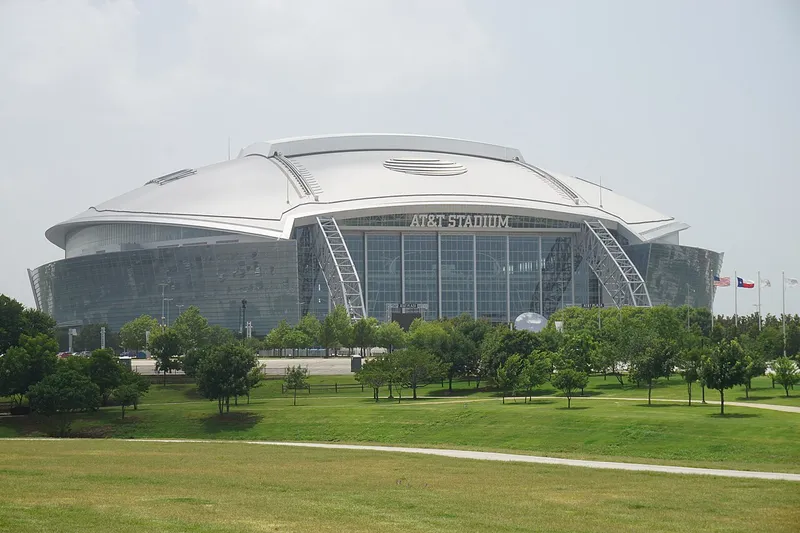
| AT&T Stadium | Arlington, TX | 80,000+ | Retractable |
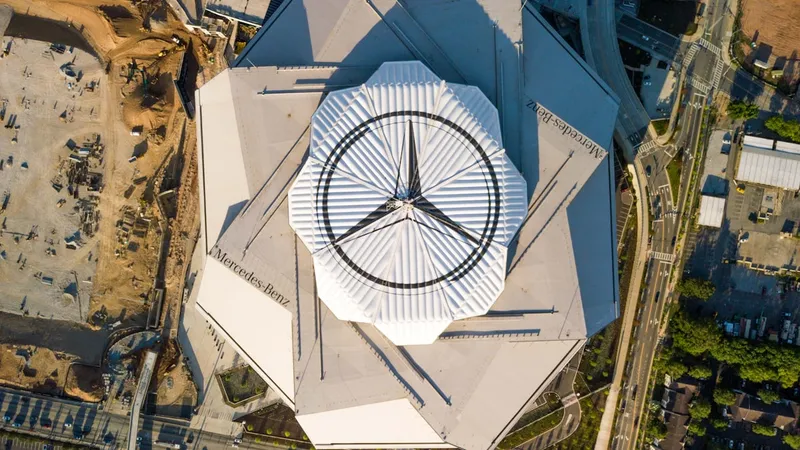
| Mercedes-Benz Stadium | Atlanta, GA | 71,000 | Retractable |
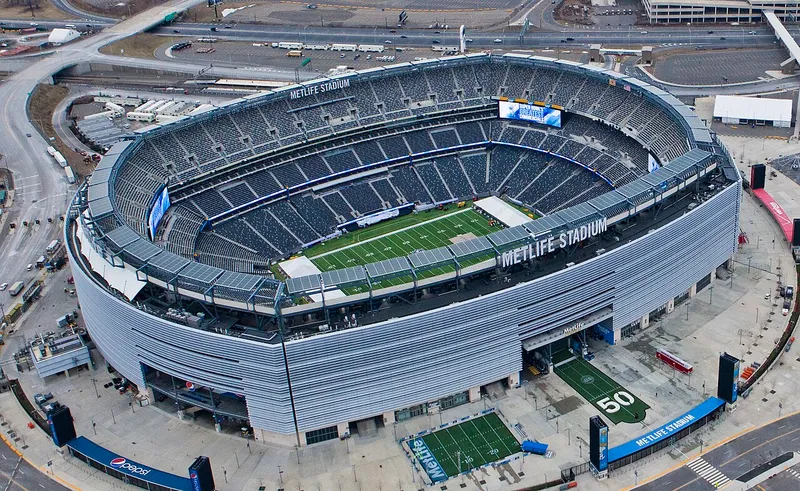
| MetLife Stadium | East Rutherford, NJ | 82,500 | Open |
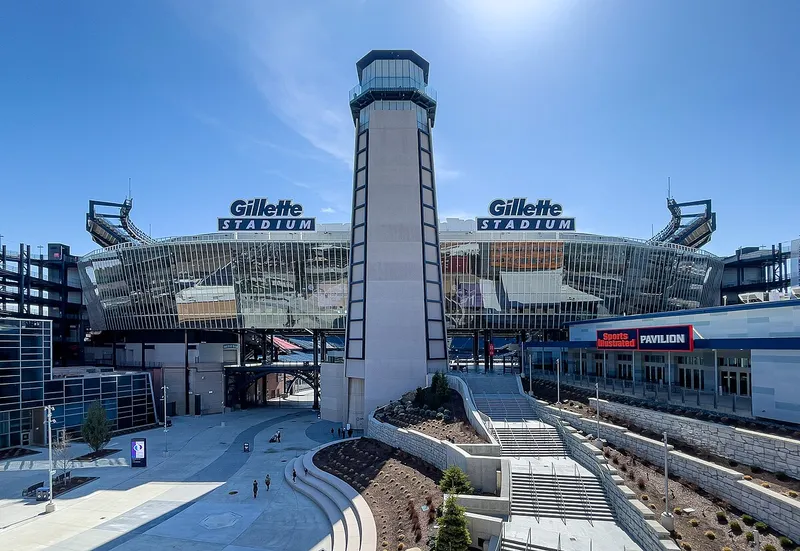
| Gillette Stadium | Foxborough, MA | 64,628 | Open |
| Wembley Stadium | London, UK | 90,000 | Part-retractable |
Why concerts pack in more than the football number
A stadium almost always holds more people for a concert than for a game, and the reason is the field. During a football game, the playing surface is off-limits. During a concert, it becomes the most valuable real estate in the building: general-admission floor, premium pit, and seated sections that stretch from the stage to the back wall. Add end-stage seating behind and beside the stage, and a building’s concert capacity climbs above its sports number.
Allegiant Stadium seats 65,000 for the Raiders, but concerts there have drawn crowds over 70,000. Gillette Stadium seats 64,628 for the Patriots, yet Ed Sheeran packed 71,723 into it in July 2023. The football capacity you see quoted is the starting point for a show, not the limit.
The field becomes seating. Turning the playing surface into floor and pit sections is what pushes a stadium’s concert capacity thousands above its game-day number.
This is also why concert capacities are slippery. They change with every stage design. An in-the-round setup with the stage at midfield holds more than an end-stage setup that sacrifices the far end for the rig, and neither matches the sports number. When you see a stadium concert attendance record, it’s tied to that specific stage, not the building’s official capacity. We track the biggest of those nights in our rundown of the biggest stadium concerts ever.
The roof advantage: rain-proof shows
The single biggest upgrade a concert stadium can have is a roof that closes. A retractable roof or a fixed dome turns an outdoor show into a guaranteed one, and for a tour routing dozens of cities on a fixed schedule, a rained-out date is a serious problem. That’s why the venues with the best roofs get the most marquee bookings.
AT&T Stadium in Arlington has a retractable roof anchored by two 300-foot steel arches, so a Texas thunderstorm never threatens the show. Mercedes-Benz Stadium in Atlanta has its distinctive retractable roof that petals open and shut. And in the desert, where summer heat makes an open-air show brutal, Allegiant Stadium is a fully enclosed, climate-controlled dome, which is exactly why Las Vegas has become a stadium-residency capital. Roofs are so central to the modern stadium that we wrote a whole explainer on why NFL stadiums have roofs in the first place.
The trade-off is the open-air magic. A clear night at MetLife Stadium or Gillette Stadium under the stars has a feeling a sealed box can’t replicate. The catch is you’re betting on the weather, and the weather doesn’t care about your ticket price.
And the stakes are real. A stadium show is a massive one-day operation: crew, gear, local staff, and a crowd that traveled and booked hotels. Lightning within a few miles can force a delay or an evacuation for safety, and a washed-out date is brutal to reschedule when the tour is in a different city tomorrow. Fans have sat through hours-long weather holds, and some shows simply don’t finish. That risk is exactly why an act routing 40 stadiums will pay a premium for the ones that can close a roof, and why the covered venues keep winning the biggest bookings. In touring, that certainty is worth paying for.
SoFi Stadium: the modern benchmark
If one venue defines the new era of concert stadiums, it’s SoFi Stadium in Inglewood. It solved the roof debate with a clever compromise: a fixed, translucent ETFE canopy that shelters the seating bowl while leaving the sides open to the California air. You’re covered from rain and sun, but it never feels like an indoor arena. That single design choice made it the most in-demand concert stadium in America almost overnight.
Then there’s the production. A giant dual-sided video board hangs over the field, so the visuals rival the biggest indoor screens, and the sound system was designed from scratch for both football and full-scale concerts. It seats 70,240 for a game and more for a show. Opened in 2020 as the most expensive stadium ever built, it was designed in an age when everyone already knew stadiums had to be world-class concert venues, not football buildings that occasionally hosted a tour.
That’s the real shift SoFi represents. Older stadiums were built for a home team and adapted for music. The newest ones are built for both from day one, and it shows in every sightline and speaker.
$5 billion went into SoFi Stadium, the most expensive stadium ever built, and a chunk of that budget assumed it would host as many concerts as football games.
It’s not the only one playing this game. AT&T Stadium has been a concert giant since it opened, its enormous center-hung video board visible from every seat, and MetLife Stadium is the default stadium stop for the New York market, the biggest media market in the country. Between them, SoFi, MetLife, and AT&T book most of the marquee multi-night US stadium runs. When a tour announces “three nights” in a city, it’s usually one of these three.
Allegiant and the case for the dome
Allegiant Stadium makes the strongest argument for going fully indoors. It’s a sealed, climate-controlled dome on the Las Vegas Strip, and in a city where summer temperatures top 100 degrees, that climate control is the entire selling point. A July show in an open stadium in Vegas would be unbearable. Inside Allegiant, it’s a comfortable 72 degrees and the roof never opens.
The payoff has been a wave of stadium residencies and one-off spectacles that treat the building like the world’s biggest arena. Concerts there have pushed past 70,000, above its football capacity, because the enclosed design and flexible floor let promoters maximize every configuration. Add the novelty of the location, steps from casinos and hotels, and you get a concert-weekend destination that few stadiums can match.
The downside is honesty in advertising: a dome is a big room. You lose the open sky and the sunset. What you gain is certainty, comfort, and sound engineers can actually control, which points to the one thing every stadium struggles with.
Wembley: the world’s benchmark
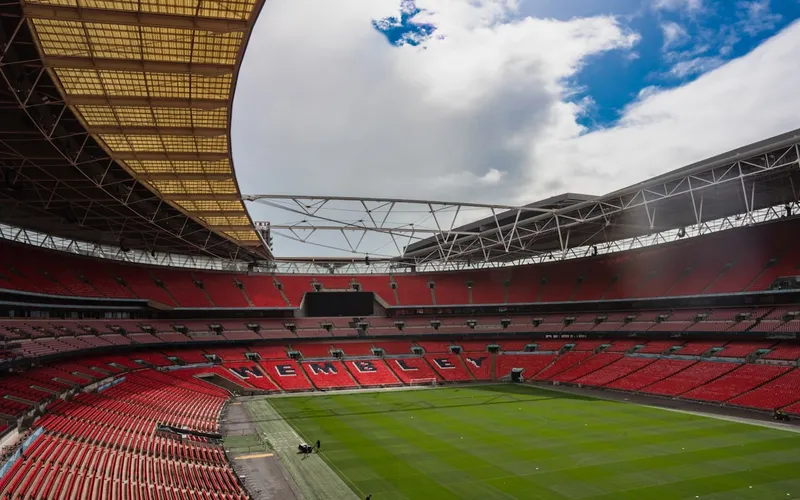
No list is honest without Wembley Stadium in London, the most storied concert venue on the planet. Its 90,000 capacity and iconic illuminated arch have hosted the defining nights in live music, from Live Aid in 1985 to decades of tours where playing Wembley is the summit of a career. For an American act, a stadium run in the States is huge. Selling out Wembley means you’ve made it.
Part of Wembley’s edge is scale, part is history, and part is that a partially retractable roof shelters every seat while leaving the pitch open. But most of it is cultural. Wembley is where the biggest moments happen, so the biggest moments keep happening there, a self-reinforcing status no new building can buy. It’s the standard the American stadiums are measured against, even the shiny new ones with better tech.
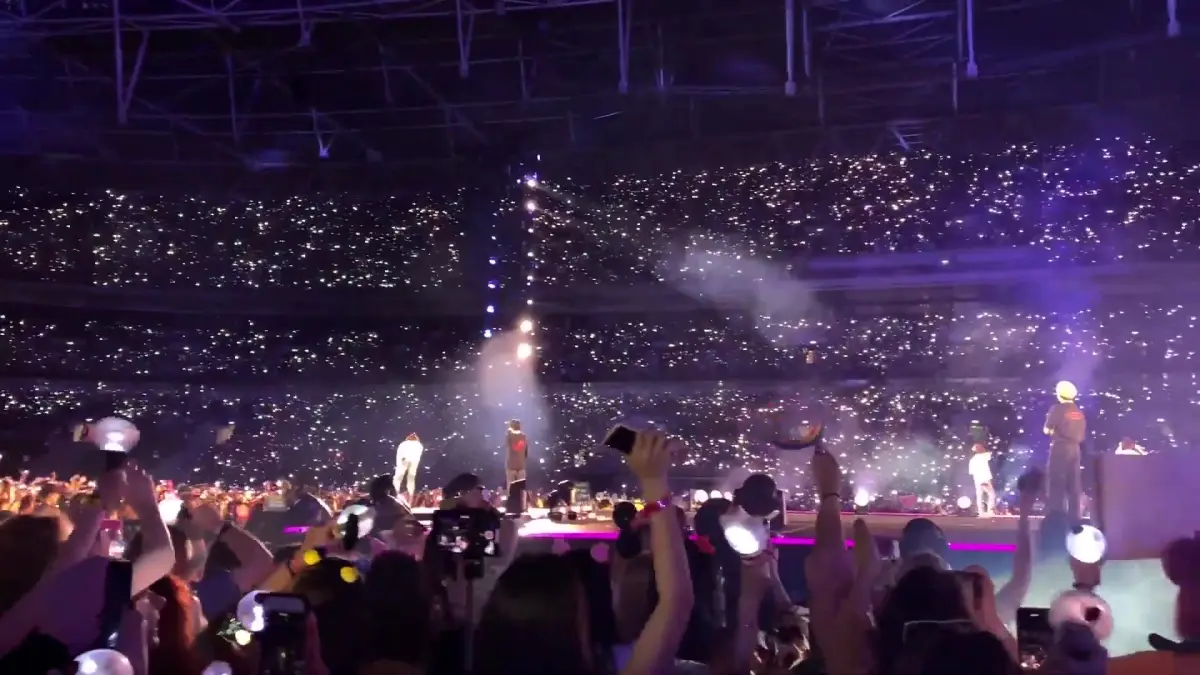
90,000 fans fill Wembley Stadium for a concert, under an illuminated arch that has become the most recognizable silhouette in live music.
If you ever get the choice, see a show there once. It’s on every serious concertgoer’s list for a reason. And it’s a useful reminder that the “best” concert stadium isn’t only about the newest video board. A building earns its reputation over decades of nights that fans never forget, which is something Atlanta’s Mercedes-Benz Stadium and the rest of the new class are still busy building.
The honest caveat: stadiums are hard to make sound good
The marketing skips this part: a stadium is an acoustic nightmare. It’s a giant concrete-and-steel bowl designed to hold a field, not to carry a mix cleanly to 70,000 ears, and sound bounces off hard surfaces, echoes off the far deck, and smears the further back you sit. Anyone who has heard a muddy stadium show from the upper level knows the feeling.
The best venues fight this with modern line-array speaker systems, delay towers that re-time the sound for distant sections, and roofs that contain the noise instead of letting it escape. It’s genuinely better than it was a decade ago. Purpose-built newer stadiums like SoFi and Allegiant have a real advantage here, because their sound systems were engineered for music from the start rather than bolted onto a football building. An enclosed roof helps too, giving engineers a controlled space instead of an open field where sound drifts off into the night.
But it’s still the reason a great arena show can sound sharper than a great stadium show, and it’s worth setting your expectations honestly. Physics doesn’t care how new the building is. You go to a stadium concert for the scale, the crowd, and the spectacle. If pristine audio is the priority, a smaller room will always win.
That’s not a knock on stadiums. It’s the trade you’re making, and knowing it going in is how you pick the right seat.
What to know before you buy
Before you buy a stadium concert ticket, check three things the listing won’t spell out. First, the roof: an open-air stadium in July heat or November cold is a real gamble, so know what you’re signing up for before you commit. Second, the stage configuration, because an end-stage show means the seats behind the stage don’t exist and the “far end” seats are a long way from the action. Third, your section relative to the delay towers and screens, since a well-placed 400-level seat with a clear video-board view can beat a floor spot stuck behind the soundboard.
Do that, and a stadium show delivers something no other venue can: 70,000 people singing the same words at once, under a roof or the open sky, at the biggest scale live music has. Pick the right building and the right seat, and few nights out compare. The venue does part of the work, but the rest is on you, and it starts with knowing which stadium you’re walking into.
For more on the venues themselves, see our rankings of the biggest NFL stadiums, most of which double as America’s marquee concert stages, and the largest stadiums in the world, where the global giants live.
Sources
- MeetStadium verified stadium pages for SoFi Stadium, Allegiant Stadium, AT&T Stadium, Mercedes-Benz Stadium, and Wembley Stadium. Capacities, roof types, and design details.
- Wembley Stadium, Wikipedia. Concert history and roof configuration.
- Allegiant Stadium, Wikipedia. Enclosed-dome design and concert capacity.
Hero photo: Concert at Wembley Stadium by NenehTrainer, CC BY 3.0.
This guide is an opinion-informed ranking built on verifiable venue facts (capacity, roof type, and design). Concert capacities are approximate and vary by stage configuration, and rankings reflect a combination of weather protection, production capability, sightlines, and access rather than a single number.