For almost two years, the most valuable tenant in America’s football stadiums did not throw a single pass. Taylor Swift’s Eras Tour played 149 shows across 51 stadiums, sold around 10 million tickets, and grossed more than 2 billion dollars, roughly double the take of any tour in history. Every one of those nights happened in a building designed for football or soccer, sitting between home games with nothing else to do.
That is the quiet truth of the modern stadium. It hosts its home team maybe 10 times a year, then goes dark. The rest of the calendar is where the concert business lives, and it has grown into something enormous: billion-dollar tours, stadiums competing to book them, and a whole economy of turf covers and noise limits underneath. Here are the biggest stadium tours ever, the venues that cash in the most, and why a football stadium needs Beyonce as much as it needs the quarterback.
Over 2 billion dollars: the gross of Taylor Swift’s Eras Tour, the highest-grossing concert tour ever, played entirely in stadiums.
The biggest stadium tours ever
Stadium tours are the only concerts big enough to fill a 60,000-seat bowl, and only a handful of acts can do it. These are the highest-grossing tours in history, nearly all of them staged in stadiums.
| Tour | Artist | Gross | Shows | Note |
|---|---|---|---|---|
| The Eras Tour (2023-24) | Taylor Swift | ~$2.08 billion | 149 | First tour ever past $1B and $2B |
| Music of the Spheres (2022-25) | Coldplay | ~$1.5 billion | 223 | Highest-grossing tour by a band |
| ÷ (Divide) Tour (2017-19) | Ed Sheeran | ~$776 million | 255 | Most-attended tour of its time |
| 2023-25 Tour | Bruce Springsteen | ~$730 million | 129 | Rock’s biggest recent earner |
| Renaissance (2023) | Beyonce | ~$580 million | 56 | Over $10M per night |
A few things stand out. The top of the list is a rout: Swift’s Eras Tour grossed nearly as much as Coldplay and Beyonce combined, and it did so in less time than Coldplay’s marathon 223-show run. It also averaged about 67,487 fans a night, the highest average attendance Pollstar has ever logged. When people say the stadium concert has never been bigger, this is the number they mean.
Ed Sheeran deserves a special mention, because he proved a solo act with a guitar and a loop pedal could out-draw stadium rock bands. His Divide Tour became the most-attended tour in history when it wrapped in 2019, and in Sydney he sold 243,513 tickets across three nights at one stadium, more people than most venues see for a full season of sport.
What is striking is how recent most of this is. Five of the six tours above happened in the 2020s, and the two biggest, Swift and Coldplay, both crossed thresholds no act had ever reached before. The stadium concert is not a fixture that has always looked this way. It has exploded in scale in just the last few years, and stadiums have raced to keep up.
Why stadiums need concerts
Here is the problem every stadium owner is quietly trying to solve. A football stadium is a billion-dollar asset that is used almost none of the time.
An NFL team plays 8 or 9 regular-season home games a year, plus maybe a preseason date or a playoff run. Beyond that, a study by Sportico found the typical NFL facility hosts fewer than five other major events annually. Do the math and a stadium that cost two or three billion dollars to build sits dark for something like 340 nights a year. That is a lot of empty seats, unsold beer, and idle parking.
Concerts are the fix, and specifically the biggest concerts, because they are among the only events on Earth that can fill a stadium bowl. A mega-tour turns a dark Tuesday in July into 60,000 paying customers. For the venue, every one of those nights is found money: dates that would otherwise earn nothing.
The catch is that only the very biggest acts can carry a stadium, which is why the concert upside is concentrated in a short list of names. A stadium cannot book a stadium concert every week. But land three or four Swift-sized runs in a summer and the math on the whole building changes.
Fewer than 5 major non-tenant events a year at the typical NFL stadium, against 8 to 10 home games. Concerts fill the rest of the calendar.
How much a stadium actually makes
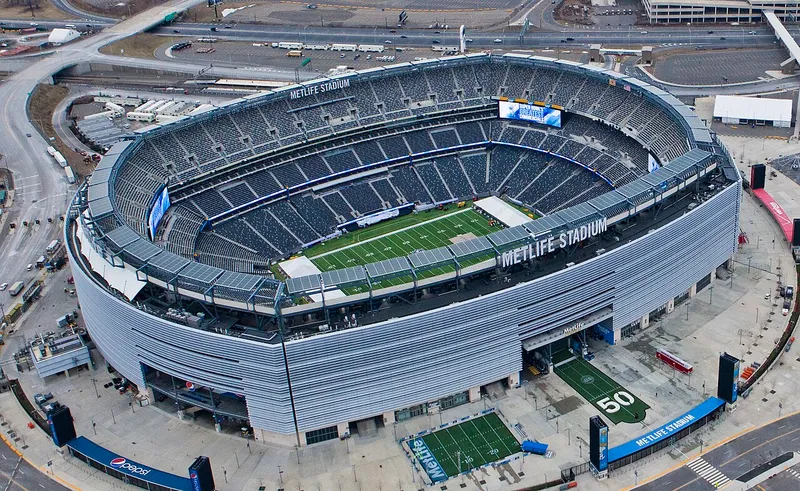
Here is where it gets counterintuitive. When Taylor Swift plays MetLife Stadium, MetLife does not pocket the ticket money. The touring act keeps almost all of it.
For Swift’s 2023 US run, all of it staged in NFL stadiums, the artist kept nearly all the ticket revenue while the teams took a comparatively small rental fee. So why do stadiums fight to book these shows? Because the ticket is only the first sale. The venue cashes in on everything around it: concessions, parking, merchandise commissions, and the premium and suite demand that a hot concert drives just as hard as a playoff game. Sixty thousand people buying beer and parking is a very good night even if someone else sold the tickets.
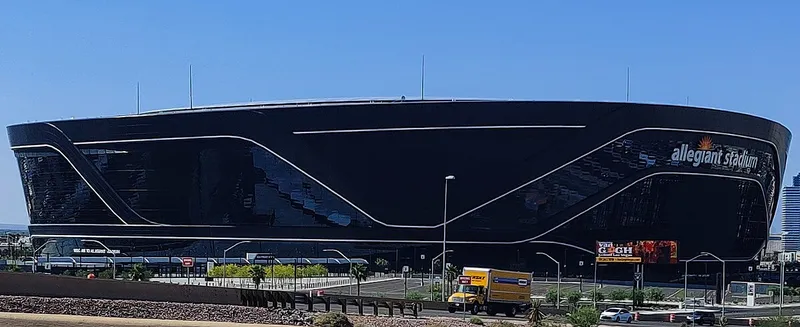
And the gross a single show can generate is staggering. On Billboard’s 2024 year-end chart, Allegiant Stadium in Las Vegas averaged nearly 8 million dollars per show across 15 concerts. U2’s residency at the Las Vegas Sphere set a per-show record of 6.11 million dollars. Bruce Springsteen averaged 5.7 million a night. A single stadium concert now routinely grosses several million dollars, and the biggest venues stack dozens of those nights into a summer.
The newest wrinkle is the residency, where an act stops touring stadium to stadium and instead parks in one building for a run of nights. U2 played 40 shows in a single Las Vegas venue and grossed 244.5 million dollars doing it. The logic is the same one driving the stadium concert business generally: a booked building is a paid building, and the fewer times you have to load in and out, the more of the gross survives. For a stadium, a six-night residency by one act is far more profitable than six separate one-offs, because the stage, the rigging, and the crew stay put between shows. It is the difference between renting a venue once and renting it for a week.
The venues that cash in the most
Not every stadium is an equal concert draw. The ones that dominate the charts share a trait: they are weatherproof, well-located, or both.
On Billboard’s 2024 year-end stadium ranking, Allegiant Stadium led all US stadiums with 119.2 million dollars from just 15 shows. It is no coincidence that Allegiant is a fully enclosed, climate-controlled dome. Rain never cancels a show there, which lets it book multi-night runs with total confidence, a direct link between the dome-building boom and concert revenue. In Mexico City, the stadium formerly known as Foro Sol topped the international chart with more than 135 million dollars across 26 shows. Soldier Field in Chicago cleared 80 million from 8 shows.
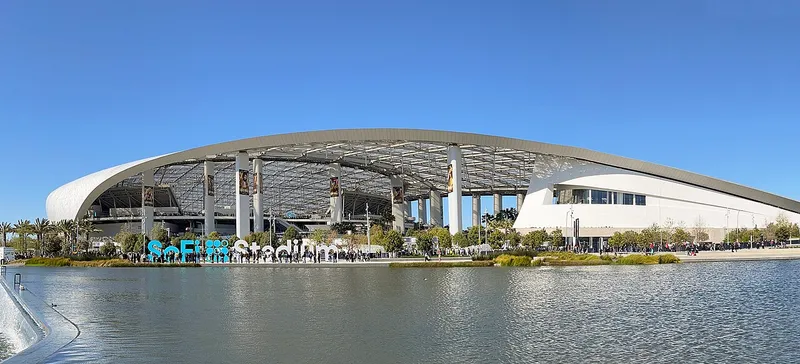
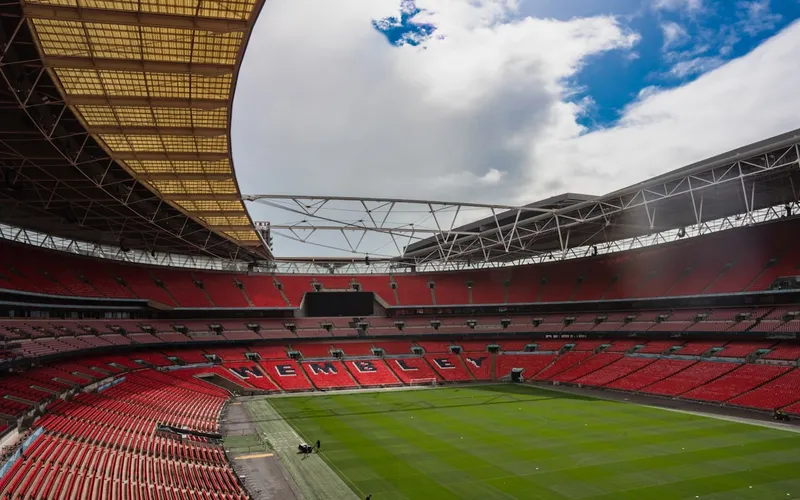
Then there are the sheer-capacity venues. Wembley Stadium seats about 90,000 for a concert and hosted eight Eras Tour nights. The Rose Bowl in Pasadena tops out near 92,000, one of the largest concert-capable stadiums in the country. SoFi Stadium is consistently ranked the number one venue in the world for touring, and hosted six Eras nights of its own.
Worth noting: a stadium’s concert capacity is often higher than its sports capacity, because the field itself becomes floor seating. The playing surface that sits empty during a game turns into thousands of standing-room tickets during a show.
The biggest venues have also learned to think in nights rather than dates. Rather than book a single show, they land a multi-night stand, and the Eras Tour turned that into an art form: eight nights at Wembley, six at SoFi, six at Toronto’s Rogers Centre, six at the Singapore National Stadium. For a stadium, that is roughly a week of sold-out crowds from one booking, with all the concession and parking revenue that comes with it, and none of the gaps that a scattered schedule leaves behind. The math is why cities now compete to be a tour’s exclusive regional stop. Landing the only Eras Tour dates for a thousand miles is worth a fortune in hotel nights and restaurant tabs, before a single ticket is counted.
The biggest crowds ever packed in
Long before the Eras Tour, stadiums were setting concert attendance records that still stand, and the biggest of them come from Brazil.
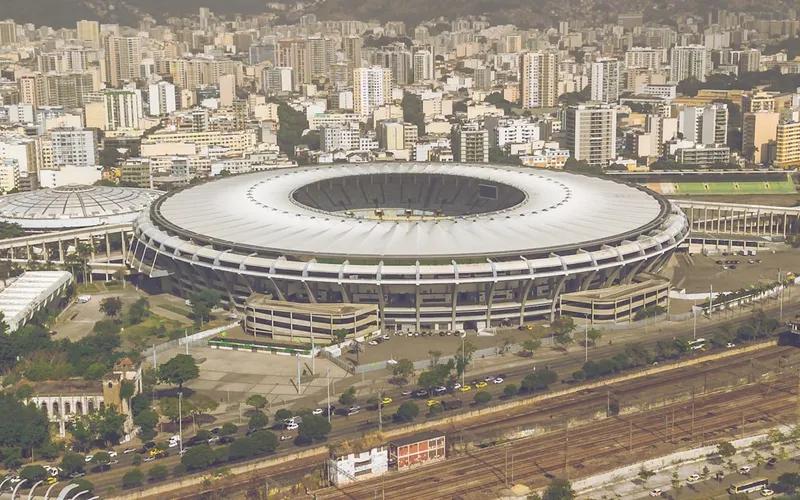
The largest paid crowd ever recorded at a stadium concert was about 198,000 people for a-ha at Maracana Stadium in Rio de Janeiro, during Rock in Rio II in 1991. Maracana in its pre-renovation, terraced form was a crowd machine: Paul McCartney drew 184,000 there in 1990, Tina Turner 180,000 in 1988, and Frank Sinatra 175,000 in 1980. Modern all-seater safety rules mean numbers like those will probably never be matched at a stadium again.
The largest concert crowd of any kind was not ticketed at all. Rod Stewart’s free New Year’s Eve show on Copacabana Beach in 1994 is estimated to have drawn around 3.5 million people, though that figure counts a whole beach of revelers rather than a stadium gate. It is the difference between a concert and a national party, but it shows the ceiling of what live music can pull.
~198,000: the paid attendance for a-ha at Maracana in 1991, the largest stadium concert crowd on record.
The cost of a concert night
A stadium concert looks like pure profit from the outside. Up close, it comes with real friction, and the biggest headache is the grass.
Natural grass fields are fragile, and a concert is about the worst thing you can do to one. Staging, rigging, forklifts, and tens of thousands of dancing feet chew up a pitch fast. NFL grounds crews already replace natural fields once or twice a season, and upkeep, with grow lights, under-soil heating, and constant maintenance, can run a million dollars or more a year. Grass deteriorates far faster when concerts are stacked on top of the sport, which is one quiet reason so many stadiums have switched to artificial turf. Durability, in stadium-speak, means hosting a Tuesday concert and a Sunday game without ruining the field for either.
The venues that keep grass fight back with technology. SoFi Stadium lays down a system of more than 5,300 interlocking deck panels that cover the entire field in about eight hours, strong enough to carry cranes while protecting the turf underneath. It is an enormous operation for a single show.
Then there are the neighbors. Because stadiums sit in cities, they run into noise and event limits written by local governments. Wembley’s planning permission historically capped it at 46 major non-sporting events a year, only raised to 54 in 2024 after the stadium applied for more. Cities like Philadelphia cap stadium sound at the nearest home’s property line. A stadium cannot simply book concerts every night even when the demand exists, because the paperwork says no.
The ripple beyond the gates
The reason stadiums and cities put up with the grass bills and the noise fights is that a stadium concert no longer stops at the turnstile. It moves an entire local economy.
Economists coined a word for the effect: Swiftonomics. Bloomberg Economics estimated the Eras Tour added 4.3 billion dollars to US GDP, with the average fan spending something like 1,300 to 1,500 dollars per show once you count travel, hotels, outfits, and food. Near host stadiums, accommodation spending jumped by nearly half during tour stops. A six-night stand at one stadium can be worth more to the surrounding city than a week of home games.
That is the real answer to why stadiums have become concert venues first and sports venues second on the balance sheet. The home team fills the building 10 times a year and defines its identity. The concerts fill the other 300 nights and, increasingly, pay for the place. For the buildings themselves, and the eye-watering sums it now takes to construct one, see our look at the most expensive stadiums ever built, and for the venues getting ready for football’s biggest event, the World Cup 2026 hub.
Sources
- Taylor Swift’s Eras Tour tops $2 billion, Variety and Pollstar. The record gross, show count, and attendance average.
- List of highest-grossing concert tours, Wikipedia. Coldplay, Beyonce, and Sheeran tour grosses.
- Ed Sheeran’s Divide Tour sets touring record, Forbes. The Divide Tour figures and Sydney stadium run.
- Billboard’s top music venues of 2024. Allegiant, Foro Sol, Soldier Field, and MetLife concert grosses.
- How Sphere posted record numbers, Las Vegas Review-Journal. U2 residency per-show gross.
- NFL stadium event study, Sportico. How few events a stadium hosts a year.
- How NFL teams make money, Sportico. The concert revenue split between artist and venue.
- SoFi Stadium turf protection, Signature Systems and NFL grass-versus-turf costs, Sportico. The operational cost of a concert night.
- Maracana Stadium, Wikipedia. Historic concert attendance records.
- Wembley event cap raised, Kilburn Times and Swiftonomics, CNN. Event limits and economic impact.
Tour grosses are compiled by Pollstar and Billboard Boxscore from reported box-office data and can be revised; figures here are the most widely reported finals. Historic concert attendances, especially the pre-1995 Maracana and Copacabana crowds, are estimates that vary by source. Some tours were still touring at the time of writing, so their grosses represent totals reported to date.
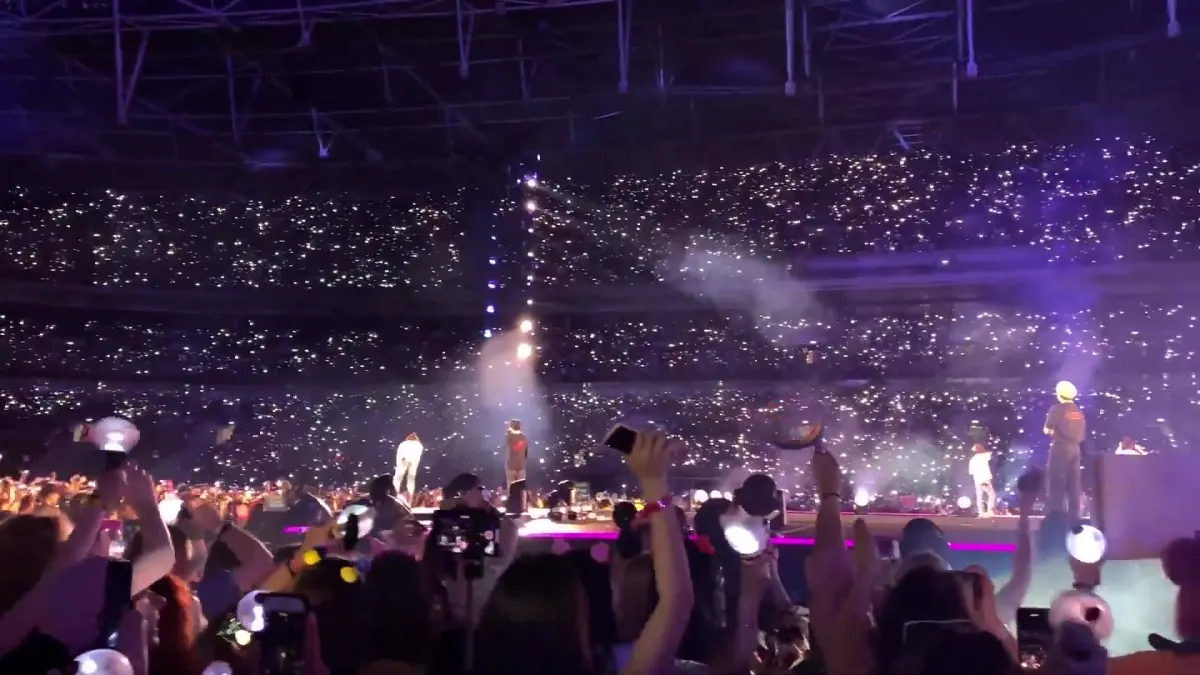
Hero photo: BTS in concert at Wembley Stadium by NenehTrainer, CC BY 3.0, via Wikimedia Commons, cropped.