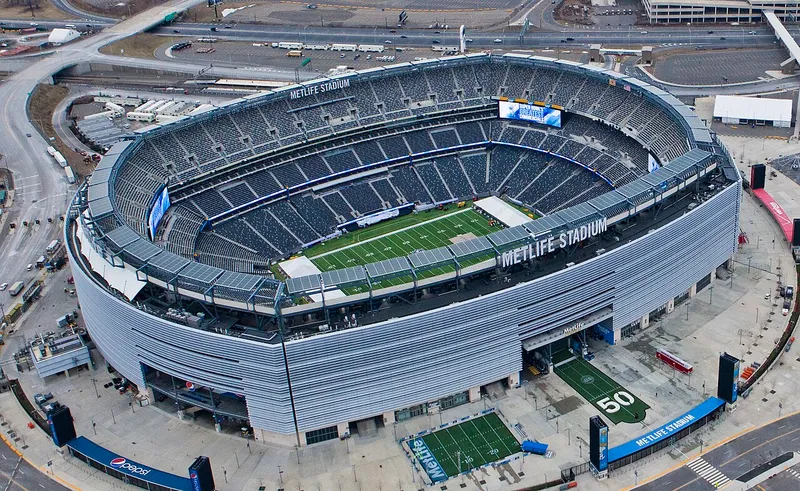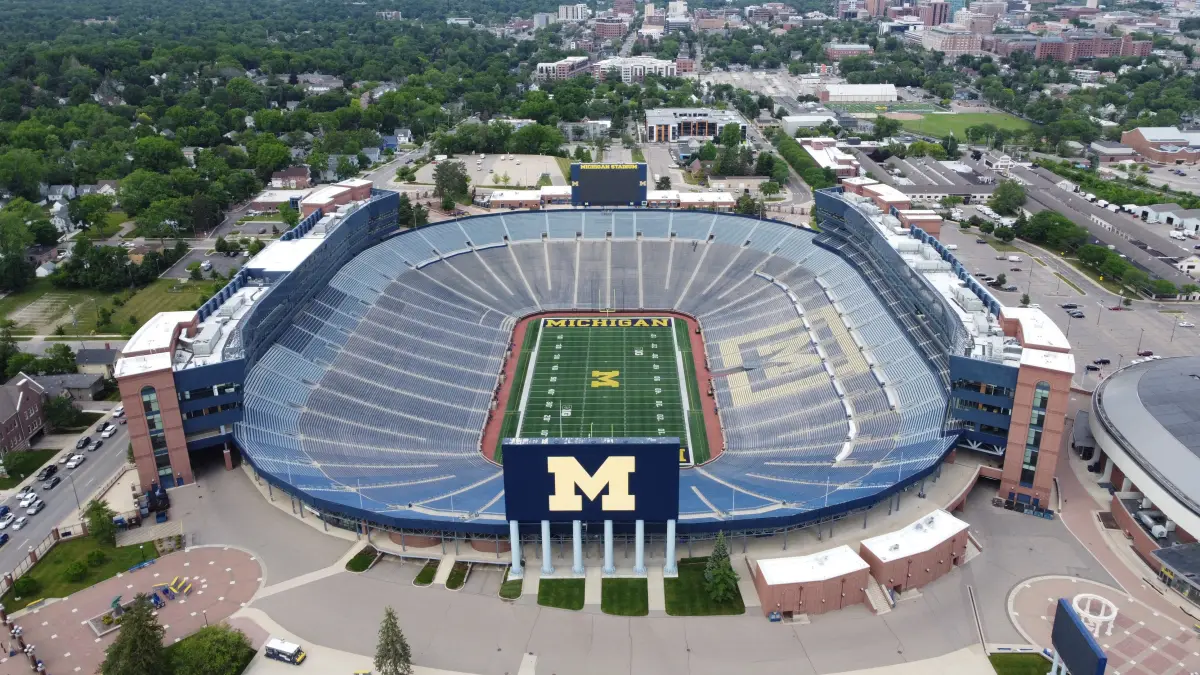
Michigan Stadium holds 107,601 people. The biggest stadium in the NFL, MetLife Stadium in New Jersey, holds 82,500. That’s a gap of about 25,000 seats, a mid-sized arena’s worth of fans. College football builds bigger than the pros do, and it always has.
The eight largest college football stadiums in America each hold more than 100,000 fans. Not one NFL stadium does. The biggest venue in pro football would rank around 14th on the college list, behind schools like Auburn and Nebraska. College Saturdays draw bigger crowds than NFL Sundays, and the buildings were sized for it. A top program can fill a six-figure stadium a half-dozen times every fall and sell most of the seats months ahead.
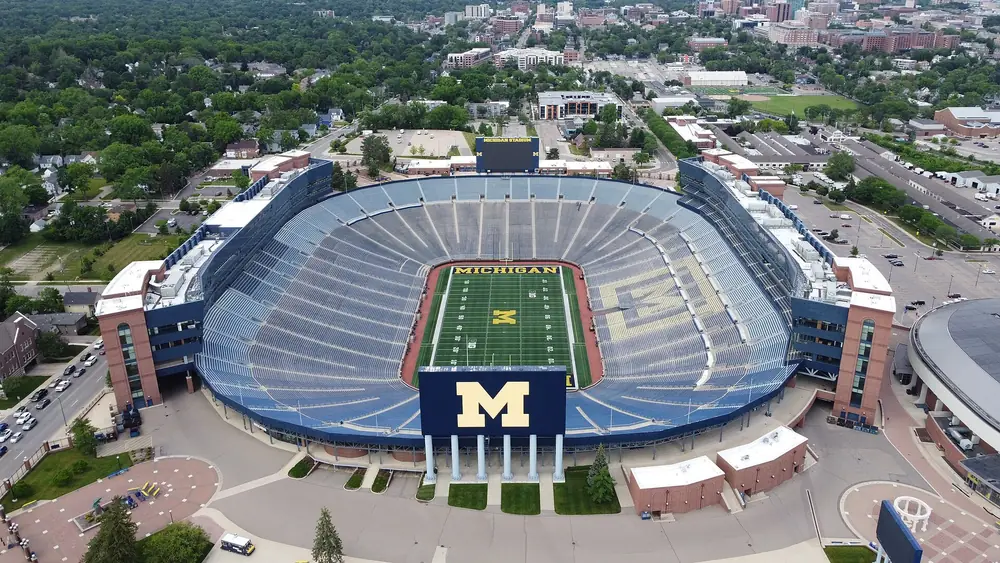
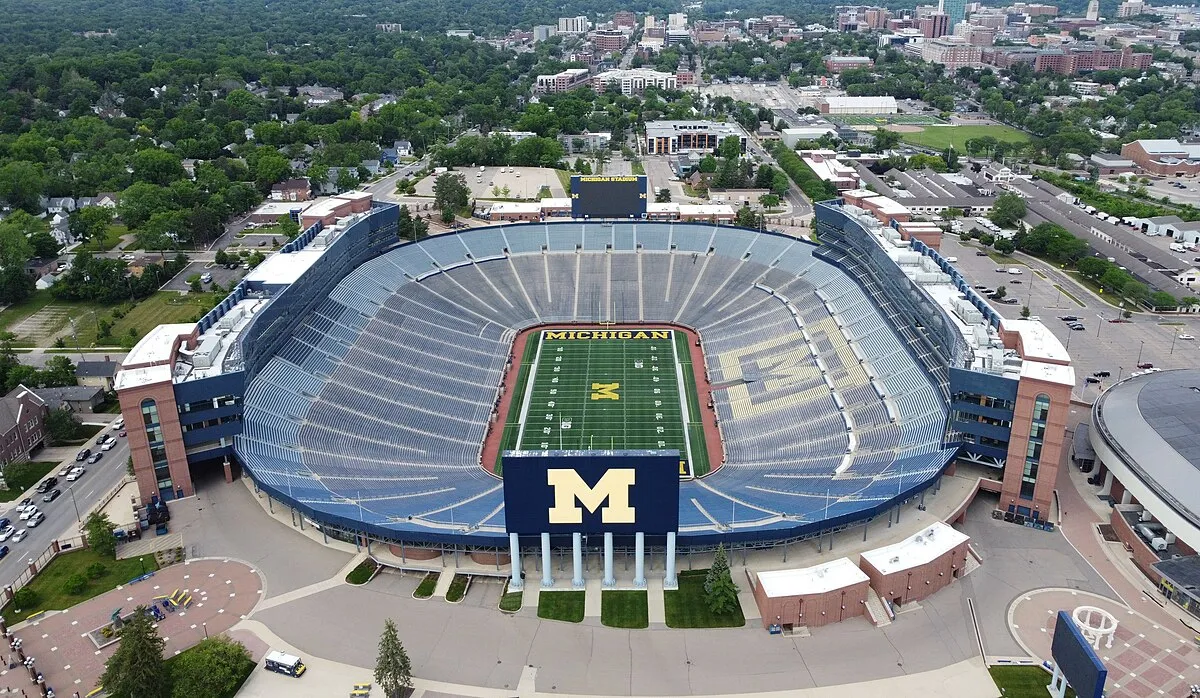
107,601 is the official capacity of Michigan Stadium, the largest stadium of any kind in the Western Hemisphere.
The biggest college football stadiums, ranked by capacity
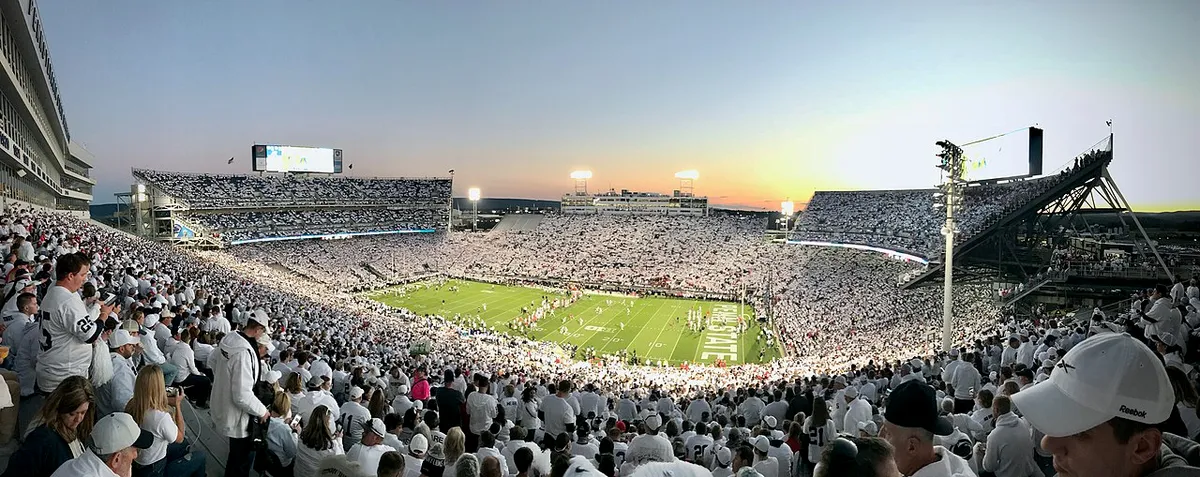
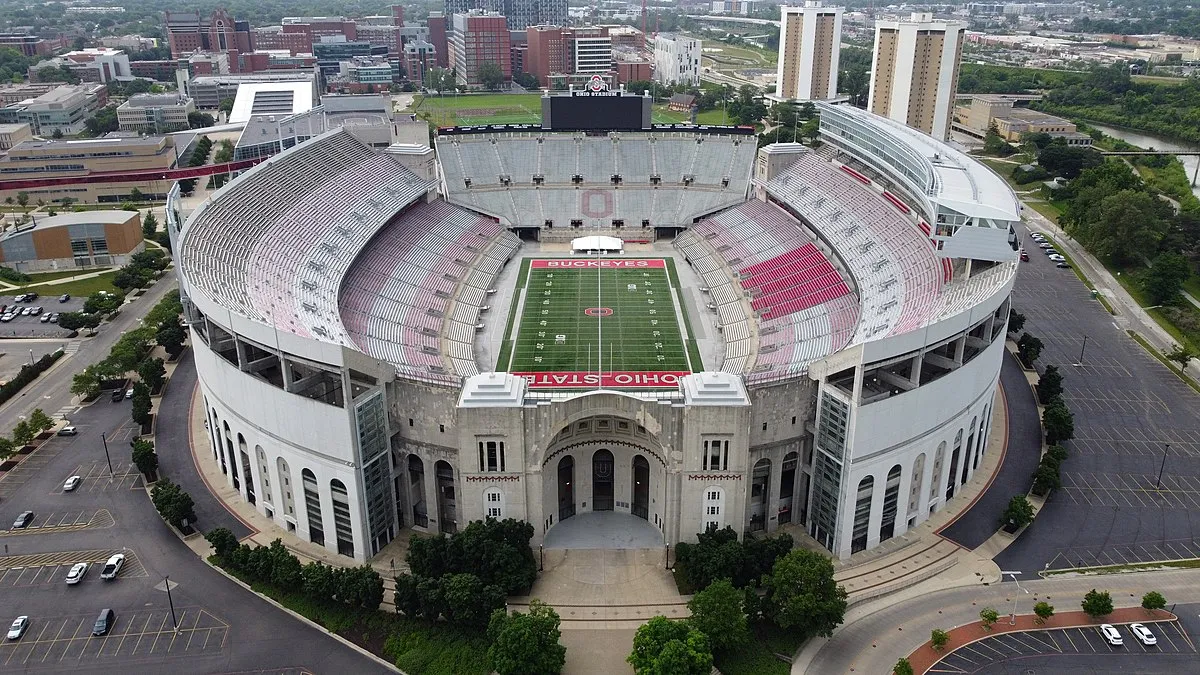
The biggest college football stadiums are a tight group of century-old giants in the Midwest and the South. Michigan Stadium leads at 107,601, followed by Beaver Stadium at Penn State (106,304) and Ohio Stadium at Ohio State (102,780). The top eight all clear 100,000. Below that, the list steps down through the low 90,000s and 80,000s, which is where the biggest NFL stadiums would finally appear. Here are the 15 largest, by listed seated capacity for 2026.
| Rank | Stadium | Team | Capacity | Opened |
|---|---|---|---|---|
| 1 | Michigan Stadium | Michigan | 107,601 | 1927 |
| 2 | Beaver Stadium | Penn State | 106,304 | 1960 |
| 3 | Ohio Stadium | Ohio State | 102,780 | 1922 |
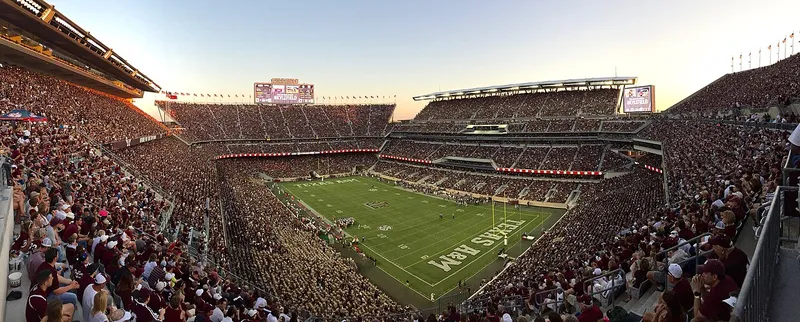
| 4 | Kyle Field | Texas A&M | 102,733 | 1927 |
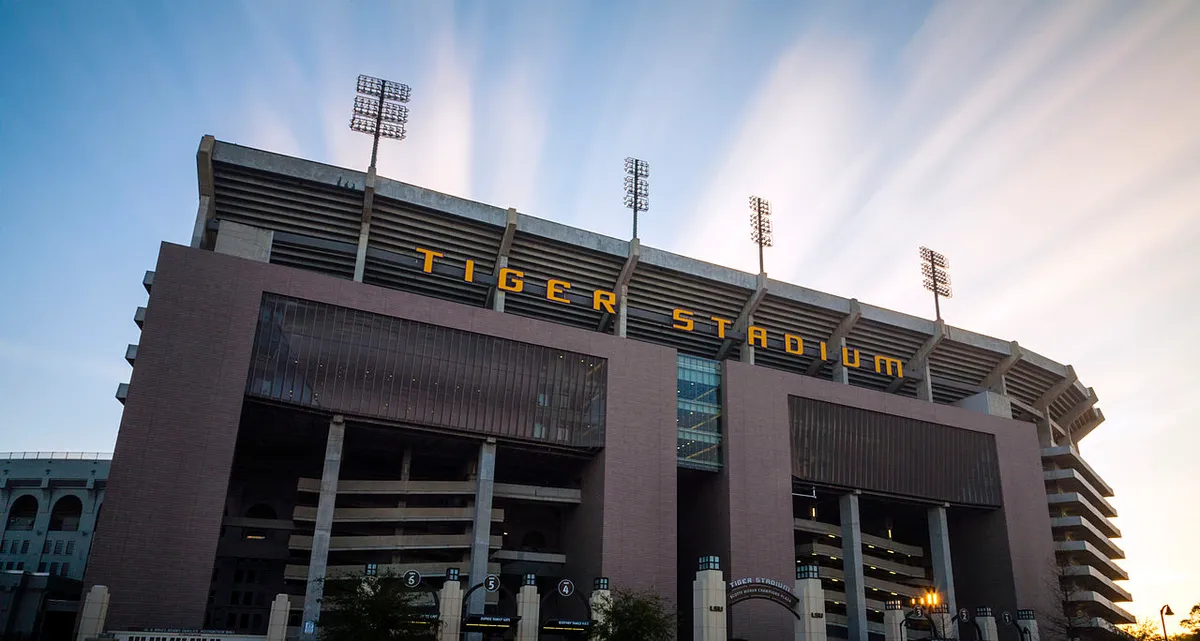
| 5 | Tiger Stadium | LSU | 102,321 | 1924 |
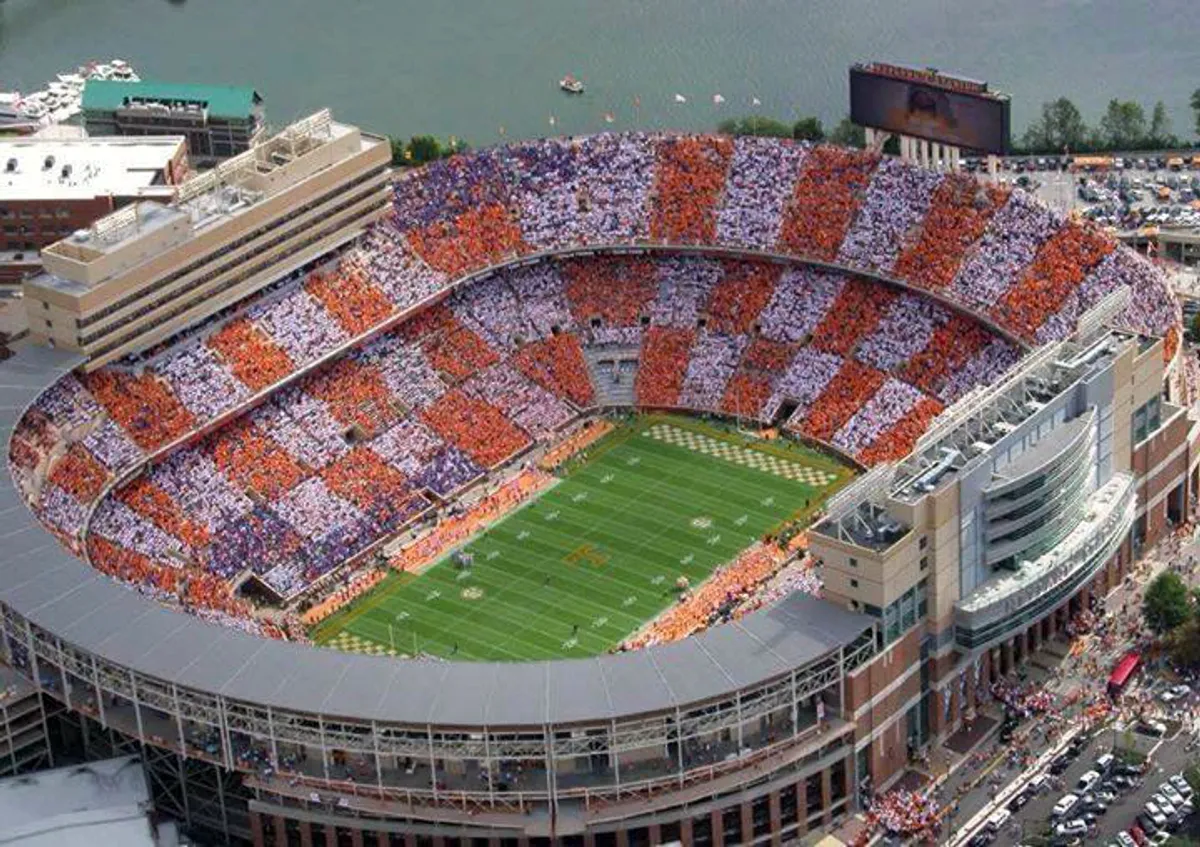
| 6 | Neyland Stadium | Tennessee | 101,915 | 1921 |
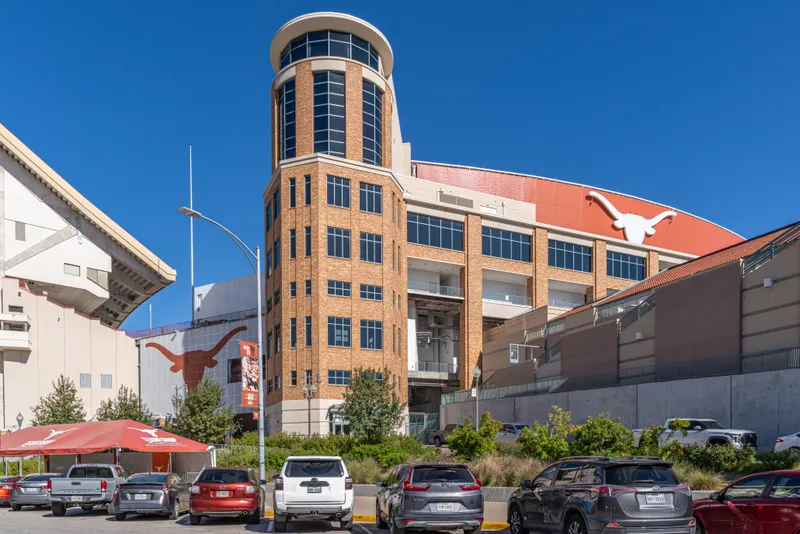
| 7 | Darrell K Royal Stadium | Texas | 100,119 | 1924 |
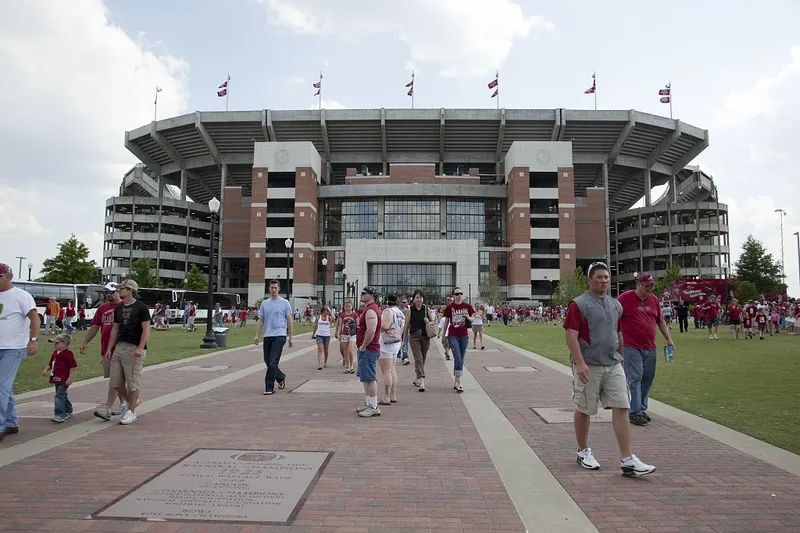
| 8 | Bryant-Denny Stadium | Alabama | 100,077 | 1929 |
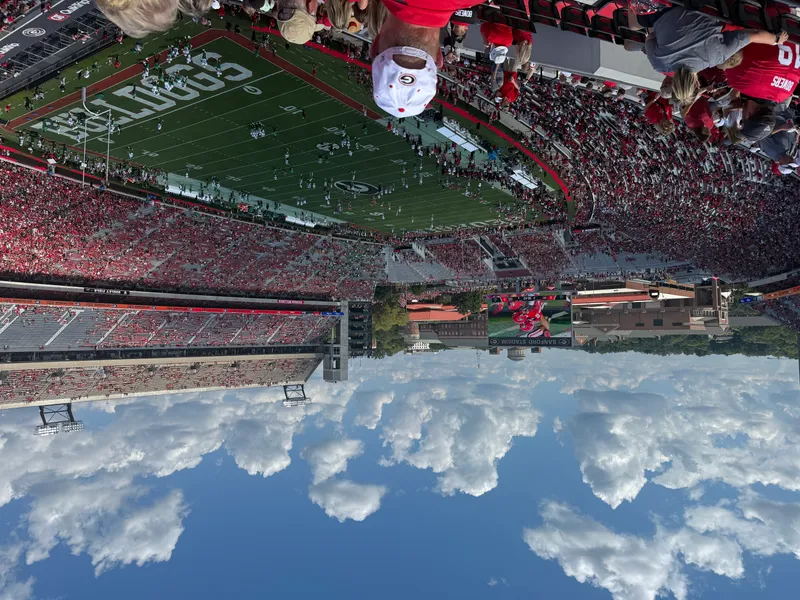
| 9 | Sanford Stadium | Georgia | 93,033 | 1929 |
| 10 | Rose Bowl | UCLA | 89,702 | 1922 |
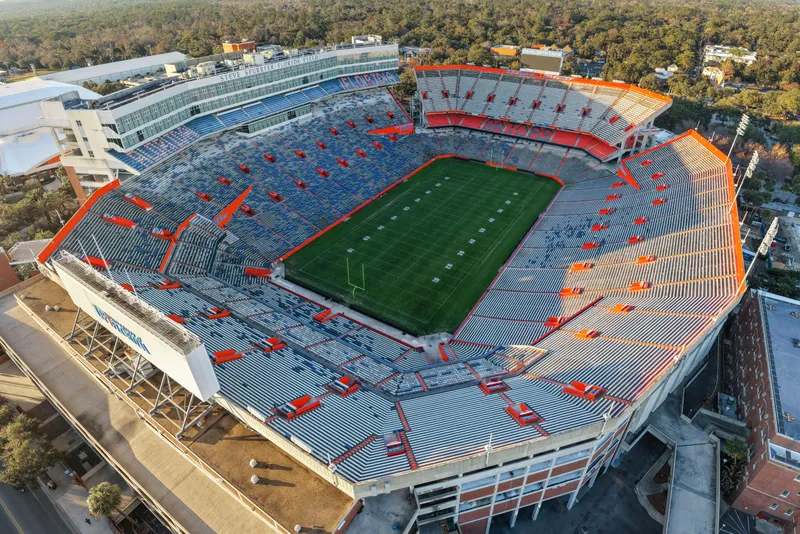
| 11 | Ben Hill Griffin Stadium | Florida | 88,548 | 1930 |
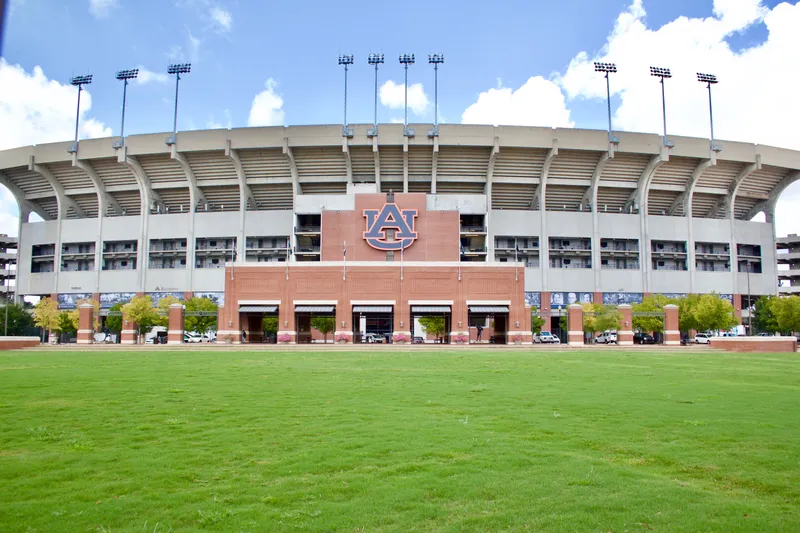
| 12 | Jordan-Hare Stadium | Auburn | 88,043 | 1939 |
| 13 | Memorial Stadium | Nebraska | 85,458 | 1923 |
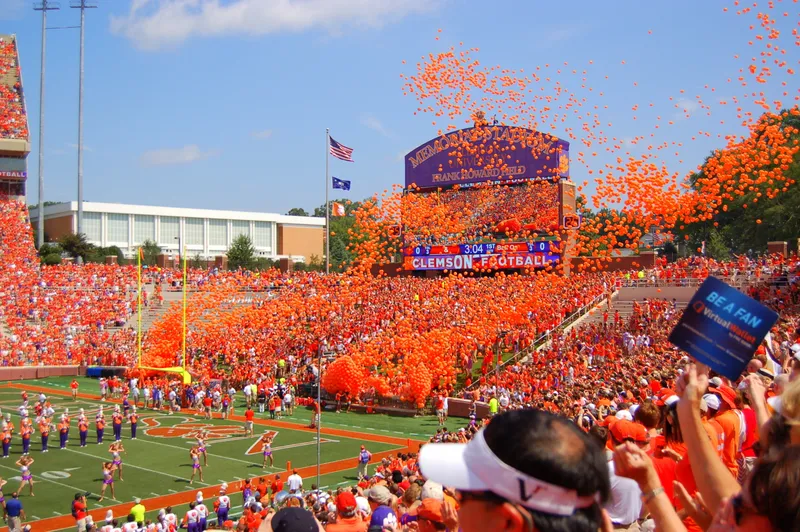
| 14 | Memorial Stadium | Clemson | 81,500 | 1942 |
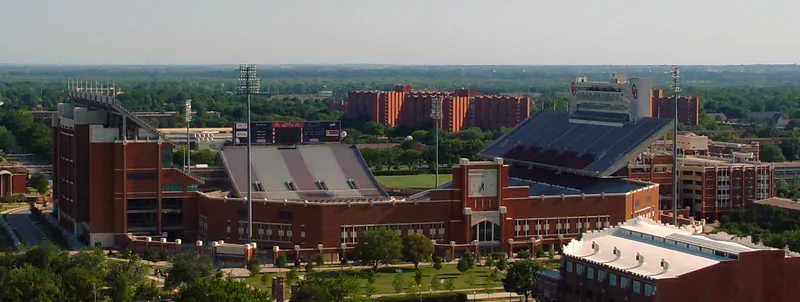
| 15 | Oklahoma Memorial Stadium | Oklahoma | 80,126 | 1923 |
Look at the opening years. Only one stadium in the top eight, Beaver, was built after World War II. The rest have been standing, and growing, for close to a hundred years.
Why college football stadiums are bigger than NFL stadiums
College football stadiums are bigger than NFL stadiums because they were built for deeper demand. A pro team sells season tickets across a metro area and prices most seats high. A big state university sells its stadium to an alumni base of several hundred thousand, a student body of 40,000 or more, and a region that treats six home Saturdays a year as the main event. When demand runs that deep and the games are that rare, you build big and keep adding seats.
The supply side points the same way. There are 138 FBS programs against the NFL’s 32 franchises, and most college towns don’t have a pro team taking a cut of the weekend. The home dates are rarer, too. An NFL club hosts eight or nine games a season. An FBS team plays twelve in total and is only required to host five. Rare events fill bigger rooms.
Put the two lists next to each other and the difference is plain. The NFL’s biggest would land in the middle of the college table.
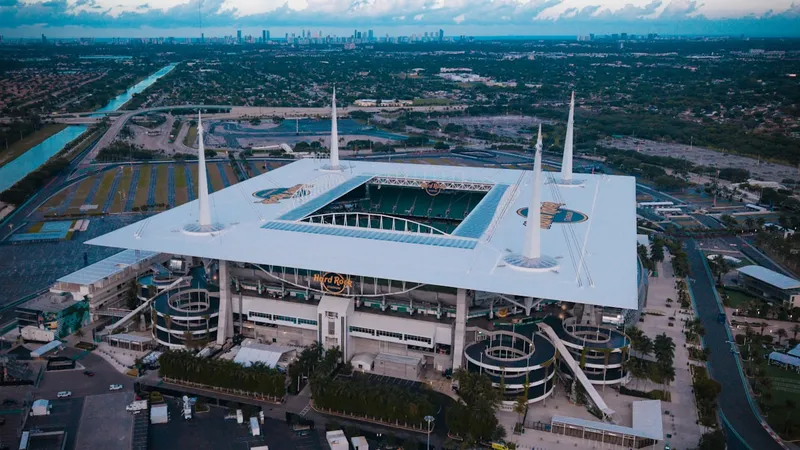
82,500 is the capacity of MetLife Stadium, the NFL’s biggest. It would rank around 14th among college football stadiums.
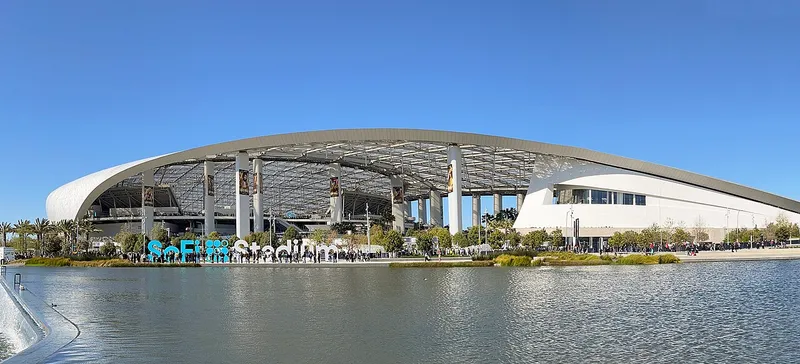
There’s a money angle too, and it runs the other way from what you’d expect. The newest NFL stadiums are getting smaller on purpose, trading raw seats for suites, clubs, and wider concourses that earn more per fan. SoFi Stadium and Allegiant Stadium both opened around 65,000 to 70,000. College programs never made that trade at the same scale. A student section that stands for four hours doesn’t need a club lounge, and a school that has sold out 100,000 seats for decades has no reason to remove them. So the college bowls kept their size while the pros shrank. We cover the pro side in our ranking of the biggest NFL stadiums, and the same pattern shows up in the largest stadiums in the world, where American college venues take up a large share of the top 20.
Michigan Stadium: the Big House and its odd 107,601
Michigan Stadium is the biggest of them all, and its capacity has a quirk fans love: it always ends in an odd number. The current figure is 107,601, and for decades the official count has ended in a “1” rather than a round number. The popular story credits Fritz Crisler, the athletic director said to have wanted Michigan to always list one more seat than anyone else. It’s a good story, but it’s disputed, with no clear record from the period to confirm it, so treat the “one more seat” line as lore. The 107,601 itself is real and verified.
What isn’t in doubt is the scale. Michigan Stadium is the largest stadium of any kind in the United States, the largest in the Western Hemisphere, and the third-largest in the world, behind only a cricket ground in India and a national stadium in North Korea. On September 7, 2013, it drew 115,109 for a night game against Notre Dame, a Michigan win and one of the biggest crowds in American sports history.
115,109 packed the Big House for a 2013 night game against Notre Dame, well above its listed capacity.
The nickname fits. From the top row of the Big House, the field looks a long way down, because the bowl is dug into the ground instead of stacked into the sky. That design, a shallow pit rather than a tall grandstand, is part of why it holds six figures without feeling like a skyscraper.
The Century Club: eight stadiums over 100,000
The line between very big and true college-football giant sits at 100,000, and exactly eight stadiums cross it. Michigan (107,601) and Beaver (106,304) lead, then a tight pack: Ohio Stadium at 102,780, Kyle Field at 102,733, Tiger Stadium at 102,321, and Neyland Stadium at 101,915. Then Texas and Alabama sit right on the line at 100,119 and 100,077, just 42 seats apart. The whole top six fits inside a span of fewer than 5,700 seats, close enough that a single renovation can move a stadium up or down the order.
That 42-seat gap between the seventh and eighth biggest stadiums shows how carefully these programs manage the number. Crossing 100,000 becomes a recruiting pitch and a headline, so schools hold their capacity right above it on purpose.
Beaver Stadium is worth a note here, because its number is in flux. Penn State is in the middle of a major renovation, scheduled to finish before the 2027 season, and its official capacity sits at 106,304 during construction, second only to Michigan. But the school expects temporary bleacher seating to push it toward 109,000 for the 2026 season, which would briefly make Beaver the largest stadium in the country, ahead of Michigan, before the lower bowl comes out after the season. Its record crowd of 111,030 shows the real ceiling is higher than the listed number anyway. When these places are full, they hold a small city.
The Rose Bowl, and what counts as a college stadium
Every stadium on this list is a school’s home field, and one of them stands out for where it sits. The Rose Bowl in Pasadena (89,702) is UCLA’s home stadium, but unlike the others it’s nowhere near campus. It sits several miles away in a canyon, and it’s known worldwide less for UCLA than for the Rose Bowl Game every New Year’s Day. It still counts, because UCLA plays its full home schedule there.
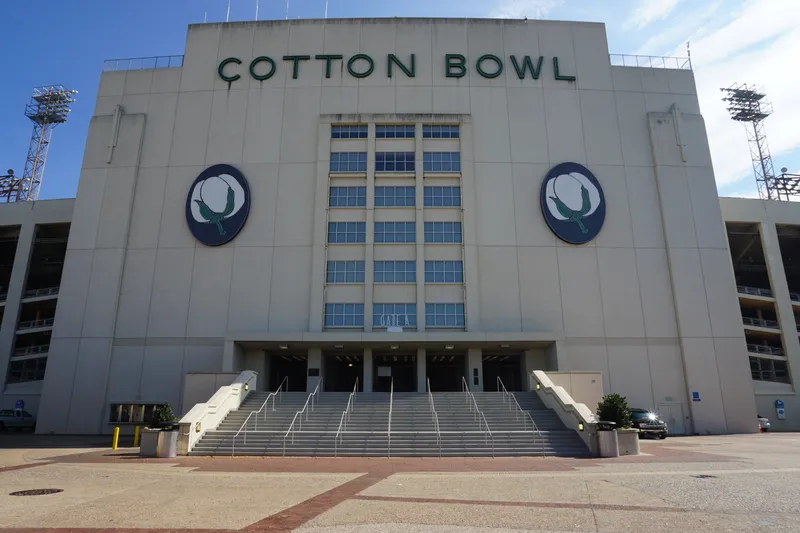
That’s also the line this ranking draws. We count stadiums that are a school’s regular home, which is why a neutral-site venue like the Cotton Bowl in Dallas doesn’t make it. The Cotton Bowl seats 92,100, bigger than most of the list, but it has no full-time college tenant. Its biggest college date is the Red River Rivalry, the Texas-Oklahoma game split down the middle in burnt orange and crimson every October, and a neutral-site game isn’t a home stadium.
Either way, the top eight don’t change, because they’re all on-campus giants: Michigan, Penn State, Ohio State, Texas A&M, LSU, Tennessee, Texas, and Alabama.
Why the biggest college stadiums are almost all a century old
The biggest stadiums in one of America’s younger major sports are almost all old. Neyland opened in 1921. Ohio Stadium and the Rose Bowl opened in 1922. Oklahoma Memorial in 1923. Tiger Stadium and Texas in 1924. Michigan and Kyle Field in 1927. Most of the top ten opened within a single decade, the 1920s, during a building boom that swept American campuses after World War I.
They didn’t open at 100,000. Michigan started near 72,000. These stadiums grew slowly, one deck and one end-zone section at a time, across a hundred years of winning teams and rising enrollment. Each expansion added another ring of seats, and they added up. Ohio Stadium still shows its age in its shape, the open-ended horseshoe that gave it its nickname, a layout from an era before fully enclosed bowls were the norm.
1920s is when most of the ten biggest college stadiums first opened, then grew to six figures over the following century.
The NFL runs the opposite way, with its newest stadiums the smallest and the trend toward fewer seats. In college football, the oldest stadiums are the biggest, because age is what let them grow. A new program can’t produce 100,000 committed fans overnight. A school that’s been selling out since the 1920s already has them.
The SEC and Big Ten own the list
Two conferences dominate the top of the ranking. Run down the 15 biggest and the SEC and the Big Ten claim almost every slot. The Big Ten has Michigan, Beaver, Ohio Stadium, Nebraska, and, since UCLA joined the league in 2024, the Rose Bowl. The SEC counts Kyle Field, Tiger Stadium, Neyland, Bryant-Denny, Sanford Stadium, Ben Hill Griffin, Jordan-Hare, and, after Texas and Oklahoma’s 2024 move, Darrell K Royal and Oklahoma Memorial.
That leaves Clemson’s Memorial Stadium, the ACC’s only entry in the top 15, at 81,500. The pattern follows where college football matters most: the industrial Midwest and the Deep South, where a Saturday home game is the biggest event for a hundred miles.
Georgia’s Sanford Stadium adds one of the sport’s best traditions. Its field is ringed by privet hedges first planted in 1929, the year the stadium opened, and “Between the Hedges” became one of the most famous phrases in the game.
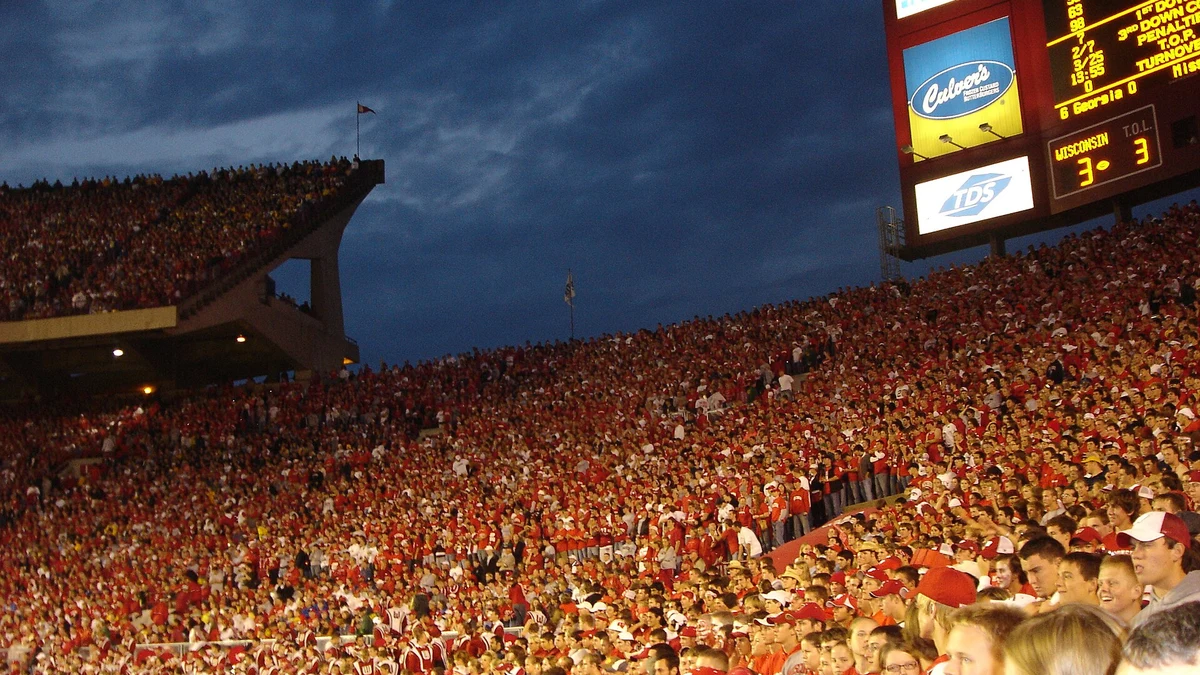
Nebraska’s tradition is one of sheer loyalty. The Cornhuskers have sold out every home game at Memorial Stadium since 1962, a streak now past 400 straight games and the longest in any college sport. A program from a state with fewer than two million people keeps an 85,000-seat stadium full for a run that no other school in any sport has matched.
The loudest of the giants
Capacity is one thing. What 100,000 people do with it is another. Two of the biggest stadiums here, Tiger Stadium at LSU and Clemson’s Memorial Stadium, are both nicknamed Death Valley, and both have a claim to being the loudest places in the sport. LSU’s night games in Baton Rouge are famous for it, and the crowd noise once registered on a seismograph on campus.
Kyle Field brings a different kind of volume. Texas A&M’s 12th Man tradition, which traces back to a single student called down from the stands to suit up in 1922, has the entire student body standing for all four quarters. Tennessee’s Neyland, which set its attendance record of 109,061 in 2004, plays “Rocky Top” after nearly every first down. This is the part that separates a big stadium from a great one. A full 100,000 that sits quiet is just a large room. A loud one, timed to a third-and-long in the fourth quarter, can swing a game, which is why coaches recruit to it and visiting quarterbacks dread it. We rank the loudest venues anywhere in our guide to the loudest stadiums in the world.
The scale is hard to picture until you compare it across the country. Several of these college bowls are the single biggest building in their entire state, which we map out in the biggest stadium in every US state. When one fills, it becomes, for three hours, one of the most populated places in America.
What the ranking actually tells you
The biggest college football stadiums are more than big buildings. They’re proof of a century-old bet that a state university’s fanbase would keep showing up, and the bet keeps paying off. Eight of them hold six figures. Every one is bigger than the largest stadium the NFL has ever built. And most were designed before television, before night games, before anyone expected 100,000 people to drive in for a Saturday.
So the next time you hear a packed NFL stadium called enormous, keep the numbers in mind. A capacity of 82,500 is 14th place in college football. The Big House sits at the top at 107,601, and it has held that spot for a long time.
For the pro side of this story, see our ranking of the biggest NFL stadiums. For the global picture, where these campuses hold their own against the great national stadiums of the world, start with the largest stadiums on Earth. And for the single biggest crowds ever counted at any venue, there’s the biggest crowds in stadium history.
Sources
- List of NCAA Division I FBS football stadiums, Wikipedia. Baseline capacity table for on-campus college venues.
- List of American football stadiums by capacity, Wikipedia. Cross-check for capacities and the college-versus-NFL comparison.
- NCAA Division I FBS, Wikipedia. Program count and the 12-game season with a five-game home floor.
- NFL regular season, Wikipedia. The 17-game season and the alternating eight or nine home dates.
- MeetStadium verified stadium pages for Michigan Stadium, Beaver Stadium, Neyland Stadium, and Sanford Stadium. Record crowds, tradition details, and renovation notes.
Hero photo: Michigan Stadium aerial by Lectrician2, CC BY-SA 4.0.
Capacities are official listed seated figures for the 2026 season and can vary by a few hundred seats between sources and after renovations. Record attendance figures exceed listed capacity because standing-room and expansion seating are counted on the day. Where our own stadium pages and public capacity tables differed, we used the figure confirmed by both.