The crowds that can never happen again
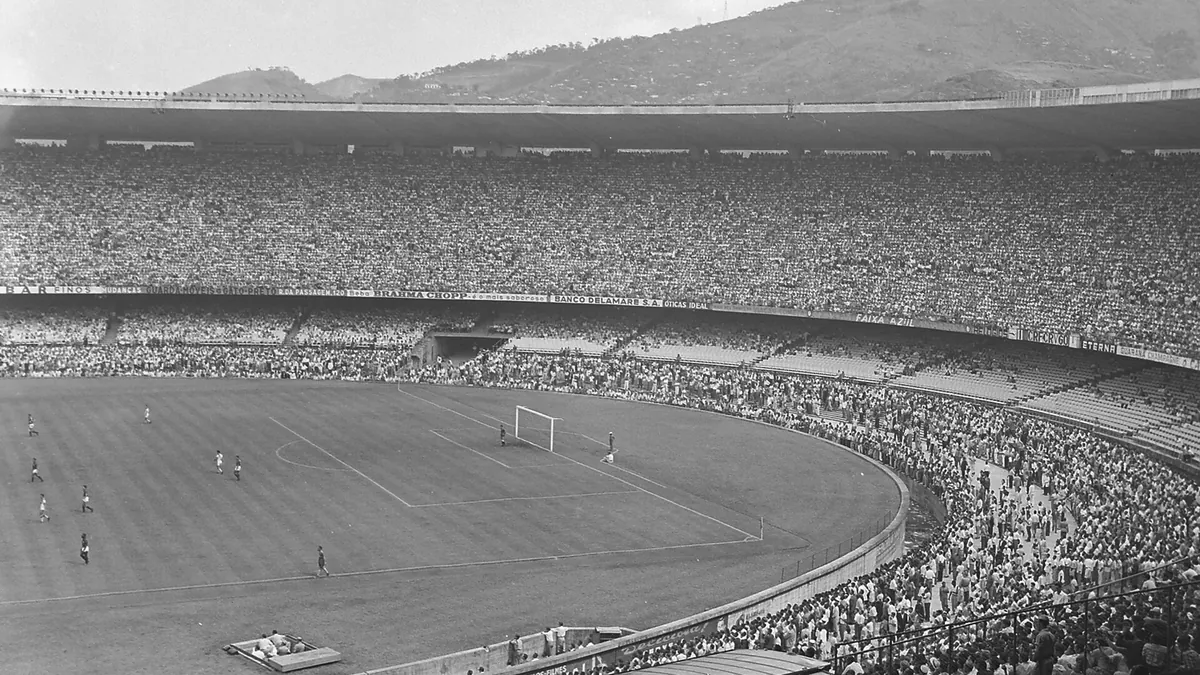
On 16 July 1950, somewhere between 173,850 and 200,000 people pushed into the Maracana in Rio de Janeiro to watch Brazil play Uruguay for the World Cup. The official paid figure was 173,850. The real number, counting everyone who climbed a wall or slipped a gate, was higher and will never be known exactly.
That crowd is the largest ever recorded at a football match. And here is the wild part: it can never be matched. Not because no one wants to, but because it is now illegal. The safety rules that govern modern stadiums make a crowd that size impossible, so the record is frozen in place forever, a relic of a more dangerous era.
That is the strange beauty of attendance records. Most of the figures on this list are not targets that someone will eventually beat. They are tombstones, marking a way of watching sport that the world decided was too risky to allow. Before we get into them, one distinction matters: attendance is how many people actually showed up, while capacity is how many seats a stadium has. The two used to drift wildly apart. For the seat counts, see our largest stadiums in the world ranking. This list is about the crowds.
The biggest stadium crowds ever recorded:
- ~350,000 (estimated): Indianapolis 500, 2016. The largest stadium crowd of any kind, though never officially counted.
- 194,603: Flamengo vs Fluminense, Maracana, 1963. The largest recorded club football crowd.
- 173,850 (paid): 1950 World Cup final, Maracana. The official football attendance record.
- 149,415: Scotland vs England, Hampden Park, 1937. Europe’s largest crowd.
- 132,274: Chavez vs Haugen boxing, Estadio Azteca, 1993. The largest paying boxing gate.
- 121,696: 1970 VFL Grand Final, Melbourne Cricket Ground.
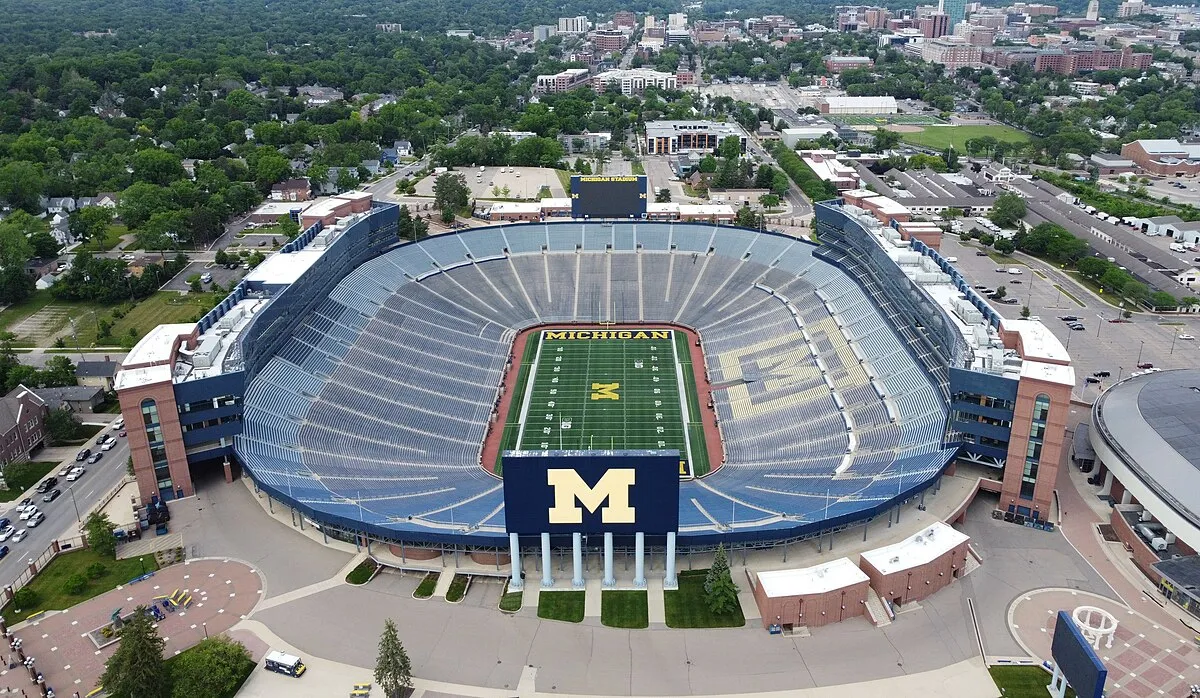
- 115,109: Michigan vs Notre Dame, Michigan Stadium, 2013.
Full breakdown, venue records, and why they are unbreakable below.
The 1950 Maracana: football’s permanent record
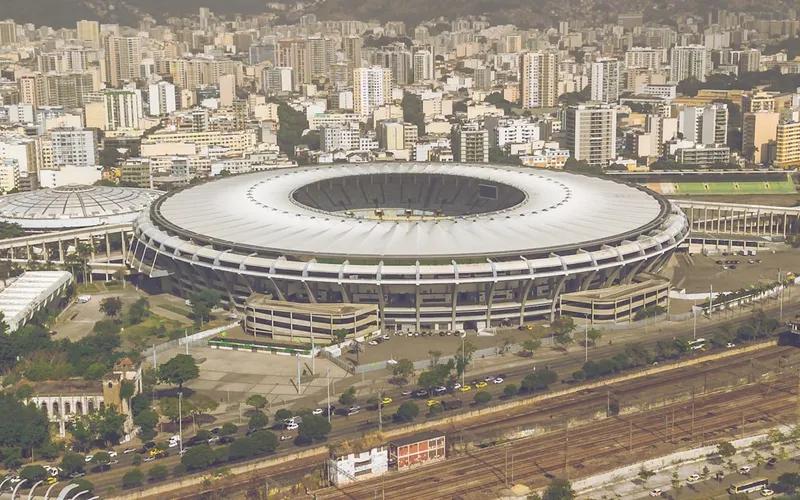
The Maracana was built for the 1950 World Cup, and it was built enormous on purpose. Brazil wanted the largest stadium on Earth, and for the final group match that would decide the tournament, it got the largest football crowd in history.
The official paid attendance was 173,850, the figure Guinness World Records recognizes and FIFA cites. Estimates of the total crowd, including the thousands who got in without a ticket, run as high as 220,000. You will sometimes see 199,854 quoted as a clean “total” number, but that figure is inconsistently sourced and best treated as one of several estimates rather than a verified count. The hard, defensible record is 173,850 paid.
What makes it sting for Brazil is the result. Uruguay won 2-1 in front of that vast home crowd, a national trauma still called the Maracanazo. The biggest crowd ever to watch football watched the host nation lose the trophy. The stadium has since been renovated down to around 78,000 seats, so it could not hold that crowd again even if the rules allowed it.
173,850 paid at the 1950 World Cup final is the official record for the largest attendance at a football match. The total crowd may have approached 220,000.
The largest club crowd: 194,603 at the Maracana
Here is a number that is actually higher than the World Cup record, and it confuses people every time.
On 15 December 1963, a Rio derby between Flamengo and Fluminense drew 194,603 spectators to the Maracana, the largest crowd ever recorded at a club football match. So why is the 1950 final the “record” when this was bigger? Because Guinness recognizes the 1950 figure as the official paid football-match record, while the 1963 derby is the largest recorded club crowd. Both are accurate. They are simply measuring slightly different things.
The fact that a regular-season league game between two city rivals outdrew a World Cup final tells you everything about mid-century Brazilian football, and about a stadium that could swallow nearly 200,000 people and ask for more.
Hampden Park 1937: Europe’s biggest crowd
Europe never built a Maracana, but for a stretch in the 1930s, Glasgow came close.
On 17 April 1937, Hampden Park held 149,415 for Scotland against England, the largest crowd ever at a football match in Europe and the record for an international anywhere. One week later, on 24 April, the same ground drew 147,365 for the Scottish Cup final between Celtic and Aberdeen, which remains the European club record.
Those are the official figures. Eyewitness counts ran higher, with thousands more getting in uncounted past police and turnstiles, which is why you will occasionally see 149,547 quoted instead. Hampden today holds around 52,000. Like the Maracana, it shrank into a modern all-seater and left its giant crowds in the past.
The Indianapolis 500: the biggest of them all
If the question is simply “what is the largest crowd ever to gather in a single venue,” the answer is not a football match. It is a car race.
The Indianapolis Motor Speedway is estimated to hold around 350,000 people for the Indy 500, combining roughly 235,000 to 257,000 permanent grandstand seats with an enormous infield where fans watch from the grass. The 100th running in 2016 is generally cited as the largest, at or near that 350,000 mark.
The honest caveat: the Speedway has never released an official attendance count, ever. So while the Indy 500 is almost certainly the biggest stadium crowd in the world, the exact number is an estimate, not a verified figure. It deserves the top spot, with an asterisk attached every single time.
~350,000 estimated at the Indianapolis 500. Larger than any football crowd in history, but the Speedway has never published an official count.
Boxing’s giant gates
For a few decades, the biggest paying crowds in sport did not gather for football at all. They gathered for prizefights.
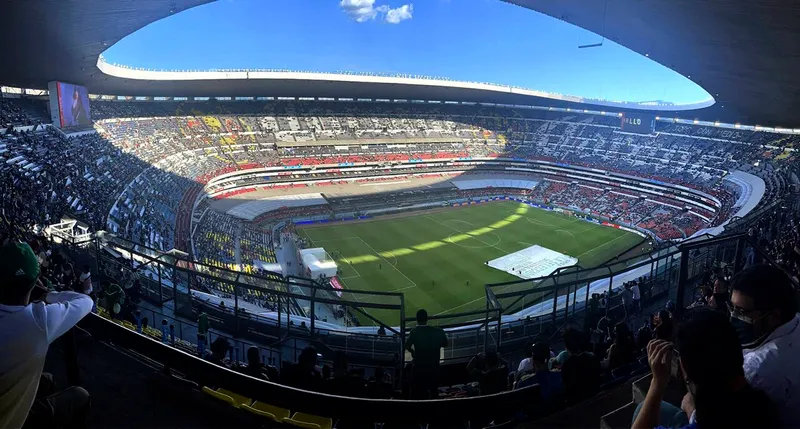
The largest paying boxing crowd in history packed Estadio Azteca in Mexico City on 20 February 1993, when Julio Cesar Chavez stopped Greg Haugen in front of around 132,274 fans. That remains the biggest gate boxing has ever drawn, and it is also the all-time attendance record for the Azteca, a stadium more famous for football.
Two American fights belong in the conversation too. In 1926, Gene Tunney beat Jack Dempsey in front of 120,557 in Philadelphia. And Guinness’s official “largest boxing attendance” record goes to a 1941 Tony Zale fight in Milwaukee at 135,132, though that was a free exhibition counted by police estimate rather than a paying gate. Paid or free, these are crowds that boxing, now built around pay-per-view and smaller arenas, will never see again.
The venue records: the biggest crowd each great stadium ever held
Some of the most-searched attendance figures are not world records at all. They are house records, the single biggest crowd a famous stadium ever held. Here are the ones people ask about most.
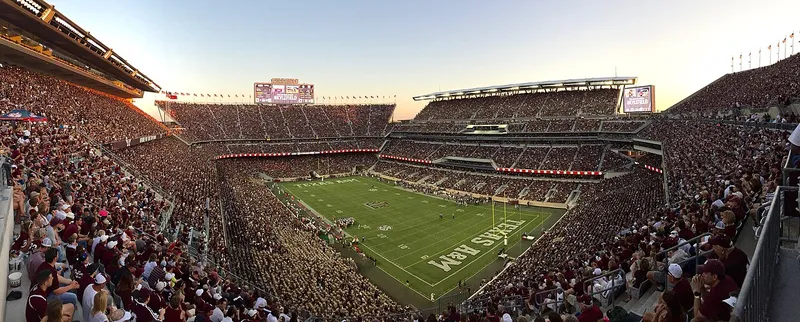
Michigan Stadium, “The Big House,” set its record at 115,109 for a night game against Notre Dame on 7 September 2013. It also holds the largest ice-hockey crowd, 104,173 for the “Big Chill” against Michigan State in 2010. Kyle Field at Texas A&M peaked at 110,633 against Ole Miss on 11 October 2014. The Rose Bowl drew 106,869 for the 1973 edition between USC and Ohio State. The Cotton Bowl in Dallas has reached 96,009 for the Texas-Oklahoma Red River rivalry.
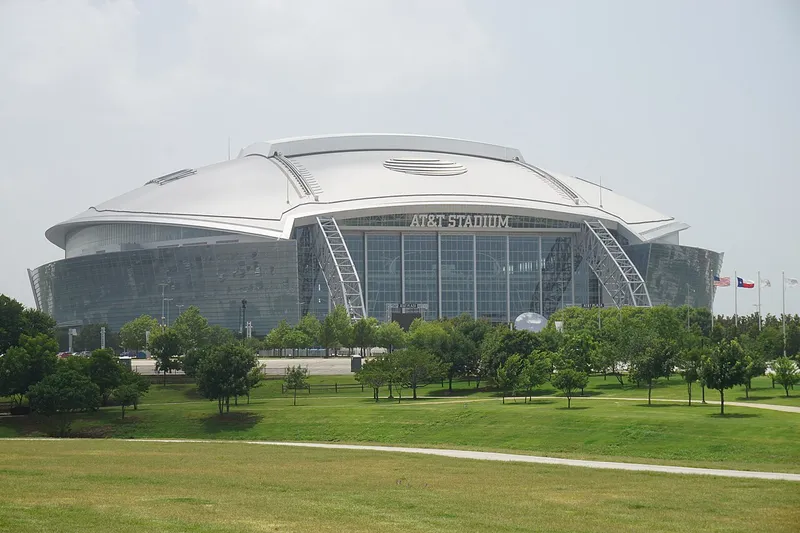
AT&T Stadium is the trickiest of the bunch. Its true verified record is the 2010 NBA All-Star Game, a Guinness-certified 108,713, the largest crowd ever to watch a basketball game. You will often see WrestleMania 32’s announced 101,763 quoted as the record, but that figure is disputed, with turnstile counts and independent estimates placing the real crowd well below it. The basketball number is the one that holds up.
And the Melbourne Cricket Ground, the largest stadium in the Southern Hemisphere, set its record at 121,696 for the 1970 Australian rules grand final, a bigger crowd than any of the American venues above.
Venue records run higher than capacity because almost all of them predate all-seater rules. Michigan’s 115,109 and Kyle Field’s 110,633 both sit above the stadiums’ official seated capacities.
The biggest crowds at a glance
Here are the record crowds in one table, with the type of figure for each, since some are paid gates, some are total estimates, and some are single-venue house records.
| Crowd | Event | Venue | Year | Type |
|---|---|---|---|---|
| ~350,000 | Indianapolis 500 | Indianapolis Motor Speedway | 2016 | Estimate, never officially counted |
| 194,603 | Flamengo vs Fluminense | Maracana, Rio | 1963 | Largest recorded club crowd |
| 173,850 | World Cup final, Uruguay vs Brazil | Maracana, Rio | 1950 | Official paid football record |
| 149,415 | Scotland vs England | Hampden Park, Glasgow | 1937 | Europe’s largest crowd |
| 132,274 | Chavez vs Haugen (boxing) | Estadio Azteca | 1993 | Largest paying boxing gate |
| 121,696 | VFL Grand Final | Melbourne Cricket Ground | 1970 | Australian rules record |
| 115,109 | Michigan vs Notre Dame | Michigan Stadium | 2013 | Venue record |
| 110,633 | Texas A&M vs Ole Miss | Kyle Field | 2014 | Venue record |
| 108,713 | NBA All-Star Game | AT&T Stadium | 2010 | Largest basketball crowd |
Why these records are unbreakable
The single reason almost every record on this list is permanent comes down to one word: terraces.
Old stadiums were built with vast standing areas, where fans packed together on stepped concrete with no seats at all. A standing terrace holds roughly two people in the space a modern seat gives to one. So when a ground converts its terraces to all-seater, it loses around half the capacity of those areas overnight. The Maracana went from holding nearly 200,000 to around 78,000. Hampden fell from 149,000 to about 52,000.
The change was not gradual. It was forced. After the 1989 Hillsborough disaster, in which 97 people died in a crush at an FA Cup semifinal, the judicial inquiry known as the Taylor Report required all-seater stadiums for England’s top two divisions by the 1994-95 season. FIFA, UEFA, and other major governing bodies adopted the same standard for the matches they control. Standing was not banned everywhere, but for the big competitions that produce record crowds, every spectator now needs a seat.
That single safety decision drew a line across sporting history. Everything before it could produce a 173,850 or a 149,415. Everything after it cannot. The records are not waiting to be broken. They are sealed.
Attendance versus capacity, one last time
It is worth ending where we started, because the gap between these two ideas is the whole story.
Capacity is what a stadium is rated to hold today, a controlled, regulated, all-seater number. Attendance, in the era these records come from, was whatever the crowd decided to make it. The two have now converged, which is exactly why modern figures look so tame next to the giants of 1950 or 1937. A sold-out modern World Cup final tops out around 80,000 to 90,000. The 1950 version held more than twice that.
So when you see a stadium’s “attendance record” sitting far above its listed capacity, you are not looking at an error. You are looking at a leftover from a vanished era of sport, before the rules caught up. For where the seats actually sit now, our biggest stadium in every US state and largest stadiums in Europe rankings cover the modern picture, and the full stadium directory goes venue by venue.
Sources
- Guinness World Records: Largest attendance at a football match. Confirms 173,850 paid at the 1950 World Cup final.
- Wikipedia: Maracana Stadium. The 1950 final, the 1963 Fla-Flu club record of 194,603, and post-renovation capacity.
- Wikipedia: Hampden Park. The 1937 Scotland-England (149,415) and Scottish Cup final (147,365) European records.
- Wikipedia: All-seater stadium and the Taylor Report. The safety regime that made these crowds impossible to repeat.
- Venue records cross-referenced across official athletic department, Guinness, and reputable sporting-history sources; the disputed WrestleMania 32 figure and the estimated Indianapolis 500 count are flagged in the text.