About the Rose Bowl
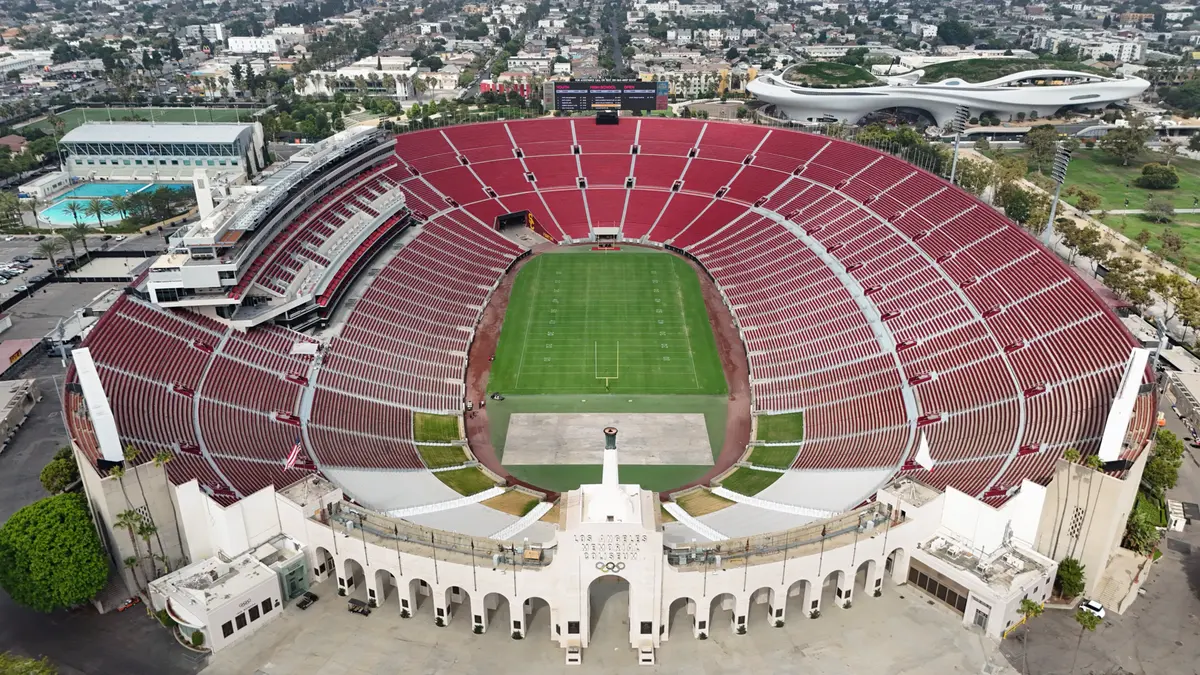
In the Arroyo Seco, at the foot of the San Gabriel Mountains, the Rose Bowl fills a canyon in Pasadena, California, about 11 miles northeast of downtown Los Angeles. At 89,702 seats, it’s one of the largest stadiums in America, and one of the most beautiful, with mountain views rising beyond the rim of the bowl on a clear day. A canyon with a scoreboard.
Home to UCLA Bruins football since 1982, the Rose Bowl is best known for the annual Rose Bowl Game played each New Year’s Day, “The Granddaddy of Them All” and the oldest bowl game in college football, first contested in 1902. The stadium has also hosted five Super Bowls, the 1994 World Cup Final, the 1999 Women’s World Cup Final, Olympic soccer in 1984, and will host soccer again at the 2028 Los Angeles Olympics.
Architect Myron Hunt designed the original horseshoe-shaped bowl in 1922, modeled after the Yale Bowl, at a cost of just $272,198. The south end was enclosed in 1928 to complete the oval, and successive expansions pushed capacity past 100,000 by 1949. A roughly $170 million renovation completed in 2013 modernized the infrastructure while preserving the stadium’s National Historic Landmark status, earned in 1987.
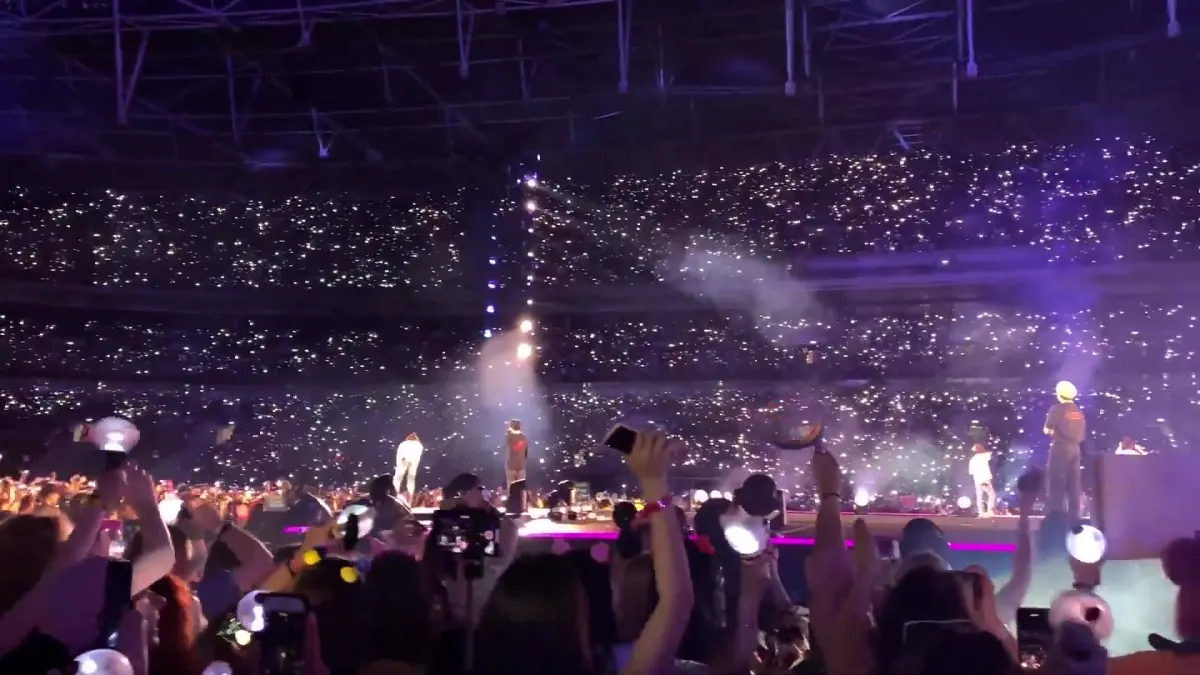
The Rose Bowl’s legacy extends well beyond football. Well beyond America, too. The 1994 World Cup Final, Brazil vs. Italy on penalties, remains one of the most-watched sporting events in history. The 1999 Women’s World Cup Final drew 90,185 fans, then the record for a women’s sporting event anywhere. And the stadium has hosted U2, BTS, Beyoncé, and Depeche Mode’s “101” concert.
Getting to the Rose Bowl
Public Transit
The Metro A Line (Gold Line) is your best bet for reaching the Rose Bowl without a car. Take it to Memorial Park station in Pasadena, then ride the free Foothill Transit shuttle from the Parsons Parking Lot at Holly Street and Fair Oaks Avenue.
→ From Downtown LA: Board the A Line at Union Station heading toward Azusa. The ride to Memorial Park takes about 25 minutes. From there, the free shuttle runs every 10-15 minutes starting at 9 AM.
→ Off-site Parking Option: Park at the Parsons Lot in Old Town Pasadena for $18 and take the free shuttle. It’s the most stress-free option for those driving in from a distance.
The shuttle runs until two hours after event conclusion, so you don’t have to rush out. Walking from Memorial Park station to the stadium is possible but it’s 2.4 miles, the shuttle is a much better choice.
Driving + Parking
The Rose Bowl is accessible from the 110 Freeway (Arroyo Seco Parkway) and the 134 Freeway. GPS users should enter “1001 Rose Bowl Drive, Pasadena, CA 91103.”
→ From Downtown LA (~11 mi): Take the 110 North. Exit at Orange Grove Blvd, continue 2.5 miles, then turn left on Rosemont Avenue and follow signs downhill to the stadium.
→ From Burbank (~15 mi): Take the 134 East, exit at Orange Grove Blvd. Turn left, then left again on Rosemont Avenue down to Lot K.
→ From Orange County (~45 mi): Take the 57 North to the 210 West, exit at Seco Street and follow signs to the stadium.
The signature Rose Bowl parking experience is on the Brookside Golf Course, you park on the grass surrounding the stadium and tailgate right there. General parking is $59 in advance ($70 day-of). Preferred paved lots are $80-100+. Tailgating is a Rose Bowl institution, propane grills and alcohol are permitted, lots open at 4 AM, and the scene on New Year’s Day is something every sports fan should experience at least once.
Rideshare
Uber and Lyft have a designated zone near Lot H, but rideshare vehicles generally can’t drive down to the stadium on event days. Expect a 15-20 minute walk from the drop-off area to your seats.
Pro tip: Get dropped off in Old Town Pasadena near the shuttle pickup at Holly and Fair Oaks, then ride the free shuttle down. It’s faster and cheaper than trying to get a rideshare into the Arroyo.
From the Airport
→ Hollywood Burbank Airport (BUR): 14 miles west, 18-25 minutes by car. The closest and most convenient airport for the Rose Bowl.
→ Los Angeles International (LAX): 24 miles southwest, 38-60 minutes by car depending on traffic. By transit, take the LAX FlyAway bus to Union Station, then the Metro A Line to Memorial Park and the Rose Bowl shuttle.
→ Ontario International (ONT): 34 miles east, 40-55 minutes by car. A good option if you’re coming from the Inland Empire.
Watching a Game at the Rose Bowl
Ask a room full of college football fans about the Rose Bowl and two answers come back at once, both delivered with total conviction. The setting is the best in the sport. The seating bowl is a hundred years old and behaves like it. Both are true, and the reason is the same piece of architecture.
There is no upper deck. Just 77 rows climbing in one continuous curve, the shape Hunt started and fifty years of expansion finished, and that single fact shapes everything a visitor notices. Sightlines are unusually even for a stadium this size. Unusually plain, too. The walkways open straight into the bowl instead of into an enclosed concourse, so the concession stands and restrooms sit out in the open with the San Gabriels behind them, which is the detail returning fans mention first. The trade is geometry. A shallow bowl spreads its rows outward rather than stacking them upward, so a high seat here sits farther from the field than the same row number in a modern steeply raked stadium. Fans who turn up expecting an NFL wall of seating are the ones who leave unimpressed.
So sit low if the budget allows, and along a sideline. There is a concrete reason beyond the angle: the aluminum seats on the east and west sides have back rests, and the ones at the north and south ends do not. Three hours on a backless bench is its own argument. The gripes from regulars are consistent enough to plan around: the stairways up to the rows are steep and narrow, legroom is tight for anyone of average height, and the restrooms and concession stands read as dated next to venues built in the last twenty years. The food is not why anyone comes. The tailgate is. Cars park on the grass of the Brookside Golf Course wrapped around the stadium, and those pre-game hours on the fairways are the part people actually describe when they get home. Nothing in the bowl is covered, either. No roof, no second tier to sit under, so an afternoon kickoff means sun from first whistle to last.
One thing worth settling before buying a ticket: which event you attend matters more here than at almost any other stadium. UCLA’s regular-season crowds do not come close to filling 89,702 seats, and a two-thirds empty bowl is a quiet one. On New Year’s Day it inverts completely. The parade ends, the crowd arrives through the twenty-eight tunnels that feed the seating bowl, and the place becomes the thing everyone means when they call it the Granddaddy of Them All. Kickoff is timed to the end of the Tournament of Roses parade, which is the whole point: the game exists because the flower festival needed an afternoon event. Same stadium, entirely different day.
Construction & Design
The Rose Bowl borrowed its shape from the Ivy League. When the Tournament of Roses outgrew its old grounds, the Pasadena architect Myron Hunt drew up a stadium modeled on the Yale Bowl, and crews built it in about eight months for $272,198. It opened on October 28, 1922, as an open horseshoe, the south end left wide to the Arroyo Seco. The setting did half the design work: a natural canyon at the foot of the San Gabriel Mountains, with the bowl dropped into it so the rim sits near ground level and the field far below.
Hunt did his homework first. Before drawing, he studied classical Greek and Roman theaters and stadiums, Pompeii among them, alongside aerial views of the American stadiums then going up, and several of his conclusions ran against the fashion of the day. He laid the seating out as a true ellipse rather than a rounded rectangle. He put the athletes’ tunnels at the corners, on the reasoning that corners make the worst seats and should therefore be given up to something else. And he left the south end open on the Greek pattern, deliberately, to let the breeze reach the field. The construction method was equally plain: what Hunt called cut and fill, digging the field out to a depth of 25 feet (7.6 metres) and using the excavated dirt to raise the berm the banks of seats sit on. The hole paid for its own foundation. Half the stadium ended up below ground level, which is why a building seating tens of thousands reads as low and unassuming from the parking lot. The thrift went further than the earthworks: the original bleacher floors were laid with lumber salvaged from the stands at Tournament Park, the ground the Rose Bowl Game was leaving behind. Worth remembering what the site had been, too. Before any of this the Arroyo Seco here served Pasadena as a municipal dump.
The finished ellipse measures 880 feet (268 metres) from the north rim to the south on its long axis and 695 feet (212 metres) east to west, with 2,430 feet of rim to walk if you circle the top. Inside sits a field of roughly 79,156 square feet, a little under two acres. The stadium is ringed by a fence a full mile in circumference, and in the ground between that fence and the concrete are about 3,000 rose bushes of some 100 varieties, which is either a nice touch or the most on-the-nose landscaping in American sport, depending on the day.
The horseshoe did not stay open long. Six years, and then the gap was closed. In 1928 the south end was enclosed to complete the oval, lifting capacity toward 76,000, and the expansions kept coming. A concrete rebuild in 1930 pushed it past 83,000 in time for the Olympics, and by the 1970s the Rose Bowl seated 104,091, briefly one of the largest stadiums on earth. It has since been brought down to a listed 89,702, still enormous (the Rose Bowl Game counts a few thousand more), with the all-time record of 106,869 standing from the 1973 Rose Bowl Game.
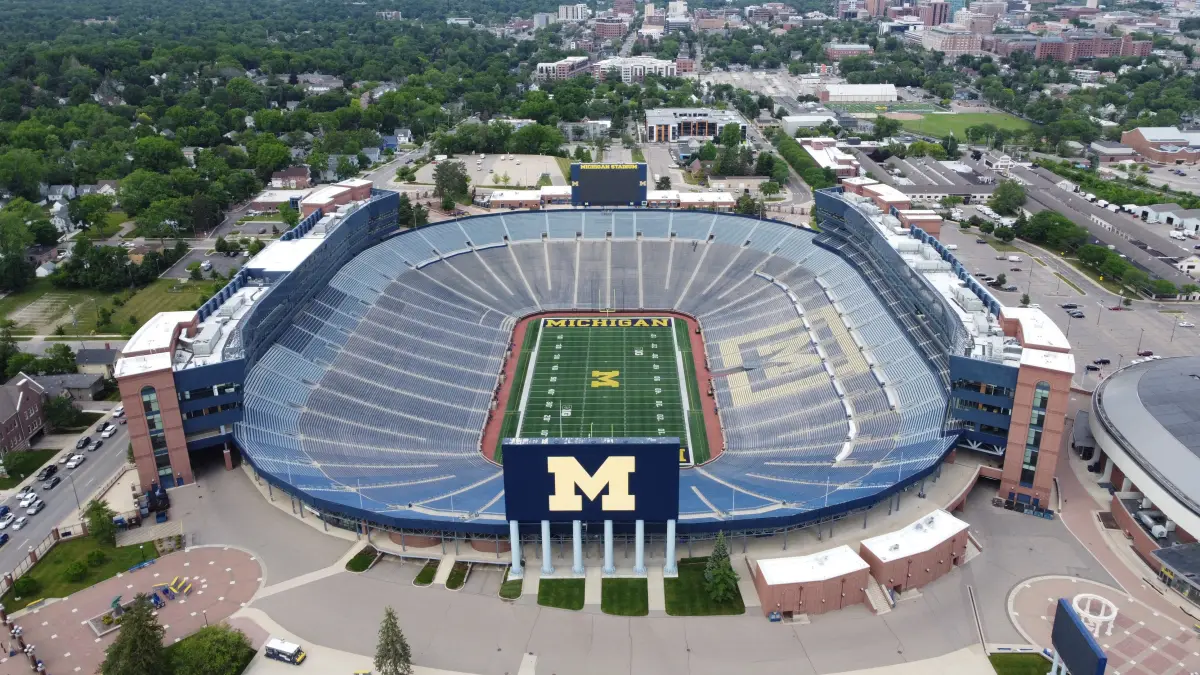
Unlike almost every stadium its size, the Rose Bowl has no upper deck. Not one. It is a single continuous bowl, which is why the sightlines feel so even and the place looks deceptively low from outside. That purity of form is part of why it was named a National Historic Landmark in 1987, along with a California Historic Civil Engineering Landmark. The closest thing to a relative is Michigan Stadium, sunk into the ground the same way and traced back to the same Yale Bowl model, and there are not many others.
Keeping a century-old bowl current takes work. A renovation completed in 2013, originally budgeted at $152 million and rising to about $170 million, rebuilt the press box, widened the concourses, and modernized the infrastructure without altering the historic profile. Another smaller project is lined up for 2026, and the stadium is preparing to host Olympic soccer in 2028, its third different Games after 1932 and 1984. For a building that started as a copy of the Yale Bowl, it has had a remarkably original life. Every venue for those Games is mapped in our Los Angeles 2028 Olympics guide.
History of the Rose Bowl
The game came first, and by twenty years. On January 1, 1902 the Tournament of Roses invited Michigan to play Stanford and watched Michigan win 49-0, at Tournament Park, not here. Pasadena did not much like it. Chariot races replaced football as the post-parade attraction the following year and kept the slot until 1916. Fourteen years of chariots. That part tends to get left out of the origin story. Only when the annual football game returned and outgrew Tournament Park did the association commission Myron Hunt, and the stadium he built for $272,198 went up in about eight months. It was dedicated on January 1, 1923, USC beating Penn State 14-3 in the first Rose Bowl Game at the new venue.
- South End Enclosed (1928): The horseshoe was closed to form a full bowl, pushing capacity to 76,000.
- Rebuilt in Concrete (1930): The original wooden bleachers came out and the stadium was reconstructed in reinforced concrete, adding 7,677 seats for a total of 83,677, two years ahead of the Olympics.
- 1932 Olympics: The Rose Bowl was converted into a temporary velodrome for the track cycling events of the Los Angeles Summer Games.
- 1984 Olympic Soccer Final (August 11, 1984): France defeated Brazil 2-0 before 101,799 fans, then the largest crowd for an Olympic soccer match.
- 1994 FIFA World Cup Final (July 17, 1994): Brazil defeated Italy 3-2 on penalties after a 0-0 draw, claiming its fourth World Cup title, with 94,194 in the stadium and Roberto Baggio’s miss closing it out. The Rose Bowl hosted 8 World Cup matches that summer.
- MLS Cup (1998): Chicago Fire beat D.C. United 2-0 in front of 51,350, one of the stadium’s turns as a neutral soccer venue between the two World Cup finals.
- 1999 FIFA Women’s World Cup Final (July 10, 1999): The United States defeated China 5-4 on penalties before 90,185 fans. Brandi Chastain’s celebration after the winning kick became one of the most reproduced images in sports history.
- $170 Million Renovation (2010-2013): Originally budgeted at $152 million, the project modernized seating, concourses, and infrastructure while preserving the stadium’s National Historic Landmark status.
- Locker Room Museum (2017): The 1922 locker room, left largely as built, was restored and opened to the public as a museum.
- 2028 Olympics (upcoming): The Rose Bowl takes five matches of the Olympic soccer tournament at the Los Angeles Summer Games and, alone among the seven venues, no group-stage games at all: a women’s quarterfinal on July 21, a men’s and a women’s semifinal on July 24 and 25, then both gold medal matches, the men’s on July 28 and the women’s on July 29. The bronze medal matches go to San Diego. It is the stadium’s third Olympics in 96 years.
Sources & Further Reading
- Wikipedia entry on the Rose Bowl: en.wikipedia.org/wiki/Rose_Bowl_(stadium). Construction, capacity history, the renovations, and major events.
- Rose Bowl Stadium official site: rosebowlstadium.com. Events, tickets, and visitor information.
- Encyclopaedia Britannica, Rose Bowl: britannica.com. An encyclopedic overview of the stadium.
- UCLA Athletics, Rose Bowl history: uclabruins.com. The primary tenant’s account of the venue.
- National Park Service, National Historic Landmark nomination: npgallery.nps.gov. The federal record behind the 1987 designation, with Hunt’s dimensions, construction method, and design reasoning.
- Historic American Buildings Survey, Rose Bowl Stadium (HABS No. CA-2267): tile.loc.gov. The Library of Congress architectural record: dimensions, the cut and fill method, tunnel and seating counts, and every alteration from 1928 onward.
- Fan accounts of the matchday experience: reddit.com/r/CFB. Several hundred first-hand reports on sightlines, the concourses, and getting in and out, which the “Watching a Game” section is drawn from.
Quick Facts
Everything you need at a glance.
Stadium specs
- Capacity
- 89,702
- Opened
- 1922
- Cost
- $272,198 (1922 original); 2010-2013 renovation around $170 million
- Roof
- Open
- Surface
- Natural Grass
- Tenants
- UCLA Bruins (NCAA)
Construction & location
- Groundbreaking
- February 27, 1922
- Architects
- Myron Hunt (original, 1922)
- Engineering
- Not separately recorded
- General contractor
- Not publicly recorded
- Address
- Rose Bowl, 1001 Rose Bowl Drive, Pasadena, CA 91103
- GPS
- 34.1613°N, 118.1676°W
Photo Gallery
Fun Facts
The Rose Bowl set its all-time attendance record of 106,869 on January 1, 1973, when USC defeated Ohio State 42-17 in the Rose Bowl Game.
The Rose Bowl has hosted five Super Bowls (XI, XIV, XVII, XXI, XXVII), all between 1977 and 1993, though it hasn't hosted the game since.
The 2028 Games will be the Rose Bowl's third Olympics in 96 years: track cycling in a temporary velodrome in 1932, soccer in 1984, and soccer again in 2028.
Stadium Location
Frequently Asked Questions
- What is the seating capacity of the Rose Bowl?
- The Rose Bowl's listed capacity is 89,702, though the figure varies by operator: UCLA reports about 91,136, and the Tournament of Roses lists about 92,542 for the Rose Bowl Game. Either way it is one of the largest stadiums in the United States. The all-time attendance record of 106,869 was set in 1973, and planned changes for the 2028 Olympics may reduce capacity.
- Where is the Rose Bowl located?
- The Rose Bowl is at 1001 Rose Bowl Drive in Pasadena, California, set in the Arroyo Seco at the foot of the San Gabriel Mountains. It's about 11 miles northeast of downtown Los Angeles.
- How do I get to the Rose Bowl by public transit?
- Take the Metro A Line (Gold Line) to Memorial Park station in Pasadena, then ride the free Foothill Transit shuttle from the Parsons Lot at Holly Street and Fair Oaks Avenue. The shuttle runs from 9 AM until two hours after event conclusion.
- Is there parking at the Rose Bowl?
- Yes. The Brookside Golf Course lots surround the stadium and are where most fans park and tailgate. General parking is $59 in advance ($70 day-of). Preferred paved lots run $80-100+. Off-site parking at the Parsons Lot in Old Town Pasadena is $18 with a free shuttle.
- Can you tailgate at the Rose Bowl?
- Yes. Tailgating is allowed in all general parking lots, including the grass lots on the Brookside Golf Course. Lots open at 4 AM, public tailgating begins at 8 AM. Propane grills and alcohol are permitted. Tents up to 10x10 feet are allowed. Glass bottles and open wood fires are prohibited.
- When was the Rose Bowl built?
- The Rose Bowl was built in 1922 by architect Myron Hunt at a cost of $272,198. It was originally a horseshoe shape seating 57,000. The south end was enclosed in 1928 to create the full bowl, and multiple expansions pushed capacity past 100,000 by 1949.
- Is the Rose Bowl an NFL stadium?
- No. The Rose Bowl is a college football stadium, home to the UCLA Bruins (Big Ten Conference). However, it has hosted five Super Bowls and the annual Rose Bowl Game, the oldest bowl game in college football.
- Why is the Rose Bowl called The Granddaddy of Them All?
- The nickname refers to the Rose Bowl Game, the oldest college football bowl game, first played in 1902. It predates all other bowl games and has been played at the Rose Bowl stadium since 1923.
- What major events has the Rose Bowl hosted besides football?
- A remarkable run of them. The stadium hosted the 1994 FIFA World Cup Final (Brazil over Italy on penalties), the 1999 Women's World Cup Final (Brandi Chastain's winning kick before 90,185), Olympic soccer in 1984, cycling at the 1932 Olympics, five Super Bowls, and concerts from U2 to BTS to Beyoncé. It will host Olympic soccer again in 2028.
- Is the Rose Bowl a National Historic Landmark?
- Yes. The Rose Bowl was designated a National Historic Landmark in 1987, and it is also a California Historic Civil Engineering Landmark. Its renovations have been carried out specifically to preserve that historic status, including the rebuild completed in 2013.
- Where are the best seats at the Rose Bowl, and which should I avoid?
- Sidelines, low, and away from the corners. When Myron Hunt laid the bowl out as a true ellipse he ran the athletes' tunnels in at the corners specifically because he judged corners the worst vantage points in the house, so the compromise seats were designed in from the start. The east and west sides also get aluminum seats with back rests, while the north and south ends are backless, which matters more over three hours than most people expect. Because the shape is a true ellipse, incidentally, no row of seats in the stadium is a straight line.
- Is there any shade at the Rose Bowl?
- None at all, and it catches people out. The bowl has never had a roof or a second tier, and the concourses are open to the sky rather than tucked under an overhang, so there is nowhere to duck out of the sun between quarters. Hunt did that deliberately: he left the south end open on the pattern of Greek theaters so the breeze could reach the field. Sunscreen and a hat, even on New Year's Day.
- How early should I get to the Rose Bowl?
- Earlier than you think, and not because of the queues. Parking lots open at 4 AM and public tailgating starts at 8 AM, and the tailgate on the Brookside Golf Course is the part regulars rate above the stadium itself. The other reason is the road in: the stadium sits at the bottom of the Arroyo Seco with a limited number of approaches, and getting out afterward is the single most common complaint about the venue. If you are coming for the Rose Bowl Game, kickoff is timed to the finish of the Tournament of Roses parade, so the arrival is compressed into a short window.
- Can you tour the Rose Bowl when there is no game on?
- Yes, the stadium runs public tours. The original locker room was restored and opened as a museum in 2017, and the Rose Bowl Loop around Brookside Park is open daily, a 3.3-mile path used by Pasadena runners and cyclists year-round whether or not anything is happening inside.
Last updated: 2026-08-18