Ask anyone who follows college football which ground is loudest and you’ll get one of two answers. Tiger Stadium, or Kyle Field. Both fanbases believe it completely.
One of them has a real number behind the claim. The other has two numbers that contradict each other and no published measurement for either.
And the record belongs to neither. The loudest reading ever taken at a college football game happened in Seattle, on a Saturday night in September 1992, when twelfth-ranked Nebraska came to Husky Stadium and a meter credited to ESPN hit 133.6 decibels. It has stood for more than three decades, through every White Out and every night in Death Valley since.
133.6 decibels at Husky Stadium, 19 September 1992, against Nebraska. Still the highest reading ever taken at a college football stadium.
Here’s the problem with ranking these places. Almost none of the famous numbers can be checked. There’s no standard for how the readings are taken, no agreed spot to put the meter, and figures get repeated for years without a date or an opponent attached to them. So this ranking does something slightly unusual: it tells you how good the sourcing is for each one.
The loudest college football stadiums, ranked by verified reading
Four grounds have readings you can trace to a date, an opponent and a source. Two more are quoted constantly and check out against nothing. That gap is the real story, so the table shows both, with the sourcing quality beside each number rather than buried in a footnote.
| Stadium | Reading | When | Opponent | Capacity | Sourcing |
|---|---|---|---|---|---|
| Husky Stadium, Washington | 133.6 dB | 19 Sep 1992 | Nebraska | 72,132 | Traceable, credited to ESPN |
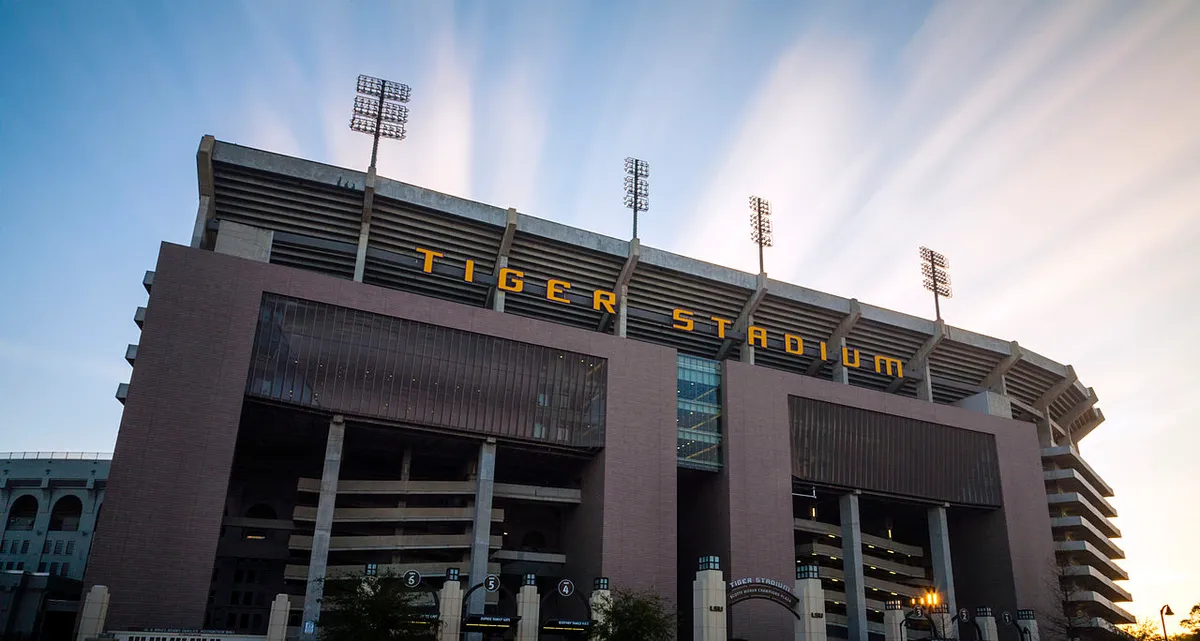
| Tiger Stadium, LSU | 130 dB | 6 Oct 2007 | Florida | 102,321 | Traceable, stadium record |
| Autzen Stadium, Oregon | 127.2 dB | 27 Oct 2007 | USC | 60,129 | Traceable, crowd of 59,277 |
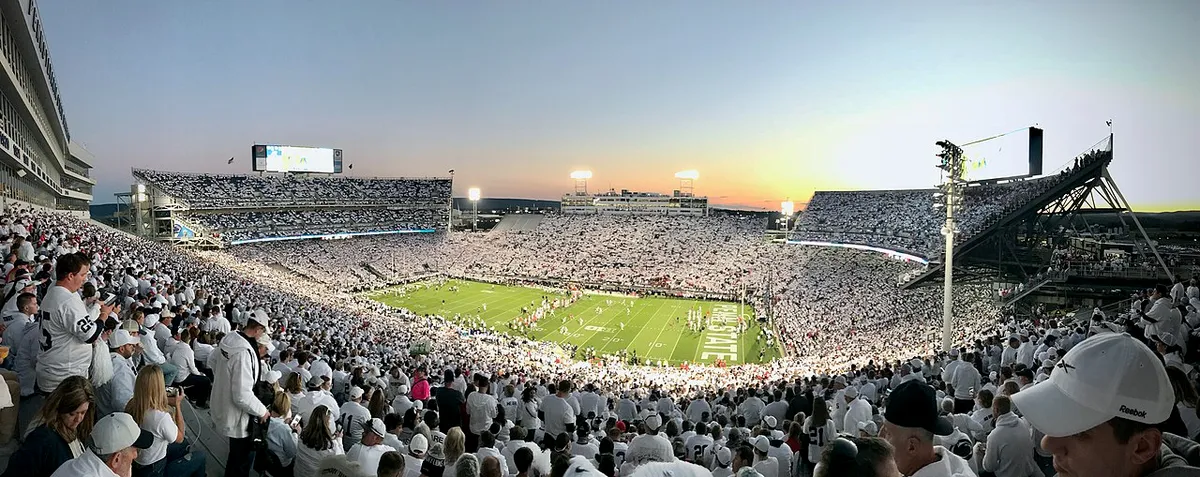
| Beaver Stadium, Penn State | 122 dB | 2007 | Ohio State (#1) | 106,304 | Traceable, the 2007 White Out, via our own venue guide |
| Lane Stadium, Virginia Tech | 126.2 dB claimed | not established | not established | not established | Weak, no primary source found |
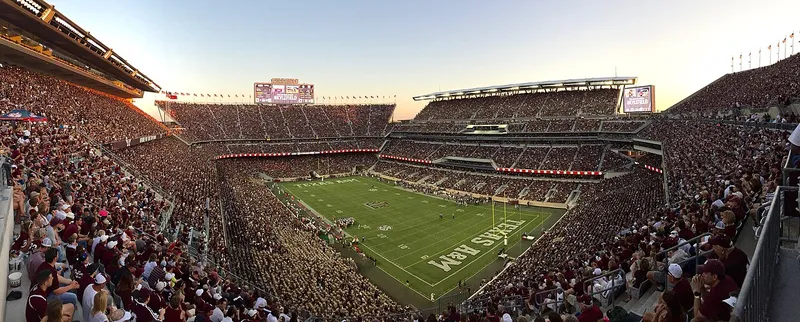
| Kyle Field, Texas A&M | 126 to 130 claimed | not established | not established | 102,733 | Weak, sources disagree |
Capacity in that table is the ground’s current figure, not the crowd on the night the reading was taken. Only Autzen’s attendance is documented alongside its number, at 59,277.
For the worldwide picture, including the ratified 142.2-decibel record that no college ground comes near, see our ranking of the loudest stadiums in the world.
Husky Stadium holds the record, and nobody says so
Washington’s ground has the highest number in college football and close to none of the reputation. The reading came on 19 September 1992, a night game against twelfth-ranked Nebraska, and ESPN put it at 133.6 decibels. Three decades later it hasn’t been beaten by anything anyone can document.
The reason is architecture, not crowd size. Husky Stadium holds 72,132, which makes it smaller than six of the grounds routinely called louder. But almost 70 percent of its seats sit between the end zones, packed into the middle of a U-shaped bowl, and those stands are covered by cantilevered metal roofs.
Metal roofs don’t absorb sound. They return it.
So the noise made by the most concentrated part of the crowd gets caught overhead and pushed back down onto the field instead of escaping into the sky. It’s a lid. Most big American stadiums are open bowls that leak their noise upward, which is exactly why capacity turns out to be such a poor predictor of volume.
Autzen proves loudness isn’t capacity
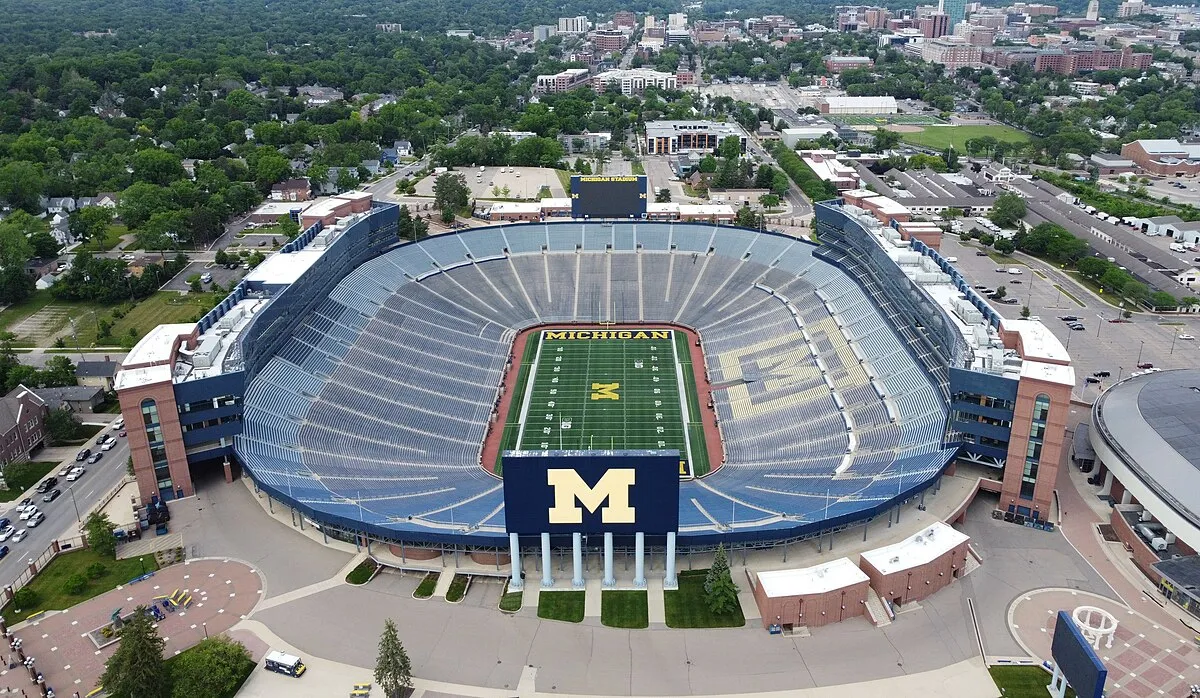
Oregon’s stadium holds 60,129. That’s barely more than half of Tiger Stadium and about 47,000 fewer seats than Michigan Stadium. On 27 October 2007, with 59,277 people inside for a 24-17 win over USC, it registered 127.2 decibels.
Sixty thousand people out-shouting a hundred thousand, and doing it against a USC side ranked in the top ten that afternoon. The design explains most of it, and none of the explanation has anything to do with how many seats Oregon sold.
The field at Autzen is sunken, so the crowd starts at pitch level and rises from there rather than sitting back and above. The footprint is tight, which puts the front rows close enough to the play to matter. And before the 2002 expansion there was an effect the locals named: noise travelled up the stands, hit the back, and came back down onto the field. The Autzen bounce.
Oregon officials have said any future expansion would trap more of it, which is a strange sentence when you think about it. Most schools expand for revenue. Oregon talks about expanding for acoustics.
60,129 seats, 127.2 decibels. Autzen generates more noise per seat than any ground in the sport, which is why Keith Jackson once called it the loudest stadium on the planet on a per-square-yard basis.
Lee Corso went further and called it the loudest stadium he’d ever been in, full stop. That’s an opinion rather than a measurement, but it’s an opinion from someone who has been in all of them.
Tiger Stadium, and the only hard evidence that noise changes games
LSU’s ground is the biggest with a verified reading. It hit 130 decibels on 6 October 2007, beating ninth-ranked Florida 28-24, and the NCAA called it the loudest stadium in college football in 2013. Capacity is 102,321. But the number that should interest you isn’t the decibel figure.
It’s this. Since 1960, LSU have won 77.3 percent of their night games in Tiger Stadium. In daylight, at the same ground, against comparable schedules, they’ve won 48.8 percent.
That’s a 28-point swing attached to nothing but kickoff time.
You can pick at it. Night games get better opponents and bigger television slots, which cuts the other way. Crowds arrive differently. Sixty-six years is a long time and the sport has changed underneath the statistic. But it’s the single most quantified claim anyone has made about atmosphere in college football, and it points hard in one direction.
Tiger Stadium is also where a crowd once registered on a seismograph, in the 1988 Earthquake Game against Auburn. We told that story properly in the worldwide ranking linked above, so I won’t repeat it here.
The numbers that don’t survive a check
Here’s where this gets awkward. Two grounds appear on nearly every loudest-stadium list published, including lists that rank them above Washington and LSU, and neither has a reading you can trace to a date, an opponent or an instrument. They are ranked on reputation, then the reputation gets a number attached to it later.
Kyle Field is the bigger name. Texas A&M’s ground holds 102,733, it’s the home of the 12th Man, and it has as strong a noise reputation as anywhere in the sport. Figures of 126 and 130 decibels both circulate, usually attached to a 2013 game against Alabama. Neither is attached to a measurement anyone has published, the two numbers disagree with each other, and no decibel figure appears in the encyclopaedic record of the stadium at all.
Lane Stadium at Virginia Tech is quoted at 126.2 decibels. I couldn’t find a date, an opponent or an instrument behind it.
None of that means these places are quiet. Kyle Field is enormous and A&M’s crowd is organised in a way almost no other student body matches. It means the numbers are folklore, and folklore repeated in enough blog posts starts to read like data.
What Kyle Field does have is a documented structural detail worth more than a shaky decibel count: the old press box used to sway during the War Hymn. The 2013-15 redevelopment lowered the playing field by about seven feet and shifted it eighteen feet south, adding six rows of seating all the way around. Worth noting that the stated drivers were fire safety and accessibility compliance, not acoustics, whatever the atmosphere ended up doing.
The famous ones with no number at all
Plenty of the grounds with the biggest noise reputations have never posted a reading anybody published. Their reputations are unmeasured rather than wrong. What these places have instead of decibel counts is a tradition built, deliberately or otherwise, to produce sustained noise across four quarters instead of spikes.
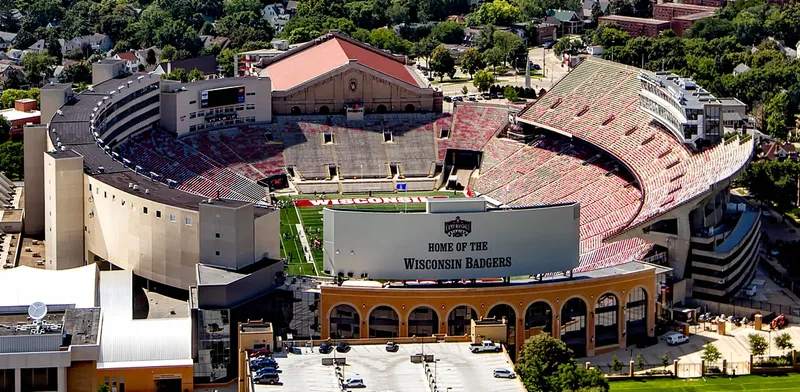
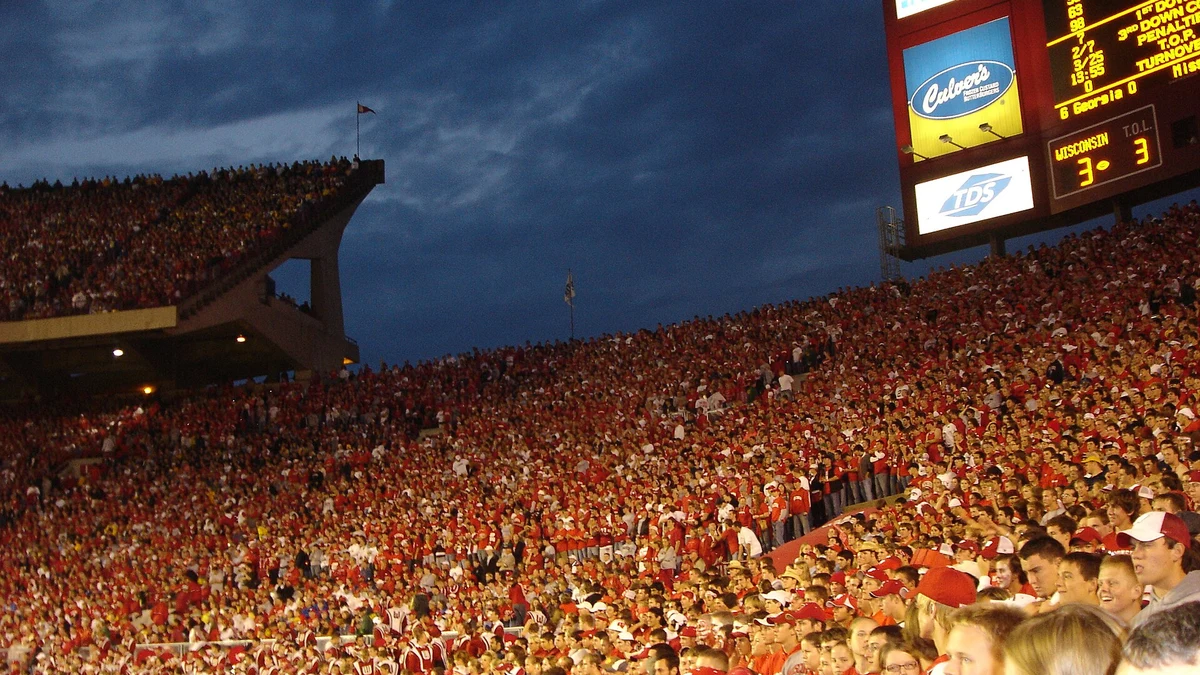
Camp Randall Stadium is the clearest example. Between the third and fourth quarters, Wisconsin plays House of Pain’s “Jump Around” and the student section, plus much of the rest of the 76,057, jumps in unison. It generates measurable seismic readings. Not a figure of speech, an actual instrument response, which puts Camp Randall in a very small club alongside LSU for moving the ground rather than just the air above it.
Williams-Brice Stadium at South Carolina has the best entrance in the sport and the structural receipts to go with it. Since 1983 every home game has opened with the theme from “2001: A Space Odyssey” over the PA as the team comes out. The east upper deck, dropped on top of the original 1934 bowl in 1982, sways during celebrations. Shock absorbers went in five years later to manage the movement.
Read that again. They had to install damping hardware because the crowd was moving the building.
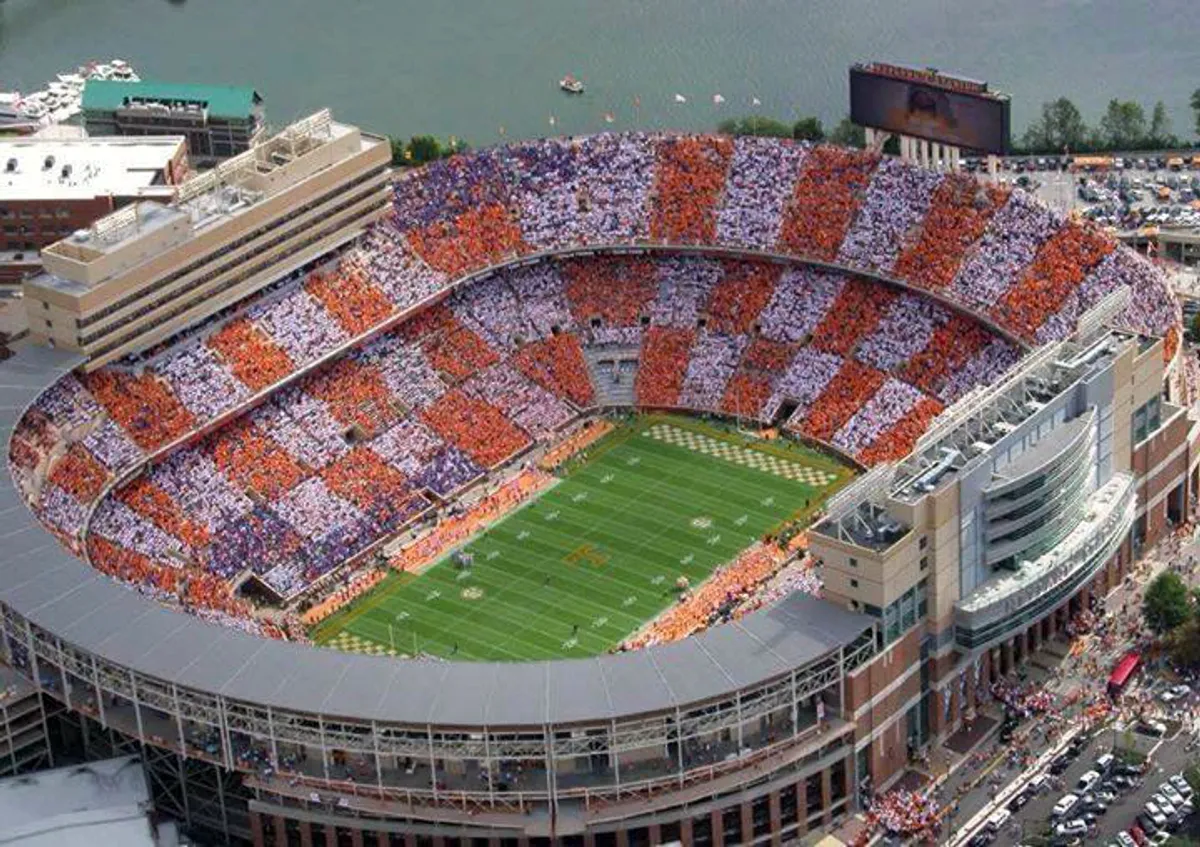
Neyland Stadium brings 101,915 and a river. Between 200 and 400 boats dock along the Tennessee on game days, a tradition called sailgating that started in 1962 when a broadcaster took a boat to avoid the traffic. Checker Neyland, the orange-and-white alternating pattern across the whole bowl, has run since 4 October 2014.
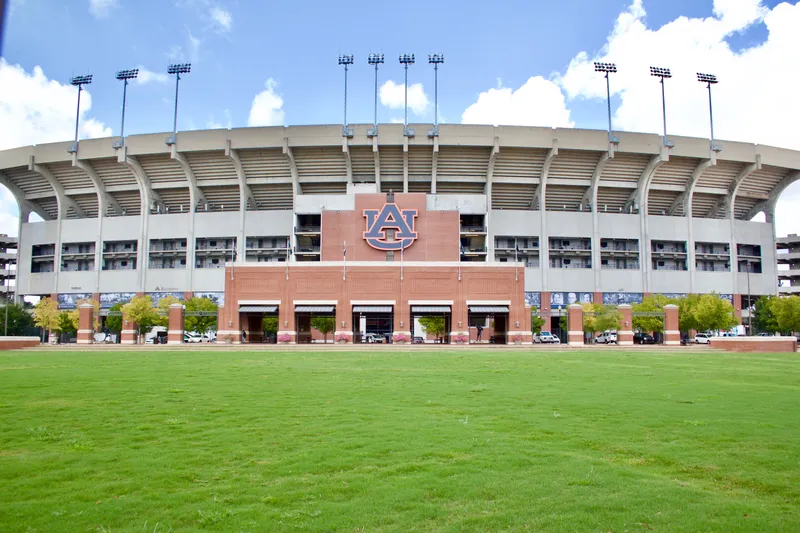
Jordan-Hare Stadium holds 88,043, which on game day makes it Alabama’s fifth-largest city and puts more people inside than live in Auburn. And Sanford Stadium has been playing between hedges planted in 1929, which is its own kind of acoustic decision: a barrier that keeps the crowd a fixed distance off the field.
None of these has a decibel figure I’d put in the table. All of them would beat several grounds that do.
Why some grounds are louder than others
Four things decide how loud a college football stadium gets, and crowd size is comfortably the weakest of them. That’s the finding that makes this ranking counterintuitive: a 60,000-seat ground in Eugene beats a 102,000-seat ground in Texas because of what the concrete does with the sound, not how many people are making it.
A roof, or something like one. Husky Stadium’s cantilevered metal covers are the clearest case in the sport. Sound that would otherwise escape upward gets returned to the field. Open bowls leak.
How close the front row is. Autzen’s sunken field and tight footprint put people almost on top of the play. Camp Randall at Wisconsin works the same way, steep and close, which is part of why Jump Around between the third and fourth quarters shakes the structure rather than just sounding loud.
Where the students sit, and whether they stand. A student section that stays on its feet for four quarters produces sustained noise rather than spikes. Jordan-Hare and Neyland both put big student blocks low and behind an end zone, which aims the sound down the field rather than across it.
Bowl geometry. Ohio Stadium is a horseshoe, open at one end, and loses noise through the gap. Beaver Stadium is a deep enclosed bowl of 106,304 and holds it. Two of the four biggest grounds in the sport, built to different shapes, with different acoustic results.
Capacity helps at the margin. It’s just nowhere near the main variable, which is the whole reason a 60,000-seat ground in Eugene can beat a 102,000-seat ground in Texas.
What the noise actually does to a visiting team
It helps to know what 130 decibels does on the field, because the damage is specific rather than atmospheric. At that level a quarterback’s cadence dies about a yard from his mouth. He can scream the snap count and his own left tackle, close enough to reach, hears nothing usable.
So the offence goes silent, and everything gets worse from there.
A silent count means the linemen stop listening and start watching the ball. They move when they see it rather than when they know it’s coming, which makes them late by a fraction on every snap, and a fraction is the whole margin at that level. The offence has handed back the one timing advantage the rules give it. Audibles get harder to relay. Protection calls get missed.
It shows up on the stat sheet in the ugliest ways football has. False starts. Delay of game. Timeouts burned before third and long just to get eleven people organised.
You can watch it happen from the stands if you know what to look for. Third down, the crowd stands, and the visiting offence goes strangely still: no cadence, no shouting, a tackle’s head swivelling inward, the whole line frozen on the ball and waiting for it to twitch. That silence in the middle of the loudest moment of the game is what the crowd came for.
Coaches take it seriously enough to pipe recorded noise into practice all week before a trip to Baton Rouge or Eugene. A team rehearsing at full volume for the experience of not being able to hear itself.
28 percentage points. The gap between LSU’s night-game and day-game win rate at Tiger Stadium since 1960, the most quantified claim anyone has made about crowd noise in the sport.
So who is actually loudest?
Three answers, and I’ll commit to all of them.
The record is Washington’s. 133.6 decibels is the highest traceable figure in the sport’s history, it has survived since 1992, and the cantilevered roofs mean it wasn’t a fluke of one night. Until somebody produces a sourced reading above it, loudest-ever-measured belongs to Husky Stadium and nowhere else.
The best acoustic machine is Autzen. Sixty thousand people landing within 2.8 decibels of a 102,000-seat LSU crowd is the most impressive ratio in these numbers, and the bounce explains how. Pound for pound there’s nothing else close.
But the noise that matters most is LSU’s, because it’s the only noise here attached to results. A 28-point swing in home winning percentage between daylight and dark, sustained since 1960, is worth more than any single meter reading. The 2007 measurement and the 1988 seismograph point the same way. If you’re taking one road trip to hear this sport at its most hostile, it’s Tiger Stadium, at night, and you should expect the home team to win.
Kyle Field may well belong near the top of all this. On the evidence available, nobody can say where, and the loudest thing about the claim is how rarely anyone checks it.
That’s the honest shape of the subject. Four numbers you can follow to a date and an opponent, two you can’t, and no ratifying body anywhere to settle it the way the NFL’s 142.2-decibel world record is settled. Anyone who tells you flatly which college stadium is loudest is picking a side in an argument, not reporting a fact.
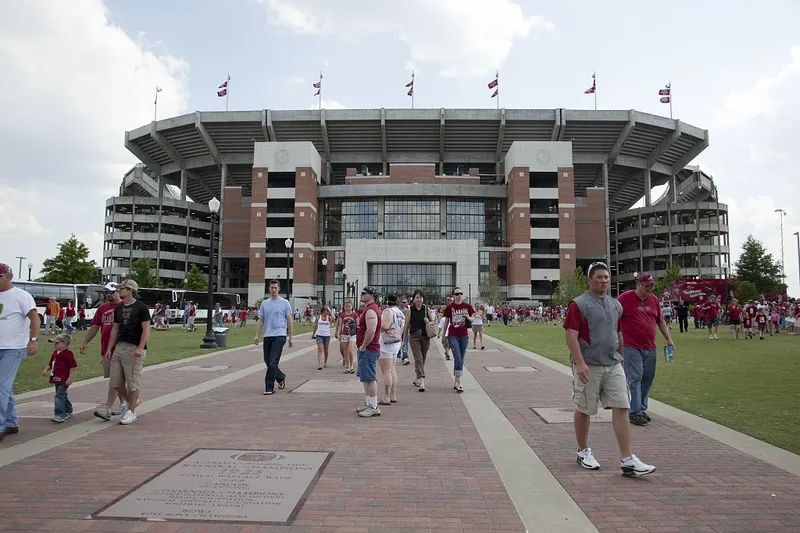
Bryant-Denny Stadium holds 100,077 and has never posted a verified reading either. Nobody who has sat in it on a night in October has ever needed one.
Sources
- Husky Stadium on Wikipedia. The 133.6-decibel reading credited to ESPN, the 1992 Nebraska game, capacity and the cantilevered-roof design.
- Tiger Stadium on Wikipedia. The 130-decibel record against Florida in 2007, the NCAA’s 2013 ranking, the 1988 Earthquake Game and the night-versus-day win percentages.
- Autzen Stadium on Wikipedia. The 127.2-decibel reading against USC, the crowd figure, the sunken field and the Autzen bounce, plus the Keith Jackson and Lee Corso quotes.
- Kyle Field on Wikipedia. Capacity, the 2013-15 redevelopment scope and the stated fire-safety and accessibility drivers. Note that no decibel figure appears here, which is the point made above.
- Hero photo: the Camp Randall Stadium crowd, by Ohsuch181 at English Wikipedia, CC BY-SA 3.0 via Wikimedia Commons.
- Capacities for the grounds we hold guides to come from our own stadium pages, each linked above and individually sourced.
Readings are cross-referenced where more than one source exists. Where a figure is widely quoted but could not be traced to a date, an opponent or a measuring party, this article says so rather than ranking it as though it were established. Decibel measurement at college stadiums is not standardised, so treat every number here as a reading taken under unknown conditions rather than a like-for-like comparison.