About Beaver Stadium
On the eastern edge of Penn State’s campus in University Park, Pennsylvania, a college town tucked into the geographic center of the state, stands the second-largest stadium in the Western Hemisphere. With 106,572 seats, Beaver Stadium is hours from any major city, yet on fall Saturdays University Park’s population of 42,000 swells past 150,000 to fill it. It is the fourth-largest stadium in the world.
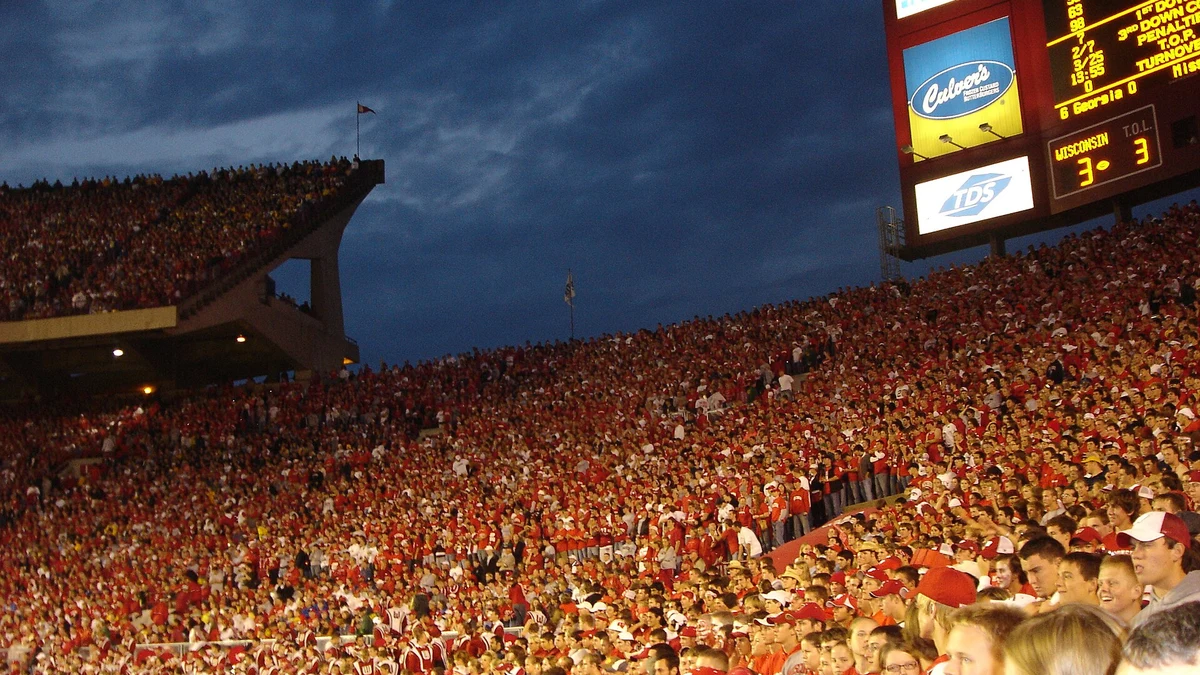
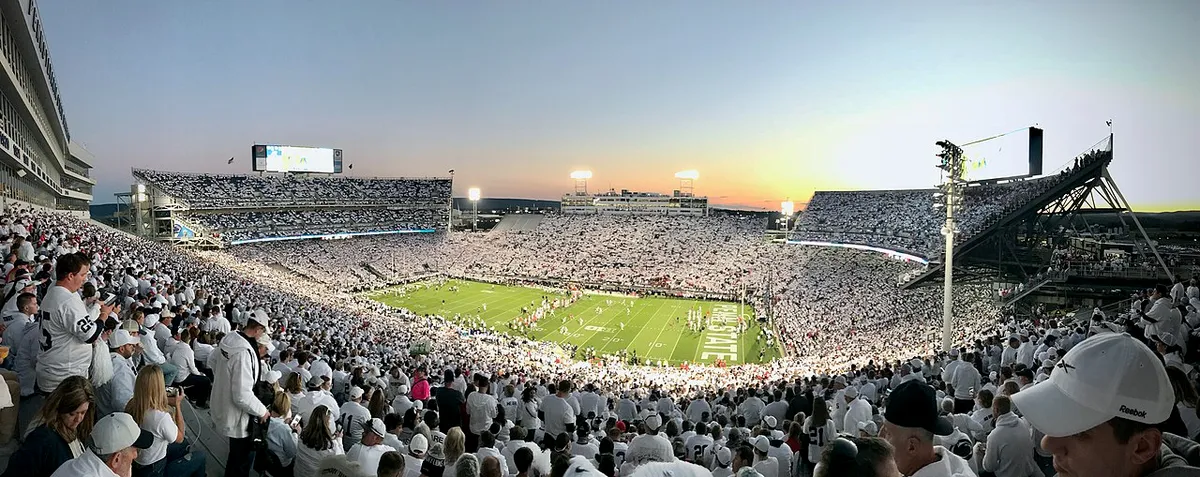
The stadium is home to the Penn State Nittany Lions, one of college football’s most storied programs. What sets Beaver Stadium apart is the White Out, an annual spectacle where every fan in the building wears white. The tradition started as a student section experiment in 2004, went stadium-wide in 2007, and has become one of the most visually striking events in American sports. Noise during White Out games has been measured at 122 decibels.
The current structure opened in 1960 after engineers dismantled the original 30,000-seat Beaver Field into roughly 700 pieces, moved them half a mile across campus, and reassembled them on a new superstructure. Nine expansions over the next four decades more than doubled capacity, from 46,284 seats at opening to a peak of 107,282 in 2001. The natural grass field sits at approximately 1,150 feet above sea level, with Mount Nittany visible beyond the south end zone.
Beaver Stadium has hosted some of the most electric moments in college football. The 2016 White Out against No. 2 Ohio State, a 24-21 upset clinched by a blocked field goal returned for a touchdown, launched Penn State’s run to the Big Ten Championship. In November 2024, the stadium set its all-time attendance record at 111,030.
Getting to Beaver Stadium
Public Transit
State College has no rail service, so buses and shuttles are your best bet. CATA operates game day shuttles from downtown hotels and South Atherton Street, $2.50 per trip or $7 for an unlimited day pass via the Token Transit app.
→ From Downtown State College: Take the CATA Downtown Shuttle from Krutch Park. Runs every 15-20 minutes starting 3 hours before kickoff.
→ From South Atherton Hotels: The South Atherton Shuttle serves hotels along the main commercial strip plus park-and-ride lots at Hills Plaza.
Fullington Trailways also runs round-trip bus service for $20 (exact change), dropping off at the Bull Barn on Fox Hollow Road, about 200 yards from the stadium.
Driving + Parking
Beaver Stadium is in central Pennsylvania, remote but well-connected by highway. GPS: “1 Beaver Stadium, University Park, PA 16802.”
→ From Pittsburgh (~139 mi): I-376 East to US-22 East through central Pennsylvania. About 2.5 hours.
→ From Philadelphia (~194 mi): I-76 West to Harrisburg, then US-322 West to State College. About 3.5 hours.
→ From Harrisburg (~88 mi): US-322 West through Lewistown. About 1.5 hours.
Game day parking runs $40-$100 in the grass lots surrounding the stadium. Campus parking decks charge a $40 flat rate. Pre-purchase passes online. They sell out fast. Tailgating is a serious tradition in the grass lots, with grills firing up hours before kickoff.
Rideshare
Uber has an exclusive partnership with Penn State Athletics. The designated pickup/drop-off zone is Lot 46 on Hastings Road, south of the stadium. Post-game surge pricing is steep. State College is a small town and driver supply is limited.
Pro tip: Walk south toward Atherton Street before requesting a ride. You’ll escape the worst congestion and find drivers faster.
From the Airport
→ State College Regional Airport (SCE): 6 miles northwest, about a 10-minute drive. Direct flights from Chicago, Detroit, and Philadelphia. The closest option by far.
→ Harrisburg International (MDT): 98 miles east, about 1.5 hours by car. A larger regional hub with more flight options if SCE routes don’t work.
Construction & Design
Beaver Stadium is one of the few major stadiums that was moved before it was ever expanded. During the 1959-60 offseason, Penn State took the 30,000-seat New Beaver Field, cut it into roughly 700 pieces, hauled them half a mile east, and bolted them back together on a new steel superstructure. The Pennsylvania engineering firm Michael Baker Jr., Inc. designed the rebuilt stadium, which opened on September 17, 1960, at a cost of $1.6 million, about $17 million in today’s money. It seated 46,284.
Then it kept growing. Nine separate expansions between 1969 and 2011 pushed capacity past 100,000, and a few of them were genuine feats of engineering. The strangest came in 1978, when crews added 16,000 seats by cutting the stadium into sections and lifting them on hydraulic jacks. Most stadiums just add a deck. Penn State raised the ones it already had.
The 2001 south end zone enclosure was the last big pre-modern expansion, a $93 million project by HOK Sport, the firm that would later rename itself Populous. It closed off the bowl, added skyboxes and a second video board, and pushed capacity above 107,000, briefly making Beaver Stadium the second-largest in the country.
The current overhaul dwarfs all of it. Approved at up to $700 million and underway since the 2024 season, the renovation is led by Populous, with Barton Malow, AECOM Hunt, and Alexander Building Construction as the construction team. It is rebuilding the entire west side: club seats, loge boxes, founder’s suites, wider concourses, modern restrooms and concessions, ADA upgrades, and the connectivity a 1960s structure was never wired for. About three-quarters of the rebuilt west side stays general seating, which for a project this premium-heavy is a deliberate choice.
The hard part is that Penn State refuses to shrink. Temporary bleachers hold capacity at 106,304 through the 2025 and 2026 construction phases, so no current season-ticket holder loses a seat while the west grandstand comes down and goes back up around them. In 2025, West Shore Home signed a $50 million, 15-year naming deal, and the field is now officially West Shore Home Field at Beaver Stadium. The stadium keeps its name. The grass gets a sponsor.
History of Beaver Stadium
Beaver Stadium’s story begins in 1893, when the original Beaver Field opened as a 500-seat structure for Penn State’s fledgling football program. By 1959, the growing university needed a bigger venue. Rather than demolish the old stadium, engineers dismantled the 30,000-seat structure into approximately 700 pieces, trucked them half a mile east, and reassembled them on a new superstructure, one of the most remarkable relocations in sports history.
- Opening Day (September 17, 1960): Penn State defeats Boston University 20-0 before 22,559 rain-soaked fans. The new Beaver Stadium seats 46,284.
- First Night Game (September 25, 1982): Penn State beats Nebraska 27-24 under temporary portable lights, a pivotal win in the Nittany Lions’ first national championship season.
- White Out Origin (October 9, 2004): Director of branding Guido D’Elia launches the White Out as a marketing experiment during a struggling season. The tradition catches fire.
- The Upset (October 22, 2016): Unranked Penn State stuns No. 2 Ohio State 24-21 in the White Out. Marcus Allen blocks a field goal, Grant Haley returns it 60 yards. Penn State wins the Big Ten title.
- Attendance Record (November 2, 2024): A record 111,030 fans pack Beaver Stadium for the White Out against Ohio State, the largest crowd in stadium history.
- First CFP Game (December 21, 2024): Penn State dominates SMU 38-10 in the first College Football Playoff game ever held at Beaver Stadium.
Sources & Further Reading
- Penn State Athletics official site: gopsusports.com. Capacity, gameday information, parking, and the Beaver Stadium A-Z guide.
- Beaver Stadium rules and policies: stadiumpennsylvania.com. Clear bag policy, prohibited items, and accessibility information.
- Penn State Athletics renovation updates: gopsusports.com. Official details on the 2024-2027 west side reconstruction and naming rights.
- Engineering News-Record: enr.com. Coverage of the construction management team for the renovation.
- Wikipedia entry on Beaver Stadium: en.wikipedia.org/wiki/Beaver_Stadium. Construction history, the 1960 relocation, expansions, and attendance records.
Quick Facts
Everything you need at a glance.
Stadium specs
- Capacity
- 106,572
- Opened
- 1960
- Cost
- $1.6 million (1960); $93 million (2001 expansion); up to $700 million (2024-2027 renovation)
- Roof
- Open
- Surface
- Natural Grass
- Tenants
- Penn State Nittany Lions (Big Ten)
Construction & location
- Groundbreaking
- 1959-1960 (relocated and rebuilt from New Beaver Field)
- Architects
- Michael Baker Jr., Inc., HOK Sport, Populous
- General contractor
- Barton Malow / AECOM Hunt / Alexander Building Construction (2024-2027 renovation)
- Address
- 1 Beaver Stadium, University Park, PA 16802, USA
- GPS
- 40.8122°N, 77.8561°W
Photo Gallery
Fun Facts
In 1960, the entire 30,000-seat stadium was dismantled into roughly 700 pieces and moved half a mile across campus, one of the largest building relocations in sports history.
Noise levels during the 2007 White Out against No. 1 Ohio State hit 122 decibels, louder than a rock concert and approaching the threshold of pain.
Penn State's season-ticket demand is so high that the $700 million renovation (2024-2027) will keep capacity above 100,000 throughout construction.
Stadium Location
Frequently Asked Questions
- What is the seating capacity of Beaver Stadium?
- Beaver Stadium holds 106,572 fans (106,304 during the 2025-2026 renovation phase), making it the second-largest stadium in the Western Hemisphere and fourth-largest in the world.
- What is the Penn State White Out?
- The White Out is a tradition where all 106,000+ fans wear white to create a visually stunning and deafeningly loud atmosphere. It started as a student section initiative in 2004 and became stadium-wide in 2007. Penn State is 13-8 all-time in official White Out games.
- How do I get to Beaver Stadium?
- CATA operates game day shuttles from downtown State College hotels for $2.50 per trip or $7 day pass. Fullington Trailways offers round-trip bus service for $20. By car, take US-322 from Harrisburg (1.5 hours), I-376 from Pittsburgh (2.5 hours), or I-76 from Philadelphia (3.5 hours). State College has no rail service.
- Is there parking at Beaver Stadium?
- Yes. Grass lots surround the stadium and campus parking decks are available. Expect to pay $40-$100 on game day. Advance-purchase passes start around $50. Tailgating is allowed in designated grass lots but not in the East Deck parking garage.
- What is the Beaver Stadium renovation?
- A $700 million project (2024-2027) designed by Populous will reconstruct the west side with premium seating, improved concessions, ADA upgrades, and modernized facilities while keeping capacity above 100,000.
- What is the closest airport to Beaver Stadium?
- State College Regional Airport (SCE) is only 6 miles away, about a 10-minute drive. For more flight options, Harrisburg International (MDT) is 98 miles away and Pittsburgh International (PIT) is 139 miles.
- Who is Beaver Stadium named after?
- James A. Beaver (1837-1914), a Civil War veteran who lost a leg at the Battle of Petersburg, served as Pennsylvania's governor (1887-1891), and later became president of Penn State's Board of Trustees.
- Can you tailgate at Beaver Stadium?
- Yes. Tailgating is permitted in designated grass parking areas. Lots open 4-5 hours before kickoff. Charcoal fires, glass bottles in grass areas, and kegs are prohibited. Violations can result in ejection and loss of future parking privileges.
- When was Beaver Stadium built?
- The current stadium opened September 17, 1960, but its bones are older. During the 1959-60 offseason, engineers dismantled the 30,000-seat New Beaver Field into roughly 700 pieces, moved them half a mile east, and rebuilt them on a new steel superstructure. Nine expansions followed between 1969 and 2011.
- Where is Beaver Stadium located?
- Beaver Stadium is at 1 Beaver Stadium, University Park, PA 16802, on the eastern edge of the Penn State campus in central Pennsylvania. State College Regional Airport is six miles away, and the nearest big cities, Pittsburgh and Philadelphia, are both more than two hours off.
- Is Beaver Stadium grass or turf?
- Natural grass. The field sits at roughly 1,150 feet above sea level, aligned northwest to southeast, with Mount Nittany visible beyond the south end zone.
- Does Beaver Stadium have a roof?
- No. Beaver Stadium is fully open-air. November White Out night games in central Pennsylvania can get bitterly cold, so dress in layers and check the forecast before you go.
- What is Beaver Stadium's bag policy?
- Beaver Stadium enforces a clear bag policy. Bags must be clear vinyl, plastic, or PVC and no larger than 12 by 6 by 12 inches, plus one small clutch up to 4 by 6 by 1 inches. Guests with childcare, dietary, or medical needs may bring one additional bag by arranging it in advance with Penn State Athletics.
- Is there accessible seating at Beaver Stadium?
- Yes. Beaver Stadium offers accessible seating, restrooms, and concessions, plus assistive listening devices, captioning, and sign language interpretation with prior notice. Mobility devices are welcome through any gate, with dedicated ADA gates at the Club/Letterman and All-Sports Museum entrances.
Last updated: 2026-07-10