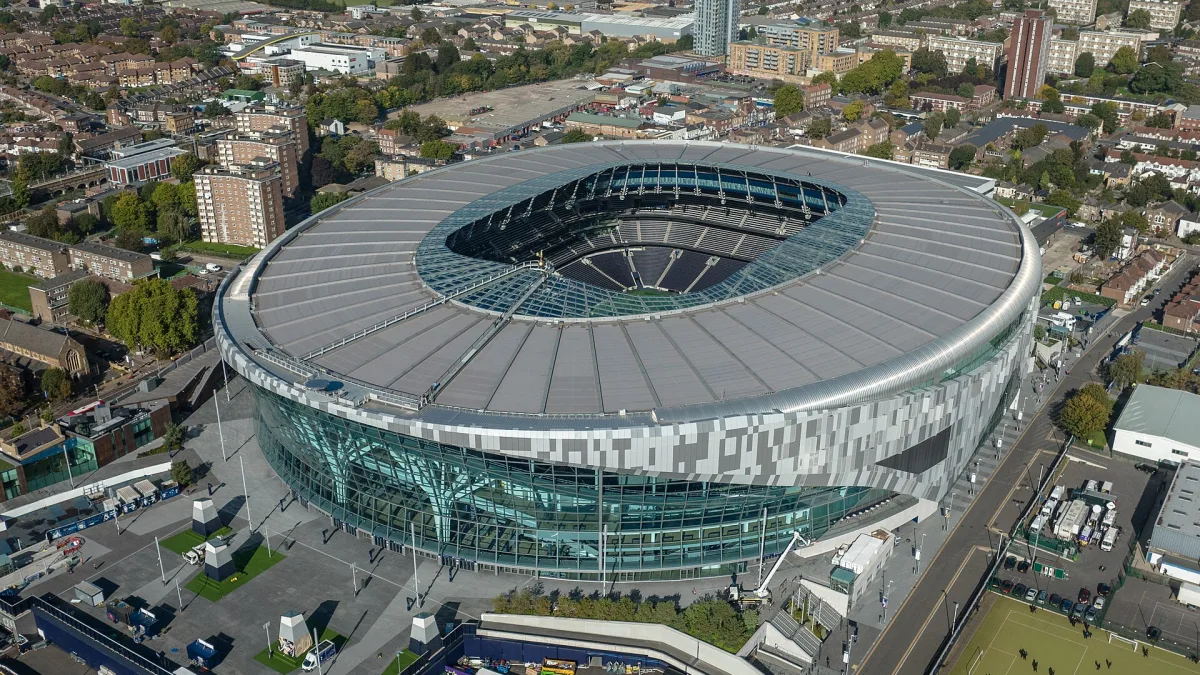
Tottenham Hotspur Stadium cost £1,156,740,741.
Not “about a billion,” not a range, not an estimate. That figure is in the audited accounts of Tottenham Hotspur Stadium Limited, company number 10151725, and it has been filed at Companies House every year since 2017. The club never announced a total, so reporting filled the gap with guesses, and the guesses are what everybody quotes.
What everyone else says
The published range for this stadium runs £800 million wide.
Early estimates were around £400 million. Mid-build reporting settled near £850 million. In April 2019, as the ground opened, Daniel Levy called it “of the order of £1 billion,” which turns out to be the closest anyone got. Later accounts pushed it to £1.2 billion.
What none of those figures rests on is a document. They trace back to each other, to the architects, to the contractor, and to the club’s own briefings, and the distance between the lowest and the highest is £800 million, which is a fair measure of how much any of them knew. The club’s debt stood at £871 million at June 2025, which is the number most often reached for as a proxy. It is a different thing entirely.
To be precise about what does exist, because this piece is about measurement: nobody ever announced a total. What was filed is the audited cost of a company’s property, plant and equipment, and that company’s only substantial asset is the stadium.
Where the real number is
Tottenham did something that makes this answerable: they put the stadium in its own company.
Tottenham Hotspur Stadium Limited was incorporated on 27 April 2016 and files full accounts, with a property, plant and equipment note that carries the spend year by year. There is a sibling entity, Tottenham Hotspur Stadium Development Limited, which holds nothing; its own accounts describe it as “an intermediary holding company.” All of the capital expenditure sits in the first company.
The accounts also capture the spend that predates the company. In its first set, £213,470,703 was transferred in from elsewhere in the group: “the construction costs relating to the NDP totalling £164,718,828” plus “£8,601,094 of professional fees” from Meldene Limited, and a further “£39,038,978 of assets” from Tottenham Hotspur Limited. So the series runs from the beginning of the project, not from 2016.
The series
Gross cost of property, plant and equipment, at each year end:
| Year to 30 June | Additions in year | Cost at year end |
|---|---|---|
| 2017 | 44,179,251 plus 213,470,703 transferred in | 257,649,954 |
| 2018 | 433,143,077 | 690,793,031 |
| 2019 | 421,341,200 | 1,112,134,231 |
| 2020 | 19,482,083 | 1,131,616,314 |
| 2021 | 11,950,708 | 1,143,567,022 |
| 2022 | 13,173,719 | 1,156,740,741 |
The stadium opened on 3 April 2019, with a 2-0 win over Crystal Palace in front of 59,215. The 2019 accounts show £1,077,468,383 moving out of assets under construction and into completed asset classes that spring, which is the moment the building stopped being a site.
Of the £1,112,134,231 at completion, £1,040,059,835 was land and buildings, £44,367,599 fixtures and fittings, and £27,664,147 capitalized interest. Three further years of fit-out took it to £1,156,740,741, and then the cost figure stops. The spending did not stop. The measurement changed.
One thing the figure does not include. Only £1,440,000 of leasehold land sits inside the stadium company, held from another group company under a lease. The group’s own balance sheet carries a separate land and buildings class of £281,459,000. So £1.157 billion is construction, fit-out and interest. The site is not in it.
What the money bought
The 2019 note splits the £1,112,134,231 four ways, and the split is lopsided in a way that limits how far the comparison can be taken.
| Component | Amount | Share |
|---|---|---|
| Land and buildings | £1,040,059,835 | 93.5% |
| Fixtures and fittings | £44,367,599 | 4.0% |
| Capitalized interest | £27,664,147 | 2.5% |
| Assets under construction | £42,650 | under 0.1% |
So the fit-out is a rounding error and the financing cost is smaller still. Roughly 93 cents in every pound went into the structure itself: the bowl, the shell, the single-tier south stand, the retractable pitch and the services under it.
That is as far as these filings go. They do not itemize the structure, so the obvious question, why this building cost £18,405 a seat when Everton’s cost £16,131, cannot be answered from the accounts. Anyone claiming to know which features account for the gap is reasoning from renderings rather than documents.
How it was paid for
The stadium borrowed against itself, and it is still doing so.
The company took a bank loan of £537,000,000, “increased in October 2018 by £100,000,000 to £637,000,000,” and by the June 2019 balance sheet the full £637,000,000 was drawn. That loan was short, repayable in May 2022, which is why the financing did not stay as it was.
On 20 September 2019 the company closed a refinancing of “the loans put in place to support the construction of THS.” The replacement package was the same size and a completely different shape: £525,000,000 raised from long-term bonds placed privately with investors in the United States, plus a £112,000,000 loan from Bank of America Merrill Lynch, who also managed the bond issue. Average maturity 23 years. Weighted average coupon 2.66%.
By the 2022 accounts the package had been reworked again, and the maturity profile is the striking part. The earliest maturity is January 2029, the average maturity is 21.3 years, the weighted average coupon is 2.80%, and “the debt stack includes a new 30-year tranche, with a bullet repayment in 2051.”
A stadium that opened in 2019 carries debt with a lump sum falling due in 2051. That is a thirty-two year horizon on a building whose tenants, competition and broadcast income nobody can forecast past the next cycle. It also explains the £27,664,147 of capitalized interest in the cost figure: interest incurred while an asset is under construction is added to the asset rather than charged against profit, so part of what the stadium “cost” is the price of the time it took to build.
The trap in the newest accounts
Anyone who goes to the latest filing and reports what they find will be wrong by £346 million.
In its 2023 accounts the company changed how it measures the stadium. The policy note says it plainly:
Prior to its 2023 reporting period, the Company’s policy was to account for all of its Property, plant and equipment using the cost model, as permitted by IAS 16. At 30 June 2023, because of the unique nature of the asset, the Company decided to change its accounting policy for the stadium asset … to the fair value model
Because it is a voluntary change, there is no retrospective restatement. The prior years keep their cost basis, the new years carry a valuation, and nothing in the table tells you the column changed meaning. The effect: cost of £1,156,740,741 at June 2022 becomes £1,517,295,970 at June 2023, on additions of just £13,281,804. £347 million of that jump is revaluation, not spending. Accumulated depreciation was reset to nil at the same time, and it is wiped out again each year, so the stadium now shows no accumulated depreciation at all.
The 2025 accounts carry the stadium at £1,503,121,000, revalued by Wilks Head & Eve, chartered surveyors, on a depreciated replacement cost basis. The group discloses how soft that is: a five percent move in the assumptions about land, build cost indexation and finance costs would raise it by £61,462,000 or cut it by £208,097,000. The same accounts note that on a historical cost basis the group’s land and buildings would carry at £840,867,000.
A depreciated replacement cost valuation answers “what would it take to build this again.” A cost answers “what was spent.” They are both useful and they are not interchangeable.
What it means
| Basis | Figure | Per seat |
|---|---|---|
| Audited cost at completion, 2019 | £1,112,134,231 | £17,695 |
| Audited cost, final, 2022 | £1,156,740,741 | £18,405 |
| Valuation, 2025, not a cost | £1,503,121,000 | £23,916 |
At 62,850 seats, Tottenham’s ground cost £18,405 per seat. That is the most expensive new football stadium in England by a wide margin, and now it is a figure rather than an impression.
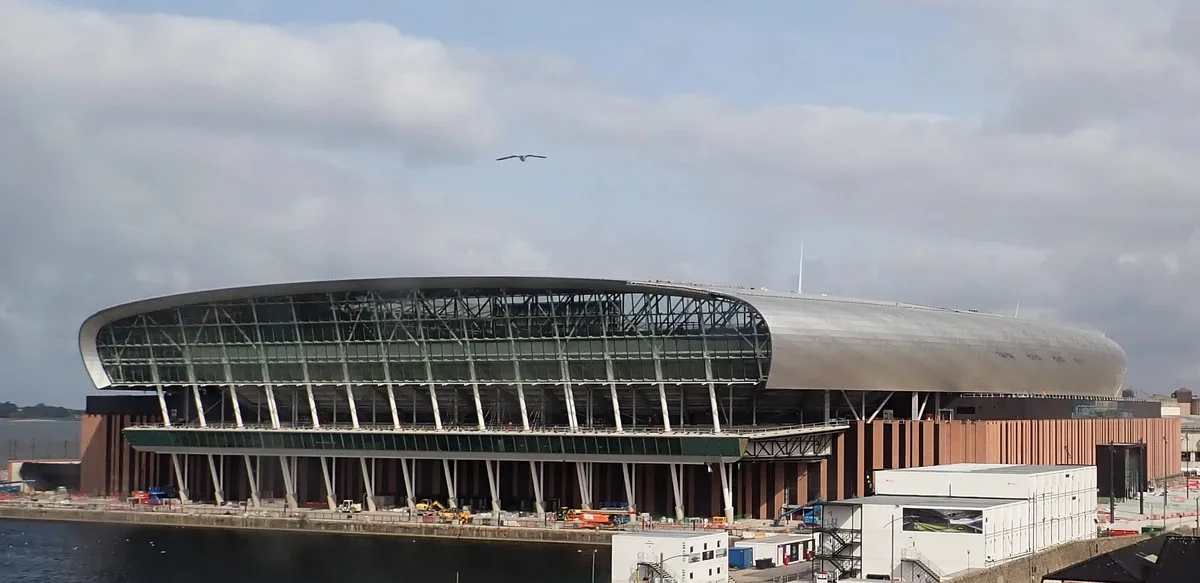
For scale, the only other audited comparable in the country: Hill Dickinson Stadium, Everton’s new ground, had £851,237,998 capitalized against it by June 2025, which is £16,131 per seat across 52,769 seats. Everton’s accounts still classed the stadium as under construction at that date, so that figure will rise. The two buildings are much closer per seat than the public numbers suggest, because Everton’s public numbers are too low rather than because Tottenham’s are too high.
And the forward comparison that matters, set out in our guide to new stadiums in English football: Manchester United have put about £2 billion on a 100,000-seat replacement for Old Trafford, which is £20,000 per seat. Against £18,405 from a stadium finished in 2019, a 2030-31 delivery at £20,000 is not an outlandish number. It may be a light one.
Sources
- Tottenham Hotspur Stadium Limited, company 10151725: the filing history, full accounts for every year ended 30 June from 2017 to 2025. The property, plant and equipment note carries the cost series, the capitalized interest, and the 2023 change in accounting policy.
- Tottenham Hotspur Stadium Development Limited, company 10148712: the filing history, which establishes that this entity holds no stadium capital expenditure and is an intermediary holding company. Its 2025 filing includes the consolidated accounts of Tottenham Hotspur Limited, the source for the group asset classes, the valuer and the valuation sensitivity.
- Everton Stadium Development Limited, company 10719054: the filing history, used for the Hill Dickinson Stadium comparison.
Filings at Companies House are served as scanned PDFs with no text layer, so every figure here was read from the scanned page rather than extracted. Arithmetic was checked by confirming that opening balance plus additions equals the closing balance in each year.
Hero photo: Tottenham Hotspur Stadium.
Where figures disagree, this piece states the basis rather than picking a favourite. A cost, a contract value, a programme cost and a valuation are four different measurements, and a number without its basis is not comparable to anything.