The most talked-about football stadium in England is a picture. Manchester United’s 100,000-seater has three masts, an umbrella canopy, a plaza its architects measure in Trafalgar Squares, a price of around £2 billion and a season, 2030-31, printed underneath. It has no planning permission and no hole in the ground. If you’ve seen the rendering and wondered how much of it is real, the answer in October 2026 is: the land, and the drawings of what might go on it.
That’s a fair summary of new stadiums in English football. Of the eight grounds below, two are new buildings. Two more are promised, both for the same season, and neither has permission to start. And two clubs got themselves a bigger ground than the newest stadium of the lot without building one.
| Ground | Club | Capacity | Status |
|---|---|---|---|
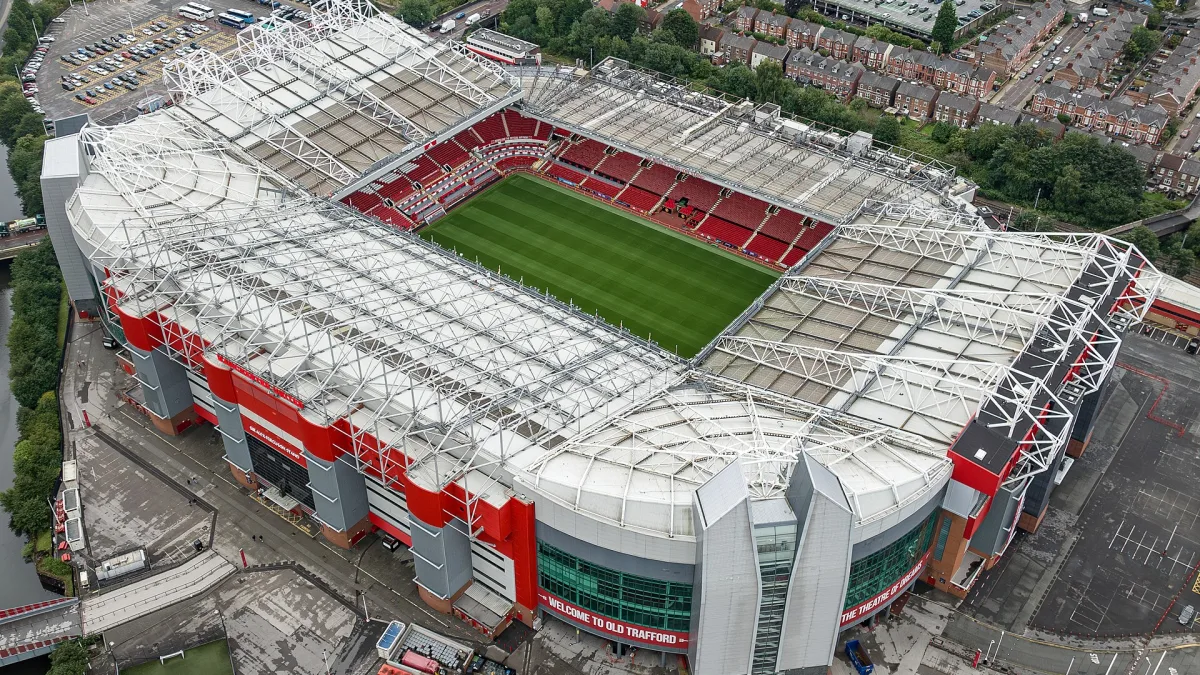
| Old Trafford | Manchester United | 74,158 | to be replaced by a 100,000-seater |
| Tottenham Hotspur Stadium | Tottenham | 62,850 | opened April 2019 |
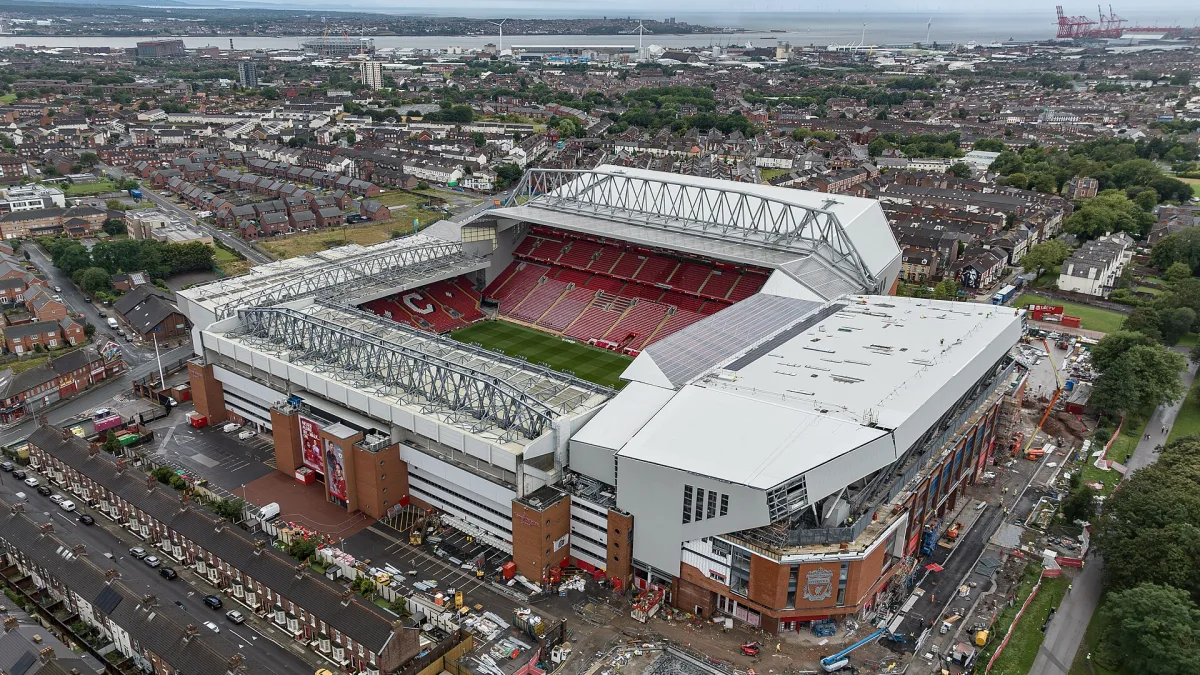
| Anfield | Liverpool | 61,276 | expanded, not replaced |
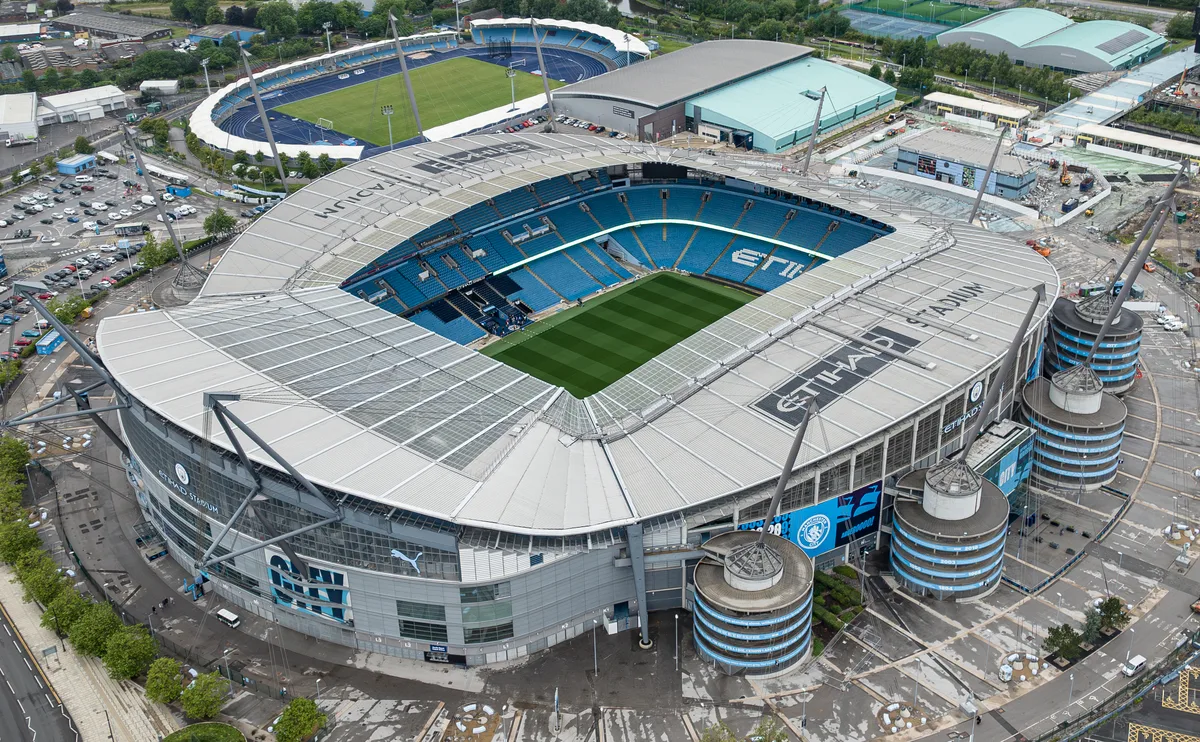
| Etihad Stadium | Manchester City | 61,038 | expanded, not replaced |
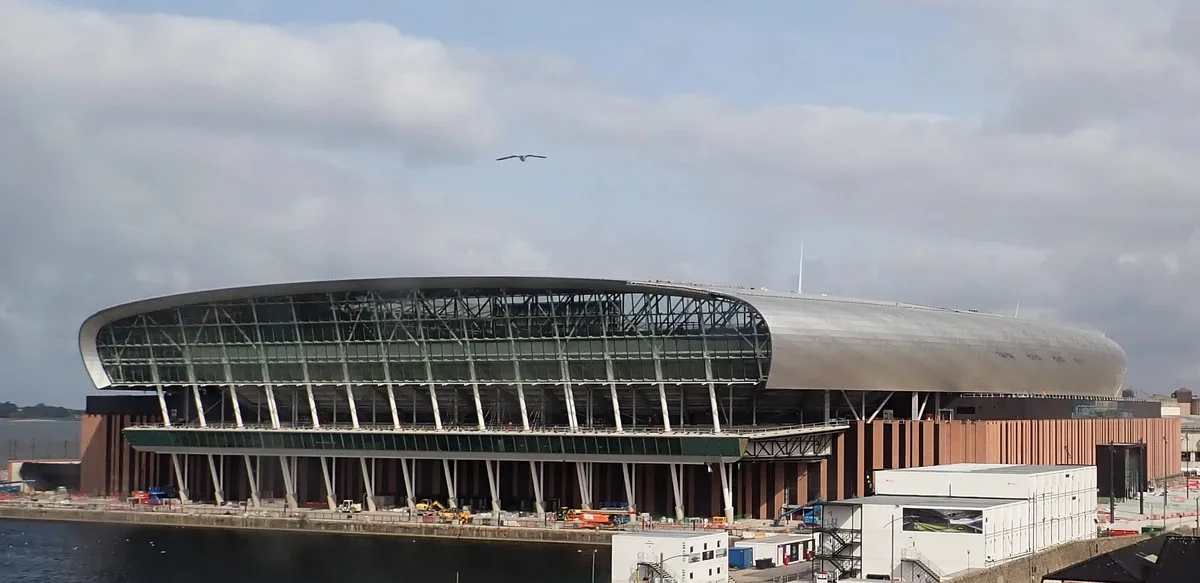
| Hill Dickinson Stadium | Everton | 52,769 | opened 2025 |
| Stamford Bridge | Chelsea | 40,044 | no agreed plan |
| New Manchester United stadium | Manchester United | 100,000 | designed, no planning permission |
| Birmingham City Powerhouse (working name) | Birmingham City | 62,000 | designed, no planning permission |
The six grounds that exist are in capacity order. The two that don’t are underneath them, which is the honest place for a drawing. Read the top half and the two newest buildings sit second and fifth. The two expansions sit third and fourth, within about 1,800 seats of Tottenham’s new build and more than 8,000 above the newest ground of all. Liverpool and Manchester City never moved. Everton did, spent four years at it, and finished smaller than both.
The one that actually opened
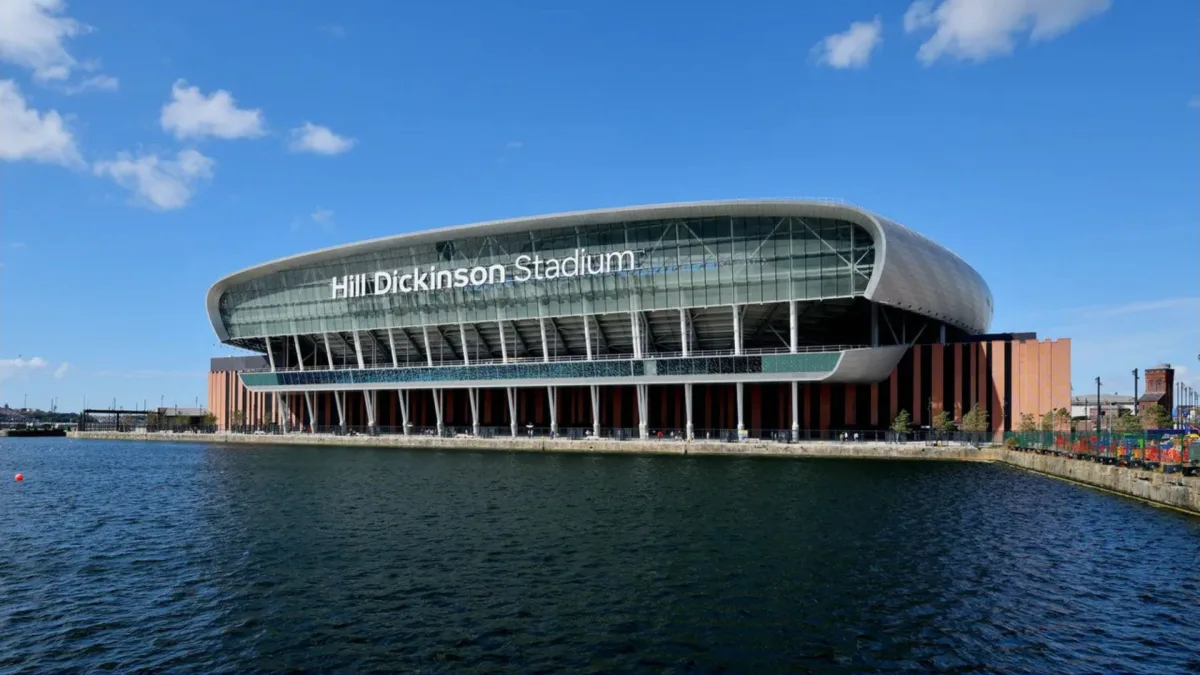
Everton spent four years building the newest stadium in the Premier League and came out smaller than two clubs who rebuilt stands instead. Hill Dickinson Stadium holds 52,769, which is 119 seats short of the 52,888 on the drawings and 8,507 short of Anfield. It is also 40 seats bigger than St James’ Park, the tightest gap anywhere in the Premier League table, so the cost of four years on a dock was forty more seats than Newcastle already had.
Bramley-Moore Dock was a working coal berth, walled in granite, with a listed hydraulic engine house standing over it. The first thing you notice outside the finished stadium is the wind. It comes off the Mersey with nothing in the way, and the water is right there, close enough that the dock wall does the job a car park does at most grounds. The brick is the same red as the warehouses behind it. On a gray Saturday the whole building looks less new than inevitable, like something that was always going to end up on that spot, which is a strange thing to feel about a stadium that wasn’t there four years ago.
Ground was broken on August 10, 2021. The building didn’t host its first event until February 17, 2025, and it was another six months, to August 24, 2025, before a competitive match was played in it.
4 years and 2 weeks from breaking ground at Bramley-Moore Dock on August 10, 2021, to the first competitive match at Hill Dickinson Stadium on August 24, 2025.
The names on the building make a long bench for one stadium. Dan Meis drew it: Meis Architects led stages 1 to 3 of the design, and Meis then stayed on as the client’s design guardian. BDP Pattern delivered it, Buro Happold engineered it and Laing O’Rourke built it. The pitch is a SIS Grass hybrid with synthetic fibers making up about 5 percent of the surface, so what the players run on is still 95 percent grass.
What it cost has been reported four ways and all four are low. Laing O’Rourke’s own project page puts the contract value at about £555 million. Reporting has put the total near £750 million, one account says £800 million, and BDP’s list of its own projects says £500 million. The club’s own development company, Everton Stadium Development Limited, had capitalised £851,237,998 against the project by June 2025, and its accounts still classed the stadium as under construction at that date, so the real figure is higher again. It will not be filed until 2027. The spend ran £222 million, £319 million and £121 million across the three years to June 2025. A contract value is the builder’s slice, not the bill.
Its name is already plural. Hill Dickinson bought the naming rights, announced May 16, 2025, at a reported £10 million a year, so the building is Hill Dickinson Stadium on every matchday until the summer of 2028, when UEFA, which doesn’t carry sponsor names, will call it Everton Stadium for Euro 2028. The newest ground in the Premier League will spend a tournament answering to a name it doesn’t otherwise use.
What Tottenham proved, and what it actually cost
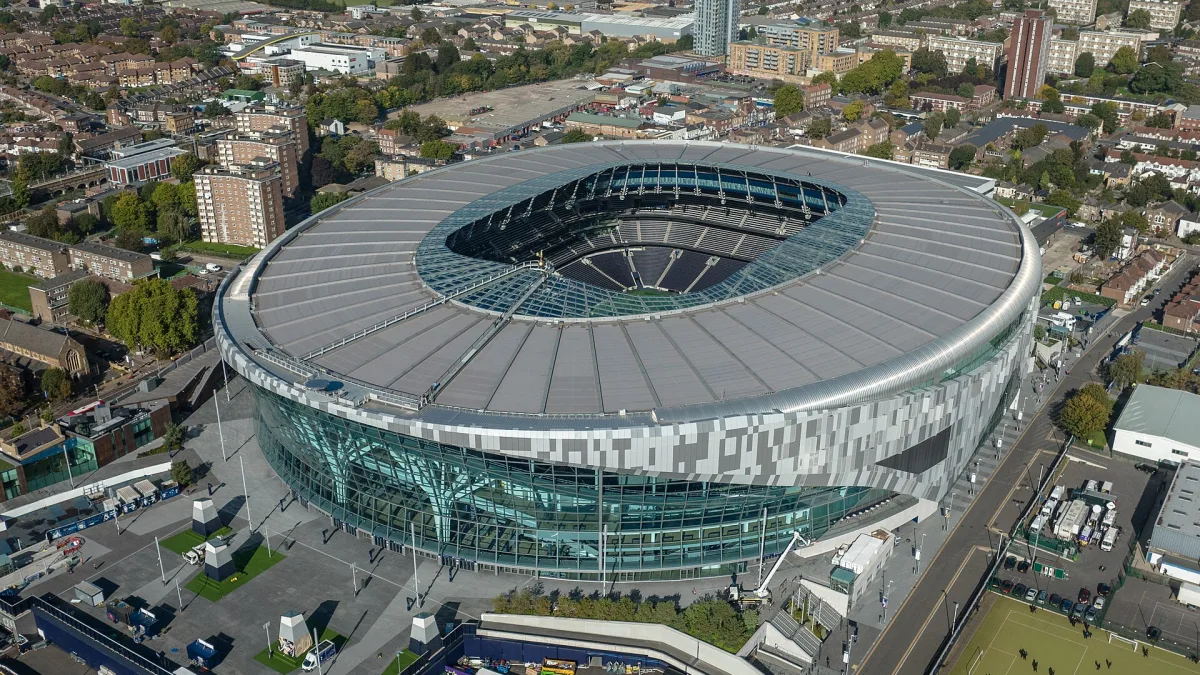
Tottenham built the benchmark every English club with a rendering now points at, and the audited cost of it is £1.157 billion. The figure has sat in the stadium company’s filed accounts for years and rarely turns up in the coverage. Tottenham Hotspur Stadium holds 62,850, the largest club ground in London, and it opened on April 3, 2019, with a 2-0 win over Crystal Palace and 59,215 in the seats.
There’s no groundbreaking date to set beside Everton’s, because there wasn’t one. Site development began in September 2012. The basement went in during the summer of 2015, the foundations that fall. Start the clock at the first of those and Spurs took six and a half years; start it at the last and it’s under four. The club’s own timeline is a compound rather than a date, and anyone who quotes a single build time for Tottenham has picked a starting line without telling you.
The pitch is the thing visitors want to see move. It’s GrassMaster hybrid grass laid in three sections, 33 steel trays to a section, 99 trays in all, and the sections slide away to leave a synthetic surface 1.6 meters below. Watching it go is the closest a football ground comes to a stage set changing scenes.
The cost was never a mystery. It was filed rather than announced. Tottenham put the ground in its own company, Tottenham Hotspur Stadium Limited, and that company’s audited accounts carry the spend year by year. Cost reached £1,112,134,231 by June 2019, the summer the stadium opened, including £27.7 million of capitalised interest. Three more years of fit-out took it to £1,156,740,741 by June 2022, and there the cost figure stops, because that was the last year the company measured the stadium at cost.
Set that against what was being said while it went up. Early estimates were around £400 million. Mid-build reporting settled near £850 million. By April 2019 Daniel Levy was calling it “of the order of £1 billion,” which turns out to be the closest anyone got, and the club’s debt stood at £871 million at June 2025.
One trap waits for anyone who goes looking. In its 2023 accounts the company moved the stadium from the cost model to the fair value model, so the figure leaps to £1.52 billion on £13 million of actual spending. The 2025 accounts carry the stadium at £1,503,121,000, a depreciated replacement cost valuation by outside surveyors. That is what the asset is reckoned to be worth, not what it cost, and the two are £346 million apart.
It’s the building that taught English football a stadium could be a venue business with a club attached. And then the strangest fact of all: it has never sold its own name. Seven years of NFL games and stadium shows, and it’s still just Tottenham Hotspur Stadium.
Manchester United’s new stadium: 100,000 seats, no permission
Manchester United has a design, a site and a price, and no permission to build.
The design was confirmed on March 11, 2025: 100,000 seats, by Foster + Partners, the biggest stadium project in British football. It would stand about 350 meters northwest of the current ground, north of the Bridgewater Canal. Three masts carry an umbrella canopy, the tallest of them 200 meters, or 656 feet, over a plaza the architects compare to two Trafalgar Squares. The price is put at around £2 billion, privately financed. The target is the 2030-31 season. Old Trafford holds 74,158 today, so the replacement adds 25,842 seats to a ground that has not grown since 2006, an increment the size of a decent Championship ground.
The site is real, which is more than most renderings can say. It’s 25 acres, bought from Indurent, and the price is in the club’s own accounts. What doesn’t exist is a planning application. None has been filed.
£63.5m paid by Manchester United for 25 acres north of the Bridgewater Canal, disclosed in the 2025-26 accounts, with no planning application filed.
That is the current state of the biggest stadium project in Britain: tens of millions committed to land, zero permission sought to build on it. A supporter who saw the rendering in March 2025 and wondered when the first seat would be bolted in has, a year and a half on, a line in the accounts to look at.
Birmingham City’s new stadium, 62,000 seats from the third tier
The second-biggest stadium planned in English football belongs to a club that was in League One in 2024, back in the third tier for the first time in 29 years before going straight up again. Birmingham City’s design for Bordesley Green, in East Birmingham, holds 62,000. That is 850 short of Tottenham Hotspur Stadium, which is the point: a club one promotion from the Premier League has drawn a ground all but level with the biggest club stadium in London.
The design came out of a competition won by Heatherwick Studio with MANICA Architecture, in collaboration with Steven Knight, the screenwriter and a lifelong Blues fan. The visuals went out on November 20, 2025, the club’s 150th anniversary. Twelve chimney-like towers of reclaimed brick ring the bowl, echoing the brickworks that stood on the site. There’s a retractable roof and a moveable pitch. The bowl is steep, the stands pulled as close to the pitch as the rules allow, for what the architects call a 360-degree wall of fans. Tom Wagner, the club’s owner, put the intent plainly: “Make no mistake. This is a football first stadium that will provide our teams with a competitive advantage from day one.”
The economics come with a number and the building doesn’t. The development is expected to add £760 million a year to Birmingham’s economy by 2035. What it will cost to put up is contested: Sky Sports has reported about £1.2 billion for the whole Sports Quarter, which includes a women’s stadium and entertainment venues, against £3 billion in other reporting, and Heatherwick’s own announcement gives no cost at all. The ambition is the start of the 2030-31 season, the same season United has named. Public engagement was due to begin in 2026.
The chimneys look like the first thing you’d cut if the money got tight. You can’t. They directly support the roof, and the elevators run inside them. Take the towers out of the picture and the roof has nothing to sit on and there’s no way up.
The route nobody calls a new stadium
Liverpool and Manchester City never moved, and both now sit on more seats than the newest stadium in the Premier League. Neither job got a magazine cover.
Anfield holds 61,276 and got there in two goes. The Main Stand was rebuilt between 2014 and 2016 at around £110 million, of which the construction contract was £75 million. The Anfield Road Stand followed from 2021 to 2024 at around £80 million. Two stands, about £190 million of work, and Liverpool played through all of it.
The Etihad holds 61,038 and also came in two rounds. Populous put a third tier on the South Stand in 2014-15, taking the ground to roughly 55,000. The same firm then rebuilt the North Stand between 2023 and 2026, adding 7,900 seats for £300 million, and that £300 million also bought a hotel, offices, a museum, a shop and a public square, which makes the seat count look better rather than worse.
So the comparison isn’t a stand against a stadium. It’s four stand projects against two new grounds, and the four beat the newer of the two by more than 8,000 seats.
8,507 seats by which Anfield, which Liverpool never left, exceeds Hill Dickinson Stadium, which Everton spent four years building.
Everton moved to a dock, spent four years, and had £851 million capitalised against 52,769 seats by June 2025 with the bill still open. Liverpool spent about £190 million across two stands and finished 8,507 ahead of that. Manchester City spent £300 million on one end and finished 8,269 ahead. Put Tottenham’s £1.157 billion beside them and the gap closes rather than opens: the most expensive new build in English football beats Anfield by 1,574 seats.
Here’s the view this article holds: expansion is the best bet in English stadium building, and the industry treats it as the boring option because it doesn’t produce a rendering. There’s no groundbreaking to photograph, and the club plays in front of scaffolding while it happens. But a club that rebuilds a stand keeps its ground, its matchday income and its address while it builds, and ends up seating more people than a club that moved. The glamour went to the dock. The seats went to the clubs that stayed home.
Why 2030-31 is doing a lot of work
Two clubs have promised the same season, and neither has permission to start.
Set the four timelines side by side and only the finished ones end in a match. Everton: ground broken August 10, 2021, first league fixture August 24, 2025. Tottenham: site development from September 2012, doors open April 2019. Manchester United: design confirmed March 2025, land bought in 2026, no planning application. Birmingham City: design revealed November 2025, public engagement from 2026.
Both are at the stage before the stage before construction. Everton’s four years and two weeks is the only clean measurement in the set, shovel to fixture with no argument about where to start the clock, and it ran from a site the club already controlled with permission in hand. Count four years and two weeks forward from October 2026 and you land in October 2030, after the season both clubs have promised has already kicked off. That assumes a shovel goes in this month, and no shovel can, because neither club has permission. English football has two stadium countdowns running, and neither clock has actually been wound.
Chelsea, which hasn’t moved
Chelsea has the smallest ground of the established big clubs and no agreed plan to do anything about it. Stamford Bridge holds 40,044, which is 22,806 fewer than Tottenham and 12,725 fewer than the ground Everton just built. Every other club in the table has either moved, expanded, or drawn something. Chelsea has reviewed.
Speaking in March 2025, Todd Boehly put the stadium at the center of whether Chelsea’s ownership group holds together: “I think that’s going to be where we’re either aligned or we ultimately decide to go different ways.”
What is actually being built
Four clubs have opened or committed to a new stadium since 2019. One of them has a building you can walk into that didn’t exist five years ago, and it’s on a dock in Liverpool with the wind coming off the Mersey. One opened in 2019 and never announced what it cost, though its own accounts have carried the figure all along. The other two are renderings with a date attached, and it’s the same date. Meanwhile the two clubs sitting on more seats than the newest stadium of the four didn’t build one at all. They rebuilt stands and stayed where they were.
So if you came here off the back of a spectacular image, the honest state of play is this: less is being built than the pictures suggest, the two real buildings of the century so far are in north London and on a Liverpool dock, and the cheapest wins aren’t new stadiums at all. Next time a club publishes a rendering, check two things before believing the date: a planning permission, and a hole in the ground. As of October 2026, the two biggest projects in the country have neither.
Sources
- Manchester United’s land: Manchester United accounts reveal 63.5m spend on land for stadium development, Property Week. The price of the 25-acre site, disclosed in the club’s 2025-26 accounts, 350m from Old Trafford and north of the Bridgewater Canal.
- Birmingham’s design: the architects’ own account of the stadium, Heatherwick Studio. The twelve reclaimed-brick towers that carry the roof and house the elevators, the retractable roof and moveable pitch, the competition won with Steven Knight, the £760m a year to the city by 2035, the 2030-31 ambition, and the release on the club’s 150th anniversary.
- Birmingham’s reveal: the 62,000-seat images and Tom Wagner’s remarks, Sky Sports. The November 2025 reveal, with the capacity, the architects and Tom Wagner’s remarks.
- Birmingham’s division: promotion back to the Championship, Sky Sports. The League One season that preceded the reveal, the club’s first in the third tier for 29 years.
- Chelsea: Todd Boehly on the ownership group and the stadium, ESPN. The March 2025 interview in which Boehly set out what agreement on Stamford Bridge would decide.
Hero photo: Hill Dickinson Stadium by Everton FC, CC BY-SA 4.0.
Capacities follow our own stadium pages, which take the Premier League Handbook 2026/27 as the domestic record. Where cost figures are disputed, the range is given rather than a single number, because the parties involved are measuring different things. Project timings are the clubs’ own stated ambitions and are not planning consents.