The venue list is the least settled thing about EURO 2028, and it’s the one thing everybody treats as settled. Nine grounds, a city and a number beside each, reprinted ever since it was drawn up until it reads like a fixture. It isn’t one. There were ten grounds on it when UEFA awarded the tournament in October 2023, and Belfast came off.
The list is below, because it’s what you came for. Then the things the list won’t tell you: which of the names on it are temporary, why every figure in the capacity column is softer than it looks, how a ground loses a European Championship it had already been promised, and which city is actually worth the flight. None of that makes the nine wrong. It makes them provisional, and with the tournament still the better part of two years away, provisional is the more honest word.
| Stadium | City | EURO 2028 capacity | Matches |
|---|---|---|---|
| Wembley Stadium | London | 86,000 | 8 |
| National Stadium of Wales | Cardiff | 73,000 | 6 |
| Tottenham Hotspur Stadium | London | 60,000 | 5 |
| Manchester City Stadium | Manchester | 58,000 | 5 |
| Hampden Park | Glasgow | 51,000 | 6 |
| Everton Stadium | Liverpool | 50,000 | 5 |
| St James’ Park | Newcastle | 50,000 | 5 |
| Dublin Arena | Dublin | 50,000 | 7 |
| Villa Park | Birmingham | 48,000 | 4 |
51 matches across nine stadiums, eight cities and four countries, from 9 June to 9 July 2028.
Nine grounds, and the column that tells you least
The capacity column is the one everybody quotes, and it’s the one that tells you the least.
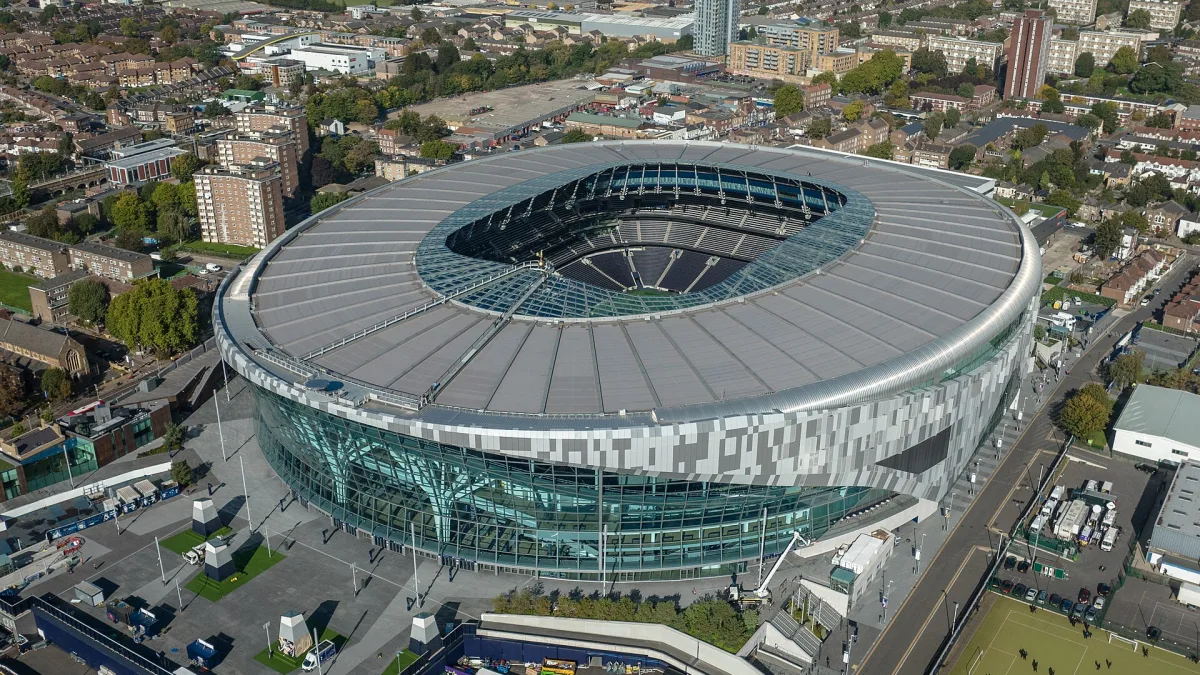
Nine stadiums across eight cities, spread over four associations: England, the Republic of Ireland, Scotland and Wales. London has two of them, Wembley and Tottenham Hotspur Stadium. Between them they take 51 matches, which breaks down as 36 group games, eight in the round of 16, four quarter-finals, two semi-finals and the final. Villa Park in Birmingham is the smallest at 48,000 and gets the fewest matches, four. So far the table behaves. The biggest ground gets the most football and the smallest gets the least, and you could close the page here believing size was the rule.
Read the rest of the fourth column and the rule falls apart. Hampden Park sits in the middle of the table at 51,000. It gets six matches, one of them a quarter-final. Tottenham Hotspur Stadium is 9,000 seats bigger and gets five, none of them a quarter-final. Dublin Arena is level with Everton and Newcastle at 50,000, and it gets seven, more football than any ground in the tournament except Wembley. Hampden gets more of this championship than Tottenham does, and Dublin gets more than either.
Whatever UEFA is handing out matches by, it isn’t seats. The column that tells you how much of the tournament a city actually gets is the one on the right, and almost nobody reads that far.
Four names that come off the building
Four of the nine grounds will spend the summer of 2028 under a name their own supporters never say.
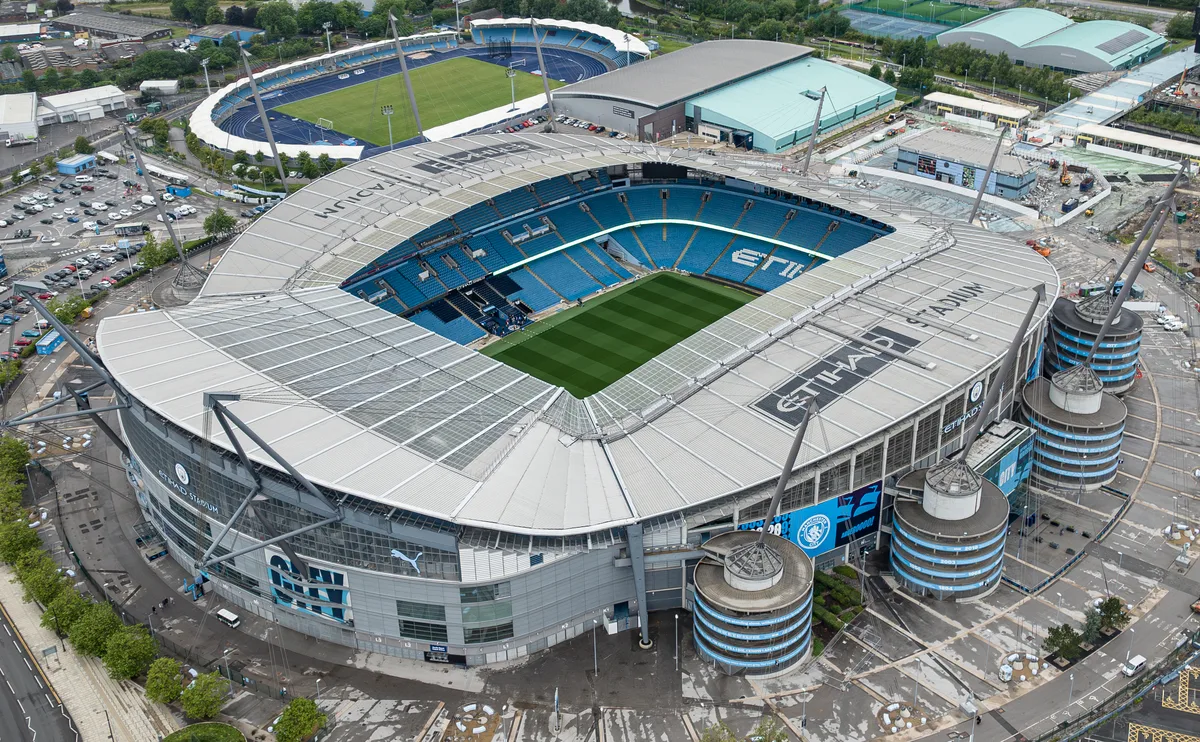
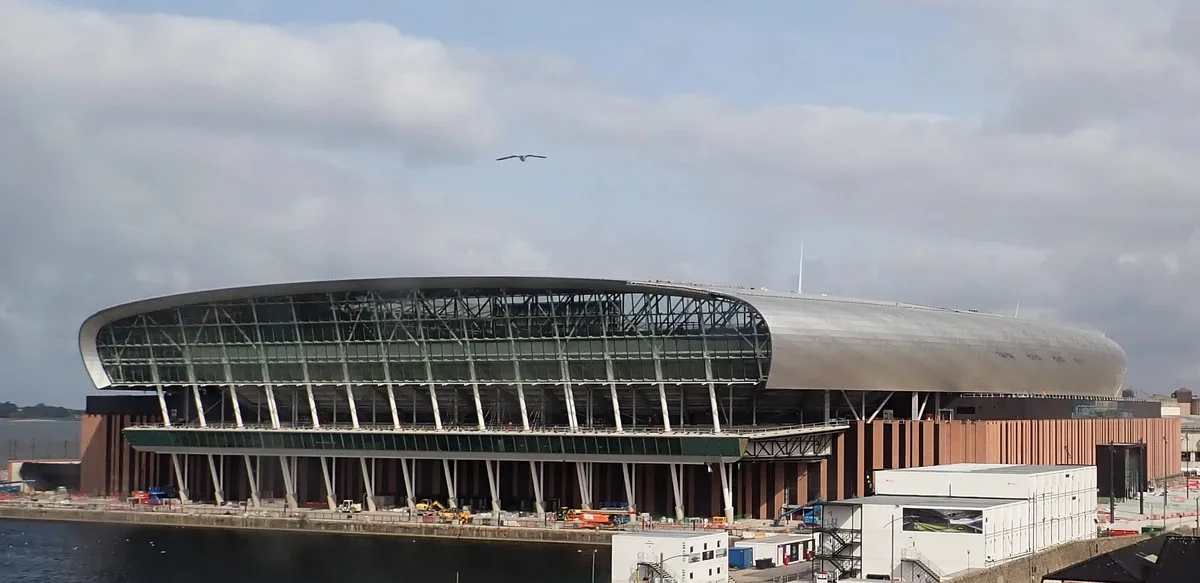
UEFA’s list reads National Stadium of Wales, Manchester City Stadium, Everton Stadium and Dublin Arena. Walk up to those four buildings and the lettering says Principality Stadium, Etihad Stadium, Hill Dickinson Stadium and Aviva Stadium. The other five, Wembley, Tottenham Hotspur Stadium, Hampden Park, St James’ Park and Villa Park, keep the names they already have. None of this is accidental, and none of it is hidden. UEFA’s documents simply don’t use the commercial names: the venue guide and the match schedule both carry the plain ones, front to back. The Etihad went through it at the 2015 Rugby World Cup and will go through it again.
Knowing the arrangement doesn’t help you at the bus stop. The ticket says Everton Stadium. Nobody in Liverpool will call it that, and the friend meeting you outside will name a stand you can’t find on the tournament map. For a month the city and the championship describe the same building in two vocabularies, and the visitor is the one carrying both. Manchester and Dublin get the same month.
Cardiff gets it first, on a Friday night, with a Group A match. The tournament opens in Cardiff on 9 June 2028, and the stadium will be lying about its name. The building says Principality. Every accreditation, every screen and every UEFA document says National Stadium of Wales. That’s what a host venue is for a month. The city keeps its ground. The tournament borrows a version of it, with the sponsor scraped off the walls and a capacity that UEFA, not the owner, gets to decide.
The Euro 2028 capacities aren’t the stadiums’ capacities
The capacity beside each ground is not the capacity of the ground. It’s a tournament capacity, a figure UEFA publishes, and at the seven finished grounds where a current figure can be checked against it, UEFA’s is the smaller number every time.
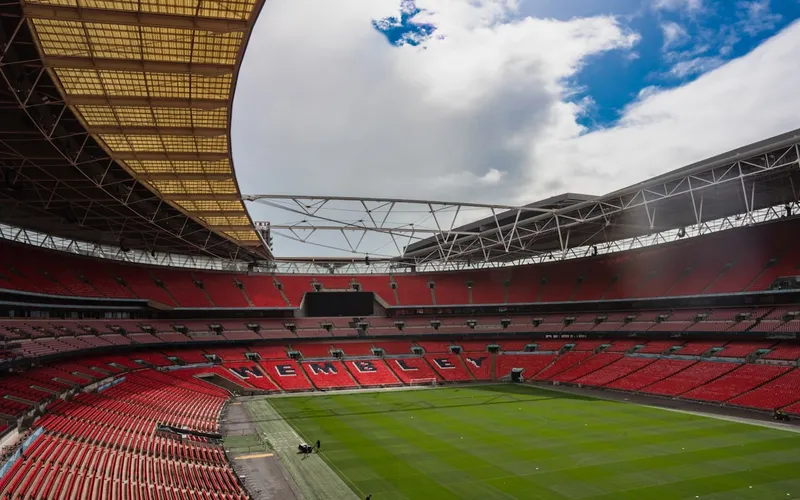
So check them. Wembley is listed at 86,000. The stadium’s own website says 90,000 seats and calls itself the largest sports venue in the UK and the second-largest in Europe, as our page on the ground sets out, which makes UEFA’s Wembley 4,000 seats smaller than Wembley’s Wembley. Tottenham Hotspur Stadium is listed at 60,000 and holds 62,850. The Etihad is listed at 58,000 and holds 61,038. Hill Dickinson Stadium is listed at 50,000 and holds 52,769. The Aviva is 50,000 on the list and 51,711 on its own site. The two smallest gaps are still gaps: Hampden Park is 51,000 for the tournament and 51,866 according to the Scottish FA, and Cardiff is 73,000 for the tournament against the 73,931 published by the stadium and by Populous, the architect that built it.
Seven grounds, seven reductions, and the same direction every time. UEFA doesn’t publish a reason for the difference, so I won’t invent one. Across those seven the tournament number is the smaller one, by under a thousand seats in Glasgow and in Cardiff and by four thousand in London, and it’s the tournament number that goes on every list, including the one at the top of this page. Which matters more than it sounds if you’re going. At those six grounds a sold-out EURO 2028 match will be a smaller crowd than the same building holds on an ordinary Saturday in March, in the same seats, at tournament prices. Where these grounds sit among Britain’s biggest stadiums and Europe’s largest is a different question, and we’ve answered it elsewhere.
Then Wembley turns out to be soft twice over. UEFA’s match schedule, the version dated 12 November 2025, gives Wembley 86,000. UEFA’s own venue guide gives it 88,000. Every other stadium carries the same figure in both documents, to the seat. Only Wembley moves, by 2,000, between two pages published by the same organization. The figure used here is 86,000, because it’s the one on the schedule. But when the body that sets the number can’t agree with itself about it, the number was never as hard as the column made it look.
86,000 or 88,000 Wembley’s capacity for EURO 2028, depending on which of UEFA’s two documents you open.
The tenth stadium
EURO 2028 was awarded to ten stadiums. Count the table again and you’ll get nine.
The UEFA Executive Committee appointed the hosts on Tuesday 10 October 2023, and the announcement was honest about which grounds didn’t exist yet in the form UEFA wanted. “City of Manchester Stadium in Manchester (to be renovated).” “Villa Park in Birmingham (to be renovated).” Everton Stadium in Liverpool was listed as a “new stadium”, and it has since been built and opened. And there was “Casement Park in Belfast (new stadium)”, which is the line that’s gone.
It went on paper. In September 2024 the UK Government declined to pay for it in time. The letter was signed by Hilary Benn, the Secretary of State for Northern Ireland, and Lisa Nandy, the Secretary of State for Culture, Media and Sport, and it said the “estimated build costs have risen dramatically”, from £180m when the bid was awarded in October 2023 “to potentially over £400m”. That’s the price of a stadium more than doubling in eleven months. The decision followed in the register governments use once they’ve made one: it was “not appropriate for the UK Government to provide funding to seek to build Casement Park in time to host matches at EURO 2028”. Read that clause again. It refuses a deadline, not a stadium.
£180m to potentially over £400m Casement Park’s estimated build cost, from the award in October 2023 to the letter that declined to fund it in time for the tournament, in September 2024.
The money isn’t the sentence that does the damage. The letter also looks back at the months between the award and the election of the new Government, and its verdict on those months is ten words long: “almost no progress was made to deliver the stadium build”.
Nine months later the same Government put money in. The Spending Review of 11 June 2025 allocated £50m to rebuilding Casement Park, and the GAA president, Jarlath Burns, thanked “the Secretary of State, Hilary Benn, the Chancellor of The Exchequer, Rachel Reeves and the UK Government” for it. Benn had signed the refusal. So Belfast is getting its stadium, slowly, and it is getting it after the tournament that was supposed to justify it. Ulster GAA’s own word for EURO 2028 is a missed opportunity. Belfast is the one city in the 2023 announcement where a visitor in 2028 will find nothing to go to.
What Northern Ireland kept is its place in the draw. UEFA’s match schedule reserves a group position for each host team that qualifies: Wales in A1, England in B1, the Republic of Ireland in E1, Scotland in F1, and Northern Ireland in D1. Five hosts, five slots, and the schedule doesn’t rank them. Four of those hosts have a slot and a stadium. Northern Ireland has a slot. Qualify, and it would play every minute of its own championship in another association’s ground, the D1 of a group that never comes to Belfast.
Villa Park is still being built up to its number
Villa Park is around 11,000 seats short of the tournament it agreed to host.
The Premier League’s handbook for 2026/27 gives Villa Park a ground capacity of 36,887 at the start of this season. It’s the same handbook we used to rank every Premier League ground. UEFA’s figure for Villa Park at EURO 2028, on the schedule dated November 2025, is 48,000. The ground a supporter walks up to this autumn and the ground in UEFA’s document are 11,000 seats apart.
36,887 Villa Park’s ground capacity at the start of 2026/27, per the Premier League handbook. UEFA lists it at 48,000 for the tournament.
The club explains the gap, and the explanation is that the whole North Stand is shut. Aston Villa announced the redevelopment in April 2025 promising capacity would never drop during the work. A year later it changed its mind and its method. The release of 21 April 2026 sets out an “accelerated timeline” that closes the North Stand for the entirety of the 2026/27 season and puts the ground at “just over 37,000”, a figure the club marks as subject to change. Francesco Calvo, its president of business operations, went first at the obvious objection: “Temporarily reducing Villa Park’s capacity is not a decision we take lightly. However, it is the right decision and one that we have made with our supporters and the long-term future of the Club at the heart of our thinking.” The standard seating and concourse reopen for the full 2027/28 season, with the hospitality areas due that October.
Which means the gap closes in one season, not two, and Villa Park arrives at EURO 2028 with a year of normal football behind it. Read in order, the four documents are a club trading a bad season for a finished stadium, and saying so out loud.
If you can only go to one city
If you can only go to one city, it’s London, and it isn’t close. The interesting answer is Dublin.
Wembley has eight matches: four group games, a quarter-final, both semi-finals and the final. The semi-finals fall on Tuesday 4 July and Wednesday 5 July 2028 and the final on Sunday 9 July, so a person in London that week watches the tournament decided across six days without changing hotel. Wembley is also the only one of the nine with no round of 16 tie at all. The ground does the group stage and the finish, and sits out the round in between.
Elsewhere is mostly Dublin. Dublin Arena has seven matches, more than any ground outside London: five group games, a round of 16 tie and a quarter-final. That’s a 50,000 stadium, level with Everton and Newcastle on the capacity column, and it carries more of the tournament than Cardiff at 73,000 or Tottenham at 60,000. Cardiff and Hampden Park take six each, a quarter-final apiece. Villa Park takes four, the fewest, at a ground that hasn’t finished being built. Kickoff times aren’t set; UEFA says they’ll be confirmed after the final draw, so anyone asking which evening to fly in is asking a question nobody can answer yet.
Nine stadiums, eight cities, four countries and 51 matches. If you can only go to one city, go to London, because that’s where the tournament is decided. If you want the most football for the fewest hotel nights, go to Dublin.
That’s the list, and it’s correct today. It’s also the most provisional part of the tournament, which is not a flaw unique to this one: the 2030 World Cup venue list has been moving since the day it was awarded and isn’t settled either. The dates are the fixed part of EURO 2028. The venue list is the forecast.
Sources
- UEFA: the official match schedule (PDF), the host cities and stadiums venue guide, the October 2023 hosts announcement. Every capacity and match allocation in the table above is counted from the schedule, the version dated 12 November 2025. The venue guide is where Wembley’s 88,000 comes from, against the schedule’s 86,000, and the 2023 announcement carries the original ten venues with UEFA’s own notes on which were still to be built or renovated.
- Casement Park: the UK Government’s funding letter (PDF), Ulster GAA on the £50m committed in June 2025, RTÉ on the September 2024 decision. The letter from Hilary Benn and Lisa Nandy declining to fund the build in time for the tournament, the reversal that followed in the Spending Review, and the report that dates the letter, which carries no visible date of its own.
- Aston Villa: the North Stand redevelopment, April 2025, the accelerated plan for 2026/27, April 2026. The original announcement, which promised capacity would not drop during the work, and the release a year later that closed the stand for a season, put the ground at just over 37,000 and quoted Francesco Calvo on the reduction.
- Premier League Handbook 2026/27 (PDF). Ground capacity at the start of the season for Villa Park, Tottenham Hotspur Stadium, the Etihad and Everton, taken from the club directory.
- Principality Stadium: facts and figures. The venue’s own seated capacity of 73,931, broken down by tier, against the 73,000 UEFA uses for Cardiff.
- Scottish FA: Hampden Park. The association’s own capacity of 51,866 for the national stadium, against UEFA’s 51,000.
- Aviva Stadium. The venue’s own capacity of 51,711, against the 50,000 UEFA lists for Dublin Arena.
Figures were cross-referenced across UEFA’s own documents, government correspondence, club and association sources, and our own stadium pages. Where UEFA’s two published documents disagree, as they do on Wembley, both numbers are given rather than one. Capacities for the Principality Stadium and St James’ Park outside the tournament are not stated here because no second source could be confirmed for them. The venue list itself is subject to change: it has already changed once. Casement Park’s funding position also changed after the September 2024 letter, and this article states both the refusal and the June 2025 reversal rather than either alone.
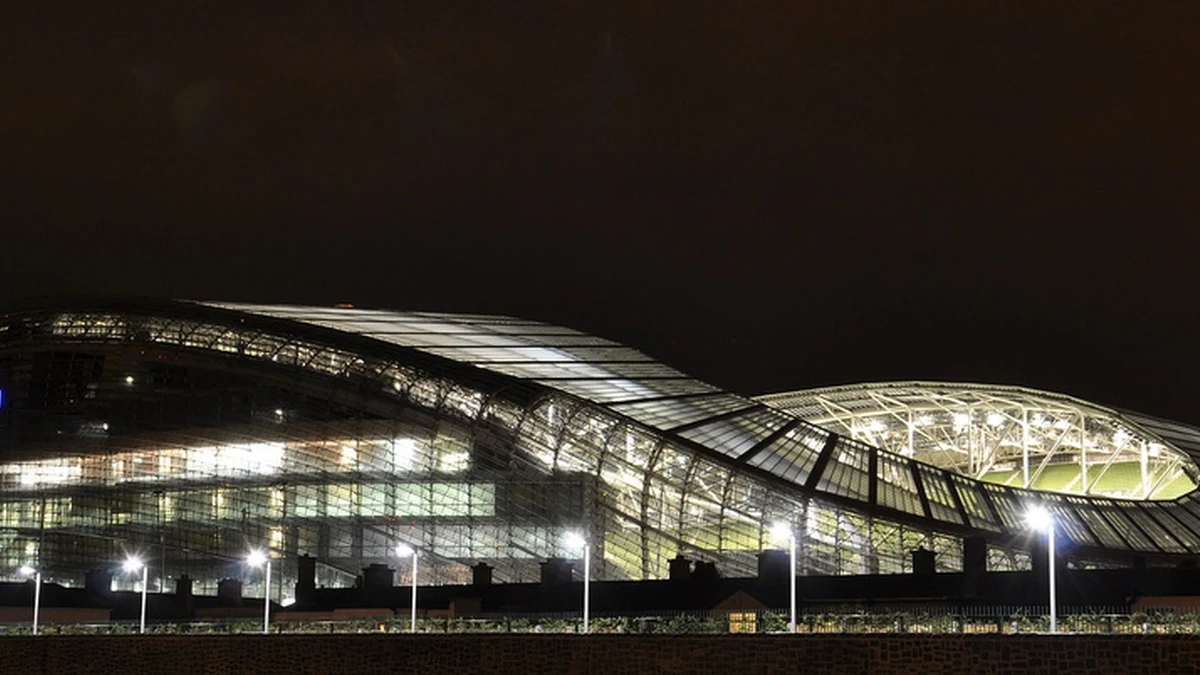
Hero photo: Aviva Stadium by Night by Hoops341, CC BY 3.0, cropped and enlarged.