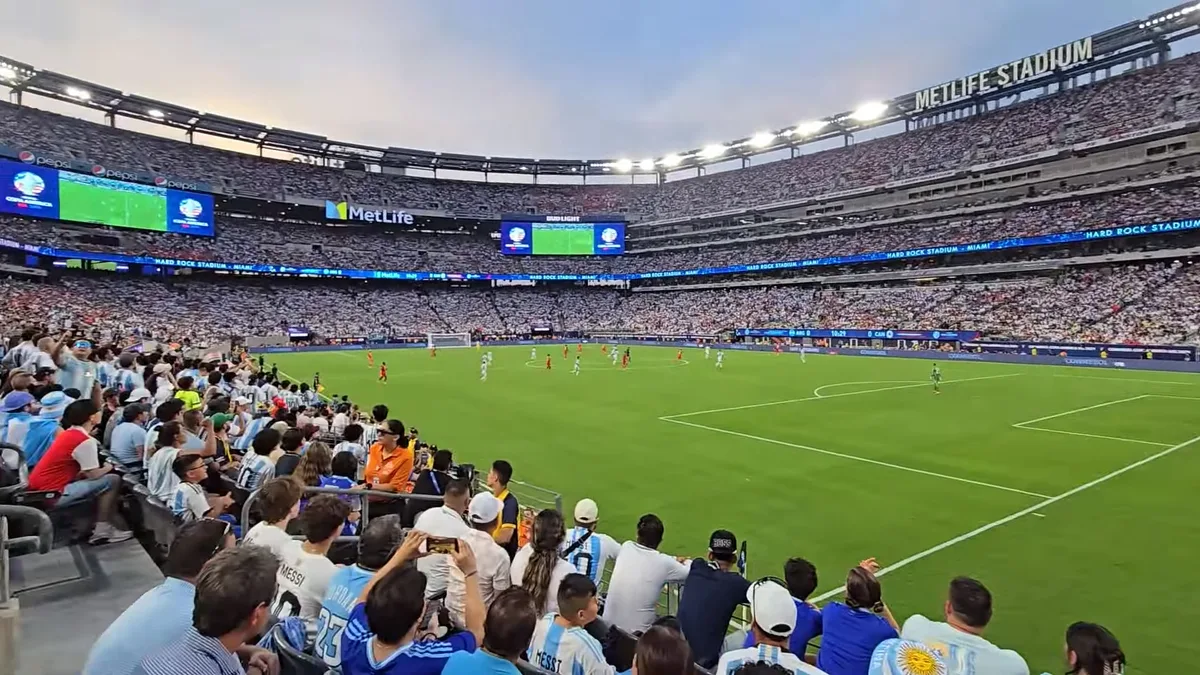
When FIFA published the announced capacities for the 2026 World Cup host stadiums, something didn’t add up.
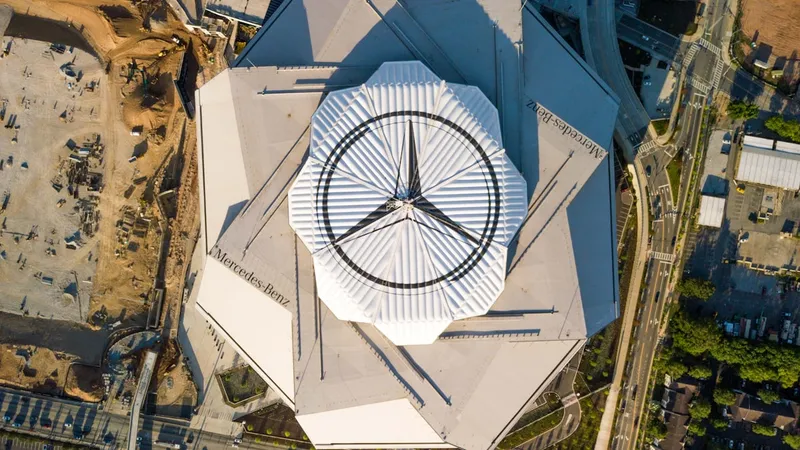
Mercedes-Benz Stadium would hold 75,000 for World Cup matches. That’s 4,000 more than its Falcons home games. Levi’s Stadium was listed at 71,000, up 2,500 from its 49ers configuration. Lumen Field, Gillette, and Hard Rock all crept up by a few hundred seats apiece.
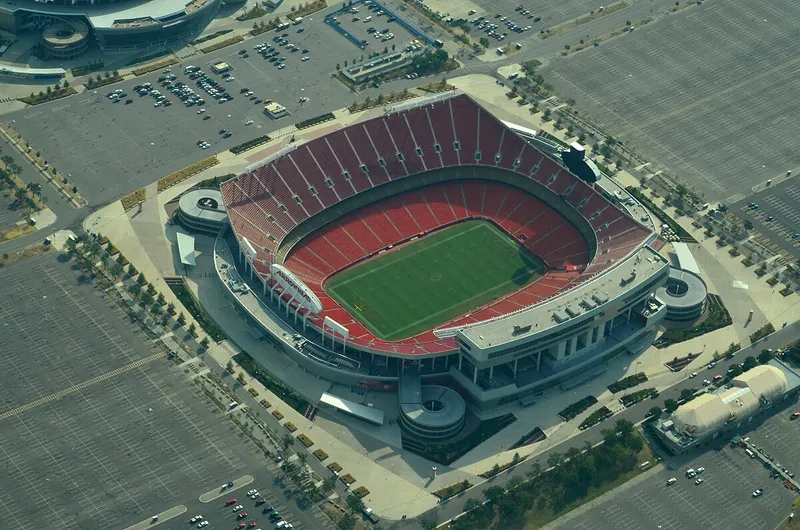
Then there was Arrowhead. Same Andy Reid sideline, same 1972 bowl, but the FIFA capacity dropped to 73,000. Chiefs games seat 76,416. That’s a 3,400-seat haircut, gone.
So the World Cup adds seats at some venues and removes them at others. It can’t be both. Or rather: it is both, and that’s the whole story.
19.2 meters of width: a FIFA pitch is 19.2 meters wider than an NFL field. That number, plus what each stadium’s bowl architecture does about it, explains every capacity move in the 2026 tournament.
The pitch is the start of everything
Walk down to the front row of any NFL stadium’s lower bowl. The sideline of the gridiron is right there. In some venues you can almost reach over and touch the down-marker chain. The seats start where the field ends.
A FIFA tournament pitch doesn’t end where an NFL field ends. The FIFA spec is 105 meters by 68 meters. An NFL field is 109.7 meters by 48.8 meters, including end zones. Run the math: the FIFA pitch is shorter end-to-end, but it’s 19.2 meters wider. That’s roughly 9.6 meters of extra grass that has to live on each sideline.
For 9.6 meters of grass to exist, the front rows have to move back. Or the seats stay where they are and the rows in between get covered with broadcast platforms, technical-area equipment, and accessibility bays.
Different stadiums solve this differently. That’s all the variation comes down to.
The FIFA spec itself doesn’t bend. The Laws of the Game allow some range for international matches (100-110m by 64-75m), but FIFA tournament rules lock the World Cup at 105 by 68, every match, every venue (FIFA Football Stadium Guidelines). Every host got handed the same width problem and figured out their own answer.
Why some venues add seats: the end zones nobody loved
Mercedes-Benz Stadium opened in 2017 with a roof that looks like a camera aperture and an end-zone seating section that was always undersold for Falcons games. NFL end-zone tickets are notoriously hard to sell. The view of the action is at the worst possible angle. The cheap seats sit there half-empty most Sundays.
For a soccer match, those same end-zone seats are perfectly placed. You’re watching the goal at eye level. Strikers run directly toward you. The sightline that’s bad for football is the best sightline at a soccer match.
So when FIFA’s planners added Mercedes-Benz to the host list, the venue did something simple. They counted the end-zone seats. Then they counted the lower-bowl rows that would have to be covered for the wider FIFA pitch. The end zones added more than the lower bowl lost. Net result: 4,000 seats up.
Levi’s did the same trick. Lumen Field. Gillette. Hard Rock. Everywhere a stadium had under-utilized end-zone capacity that pulled into clear soccer sightlines, the FIFA number went above the NFL number.
This is the part that surprised some early observers. World Cup matches were supposed to be smaller crowds in NFL venues, not bigger. The truth was less dramatic. It was a swap. Bowl seats out, end zone seats in. At the right venues, the swap nets positive.
+4,000 seats at Mercedes-Benz Stadium: end-zone capacity that doesn’t sell well for Falcons games converts into clear-sightline FIFA seating.
Why some venues lose seats: the front rows that can’t be saved
Arrowhead Stadium opened in 1972. The Chiefs play in a bowl that was designed when stadium architects believed proximity to the action was the whole point. The lower-bowl front rows sit close to the gridiron sideline. Like, close. There’s no buffer.
When the FIFA pitch’s wider boundary pushes outward at Arrowhead, it goes through six to fourteen rows of seats on each side. Those seats can’t be moved. They’re permanent concrete. The only thing to do is cover them, install the FIFA technical area on top, and accept the loss.
3,400 seats. Gone for the duration of the tournament.
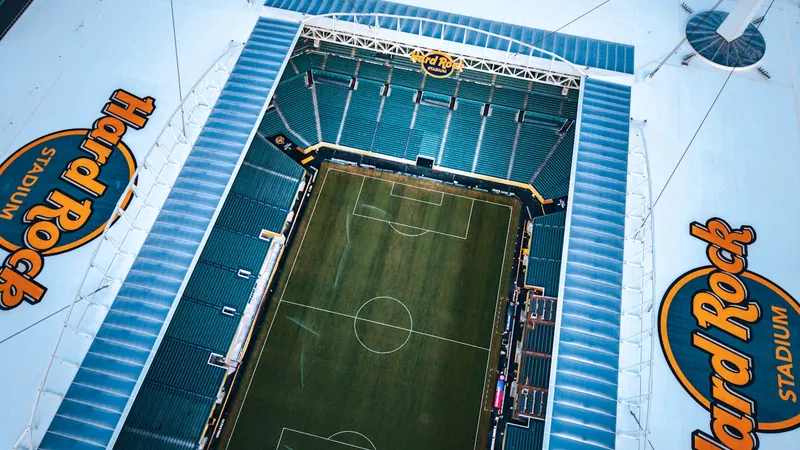
Hard Rock Stadium has the same problem. Built in 1987, designed when Dolphins fans wanted to be inside the action. Less room to give. The FIFA pitch doesn’t fit cleanly. Most of the lost capacity comes from the lower bowl rows that can’t survive the pitch overlay.
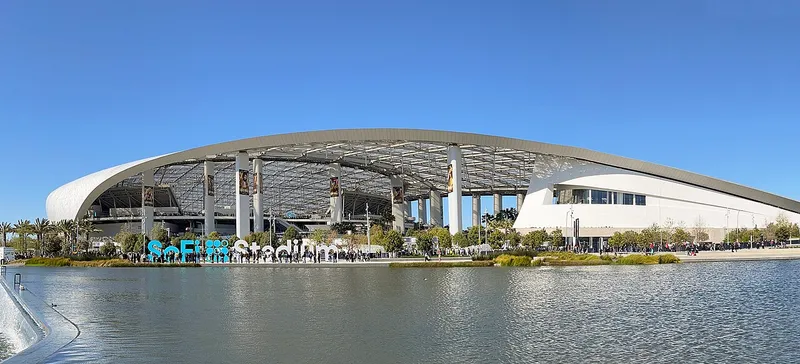
Newer venues handle this better. SoFi Stadium opened in 2020 with a steep lower bowl that pulls fans up vertically rather than horizontally. The angle of the seating means the front rows are physically further from where the FIFA touchline ends up. Fewer rows blocked. Smaller capacity drop.
The pattern: the older the stadium, the worse the math. Arrowhead in 1972, Hard Rock in 1987, NRG in 2002. Newer venues kept the front-row buffer wider for exactly this kind of multi-sport flexibility. They paid the architectural cost upfront. Older venues paid it now, in seat count.
Broadcast, accessibility, and the FIFA functional zone
Even after the pitch eats its rows, three more things come out of every host’s seat count.
Broadcast positions. FIFA tournament matches need 30 to 50 dedicated cameras (handhelds, Steadicams, jib arms, the wire-cam tracks above the pitch), plus commentary booths, plus a credentialed media area for 1,500+ journalists at major matches. NFL games don’t have anything close to that scale. The host venue gives up perimeter seats and corner sections to install gantries and cable runs.
Accessibility upgrades. FIFA mandates roughly 1% of total capacity as wheelchair seating with companion seats. Most NFL stadiums meet a lower ADA minimum. Additional seats convert to accessible bays for World Cup matches. The conversion isn’t 1:1; each accessible seat replaces 2-3 standard seats once you add the legally required clear floor space.
The FIFA functional zone. The technical area along the touchline. The substitutes’ benches. The VAR review desk. The ball-boy zones behind the goals. The dignitary box. The player tunnel. All of these need cleared real estate that NFL games don’t require. Most host venues lose another 200 to 800 seats to functional zones across both sidelines.
These deductions exist at every venue. The reason some net out positive (Mercedes-Benz, Levi’s) is that the seats added in the end zones outweigh the seats taken out for FIFA infrastructure. The reason some net negative (Arrowhead) is the opposite: the bowl architecture doesn’t let enough end-zone seats convert.
3 to 5%: typical share of each NFL host’s listed capacity that disappears for FIFA broadcast positions, accessibility upgrades, and functional zones, before any pitch-overlay losses.
The full picture: every world cup 2026 stadium in the U.S.
| Stadium | Primary tenant capacity | WC2026 capacity | Change |
|---|---|---|---|
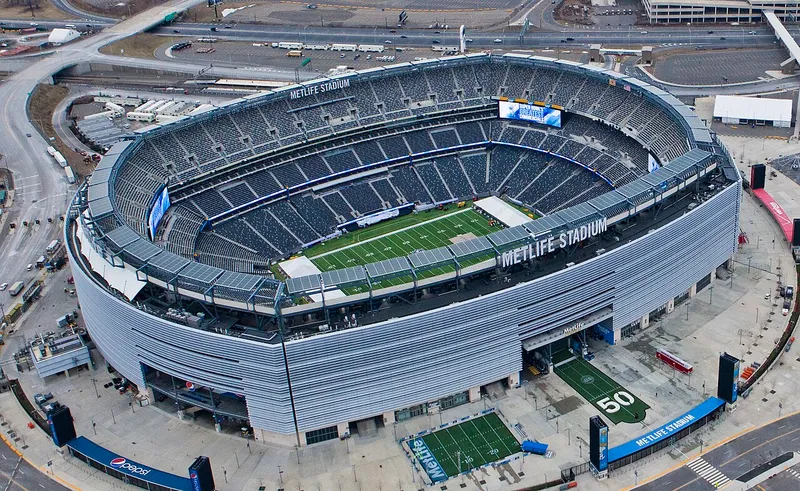
| MetLife Stadium (Giants/Jets) | 82,500 | 78,576 | -3,924 |
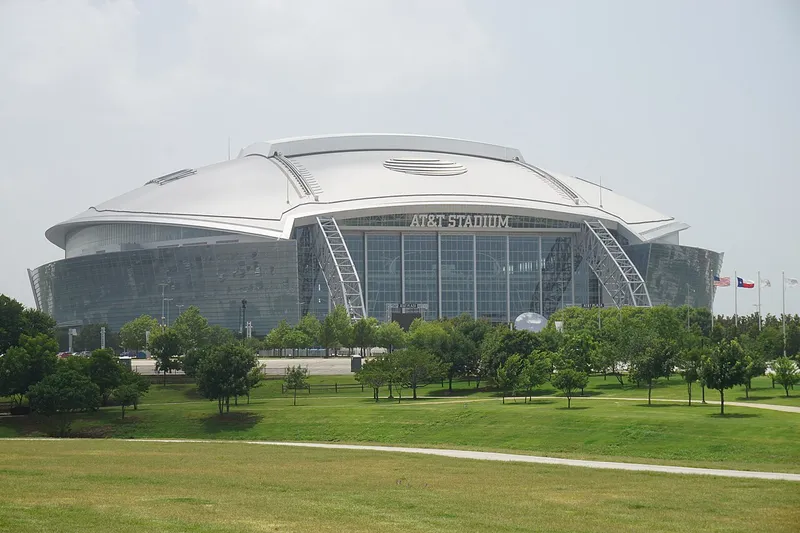
| AT&T Stadium (Cowboys) | 80,000 base, 94,000 expanded | 94,000 | uses expanded config |
| SoFi Stadium (Rams/Chargers) | 70,240 | 70,000 | -240 |
| Arrowhead Stadium (Chiefs) | 76,416 | 73,000 | -3,416 |
| NRG Stadium (Texans) | 72,220 | 72,000 | -220 |
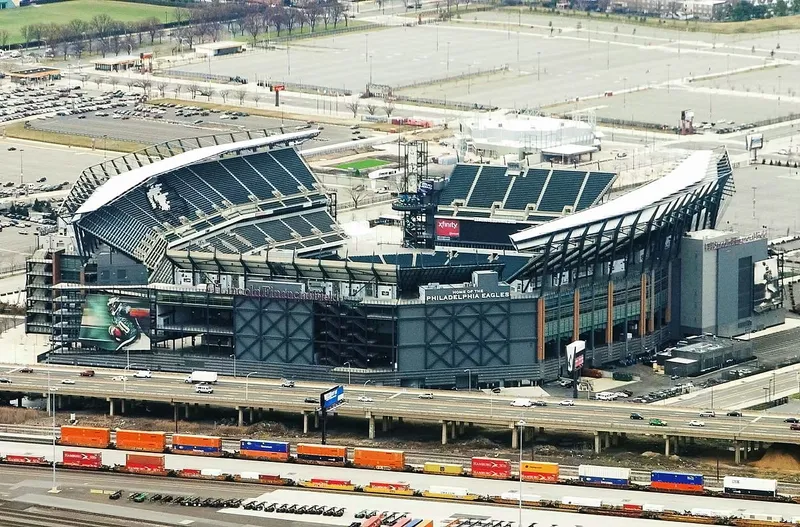
| Lincoln Financial Field (Eagles) | 69,796 | 69,000 | -796 |
| Mercedes-Benz Stadium (Falcons) | 71,000 | 75,000 | +4,000 |
| Levi’s Stadium (49ers) | 68,500 | 71,000 | +2,500 |
| Lumen Field (Seahawks) | 68,740 | 69,000 | +260 |
| Gillette Stadium (Patriots) | 64,628 | 65,000 | +372 |
| Hard Rock Stadium (Dolphins) | 64,767 | 65,000 | +233 |
Five venues gain seats. Five lose seats. MetLife stays flat (which is the point of MetLife: built in 2010 with FIFA hosting in mind, designed to handle this exact scenario).
Numbers from Wikipedia 2026 FIFA World Cup, cross-referenced with each franchise’s published NFL capacity.
The Mexican stadiums don’t deal with any of this
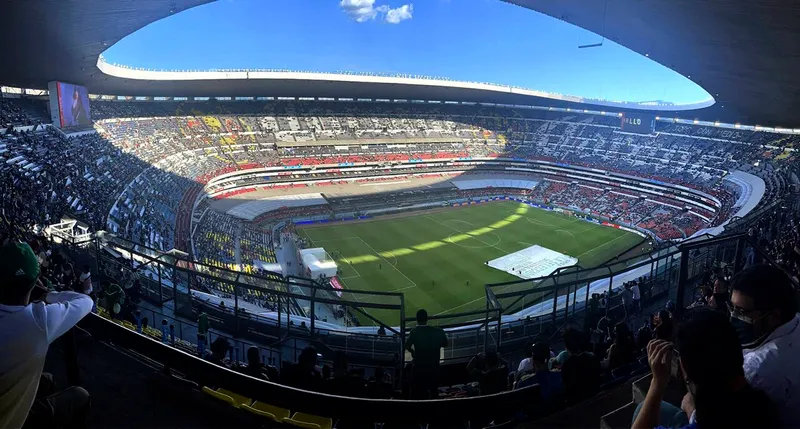
Estadio Azteca opened in 1966 as a purpose-built football stadium. The bowl was shaped to a 105 by 68 pitch the day construction started. There’s no front row that has to be sacrificed. There’s no awkward end zone to repurpose. The pitch sits where the architects intended it to sit, sixty years ago.
Estadio Akron in Guadalajara opened in 2010 to the same spec. Estadio BBVA in Monterrey opened in 2015, also football-first. None of the three Mexican hosts lose a row of seating when a FIFA pitch goes down.
BC Place in Vancouver is similar. The Whitecaps have played MLS matches there with FIFA-spec pitches since 2011. The bowl knows how to handle it. So does the post-renovation surface.
BMO Field in Toronto is the unusual case among the non-U.S. hosts. The base capacity (30,000) is below the FIFA-mandated 40,000+ minimum, so the venue is undergoing a temporary expansion to 45,000 with modular tribunes added at the south end. After the tournament ends, the temporary seating gets removed and BMO returns to MLS scale.
The non-U.S. hosts don’t have the same trade because they were never asked to convert from a sport with a narrower field. The American stadiums are the ones doing the math.
What this means if you’re buying a ticket
Practical implication: the announced capacity at each U.S. venue is the actual sellable capacity for the match. FIFA isn’t padding the number with standing room or sponsor activations the way some NFL listings do. The published figure is what gets sold.
That said, your specific seat number might not exist between configurations. A lower-bowl row that’s row 1 at a Falcons game might be a covered FIFA broadcast platform for Mercedes-Benz Stadium’s World Cup matches. The end-zone seat that didn’t sell well for Levi’s was rebuilt as a regular seat for the World Cup. Cross-referencing your seat against FIFA’s tournament map (released roughly 60 days before kickoff) is worth doing before you panic about the view.
For the older venues with negative changes (Arrowhead, NRG, Lincoln Financial), expect higher per-face-value demand on the secondary market. Smaller available inventory plus stable demand equals tighter resale prices. The venues with positive changes have absorbed temporary structural costs to add capacity, but underlying demand for FIFA tickets at any U.S. host is high enough that even expanded inventory will probably clear above face.
Net change across all 11 U.S. hosts: roughly +2,400 seats compared to NFL capacities. The expansions at Mercedes-Benz and Levi’s outweigh the reductions at Arrowhead and Lincoln Financial.
Why 1994 was the last hundred-thousand-seat World Cup
The 1994 final at the Rose Bowl drew 94,194 people. That figure has been the high-water mark for U.S. World Cup attendance for 32 years and it’s not getting beaten in 2026.
Modern FIFA accessibility, broadcast position, and pitch buffer rules would knock the same Rose Bowl crowd down to roughly 88,500 today. Same venue. Same bowl. Just thirty years of additional FIFA technical requirements layered on top.
The trend has been one-directional since 1994: standards get more demanding each cycle, listed tournament capacity at older venues drops by a few thousand. That’s why MetLife drops to 78,576 for the tournament, and why even AT&T Stadium’s tournament-high 94,000 falls well short of the 100,000-plus crowds the Rose Bowl drew in 1994. The era of six-figure World Cup matches at American venues ended quietly between then and now.
Future cycles will push the standards further. The 2030 tournament (Spain, Portugal, Morocco) and the 2034 tournament (Saudi Arabia) will both see new venues built with FIFA dimensions from day one rather than retrofit. New construction is increasingly the easier path. Conversion of existing NFL stadiums has worked for 2026, but it’s the last large-scale tournament where that approach gets used in this volume.
For the 16 World Cup 2026 host stadiums and the dates and matches assigned to each, see the tournament hub. For the Estadio Azteca opener on June 11 and the MetLife Stadium final on July 19, see the venue pages.
Sources
- FIFA: Football Stadiums Technical Recommendations and Requirements (5th edition; pitch dimensions, broadcast positions, accessibility minimums)
- FIFA: World Cup 2026 host stadiums and schedule
- IFAB: Laws of the Game, Law 1: The Field of Play
- Wikipedia: 2026 FIFA World Cup (announced WC capacities for all 16 host stadiums)
- Wikipedia: 1994 FIFA World Cup Final (Rose Bowl attendance, 94,194)
- NFL franchise media guides for primary-tenant capacities
- MeetStadium internal data: individual host stadium pages for venue specifications
- Hero image: “Interior view of the MetLife Stadium — ARG v CAN — 2024-07-09” by Sebas, licensed under CC BY 3.0 via Wikimedia Commons (Argentina vs Canada Copa América 2024 semifinal)