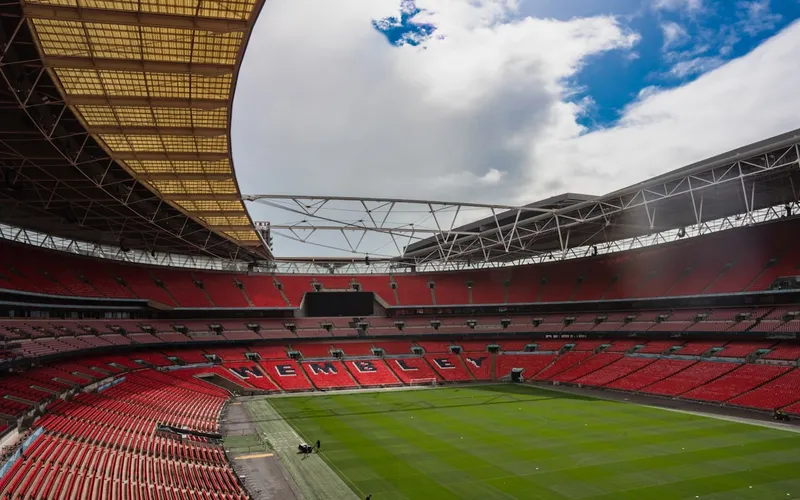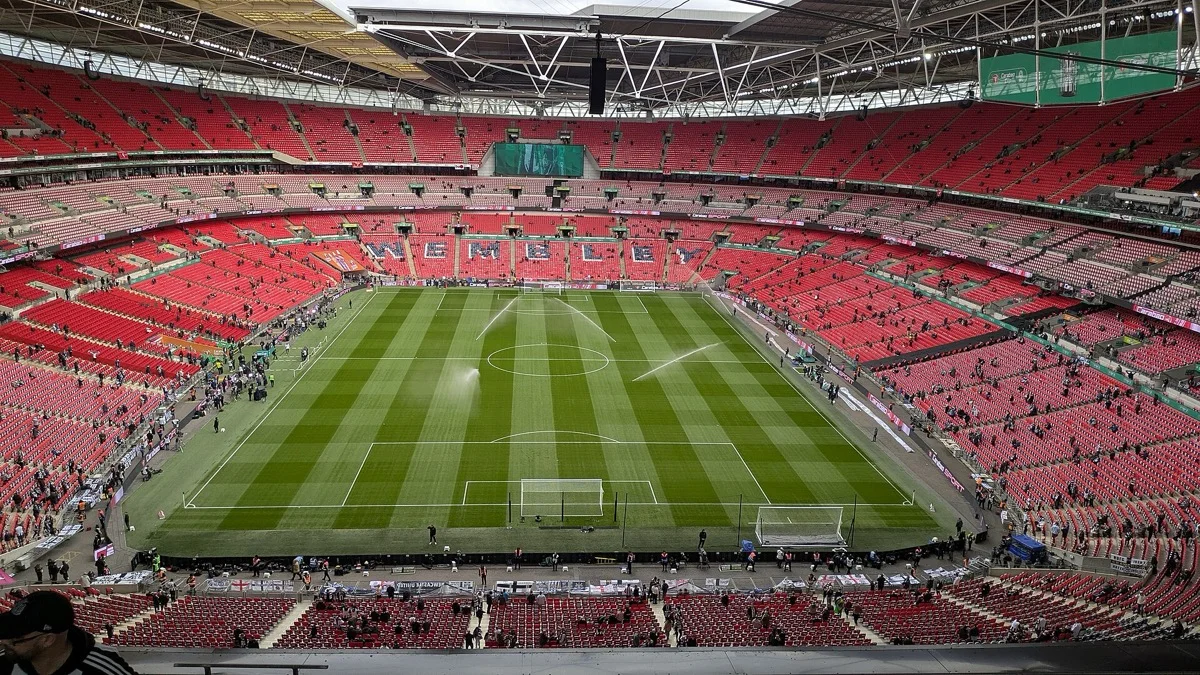
Wembley is the biggest stadium in Britain. It isn’t the biggest Wembley.
The ground that stood on the same site put more people through the turnstiles for a single match in 1923 than the current one is built to hold. That’s the top line of the ranking below, and it isn’t the only line where the crowd a place once held is bigger than the crowd it holds now.
| # | Stadium | City | Capacity | Primary use |
|---|---|---|---|---|
| 1 | Wembley Stadium | London | 90,000 | England football, national |
| 2 | Allianz Stadium (Twickenham) | London | 82,000 | England rugby union |
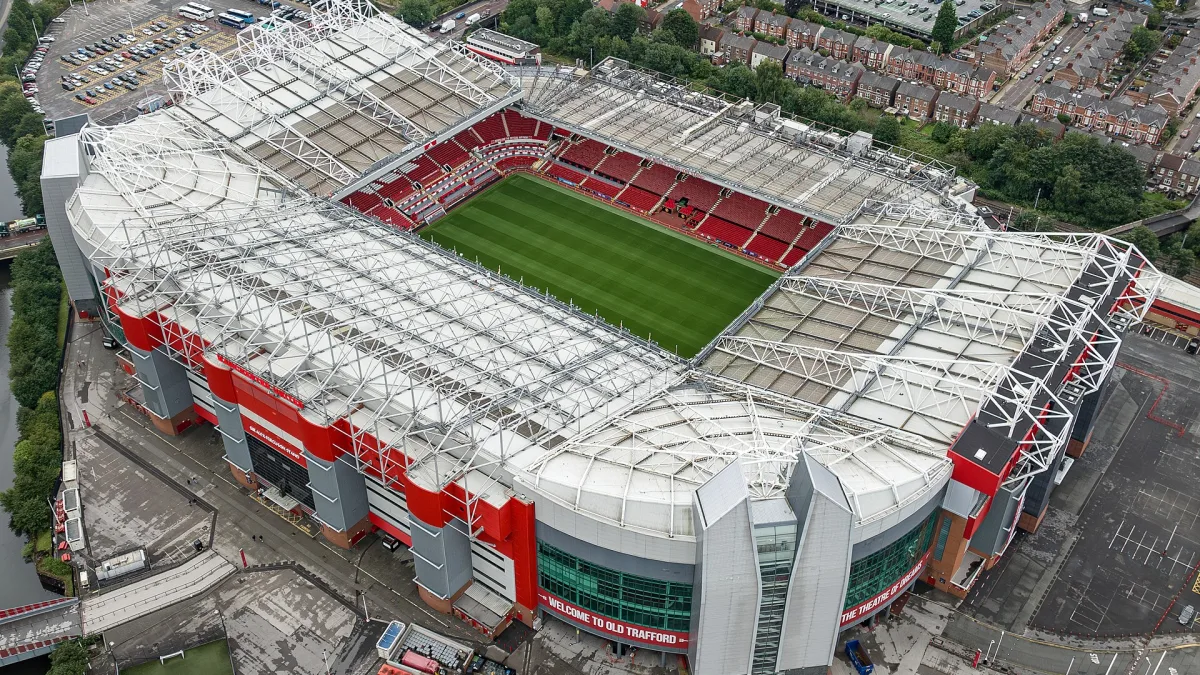
| 3 | Old Trafford | Manchester | 74,158 | Manchester United |
| 4 | Principality Stadium | Cardiff | 73,931 | Wales rugby union |
| 5 | Scottish Gas Murrayfield | Edinburgh | 67,144 | Scotland rugby union |
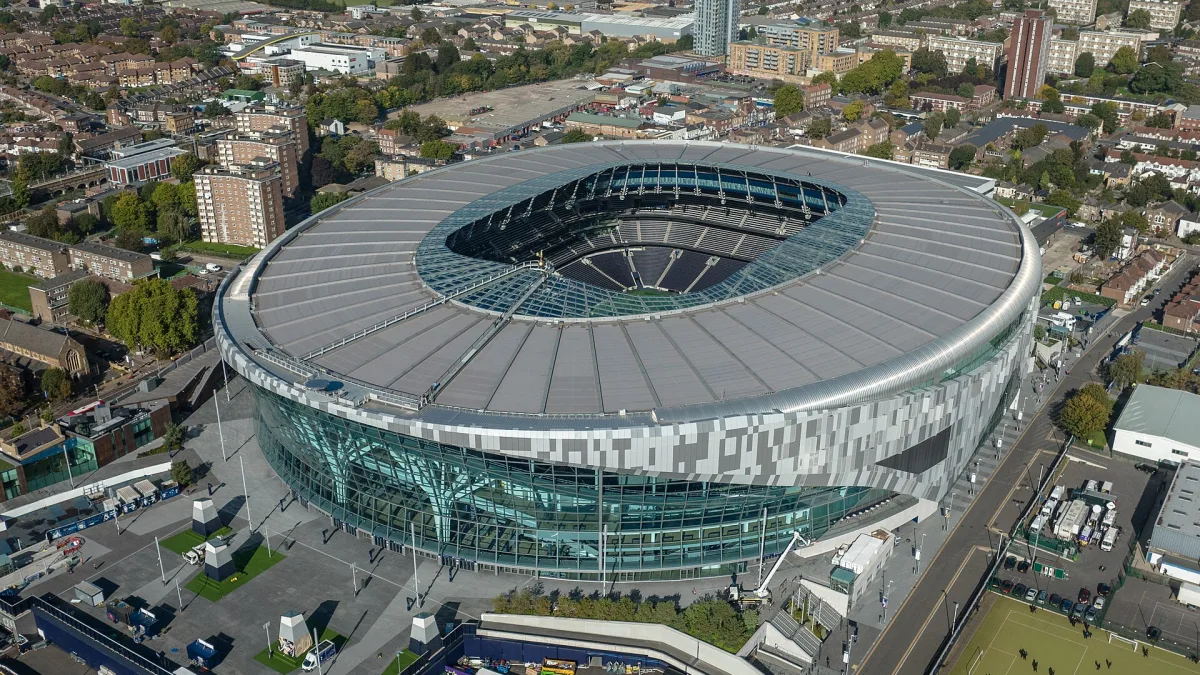
| 6 | Tottenham Hotspur Stadium | London | 62,850 | Tottenham Hotspur |
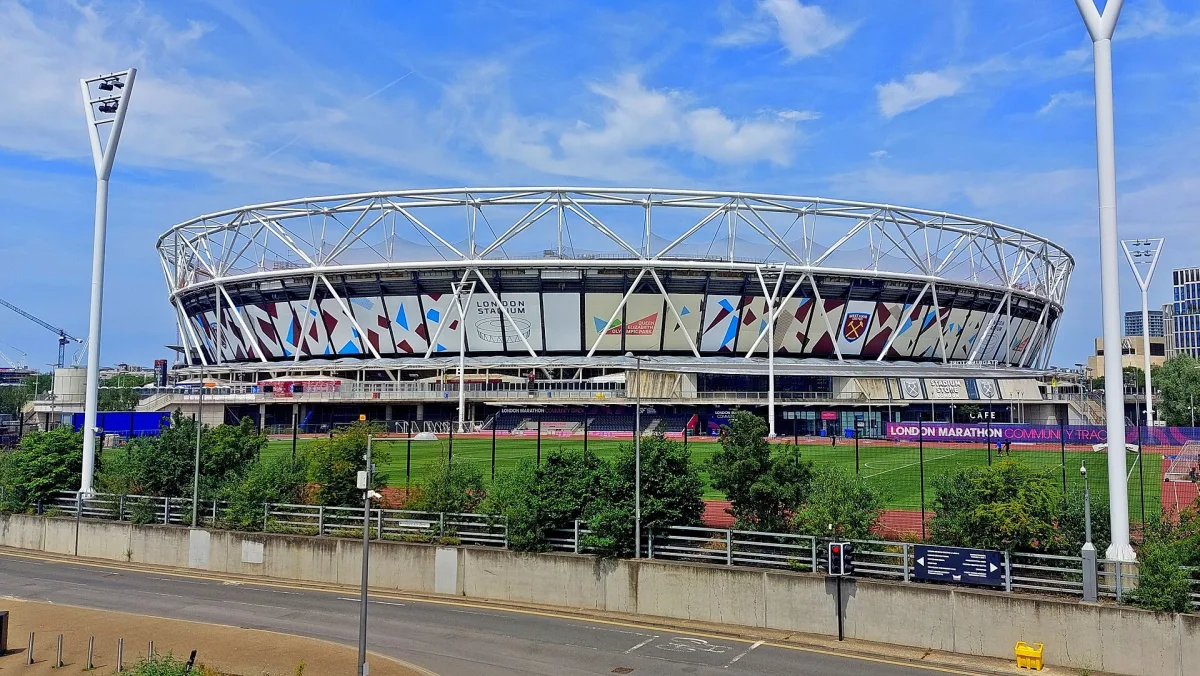
| 7 | London Stadium | London | 62,500 | West Ham United |
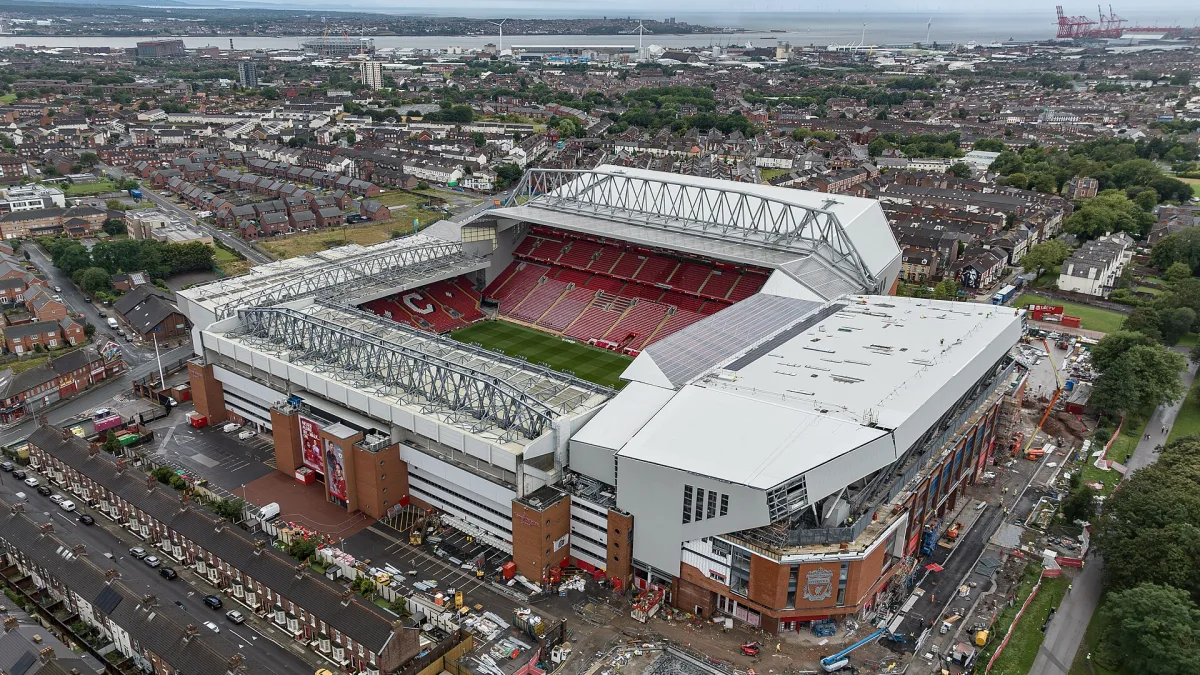
| 8 | Anfield | Liverpool | 61,276 | Liverpool |
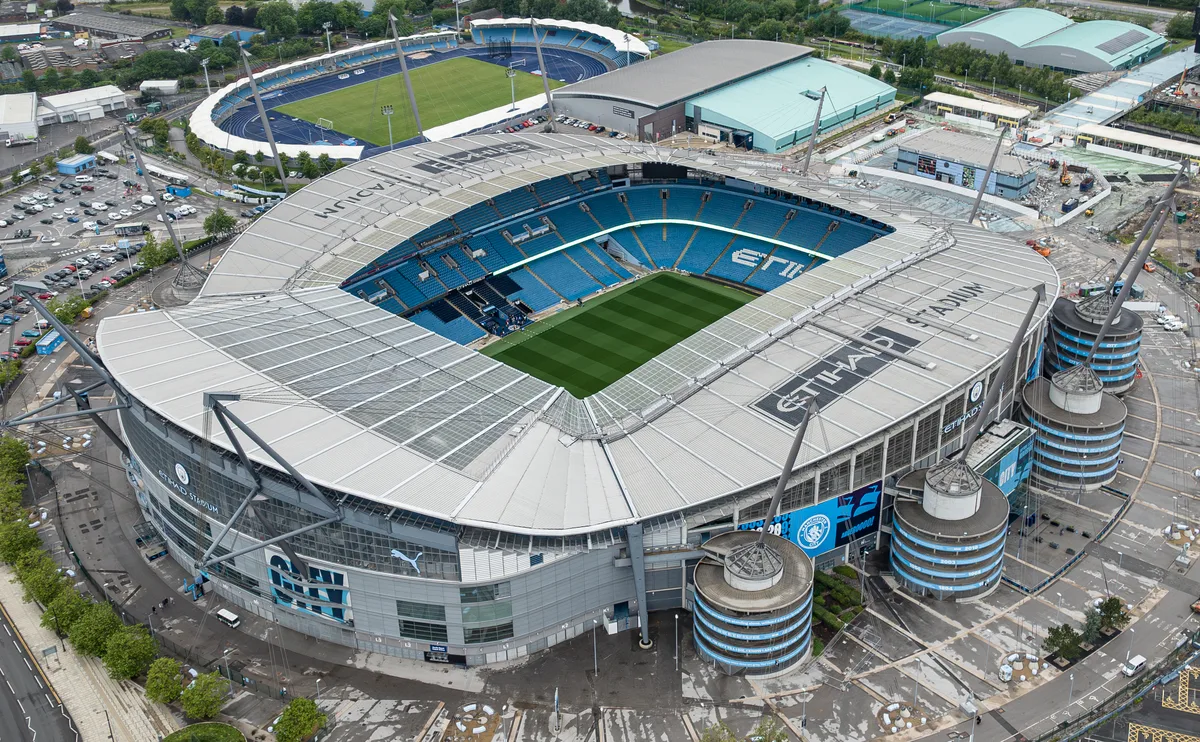
| 9 | Etihad Stadium | Manchester | 61,038 | Manchester City |
| 10 | Emirates Stadium | London | 60,704 | Arsenal |
The list is the easy part. What it turns out to be a list of is the story: six of these ten were built for a national team, a rugby union or an athletics track rather than for a football club, and the club that spent around £1 billion on its stadium got one that sits sixth. The rest of this page walks the ranking from the top, puts the record crowds beside the capacities, and shows where the capacities themselves are argued over. The answer to the title waits at the end, in two halves, because Wembley is the biggest stadium in Britain today and Britain’s stadiums used to be bigger.
What the list is a list of
Only four of these ten were built as football club grounds and nothing else. Three of the top five are rugby grounds. The one at the top is the national football stadium, not anybody’s home. Two more, lower down, went up around running tracks and were handed to clubs afterward: London Stadium started life as an Olympic stadium, and the Etihad hosted the 2002 Commonwealth Games with a track between the stands and the field.
6 of 10 were built for a national team, a rugby union or an athletics track. Only four went up as club football grounds.
That changes what the ranking says about the Premier League. The league’s biggest home, Old Trafford, is third on a list of ten, behind a rugby ground in London. The national rugby grounds in Cardiff and Edinburgh are bigger than every English club ground but Old Trafford, and neither of them is in England. Twickenham, at 82,000, is bigger than Old Trafford too. If you came expecting the Premier League’s grounds in order, you’ll find them, but they start at third, and the two places directly below Old Trafford are rugby grounds.
We rank the largest stadiums in Europe separately, and the British entries sit lower on that list than you might expect. Take the six out and four are left, the only grounds in the top ten that were built as football grounds, for football clubs, and for nothing else: Old Trafford, Tottenham Hotspur Stadium, Anfield and the Emirates. The clubs bring the money and the fame. The national unions bring the size.
Wembley, and the 126,047 who came before it
You can see Wembley before you can see Wembley. The arch stands 133 metres tall and spans 315 metres, the longest single-span roof structure in the world, and it sits on the skyline from the far side of London long before the stadium under it resolves into a building. That was the design. The old Wembley had twin towers you had to arrive at, a reward at the end of the walk up. The new one announces itself from across the city, so that by the time you’re close enough to see seats you’ve been looking at the building for most of the way in.
Making a building do that cost around £798 million, a 2007 figure, and took Foster + Partners working with HOK Sport to design. What the money bought is 90,000 places under that arch, and from the top of the upper tier the arch is the only thing in the sky. That 90,000 is the biggest number in Britain. It’s also short of what this patch of ground has held before.
The 1923 Wembley counted 126,047 through the turnstiles for one match, and the crowd that actually got in is estimated at 200,000-plus. Nobody knows the real figure, which tells you most of what you need to know about the afternoon. So where does a crowd like that go now? Nowhere. There’s no version of the current building that admits them, and the turnstiles stop at 90,000. What survives of the old crowd is a name. The match is remembered as the White Horse Final, and what the name remembers is a crowd that came over the touchline and onto the grass, so that the picture of the day is a pitch with people standing on it.
Second place doesn’t play football
Twickenham holds 82,000, and the biggest club football ground in Britain is 7,842 short of it. The Rugby Football Union owns the ground and calls it, in its own words, “the iconic 82,000-seater stadium,” which is the kind of phrase a governing body reaches for when the number is the point.
7,842 is the gap between Twickenham and Old Trafford, the biggest club football ground in the country.
What separates it from the football grounds below it is who plays there. Old Trafford, Anfield, the Emirates and Tottenham’s stadium each hold one club’s home games. Twickenham holds England’s. Rugby has been played on the site since 2 October 1909, the same year Archibald Leitch’s Old Trafford was going up in Manchester. A club ground fills for a club. This one fills for a country, and it’s sized like it. On a match day it fills from the streets around it and empties back into them, slowly, and nobody in that crowd is there for a club.
Then the name changed. The RFU announced a multi-year partnership with Allianz, under which the ground would become Allianz Stadium from September. It had been Twickenham since 1909. A ground that spent a century as a place is now, contractually, a brand.
Cardiff and Edinburgh
The Principality Stadium and Murrayfield are both bigger than every English club ground except Old Trafford. Neither is a club’s home. Each is a national side’s ground, one Welsh and one Scottish, and each has taken a sponsor’s name to go with the job.
Murrayfield is the older of the two and has had more names. It opened on 21 March 1925 and belongs to the Scottish Rugby Union, and it has carried two sponsors’ names since 2014: BT Murrayfield from 2014 to 2023, Scottish Gas Murrayfield now. It’s a wide, open bowl of a place, the kind of ground where you notice the weather, and whatever’s on the front, the number is 67,144, fifth in Britain.
Cardiff’s ground is younger and has had one rename. It opened on 26 June 1999 as the Millennium Stadium and kept that name until 22 January 2016, when a 10-year deal with the Principality Building Society put the society’s name on it. It holds 73,931, fourth in Britain, and it sits right in the middle of the city, close enough to the shops that a match day and a shopping day share the same sidewalks.
Its roof moves, which in Cardiff is less a luxury than a courtesy. The opening it covers is 105 metres by 80, a hole big enough that the structure closing it needs 3.2 kilometres of tensioning cable. Cardiff put a lid on a stadium that size in 1999. It opens in 20 minutes.
Every record on this page beats the ground that set it
Murrayfield took 104,000 people in 1975, for Scotland against Wales in the Five Nations, and Scotland won 12-10. The ground holds 67,144 today. That single afternoon put more people inside a Scottish rugby ground than any stadium in Britain can now admit at all, because the largest, Wembley, stops at 90,000.
104,000 at Murrayfield in 1975. The ground holds 67,144 today, and no British stadium holds that many.
It isn’t the British record, though. Hampden Park in Glasgow took more than 149,000 for Scotland against England on 17 April 1937, upwards of 45,000 more than Murrayfield’s afternoon.
Old Trafford’s record was set on 25 March 1939, and Manchester United weren’t playing. The match was an FA Cup semi-final between Wolverhampton Wanderers and Grimsby Town, and 76,962 came, 2,804 more than the ground holds now. The biggest crowd the biggest club ground in Britain has ever held turned up for two other clubs.
Anfield’s is 61,905, for Liverpool against Wolves on 2 February 1952, against 61,276 today.
Anfield has not been left to dwindle. The rebuilt Main Stand reopened on 9 September 2016 with around 20,500 places, 8,500 more than it had held before; the Anfield Road Stand followed, and the capacity was confirmed at 61,276 in August 2024. Two new stands in a decade, and the ground is still 629 short of an afternoon in 1952. Old Trafford tells the same story from closer in. The 2006 expansion took it to 76,212, within 750 of the 1939 record, before accessibility work trimmed it to today’s 74,158.
These grounds have been rebuilt, repeatedly and at enormous cost, and they still cannot reach the crowds they used to take. Wembley is the clearest case of the lot: built for 90,000, on a site where the old ground had counted 126,047 through the gates in a single afternoon.
What a billion pounds buys
The club grounds are where the money went, and it didn’t buy size. Tottenham Hotspur Stadium cost around £1 billion, with later reports putting it at up to £1.2 billion, and holds 62,850. That’s more money than Wembley cost and a smaller building than three rugby grounds. For the scale these figures sit against worldwide, see the largest stadiums in the world. Populous designed it, and what Tottenham bought instead of capacity was machinery.
£798 million built the biggest stadium in Britain. Tottenham spent around £1 billion on the sixth-biggest.
Old Trafford is the opposite case. Archibald Leitch built it in 1909-10 for around £60,000. It’s still the biggest club ground in the country, and under the grass today run 37 kilometres of heating pipe, about 25 centimetres down, enough to keep a pitch warm through a Manchester winter.
Anfield’s money went into stands, the Main Stand between 2014 and 2016 and the Anfield Road Stand between 2021 and 2024, on a ground Archibald Leitch laid out originally. What Liverpool kept is stranger than what it built. The white flagpole on the corner of the Kop is the topmast of Brunel’s SS Great Eastern, the largest ship in the world when it launched in 1858.
The Etihad’s money went down. Arup’s stadium cost £112 million to build between 2000 and 2002, and the North Stand, a 2023-26 project, was priced at £300 million. The pitch sits six metres below the ground outside, because after the 2002 Commonwealth Games the running track was lifted and the floor of the bowl was dug out, so you come in at street level and look down at the football.
London Stadium was paid for twice. Building it cost £486 million between 2008 and 2011, and converting it cost £323 million more between 2013 and 2016, a conversion sold partly on a £300,000 figure for swapping the place between football and athletics on a retractable lower tier. The ground sits on an island. The River Lea, the City Mill River and the Old Pudding Mill River wrap three sides of it, so from most directions the last thing you cross on the way in is a bridge.
Which leaves Tottenham’s. The Goal Line Bar runs 65 metres and is billed as the longest bar in Europe. The machine is the pitch. It splits into three lengthwise sections, because two structural columns sit in the way of shifting it in one piece, and slides out from under the South Stand, grass and all. Each section weighs more than 3,000 tonnes. The sixth-biggest stadium in Britain keeps its lawn on rails.
Three of these numbers are disputed, and one of them changes the order
The order depends on which source you trust, and reasonable sources disagree. Where published lists disagree on a club ground, the capacity here follows the Premier League’s domestic-football listing; Tottenham, the London Stadium and the Emirates are the clubs’ and the operator’s own published figures. The most widely copied public list differs from ours on two of the top ten, and one of those two moves a stadium. A third number is disputed by the club that publishes it. On a list this tight, the source is part of the ranking.
The Etihad is the one that moves. We use 61,038; the public list says 61,470. At 61,470 the Etihad sits above Anfield, and at 61,038 it sits below, so Anfield is eighth here and the Etihad ninth. Pick the other number and they swap.
Old Trafford is the one that doesn’t. We use 74,158, the figure in the Premier League Handbook 2026/27; the public list says 74,197. Old Trafford is third on either.
299 seats separate the two capacities Arsenal publishes for the Emirates.
The third disagreement is Arsenal’s, and Arsenal is having it with itself. The club’s capacity page says the Emirates holds 60,704. Its own “Emirates at 20” piece says the current capacity is 60,405 and adds that the figure “differs depending on the size of the away allocation.” Both numbers are Arsenal’s, and the gap between them is inside the range of a single away end. We use 60,704, from the capacity page, and rank on it. The tenth stadium on this list is the one whose club publishes two sizes for it.
So, the biggest stadium in Britain
Wembley, 90,000, and nothing is close. Twickenham is second at 82,000, a rugby ground, if you skipped to the end. The biggest football club ground in the country is third.
That’s half the answer, and it’s the half you came for. The other half is that every record this page names is bigger than the ground that set it. Old Trafford’s beats its capacity. Anfield’s beats its capacity, after two new stands and £190 million. Murrayfield took 104,000 in 1975 and offers 67,144 now. Hampden’s crowd from 1937 clears everything in the table above by nearly 60,000 people.
None of which means Britain can’t build big. Manchester United’s answer to a ground it has outgrown is a new one a few hundred metres away: 100,000 seats, designed by Foster + Partners, costed at around £2 billion, privately funded, aimed at the 2030-31 season. If it opens, the name at the top of this table changes and the biggest stadium in Britain becomes a club’s. Until then it’s Wembley, 90,000, and a record book full of afternoons nobody can sell tickets to any more.
Sources
The capacities and construction histories for Wembley, Old Trafford, Tottenham Hotspur Stadium, London Stadium, Anfield and the Etihad come from our own stadium guides, each linked in the table above and each carrying its own sourcing. Where published lists disagree on a club ground, the capacity here follows the Premier League’s domestic-football listing. Tottenham, the London Stadium and the Emirates are the clubs’ and the operator’s own published figures. The links below cover the four grounds we do not hold pages for, and the two records the article cites from outside them.
-
Allianz Stadium, Rugby Football Union and Twickenham’s first match, Rugby Football Union. The RFU calls the ground “the iconic 82,000-seater stadium,” dates its first match to 2 October 1909, and describes “a multi-year partnership” under which the ground becomes Allianz Stadium from September.
-
Facts and figures, Principality Stadium. The 73,931 capacity and the retractable roof, from the stadium’s own site.
-
Murrayfield through the years, Scottish Rugby and 1925: Murrayfield is born, Scottish Rugby. The 67,144 capacity and the March 1925 opening. Scottish Rugby also states the crowd and the scoreline in those words: “For the Five Nations clash between Scotland and Wales, a staggering 104,000 crammed into Murrayfield to see the hosts win 12-10.”
-
When did Arsenal move to the Emirates, Arsenal and Emirates at 20, Arsenal. The club’s two published capacities for its own ground, 60,704 and 60,405.
-
One packed afternoon at Hampden, Scottish Football Museum. The 1937 Scotland against England crowd, “recorded as 149,415 though some sources report it to be 149,547”, the higher figure being one that “some say includes complimentary tickets, press box attendees and the police”, and the day as “the largest crowd to watch a European international football fixture”. This article says more than 149,000 rather than picking one.
Hero photo: A Somewhat Empty Wembley by Alex Kinney, CC BY-SA 2.0.
Capacities are 2026 figures and they move. Clubs and governing bodies revise them, safety certificates change them, and a single away allocation can shift a published number by a few hundred seats, as Arsenal’s own two figures show. Where sources disagree the article says so rather than picking quietly.