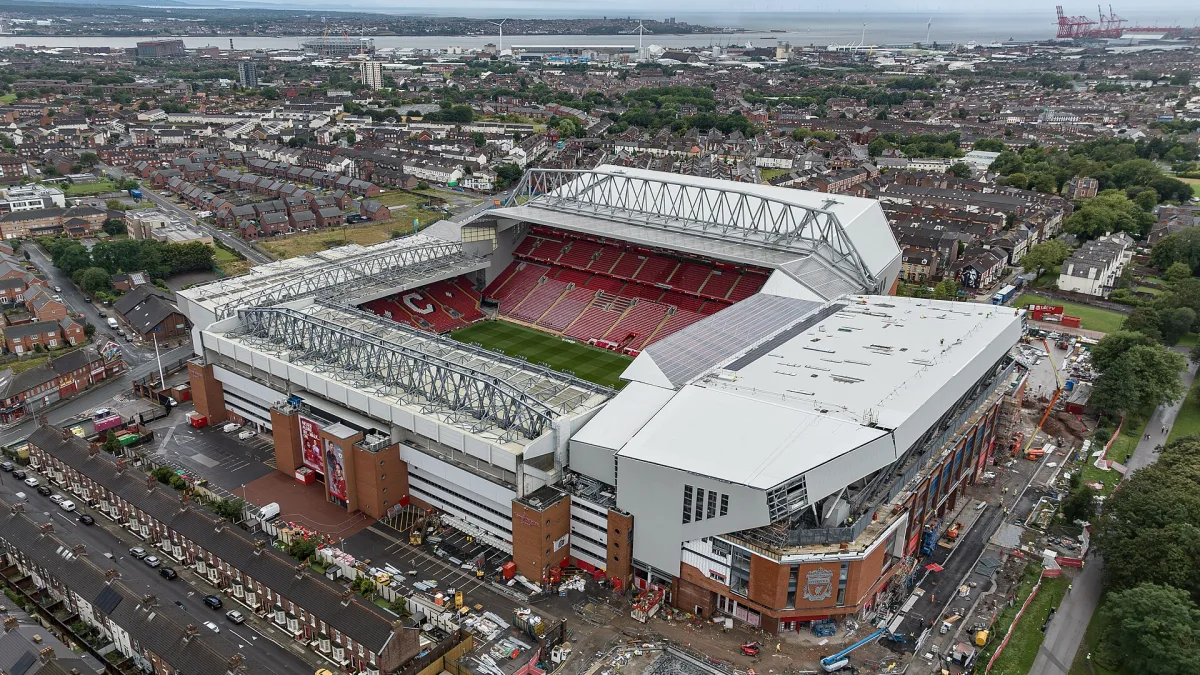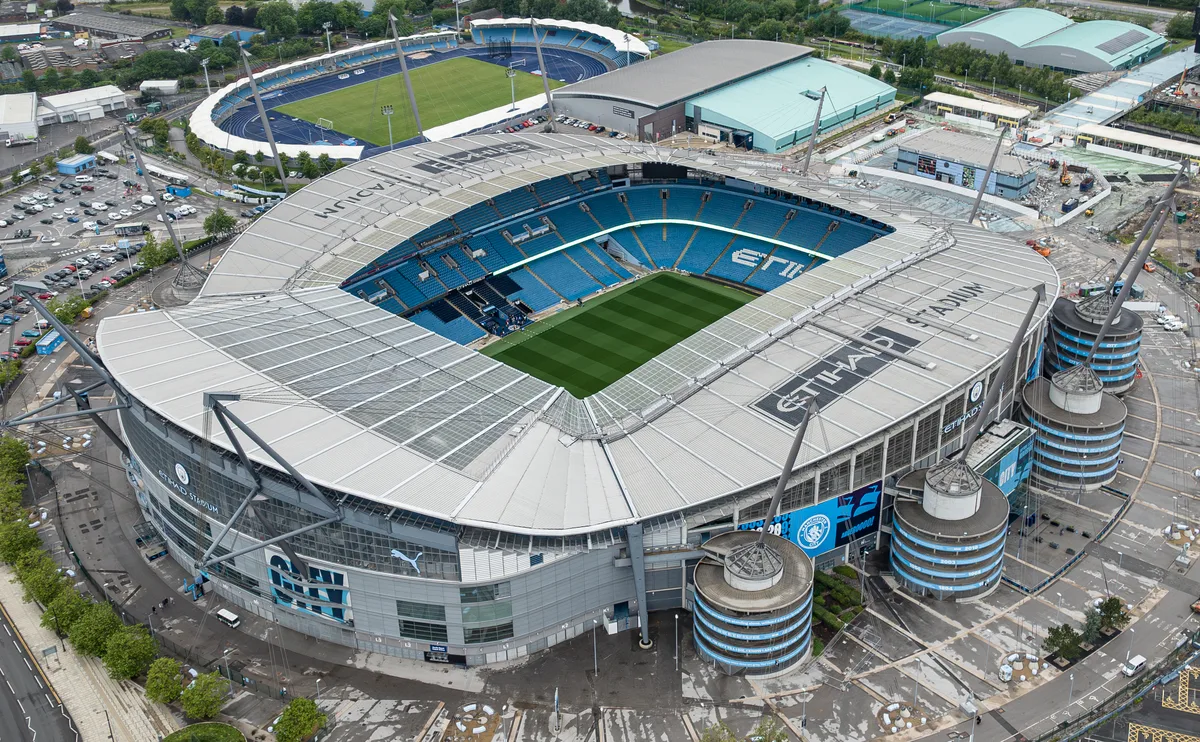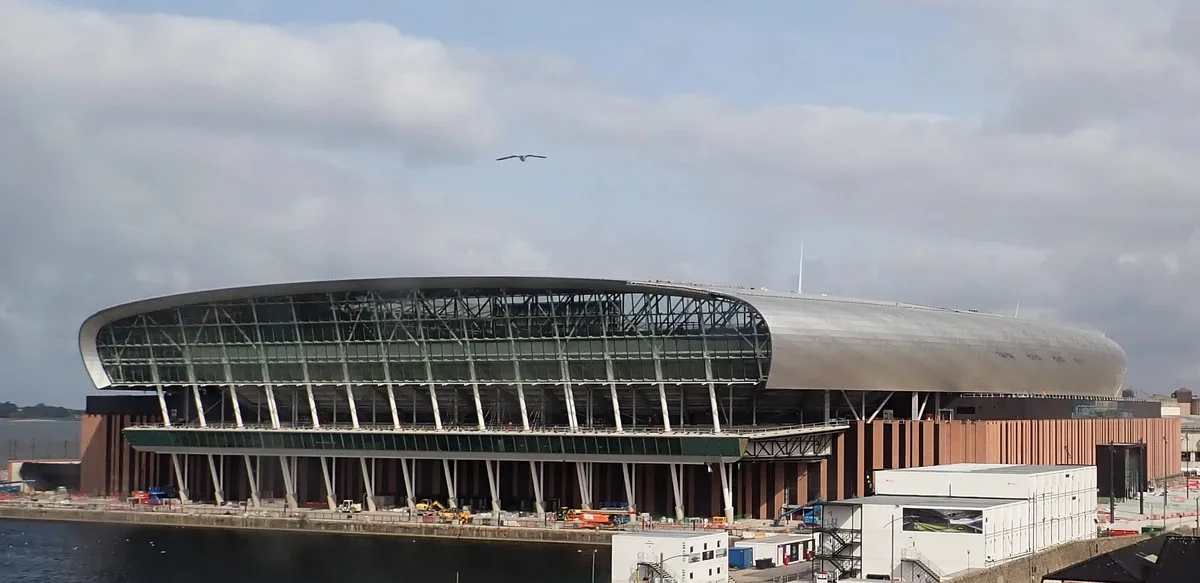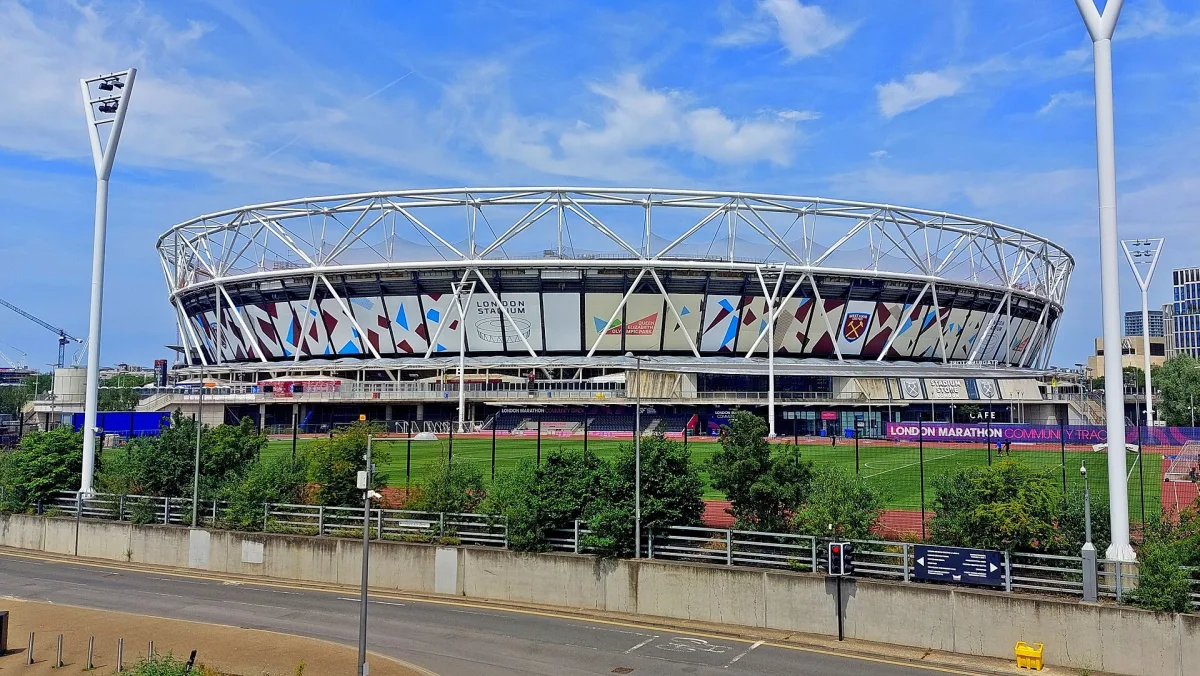
Here’s the list you came for, all twenty grounds, ranked by what the Premier League itself says they hold at the start of the 2026-27 season.
| # | Club | Stadium | Capacity |
|---|---|---|---|
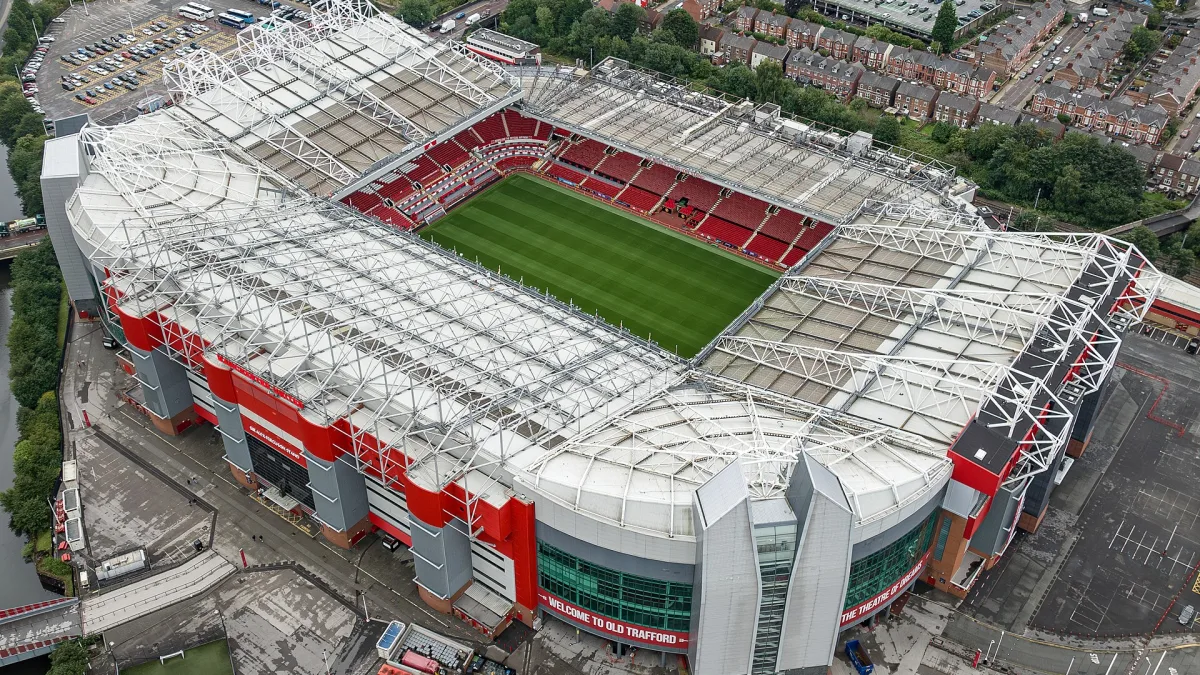
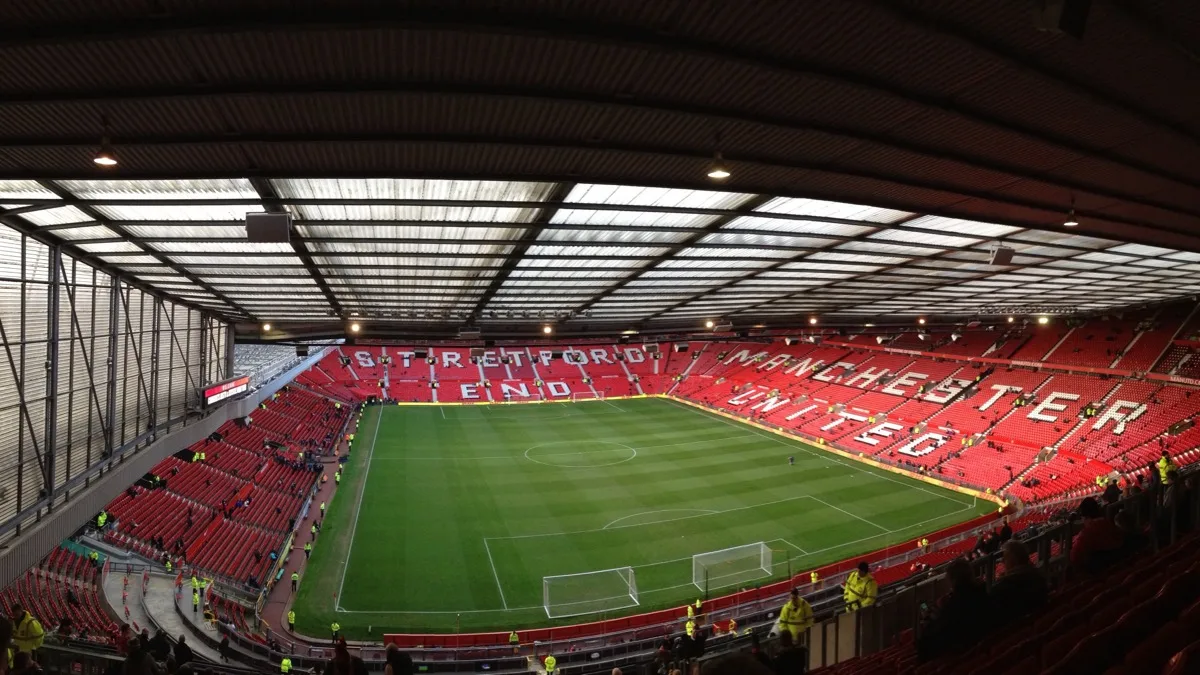
| 1 | Manchester United | Old Trafford | 74,158 |
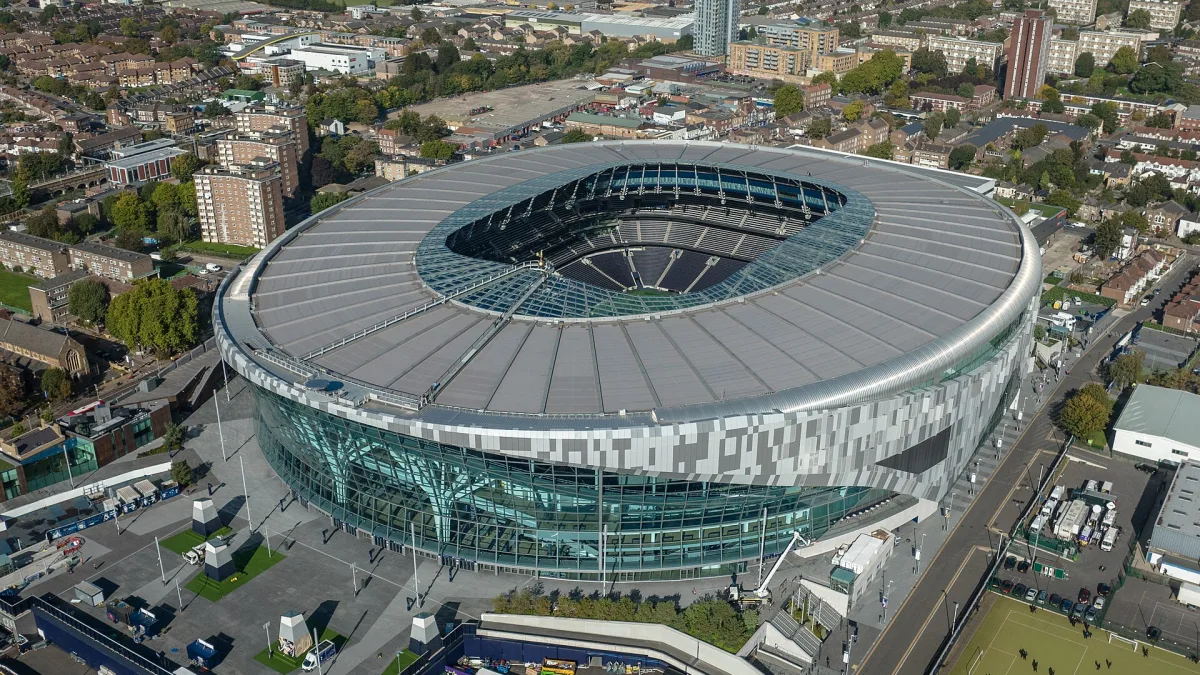
| 2 | Tottenham Hotspur | Tottenham Hotspur Stadium | 62,850 |
| 3 | Liverpool | Anfield | 61,276 |
| 4 | Manchester City | Etihad Stadium | 61,038 |
| 5 | Arsenal | Emirates Stadium | 60,704 |
| 6 | Everton | Hill Dickinson Stadium | 52,769 |
| 7 | Newcastle United | St James’ Park | 52,729 |
| 8 | Sunderland | Stadium of Light | 48,095 |
| 9 | Chelsea | Stamford Bridge | 40,044 |
| 10 | Leeds United | Elland Road | 37,633 |
| 11 | Aston Villa | Villa Park | 36,887 |
| 12 | Coventry City | Coventry Building Society Arena | 32,609 |
| 13 | Brighton & Hove Albion | The American Express Stadium | 32,176 |
| 14 | Nottingham Forest | The City Ground | 31,212 |
| 15 | Ipswich Town | Portman Road | 30,294 |
| 16 | Fulham | Craven Cottage | 28,107 |
| 17 | Crystal Palace | Selhurst Park | 25,194 |
| 18 | Hull City | MKM Stadium | 24,983 |
| 19 | Brentford | Gtech Community Stadium | 17,250 |
| 20 | AFC Bournemouth | Vitality Stadium | 12,357 |
If you’re settling an argument, the winning number is up there. Stay for the shape of the thing, because this table is odder than a league table has any right to be: one runaway at the top, four clubs packed into 2,146 seats fighting over second, a 40-seat argument at sixth, and a long slide down to a bottom two that between them couldn’t fill Old Trafford. Five grounds hold more than 60,000. Five hold fewer than 30,000. That’s half the division sitting at one extreme or the other. The rest of this page walks the strange parts of that column, and ends where the title says it should, at the top. Widen the lens past the Premier League to the biggest British stadiums and the shape changes again, because neither of the two grounds at the top of that list is any club’s home.
The six-times league
Two clubs in this division are separated by a factor of six, and they play each other twice a year for the same three points.
Old Trafford holds 74,158. The Vitality Stadium holds 12,357. Divide one by the other and you get 6.0013, which means Manchester United’s ground is six entire Bournemouths, with a rounding error to spare. The raw difference is 61,801 seats. When Bournemouth walk out at Old Trafford, they’re playing inside a building that could seat their whole home crowd six times over and still feel the same as any other away day: same rules, same referee, same three points.
All twenty grounds together hold 822,365 people, an average of 41,118 and a median of 37,260, and even those two numbers disagree because the top of the table drags the average up past twelve of the twenty clubs. The top five hold 320,026 between them, 38.9% of the league’s entire seating, and outnumber the bottom five nearly three to one. And the strangest gap isn’t between top and bottom. It’s at the very top: the 11,308 seats between first and second place are within 1,049 of being an entire Bournemouth.
6.0013: Old Trafford’s capacity divided by the Vitality Stadium’s. Same league, same fixture list.
Four clubs tied for second, one club above the argument
Manchester United aren’t so much first in this table as sitting on their own above it.
Their lead over second place is 11,308 seats. The entire gap from second place down to seventh is 10,121. Tottenham, Liverpool, Manchester City, Arsenal, Everton and Newcastle, six clubs including five of the biggest names in English football, all fit inside a span smaller than United’s lead over the nearest of them. And within that pack, the fight for second is almost comically tight: Tottenham at 62,850, Anfield at 61,276, the Etihad at 61,038, the Emirates at 60,704. Four grounds inside 2,146 seats. Anfield beats the Etihad by 238. The Etihad beats the Emirates by 334. Liverpool sit above Manchester City in this table by fewer people than you would find on one concourse at half time, and Arsenal are fifth rather than fourth by about the same. Clubs that spend hundreds of millions competing with each other have ended up, by accident, with nearly identical buildings.
Old Trafford managed all this while shrinking. It peaked at 76,212 after the 2006 expansion, then gave seats back to accessibility work. Its owners have noticed the ceiling: United plan a 100,000-seat replacement a few hundred metres from the current ground, designed by Foster + Partners, around £2 billion, privately funded, targeting the 2030-31 season. It would also sit above every ground currently standing on our list of the largest stadiums in Europe. If it lands on schedule, the lead at the top of this table stops being remarkable and starts being absurd. A 100,000-seat ground in this division would lead second place by more than three Bournemouths.
11,308 seats: United’s lead over second place. Second through seventh fit inside 10,121.
Forty seats
Everton spent the better part of a billion pounds and beat Newcastle into sixth place by forty seats.
Hill Dickinson Stadium, open since 2025, holds 52,769. St James’ Park holds 52,729. That’s the margin, 40, the tightest gap anywhere in the table, and it’s the least important thing Everton bought. Nobody in the Everton boardroom set out to clear Newcastle by one coachload, but that’s where the numbers landed, and Newcastle, who did nothing wrong, dropped a place. The point of the move was Goodison Park, a ground hemmed in by terraced housing on three sides, costing around £500,000 a year in repairs by 2007, where roughly half the seats had a column somewhere in the sightline. You bought a ticket to watch Everton and a pillar came with it. Goodison had held over 78,000 once; the Taylor Report’s all-seater rules cut it to under 40,000, and there was nowhere left to build. Everton’s men played their last game there on 18 May 2025 and won it 2-0 over Southampton, both goals from Iliman Ndiaye, which is about as clean an ending as a farewell gets.
The new ground’s main contract with Laing O’Rourke was about £555 million, signed in April 2021 with ground broken that August, and the wider project has been reported closer to £750 million, in at least one account £800 million, the difference being land, infrastructure and financing. What all that money actually bought is the sightline. At Goodison, half the crowd watched football around a stanchion. At Hill Dickinson the restricted seats are a handful beside the press desk, sold as such. The forty seats over Newcastle are a punchline; the columns are the story. Everton went from under 40,000 to 52,769, and the fans who made the move measure it in what’s no longer in the way.
40 seats separate sixth from seventh, after a project reported at up to £800 million.
The third-biggest ground in this league isn’t in this league
Relegation doesn’t care what you hold. West Ham went down last season, along with Burnley and Wolverhampton Wanderers, and took the London Stadium with them. In football mode it holds 62,500, which would slot into the table above in third place, between Tottenham and Anfield, ahead of Liverpool, Manchester City and Arsenal. It’s now a Championship ground. A ground of 62,500 didn’t keep West Ham up, and 12,357 seats didn’t send Bournemouth down.
Coming the other way: Coventry City, Ipswich Town and Hull City. Coventry arrive at the Coventry Building Society Arena with 32,609 seats and walk straight into twelfth place, above eight clubs that were already here, Brighton and Nottingham Forest among them. Ipswich bring Portman Road at 30,294. Hull bring the MKM Stadium at 24,983, which is eighteenth, and all three would take their grounds back out with them if they went straight back down. The swap changes the league’s whole middle, and it happens every May. Which is the caveat this page owes you: a capacity ranking of the Premier League is a photograph of one season, 21 August 2026 to 30 May 2027, not a fact about English football. Next spring, three of these rows get deleted.
The stadium in the railway triangle
Brentford’s ground is small because there’s physically nowhere for it to be bigger.
The Gtech Community Stadium sits in a railway wye, the triangle of land left over where a line splits in two, some of it carrying freight. Everything Brentford owns had to fit inside that triangle. The stands go up instead of out, steep and close, and the arrival is unlike anywhere else in the division: no long walk across a car park, no stadium on the horizon getting bigger. You come out of an ordinary west London street and the ground is simply there, filling its triangle, with the trains running past behind it. It opened on 1 September 2020, replaced Griffin Park, holds 17,250, and took its current name in July 2022 on a ten-year deal with Grey Technology. It was costed at around £71 million for the stadium and its associated infrastructure, excluding the land. Manchester United’s planned replacement for Old Trafford is around £2 billion.
Below Brentford, alone at the very bottom, is the Vitality Stadium at 12,357, the only other ground in the league under 20,000 and the smallest in the division by 4,893. Put the two of them together and they still wouldn’t fill Old Trafford. Bournemouth’s ground carries its own architectural confession: the club decamped to Dorchester Town for a season while the stadium was rebuilt on the same plot with the pitch turned ninety degrees, reopening in November 2001. You don’t rotate a football pitch for fun. You do it because the plot won’t take it any other way. The two smallest grounds in the division are both, in the end, stories about the room they didn’t have.
Sunderland’s ground is bigger than Chelsea’s
Chelsea have won the Champions League twice and play in the ninth-biggest ground in their own league.
The Stadium of Light holds 48,095, eighth in the table. Stamford Bridge holds 40,044, ninth, which puts Sunderland’s ground 8,051 seats clear of Chelsea’s. It isn’t only Sunderland. Everton and Newcastle, sixth and seventh, both hold more than 52,000. Keep reading down and the misalignment continues: Leeds at Elland Road hold 37,633 and Aston Villa 36,887 at Villa Park, both within a few thousand seats of Chelsea. Villa’s figure is a temporary one: the North Stand is closed for the whole season while it is rebuilt, and the club expects the ground to pass 50,000 when it reopens for 2027/28. Capacity in this league tracks history, geography and whoever managed to rebuild when, and it flatly refuses to track status. Sunderland, who were in this league last season too and simply carried on, out-seat them by more than eight thousand. If ground size tracked money or trophies Chelsea would be near the top of this table. They’re ninth, and the table doesn’t care who’s embarrassed by that.
Where these numbers come from, and what the names hide
Every figure above comes from one document, on purpose. Mix sources on stadium capacity and you inherit each one’s counting rules; a ranking built that way can shuffle its own middle depending on which website you copied which row from. So this table uses the Premier League’s own Handbook for 2026-27, published 31 July 2026, which lists “Ground Capacity at start of the Season” for all twenty clubs on one consistent basis, and every number was then checked against an independent public list. All twenty matched exactly. Anyone who’s done this exercise knows how rare that sentence is. The choice of source still matters, and it matters most at third and fourth: other published lists give the Etihad a larger figure than the one used here, and on those lists Manchester City sit above Liverpool rather than below. We use the league’s number, so Anfield is third.
The names are where the sources actually disagree. Three of these twenty grounds are filed differently by the league than they are listed elsewhere: the league’s Gtech Community Stadium is more often the Brentford Community Stadium, the league’s The American Express Stadium is the Falmer Stadium, and the league’s Vitality Stadium is Dean Court. Same buildings, same capacities, different filing systems, and nobody notices because the numbers happen to agree. The lesson for anyone citing a stadium figure: the name is branding, the number is the fact, and you should always ask whose number it is.
20 of 20 figures matched between the league’s Handbook and an independent check. That almost never happens.
So, the biggest ground in the Premier League
Old Trafford, 74,158, leading by 11,308, and nothing else in the division is close. It’ll answer this page’s question for years, and if the 100,000-seat plan holds, it’ll answer it emphatically until somebody else finds £2 billion.
But 74,158 isn’t the number that describes this league. Six is. This is a division where Everton can move house and gain twelve thousand seats, where relegation can delete the third-biggest ground in the league from the table overnight, where four giants sit within 2,146 seats of each other, and where, through all of it, the ground at the top holds six of the ground at the bottom. Twice this season, Manchester United and Bournemouth will stand in the same tunnel, walk out to the same anthem, and play under the same rules, in buildings that don’t belong to the same universe. The Premier League sells itself on the idea that anyone can beat anyone. Its seating chart says otherwise, and the games, twice a year, get to decide who’s right.
Sources
Capacities for Old Trafford, Tottenham Hotspur Stadium, Anfield, the Etihad Stadium, Hill Dickinson Stadium and the London Stadium also appear on our own stadium guides, each linked in the table above and each carrying its own sourcing. The links below are the external sources this ranking rests on.
- Premier League Handbook 2026/27, Premier League. Published 31 July 2026. Its club directory gives a “Ground Capacity at start of the Season” for all twenty clubs on one basis, and is the source this ranking is ordered on.
- The 2026/27 season officially starts, Premier League, and the season’s confirmed dates. The league naming the three promoted clubs and the three relegated ones in its own words, and the 21 August 2026 start with the 30 May 2027 finish.
- Aston Villa on the North Stand redevelopment, Aston Villa FC. The club’s own announcement that the stand is closed for the entirety of 2026/27, putting the ground at “just over 37,000”, and that total capacity rises to over 50,000 when it reopens.
- Chelsea club history, UEFA. The governing body’s record of two Champions League titles, 2011/12 and 2020/21.
- Gtech Community Stadium, Brentford FC. The club placing its ground next to Kew Bridge station, less than a mile from its former home at Griffin Park.
- Club history, AFC Bournemouth. The club’s own account of the rebuild: a season spent at Dorchester Town’s Avenue Stadium “whilst the new stadium was built on the site of the old Dean Court, with the pitch turned by 90 degrees”, reopening on 10 November 2001.
- Nick Grey on the Brentford deal, Gtech. The naming partner’s own account: Brentford “left Griffin Park and moved to their new ground, which they share with Premiership Rugby side London Irish, in August 2020”, and “the 10-year partnership represents the biggest sponsorship deal in the club’s history”.
- Regeneration Committee site visit to Brentford FC, Greater London Authority. The committee’s July 2014 note: “The cost of the new stadium and associated infrastructure will be approximately £71 million (excluding the land).”
Hero photo: Old Trafford (interior), Manchester United by Stacey MacNaught, CC BY 2.0.
Capacities are 2026-27 figures and they move. A club will often quote a larger number for a different configuration, safety certificates change, and three clubs leave this list every spring. Where a ground is known by more than one name, this page uses the league’s.