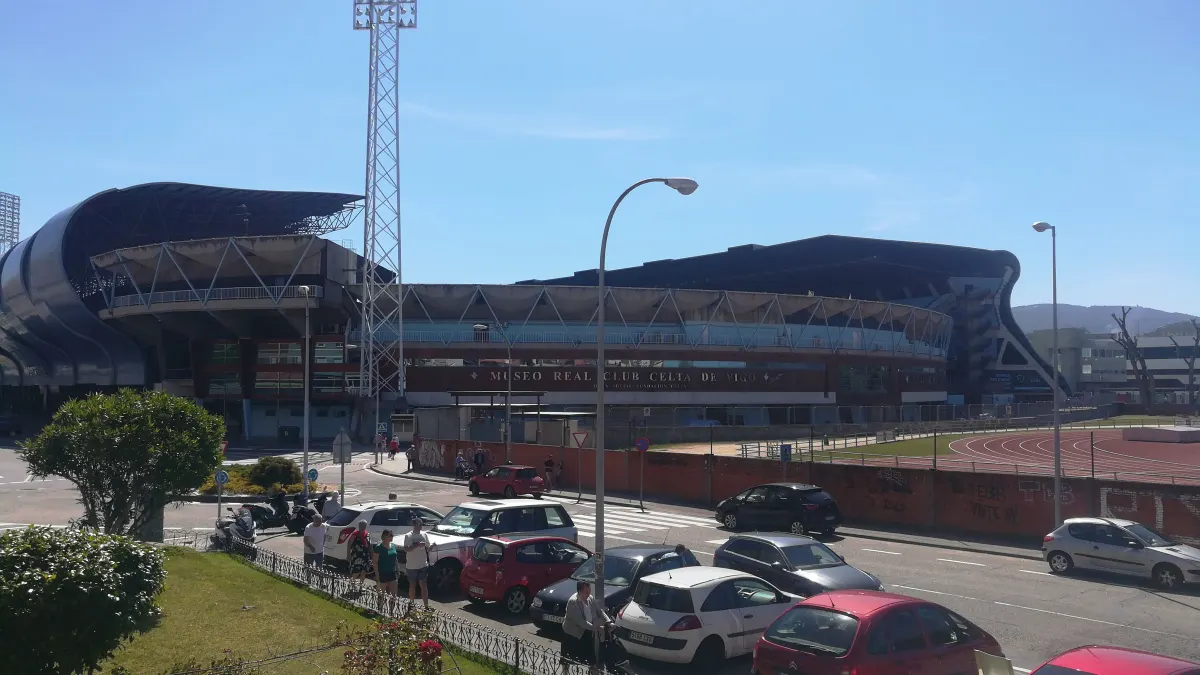
About Abanca-Balaídos
Abanca-Balaídos is the home of RC Celta de Vigo, and it has been since almost the beginning. The ground opened in 1928 in the Balaídos district on the southwest edge of Vigo, in Galicia, and Celta have played there ever since, which makes it one of the oldest continuously used stadiums in Spanish football. The formal name is the Estadio Municipal de Balaídos, carrying the Abanca prefix since a naming deal with the Galician bank in 2018, but to everyone in Vigo it is simply Balaídos.
It is a municipal ground, owned by the city of Vigo rather than the club, on a natural-grass pitch of 105 by 70 metres with no full stadium roof, only covers over the individual stands. And right now it is a moving target. Balaídos is in the middle of a long, phased renovation called Gran Balaídos, and the capacity has been shrinking as each stand is torn down and rebuilt. Its standing capacity is about 31,800, but it is currently reduced to roughly 20,739 while the Gol stand is closed for a full reconstruction.
The plan is to grow, not shrink. Once the Gol stand reconstruction is finished, in the next couple of years, the capacity returns to around 31,800, and a further, separate project would rebuild the Tribuna stand to push the total toward 43,000 for the 2030 World Cup, for which Vigo is a proposed host. That larger expansion is still at the design stage, with its funding unresolved, so the 43,000 figure is an aspiration rather than a booking.
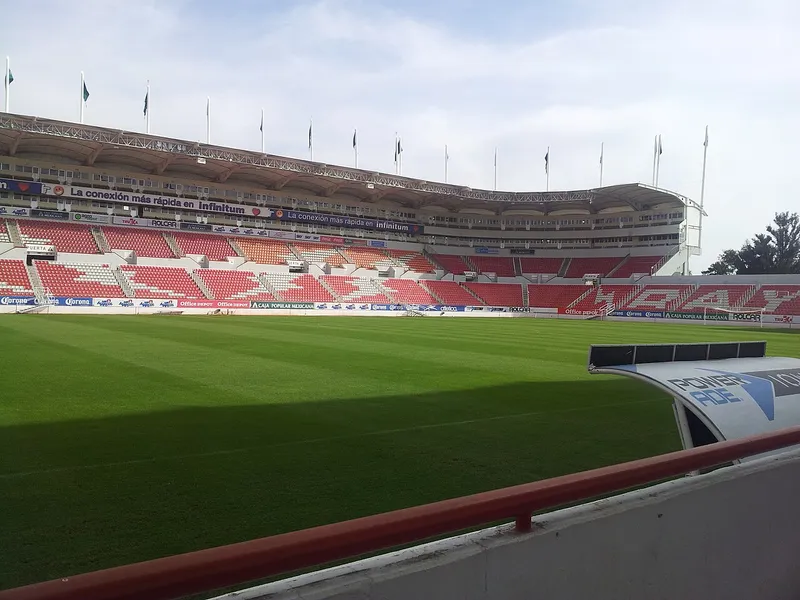
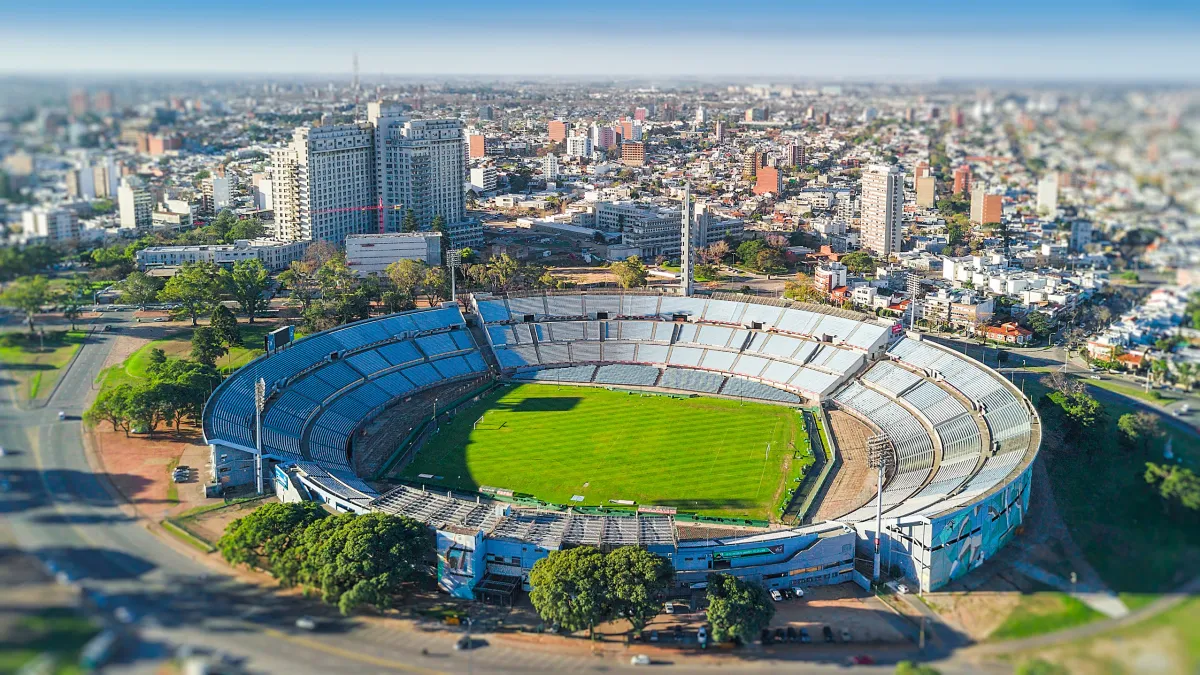
For all the construction, it remains a proper football ground. The stands are steep and close to the pitch, the atmosphere on a European night is fierce, and the four sides, Gol, Río, Marcador and Tribuna, frame one of the more characterful grounds in LaLiga.
Getting to Abanca-Balaídos
Vigo is a hilly Atlantic city with no metro, so getting to the ground means a bus, a taxi, or a walk with some gradients.
Public Transit
The city bus network, run by Vitrasa, is the main way to reach Balaídos, since Vigo has no metro or tram.
→ Via city bus: Several Vitrasa lines run from the center toward the Balaídos and Coia districts. Check the current route on the Vitrasa app, as the exact lines vary.
→ Via train: The nearest station is Vigo-Urzáiz, about 5 kilometres away, from where a taxi or a long uphill walk finishes the journey.
Driving + Parking
The stadium sits near the Citroën car plant, reached from the VG-20 ring road that loops around the city.
→ From the center: A short drive southwest, though Vigo’s steep streets and one-way system can slow it down on a match day.
→ Parking: There is no large dedicated stadium car park, and street parking fills quickly. The city council actively pushes visitors toward public transport.
Rideshare
Taxis are the reliable door-to-door option in Vigo, and the ride from the center to Balaídos is short. Ride-hailing coverage in the city is thinner than in Madrid or Barcelona, so a licensed taxi is often the surer bet, especially after the final whistle when the surrounding streets are busy.
From the Airport
→ Vigo-Peinador (VGO): The city airport is about 9 to 10 kilometres east of the ground. A taxi takes roughly 20 to 25 minutes, or the airport bus runs into the city center, from where a local bus or taxi finishes the trip.
→ Wider region: Santiago de Compostela and Porto airports are within a couple of hours by car or train for visitors arriving from further afield.
Matchday at Balaídos
A Celta match is a Galician day out as much as a football one, and it starts with food. The pre-match ritual is tapas and seafood in Vigo’s old town, the Casco Vello, where the pulpo á feira, Galician octopus dusted with paprika, and the empanada gallega are the local staples, all washed down with an Estrella Galicia. Vigo’s oyster street, in the heart of the old town, is the classic stop before heading up to the ground.
Inside, Balaídos punches above its size. The enclosed, steep stands trap the noise, and the crowd carries a strong sense of Galician identity, more regional pride than big-city glamour. The loudest support has traditionally gathered in the Gol stand, home of the Celtarras ultras, though that end is being rebuilt during the current works, so its character is in flux. The Tribuna is the main stand with the best sightlines and the hospitality boxes, and the Marcador Centenario end, fully rebuilt in 2023, is the newest part of the ground.
The occasions to aim for are the European nights and the Galician derby against Deportivo La Coruña, known here as O Noso Derbi, our derby, one of the fiercest rivalries in Spanish football, though it only happens when both clubs share a division. On an ordinary league weekend the ground is rarely a sellout, and walk-up tickets are often possible, but demand climbs sharply for a European tie or a visit from one of the giants.
One honest caveat for any visitor: this is a building site as much as a stadium. Reduced capacity, temporary stands and seating exposed to Vigo’s frequent rain are all part of the current experience, and the running local debate is whether the full Gran Balaídos vision will actually be ready in time for 2030. Come for the atmosphere and the seafood, and treat the scaffolding as part of the story.
Construction & Design
Balaídos was born out of a loss. When Celta’s old Campo de Coia was swallowed by a new tram line in the early 1920s, a group of Vigo businessmen bought a 75,000-square-metre plot and set about building a replacement. The architect Jenaro de la Fuente Álvarez drew up an ambitious European-class design of 22,000 numbered seats with an athletics track and tennis courts, but when the share subscriptions fell short, the grand stands were downgraded to earth terraces and a tiled-visor main stand. The ground opened on December 30, 1928, with Celta beating Real Unión de Irún 7-0.
It has been rebuilt more than once since. The stadium was expanded to around 45,000 for the 1982 World Cup, then converted to an all-seater in the early 2000s at about 31,800. The defining project of the modern era, though, is the phased Gran Balaídos renovation, the reason the capacity keeps changing. The old athletics track was removed to bring the stands hard up against the pitch, the Marcador Centenario stand was rebuilt in 2023, and the Gol stand went under full reconstruction from 2025.
The reported cost of the current reform is around 29.7 million euros, split mainly between the regional and city governments with a contribution from Celta, though the far larger 2030 Tribuna expansion has yet to be costed or funded. For now the design is a work in progress in the most literal sense, an old ground being rebuilt around its own crowd one stand at a time.
History of Abanca-Balaídos
Since that 7-0 opener in 1928, Balaídos has been the constant in Celta de Vigo’s story. The club bought the ground outright in 1945 for 825,000 pesetas before it eventually returned to municipal hands, and the stadium grew alongside the city through the twentieth century, reaching its peak of around 45,000 for the 1982 World Cup.
That World Cup gave Balaídos its brush with the global game. The ground hosted three first-round matches, all of them involving Italy, who drew their way through the group in Vigo and Galicia before going on to win the tournament. The record football attendance came the same year, about 45,000 for a Celta match in May 1982.
Its European nights are woven through the more recent history. Balaídos heard the Champions League anthem for the first time in 2003, when Celta hosted AC Milan, part of a golden run that took the club deep into Europe. The stadium has also served as one of the great Galician concert venues, with a Dire Straits show in 1992 drawing a crowd of around 40,000, Madonna appearing in a Celta shirt in 1990, and the Rolling Stones and Guns N’ Roses among the acts to have played there.
Now the ground is writing a new chapter in concrete. The Gran Balaídos renovation is dragging the old stadium toward a possible role in the 2030 World Cup, and whether Vigo makes that deadline is one of the liveliest arguments in the city. Whatever the outcome, Balaídos has already outlasted a century of Spanish football, and Celta are not going anywhere else.
Sources & Further Reading
- Wikipedia entry on Balaídos Stadium: en.wikipedia.org/wiki/Bala%C3%ADdos_Stadium. Capacity, ownership, stands and renovation.
- Wikipedia (Spanish) on Estadio de Balaídos: es.wikipedia.org. Dates, architect, cost, capacity history and current works.
- LaLiga history of Balaídos: laliga.com. The stadium’s opening, expansions and events.
- El Español (Treintayseis) on Balaídos: elespanol.com. Naming, concerts and the current capacity works.
- El Debate on the 2030 project: eldebate.com. The Gran Balaídos plan, capacity targets and its funding uncertainty.
Quick Facts
Everything you need at a glance.
Stadium specs
- Capacity
- 31,800
- Opened
- 1928
- Cost
- Not separately recorded
- Roof
- Open
- Surface
- Natural Grass
- Tenants
- RC Celta de Vigo
Construction & location
- Groundbreaking
- 1924
- Architects
- Jenaro de la Fuente Álvarez
- Engineering
- Not separately recorded
- General contractor
- Not separately recorded
- Address
- Avenida de Balaídos, s/n, 36210 Vigo, Pontevedra, Galicia, Spain
- GPS
- 42.2119°N, 8.7403°W
Photo Gallery
Fun Facts
Celta de Vigo bought their own stadium in 1945 for 825,000 pesetas, and the ground has been municipally owned again for decades since.
Balaídos opened in 1928 with a 7-0 thrashing of Real Unión de Irún. It had been planned for 22,000 numbered seats on a one-million-peseta budget, before the money ran short and the grand stands became earth terraces.
The venue's biggest crowd may not have been for football at all: a Dire Straits concert in August 1992 drew around 40,000, and Madonna played here in 1990 wearing a Celta shirt.
Stadium Location
Frequently Asked Questions
- Why does Abanca-Balaídos have a reduced capacity right now?
- The stadium is in the middle of a long, phased renovation known as Gran Balaídos. The Gol stand was closed for a full rebuild in 2025, which has temporarily dropped capacity to around 20,739, down from its standing figure of about 31,800. It is expected to return to around 31,800 once the Gol stand reconstruction is finished in the next couple of years.
- How big will Balaídos be for the 2030 World Cup?
- The Gran Balaídos plan aims to reach roughly 43,000 seats for the 2030 World Cup, mainly by rebuilding the Tribuna stand from about 5,500 seats to around 16,000. As of 2026 that part of the project is still at the preliminary-design stage, with financing across the city, regional and national governments not yet resolved, so it is not guaranteed.
- Where do the loudest Celta fans sit at Balaídos?
- The Gol stand is traditionally the home of the noisiest support and the Celtarras, Celta's main ultras group, though that stand is being rebuilt during the current works. The Tribuna is the main stand with the best sightlines and the hospitality areas, while the Marcador Centenario end was fully rebuilt in 2023.
- What should I eat at a Celta match in Vigo?
- Go Galician. The pre-match ritual is tapas and seafood in Vigo's old town, where pulpo á feira, or Galician octopus, and empanada gallega are the staples, washed down with an Estrella Galicia beer. Vigo's oyster street in the Casco Vello is a classic stop before heading to the ground.
- What is the atmosphere like at Balaídos?
- For a mid-sized ground it is loud. The enclosed, steep stands trap the noise, and Celta's support is rooted in strong Galician regional pride. European nights and the Galician derby against Deportivo La Coruña, known locally as O Noso Derbi, are the biggest occasions, though the derby only happens when both clubs are in the same division.
- How do you get to Abanca-Balaídos?
- Vigo has no metro, so several Vitrasa city bus lines serve the Balaídos district, or you can take a short taxi or rideshare from the center. From Vigo-Peinador Airport it is about 25 minutes by taxi, or the airport bus into the city. Parking near the ground is limited, so public transport is the sensible choice on match days.
- Who owns Balaídos, Celta or the city?
- The city of Vigo owns it. Celta de Vigo actually bought the stadium in 1945 for 825,000 pesetas, but it later returned to municipal ownership, and today the ground belongs to the Concello de Vigo with Celta as its tenant. The current renovation is funded mainly by the regional and city governments.
- When was Balaídos built?
- It opened on December 30, 1928, with Celta beating Real Unión de Irún 7-0. The site had been bought in 1924 after Celta lost their old Campo de Coia to a new tram line. It was rebuilt to about 45,000 for the 1982 World Cup, and has been renovated in phases ever since.
- Did Balaídos host the 1982 World Cup?
- Yes. Balaídos was one of the venues for the 1982 World Cup in Spain and hosted three first-round matches, all of them involving Italy, who went on to win the tournament. The ground held around 45,000 at the time, its peak capacity.
Last updated: 2026-07-18