About Angel Stadium
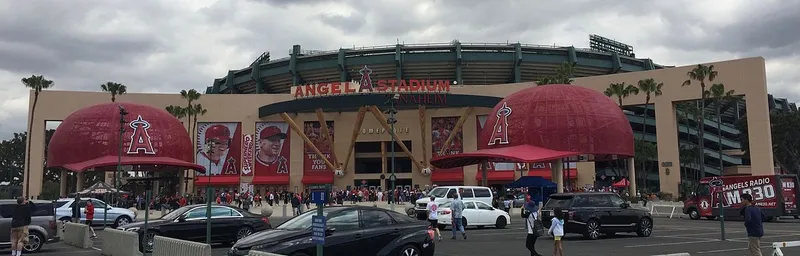
The halo still lights up after every win. Angel Stadium, a 45,050-seat ballpark in Anaheim, California, is the fourth-oldest active venue in the major leagues, home to the Los Angeles Angels and to a 230-foot A-frame sign that has become Orange County’s most recognizable landmark. It has survived two full-scale renovations, three names, and one of the greatest World Series comebacks ever played.
The ballpark opened on April 19, 1966 as Anaheim Stadium, a $24 million, three-tiered grandstand with open views of the Chino Hills and the San Gabriel Mountains beyond the outfield. Designed by Noble W. Herzberg, it gave the California Angels a permanent home and Orange County its first major-league team. The Big A, standing 230 feet and weighing 210 tons, was the tallest structure in the county when it went up.
The 2002 World Series is the defining moment. The Angels, a franchise that had never won it all in 41 years, trailed the Giants 5-0 in Game 6 and rallied to win 6-5 behind Scott Spiezio’s three-run homer and Troy Glaus’s go-ahead double. Game 7 the next night was a 4-1 clincher. It remains one of the greatest World Series comebacks in baseball history, and the Rally Monkey, born on the Angel Stadium video boards two years earlier, became a national sensation along the way.
Construction & Design
Angel Stadium was built fast and built big. Ground broke on August 31, 1964, and 42,000 cubic yards of concrete and 15 million pounds of steel later, the $24 million ballpark opened in April 1966. Noble W. Herzberg and Associates designed it; the Del E. Webb Company built it. The signature was the Big A, a 230-foot, 210-ton scoreboard behind left field, funded by Standard Oil for $1 million and, at the time, the tallest structure in Orange County. The City of Anaheim owns the stadium; the Angels operate it.
The place has been remade twice. In 1979 and 1980, a renovation enclosed the open bowl to bring in the NFL’s Los Angeles Rams, pushing capacity to roughly 69,000 for football and moving the Big A 1,300 feet out to the parking lot, where it still stands. Then, after the Walt Disney Company bought the Angels in 1996, a $118 million renovation in 1997 and 1998 tore the enclosure back down. HOK Sport and Robert A.M. Stern restored the open-air baseball bowl, Turner Construction did the work, and Walt Disney Imagineering built the California Spectacular, a 22,000-square-foot rock formation with a 100-foot geyser in center field. The stadium reopened as Edison International Field, then took the Angel Stadium name in 2004.
The stadium’s future has been its most contested feature. In December 2019 the city agreed to sell Angel Stadium and its vast parking lots to the team’s ownership for $325 million, but the deal collapsed in May 2022 after a federal corruption investigation engulfed Anaheim’s city hall and forced the mayor to resign. The Angels stayed put. In February 2025 the team extended its lease through 2032, keeping big-league baseball in Anaheim for at least another decade while the question of a new or rebuilt ballpark stays wide open.
Getting to Angel Stadium
Public Transit
Angel Stadium has a commuter rail connection through the Anaheim Regional Transportation Intermodal Center (ARTIC), plus bus and shuttle options.
→ Via Metrolink: The Anaheim-ARTIC station on the Orange County Line is across SR-57 from the stadium, accessible through the Douglass Road parking gate (about a half-mile walk).
→ Via OCTA Bus: Routes 50 (Katella Ave), 53, and 57 (State College Blvd) stop within walking distance.
→ Via ART Shuttle: The free Anaheim Resort Transportation shuttle connects Disneyland, Angel Stadium, Honda Center, and area hotels.
The ART shuttle is the easiest option if you’re staying near Disneyland. Metrolink serves Anaheim from LA Union Station and stations along the Orange County Line.
Driving + Parking
The ballpark address is 2000 Gene Autry Way, Anaheim, CA 92806. I-5 and SR-57 are the primary approaches.
→ From Los Angeles (~30 mi): I-5 South to the Katella Avenue exit. About 35-60 minutes depending on traffic.
→ From San Diego (~93 mi): I-5 North to SR-57 North, exit Orangewood Avenue. About 1 hour 30 minutes.
→ From Long Beach (~20 mi): I-405 South to SR-22 East to SR-57 North, exit Orangewood. About 25-40 minutes.
The main parking lot has three entrances (Douglass Road, State College Boulevard, Orangewood Avenue). General parking is $20, preferred/oversized $30. Lots open 2.5 hours before game time. Tailgating is only permitted in the Big A Lot near the sign, with no alcohol, no outside catering, and approved gas or propane grills only.
Rideshare
Uber and Lyft drop off via Gene Autry Way near the main entrance gates. Post-game pickup is near Gate 1 toward left field, by the red rideshare light pole near the City National Grove of Anaheim. From downtown Anaheim, expect $8–$12. From Disneyland, $8–$10. From LAX, $45–$70.
From the Airport
→ John Wayne Airport (SNA): 11 miles south, about 17-20 minutes by car. The closest commercial airport. Rideshare runs $20–$30.
→ Long Beach Airport (LGB): 19 miles west, about 26-30 minutes. Served by JetBlue and Southwest.
→ Los Angeles International (LAX): 36 miles northwest, about 44 minutes without traffic (often longer). Widest carrier selection but worst traffic.
History of Angel Stadium
Angel Stadium was built to give the California Angels a permanent home in Orange County, and it opened in April 1966 as one of the era’s grand modern ballparks. What followed was six decades of reinvention: a football conversion, a Disney-era makeover, a championship, and a long fight over who would own the place.
The Angels themselves were the creation of Gene Autry, the Singing Cowboy of Hollywood westerns, who owned the club from its 1961 expansion birth until his death in 1998. His name still marks the street outside, Gene Autry Way, and the franchise he founded finally won it all in 2002, four years after he was gone. The ballpark has always carried a little of that showman’s instinct, from the halo on the Big A to the geyser in center field.
First Game (April 19, 1966): The Chicago White Sox defeated the Angels 3-1 in the stadium’s inaugural regular-season game. The Big A, funded by Standard Oil for $1 million, served as the scoreboard behind left field and gave the stadium its enduring nickname.
1967 MLB All-Star Game (July 11, 1967): The first All-Star Game broadcast in prime time on national television. The National League won 2-1 in 15 innings, the longest All-Star Game ever played at the time (later matched in 2008).
Football Era (1980-1994): The 1979-80 enclosure brought the NFL’s Los Angeles Rams to Anaheim, filling the outfield with seats and pushing capacity toward 69,000. The Rams played here for 15 seasons before leaving for St. Louis.
Disney Renovation (1997-98): The Walt Disney Company, which purchased the Angels in 1996, spent $118 million to demolish the outfield upper deck, restore the open-air configuration, and add the California Spectacular. The stadium was renamed Edison International Field.
2002 World Series (October 19-27, 2002): The Angels defeated the Giants in seven games for their only championship. Game 6 is one of baseball’s all-time moments: down 5-0, the Angels rallied to win 6-5 behind Spiezio’s three-run homer and Glaus’s RBI double. Game 7 the next night, Angels 4, Giants 1.
From the Big A to the California Spectacular to the Rally Monkey, Angel Stadium is where Orange County baseball lives, the fourth-oldest active ballpark in the majors, where the halo still lights up after every win.
Sources & Further Reading
- Los Angeles Angels, ballpark information: mlb.com/angels/ballpark. Official seating, events, and visitor details.
- Ballparks of Baseball, Angel Stadium: ballparksofbaseball.com. Capacity, cost, and renovation history.
- City of Anaheim, Angel Stadium lease: anaheim.net. Ownership and the 2025 lease extension.
- Angel Stadium, Wikipedia: en.wikipedia.org/wiki/Angel_Stadium. Construction, naming, renovations, and the sale saga.
Quick Facts
Everything you need at a glance.
Stadium specs
- Capacity
- 45,050
- Opened
- 1966
- Cost
- $24 million (1966); $118 million 1997-98 renovation (~$230 million (2025 dollars, original build) today)
- Roof
- Open
- Surface
- Natural Grass (Bermuda)
- Tenants
- Los Angeles Angels (MLB)
Construction & location
- Groundbreaking
- August 31, 1964
- Architects
- Noble W. Herzberg and Associates (1966), HOK Sport with Robert A.M. Stern (1997-98)
- General contractor
- Del E. Webb Company (1966); Turner Construction (1997-98)
- Address
- 2000 Gene Autry Way, Anaheim, CA 92806, USA
- GPS
- 33.8003°N, 117.8827°W
Photo Gallery
Fun Facts
The Big A stands 230 feet tall and weighs 210 tons, and when built in 1966 it was the tallest structure in Orange County. Originally the left-field scoreboard, it was moved 1,300 feet to the parking lot in 1979, and its halo still lights up after every Angels win, inspiring the fan catchphrase 'Light That Baby Up!'
The California Spectacular in center field, designed by Walt Disney Imagineering during the 1997-98 renovation, features a 100-foot geyser, five 50-foot geyser bursts, a cascading waterfall, real trees, and artificial boulders spanning over 22,000 square feet.
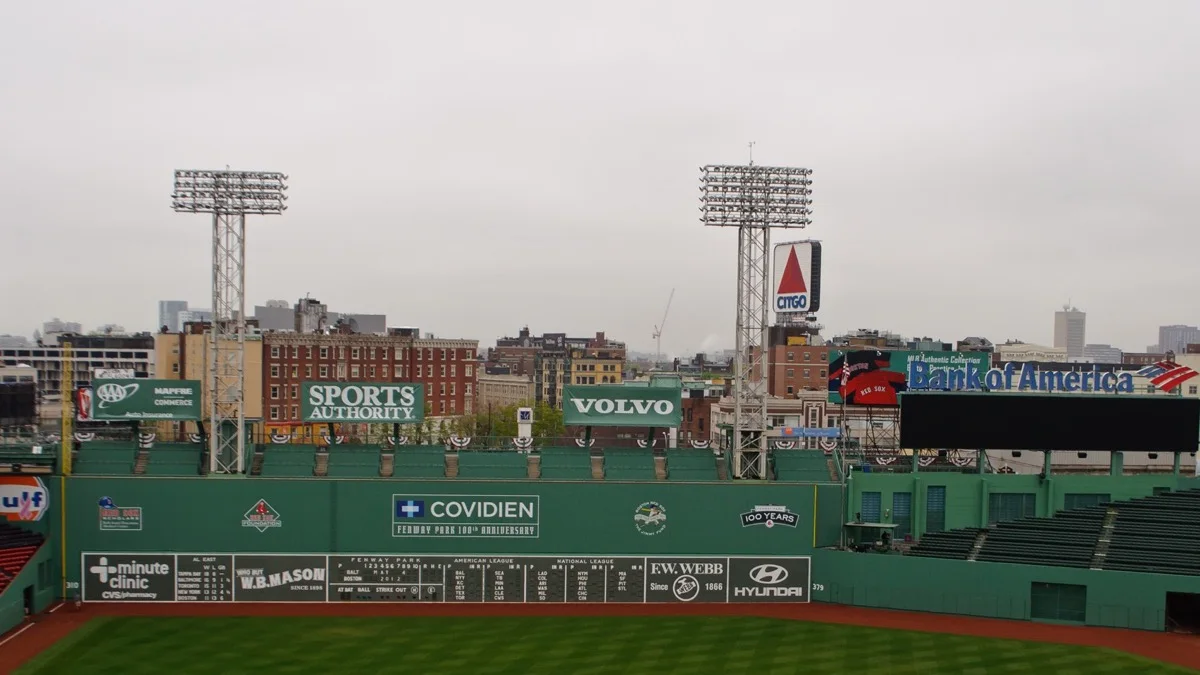
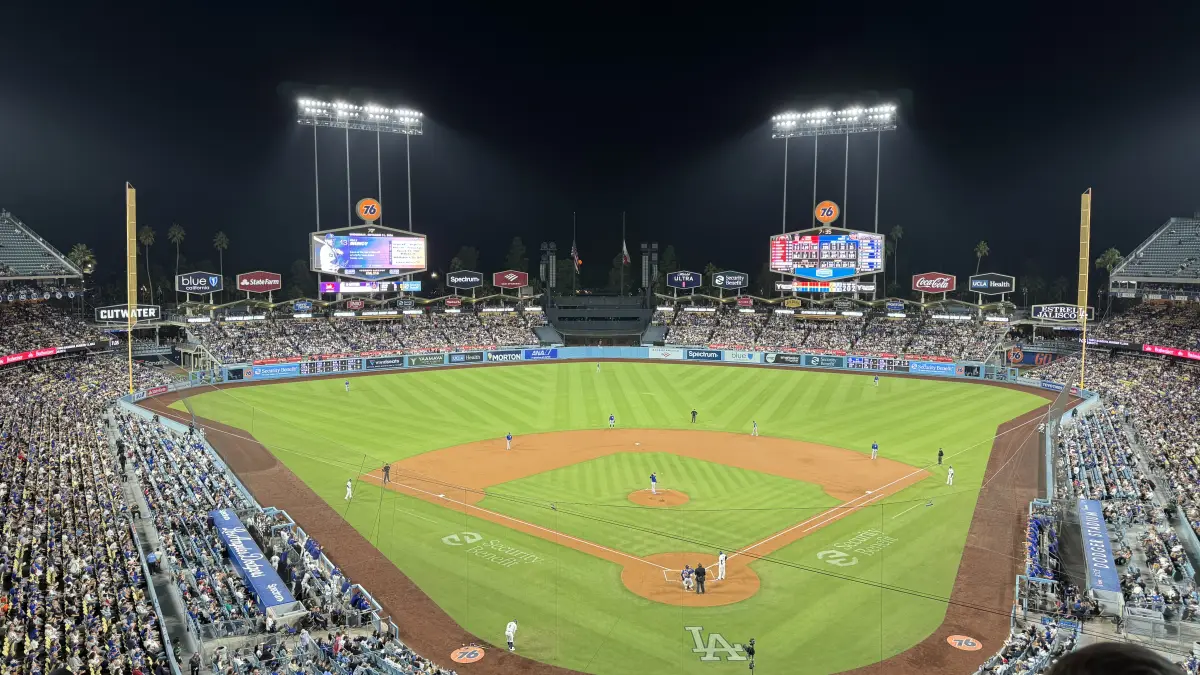
Angel Stadium is the fourth-oldest active MLB ballpark, trailing only Fenway Park (1912), Wrigley Field (1914), and Dodger Stadium (1962), and it has had three official names: Anaheim Stadium (1966-1997), Edison International Field (1998-2003), and Angel Stadium of Anaheim (2004-present).
Stadium Location
Frequently Asked Questions
- What is the seating capacity of Angel Stadium?
- Angel Stadium seats about 45,050 for baseball. It originally held roughly 43,000 when it opened in 1966 and was enclosed to seat around 69,000 for football in the 1980s, before the 1997-98 Disney renovation returned it to an open-air, baseball-only configuration.
- Where is Angel Stadium located?
- Angel Stadium is at 2000 Gene Autry Way, Anaheim, California 92806, in Orange County. It sits just east of I-5 and west of SR-57, about 30 miles southeast of downtown Los Angeles and 2.5 miles from Disneyland.
- How do I get to Angel Stadium by public transit?
- Take Metrolink's Orange County Line to the Anaheim-ARTIC station, located across SR-57 from the stadium (accessible through the Douglass Road parking gate, about a half-mile walk). OCTA bus routes 50, 53, and 57 also stop nearby. The free ART shuttle connects the stadium to Disneyland and nearby hotels.
- How much does parking cost at Angel Stadium?
- General parking costs $20 per vehicle and preferred/oversized vehicle parking is $30. The parking lot opens 2.5 hours before game time with three entrances: Douglass Road, State College Boulevard, and Orangewood Avenue. The lot closes one hour after the game.
- Have the Angels ever won the World Series?
- Yes. The Angels won their only World Series in 2002, defeating the San Francisco Giants 4 games to 3. Game 6 on October 26, 2002 featured one of baseball's greatest comebacks, as the Angels overcame a 5-0 deficit to win 6-5, and they clinched the title the next night with a 4-1 Game 7 victory.
- What is the Big A at Angel Stadium?
- The Big A is a 230-foot-tall, 210-ton A-frame sign topped with a halo, Angel Stadium's signature landmark. Built in 1966 as the scoreboard behind left field, it was relocated 1,300 feet to the parking lot in 1979 when the stadium was enclosed for football. The halo lights up after every Angels win.
- Will the Angels stay at Angel Stadium?
- Yes, at least through 2032. A December 2019 deal to sell the stadium to the team's ownership for $325 million collapsed in May 2022 amid a federal corruption investigation into Anaheim's city hall. In February 2025 the Angels extended their lease with the City of Anaheim through 2032.
- What is the closest airport to Angel Stadium?
- John Wayne Airport (SNA) in Santa Ana is the closest, just 11 miles and about 17-20 minutes away. Long Beach Airport (LGB) is 19 miles away, and Los Angeles International (LAX) is 36 miles away but offers the most flight options.
- Why is it called Angel Stadium and what were its previous names?
- The stadium has had three official names: Anaheim Stadium (1966-1997), Edison International Field of Anaheim (1998-2003 naming rights deal during the Disney era), and Angel Stadium of Anaheim (2004-present). Fans commonly call it 'The Big A' after its parking lot sign.
Last updated: 2026-07-10