About Camp Nou
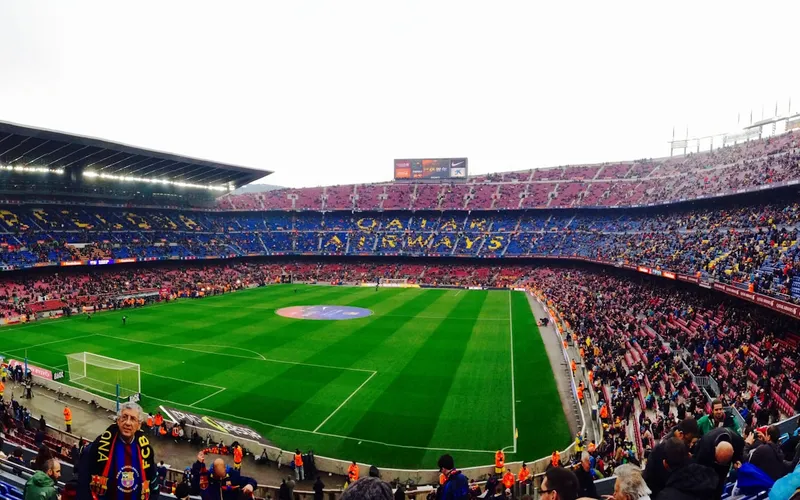
Camp Nou is the largest stadium in Europe and the spiritual home of one of the most famous sporting institutions on earth. Since 1957, this massive concrete bowl in Barcelona’s Les Corts district has been where FC Barcelona plays, where Catalonia asserts its identity, and where some of the greatest moments in football history have unfolded.
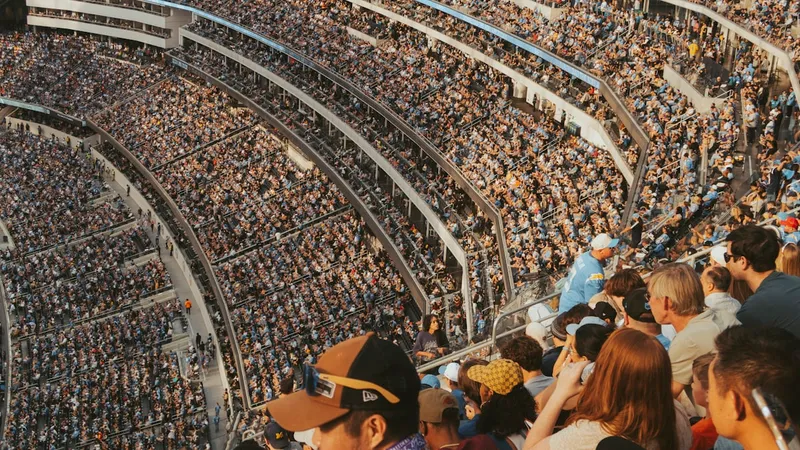
The numbers are staggering: 99,354 seats arranged in three steep tiers that create a wall of sound on European nights. When Camp Nou fills for a Champions League knockout match or an El Clásico against Real Madrid, the roar is visceral. The club’s motto — Més que un club (More than a club) — is not marketing. It’s a statement of political and cultural identity that dates back to the Franco era, when Camp Nou was a sanctuary for Catalan language and expression.
FC Barcelona’s style of play — the tiki-taka possession football pioneered by Johan Cruyff and perfected by Pep Guardiola — was developed on this pitch. Lionel Messi played his entire formative career here, scoring 672 goals across 778 appearances. Cruyff, Maradona, Ronaldinho, Xavi, Iniesta — the list of legends who have graced this ground reads like a Hall of Fame.
The stadium is currently undergoing its most dramatic transformation since it was built. The Espai Barça project will expand capacity to 105,000, add a full roof for the first time, and modernize every aspect of the venue. When complete, Camp Nou will be not only the largest but one of the most technologically advanced stadiums in Europe.
Getting to Camp Nou
Public Transit
Barcelona’s Metro system makes getting to Camp Nou straightforward.
Metro Line 3 (Green): The Les Corts and Palau Reial stations are both within a 5-minute walk of the stadium. From Plaça Catalunya (the city center hub), the journey takes approximately 10 minutes.
Metro Line 5 (Blue): Collblanc and Badal stations are slightly farther but still within a 10-minute walk. Useful if coming from Sagrada Família or the Diagonal corridor.
Tram: The Trambaix (T1, T2, T3) stops at Avinguda de Xile, a 10-minute walk. Useful from the upper Diagonal area.
On matchdays: The Metro starts buzzing with Barcelona fans 2 hours before kickoff. The stations get crowded but efficient. Post-match, trains run late to accommodate the crowds. Walking toward Plaça Espanya or a station one stop away can avoid the worst crush.
Driving + Parking
Driving to Camp Nou is manageable but parking is limited and expensive on matchdays.
→ From Barcelona city center: Head west along Avinguda Diagonal, then turn south on Travessera de les Corts. Approximately 3 km, 10-20 minutes without event traffic.
→ From the AP-7 motorway: Exit at Avinguda Diagonal and follow signs to Camp Nou. The stadium is well-signposted from the major approach roads.
Limited underground parking is available at the L’Illa Diagonal shopping center (15-minute walk) and other nearby commercial garages. The stadium’s own parking is reserved for members and VIP. Street parking in Les Corts is heavily restricted on matchdays. The Metro is the better choice.
Rideshare
Uber (via the Cabify app in Spain) and local taxi services are widely available. A ride from the city center costs approximately €8-15. On matchdays, pick-up/drop-off around the stadium can be congested — ask to be dropped at Avinguda Diagonal for an easy 5-minute walk.
From the Airport
→ Barcelona El Prat Airport (BCN): 13 km south. The Aerobús runs to Plaça Catalunya (35 minutes), then Metro Line 3 to Les Corts (10 minutes). Total: about 50 minutes. By taxi, 20-35 minutes and approximately €30-40.
→ Girona-Costa Brava Airport (GRO): 100 km north. Used by budget carriers (Ryanair). Bus to Barcelona Nord station (75 minutes), then Metro. Not convenient for matchday arrivals.
The Espai Barça Renovation
Camp Nou is undergoing the most ambitious stadium renovation project in European history. The Espai Barça project, designed by Nikken Sekkei architects, will transform the 1957 structure into a 21st-century arena while preserving its essential character.
What’s changing: The capacity will expand from 99,354 to approximately 105,000, making it the largest football stadium in the world. A full roof — an undulating canopy inspired by Mediterranean light — will cover all seats for the first time. New hospitality areas, modernized concourses, improved accessibility, and state-of-the-art broadcast infrastructure are all part of the scope.
The cost: Approximately €1.5 billion, financed through a Goldman Sachs loan and future revenue from the upgraded venue. It is one of the largest stadium investments in history.
Timeline: FC Barcelona temporarily relocated to the Estadi Olímpic Lluís Companys on Montjuïc for the 2023-24 season. The team returned to Camp Nou during the 2024-25 season with a reduced capacity of approximately 60,000 while construction continues around them. Full completion is targeted for 2026.
Why it matters: Camp Nou without a roof has been both its charm and its limitation. Rain, cold winter nights, and the inability to host certain concerts and events left revenue on the table. The covered Camp Nou will compete with modern arenas like Tottenham Hotspur Stadium and the Bernabéu while retaining the cathedral-like atmosphere that makes it unique.
History of Camp Nou
Camp Nou opened on September 24, 1957, replacing FC Barcelona’s previous home, the Camp de Les Corts, which could no longer accommodate the club’s growing fanbase. The new stadium was designed by architects Francesc Mitjans, Josep Soteras, and Lorenzo García-Barbón, and originally held 93,053 spectators.
Political identity: Under Francisco Franco’s dictatorship (1939-1975), Camp Nou became a symbol of Catalan resistance. While the Catalan language was suppressed in public life, it thrived in the stands at Camp Nou. The club’s identity fused with the Catalan independence movement, and “Més que un club” became a statement about cultural survival as much as sporting excellence.
Johan Cruyff era: Cruyff arrived as a player in 1973 and transformed Barcelona. He returned as manager in 1988, building the “Dream Team” that won four consecutive La Liga titles (1991-94) and Barcelona’s first European Cup at Wembley in 1992 (1-0 over Sampdoria). Cruyff’s philosophy — total football, attacking play, youth development — is the DNA of modern Barcelona.
The Messi years: Lionel Messi made his Camp Nou debut in 2004 at age 17 and spent the next 17 years rewriting every record in the book. His 672 goals in a Barcelona shirt, the 91-goal calendar year in 2012, the 6-1 remontada against PSG in 2017 — Camp Nou was the stage for arguably the greatest individual career in sporting history. His departure in 2021 was one of the most emotional moments in the stadium’s history.
Champions League glory: Barcelona has won the Champions League/European Cup five times, with iconic Camp Nou moments including the 1999 semi-final comeback against Chelsea, the 2015 treble season, and the unforgettable 6-1 victory over PSG in 2017 — when Sergi Roberto’s 95th-minute goal completed the greatest comeback in Champions League history.
1992 Olympics: Camp Nou hosted the Opening Ceremony of the 1992 Barcelona Olympics and football matches during the Games. The Olympics transformed Barcelona from a regional city into a global destination — and Camp Nou was at the center of that reinvention.
Camp Nou is not just a stadium. It is a monument to Catalan identity, a museum of footballing genius, and a living, evolving organism that is currently being rebuilt without ever truly closing. When the renovation is complete, it will be the largest, most modern football stadium in the world — and still, unmistakably, the home of Barça.
Photo Gallery
Fun Facts
Camp Nou's original name was 'Estadi del FC Barcelona' — fans nicknamed it 'Camp Nou' (New Field in Catalan) to distinguish it from the club's previous ground, and the name stuck so firmly that the club officially adopted it in 2001.
The Espai Barça renovation project will make Camp Nou the largest stadium in Europe at 105,000 seats, with a fully covered roof for the first time in its history — transforming its open-bowl silhouette forever.
On matchdays, Camp Nou's 'Més que un club' (More than a club) motto takes on literal meaning — during the Franco dictatorship, the stadium was one of the few places where the Catalan language could be spoken freely in public.
Stadium Location
Frequently Asked Questions
- What is the seating capacity of Camp Nou?
- Camp Nou's traditional capacity is 99,354, making it the largest stadium in Europe. The ongoing Espai Barça renovation will increase this to approximately 105,000 when fully complete, with the addition of a third tier and a covered roof.
- Is Camp Nou currently under renovation?
- Yes. The Espai Barça project, announced in 2014 and actively underway, is a €1.5 billion transformation of Camp Nou. The renovation includes expanding capacity to 105,000, adding a full roof, modernizing all facilities, and creating new commercial and hospitality spaces. FC Barcelona returned to Camp Nou during the 2024-25 season with a temporarily reduced capacity while work continues.
- Where is Camp Nou located?
- Camp Nou is located in the Les Corts district of Barcelona, at Carrer d'Aristides Maillol. It is approximately 3 km from Barcelona's city center and well-connected by Metro, bus, and tram.
- How do I get to Camp Nou by public transit?
- Take Metro Line 3 (Green) to Les Corts or Palau Reial, or Line 5 (Blue) to Collblanc or Badal. All four stations are within a 5-10 minute walk. On matchdays, extra trains run and the atmosphere begins at the Metro stations.
- Can I visit Camp Nou without attending a match?
- Yes. The Camp Nou Experience tour allows visitors to explore the pitch, press room, tunnel, commentary boxes, and the FC Barcelona Museum. It is the most visited museum in Catalonia. Note: tour availability may be affected by renovation work — check the FC Barcelona website for current access.
- How much do FC Barcelona tickets cost?
- Ticket prices vary significantly by match. League games against smaller teams start around €40-80, while El Clásico (vs. Real Madrid) and Champions League knockout matches can exceed €300-500. Tickets are sold through FC Barcelona's official website. Buy early — Camp Nou regularly sells out for big matches.
Last updated: 2026-02-11