About Estadio Alfonso Lastras
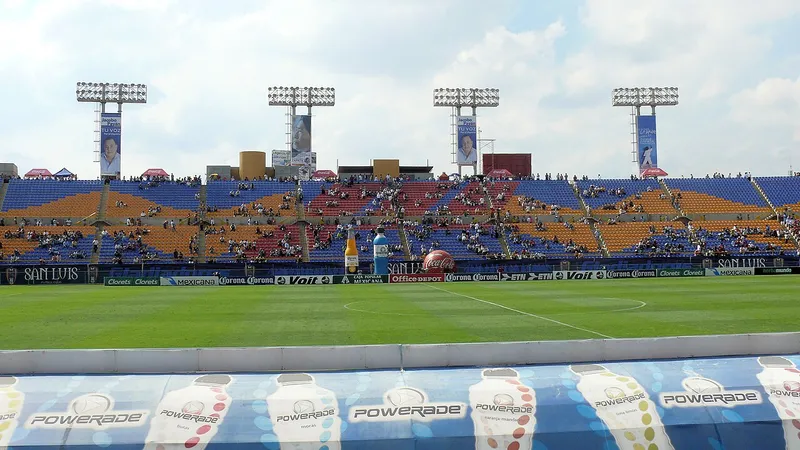
Estadio Alfonso Lastras sits in the Valle Dorado neighborhood of San Luis Potosí, a colonial city of over one million people in central Mexico. With 25,709 seats, it’s the home of Atlético de San Luis — a Liga MX club co-founded with Spanish giant Atlético Madrid in 2013. The stadium’s nickname, El Coloso de Valle Dorado (The Colossus of Valle Dorado), speaks to its scale relative to the surrounding residential streets.
Atlético de San Luis are the sole tenants, and the venue has become their fortress since they earned promotion to Liga MX in 2019. The club reached the Apertura 2023 semifinals — their deepest-ever playoff run — with the stadium rocking at near-capacity. The altitude helps: at 1,864 meters above sea level, visiting teams from coastal cities often struggle with the thin air.
Architect José Francisco Alfaro Sousa designed the stadium, which opened on May 18, 1999. The original blueprints called for 30,000 seats, but the upper tier was never completed, leaving the venue at its current 25,709 capacity. The natural grass pitch measures a standard 105 by 68 meters with no running track, keeping fans close to the action. The bowl sits partially below street level, with the pitch sunken into the ground — a design that reduces the building’s visual footprint while creating a steep, intimate atmosphere inside.
San Luis Potosí’s semi-arid climate — warm days, cool nights, and minimal rainfall — makes for reliable match-day conditions year-round. Summer evening kickoffs, the most common scheduling slot, typically see temperatures in the low 20s°C (low 70s°F), comfortable for both players and fans. The altitude, however, is another matter: at 1,864 meters above sea level, visiting players from coastal cities like Acapulco or Veracruz can feel the thin air by the second half.
The Mexico national team has used the stadium for World Cup qualifiers and friendlies, including a 4-0 win over Iran in 2007 and a 3-1 victory over Trinidad & Tobago in 2017 during CONCACAF qualifying for the 2018 FIFA World Cup. In January 2026, naming rights were sold to Libertad Financiera, though most fans still call it by its historic name.
Getting to Estadio Alfonso Lastras
Public Transit
San Luis Potosí has no metro or rail system, but city buses serve the stadium well.
→ From Centro Histórico: CMOV bus routes 05, 17, 19, 27, 30, 33, and 50 all pass near the stadium. The nearest stop is Avenida Coral 920, a 2-minute walk from the gates.
→ From the bus terminal (Central Camionera): Take Ruta 17 or 27 toward Valle Dorado. About 20 minutes depending on traffic.
City buses run on flat fares of approximately MXN $13. Service frequency drops after evening matches, so plan your return trip in advance.
Driving + Parking
GPS address: Avenida Malaquita 1030, Colonia Valle Dorado, C.P. 78399, San Luis Potosí.
→ From Aguascalientes (165 km): Highway 70D east through Villa de Reyes. About 2 hours.
→ From Querétaro (207 km): Highway 57D north. About 2 hours 30 minutes.
→ From Monterrey (515 km): Highway 57 south through Matehuala. About 5 hours 40 minutes.
Two parking lots serve the stadium: one reserved for suite holders and a general public lot. Arrive early — spaces fill quickly on match days. Street parking in the Valle Dorado neighborhood is the overflow option.
Rideshare
Uber and DiDi both operate in San Luis Potosí. A ride from Centro Histórico costs MXN $60-90 (USD $3-5), about 10-15 minutes. InDriver is also available with negotiable fares. Post-match surge pricing is common — walk a few blocks along Avenida Malaquita for faster pickups.
From the Airport
→ Ponciano Arriaga International Airport (SLP): 19 km northwest, about 20-25 minutes by car. Uber/DiDi fare about MXN $150-200 (USD $8-12). Domestic flights connect to Mexico City, Monterrey, Guadalajara, Tijuana, and Cancún.
History of Estadio Alfonso Lastras
The stadium is named after Alfonso Lastras Ramírez — a lawyer, politician, and rector of the Universidad Autónoma de San Luis Potosí who co-founded one of the city’s earliest football clubs. Construction began in 1998 under architect José Francisco Alfaro Sousa, and the venue was inaugurated on May 18, 1999.
The original design called for 30,000 seats, but funding ran out before the upper tier could be completed — a situation that has persisted for over 27 years. The stadium opened as a multi-use venue without a primary Liga MX tenant.
Key moments in the stadium’s history:
- May 18, 1999: Inaugural match at the newly completed venue.
- 2002: San Luis FC moves in as the primary Liga MX tenant after facility upgrades to the parking lots and concourses.
- June 2, 2007: Mexico 4-0 Iran — friendly match ahead of the CONCACAF Gold Cup.
- October 6, 2017: Mexico 3-1 Trinidad & Tobago — 2018 FIFA World Cup CONCACAF qualifier.
- May 5, 2019: Atlético de San Luis clinches the Ascenso MX title, earning promotion to Liga MX by defeating Dorados de Sinaloa.
- December 6, 2023: Atlético de San Luis hosts Club América in the Apertura 2023 semifinal — the club’s deepest-ever Liga MX playoff run.
- January 2026: Naming rights sold to Libertad Financiera, though the historic name remains in common use.
The Atlético Madrid connection is more than a name. When the Spanish club co-founded Atlético de San Luis in 2013, they provided coaching staff, youth academy methodology, and loan players during the club’s early years in the Ascenso MX. The partnership has since loosened — Atlético de San Luis operates independently — but the red-and-white striped crest and the rojiblanco identity remain. Fans who make the pilgrimage to the Wanda Metropolitano in Madrid occasionally spot Atlético de San Luis scarves in the away section.
San Luis Potosí is a city with deep football roots, and this stadium has been central to the community for over two decades. Whether under the San Luis FC banner or the Atlético de San Luis crest, El Coloso de Valle Dorado has given the city’s fans a home to call their own — even if those missing upper-tier seats remain a permanent reminder of what might have been.
Photo Gallery
Fun Facts
Estadio Alfonso Lastras was designed for 30,000 seats, but the upper tier was never completed — leaving 4,291 phantom seats that exist only on the architect's original blueprints.
At 1,864 meters (6,115 feet) above sea level, the stadium is one of the highest-altitude Liga MX venues, giving Atlético de San Luis a physiological edge over visiting teams unaccustomed to the thin air.
The stadium has been home to two different Liga MX clubs — San Luis FC (2002-2013) and Atlético de San Luis (2013-present) — after the original franchise was dissolved and relocated.
Stadium Location
Frequently Asked Questions
- What is the capacity of Estadio Alfonso Lastras?
- 25,709 seats. The stadium was originally designed for 30,000 but the upper sections were never completed.
- What team plays at Estadio Alfonso Lastras?
- Atlético de San Luis of Liga MX. The club was co-founded with backing from Spain's Atlético Madrid and has played here since 2013.
- How do I get to Estadio Alfonso Lastras by public transit?
- Several CMOV bus routes stop within a 2-minute walk, including Ruta 05, 17, 19, 27, 30, 33, and 50. The nearest stop is Avenida Coral 920.
- Is there parking at Estadio Alfonso Lastras?
- Yes. There are two lots: one reserved for suite holders and a general public lot. Arrive early on match days as spaces fill quickly.
- How far is the airport from Estadio Alfonso Lastras?
- Ponciano Arriaga International Airport (SLP) is approximately 19 km away, about a 20-25 minute drive.
- Can I use Uber to get to the stadium?
- Yes. Both Uber and DiDi operate in San Luis Potosí. A ride from the city center costs roughly MXN $60-90 (USD $3-5) and takes 10-15 minutes.
Last updated: 2026-03-12