Arsenal’s stadium cost £463,882,000.
That is the audited cost of the finished building at 31 May 2007, the first year end after it came into use, taken from the accounts of the company that owns it.
Nineteen years later the same cost line reads £530,276,000, because a stadium that is finished keeps having money spent on it.
The figure that circulates in print is around £390m. It is neither of those, and nothing published next to it says which question it is answering.
| Date | Audited cost | Basis | Per seat | |
|---|---|---|---|---|
| Build, at completion | 31 May 2007 | £463,882,000 | AUDITED-FINAL | £7,642 |
| Cumulative | 31 May 2025 | £530,276,000 | AUDITED-CUMULATIVE | £8,735 |
What everyone else says
The common figure is about £390m, and it is usually given without a basis. An architecture guide states it plainly: “Work was completed on the new ground in 2006 at a construction cost of around £390m.” Reference entries give the same number, sometimes labeled as 2004 pounds, which at least concedes that the money has a date.
Above that sit higher claims, in the region of £430m to £450m, on the reasoning that £390m covers building work and leaves out land, infrastructure and financing. Those are not sourced to anything and we are not repeating them as figures.
The financing is reported too, usually as a £260m debt facility.
What none of these rests on is a document. That is the point of this piece rather than a complaint about it: the company that owns the Emirates has filed a property, plant and equipment note every year since 2001, and £390m does not appear in any of them.
Where the real number is
Arsenal put the stadium in its own company. Arsenal (Emirates Stadium) Limited, company number 04106698, was incorporated on 13 November 2000, two years before construction began, and it has filed full accounts every year since. Companies House holds twenty-five consecutive sets, from the year ended 31 May 2001 to the year ended 31 May 2025.
The company does one thing. Its FY2025 strategic report says so in a single sentence: “The Company continues to own Emirates Stadium and to make the stadium available to Arsenal Football Club.” Its principal activity is “that of a property company”, it has one class of business, and its income is licence income from a fellow Arsenal subsidiary.
These are separate accounts rather than group ones. The company takes the exemption from preparing consolidated statements under section 400 of the Companies Act, as a wholly owned subsidiary of Arsenal Holdings Limited, whose own ultimate parent is KSE UK Inc. So the figures below are this company’s own assets, with no group activity folded in.
To be precise about what exists, because this piece is about measurement: nobody ever announced a total. What was filed is the audited cost of a company’s property, plant and equipment, and that company’s only substantial asset is the stadium. Reading the former as the latter is an interpretation. It is a reasonable one, and it is ours.
The series
Cost balances at each year end, in thousands of pounds, from the fixed asset note of each year’s accounts.
| Year end | Cost | Additions in year | Where the money sat |
|---|---|---|---|
| 31 May 2005 | 292,888 | 183,032 in course of construction | |
| 31 May 2006 | 438,704 | 143,768 | 325,644 in course of construction |
| 31 May 2007 | 463,882 | 22,744 | construction account at nil |
| 31 May 2010 | 471,081 | 3,067 | |
| 31 May 2015 | 484,461 | 3,120 | disposals of 1,240 |
| 31 May 2020 | 510,629 | 7,291 | |
| 31 May 2021 | 510,970 | 341 | |
| 31 May 2022 | 509,629 | 3,208 | disposals of 4,549 |
| 31 May 2023 | 518,653 | 9,024 | |
| 31 May 2024 | 524,892 | 6,239 | |
| 31 May 2025 | 530,276 | 5,384 |
Every year-to-year link closes against the next year’s opening balance. The filings are scanned images with no text layer, so each figure was read rather than extracted, and the arithmetic is what proves the reading.
The shape is worth a second look. In the eight years from 2007 to 2015 the cost line rose by £20,579,000, a little over £2.5m a year. In the ten years since it has risen by £45,815,000. The spending on a finished stadium did not taper off. It accelerated.
The year the construction account went to zero
The FY2007 accounts are the ones that matter, because they are where the building stops being a building site. The FY2006 accounts say what is coming: “Depreciation will be charged on the new stadium development in the year ended 31 May 2007.”
Here is that year, in thousands.
| Freehold | Short leasehold | Plant and equipment | In course of construction | Total | |
|---|---|---|---|---|---|
| At 1 June 2006 | 111,617 | 1,443 | - | 325,644 | 438,704 |
| Additions | 874 | - | - | 21,870 | 22,744 |
| Transfers | 280,586 | (1,443) | 70,805 | (347,514) | 2,434 |
| At 31 May 2007 | 393,077 | - | 70,805 | - | 463,882 |
The £347,514,000 sitting in “assets in course of construction” moves out and the line goes to nil. Depreciation is charged for the first time, £7,955,000 of it. Arsenal’s own account of the move fits: the stadium “opened for business” in 2006, with the first competitive match against Aston Villa on 19 August 2006, which falls inside this financial year.
That is why £463,882,000 is the build figure and the 2025 balance is not.
What the money bought, and what these filings will not say
One line of the £463,882,000 is identified. The FY2025 accounts still carry the note: “The cost of tangible fixed assets includes £76.2 million (2024: £76.2 million) of finance costs capitalised during the period in which certain tangible fixed assets were constructed. The capitalisation of interest ceased in 2006 when Emirates Stadium came into use.”
So £76.2m of the completed cost is interest on the money borrowed to build, not construction. It arrived in two visible tranches, £39,417,000 capitalized in FY2006 and £2,960,000 in FY2007, and then stopped.
Everything else is split two ways and no further: freehold land and buildings, and plant and equipment. The accounts never itemize the bowl, the roof, the facade or the site. They cannot tell you what Arsenal paid for the land at Ashburton Grove, because freehold land and the building sit in one figure. They cannot break out the £66,394,000 spent since opening into projects, so the 780-odd Club Level seats added in 2018 and 2019 are somewhere in that total without a line of their own. Anyone producing a cost breakdown of the Emirates is not reading these filings.
How it was paid for
During construction, with secured bank debt, and the accounts are specific about it. At 31 May 2006 the company carried £254,311,000 of bank loans, against £165,583,000 a year earlier, shown net of £11,210,000 of costs of raising finance. Of that, £11,550,000 was due within a year and £231,551,000 after more than one. The FY2006 accounts note that “the company’s bank loans are secured by a legal mortgage on all of the company’s freehold and leasehold” property. The reported £260m facility and the £254,311,000 actually drawn are close enough to say the reporting had this part roughly right.
Then the stadium opened and the structure changed. The FY2007 accounts record exceptional charges that “relate to the refinancing of the project finance bank loans which the Company had used to fund the development of Emirates Stadium”. The unamortized costs of raising those loans were written off and the interest rate swaps that had fixed the rate were cancelled on repayment. Secured bank loans go from £231,551,000 to nil in a single year.
The bonds that replaced them are referred to in the same accounts, but they are not a liability of this company, and this piece will not say they are. From 2007 its long term debt is described as inter-company debt, and by FY2025 that is all there is.
What is left today is a stadium carried at £341,635,000 net, inside a company with £409,106,000 owed to other Arsenal companies, “repayable on demand and interest free”, and net liabilities of £46,446,000. Its going concern statement rests on a letter: “The Company is reliant on the continued financial support of its ultimate parent company, KSE UK Inc.” The building is paid for. The company that owns it is not independently solvent, and has not needed to be for nineteen years.
What it means
Arsenal’s capacity today is 60,704, which both the club and the Premier League state. Divide the audited figures by it and the completed stadium cost about £7,642 a seat, and the cumulative total about £8,735. Both divide a cost from one date by a seat count from another, since the capacity has moved over the period, so they are comparisons rather than measurements.
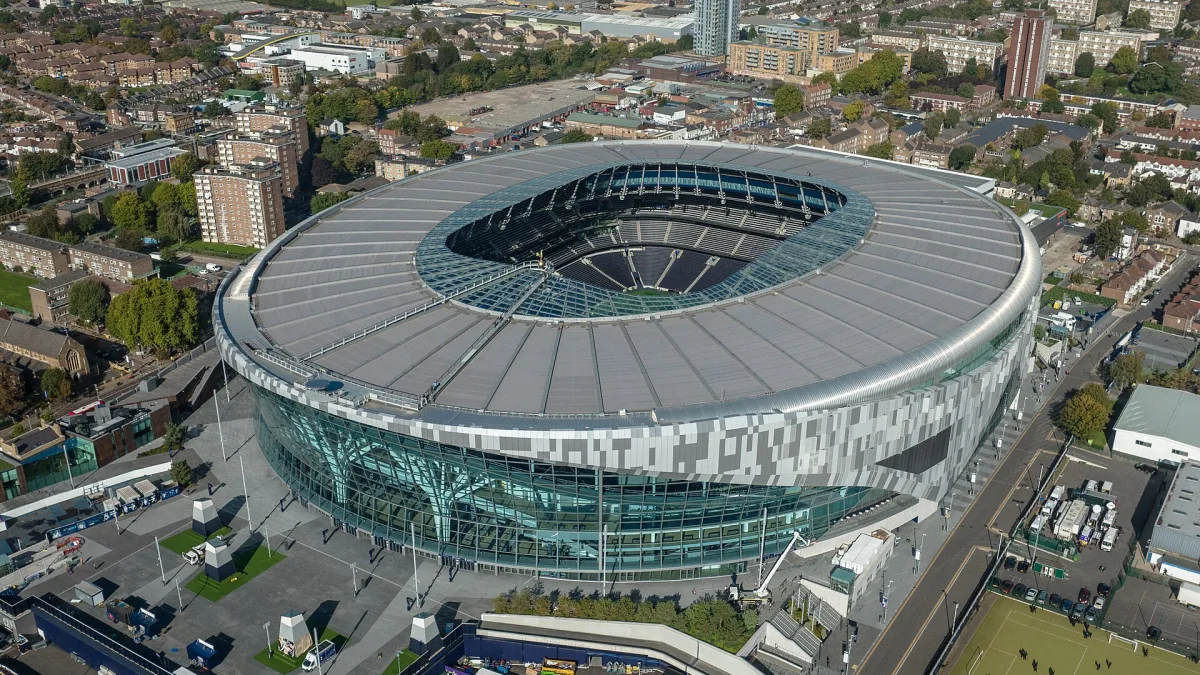
Set that against the only other English stadium with an audited figure of the same kind. Tottenham Hotspur Stadium cost £1,156,740,741, or £18,405 a seat, as we set out in our reading of its accounts. Two north London grounds, thirteen years apart, and the older one cost 42 percent as much per seat.
The useful finding is not that £390m is too low, though it is, by £73,882,000 against the completed building. It is that the two numbers a reader can easily reach are answering different questions and neither is labeled. One understates the finished cost. The other, sitting in the newest filing and easy to quote as the cost of the stadium, is eighteen years of spending past the day it opened.
That is the whole reason this track states a basis next to every figure. A stadium cost without one is a number looking for a question.
Sources
- Arsenal (Emirates Stadium) Limited, company 04106698: the filing history, full accounts for the years ended 31 May 2005, 2006, 2007, 2010, 2015, and 2020 through 2025. The tangible fixed assets note carries the cost series and the depreciation; the creditors and going concern notes carry the secured bank loans, their repayment, the intra-group balance and the parent company’s letter of support.
- e-architect: its Emirates Stadium page, which gives “a construction cost of around £390m”. That is the published figure the filings are tested against.
- Capacity: Arsenal, which gives 60,704 and dates the move to 2006, and the Premier League, which gives the same figure.
Filings at Companies House are served as scanned PDFs with no text layer, so every figure here was read from the scanned page rather than extracted. Arithmetic was checked by confirming that opening balance plus additions and transfers equals the closing balance in each year. Every year closes.
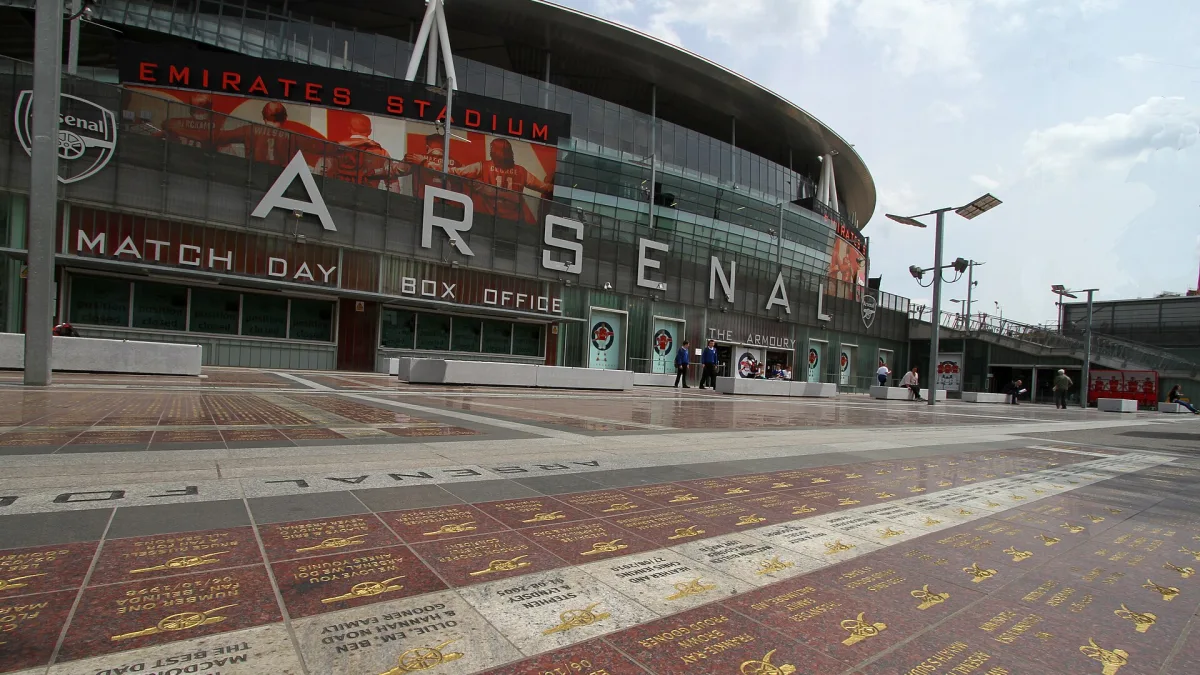
Hero photo: Emirates Stadium by Ronnie Macdonald, CC BY 2.0, via Wikimedia Commons, cropped.
Figures from British statutory accounts are quoted as filed, British spellings included. The per seat figures are our own arithmetic, and both divide a cost from one date by today’s seat count. Where a published figure and a filed figure measure different things, this piece states both and names the document each came from. A cost at completion and a cost carried for nineteen years are two different measurements, and a number without its date is not comparable to anything.