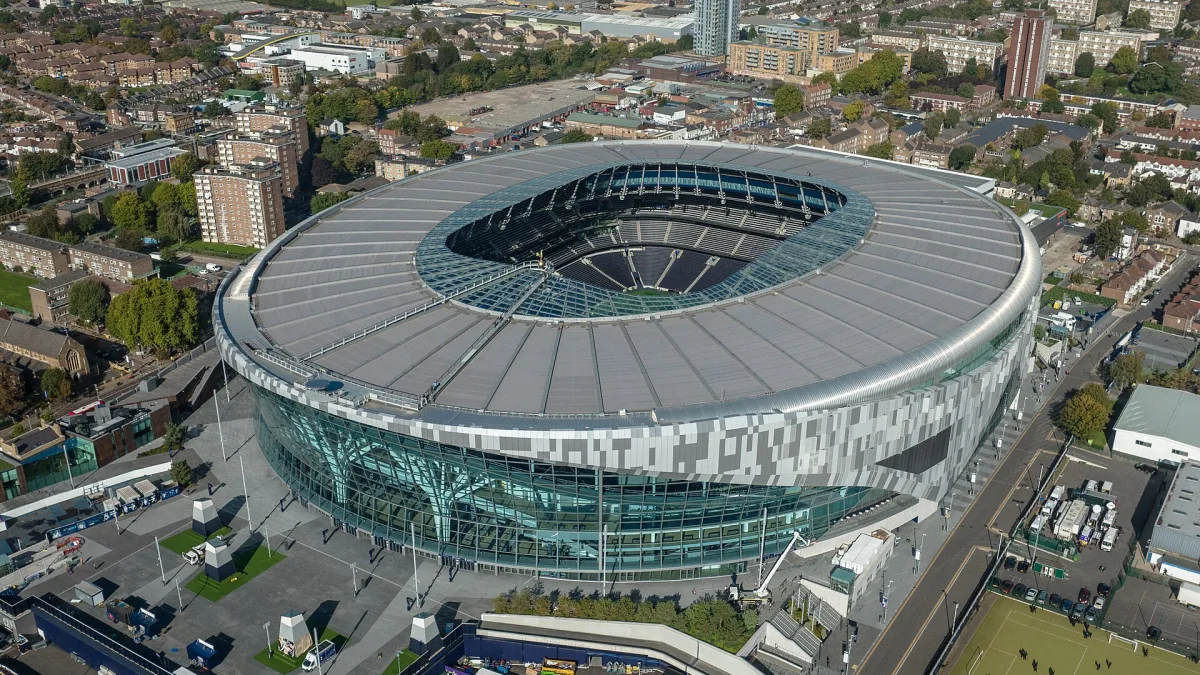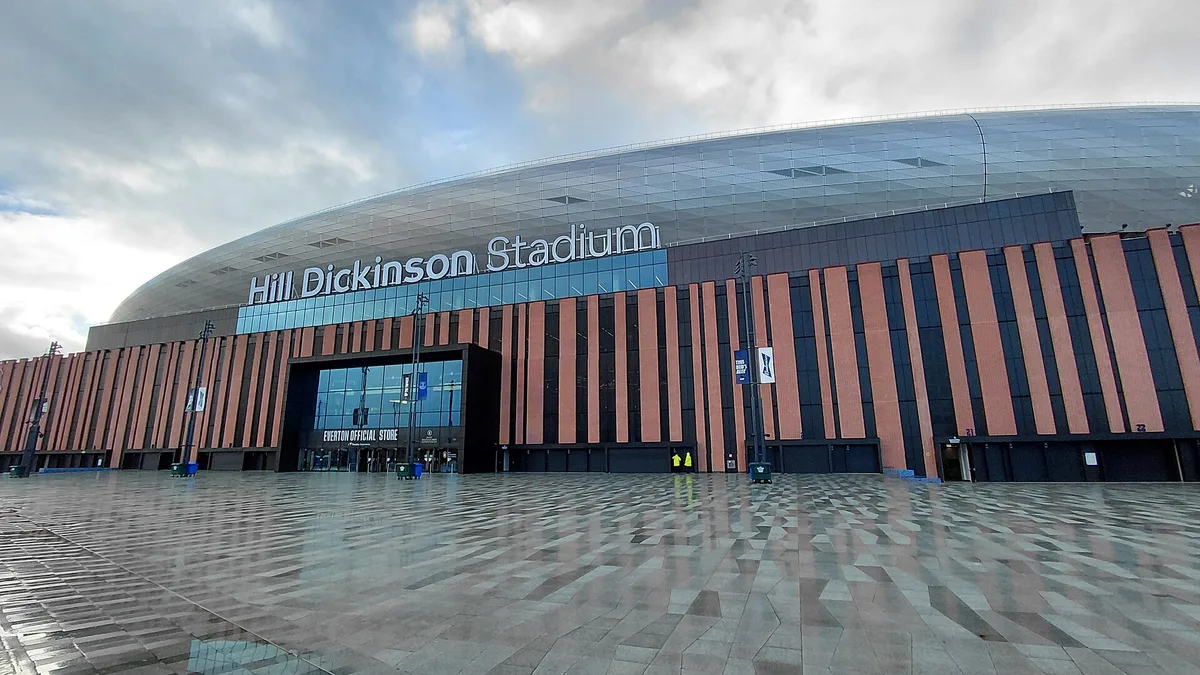
Everton’s new stadium cost £851,237,998.
That figure is in the audited accounts of Everton Stadium Development Limited, company number 10719054, filed at Companies House on 12 April 2026 for the year ended 30 June 2025. It has been public since April. Four different totals circulated while the stadium was going up, and all four were below it.
What everyone else says
The published figures for this building are £500 million, £555 million, “near £750 million” and £800 million.
The £555 million is the one that stuck, and it is the easiest to explain: it is the value of the main construction contract awarded to Laing O’Rourke. That is a real number measuring a real thing, which is what one builder was paid. It is not what the project cost. The £500 million appeared on a project list, and the £750 million and £800 million were reported totals without a document behind either.
Against the audited figure, the £555 million contract is £296 million short and the £500 million is short by £351 million. The highest number anyone published, £800 million, still misses by £51 million.
To be precise about what does exist, because this piece is about measurement: nobody ever announced a total. What was filed is the audited cost of a company’s property, plant and equipment, and that company’s only substantial asset is the stadium. Reading the first as the second is an interpretation, and it is ours.
Where the real number is
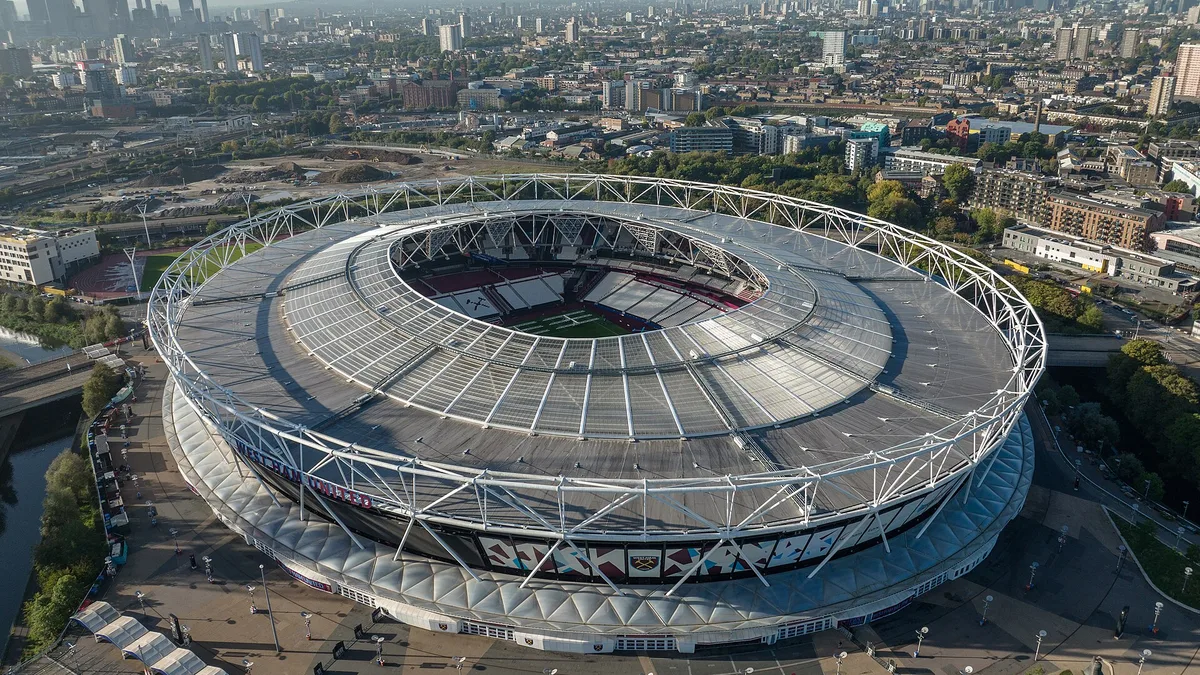
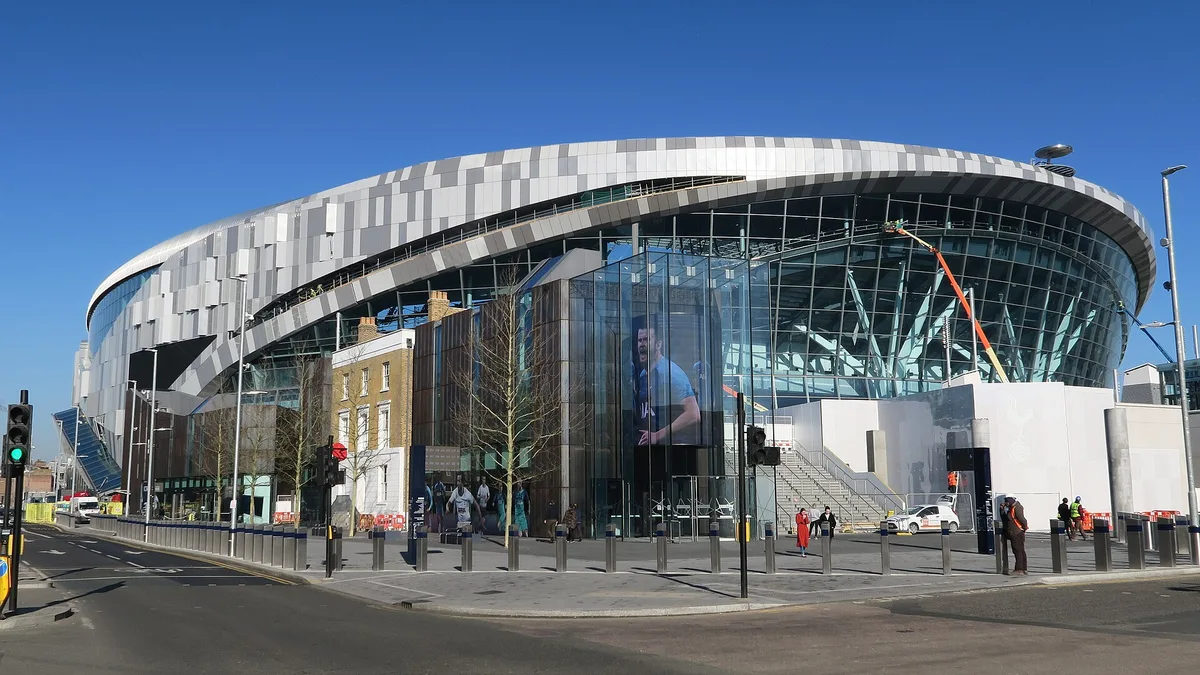
Everton did what Tottenham did, which is what makes this answerable at all. They built the stadium inside its own company.
Everton Stadium Development Limited holds the spend. There is a sibling above it, Everton Stadium Development Holding Company Limited, company number 11727444, and its own group accounts say of it: “Everton Stadium Development Holding Company Limited has no tangible fixed assets as at 30 June 2025 (2024: none).” The subsidiary’s accounts are blunter still: “The cost of the project can be measured reliably and all costs are incurred in Everton Stadium Development Limited.”
One limit on where the series begins. The accounts justify “capitalising project expenditure from the reporting period ending 12 months to 30 June 2021 onwards,” which is four years after the company was incorporated, on 10 April 2017. What the capitalized series measures is the cost of building, which is not necessarily the cost of the project.
The series
Assets under construction, at each year end:
| Year to 30 June | Additions in year | Cost at year end |
|---|---|---|
| 2022 and earlier | not separately stated | 189,093,887 |
| 2023 | 221,514,110 | 410,607,997 |
| 2024 | 319,353,682 | 729,961,679 |
| 2025 | 121,276,319 | 851,237,998 |
Plant and equipment sits apart at £724,712 and was fully written down by June 2025, which is why the balance sheet reads £851,962,710 rather than the construction figure.
Each opening balance equals the prior closing balance, so nothing here has been restated. That matters, because Tottenham’s series was restated in substance by a change of accounting policy that the table did not announce.
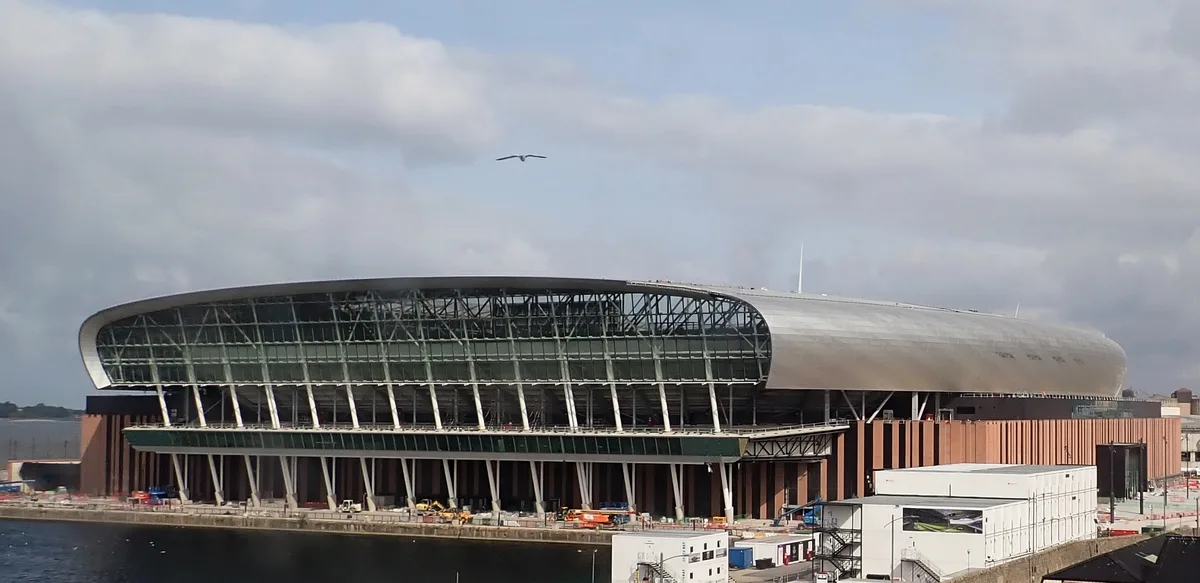
The series is now closed, and the accounts say why. Hill Dickinson Stadium received its safety certificate on 21 August 2025, which management treats as the date “substantially all activities necessary to prepare the stadium for its intended use are complete,” and so “the last date that interest was capitalised to the asset will be 30 June 2025.” After that, interest on all loans goes to the profit and loss account instead of onto the building. The accounts confirm the rest: “Post 30 June 2025, the Stadium has since been completed and is hosting Everton Football Club Men’s First Team matches during the Premier League season 2025/26.”
So £851,237,998 is not a figure climbing toward something. The 2026 accounts, due by 31 March 2027, can add leftover construction. They cannot add any more financing cost.
Two audited costs, five million apart
This part only became visible in April.
The holding company filed small-company accounts for 2024 and group accounts for 2025. Consolidating changes the answer:
| Basis | Assets under construction | Additions in year | Interest capitalized in year |
|---|---|---|---|
| Everton Stadium Development Limited | 851,237,998 | 121,276,319 | 39,279,000 |
| The group, consolidated | 846,138,000 | 116,176,000 | 34,179,000 |
The borrowing-cost line is the explanation, and it is exact to the pound: the group capitalized £5,100,000 less interest than the company did. That single elimination accounts for the whole gap in additions and in the closing balance. The group accounts are presented in thousands, so those two lines agree only to the nearest £1,000, while the interest line agrees precisely.
The group’s own basis of consolidation says why it has to go: “All intra-group transactions, balances, income and expenses are eliminated on consolidation.” The subsidiary capitalized that interest because it genuinely paid it. The group cannot, because looked at whole the money never left the building’s owners. Both numbers are correct and they answer different questions. If the question is what Everton’s stadium company spent, it is £851,237,998. If the question is what the cost was to the group that owns it, net of money moved between its own pockets, it is £846,138,000.
This is the measurement problem in a single building. A stadium cost is not one number waiting to be found. It is a number plus the basis it was computed on, and Crowe U.K. LLP signed both of these.
What the money bought, and what these filings will not say
Almost nothing. Tottenham’s accounts split the spend four ways, between land and buildings, fixtures, interest and work in progress. Everton’s do not split it at all. There is one line, assets under construction, and a note saying it relates to Hill Dickinson Stadium.
Four things these documents therefore cannot settle, stated rather than guessed at:
The structure is not itemized. Nothing here separates the bowl from the fit-out, the dock infill from the roof, or professional fees from construction. The question of why this stadium cost £16,131 a seat where Tottenham’s cost £18,405 cannot be answered from the accounts, and anyone answering it is reasoning from renderings.
The site is missing. The words “leasehold”, “land”, “dock” and “Bramley-Moore” appear nowhere in the 2025 accounts. The only place the site surfaces in any filing is the charge register, which describes the security as “the leasehold property known as land at bramley moore dock”. What the ground cost, and whether any of it is inside the £851 million, is not in these documents.
Total interest is undisclosed. The 2024 and 2025 accounts quantify capitalized borrowing costs at £61,207,000 and £39,279,000. Earlier years confirm interest was being capitalized without saying how much. So at least £100,486,000 of this stadium’s cost is the price of the time it took to build, and the true total is higher by an amount the filings do not give.
The pre-2021 spend is outside the series, for the reason given above.
How it was paid for
At 30 June 2024, a stadium of this size was being funded on money due back within the year. The accounts put it plainly: other loans at that date “included a one-year facility totalling £200,000,000 which was secured by a fixed and floating charge on the assets of the Club.” Not the stadium company’s assets. The club’s.
Then the ownership changed. On 18 December 2024, Everton passed from Farhad Moshiri, through Blue Heaven Holdings Limited, to Roundhouse Capital Holdings Limited, which closed with 99.5 percent of Everton Football Club Company Limited. Two months later the funding was rebuilt:
On 20 February 2025, the Company secured long term financing for Hill Dickinson Stadium. This was achieved with JPMorgan Chase who helped secure a £350m private-placement funding package. The funding is repayable over 30 years, with the final payment on the 30 June 2055, secured over the assets of the stadium and incurs interest at market rates.
One-year money became thirty-year money, and the security moved from the club onto the building. At 30 June 2025 the external debt stands at £340,970,827, of which £4,855,871 falls due within two to five years and £336,114,956 after more than five. Nothing at all falls due within a year, where twelve months earlier the entire £200,000,000 did.
The charge register at Companies House dates the switch independently, and it is worth reading as a sequence:
| Charge created | Status | Secured in favor of |
|---|---|---|
| 19 May 2023, two charges | Satisfied 13 July 2024 | Blythe Capital |
| 18 June, 22 September and 18 December 2024 | All satisfied 26 February 2025 | TDF Capital Management, L.L.C., as security agent |
| 20 February 2025 | Outstanding | Glas Trust Corporation Limited |
| 19 February and 8 August 2025, four charges | Outstanding | Aramark Limited |
Three charges discharged on one day, six days after a new security trustee was registered. The last of the three was created on 18 December 2024, the same day the club changed hands. Who stands behind TDF Capital Management is not something these filings say, and the accounts name only Roundhouse, so this piece will not join them up.
The external debt is not the whole stack. The company also owes £178,700,000 to its own holding company and £20,300,000 to Everton Football Club Company Limited, against nil a year earlier, after what the accounts describe as a comprehensive refinancing exercise undertaken across the group. Add it together and roughly £540 million of debt sits against an £851 million asset. The group’s net assets moved from £49.7 million of net liabilities to £314.8 million positive on the back of it.
What it means
| Stadium | Audited figure | Seats | Per seat |
|---|---|---|---|
| Tottenham Hotspur Stadium | £1,156,740,741 | 62,850 | £18,405 |
| Hill Dickinson Stadium, company basis | £851,237,998 | 52,769 | £16,131 |
| Hill Dickinson Stadium, group basis | £846,138,000 | 52,769 | £16,035 |
England now has two new stadiums with audited costs, and they are £2,274 a seat apart. The published narrative had them much further apart than that, with Everton’s ground filed under roughly half a billion and Tottenham’s under a billion, which reads as one costing half what the other did. On the documents they are within about 12 percent per seat.
The correction runs one way. Everton’s real figure is higher than anything published, not lower, and the reason is the part of a stadium that never appears in a contract award: the fees, the enabling works, the ground it stands on, and £100 million of interest on the money borrowed while it was built. Our guide to new stadiums in English football sets the forward comparison, where Manchester United have put about £2 billion against a 100,000-seat replacement for Old Trafford. That is £20,000 a seat. Measured against £16,131 for a stadium finished in 2025 and £18,405 for one finished in 2019, a figure announced years before anybody breaks ground looks less like an overestimate than it did.
Sources
- Everton Stadium Development Limited, company 10719054: the filing history, accounts for the years ended 30 June 2023, 2024 and 2025. The tangible fixed assets note carries the construction series and the capitalized borrowing costs; the loans note carries the private placement, the maturity profile and the facility it replaced. Also the charge register, ten charges, five outstanding, which dates the refinancing and names the counterparties.
- Everton Stadium Development Holding Company Limited, company 11727444: the filing history. Its accounts for the year ended 30 June 2025 are group accounts, the source for the consolidated figure, the eliminated intercompany interest and the group’s net asset position. Its 2024 filing is small-company accounts, which is why the consolidated figure did not exist until April 2026.
Filings at Companies House are served as scanned PDFs with no text layer, so every figure here was read from the scanned page rather than extracted. Arithmetic was checked by confirming that opening balance plus additions equals the closing balance in each year, and that the company and group figures reconcile through the eliminated interest.
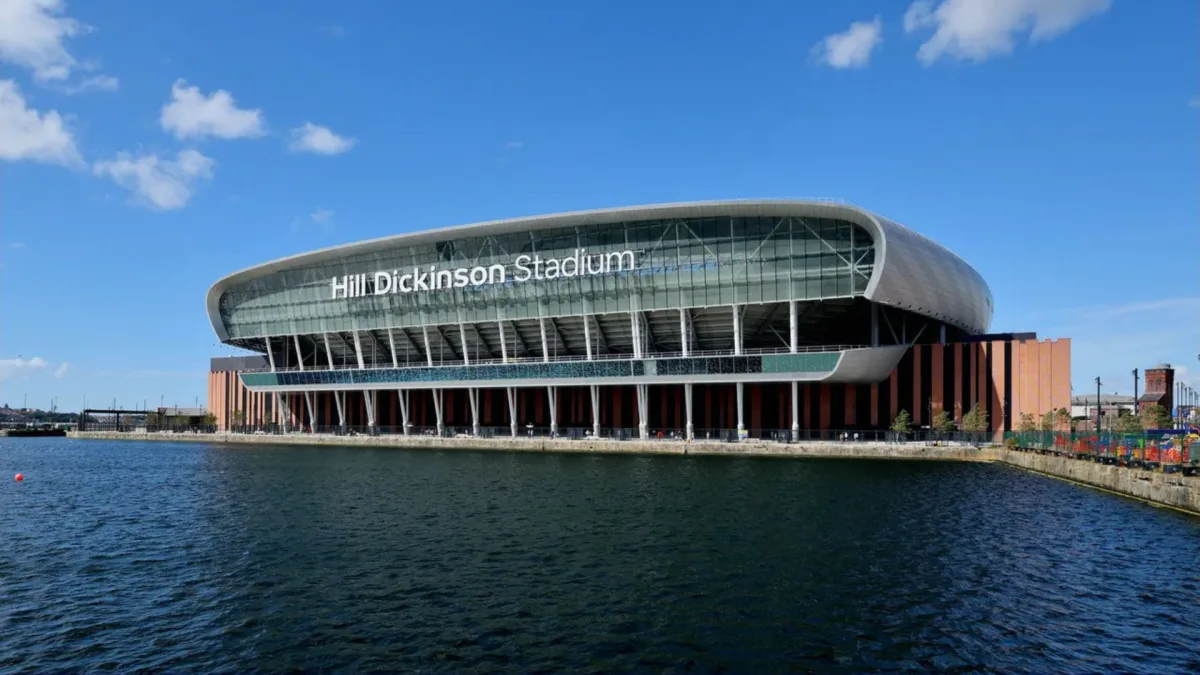
Hero photo: Hill Dickinson Stadium by RoyalBlueStuey, CC0, via Wikimedia Commons, cropped.
Where figures disagree, this piece states the basis rather than picking one. A cost, a contract value, a programme cost and a valuation are four different measurements, and a number without its basis is not comparable to anything.