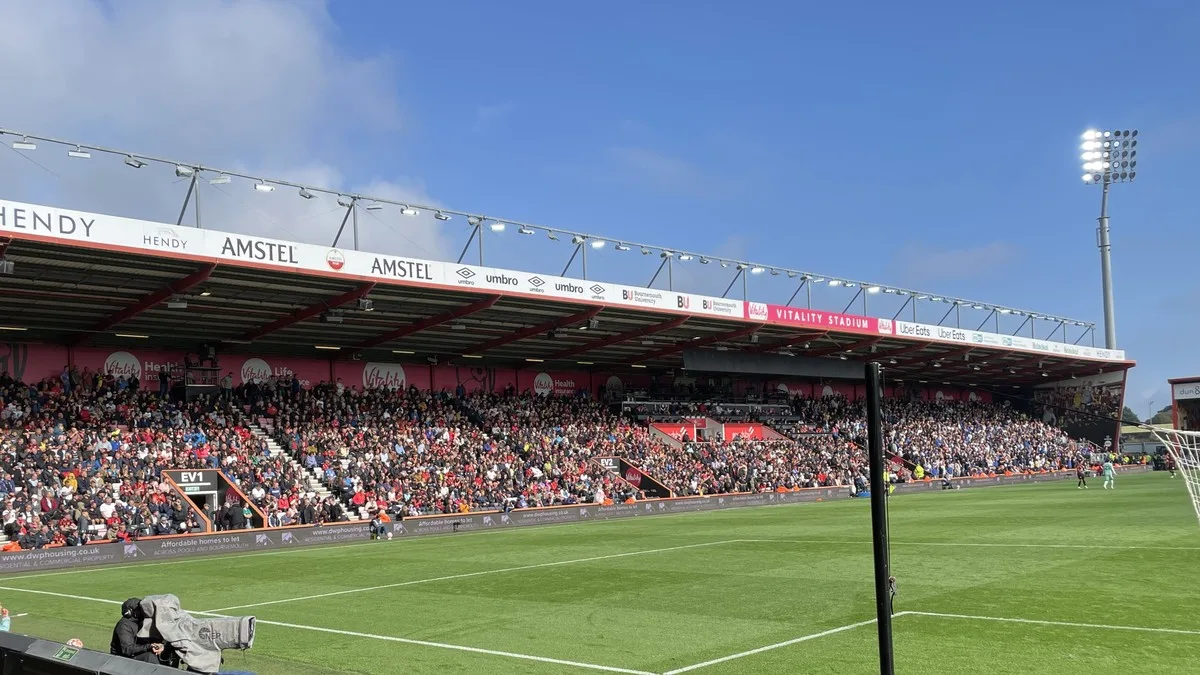
The landlord that sold the Vitality Stadium back to AFC Bournemouth’s owners in 2025 received £9,987,374 for it. No price was published.
The figure is our arithmetic, from two audited numbers in one document. The seller, Bournemouth Stadium LLP, filed its final accounts in June 2026. They show the ground carried at £8,100,000 and a gain of £1,887,374 on selling it. Added together, the two give what the seller received.
The seller’s first accounts record what it paid in 2005-06: £3,840,000. In between, its accounts valued the stadium as low as £3,000,000 and as high as £10,000,000, and never named an outside valuer.
The buyer was Black Knight Stadium Limited, incorporated on 9 April 2025 and controlled by the club’s owner, Black Knight Football Club UK Limited, which Bill Foley controls. The club itself, AFC Bournemouth Limited, did not buy the ground and still leases it.
| Date | Figure | Basis | |
|---|---|---|---|
| Sale price, landlord to club owners | transfer dated 16 May 2025 | £9,987,374 | our arithmetic: audited book value plus audited gain |
| What the landlord paid | 2005-06 | £3,840,000 | audited, cost of the property |
| Landlord’s last valuation before the sale | 30 September 2024 | £8,100,000 | fair value, the owner’s own internal valuation |
| Landlord’s gain on the sale | period to 31 January 2026 | £1,887,374 | audited |
What everyone else says
The deal was announced on 25 April 2025. Reuters, carried by ESPN, reported that Bournemouth “have agreed a deal to buy back the Vitality Stadium”. Reuters said the club had sold the stadium to Structadene, a London property company, in 2005 and leased it back “to help pay off debts”. The report gave no price.
Inside World Football, on 15 May 2025, put the 2005 sale at a reported £3.5 million and added: “No value has been given for the buy back.”
Cannae Holdings, a US-listed company with a stake in Black Knight Football Club, files shareholder letters with the US Securities and Exchange Commission (SEC). Its letter for the second quarter of 2025 says: “BKFC completed a $130 Million capital raise earlier in the year and also announced that it acquired Vitality Stadium.” We searched every SEC filing that names “Vitality Stadium”, 33 documents. None gives a price.
The club, its owner and its owner’s US investor all announced the deal. None said what it cost.
Where the real number is
Bournemouth Stadium LLP (OC316302) was formed on 22 November 2005 and was the ground’s landlord for twenty years. An LLP, or limited liability partnership, is a partnership whose members have limited liability and which files audited accounts like a company. Its two members were David Pearlman and Searchgrade Limited, and its ultimate parent is Structadene Limited.
Its last accounts, audited by UHY Hacker Young and approved on 8 June 2026, cover the 16 months from 1 October 2024 to 31 January 2026, a period extended “to facilitate the orderly wind-down of the limited liability partnership”.
The profit and loss account shows a “Gain on disposal of property” of £1,887,374, listed in note 3 as an exceptional item, a one-off. The balance sheet shows investment property (property held to earn rent or to rise in value) at nil on 31 January 2026, against £8,100,000 on 30 September 2024. No change in value was booked in the 16 months before the sale, so the ground left the books at £8,100,000.
A gain on disposal is what a seller received above the value the asset was carried at.
| From the LLP’s accounts to 31 January 2026 | £ |
|---|---|
| Carried at, 30 September 2024 | 8,100,000 |
| Gain on disposal | 1,887,374 |
| Sale price, by our arithmetic | 9,987,374 |
The accounts never state the price, the buyer or the date of the sale. No document contains the sentence “the Vitality Stadium was sold for £9,987,374”. What was filed is the value the ground was carried at and the gain made on selling it. Together they give what the seller received, after any selling costs set against the gain; the note does not show the gross price or the costs separately. Unlike a sale inside one group, this one was between two unrelated owners: Structadene on one side, the club’s owners on the other.
The date comes from the buyer. On 20 February 2026 Black Knight Stadium Limited, the stadium company, granted a charge (a mortgage, registered at Companies House) over the ground. The document lists the freehold and a leasehold title, with Bournemouth Stadium LLP still shown as the owner, and a note:
a transfer to Black Knight Stadium Limited dated 16 May 2025 is pending registration at the Land Registry
Nine months on, by our arithmetic from the two dates, the Land Registry had still not registered the transfer.
The price was 23.3% above the landlord’s own valuation of September 2024 (our arithmetic: £1,887,374 over £8,100,000).
The series
The LLP’s investment property note values the ground at each 30 September year end from 2006 to 2024.
| Year end | Value in the accounts | Change | Who valued it |
|---|---|---|---|
| 2006 | £3,000,000 | (£840,000) from cost | the members |
| 2007 | £3,500,000 | +£500,000 | the members |
| 2008 | £3,500,000 | nil | the members |
| 2009 | £3,500,000 | nil | the members |
| 2010 | £3,750,000 | +£250,000 | the members |
| 2011 | £5,000,000 | +£1,250,000 | the members |
| 2012 | £6,000,000 | +£1,000,000 | the members |
| 2013 | £6,000,000 | nil | the members |
| 2014 | £6,000,000 | nil | the members |
| 2015 | £10,000,000 | +£4,000,000 | the members |
| 2016 | £10,000,000 | nil | the members |
| 2017 | £10,000,000 | nil | the members |
| 2018 | £8,680,000 | (£1,320,000) | the members |
| 2019 | £7,300,000 | (£1,380,000) | the members |
| 2020 | £7,000,000 | (£300,000) | internal specialists |
| 2021 | £6,750,000 | (£250,000) | internal specialists |
| 2022 | £5,650,000 | (£1,100,000) | internal specialists |
| 2023 | £5,650,000 | nil | internal specialists |
| 2024 | £8,100,000 | +£2,450,000 | internal specialists |
| 2026 | nil | sold |
The first accounts, for 22 November 2005 to 30 September 2006, show investment property “Additions” of £3,840,000, written down by £840,000 to £3,000,000 at the first year end. The landlord’s first valuation was lower than what it had just paid. The same accounts show £3,521,774 owed to “parent and fellow subsidiary undertakings”: the group funded the purchase.
Until 2019 the members valued the ground themselves. The accounts for 2017 and 2018 give the reason:
Given the property market knowledge and expertise of the members, no third party valuation has been considered necessary unless required by the lenders.
From 2020 the valuer is “internal specialists”. At no point do the accounts name an outside valuer.
The peak, £10,000,000, was set in 2015 and held for three years. The value was then cut in five steps to £5,650,000 by 2022 and raised to £8,100,000 in 2024.
Two comparisons, both our arithmetic. The sale price came in £12,626 below the peak valuation. It is 2.6 times the £3,840,000 cost, or £6,147,374 more.
What the landlord collected
Every set of accounts reports the LLP’s turnover, meaning its income. From 2017 the accounts define it as “rents, insurance receivable and service charges receivable”, so the later years are not pure rent. Before that it was rent, so the total below is income from the ground, not rent alone.
The table shows selected years; the last row adds up all twenty filings.
| Year to 30 September | Income (£) |
|---|---|
| 2006 (ten months) | 260,450 |
| 2007 | 293,463 |
| 2012 | 343,540 |
| 2013 | 492,133 |
| 2014 | 376,485 |
| 2017 | 508,771 |
| 2021 | 622,475 |
| 2024 | 651,827 |
| 16 months to 31 January 2026 | 402,833 |
| All twenty filings, by our arithmetic | 9,042,753 |
Income from the ground comes to £9,042,753 across the twenty filings, against £9,987,374 for the sale: about as much from the club’s occupation as from selling the ground. The price was 15.3 years of the last full year’s income of £651,827, also our arithmetic.
The final accounts record the wind-down. The members’ interests, meaning what the partnership owes its members, go to nil: £7,074,628 of profits divided among the members and £3,258,279 of capital repaid. Our arithmetic puts the total paid out to the members at £10,332,907.
The accounts for most years, including every year from 2013 to 2024, also record the ground as security for Structadene group borrowing. Companies House shows ten charges registered against the LLP over the years, all now satisfied, meaning released. The last, to Lloyds Bank, was created on 24 September 2024, less than eight months before the transfer date by our arithmetic, and satisfied on 26 June 2026.
How the buyer paid for it
No filing says how the stadium company paid.
The charge of 20 February 2026 secures, among other things, “the term facility agreement dated 13 December 2024”, a loan agreement with AFC Bournemouth Limited as borrower and Goldman Sachs International as arranger. Both the club and the stadium company signed the charge.
The club’s accounts for the year to 30 June 2025, filed on 29 March 2026, show £50,000,000 drawn on the facility, “charged interest at a rate of 7.65%”. The money was used “for trading purposes, to repay an existing bank loan of £29,411,000 and to repay £6,400,000 of shareholder loans”.
The same 57-page accounts do not state the stadium price or say whether any of the facility paid for the ground. The documents show only that in February 2026 the ground was pledged as security for the club’s Goldman Sachs facility. Cannae’s letter records a $130 million capital raise in 2025, and no filing links that to the price either.
The club still pays rent, now to a sister company: its accounts call the stadium company “a company with the same immediate parent company”. The lease note ties the club’s lease liability to “the leasing of Vitality Stadium”, and at 30 June 2025 the club owed Black Knight Stadium Limited £228,000 “relating to the stadium lease”. Only the landlord changed, from Structadene to a company owned by the club’s own parent.
What the figure is, and what it is not
£9,987,374 is a sale price between unrelated parties. £3,840,000 is what the landlord recorded as the cost of buying the ground. Every figure between them is the owner’s own valuation. None of them is what the ground cost to build, and none says what rebuilding or expanding it will cost.
The Premier League Handbook gives the “Ground Capacity at start of the Season” as 11,307 for both 2024/25, the season of the sale, and 2025/26. That is the smallest ground in the division; the 2026/27 Handbook gives 12,357 after new corner seating. Expansion is why the owners wanted the ground: Cannae’s letter of 9 November 2026 says the club expects 17,600 seats by next season. At 11,307 seats the price is £883 a seat, our arithmetic.
| Figure | Basis | |
|---|---|---|
| Sale price, 2025 | £9,987,374 | our arithmetic, from two audited figures |
| Sale price per seat, at 11,307 seats | £883 | our arithmetic |
| Cost to the landlord, 2005-06 | £3,840,000 | audited |
| Valuations, 2006 to 2024 | £3,000,000 to £10,000,000 | the owner’s own, no outside valuer named |
That per-seat figure cannot be compared with the build costs we have read from filings. Those measure the cost of building new. This is a price paid for an existing ground, the club’s home since 1910.
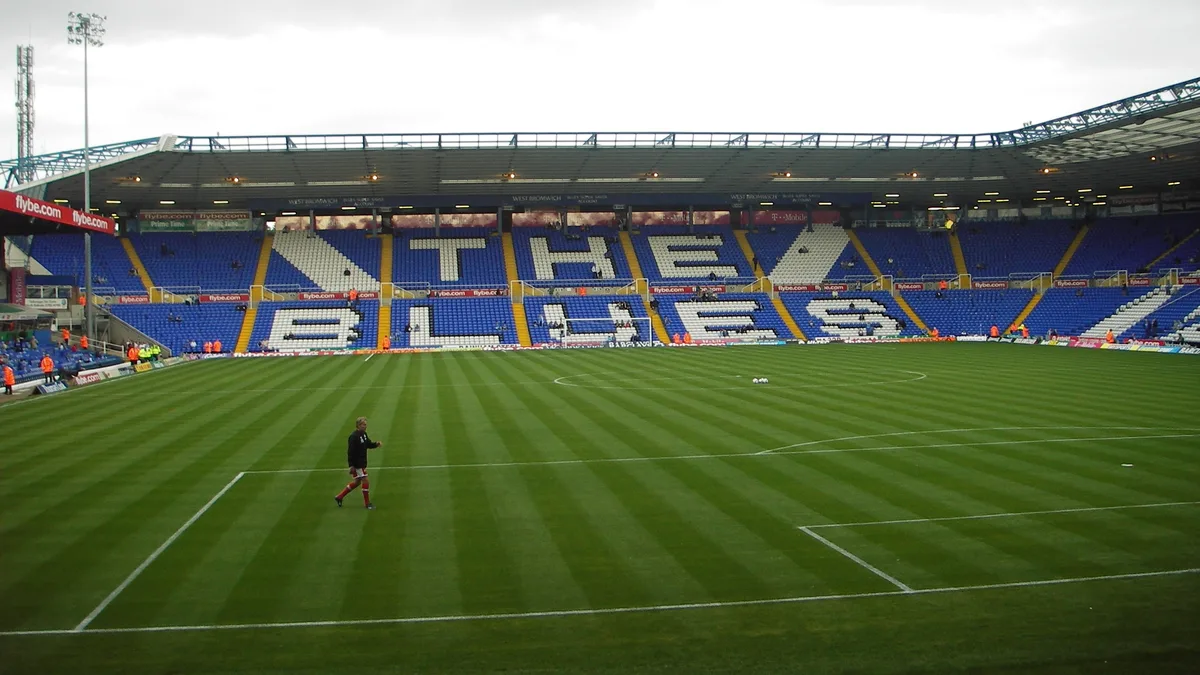
The only other ground sale in the series, St Andrew’s, which Birmingham City sold to a sister company, was priced inside one group.
What these filings will not say
- The gross price, and the selling costs set against the gain.
- What the £3,840,000 of 2005 “additions” was made of: the price agreed with the club, plus whatever taxes and fees. Reports at the time put the price at £3.5 million; the filing gives £3,840,000 and no breakdown.
- The rent the club now pays its sister company, and the length of the lease.
- What the stadium company recorded as its cost. Its first accounts, due by 9 January 2027, are the next document that could show it.
- Whether any of the Goldman Sachs money paid for the ground.
- Why the Land Registry had still not registered the transfer nine months after it was signed.
Sources
- Bournemouth Stadium LLP, OC316302: the filing history, accounts from 2006 to the 16 months to 31 January 2026, and the charges register. The investment property note carries the value series; the final accounts carry the gain on disposal.
- Black Knight Stadium Limited, 16375689: the filing history, including the charge of 20 February 2026 that dates the transfer and names the Goldman Sachs facility.
- AFC Bournemouth Limited, 06632170: the filing history, accounts for the year to 30 June 2025, for the facility, the stadium lease and the balances with the stadium company.
- Cannae Holdings: second-quarter 2025 shareholder letter and third-quarter 2026 shareholder letter, filed with the SEC, for the capital raise and the expansion.
- The announcement: Reuters via ESPN, 25 April 2025 and Inside World Football, 15 May 2025, the published accounts of the deal the filings are tested against.
- Capacity: the Premier League Handbook for 2025/26, as filed with the SEC, “Ground Capacity at start of the Season”.
Hero photo: the Vitality Stadium’s East Stand by Mr Ignavy, CC BY-SA 2.0, via Wikimedia Commons, cropped.
Filings at Companies House are served as scanned PDFs with no text layer, so every figure here was read from the scanned page rather than extracted, and checked by making each year’s opening and closing values agree. The SEC filings are text documents and are quoted as published.
Figures from British statutory accounts are quoted as filed, British spellings included. The sale price, the per-seat figure and the differences between figures are our own arithmetic. Where a published figure and a filed figure measure different things, this piece states both and names the document each came from.