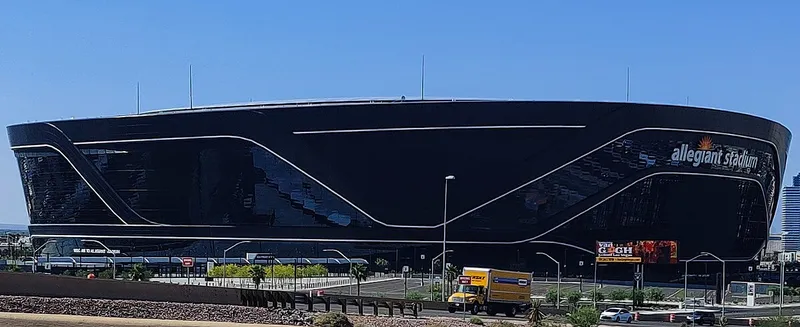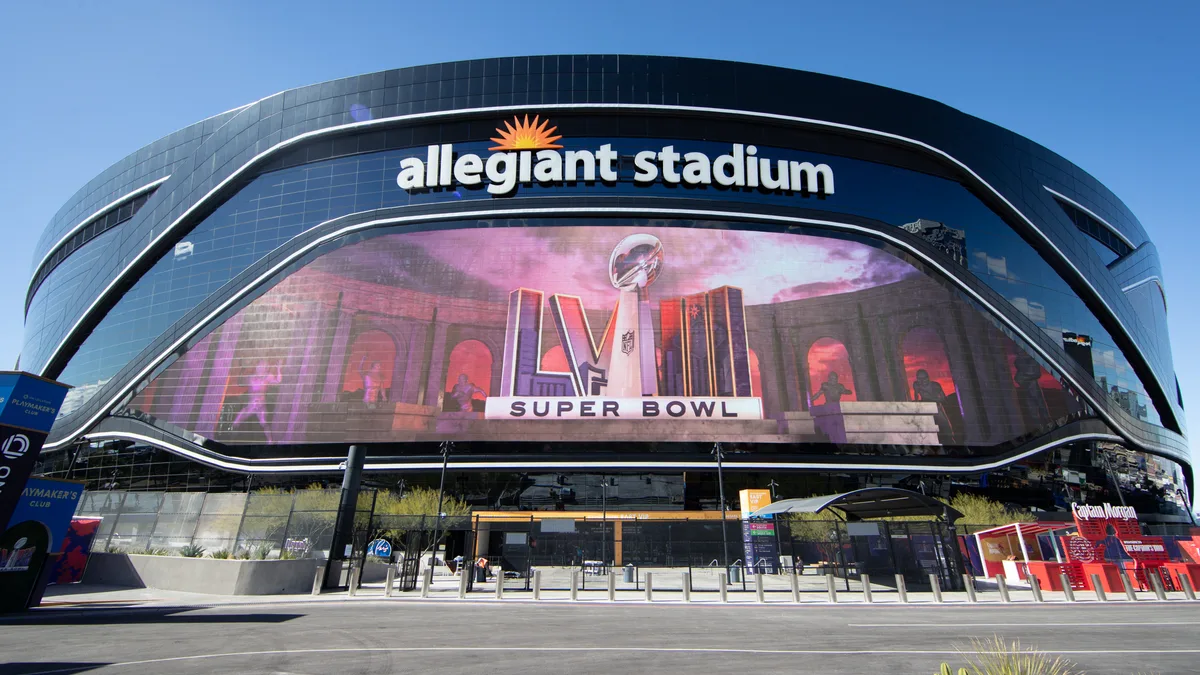
By the summer of 2022, Las Vegas had already booked the calendar most cities only dream about: Super Bowl LVIII, a Final Four, two WrestleManias, a slate of NFL Draft events. Allegiant Stadium was the centerpiece. Then FIFA came calling, took a look at the venue, and walked away. Steve Hill, chairman of the Las Vegas Stadium Authority Board (the public body overseeing Allegiant), said the real reason out loud:
“The Allegiant Stadium playing field that sits on a tray in the venue is not wide enough to accommodate the World Cup soccer games.”
That was it. Vegas was out. Not for capacity, not for cost, not for location. For roughly thirty feet of grass.
9.6 meters short: how much grass Allegiant Stadium’s field tray would have to gain on each sideline to meet FIFA’s run-off space requirements. That’s the entire story.
What FIFA was looking at when they said no
Allegiant Stadium has 65,000 seats, expandable to 71,835 for big events. It sits on the Strip. It opened in July 2020 at a final cost of $1.9 billion (Wikipedia: Allegiant Stadium). On paper it should have been an obvious yes.
FIFA didn’t say no to any of that. They said no to the architecture.
The stadium has a feature you don’t see at most NFL venues: a 9,500-ton “field tray” that holds natural Bermuda grass. The tray sits on wheels. Between events, it rolls out of the stadium and parks in the desert sun so the grass can grow under real light. When the Raiders need it, it slides back inside.
It’s a genuine engineering trick. Real grass can’t survive inside a domed stadium (no sun, bad ventilation, dies in weeks). The first stadium to solve this with a rolling-pitch tray was GelreDome in Arnhem, Netherlands, which opened in March 1998 (Guinness World Records). State Farm Stadium in Glendale brought the idea to North America in 2006. Allegiant scaled it up. The whole system is one of the more interesting structural-engineering choices in modern North American stadium design.
But it was designed for one specific job: NFL football. An NFL field is 109.7 meters long by 48.8 meters wide. The tray was built around those dimensions plus a small fan-zone buffer. A FIFA tournament pitch is 105 by 68 meters. The length is fine. The width isn’t.
You need 9.6 meters of extra grass on each sideline. The tray, as built, doesn’t hold it.
Why this didn’t kill Allegiant’s soccer career
Worth a fact that confuses people: Allegiant has hosted major international soccer. Copa América 2024 played three matches at the venue: Ecuador vs Jamaica (Group B) on June 26, Brazil vs Paraguay (Group C) on June 28, and a quarterfinal on July 6. The matches went fine. The pitch worked.
So how is the venue good enough for CONMEBOL but not for FIFA? Different rule books.
CONMEBOL’s tournament pitch standards allow more flexibility on lateral clearance, the run-off space along the touchlines reserved for photographers, security, and broadcast equipment. FIFA World Cup tournament rules are stricter. The actual playing surface fits a soccer pitch either way. What FIFA wouldn’t accept was the gap between the touchline and the front-row seats.
That’s the part Las Vegas couldn’t fix without nine months of construction.
Nine months of construction Allegiant couldn’t afford
The modification plan was specific. Remove sections of the lower-bowl seating. Grow additional Bermuda grass on the sides outside the existing tray. Reconfigure the broadcast infrastructure. Then tear it all out after the tournament and put the bowl back together. FIFA’s tournament requirements go beyond the pitch dimensions too: every host has to provide free fan zones for 20,000 people, high-end training facilities for the visiting national teams, and substantial infrastructure investments around the venue.
Estimated time: nine months. Total cost, per statements from Las Vegas Stadium Authority officials, “could have exceeded $100 million.”
Both numbers were dealbreakers.
Start with the timeline. FIFA’s site selection happened in June 2022. The Vegas modification would have needed to start in late 2024 to be ready for June 2026 kickoff. That window included Super Bowl LVIII (February 2024), the 2024 NFL season, WrestleMania 41 (April 2025), the 2025 NFL season, and ongoing Raiders home games. There was no nine-month gap in Allegiant’s calendar where the bowl could be torn apart. Closing the venue for that long meant cancelling guaranteed revenue events to chase one tournament.
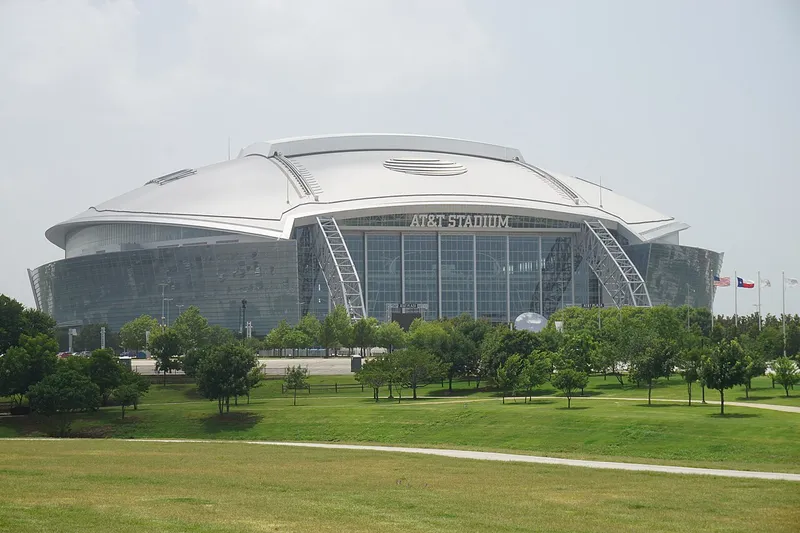
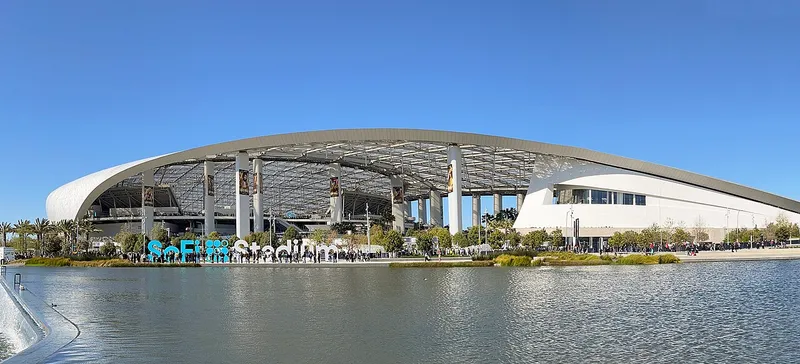
Now the cost. $100+ million is real money even before you factor in lost event revenue. Compare it to SoFi Stadium, Mercedes-Benz Stadium, or AT&T Stadium, where the FIFA-compliance work cost a fraction of that. Those venues either already met the spec or could be modified at the seating level without touching the playing surface itself. Allegiant’s grass-tray architecture meant the modification had to happen at the tray level, which is harder, slower, and more expensive. The lack of clarity over who would actually pay for it didn’t help. Vegas eventually withdrew from the host selection process rather than continue chasing modifications nobody had budgeted for.
FIFA’s math was simple. Sixteen World Cup 2026 host cities were going to be selected from a candidate pool of 23 across three countries (17 American, 3 Canadian, 3 Mexican). Eleven American cities made it. Six didn’t.
$100+ million: total cost, per Las Vegas officials, that FIFA-compliance modifications at Allegiant could have exceeded. Vegas withdrew rather than commit to figures that high without clear cost-sharing.
What the city lost
The financial number is real. Boston Consulting Group’s pre-tournament estimates put each host city’s incremental economic activity at $160-620 million, with a net benefit of $90-480 million after accounting for public costs (U.S. Soccer / BCG, 2018). For a city like Vegas, with the existing hotel inventory, transit, restaurants, and tourist machinery already built to absorb a surge, the upper end of that range was plausible.
Call it $300-500 million in foregone activity. Gone before the first kick.
That’s hotel bookings, restaurant covers, casino floor traffic, transportation, ticketing fees, ancillary tourism, the post-match bar runs. None of it shows up if there’s no match.
The other cost is harder to put a number on. Las Vegas has spent twenty years building a brand around being the major-event capital of North America. Super Bowls, Final Fours, NHL All-Star Games, Formula 1 night races, championship boxing. The pitch has worked for almost every sport. The World Cup snub is the rare exception, and it’s an exception that comes with a follow-up problem: thousands of tourists arriving in Las Vegas for World Cup-adjacent activities (gambling, vacations, viewing parties) will need an explanation for why the actual matches are happening in Los Angeles or San Francisco. That’s an awkward conversation for a tourism board.
The Sphere draw that almost happened
There’s a near-miss worth knowing about.
For most of 2025, multiple outlets reported that the FIFA World Cup 2026 final draw was likely to be held at the Sphere, the 17,500-seat LED-screen venue that opened in 2023. ESPN, Al Jazeera, CBS Sports all reported it as the leading candidate (Al Jazeera, July 2025). Vegas had pitched the Sphere as a spectacular venue for the most-watched non-match event of the tournament cycle, and the city’s existing infrastructure made the logistics easy.
It would’ve been a consolation prize. Not matches, but a major FIFA-branded event with global broadcast reach.
Then in late 2025, FIFA picked the Kennedy Center in Washington, DC. Vegas was reportedly the runner-up. The final draw happened on December 5, 2025, at a venue 2,400 miles east of the Strip.
So in less than four years, Las Vegas went from being a candidate to host World Cup matches, to a candidate to host the draw, to neither. The tourism authority has been measured publicly about both losses. Internally, losing back-to-back FIFA-branded events landed harder than the public statements suggested.
The other cities FIFA passed on
For context, six American cities bid and didn’t get selected. Vegas wasn’t alone:
- Cincinnati
- Denver
- Nashville
- Orlando
- Washington DC / Baltimore
- Las Vegas
Each had its own reason. Some were venue-specific (capacity, surface, scheduled renovations). Some were geographic (FIFA wanted regional diversity without two hosts in the same metro area). None had Allegiant’s specific architectural problem with the field tray. Vegas was the only rejection where the answer came down to a piece of construction equipment.
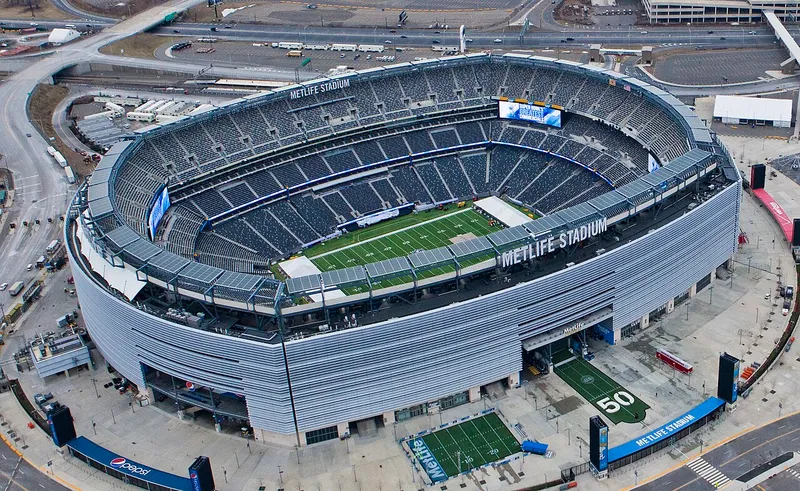
The 11 American cities that did get selected for world cup 2026 stadiums hosting: New York/New Jersey (MetLife Stadium), Dallas (AT&T Stadium), Los Angeles (SoFi Stadium), Kansas City (Arrowhead Stadium), Houston (NRG Stadium), Philadelphia (Lincoln Financial Field), Atlanta (Mercedes-Benz Stadium), San Francisco Bay Area (Levi’s Stadium), Seattle (Lumen Field), Boston (Gillette Stadium), and Miami (Hard Rock Stadium).
Will Las Vegas ever host?
The honest answer: not in this version of Allegiant.
The next World Cup is 2030 (Spain, Portugal, Morocco, with single matches in Argentina, Uruguay, and Paraguay as a tribute to the 1930 tournament). The 2034 World Cup is in Saudi Arabia. Neither cycle includes a U.S. host.
So the earliest Allegiant could be in play is 2038, which has no host yet. By then the stadium will be 18 years old and probably due for a renovation cycle. If the field tray gets replaced or expanded as part of that work, FIFA compliance becomes possible. Industry estimates for that kind of major retrofit run $80-150 million, which is a lot for a venue that’s still relatively new.
The other possibility: a new venue. The Las Vegas Athletics ballpark is currently under construction nearby. Las Vegas has also been linked to a potential new NBA arena. If any major new venue gets built between now and the late 2030s and includes FIFA-spec dimensions from day one, that’s the path to a Vegas World Cup match.
In the meantime, the city has the Super Bowl coming in 2029, the Final Four already booked for 2028, and a calendar that fills itself a year out. Allegiant Stadium isn’t hurting for events. The World Cup is just the one entry that wasn’t going to fit, because somebody made a decision in 2017 about how to grow grass in the desert, and that decision happened to be the wrong shape for a sport that hadn’t been part of the brief.
2038 at the earliest: realistic window for Las Vegas hosting any FIFA World Cup match, contingent on Allegiant being modified or a new venue being designed with FIFA dimensions from day one.
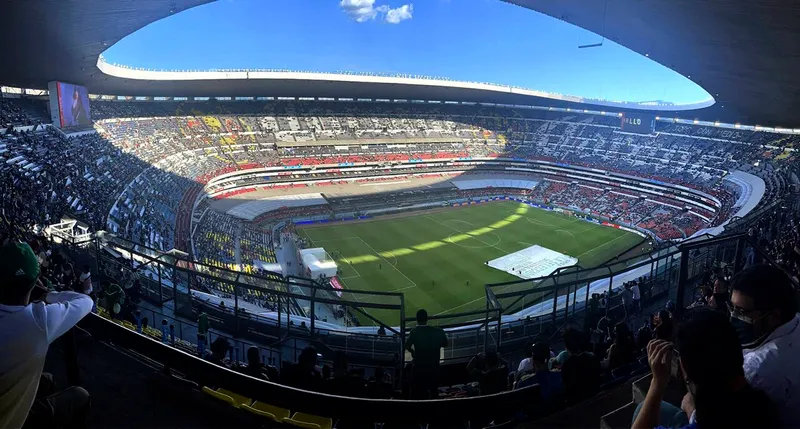
For the 16 World Cup 2026 host stadiums that did make it, see the tournament hub. For the Estadio Azteca opener on June 11 and the MetLife Stadium final on July 19, see the venue pages.
Sources
- LVSportsBiz: Las Vegas Misses Out on Hosting 2026 World Cup Because Allegiant Stadium Field Tray Is Too Narrow (October 2022; Steve Hill quotes)
- Las Vegas Stadium Authority statements (Vegas withdrawal, $100M+ modification cost estimate)
- Wikipedia: Allegiant Stadium (capacity, opening date, $1.9B cost, 9,500-ton field tray specifications, major events hosted)
- Wikipedia: 2026 FIFA World Cup (host stadium selection)
- Wikipedia: United 2026 FIFA World Cup bid (23 candidate cities, 17 US + 3 Canadian + 3 Mexican)
- Allegiant Stadium official site: Copa América 2024 matches at Allegiant (Ecuador-Jamaica June 26, Brazil-Paraguay June 28, quarterfinal July 6)
- WrestleMania 41 at Allegiant Stadium (April 19-20, 2025)
- Guinness World Records: First retractable grass pitch (GelreDome 1998 as world first)
- Al Jazeera, July 2025 and CBS Sports: pre-decision reporting on the Sphere as candidate venue for the WC2026 final draw
- FIFA: Football Stadiums Technical Recommendations and Requirements (5th edition; pitch dimensions and run-off space requirements)
- U.S. Soccer / Boston Consulting Group, February 2018: host city economic impact estimate ($160-620M gross / $90-480M net per host city)
- Hero image: “Allegiant Stadium Street View on Super Bowl LVIII” by Jerry Glaser, U.S. Customs and Border Protection (public domain, February 2024) via Wikimedia Commons