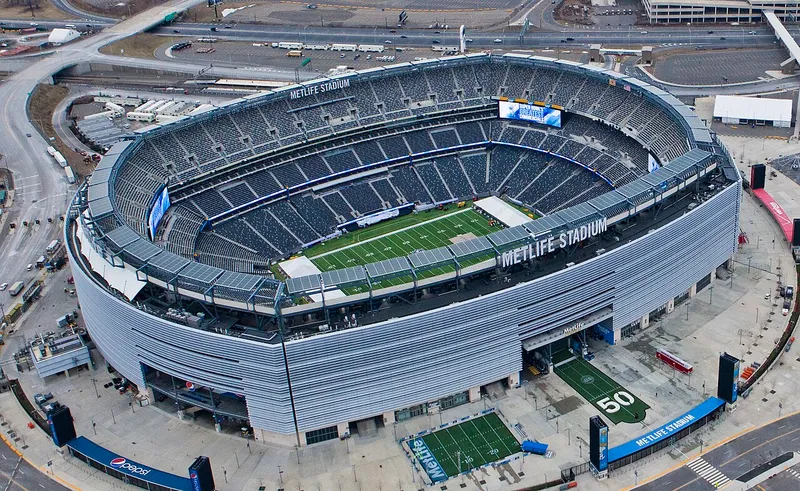
The 2026 World Cup final will be played at MetLife Stadium on July 19. Within a couple of weeks, the grass it’s played on will be gone, peeled up and hauled away, and the New York Giants and Jets will be back on artificial turf getting ready for the NFL season. That quiet reversal, repeated at stadium after stadium, is the part of the World Cup nobody buys a ticket for. It’s also where the real question of legacy gets answered.
Because the story of a host stadium isn’t the month it spends on television. It’s the decades after. Brazil, South Africa, and Qatar all learned that the hard way, building glittering venues that turned into money pits once the circus left town. The 2026 World Cup is set up to avoid that trap almost entirely, and the reason is hiding in plain sight: nobody built a new stadium for it.
So here’s what actually happens to the 16 venues once the tournament ends, what stays, what comes up, and why these grounds won’t end up as parking lots.
What happens to the 2026 stadiums after July 19, at a glance:
- The grass comes up. Venues that laid temporary natural grass over artificial turf revert to turf, and the NFL, MLS, and Liga MX seasons resume within weeks.
- The seats mostly come out, not in. Only Toronto’s BMO Field meaningfully added seating; most venues run at reduced FIFA capacity and simply reopen fully afterward.
- Some upgrades stay: Estadio Azteca’s renovation, BMO Field’s improvements, new video boards and lighting, and permanent transit projects.
- Low white-elephant risk: all 16 are existing venues with permanent tenants, and zero were purpose-built, unlike Brazil, South Africa, and Qatar.
- The open debate: FIFA projects a huge economic impact; independent economists call the benefit to host cities small.
Zero. The number of stadiums built from scratch for the 2026 World Cup, across all 16 venues.
The grass comes up first
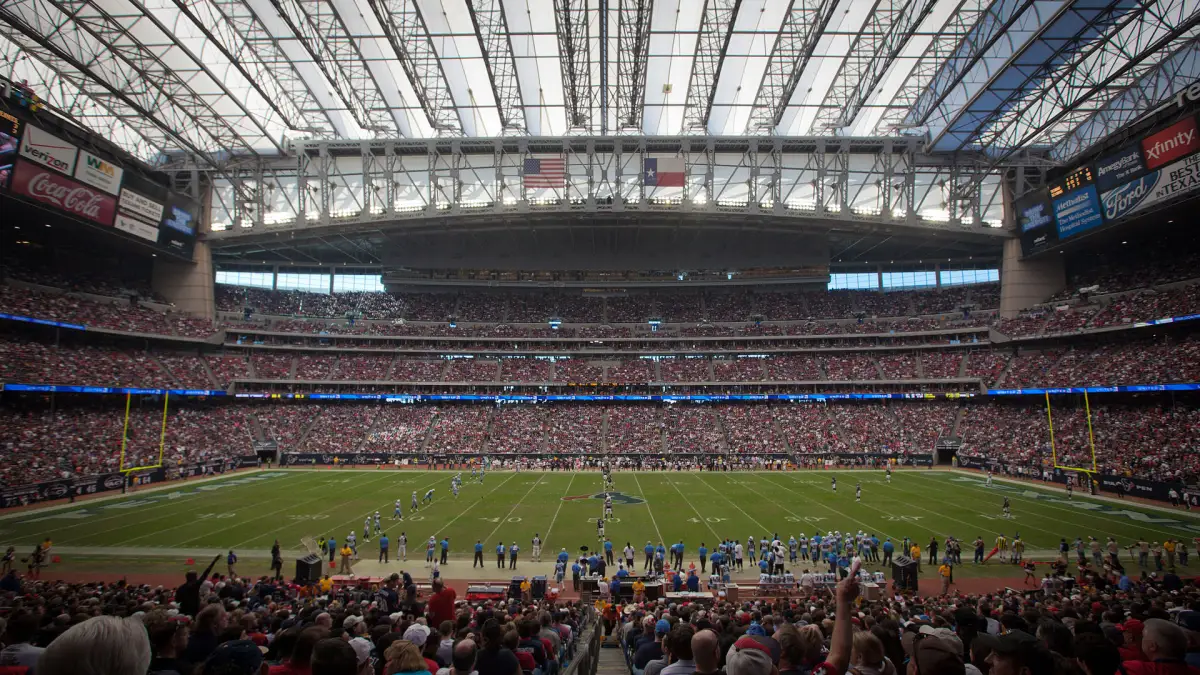
The first thing to disappear is the pitch. FIFA requires natural grass, but many US host venues are indoor or artificial-turf stadiums, so they installed temporary natural sod over their normal surface just for the tournament. Turfgrass scientists at Michigan State and the University of Tennessee grew and tested the fields, more than 88 miles of sod in total, using a “sod on plastic” system so the grass could be laid over concrete and turf and lifted again cleanly.
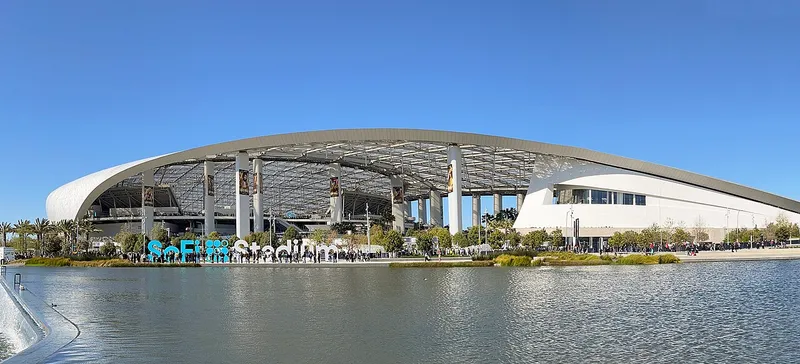
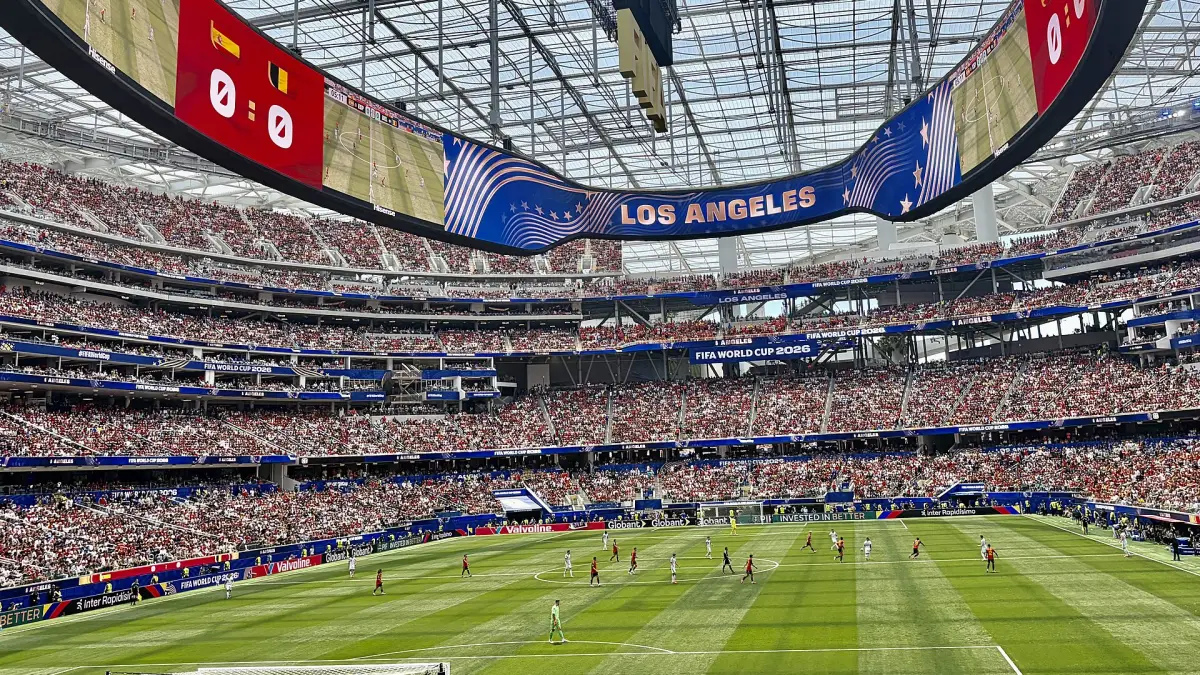
Once the matches end, most of that grass comes up. NRG Stadium in Houston can strip its temporary pitch in under two weeks. SoFi Stadium in Los Angeles grew its grass on removable Permavoid trays and can clear them in a day or two. MetLife, AT&T, Mercedes-Benz, and Gillette all revert to the artificial turf their NFL tenants prefer. The exceptions are the venues that already play on grass, like Hard Rock in Miami and Lincoln Financial in Philadelphia, which keep it. It’s a strange kind of legacy, a World Cup remembered in some cities as the summer the field was briefly, beautifully real.
88 miles of grass. The natural sod grown to cover artificial-turf and indoor fields for the tournament, most of it lifted again afterward.
The seats mostly come out, not in
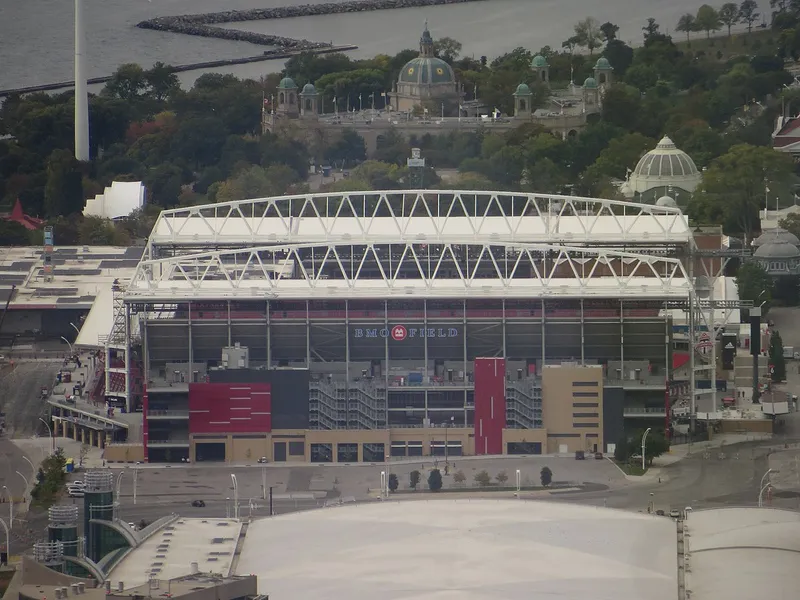
Here’s a myth worth correcting: the idea that host cities bolt on huge temporary stands for a World Cup. For 2026, mostly the opposite happened. Only BMO Field in Toronto meaningfully grew, adding around 17,756 temporary seats to climb from about 28,000 to 45,700 and clear FIFA’s 40,000 minimum. It’s the tournament’s smallest stadium, and the extra seats are designed to come back out afterward for Toronto FC and the Argonauts.
17,756 seats. The temporary seating Toronto’s BMO Field added, the main 2026 venue to grow rather than shrink for the World Cup.
Almost everywhere else, the “World Cup capacity” you see is actually lower than the stadium’s normal number. Estadio Azteca, BC Place, Estadio Akron, and Estadio BBVA all list tournament capacities below their real maximums, because FIFA blocks off seats for broadcast, media, and commercial operations, not because anyone added stands. So for most venues, “returning to normal” just means unblocking seats and reopening at full size. The turnaround is tight but manageable: MLS resumes in mid-July and the NFL preseason starts in mid-August, giving even the venues that host late matches roughly three to four weeks to switch back.
What actually stays: the permanent upgrades
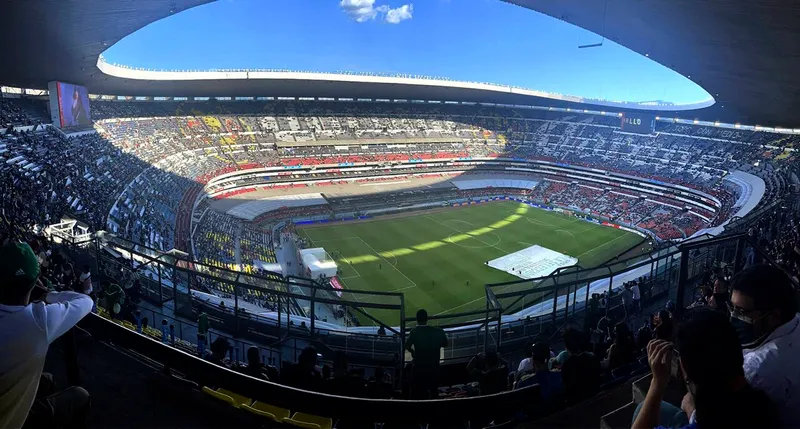
Not everything gets undone. The most significant permanent legacy is in Mexico City, where Estadio Azteca underwent a full renovation and emerged as Estadio Banorte, with new suites, a new roof, all-new seating, and modern facilities. Reported costs vary widely, from around 150 million to 300 million dollars depending on the source, but the upgrade itself is permanent, and the stadium becomes the first ever to host matches at three different World Cups.
Elsewhere the keepers are smaller but real. BMO Field’s 157.9 million Canadian dollar renovation covered both halves of the job, since the temporary stands came out of the same budget, but the permanent side is substantial: corner video boards, new lighting and audio, a rebuilt pitch, upgraded broadcast infrastructure, new suites, and a rooftop terrace. Estadio BBVA in Monterrey installed a FIFA-grade LED lighting system. MetLife added more than 100 million dollars of video, audio, and broadcast upgrades that outlast the event, and Levi’s Stadium spent around 200 million on field and technology improvements. Some of the most useful legacies aren’t in the stadiums at all: Mexico City poured money into airport and road rehabilitation, and Kansas City opened a permanent streetcar extension. Those outlive every temporary pitch.
Why 2026 dodges the white-elephant curse
To see why 2026’s stadiums are safe, look at what happened when hosts built new ones. The white-elephant hall of fame is a warning in concrete.
| World Cup | New stadiums built | Legacy outcome |
|---|---|---|
| Brazil 2014 | Several, in low-football cities | Brasilia’s ~$550-900M national stadium became a bus depot; Manaus hosted four games, now barely used |
| South Africa 2010 | Multiple, ~$4B total | Cape Town Stadium (~$600M) reported losing millions a year; Port Elizabeth’s club went under |
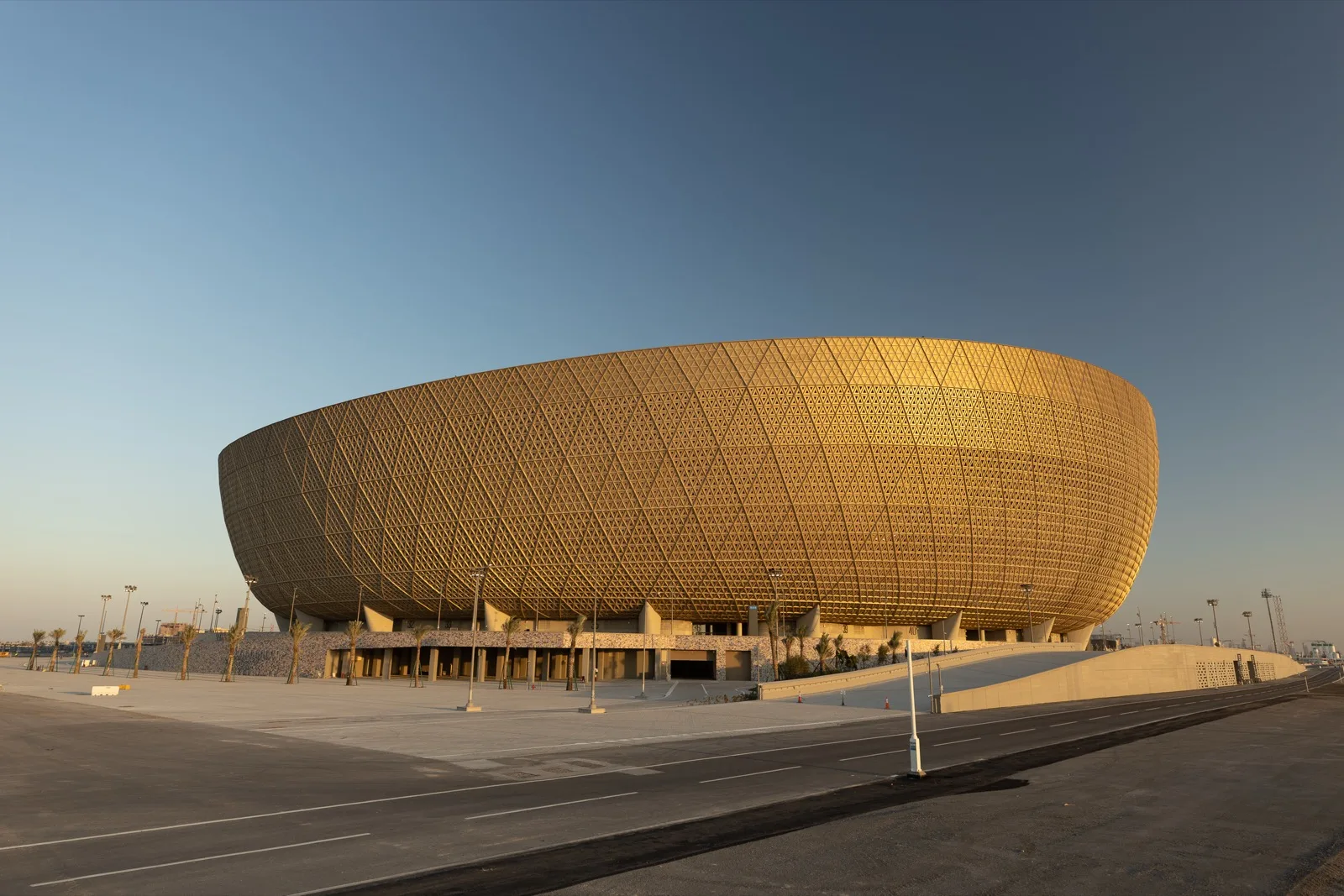
| Qatar 2022 | Seven new, one renovated | ~$6.5-10B on venues; several downsized; Lusail still being converted years later |
| USA/Canada/Mexico 2026 | None | All 16 revert to existing NFL, MLS, and Liga MX tenants |
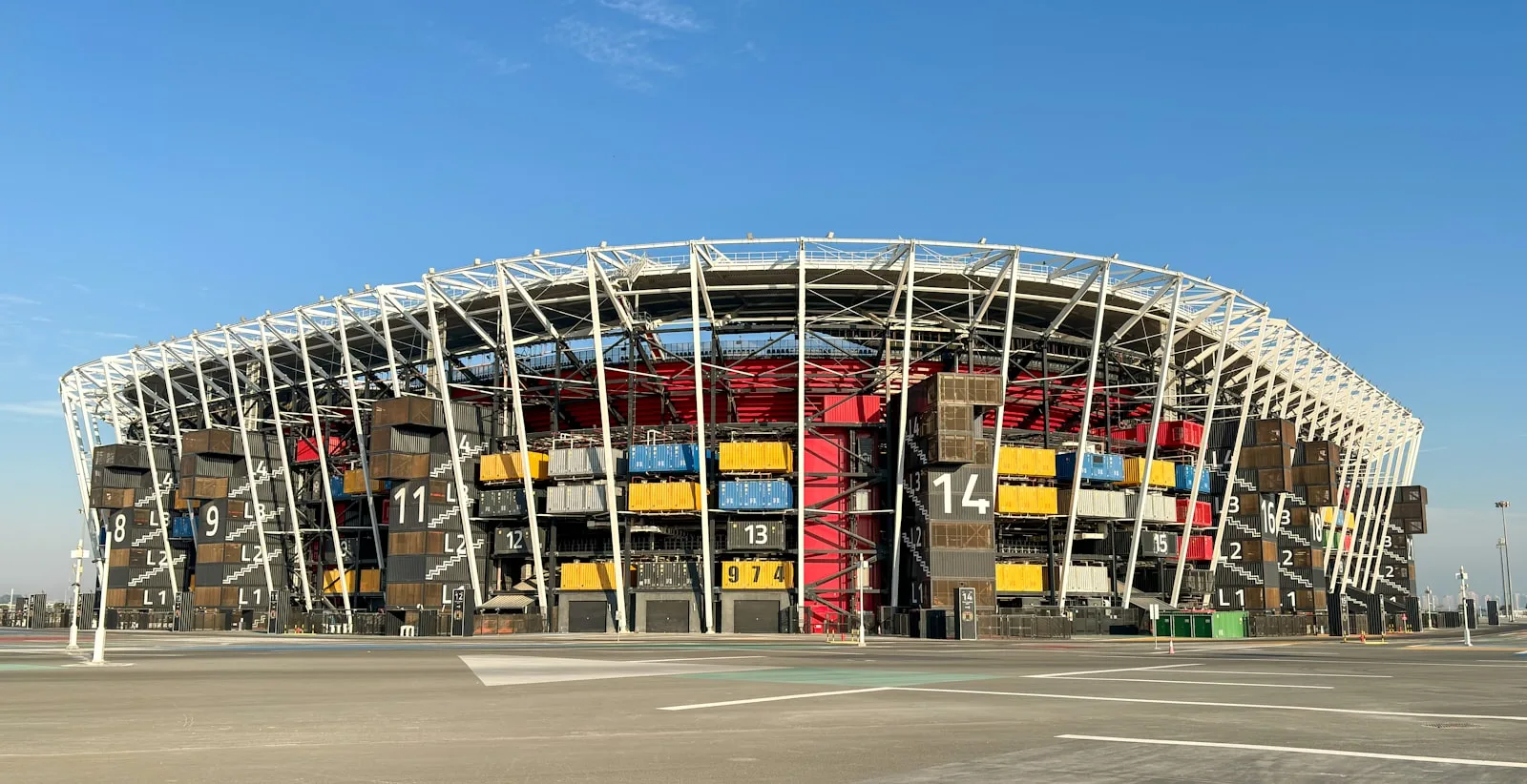
Brazil’s Estadio Nacional Mane Garrincha in Brasilia, one of the most expensive stadiums ever built at the time, ended up storing city buses because the capital has no top-flight club to fill it. Qatar’s answer was cleverer: Stadium 974 was assembled from 974 shipping containers and meant to be taken apart and shipped elsewhere. Except it wasn’t. As of 2026 it still stands in Doha, the built-to-disappear stadium that didn’t, while Lusail Stadium, the 2022 final venue, is still mid-conversion into a community hub years later.
The 2026 World Cup skips the whole problem. Every one of its 16 venues already existed, built for the NFL, MLS, or Mexican and Canadian football, and every one has a tenant waiting to move back in. The newest, SoFi, opened in 2020 for the NFL, not for FIFA. There’s no afterlife question because there’s no stadium sitting empty. It’s the clearest example yet of hosting a World Cup by borrowing venues instead of building them.
The bill: who profits, and who pays
The stadiums may be safe, but the finances are the real debate. FIFA has projected a global economic output in the tens of billions from the tournament and keeps around 8.9 billion dollars of revenue for itself. Host committees have echoed the optimism, with cities claiming impacts from several hundred million to a few billion dollars each.
$8.9 billion. FIFA’s projected revenue from the tournament, which it keeps, while several host cities report public costs running ahead of returns.
Independent economists are far more skeptical, and they’ve been saying so for decades. Andrew Zimbalist has argued host cities “don’t get the revenue, but they get the costs.” Victor Matheson notes that most World Cup spending is money that would have been spent locally anyway, just shifted, and that a fan’s ticket money largely flows to FIFA rather than the city. Early data from the 2026 tournament hasn’t settled the argument in the hosts’ favor, with some cities reporting only modest bumps in hospitality spending and hotels tracking below forecast. Several host governments, including in Canada and Washington state, have flagged public costs running ahead of expected returns. The stadiums will be fine. Whether the host cities come out ahead is a harder question, and it usually gets answered quietly, long after the trophy is lifted.
That’s the afterlife of a World Cup stadium: grass trucked away, seats unbolted, tenants moving back, a few new video boards left glowing. The 2026 tournament made a deliberate bet that borrowing 16 ready-made stadiums beats building new monuments, and on the evidence of Brazil, South Africa, and Qatar, it’s the smart one. The venues will still be full next season. For the tournaments still to come, see the 2030 World Cup and its stadiums and Saudi Arabia’s 2034 build, where the new-stadium question comes roaring back. Or start at the World Cup 2026 hub.
Sources
- Michigan State University: turfgrass program fuels the 2026 World Cup fields. The 88 miles of sod and the “sod on plastic” system.
- ESPN: how NFL stadiums transformed for the 2026 World Cup. Temporary grass, seating changes, and permanent upgrades.
- City of Toronto: Toronto Stadium upgrades complete for the FIFA World Cup 2026. The 157.9 million dollar final cost, the city and MLSE split, and which upgrades stay versus come out.
- BMO Field: FIFA World Cup 26 at Toronto Stadium. The 17,756 temporary seats and the 45,736 tournament capacity.
- Mexico News Daily: Mexico City World Cup infrastructure. Estadio Azteca renovation and permanent transit investment.
- Sports Illustrated: Brazil’s World Cup white elephants. The Mane Garrincha bus depot and the Manaus venue.
- The Peninsula: Qatar announces six stadiums for the FIFA Arab Cup 2025. Stadium 974 named as a venue in December 2025, three years after it was meant to be dismantled and shipped away.
- Fortune: who pays for the World Cup. FIFA’s revenue and the host-city cost debate.
- Newsweek: why the World Cup may not boost the economy. Economists Zimbalist and Matheson on host-city impact.
Stadium-conversion details were cross-referenced across university turf programs, venue and league reporting, and official city sources. Renovation costs that varied between sources (such as Estadio Azteca’s) are given as ranges. Economic-impact figures are attributed to the bodies that produced them, boosters and independent economists alike, because they genuinely disagree.
Hero photo: SoFi Stadium during the 2026 World Cup, by Alexis Doine (CC0).