You’ve probably seen the answer already. Some listicle told you the oldest football ground in the world dates from 1804, and you half-remember Bramall Lane being the famous one, and now you’re here to settle it. Good instinct. The 1804 date is a cricket date, Bramall Lane’s own club is careful never to say “oldest,” and the ground that holds the official record is one most football fans couldn’t place on a map.
| Ground | Club | The claim, or why it’s here | Dates from |
|---|---|---|---|
| Sandygate | Hallam FC | Oldest football ground in the world | 1860 |
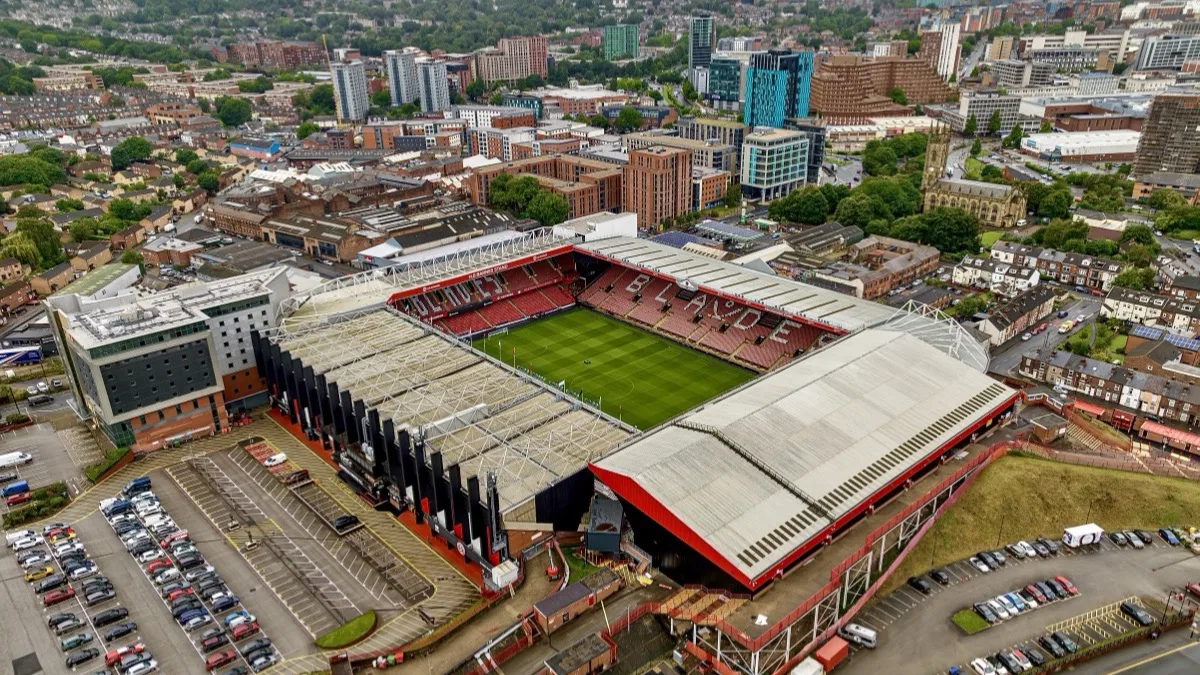
| Bramall Lane | Sheffield United | ”Arguably the most historic football stadium in the world” | Laid out 1854, opened 1855, football from 1862 |
| The Racecourse | Wrexham AFC | Oldest international football stadium in continuous use | First international 1877 |
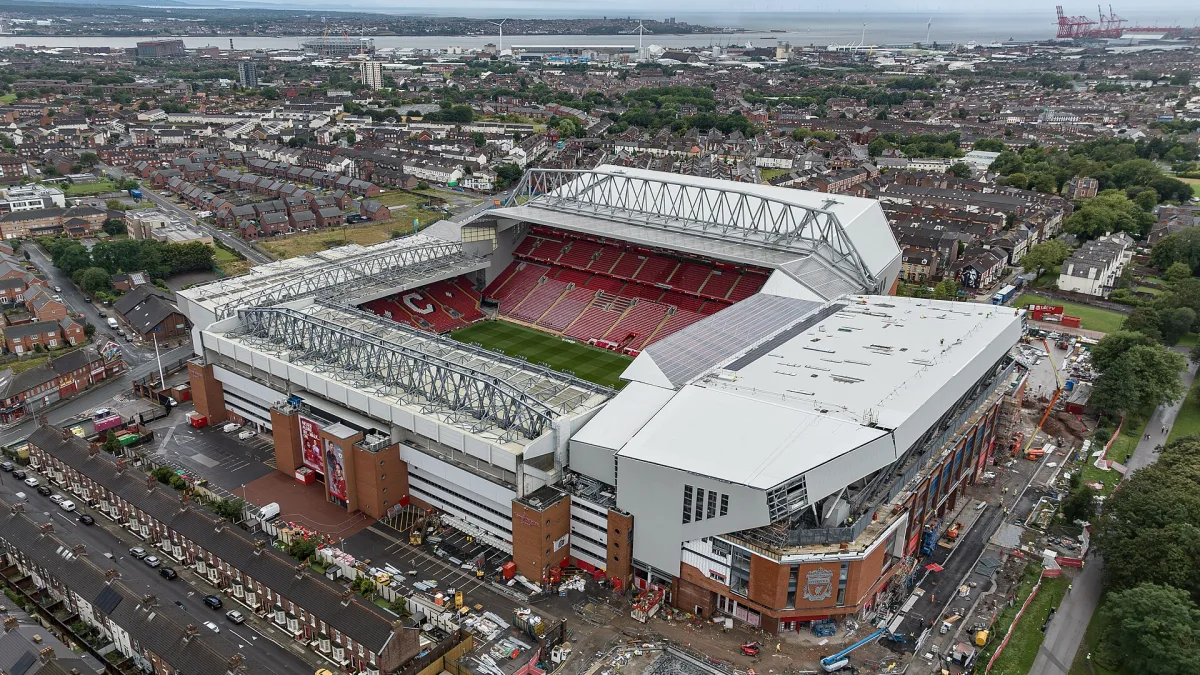
| Anfield | Liverpool | Older than the club that plays in it | 1884 |
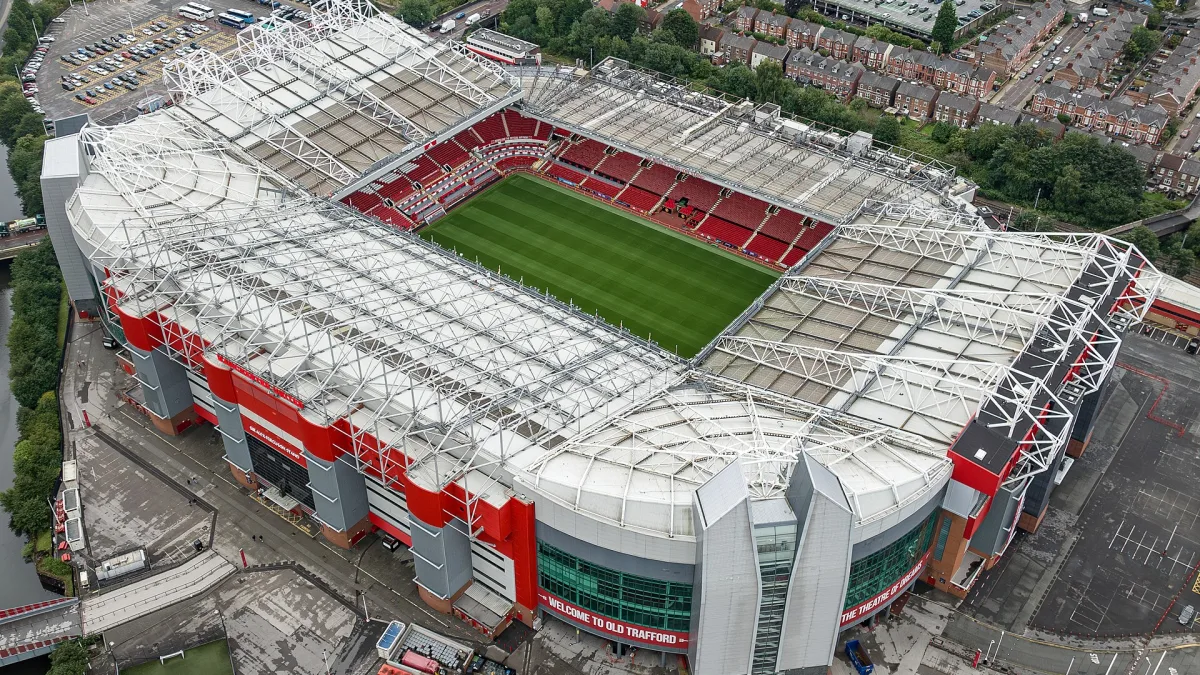
| Old Trafford | Manchester United | The Edwardian benchmark | 1910 |
Here’s the part the listicles skip. “Oldest football stadium” has three defensible answers, held by three different grounds, and every one of them is stated in writing by the people who own the place. They don’t contradict each other. They’re dating different things: the site, the first football match, the first international. Sort out which event a date belongs to and the question stops being a fight and starts being arithmetic. One ground wins, and it’s the one the lists name, for a reason they get wrong by fifty-six years.
Sandygate: the ground Guinness actually picked
The official oldest football ground in the world is one you’ve never heard of, and that gap, between the record and the fame, is the first thing worth explaining.
Guinness World Records keeps a record for this. It doesn’t belong to Bramall Lane, or Anfield, or anywhere with a stand named after anyone. It reads: “The oldest football ground is Sandygate, owned by Hallam FC in Sheffield.” Sandygate. A ground in a Sheffield suburb, home to a non-league club, holding the superlative every famous stadium in the world would love to carve over its gates.
The club’s own history page says the same thing in the same breath: “Sandygate Road, officially the oldest football ground in the World and home of Hallam FC since 1860.” And that agreement matters more than it looks. Everywhere else in this subject, the owner’s claim and the record keeper’s claim slide past each other. Here they lock. Guinness dates its record from 1860. Hallam says “Thus in 1860, Hallam FC was born.” Same year, two independent sources, no daylight.
The fixture underneath the record is almost absurdly on the nose. Guinness: “The first competitive game played at the ground was against Sheffield Football Club on 26 Dec 1860.” Hallam’s version calls it “the first ever challenge match,” played on Boxing Day 1860 against Sheffield FC, and adds: “This is still believed to be the first ever Inter Club game and the oldest to survive until today.” Sheffield FC is the oldest football club in the world. Hallam is the second oldest. The oldest fixture that still exists was the first two clubs on earth running out of other people to play, and the ground it happened on is still hosting football.
26 December 1860. The first competitive match at Sandygate, Hallam FC against Sheffield FC. Guinness dates its world record from it.
The date everyone copies, and what it’s actually dating
Now the number that brought you here. Almost every article on this subject dates Sandygate to 1804, and the club it belongs to has been straight about it the whole time.
Read Hallam’s history page to the end and the answer is sitting there: “After the formation of Hallam Cricket club in 1804 by the landlord of the Plough Inn the club blossomed. By the 1850’s it had more than three hundred members. Many of these members, familiar with the team football being played by Sheffield FC (formed in 1857), wished to create a less exclusive club led by cricketers. Thus in 1860, Hallam FC was born.”
Two dates, two clubs, and the club keeps them apart. 1804 is cricket, started by a publican. 1860 is football, started by members of a cricket club three hundred strong who wanted somewhere less exclusive than Sheffield FC to play. Guinness doesn’t blur them either: its record is dated from 1860 and 1804 appears nowhere in it. The only people merging the two are the ones who weren’t there and didn’t ask.
What the listicles have done is date the ground’s life as land and present it as the ground’s life as a football ground, and once you spot the move you see it everywhere in stadium history. A site is old. A sport arrives later. The site’s age gets quietly transferred to the sport, the number gets copied from article to article, and after enough repetitions it hardens into a fact no primary source will stand behind.
The question was “what’s the oldest football ground.” Cricket isn’t football. Dating Sandygate from 1804 is like dating a theater from the year the building was a warehouse. True of the building. Useless about the theater.
And there’s something better underneath the error. Hallam FC exists because a cricket club got too big and too genteel for some of its own members. A less exclusive club led by cricketers. That’s the founding document of the second oldest football club in the world, and it’s a complaint about snobbery.
56 years. The gap between 1804 and 1860 on Hallam FC’s own history page. One is the cricket club. One is the football club. The lists print the first and mean the second.
Bramall Lane: three hours, and nobody scored
So if Sandygate holds the record, what is Bramall Lane? Something narrower than its fame, and more interesting than the word it keeps getting given.
Start with the club’s own wording, because the restraint in it deserves notice. Sheffield United’s site calls Bramall Lane “arguably the most historic football stadium in the world.” Arguably. Most historic. Not oldest. A club with every commercial reason to claim the big word chose a hedged one instead, which tells you its historians have read the same documents we have. Historic England is blunt about why: “Football didn’t arrive here until 29 December 1862 when Hallam played Sheffield FC, the world’s oldest football club.” Two years after Sandygate’s Boxing Day match. Close. Not first.
What Bramall Lane can claim is nearly everything that happened to football next. By the club’s own account it staged the first football cup final, the Youdan Cup, in 1867, saw fixed crossbars introduced in 1883, and hosted its first England international the same year. The one I can put a second document behind is the floodlights: the first floodlit football match was played there in 1878, and Sheffield City Archives still catalogs the paperwork as “Historical notes on the first floodlit match played at Bramall Lane in 1878.” Football arrived there in 1862, and the professional club followed in 1889. If Sandygate is where club football started, Bramall Lane is where it grew up.
And the day it arrived is worth standing in for a moment. Picture the 29th of December, 1862. A cricket ground in Sheffield, out of season, the square roped off somewhere under all those boots. Sheffield against Hallam, and the two clubs are the oldest and second oldest in the world, though neither of them knows that yet, because there is barely anyone else to be older than. The match raised money for the Lancashire Mills Distress Fund. They play for three hours. Three. And nobody scores.
1867 and 1878. The first football cup final and the first floodlit football match, both at Bramall Lane. Football arrived there in 1862 and immediately started inventing things.
Bramall Lane opened in 1854. And in 1855
Ask the two most careful authorities in this story when Bramall Lane opened and you get two different answers. Historic England: “Born in 1854, this sporting venue was actually laid out as a cricket ground.” Sheffield United: “Opened in 1855, it was designed primarily as a cricket and athletics stadium.” The national heritage body and the ground’s own club, a year apart, in print, about the best-documented stadium in this article.
Neither has made an error. Sheffield City Archives holds the timeline that reconciles them, and it’s almost disappointingly tidy. 1854: “Sheffield United Cricket Club formed. Land at Bramall Lane leased to the club by the Duke of Norfolk.” 1855: “Ground at Bramall Lane opened and first cricket match played.” The archive even holds plans for the ground’s new pavilion dated 1854, paperwork from the gap year itself. Historic England is dating the land deal. Sheffield United is dating the first match. Different events, different years, both true.
This small disagreement is the whole article in miniature. Two careful organizations publish different dates because they’re answering different questions, and nobody calls it a controversy because the gap is only a year. Stretch the same gap to fifty-six years, swap the land lease for a cricket club, and you have 1804 versus 1860 at Sandygate. The identical move. The only difference is that a one-year gap looks like precision and a fifty-six-year gap looks like a better headline.
The Racecourse: Wrexham’s claim, and the line it doesn’t cross
The third answer comes from Wales, and it’s the claim that sounds smallest and travels furthest. Wrexham AFC’s site calls the Racecourse “the world’s oldest international football stadium still in continuous use, having hosted Wales’ first ever international home game against Scotland on March 5, 1877.” Not oldest ground. Not oldest in football. Oldest international stadium still in continuous use, a superlative so specific it reads like it was drafted by a lawyer, and all the stronger for it.
How far does the evidence actually reach? The Football Association of Wales confirms the bones of the day: “A year later, on 5 March 1877, the return fixture took place at the Racecourse Ground in Wrexham. Scotland again won, this time by 2-0.” Date, venue, opponent, result, all backed by the governing body. But read the FAW’s words again. “The return fixture.” The superlative, the “world’s oldest,” appears only in the club’s own telling. The governing body confirms the match; the club supplies the crown.
The ground’s depth is real either way. Wrexham first played there in October 1864, and the club says horse racing was held on the site “possibly even 400 years ago,” which is the kind of claim you quote rather than check. The club is also straight about the one gap in its own tenancy. It has played at the Racecourse “almost ever since” 1864, the exception being two years, 1881 to 1883, “when rent increases forced the team to move away.” Whether the ground itself went dark in those years isn’t something the club says either way, and I’m not going to invent it. What the sentence does show is a club publishing the inconvenient clause instead of rounding it off, which is more than most of the sources in this article manage.
1881 to 1883. The two years Wrexham spent away from the Racecourse after rent increases, disclosed by the club itself in the same sentence that makes its “continuous use” claim.
The grounds that came before their own clubs
Spend enough time at this end of football history and you notice the order of operations is backwards. You’d assume a club builds a ground. At this age it runs the other way: the ground exists, football visits, and the club turns up afterwards.
Anfield opened in 1884, and its first match was Everton beating Earlestown 5-0 on 28 September 1884. Liverpool FC, the club the whole world associates with that ground, did not yet exist. Anfield opened for somebody else entirely, and for all its fame it doesn’t make the top fifteen on our list of the largest stadiums in Europe. Fame at this end of the game is a function of age, not size. Two more things happened there in 1906. Archibald Leitch designed the lower Main Stand, and Ernest Edwards of the Liverpool Echo gave the Spion Kop its name. An architect and a sportswriter, same year, and it’s the sportswriter’s word that stuck. Leitch’s signature also sits on Old Trafford, opened 19 February 1910, which is decades too young for this argument but belongs in the same handwriting. Neither is near the top of the Premier League capacity table, which is its own argument about what age buys you.
Bramall Lane is the sharpest case, and Sheffield City Archives has the receipts down to the week. On 16 March 1889, the ground staged an FA Cup semi-final, Preston North End against West Bromwich Albion. On 22 March 1889, six days later, “it was decided to run a football team alongside Sheffield United Cricket Club.” That August, the new club opened its first season with a 3-1 win over Sheffield Club. Read those dates as a story and it’s almost funny. A cricket club watched football draw a crowd on its own pitch and founded a football club inside a week. The ground had already been staging football for 27 years. Sheffield United, the institution, is a response to Bramall Lane, the place. Not the other way around.
Six days. 16 March 1889, an FA Cup semi-final at Bramall Lane. 22 March 1889, the cricket club decides to run a football team. Sheffield United is 27 years younger than football at its own ground.
So which is the oldest football stadium in the world?
Sandygate. Home of Hallam FC, Sheffield, football since 1860, and it wins on the only test that should settle a question like this: two independent authorities, the record keeper and the ground’s owner, state the same claim from the same year, and neither reaches for a bigger number than the evidence holds. Bramall Lane’s claim is real and more modest than its fame: football there since 1862, and its own club calling it “arguably the most historic football stadium in the world” rather than the oldest. The Racecourse’s is real and more precise than either: Wrexham says it is “the world’s oldest international football stadium still in continuous use,” which is not the same as the first ground to stage an international. The FAW’s own history puts Wales’ first international at Hamilton Crescent in Glasgow on 25 March 1876, a year before the Racecourse got one. Three claims, three different questions, and the headline answer is the ground in the Sheffield suburb.
One honesty note before you go. The title says “in the world,” and every ground in this article is English or Welsh. That’s a limit rather than a finding. Candidates elsewhere exist and I didn’t test them: I went after the grounds whose owners publish documents I could read and check, and those turned out to be in Sheffield and Wrexham. Treat this as the English and Welsh answer, verified, rather than a world survey.
If you want the other ends of this story: new stadiums in English football covers what gets built now, the biggest British stadiums ranks what the centuries produced, and we run the same test on American sport in the oldest NFL stadiums and the oldest MLB ballparks, where the paperwork is younger and the arguments are nastier.
Take the method with you, though, because it’s the part that transfers. When a date is contested, ask what event it’s dating. Old grounds don’t usually lie about their age. The questions do.
Next time somebody tells you 1804, ask them what happened that year. Then tell them what happened on Boxing Day 1860.
Sources
- Sandygate: Oldest football ground, Guinness World Records, Our History, Hallam FC. The record wording and the 1860 date, agreed independently, plus the 1804 cricket club and the Boxing Day match against Sheffield FC.
- Bramall Lane: Bramall Lane history, Sheffield United, 5 Historic Football Grounds in England, Historic England, Sources for the Study of Sheffield United FC, PDF, Sheffield City Council. The 1854 lease, the 1855 opening and the 1862 first match, with the archive timeline reconciling the first two.
- The Racecourse Ground: The Racecourse Ground, Wrexham AFC, Celebrating 150 Years of the FAW, Football Association of Wales. The club makes the continuous-use claim; the governing body confirms only the 1877 fixture and names Hamilton Crescent as the earlier venue.
Hero photo: Bramall Lane by Arne Müseler / www.arne-mueseler.com, CC BY-SA 3.0 DE, via Wikimedia Commons, cropped.
Where sources disagree, this article gives both and says what each one is dating rather than picking a winner. Dates for grounds of this age are frequently reported as a single number when they describe several different events.