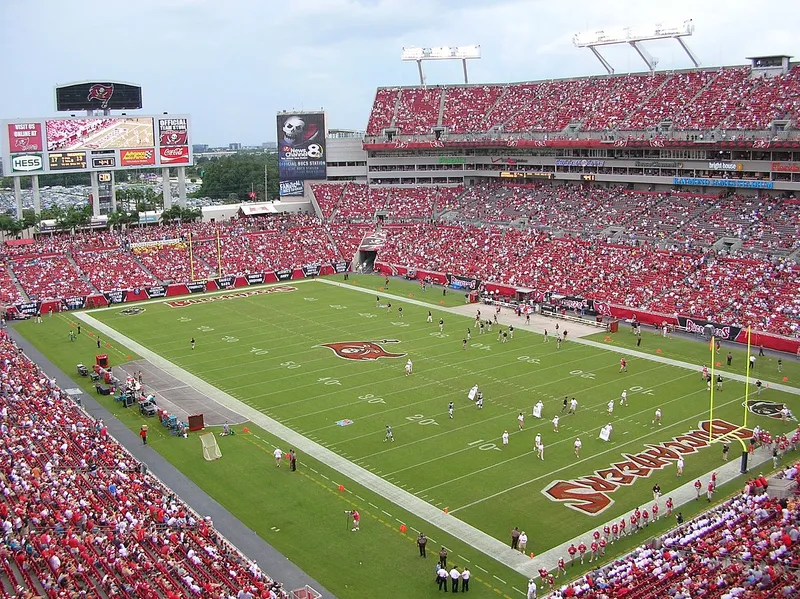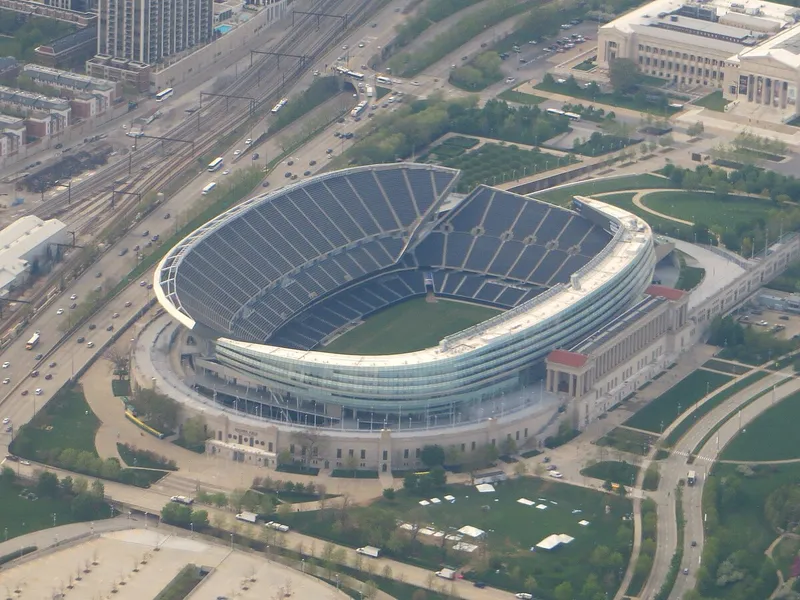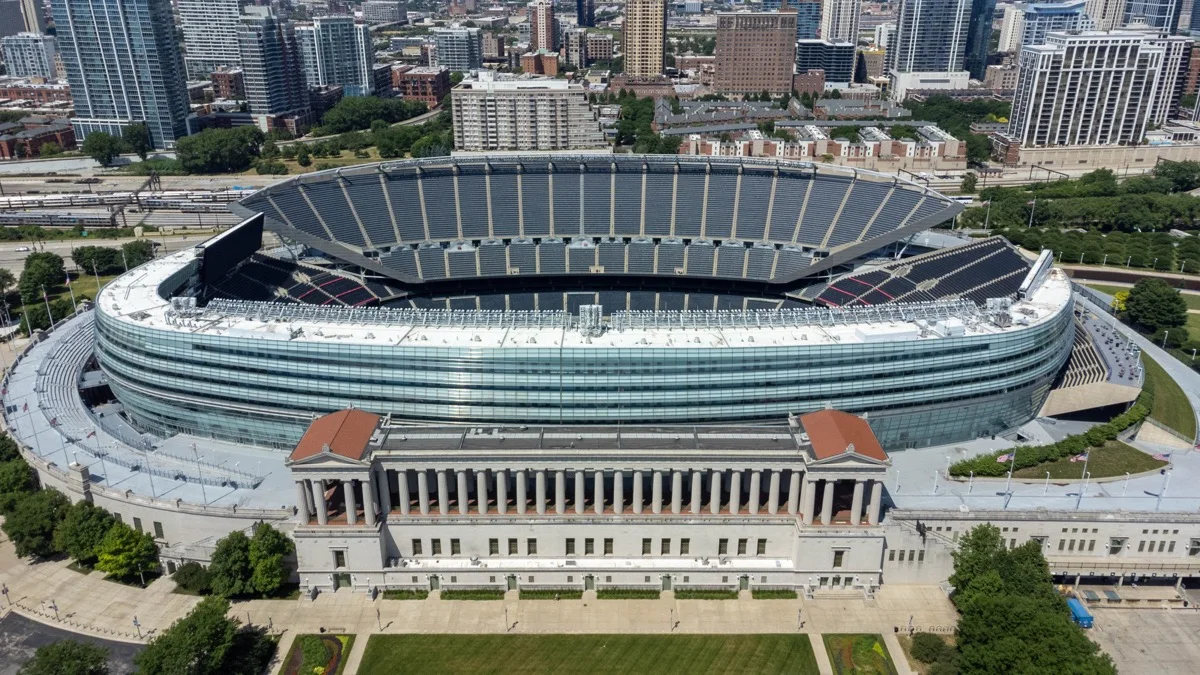
The answer is Soldier Field. It opened in Chicago in 1924, it’s 102 years old, and no other NFL stadium is within three decades of it. If that’s all you wanted, you’re done, and the table’s below.
Stay a minute, though, because the list underneath that answer is strange. Baseball’s two oldest parks opened in 1912 and 1914, and nobody would dare touch them, as the oldest MLB ballparks sets out. Football’s second-oldest opened in 1957. Only two of the ten below predate 1972. Every single one of the ten has been gutted, rebuilt, or is under reconstruction right now, and the oldest of them was formally stripped of its historic status because the rebuilding left too little of the original behind.
| # | Stadium | Team | City | Opened | Capacity |
|---|---|---|---|---|---|
| 1 | Soldier Field | Bears | Chicago | 1924 | 61,500 |
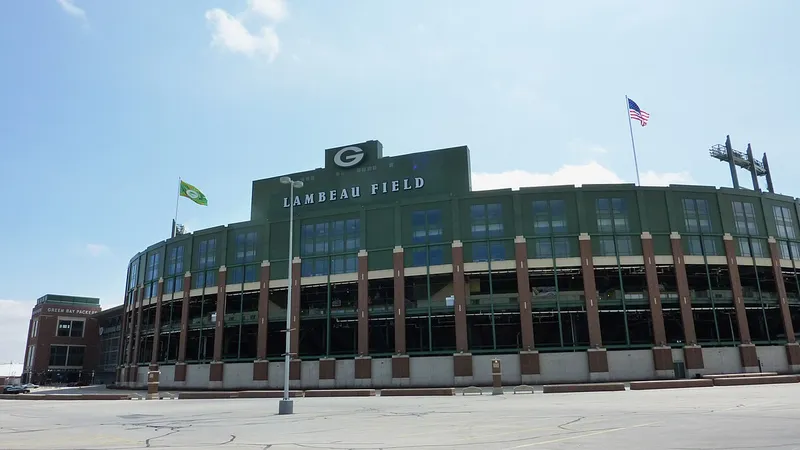
| 2 | Lambeau Field | Packers | Green Bay | 1957 | 81,441 |
| 3 | Arrowhead Stadium | Chiefs | Kansas City | 1972 | 76,416 |
| 4 | Caesars Superdome | Saints | New Orleans | 1975 | 73,208 |
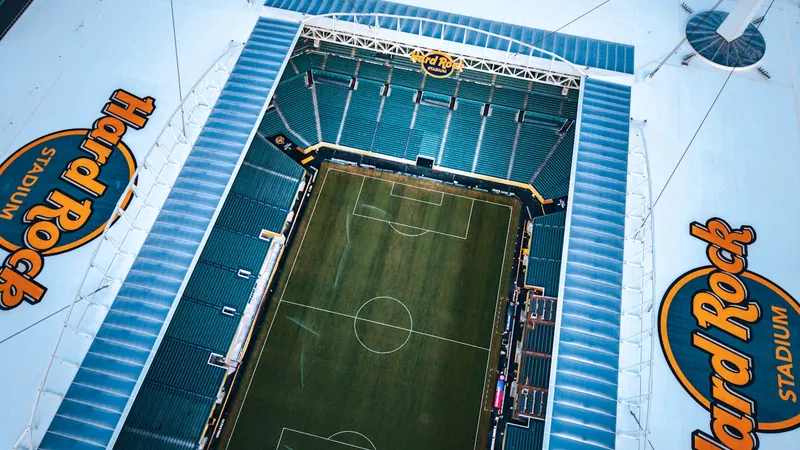
| 5 | Hard Rock Stadium | Dolphins | Miami Gardens | 1987 | 64,767 |
| 6 | EverBank Stadium | Jaguars | Jacksonville | 1995 | 67,814 |
| 7 | Bank of America Stadium | Panthers | Charlotte | 1996 | 75,037 |
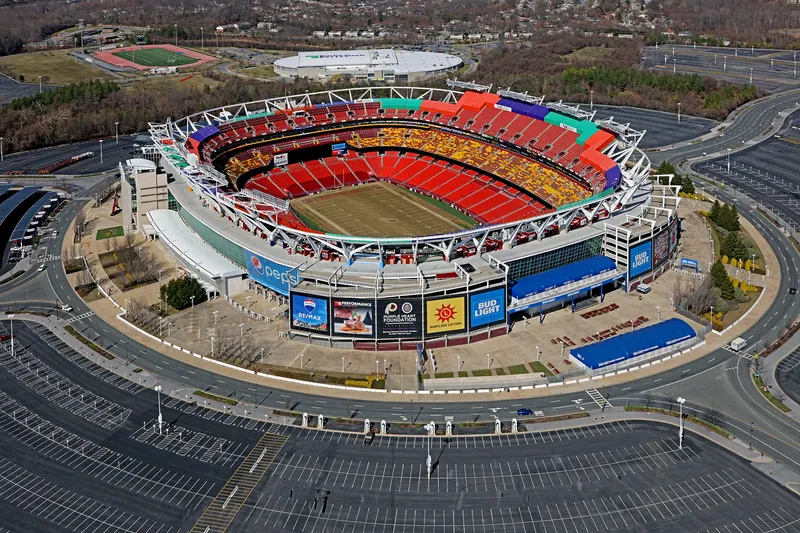
| 8 | Northwest Stadium | Commanders | Landover | 1997 | 64,000 |
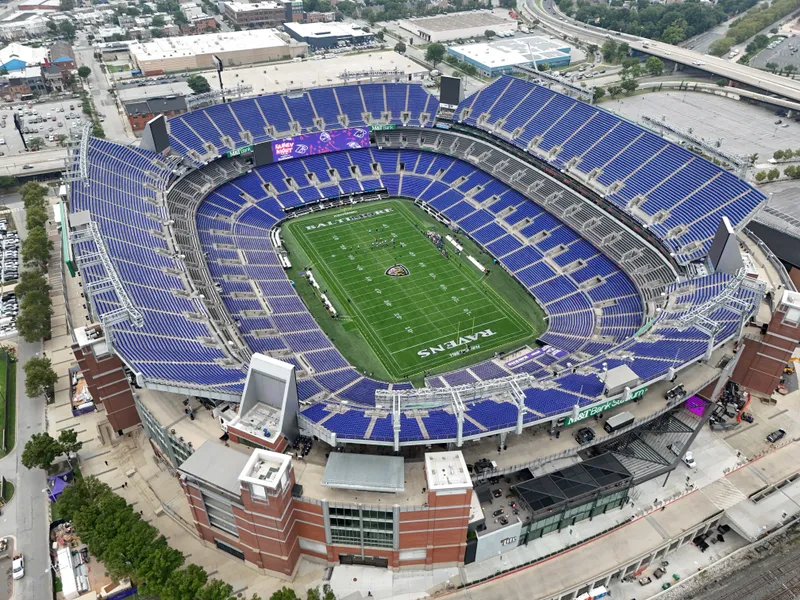
| 9 | M&T Bank Stadium | Ravens | Baltimore | 1998 | 70,257 |
| 10 | Raymond James Stadium | Buccaneers | Tampa | 1998 | 65,890 |
Look at the gaps before you read on. Thirty-three years separate first from second, 15 more separate second from third, and then half the list arrives in a four-year sprint in the 1990s. The name at the top is the easy part. The real subject of this page is why the league barely has old stadiums at all, what it did to the ones it kept, and which names are already scheduled to come off the list. By the end you’ll know what 1924 actually bought Chicago, and it isn’t what the number suggests.
The columns and the spaceship
Walk up to Soldier Field from the lakefront and 1924 is the first thing you see: two long rows of limestone Doric columns, the kind of architecture a city commissions when it wants to look like Rome. Holabird & Roche designed it as a war memorial, $13 million, with a running track around the field, and for decades it swallowed crowds of 100,000 and more. The 1927 Dempsey-Tunney fight drew 104,943 people into it.
Then you notice what’s sitting behind the columns. The modern seating bowl rises straight out of the colonnade and overhangs it, glass and steel resting on stone, and the two buildings make no attempt to pretend they’re one building. Chicagoans started calling it the spaceship before the paint dried. That bowl is the 2003 reconstruction, around $632 million of work by Wood + Zapata with Lohan Caprile Goettsch, and once you pass through the memorial’s stonework you’re inside it completely. From a seat in the bowl you can’t see a single limestone column. The oldest stadium in professional football, viewed from inside, is younger than some of the players on the field.
In 2006 the federal government agreed. A federal advisory committee found the 2003 changes so extensive that the stadium no longer met the criteria for its National Historic Landmark designation, and on February 17, 2006, the status was formally revoked. The National Park Service had delisted 42 properties as of December 2024. Soldier Field is the only sports venue among them.
The Bears arrived here in 1971 from Wrigley Field, which is to say they left the second-oldest ballpark in baseball, still standing today, to move into what would become the oldest stadium in football, which mostly isn’t standing. Their home now holds 61,500, the second-smallest crowd in the league since Buffalo’s new 60,000-seat Highmark opened for 2026, and after a century on the lakefront they’re working on a move to Hammond, Indiana. Even the tenant is temporary.
42 properties have lost National Historic Landmark status. One of them is a sports venue.
The stadium its owners couldn’t threaten
Lambeau Field cost $960,000 in 1957, ground broken in October 1956 to a design by Somerville Associates, and it has since absorbed a $295 million redevelopment from 2001 to 2003 and another $140.5 million for the south end zone in 2013. So it hasn’t survived unchanged. Nothing in this league has. What it survived is the thing that killed every other old stadium in football: the threat.
The standard sequence goes like this. An owner wants a new building, hints at Los Angeles or, lately, Hammond, and a legislature finds the money. Green Bay is the one place in American major league sports where that play can’t be run, because the Packers are the league’s only community-owned, non-profit franchise. The people who’d have to approve demolishing Lambeau are, in a real sense, the people who own the team. There’s no owner to move it, no relocation to bargain with, and no business case either: the stadium has sold out on a season-ticket basis since 1960, every home game for more than 65 years, and the waiting list runs past 150,000 names. Green Bay’s population is about 107,000. More people are queuing to get into Lambeau than live in the city around it.
Under the grass, 34 miles of heating pipe fed by 12 boilers push 48 million BTUs into the turf so the frozen tundra doesn’t actually freeze. The most famous cold place in football is warmed from below, year after year, at whatever it costs. That’s what keeping a stadium looks like.
150,000 names on the season-ticket waiting list, in a city of 107,000 people.
Loudest, and leaving
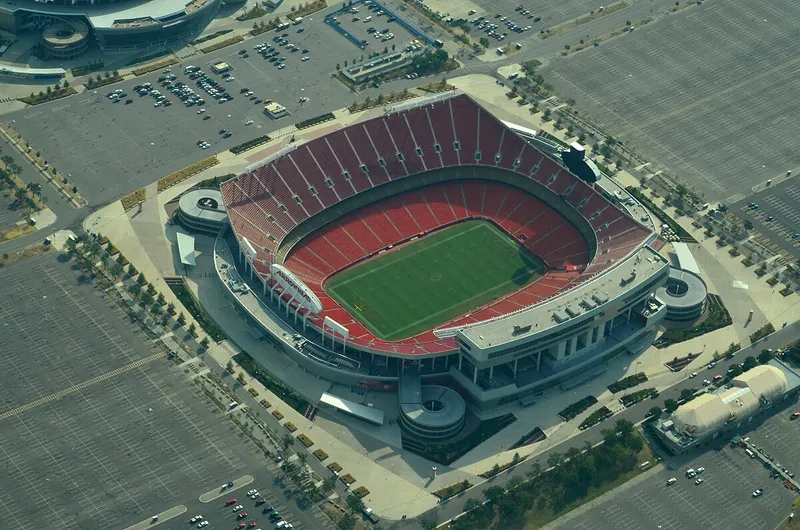
Arrowhead is what happens to an NFL stadium that’s still the best in the world at its job: it gets five more seasons.
The job is noise. Kivett and Myers sank the playing field three stories below ground level when the stadium went up in 1972 ($43 million, ground broken July 11, 1968), and the steep tiers rising from that pit work as an amplifier pointed at the players. On September 29, 2014, against the Patriots, the crowd hit 142.2 decibels, the Guinness World Record for the loudest crowd roar at an outdoor sports stadium. It still stands. The Chiefs put $375 million into the building from 2007 to 2010, roughly nine times its original cost, and the renovation had the good sense not to touch the shape.
The original 1967 concept was stranger than anything that got built: a rolling roof that would travel between Arrowhead and the baseball stadium next door, covering whichever building needed it that day. It was cut to save money.
None of it earns a reprieve. The Chiefs leave for a new stadium in Kansas in 2031, one designed, the club’s chairman says, to echo Arrowhead’s bowl so the noise makes the trip. The record-holder is being measured for its memorial while the record is still live.
142.2 decibels on September 29, 2014. The Guinness record has stood for twelve years and the building has five seasons left.
The dome that came back
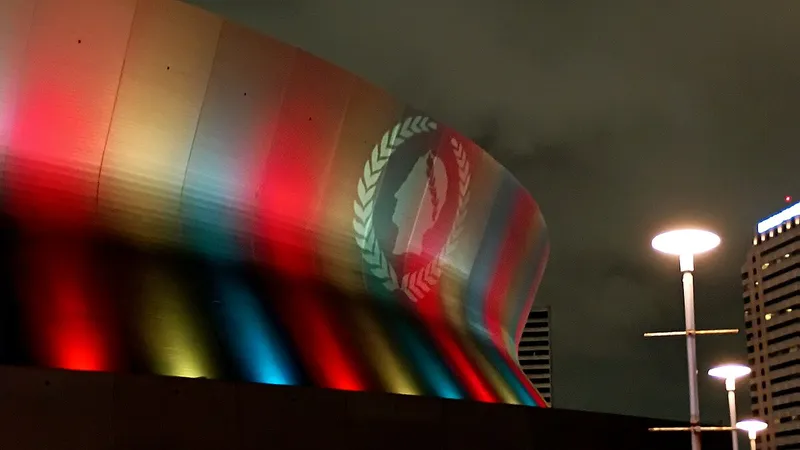
The Superdome has been demolished once from the inside. Curtis and Davis designed it, ground broke on August 12, 1971, it opened in 1975 for around $165 million, and for thirty years it was simply the biggest room in sports: 680 feet across, 13 acres under one lid, still the largest fixed domed structure in the world. Then Katrina put 25,000 to 30,000 desperate people inside it, tore at the roof, and turned the building into the most recognizable image of a drowned city.
What followed in 2006 was a reconstruction, roughly $185 to $200 million, and calling it a renovation undersells what the city was doing, which was deciding that New Orleans would still have a downtown worth the name. Trahan Architects then ran a further renovation of around $560 million, finished in 2024, in time for Super Bowl LIX. That made eight Super Bowls under the one roof, more than any stadium in NFL history. The league keeps coming back to the building that almost didn’t.
The man who paid for it himself
The stadium that explains the bottom half of this table is fifth on it. Hard Rock Stadium opened in 1987 for $115 million and by the 2010s was, by NFL standards, obsolete: wrong sight lines, no shade, no Super Bowls coming. Its owner, Stephen Ross, did the thing owners almost never do. He spent more than $500 million of his own money renovating it in 2015 and 2016, canopy included, more than four times the building’s original cost, with no stadium-sized check from taxpayers attached. Six Super Bowls have been played there. The lesson the league took wasn’t about generosity. It was that a thirty-year-old stadium plus half a billion dollars beats a teardown, and every owner with a 1990s building has been doing that arithmetic since.
Old at thirty
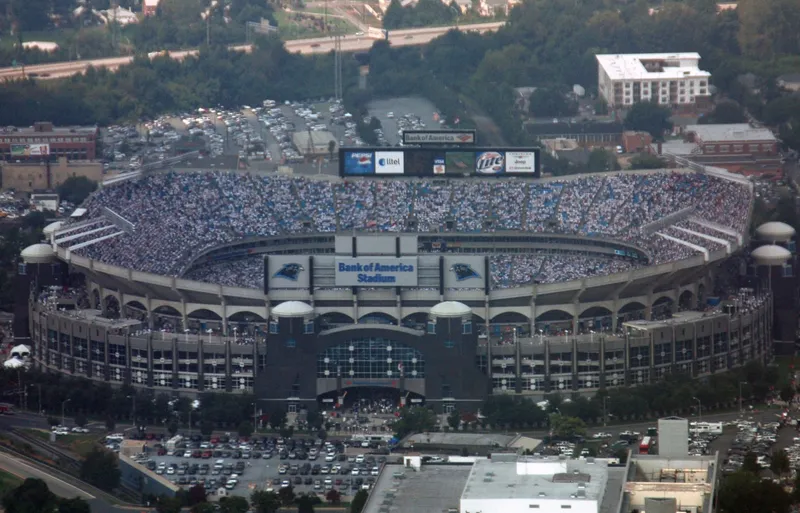
Five stadiums on this list opened in a four-year window: Jacksonville in 1995 ($121 million to build, about $134 million all in), Charlotte in 1996, Landover in 1997, Baltimore and Tampa in 1998. They’re barely middle-aged, and they’re already being rebuilt at multiples of their construction cost, because what wears out in an NFL stadium isn’t the concrete. It’s the revenue map drawn on top of it. A 1996 seating bowl organizes its money around ticket sales; a 2026 one organizes it around clubs, suites and the concourse, and converting one map into the other costs more than the original building did.
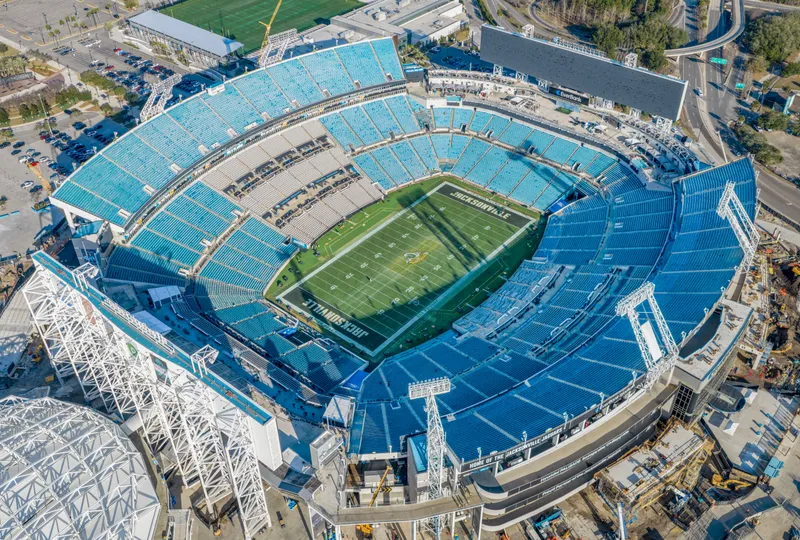
Bank of America Stadium is the cleanest example. The Panthers built it for about $248 million, privately financed by selling personal seat licenses, fan money up front. The renovation beginning in 2026 is budgeted at $800 million, more than three times the construction cost, to remodel a building most of its season-ticket holders can remember opening. M&T Bank Stadium is on the same track in slower motion: about $220 million to build in 1998, $144 million of work from 2016 to 2019, and a state-funded modernization of roughly $430 million running through 2026. EverBank in Jacksonville has gone furthest of all: it closes after the 2026 season and the Jaguars return to a 62,000-seat stadium in 2028, one of the new NFL stadiums being built.
And then there’s Northwest Stadium in Landover, which opened in 1997 and has spent the years since changing names the way other stadiums change turf: Jack Kent Cooke Stadium, then FedExField, then Commanders Field, then Northwest Stadium in August 2024. Four names in under thirty years, for a building whose fifth act is already signed.
Two of these are already gone
Read the table again knowing this: two of its ten stadiums are condemned.
Arrowhead’s sentence is dated 2031, when the Chiefs cross into Kansas. Northwest Stadium’s is contractual: owner Josh Harris signed a memorandum with Maryland officials committing to begin demolition within 90 days of the Commanders’ first game at their new Washington stadium in 2030, after which the 200-acre site becomes mixed-use development. A 64,000-seat NFL stadium, 33 years old at execution, with the paperwork already filed.
Just outside the ten, the churn is faster still. The Titans leave Nissan Stadium, opened 1999, in 2027. The Browns leave their 1999 lakefront stadium in 2029. Buildings younger than most of this list’s bottom half, gone before Arrowhead.
90 days. The demolition clock that starts on Northwest Stadium the moment the Commanders kick off somewhere else.
What 1924 actually buys you
So, the answer: Soldier Field, opened 1924, and nothing else is close. But notice what kind of oldest it is. The bowl you’d sit in dates from 2003. Lambeau’s south end is 2013, Hard Rock’s canopy is 2016, the Superdome’s interior is 2024, and the federal government has certified, in writing, that the oldest stadium in the league is no longer historically the same building. Football’s antiquity is a set of addresses wearing new stadiums, and even the addresses aren’t safe. Baseball, handed a 1912 ballpark, repaired it for a century. The NFL renovates its old stadiums until they stop being old, and when that stops working, it knocks them down.
It does so quickly. In the spring of 2026, this list had a different fourth place: the Bills’ stadium in Orchard Park, opened 1973, a year younger than Arrowhead and older than every other building here. Its structural demolition was completed on August 5, 2026. Between two updates of a page like this one, the fourth-oldest stadium in the NFL stopped existing. That’s the league this ranking describes. Read it soon; it moves.
Sources
The ranking, the capacities and the construction histories are on our own stadium guides, each linked in the table above and each carrying its own sourcing. The links below cover only what those pages do not: the landmark ruling and the replacement timeline for stadiums that do not exist yet.
- National Park Service, on the withdrawal of National Historic Landmark status and on Grant Park Stadium, Soldier Field in particular. Forty-two properties delisted as of December 2024, the only sports venue among them, and the date and reasoning from the agency that decided it.
- The NFL, on the Titans’ new stadium being on track for February 2027.
- The NFL, on the Browns breaking ground in Brook Park for 2029.
- The Kansas City Chiefs, on their 2031 stadium, including the bowl shaped to carry Arrowhead’s noise.
- Maryland Matters, on the Commanders’ move, the signed memorandum and the 90-day demolition trigger.
Hero photo: Soldier Field looking west by Sea Cow, CC BY-SA 4.0.
Capacities are 2026 figures and clubs revise them regularly, so a figure here and a figure elsewhere can differ by a few hundred seats without either being wrong. “Oldest” is contested in the NFL: this ranking uses the year each stadium opened, which is the standard measure, but the age of the current structure gives a very different answer, and the article above says where the two diverge.