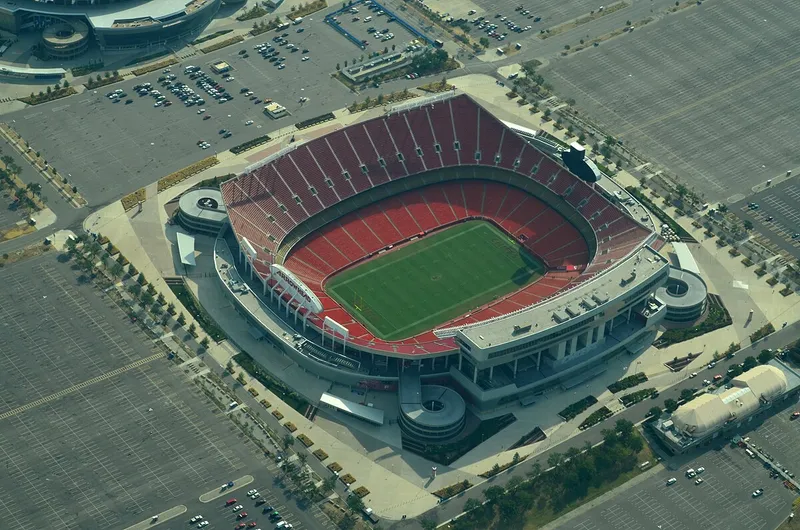
In May 2019 the Kansas City Chiefs filed a brief with the Supreme Court of Missouri, and on one of its pages the team wrote down who owns Arrowhead Stadium. “The Harry S. Truman Sports Complex (‘Complex’) is owned by Jackson County, Missouri (‘County’) and leased to the Authority,” the filing says, and the Authority “in turn, sublets parts of the Complex” to the Royals and the Chiefs. Owner, tenant, subtenant: three layers for one building, settled in a court document most fans will never open. The Authority’s name is the one on the lease. The county is the landlord.
That was supposed to be the easy question. Who owns an NFL stadium reads like a lookup, and for most of the thirty it is. Who paid for one isn’t, and the reason is in the right-hand column below.
| Stadium | Who owns it | Who paid to build it |
|---|---|---|
| Acrisure Stadium | Sports & Exhibition Authority of Pittsburgh and Allegheny County | mostly public, around $281m in 2001 |
| Allegiant Stadium | Las Vegas Stadium Authority | public and private, around $1.9bn in 2020 |
| Arrowhead Stadium | Jackson County, Missouri | public, $53m in 1972 for the twin complex, plus a $375m public renovation |
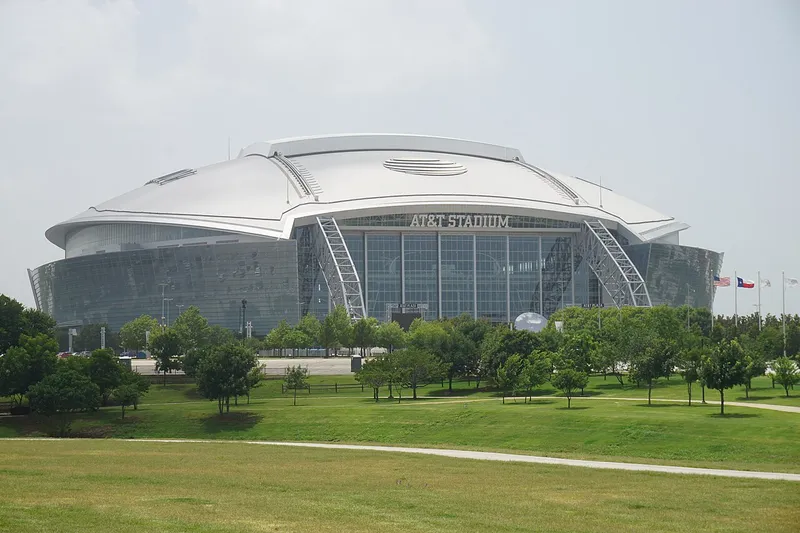
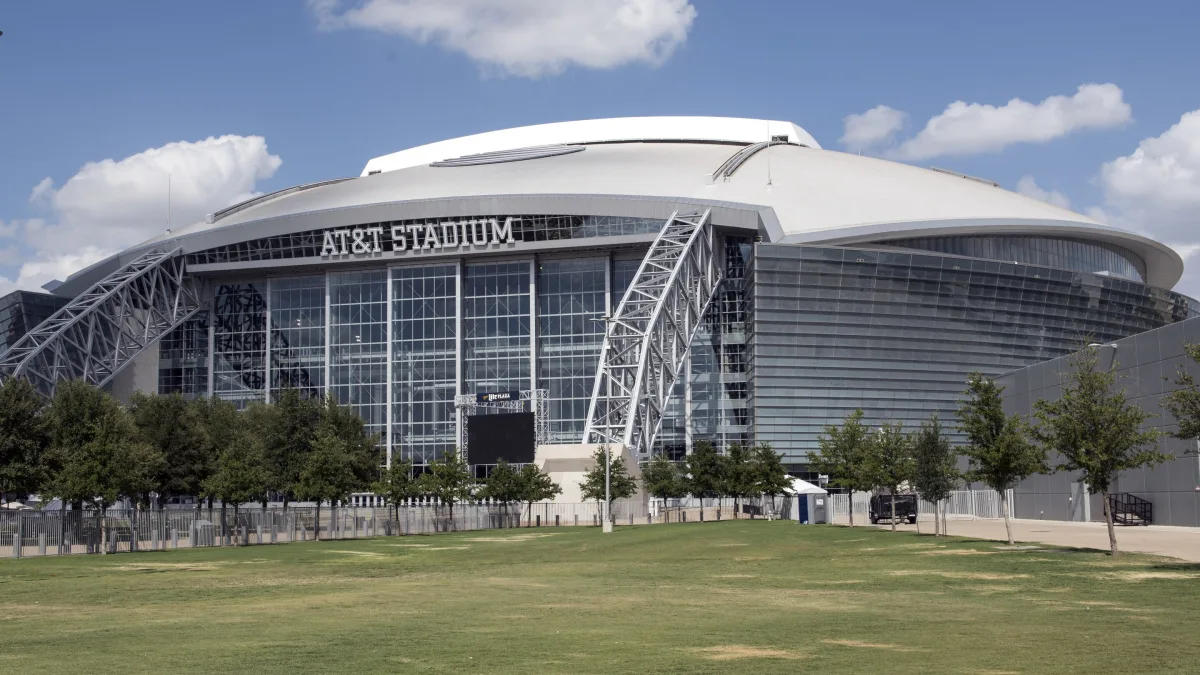
| AT&T Stadium | City of Arlington | public and private, $1.15bn to $1.3bn in 2009 |
| Bank of America Stadium | Tepper Sports & Entertainment | private, around $248m in 1996 via seat licenses |
| Caesars Superdome | Louisiana Stadium and Exposition District | public, around $165m in 1975 |
| Empower Field at Mile High | Metropolitan Football Stadium District | mostly public, around $401m in 2001 |
| EverBank Stadium | City of Jacksonville | public, $121m in 1995 |
| Ford Field | Detroit/Wayne County Stadium Authority | public and private, around $500m in 2002 |
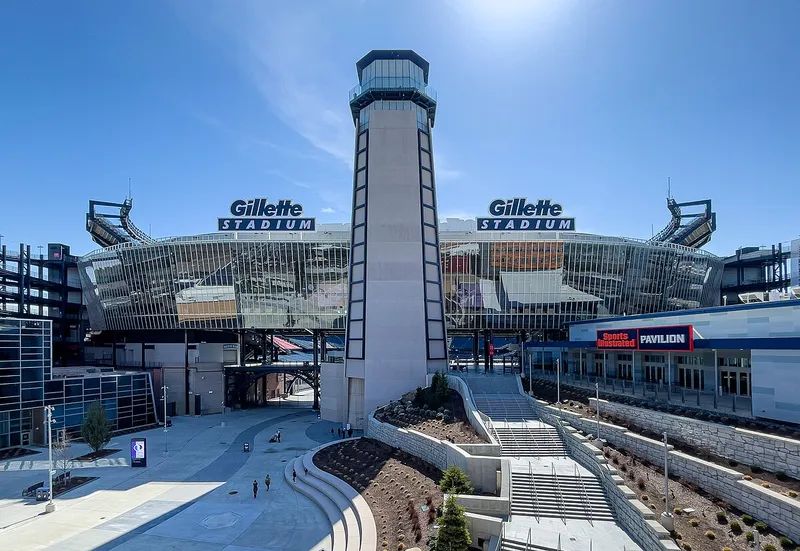
| Gillette Stadium | the Kraft Group | private build, public infrastructure, $325m in 2002 |
| Hard Rock Stadium | Stephen Ross | private, $115m in 1987 plus a $500m+ private renovation |
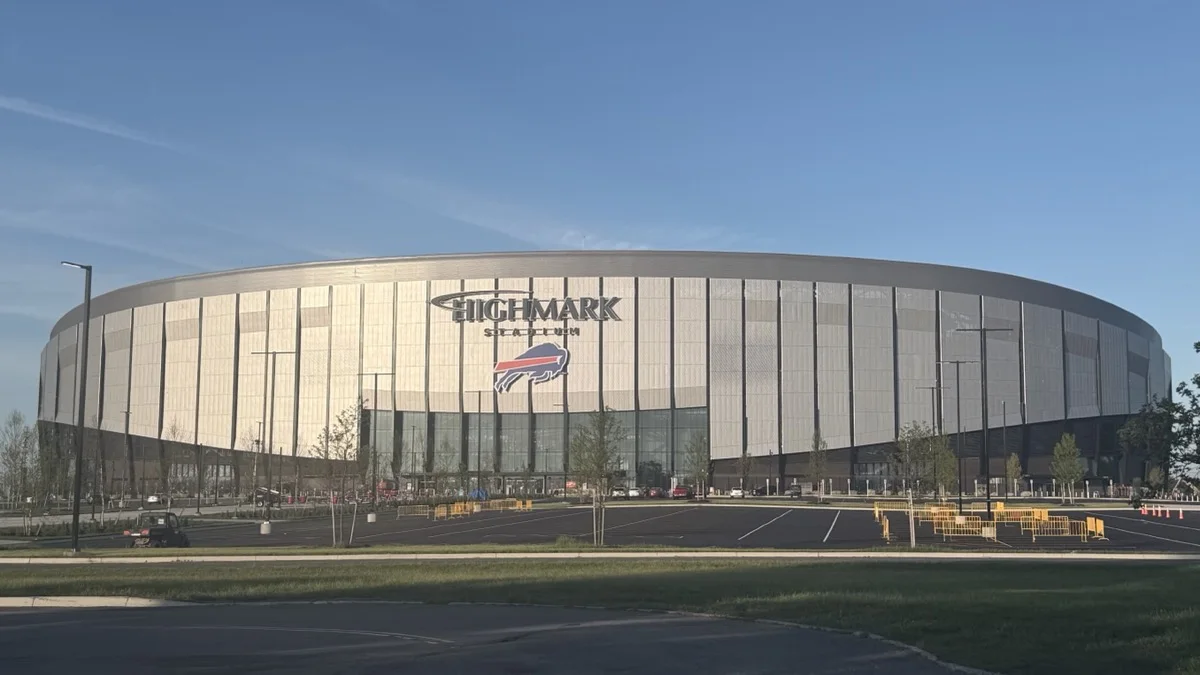
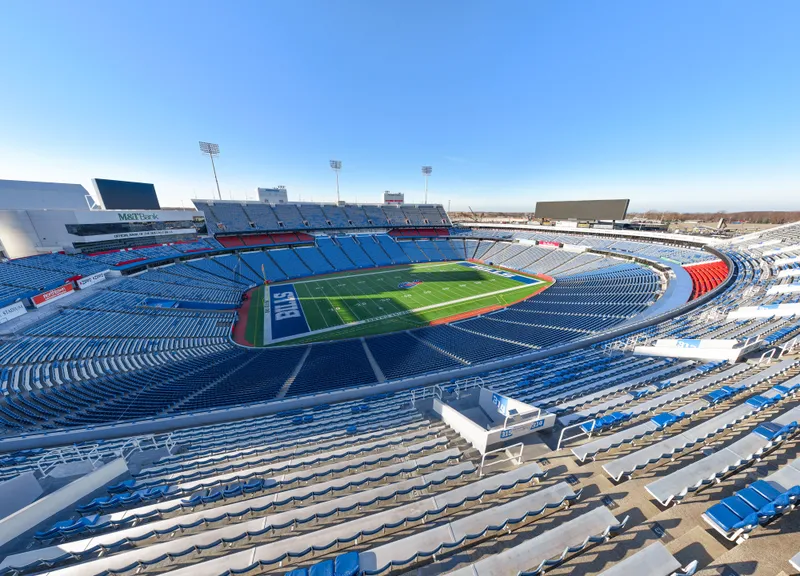
| Highmark Stadium | New York State, since August 2026 | mostly public, $2.1bn to $2.2bn, opened 2026 |
| Huntington Bank Field | City of Cleveland | mostly public, around $283m in 1999 via a county sin tax |
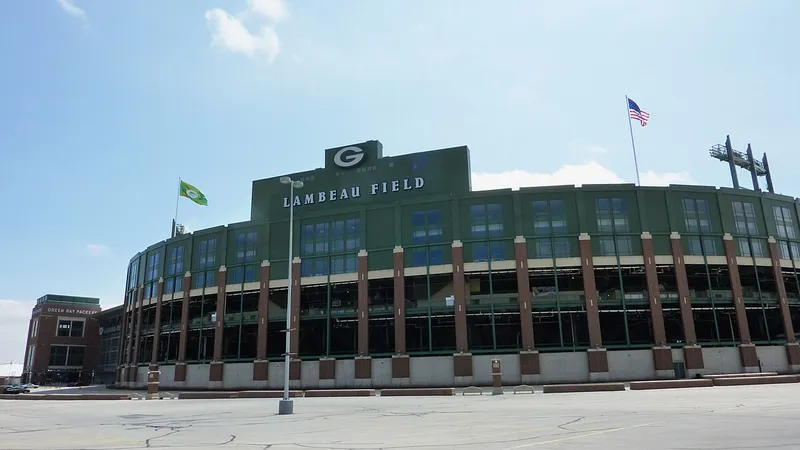
| Lambeau Field | City of Green Bay, though the record is murkier than that | public, with a county sales tax funding the $295m 2003 rebuild |
| Levi’s Stadium | Santa Clara Stadium Authority | mostly private, $1.3bn in 2014 |
| Lincoln Financial Field | City of Philadelphia | public and private, $512m in 2003 |
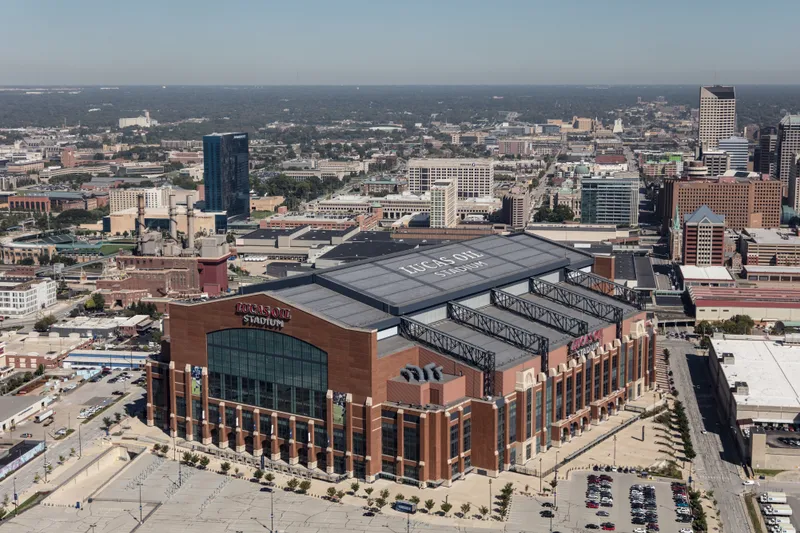
| Lucas Oil Stadium | Indiana Stadium and Convention Building Authority, leased to the county board | mostly public, around $720m in 2008 |
| Lumen Field | Washington State Public Stadium Authority | mostly public, $430m in 2002 |
| M&T Bank Stadium | Maryland Stadium Authority | public, around $220m in 1998 |
| Mercedes-Benz Stadium | Georgia World Congress Center Authority | mostly private, $1.6bn in 2017 |
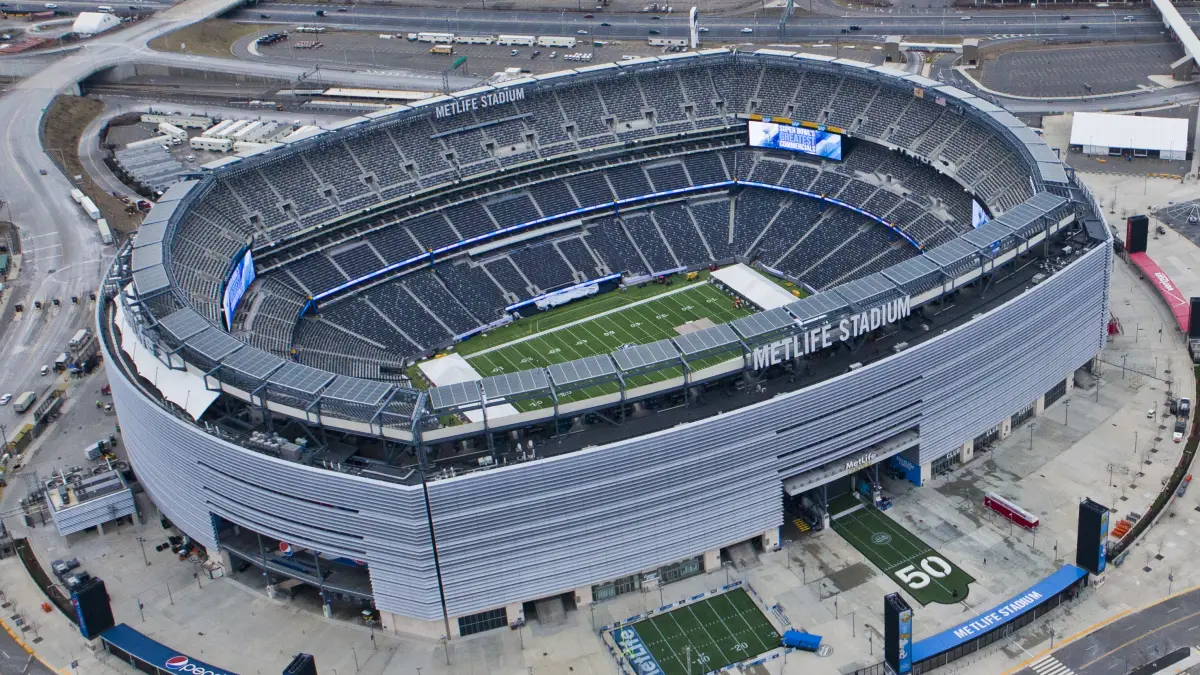
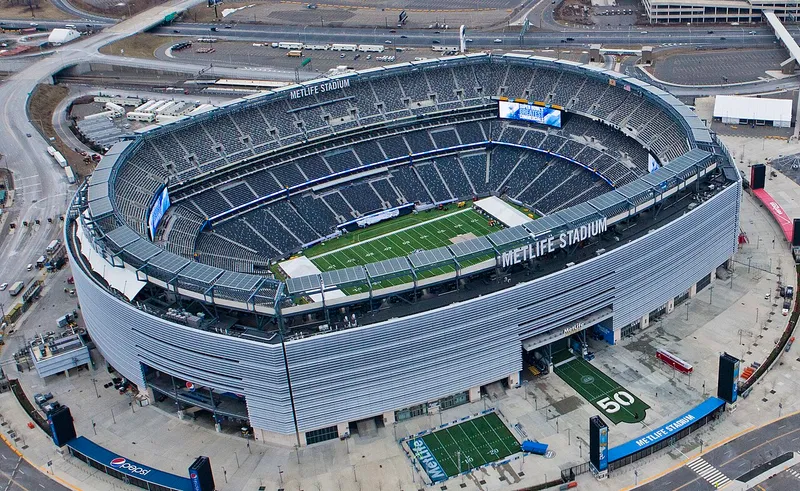
| MetLife Stadium | the Giants and Jets own the building, the state owns the land | private, $1.6bn in 2010 |
| Nissan Stadium | Metro Nashville Sports Authority owns the stadium, the city owns the land | public, $292m in 1999 |
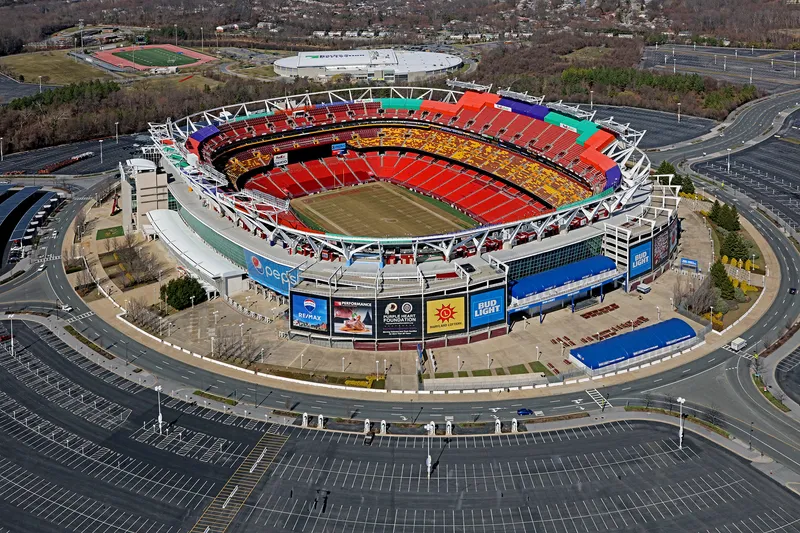
| Northwest Stadium | not stated in any public document we could find | mostly private, $250m in 1997 |
| Paycor Stadium | Hamilton County | public, $449.5m in 2000 |
| Raymond James Stadium | Hillsborough County | public, $168.5m in 1998 |
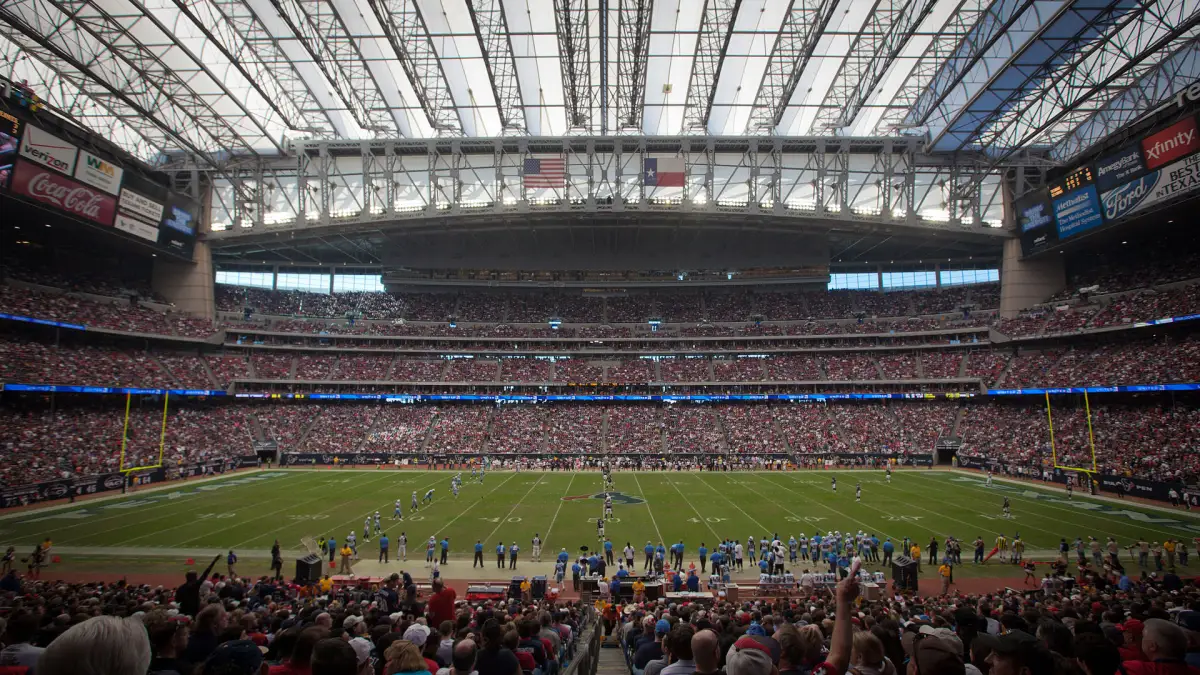
| Reliant Stadium, formerly NRG Stadium | Harris County | public and private, $352m in 2002 |
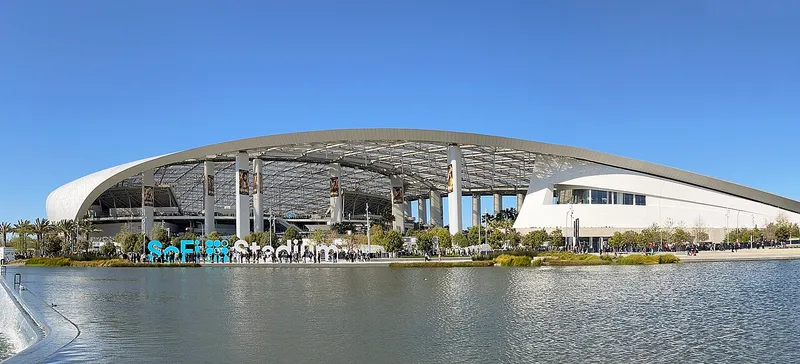
| SoFi Stadium | Stan Kroenke | private, $5.5bn in 2020 |
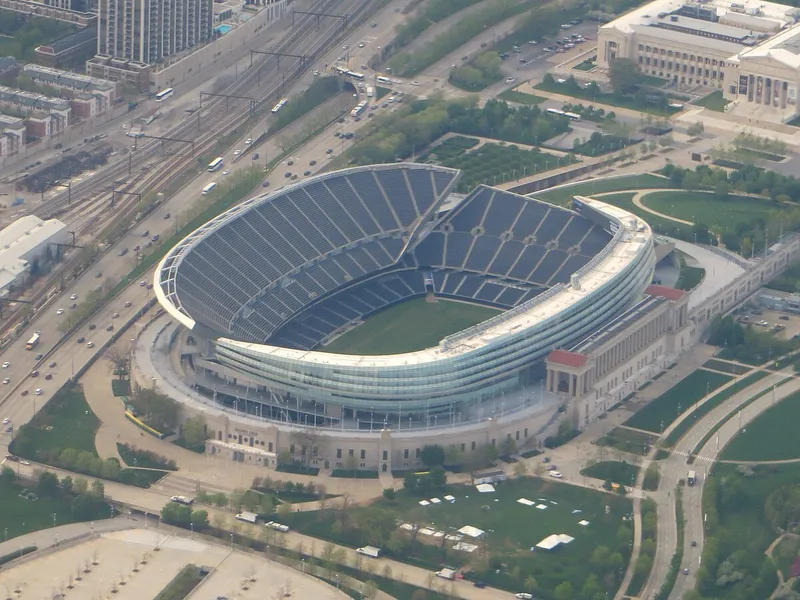
| Soldier Field | Chicago Park District | public, around $632m for the 2003 reconstruction |
| State Farm Stadium | Arizona Sports & Tourism Authority | mostly public, $455m in 2006 |
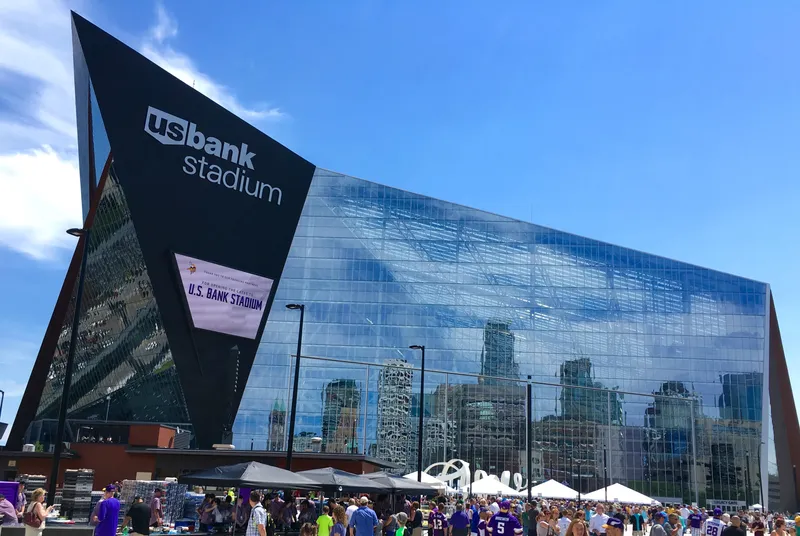
| U.S. Bank Stadium | the State of Minnesota, through its stadium authority | public and private, $1.061bn in 2016 |
Twenty-four of the thirty belong to a government body of some kind: a city, a county, a state, or an authority invented to hold the deed. Four belong outright to a team or its owner. One, MetLife, straddles that line: the Giants and Jets own the building, New Jersey owns the ground. And one, the Commanders’ stadium in Landover, has no stated owner anywhere we could find, including from the team. The right-hand column is where it gets slippery, because every figure in it is a construction cost, and a construction cost is not what anybody paid.
There are three layers of public money under these buildings, and almost every article counts one: what a city or county borrowed, plus the interest, which never appears in the cost; a federal tax break on that borrowing, which appears in no stadium’s cost anywhere; and land, roads, upkeep and property tax never billed, which the leading academic study of the subject says is routinely left out. One city has now added up its own first layer and published the total. It came to 51 percent more than the number it had been calling its contribution.
Who owns an NFL stadium, and why six of them can’t answer
Ownership of a public stadium is a legal position rather than a plain fact, and on six of the thirty it is contested, split or simply unstated. Those six are Lucas Oil and U.S. Bank, where two primary sources disagree; MetLife and Nissan, where the building and the land have different owners; Lambeau, where the record won’t settle; and Northwest, where nobody will say.
Lucas Oil Stadium’s own A to Z guide says the Capital Improvement Board of Managers of Marion County “owned and operated” the building. The Indiana Stadium and Convention Building Authority, a state agency, says it was created to “finance, design, construct and own the Lucas Oil Stadium,” and that the stadium “is leased and operated by” that county board. The venue’s own website contradicts the agency holding the title.
Minnesota managed the same split inside one state government. The Office of the Legislative Auditor, in 2018: “The Authority owns the stadium and is responsible for its operation and maintenance.” The stadium authority itself, to the Senate Capital Investment Committee in March 2025: “The State of Minnesota is the sole owner of U.S. Bank Stadium and therefore has an obligation for the upkeep of the facility.” Same stadium, seven years, no sale, and the owner moved from an authority to the entire state.
Two stadiums separate the building from the land beneath it, in opposite directions. At MetLife the Giants and Jets own the building and the New Jersey Sports and Exposition Authority owns the land and leases it to them. In Nashville it’s the reverse: the Metro Nashville Sports Authority owns the stadium and the city owns the land. Each answer is correct, and each is half of one.
Highmark Stadium, the newest building on the list and the first of a wave of new NFL venues, had a clean answer that expired: on August 3, 2026, it passed from Erie County to New York State, so every ownership table published before August is now wrong.
Lambeau Field is the murkiest. The City of Green Bay is usually named as the owner, and the city’s own annual financial report doesn’t carry the stadium as a capital asset, which is an odd thing for an owner to leave off its books. A separate stadium district, created by the state and funded by a county sales tax, is the body that oversaw the rebuild. The Packers call themselves the stadium’s “occupant.” A lease fight is live, and it’s hard to referee when the record can’t settle who the landlord is.
Then there’s Landover. The Commanders don’t say who owns Northwest Stadium. Their own guide to the building doesn’t say. Their head of real estate doesn’t say. The county says only that it looks forward to “working with the Commanders organization on a bold vision to redevelop the Northwest Stadium site.” A stadium that opened in 1997, and the one line nobody will put in writing is whose it is.
What a public contribution actually costs
Arlington finished paying for AT&T Stadium in August 2025, and the final total was 51 percent more than the figure the city had spent twenty years calling its contribution.
The city put out a press release with the word “Touchdown!” in the headline. It wasn’t about football. The last payment, $22.6 million, had gone out on Friday, August 15, 2025, ten years ahead of schedule, and below the celebration sat a number the city had never had cause to publish before. “In total,” it read, “the City paid $490,325,273 in principal, interest and fees for the stadium.” That is what the City of Arlington’s $325 million contribution came to once twenty years of interest were added.
$490,325,273 What Arlington’s $325 million contribution to AT&T Stadium came to in principal, interest and fees by August 15, 2025.
The published public share was $325 million, which was the brochure, not the bill. A resident of Arlington who wanted to know what the stadium had cost her city couldn’t have found out until the debt was retired, because nobody had reason to add it up until the city wanted to celebrate being rid of it. The gap is $165 million. It bought nothing. It was the price of paying over time.
The subsidy that appears in no stadium’s cost
A share of most new stadiums in America was paid for by people who will never see them, and the payment appears on no invoice.
Most were financed with tax-exempt municipal bonds, bonds whose interest the federal government doesn’t tax, which lets the issuer borrow more cheaply. The federal treasury funds that discount, which means everyone who files a return funds it.
Of 57 stadiums built since 2000 across the four major leagues, 43 were financed at least in part that way. The present value of the subsidy to the issuers comes to $3.6 billion, on the published 2020 figures. The revenue lost to the federal government comes to $4.3 billion. Those two numbers differ by roughly $700 million, and the gap never reaches the city doing the borrowing. It lands with bondholders in the higher tax brackets, who the study says “receive windfall gains.” The treasury gives up more than the stadium’s financier gains, and the difference is a transfer to whoever happens to hold the debt.
$4.3 billion Federal revenue given up on tax-exempt bonds for 43 stadiums built since 2000, against $3.6 billion of benefit to the issuers.
The largest single federal subsidy in the NFL sample belongs to Soldier Field: $205 million, on $533 million of bonds in 2014 dollars. The Chicago Park District owns Soldier Field, so a park district’s borrowing cost the federal government $205 million, and that figure appears in no account of what the stadium cost, no city budget line, and no scoreboard. It exists only in a tax expenditure estimate.
The earlier working-paper version of the study listed 16 NFL venues. Thirteen used tax-exempt financing. Three of those sixteen did not: Gillette, Levi’s and MetLife. On the federal layer, at least, those three are clean.
The layer nobody counts
Even the honest figures are short, and the shortfall has been measured.
Judith Grant Long, writing in the Journal of Sports Economics in 2005, found that governments “pay far more to participate in the development of major league sports facilities than is commonly understood due to the routine omission of public subsidies for land and infrastructure, and the ongoing costs of operations, capital improvements, municipal services, and foregone property taxes.” The land it sits on, the road built to reach it, the property tax never billed: none of it is in the number.
Counting it raises the average public subsidy by $50 million per facility, to $177 million, which is 40 percent above the industry-reported average of $126 million, across all 99 big-four facilities in use in 2001.
$177 million The average public subsidy per facility once land, infrastructure, operations and foregone property taxes are counted, against the industry-reported $126 million.
So three counts, three totals, and none of them wrong. The industry figure counts the building. The tax paper counts the federal discount. Long counts the land and the upkeep. A reader who finds three different numbers for one stadium hasn’t found three errors. They’ve found three questions, none of them the one they asked.
Across those 99 facilities, the uncounted public cost comes to $5 billion, sitting in plain view in budgets nobody totals.
What the landlord collects
Public bodies that own stadiums are landlords, and the rent would embarrass one.
Jackson County issued “over $400 million in County bonds” for the 2006 renovations at the Truman Sports Complex, which holds Arrowhead and the Royals’ ballpark both, by the Chiefs’ own account in the same filing. The Chiefs and the Royals each pay $450,000 a year in basic rent. Four hundred million out. Nine hundred thousand a year back in.
$450,000 The basic annual rent each of the Chiefs and the Royals pays at a complex Jackson County issued over $400 million in bonds to renovate.
Pittsburgh’s version is stranger. When the Sports & Exhibition Authority borrowed $23.3 million in 2014 to expand the stadium’s south plaza, it arranged to repay the bonds out of a rent rise: $2.11 million a year from the Steelers’ entity, running from 2015 through 2029, covering principal, interest, fees and transaction expenses. The rise matched the debt service to the dollar, which makes it a repayment schedule filed under rent.
Arlington, with its debt retired, went back for more. In April 2026 the city extended the Cowboys’ lease to 2055: a minimum of $750 million from the team for maintenance and improvement, and up to $273 million more from the city in net present value over twenty years, from the venue taxes it already collects. The debt is gone. The taxes stay, eight months after the headline said “Touchdown!”
The privately financed stadium that wasn’t
Gillette Stadium is the test case, and it fails the clean version of its own story.
Gillette cost $325 million in 2002 and the Kraft family paid for the building. It’s one of only three NFL stadiums in the Brookings sample that took no federal tax-exempt financing. By any published measure it is the privately financed stadium.
And Massachusetts put in about $70 million of infrastructure, the access roads and parking around the building, which the team repays. Sources differ on the figure: one says $70 million, another says $72 million and puts the team’s total at $389 million. The repayment is a real distinction. The sentence still begins “the state put in about $70 million.”
About $70 million Massachusetts’s infrastructure around Gillette Stadium, repaid by the team; sources say $70 million or $72 million.
The clean version of the story is the one that travels, and every published measure supports it. The owner paid for the building. The federal government granted no exemption. Both of those are true, and neither of them counts a road.
That is the whole article in one building. The $70 million sits in the layer that no construction cost and no bond table reaches, so a stadium can be privately financed on every number anyone publishes and still rest on public works.
Why no two sources agree on what a stadium cost
The disagreement starts with the dollar itself, and we hit the same wall reading Tottenham’s audited accounts, where the number in the filings and the number in the press were not the same number.
Construction costs are nominal, meaning the dollars of the year the building went up. The Brookings tables are in 2014 dollars, so they read higher on nearly every venue. Both are right. They’re different questions, and almost nobody says which one they’re answering.
Lambeau opened at $960,000 in 1957 and was rebuilt for $295 million in 2003, which is also why it never troubles a list of the most expensive stadiums ever built. A single cost figure for a stadium that has been rebuilt twice is a category error, and most tables print one anyway.
Then names move. The Houston stadium was NRG Stadium from 2014 until August 2026 and is Reliant Stadium again now; its old website redirects to the new one.
Ford Field has three published costs. Around $500 million nominal. $658 million in 2014 dollars. And $430 million, the figure in the study the Brookings researchers drew on, which also reported that $219 million of that came from Wayne County tax-exempt bonds. Brookings went looking for those bonds and could document only $16.965 million of them, issued by the City of Detroit, and said so in a footnote: “Results for Ford Field, therefore, are likely underestimates.” The most careful accounting anyone has done of this subsidy could not establish what one stadium borrowed, and printed the shortfall instead of smoothing it over.
So who actually paid
The ownership half has an answer. Twenty-four of the thirty NFL stadiums are held by a government of some kind. Four are held by a team or its owner. One is held by both at once, a private building on public land. And one has no answer anyone will put in writing. Even the twenty-four is softer than it looks, because Green Bay’s own books don’t carry the stadium the city is said to own.
The money half doesn’t have one, because the total has never been assembled. What this article can show is the direction of travel. Every layer you add moves the public share up and not one of them moves it back: the interest on the borrowing, which Arlington alone has published; the federal tax break, which 43 of 57 stadiums took; and the land, roads, upkeep and foregone property taxes, worth an average of $50 million a facility on the only count anyone has made. Even the stadiums sold to the public as privately financed carry some of it, as Gillette does.
Nothing adds up because nobody is paid to add it. The team knows what it spent. The city knows what it borrowed. The federal government knows what the exemption cost it. The county knows what the land was worth. None of them is responsible for the total, and the only figure that ever gets a press release is the construction cost.
Arlington is the exception, and it got there by accident. The city wrote a press release to celebrate paying off a debt, and a celebration needs a total, so a total got published: $490,325,273, under a headline that said “Touchdown!” It’s the one number in this article a reader can check to the dollar, and it’s the one the public paid last. The full cost of an NFL stadium is not a number anyone has published, because no one is responsible for publishing it, and the closest any city has come took twenty years of interest and a mood to celebrate.
Which is why we’ve started reading the accounts instead of the announcements. Stadiumetrix is our series built from audited statements, the filings a club or a public authority has to put on the record whether or not the number flatters anyone, and the Tottenham piece linked above is the first of them. It is being extended venue by venue. When it reaches these thirty, this page gets what no construction cost and no press release has ever carried: a total assembled from the accounts.
Sources
Our own stadium pages carry the construction costs and the per-venue detail, and they are linked throughout the article above rather than repeated here.
Every owner in the table is taken from a document published by the owner, or by the body that holds or operates the asset: a venue’s own about page, an executed lease, an audited financial statement, or a state audit. Where two official bodies disagree, both documents are listed below and the article reports the disagreement rather than resolving it. The documents below are the ones the argument rests on.
- The federal subsidy: the 2020 paper’s abstract and citation, RePEc, the earlier working paper, Brookings. The 2020 paper gives the totals, the 2016 version the stadium-by-stadium table.
- Arlington’s final bill: the debt payoff announcement, City of Arlington, the 2026 lease extension. What a $325 million contribution came to once the interest was paid.
- Two states, two answers: Minnesota’s Legislative Auditor, 2018, the stadium authority to the state Senate, 2025, the venue’s A to Z guide, Lucas Oil Stadium, Indiana’s state building authority. Four documents in which two official bodies name different owners of the same building.
- Arrowhead’s owner: the Authority’s 2014 agency agreement, Jackson County. The 2014 resolution recites the 1967 and 1970 agreements: the county built the complex with its own bonds and leases it to the authority, which acts as the county’s agent.
- The uncounted costs: Judith Grant Long, Journal of Sports Economics. The study that added land, infrastructure, operations and foregone taxes back in.
- Atlanta’s licence: the executed stadium term sheet, GWCCA. The state authority “will own the NSP” and licenses it to the Falcons’ stadium company, which is the arrangement the FAQ below quotes.
- Highmark’s transfer: the county’s announcement. The August 2026 transfer that moved the stadium to New York State.
Hero photo: AT&T Stadium by Carol M. Highsmith, Library of Congress, public domain.
Figures are cross-referenced between our own stadium pages and the documents above. Where a cost or an owner is disputed, the article says so and gives the competing figures rather than choosing between them.