About Dodger Stadium
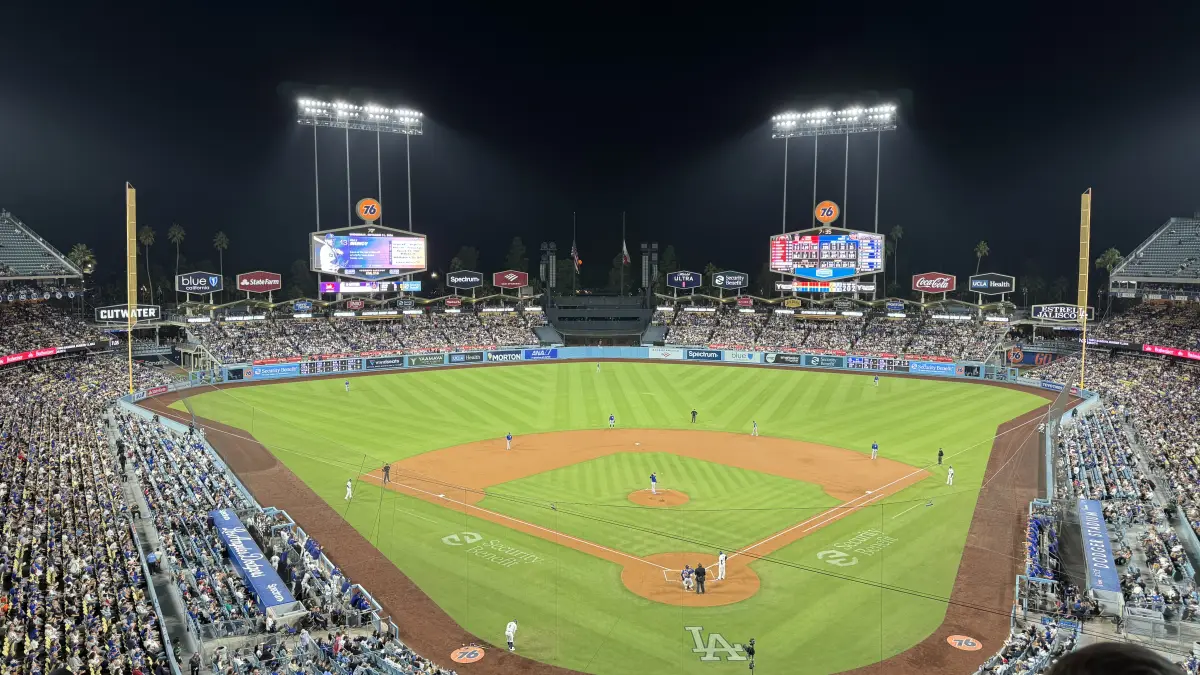
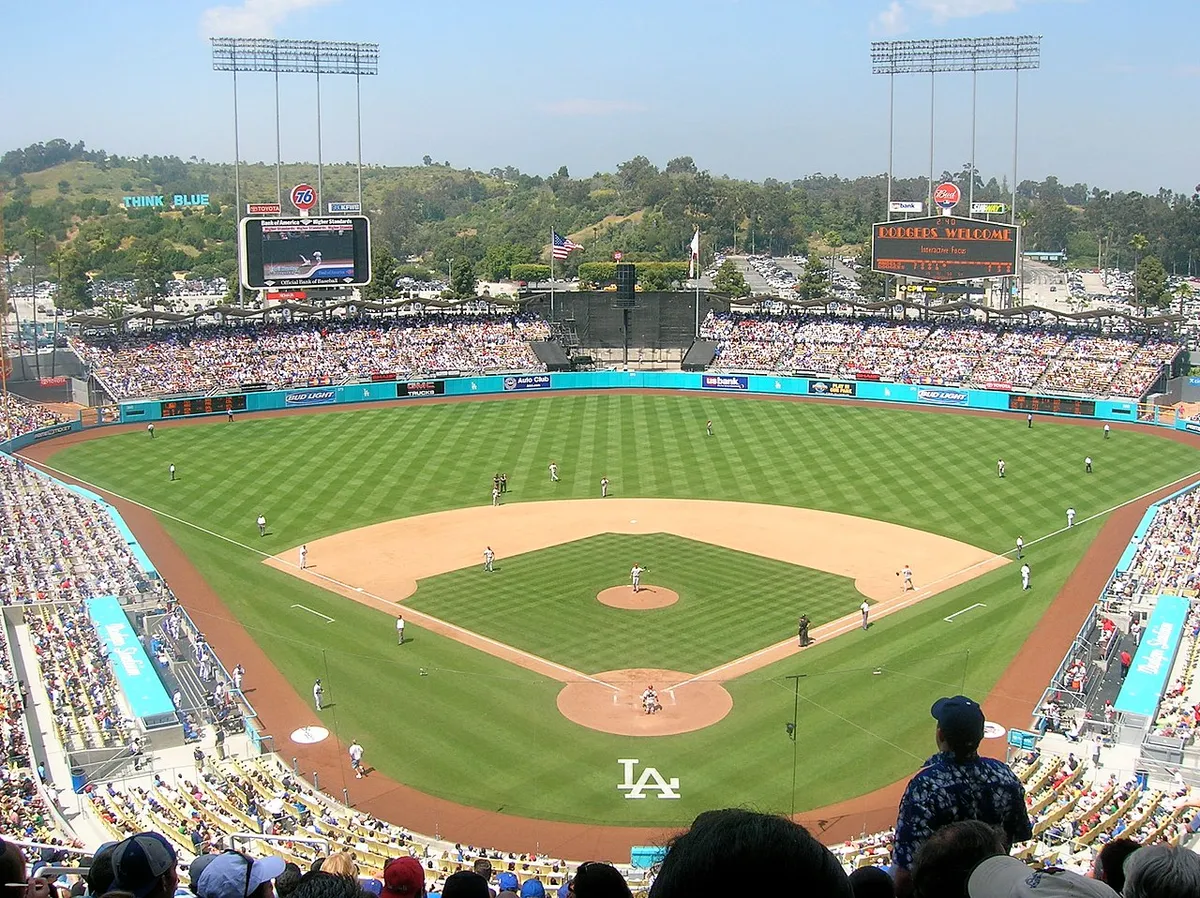
From a hilltop in Chavez Ravine, two miles north of downtown Los Angeles, Dodger Stadium looks out on the San Gabriel Mountains framing the outfield, with the downtown skyline behind you if you are sitting up in the top deck. At 56,000 seats, it’s the largest ballpark in Major League Baseball, and on a clear evening, with the light going orange over the mountains, there’s no better seat in sports.
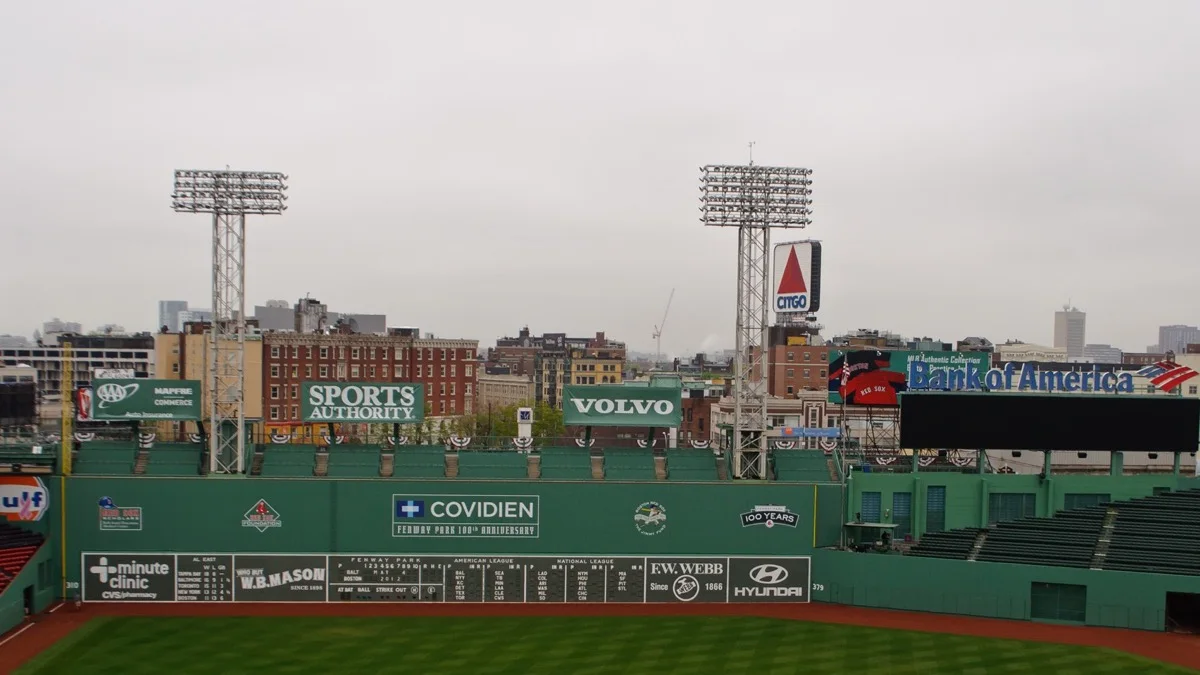
Home to the Los Angeles Dodgers since 1962, the stadium is the third-oldest active MLB park behind Fenway Park and Wrigley Field. Only two are older. Unlike those intimate pre-war venues, Dodger Stadium was purpose-built for the automobile age, carved into a hillside with layered parking lots that let fans walk directly to their seating level without climbing stairs. Revolutionary in 1962, and still working.
Walter O’Malley privately financed the $23 million construction, making it the first owner-funded major league ballpark since Yankee Stadium in 1923. Architect Emil Praeger, whose firm Praeger-Kavanagh-Waterbury drew the plans, created a modernist bowl with clean sight lines and a cantilevered roof that shades the upper deck. The stadium underwent a $100 million renovation in 2019-2020 that added the two-acre center-field plaza, new dining options, and improved accessibility.
Dodger Stadium has hosted 12 World Series, two MLB All-Star Games (1980, 2022), a 1987 papal Mass, Olympic baseball in 1984 (and again in 2028), and concerts from the Rolling Stones to Elton John. The Dodgers won back-to-back titles in 2024 and 2025, their eighth and ninth championships overall.
Getting to Dodger Stadium
Public Transit
The Dodger Stadium Express is a free bus service operated by LA Metro that runs on all game days. It’s by far the best way to avoid the infamous stadium traffic.
→ From Union Station: Board at the West Portal on Alameda Street (facing downtown). Service begins 2.5 hours before first pitch and runs through the second inning. Return buses run until 45 minutes after the final out. Union Station parking is $8.
→ From the South Bay: The Express stops at Slauson, Manchester, Harbor Freeway, Rosecrans, and Harbor Gateway Transit Center (Bay 9). Free parking is available at these stations on a first-come, first-served basis.
You need a valid game ticket to board the Dodger Stadium Express. The ride from Union Station takes about 10-15 minutes depending on traffic.
Driving + Parking
Dodger Stadium is accessible from multiple freeways, but post-game traffic on the narrow exit roads is notorious. GPS users should enter “1000 Vin Scully Avenue, Los Angeles, CA 90012.”
→ From the 110 Freeway (north or south): Exit at Stadium Way / Dodger Stadium. Follow signs to Gate A or B.
→ From the 5 Freeway (north): Exit at Stadium Way. Follow signs to the stadium.
→ From the 101 Freeway: Exit at Alvarado Street or Echo Park Avenue, then follow signs north to the stadium.
Parking prices change by event and by season, and 2026 reporting put general prepaid parking around $40, with a premium for paying at the gate and more again for the preferred lots nearest the entrances. Buy in advance from the Dodgers rather than relying on a number from anywhere else. Arrive early, the lots are tiered into the hillside, and getting settled before the crowds makes a real difference.
Rideshare
Uber and Lyft have a designated pickup and drop-off area near Lot 1, entering through Gate B. After the game, expect 20-40 minute waits and surge pricing during the immediate post-game rush.
Pro tip: Grab a Dodger Dog at the center-field plaza after the final out, let the initial wave clear, then order your ride. You’ll save money and time.
From the Airport
→ Hollywood Burbank Airport (BUR): 12 miles north, 18-30 minutes by car. The closest and most convenient airport for Dodger Stadium. No direct transit, rideshare or car rental is your best bet.
→ Los Angeles International (LAX): 20 miles southwest, 30-50 minutes by car depending on traffic. By transit, take the LAX FlyAway bus to Union Station, then the Dodger Stadium Express on game days.
Watching a Game at Dodger Stadium
The first thing to know about a seven o’clock start is which side of the bowl the sun is on. Home plate points north-northeast, which puts third base on the western side and first base opposite, so the low evening sun drops behind the third-base stands and shines straight into the seats along the first-base line and the right-field pavilion. Those are the ones that squint through the early innings. A noon game is fine. Third base is the shaded side, and the compensation for everyone arrives about an hour later, when the light goes orange over the San Gabriels beyond center field.
The second warning is the stairs. Walter O’Malley’s great innovation was terracing the parking into the hillside so that you enter on the level your seat is on, and that part still works exactly as intended. Once you are inside the top deck, though, the rake is severe and the steps are steep enough that fans caution each other about them in earnest, particularly for anyone uneasy with heights. Take it slowly, and think twice about the very top rows with small children.
Then there is the scale, which does not read from photographs. This is the largest ballpark in baseball by capacity and fans who have worked through other parks say the top deck here feels farther from home plate than anywhere else they have been. The upside is that those distant corner seats are cheap when they are sold at all, since the wings often stay closed for anything short of a marquee game, and the view down the length of the field with the mountains beyond is the one people photograph.
The food question has one obvious answer and it is not really up for debate. The Dodger Dog is the thing, eaten at least once, and the arguments among regulars are about grilled versus steamed rather than whether to bother. Beyond that, the two-acre center-field plaza added in the 2020 renovation turned the outfield into somewhere you can actually spend an hour before first pitch, which the stadium conspicuously lacked for its first fifty-eight years.
Construction & Design
Building Dodger Stadium meant moving a mountain. When Walter O’Malley brought the Dodgers west, the city handed him roughly 300 acres of rugged land in Chavez Ravine, or 315.86 once the lawyers had finished stipulating the number, and turning those hills into a ballpark took nearly three years and about eight million cubic yards of earth, graded and shifted into a level field ringed by terraced parking. The architect Emil Praeger drew the plans, William Simpson and Associates engineered the structure, the Vinnell Corporation built it, and O’Malley paid the $23 million bill himself, the first privately financed big-league park since the original Yankee Stadium in 1923.
That land did not come free, and not only in dollars. Through the 1950s the city had cleared the Mexican-American neighborhoods of Chavez Ravine under eminent domain, originally for public housing that was never built. The episode, remembered as the Battle of Chavez Ravine, displaced families who had lived there for generations, and the ballpark that rose on the site has never fully shed that history. It is part of the place, whether the scoreboard mentions it or not.
The design itself was ahead of its time. Praeger terraced the parking into the hillside so fans could enter near their seating level instead of climbing ramps, and he cantilevered the grandstand so almost no seat sits behind a post. The outfield pavilions wear a wavy, zigzag roofline that became a signature, and the symmetrical outfield opens to the San Gabriel Mountains beyond center field. For a stadium built for the automobile age, it has aged remarkably well.
The capacity has stayed frozen at 56,000 by design. A conditional-use permit ties the number to the parking, so whenever the team adds premium seats down low, it removes seats up top to hold the line. That quirk has kept Dodger Stadium the largest ballpark in baseball for sixty years. A roughly $100 million renovation in 2020 added a two-acre center-field plaza and reworked the pavilions without ever touching that number.
Dodger Stadium Beyond Baseball
A ballpark on a hill with 56,000 seats and its own road system turns out to be useful for a great many things that are not baseball. Two Olympic Games, for a start. A pope, and six decades of touring bands.
The stadium hosted Olympic baseball during the 1984 Summer Games, though the sport was a demonstration event then rather than a medal one. That changes in 2028, when Dodger Stadium stages the Olympic baseball tournament proper, gold and bronze medal games included. Softball, the sport most people assume travels with it, goes to Devon Park in Oklahoma City instead, part of a small Oklahoma subsite that also stages canoe slalom. Every site is mapped in our Los Angeles 2028 Olympics guide.
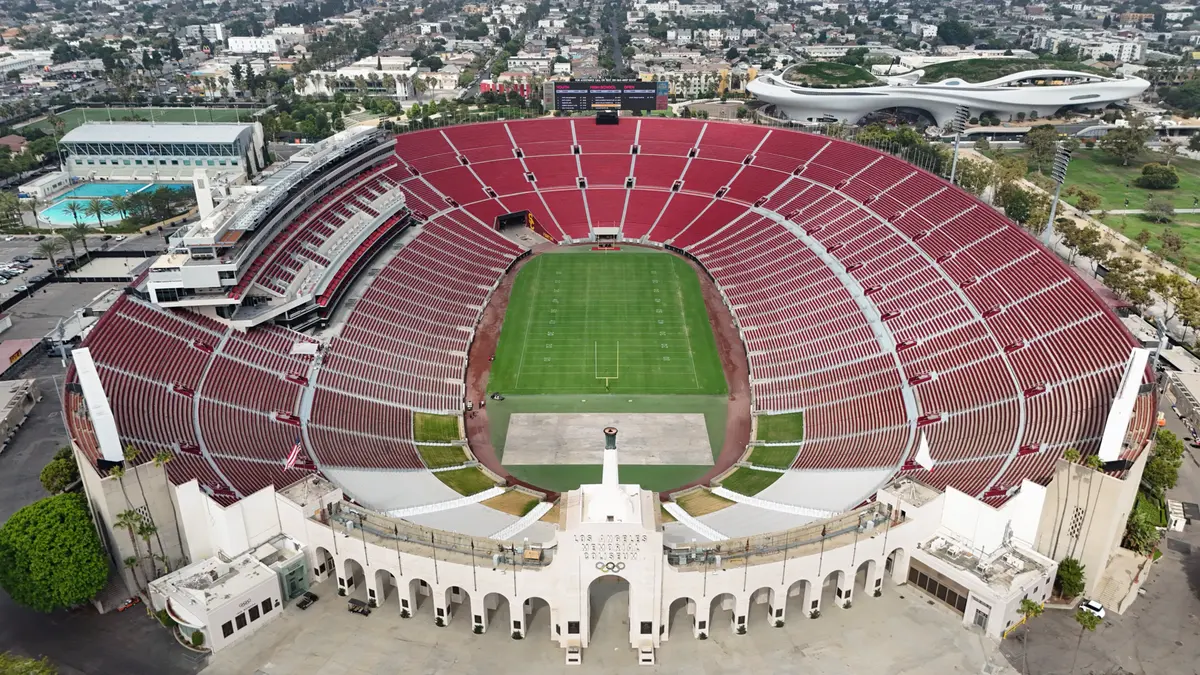
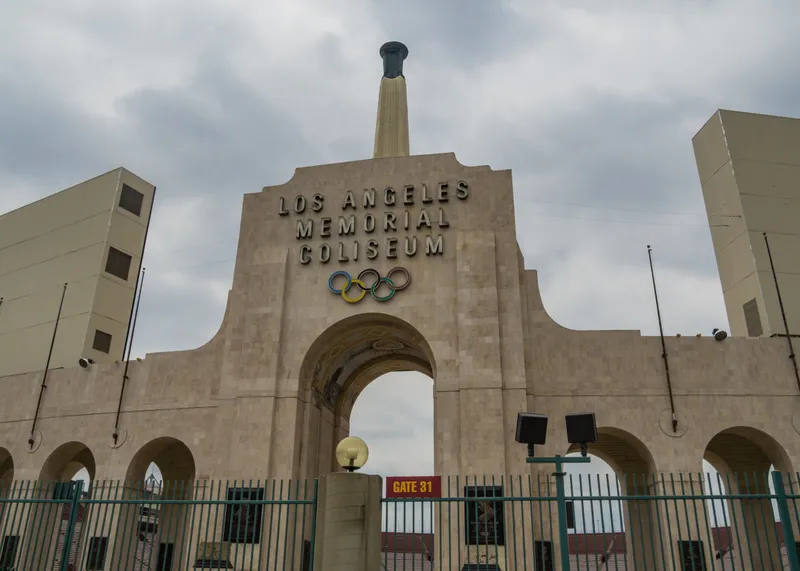
Pope John Paul II celebrated Mass here on September 16, 1987, before a congregation of about 63,000. It was his second Mass in as many days: the night before he had drawn 103,854 to the LA Memorial Coliseum across town, by that venue’s own count.
The concert history reads like a Rock and Roll Hall of Fame ballot: the Rolling Stones, Elton John, and the Beatles on August 28, 1966, on what turned out to be their final tour. The center-field plaza added during the 2020 renovation has made the stadium a year-round destination, not just a game-day venue.
History of Dodger Stadium
When Walter O’Malley moved the Brooklyn Dodgers to Los Angeles in 1957, he needed a stadium. He did not have one. For four seasons the Dodgers played in the LA Memorial Coliseum, a track and field bowl so ill-suited to baseball that left field sat 251 feet from home plate behind a 42-foot screen. A stopgap, and it showed. The city offered roughly 300 acres of hilly land in Chavez Ravine, O’Malley hired architect Emil Praeger to design a modernist ballpark carved into the terrain, and construction began on September 17, 1959, requiring workers to move eight million cubic yards of earth and rock to reshape the Stone Quarry Hills.
- Opening Day (April 10, 1962): The Dodgers played their first game before 52,564 fans. The stadium cost $23 million, entirely privately financed.
- World Series Titles (1963, 1965, 1981, 1988): Sandy Koufax dominated in the ’60s, and Kirk Gibson’s walk-off home run in Game 1 of the 1988 Series became one of baseball’s most replayed moments.
- All-Star Games (1980, 2022): The 2022 Midsummer Classic brought renovated Dodger Stadium back to the national spotlight.
- Seat Replacement and Color Restoration (2005-06 offseason): Every seat was replaced and the original 1962 palette restored, yellow, light orange, turquoise and sky blue running level by level up the bowl.
- $100 Million Renovation (2019-2020): Added the two-acre center-field plaza with new concessions, a Dodgers museum, improved accessibility, and gathering spaces that opened the stadium up beyond the seating bowl.
- 2024-2025 World Series Titles: The Dodgers beat the Yankees in five games in 2024 for their eighth title, their first won at Dodger Stadium since 1988. The 2020 championship in between does not count against that, because the pandemic sent that World Series to a neutral site at Globe Life Field in Arlington, Texas. They repeated in 2025 for a ninth, back to back.
- 2028 Olympics (upcoming): Dodger Stadium hosts the Olympic baseball tournament, medals included, sixty-six years after it opened. Softball is not paired with it: that goes to Devon Park in Oklahoma City.
Sources & Further Reading
- Wikipedia entry on Dodger Stadium: en.wikipedia.org/wiki/Dodger_Stadium. Construction, the Chavez Ravine history, the design, and renovations.
- Ballparks of Baseball, Dodger Stadium: ballparksofbaseball.com. A detailed ballpark reference and timeline.
- SABR, Dodger Stadium: sabr.org. The Society for American Baseball Research profile.
- Los Angeles Dodgers official ballpark page: mlb.com/dodgers/ballpark. Events, tickets, and visitor information.
Quick Facts
Everything you need at a glance.
Stadium specs
- Capacity
- 56,000
- Opened
- 1962
- Cost
- $23 million (1962 original); 2020 center-field plaza renovation around $100 million
- Roof
- Open
- Surface
- Natural Grass
- Tenants
- Los Angeles Dodgers (MLB)
Construction & location
- Groundbreaking
- September 17, 1959
- Architects
- Emil Praeger (Praeger-Kavanagh-Waterbury)
- Engineering
- William Simpson & Associates
- General contractor
- Vinnell Corporation
- Address
- Dodger Stadium, 1000 Vin Scully Avenue, Los Angeles, CA 90012
- GPS
- 34.0739°N, 118.2400°W
Photo Gallery
Fun Facts
Dodger Stadium is the third-oldest MLB ballpark (after Fenway Park and Wrigley Field) and the largest by seating capacity at 56,000.
The stadium was the first privately financed major league ballpark since Yankee Stadium in 1923, costing $23 million to build in 1962.
Dodger Stadium has hosted 12 World Series spanning more than sixty years, from 1963 to back-to-back Dodgers titles in 2024 and 2025, their eighth and ninth championships.
Stadium Location
Frequently Asked Questions
- What is the seating capacity of Dodger Stadium?
- Dodger Stadium seats 56,000, making it the largest ballpark in Major League Baseball by seating capacity. Non-baseball events that put crowds on the field have gone considerably higher: the 1987 papal Mass drew about 63,000.
- Which side of Dodger Stadium gets the sun for an evening game?
- The first-base side and the right-field pavilion. Home plate points north-northeast, so third base sits on the western side of the bowl and the setting sun drops behind those stands, leaving the seats opposite squinting into it through the early innings. If you are choosing between similar seats for a seven o'clock start in summer, take the third-base side. Everyone gets the payoff about an hour in, when the light turns orange over the San Gabriels beyond center field.
- Where is Dodger Stadium located?
- Dodger Stadium is at 1000 Vin Scully Avenue in the Chavez Ravine area of Los Angeles, about 2 miles north of downtown LA. It sits on a hilltop in Elysian Park with views of the San Gabriel Mountains and the downtown skyline.
- Are the top deck seats worth it at Dodger Stadium?
- They are cheap, the view over the field to the mountains is the one people photograph, and they come with two warnings. The stairs up there are steep enough that regulars caution each other about them, so think twice with small children or if heights bother you. And this is the largest ballpark in baseball by capacity, which the top deck makes you feel: fans who have worked through other parks routinely say home plate looks farther away from up here than anywhere else they have sat.
- How do I get to Dodger Stadium by public transit?
- The free Dodger Stadium Express bus runs from Union Station (West Portal on Alameda Street) and from several South Bay Metro stations directly to the stadium on game days. Service starts 2.5 hours before first pitch and runs through the end of the second inning. Return buses run until 45 minutes after the final out.
- Is there parking at Dodger Stadium?
- Yes. Extensive lots are terraced into the hillside around the stadium, but prices move by event and by season, so buy from the Dodgers directly rather than trusting any figure you read elsewhere, including ours. As a rough guide for 2026, general prepaid parking sits around $40, with a premium for paying at the gate and more again for the preferred lots. The free Dodger Stadium Express sidesteps the question entirely.
- When was Dodger Stadium built?
- Dodger Stadium opened on April 10, 1962, after nearly three years of construction that involved moving eight million cubic yards of earth in the Chavez Ravine hills. It was designed by architect Emil Praeger and cost $23 million, privately financed by Dodgers owner Walter O'Malley.
- Will Dodger Stadium host the 2028 Olympics?
- Yes, for baseball. Softball, which most people assume travels with it, is being played at Devon Park in Oklahoma City instead, part of a small Oklahoma subsite that also takes canoe slalom. Dodger Stadium staged baseball at the 1984 Games too, though the sport was a demonstration event then rather than a medal one. In 2028 it is the real thing, gold and bronze medal games included.
- Can I visit Dodger Stadium without attending a game?
- Yes. The Dodgers offer behind-the-scenes stadium tours that include the Dodger dugout, the press box, the field, and exclusive club areas. Tours are available on non-game days year-round. Check mlb.com/dodgers for schedules and tickets.
- Who designed and built Dodger Stadium?
- Dodger Stadium was designed by architect Emil Praeger, engineered by William Simpson & Associates, and built by the Vinnell Corporation between 1959 and 1962. Dodgers owner Walter O'Malley financed the $23 million project privately, the first owner-funded major league ballpark since the original Yankee Stadium in 1923.
- What was the Battle of Chavez Ravine?
- Before the stadium was built, the city of Los Angeles cleared the Mexican-American neighborhoods of Chavez Ravine through eminent domain in the 1950s, originally for public housing that was never built. Families who had lived there for generations were displaced, an episode remembered as the Battle of Chavez Ravine, and the land later became the site of Dodger Stadium.
- Why is Dodger Stadium's capacity capped at 56,000?
- The figure is fixed by a conditional-use permit that ties the seat count to the stadium's parking. Whenever the Dodgers add premium seats in the lower bowl, they remove seats elsewhere to stay at 56,000. That cap has kept Dodger Stadium the largest ballpark in Major League Baseball by capacity for more than sixty years.
Last updated: 2026-08-17