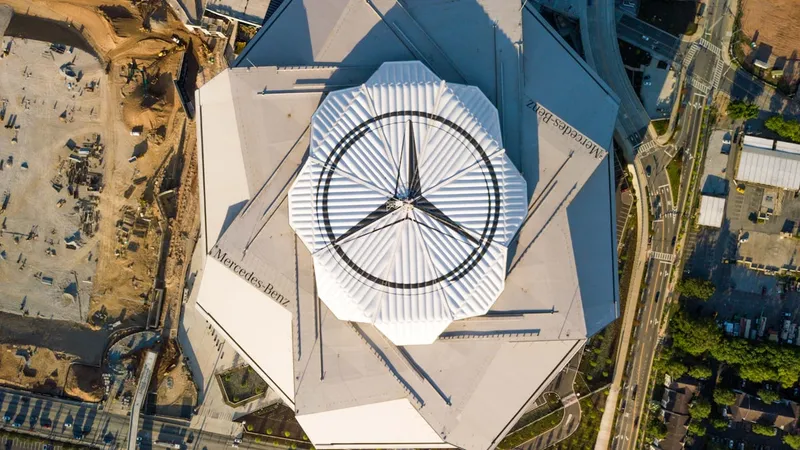
In 1996, a college stadium in Atlanta with about 15,000 seats hosted the Olympic field hockey finals. Since 2014 it’s had a chain on the gate and weeds on the field. Nobody demolished it and nobody reopened it. Nobody decided anything, and that’s how a stadium ends up empty.
That’s Herndon Stadium, and it’s one of eight places on this page. You’ve probably seen a couple of the others in photos: the dome in Houston with nobody in it, the roofless concrete bowl in Valencia. Each one emptied for a reason you can name, and “abandoned” usually turns out to be a polite word for “nobody wants to sign the check.” Two of them are on their way back. Love had very little to do with it.
| Stadium | City | Opened | Empty since | Why it emptied | Status, November 2026 |
|---|---|---|---|---|---|
| Herndon Stadium | Atlanta | 1948 | 2014 | Morris Brown College sold it to pay debts | Standing, abandoned, owned by Clark Atlanta University |
| Astrodome | Houston | 1965 | 2009 | Closed to the public after code violations | Standing, vacant; county weighing demolition vs renovation |
| Miami Marine Stadium | Miami | 1963 | 1992 | Declared unsafe after Hurricane Andrew | Standing; voters approved an operator in August 2026 |
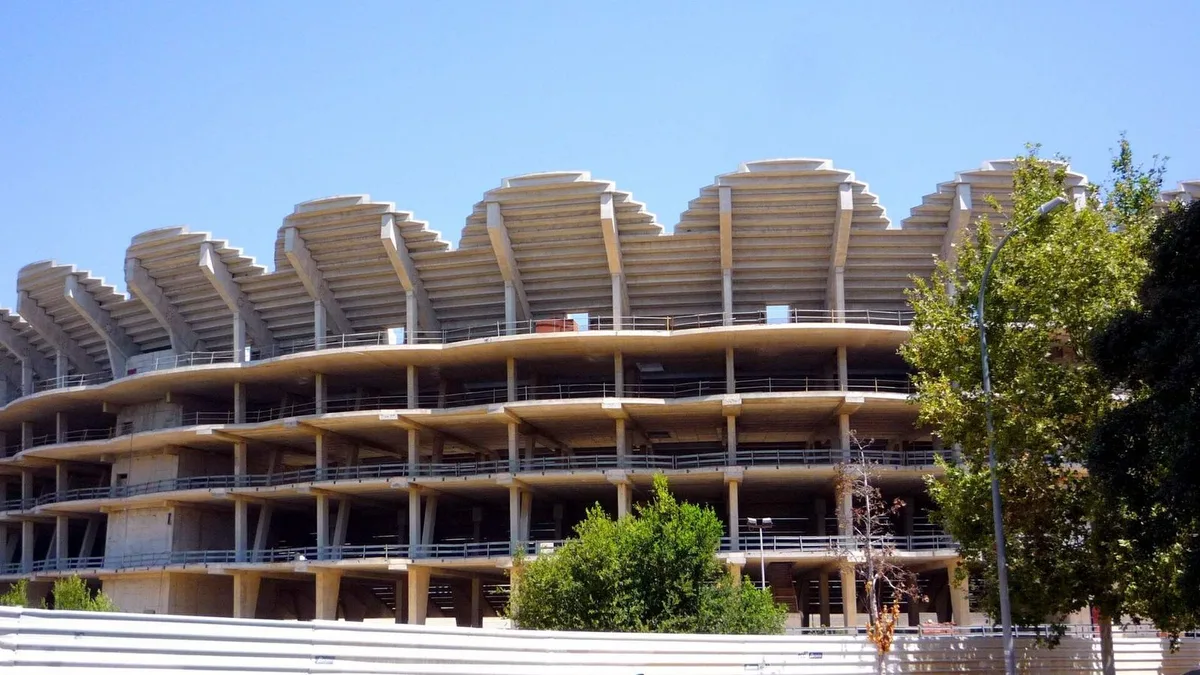
| Nou Mestalla | Valencia, Spain | Never opened | 2009 | Valencia CF ran out of money mid-build | Work resumed January 2025; target 2027 |
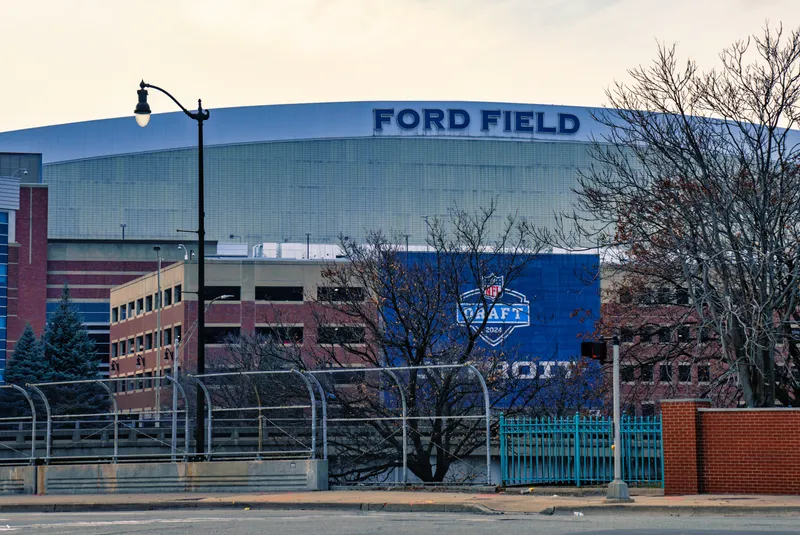
| Pontiac Silverdome | Pontiac, Michigan | 1975 | 2002 | The Lions left for Ford Field | Demolished; Amazon site |
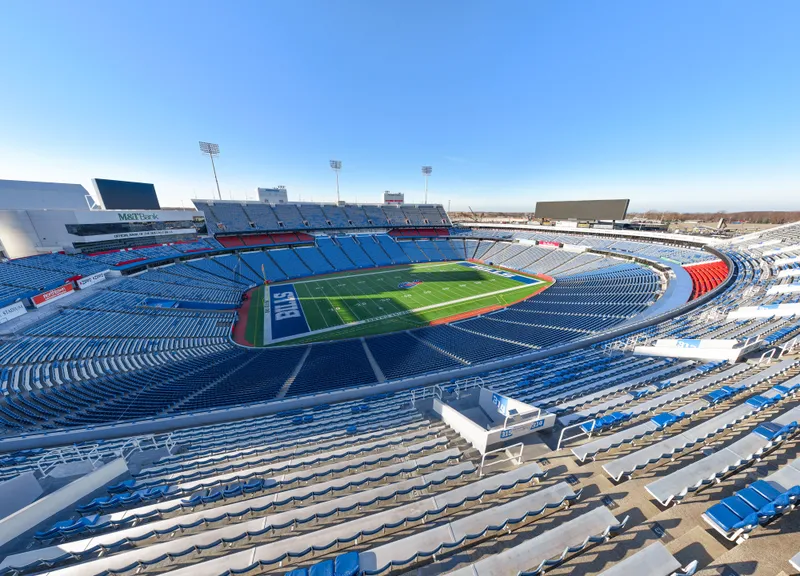
| Old Highmark Stadium | Orchard Park, New York | 1973 | 2026 | The Bills moved across the street | Being demolished |
| Hellinikon venues (Athens 2004) | Athens | 2004 | After the Games | The Olympics ended | Site cleared and redeveloped |
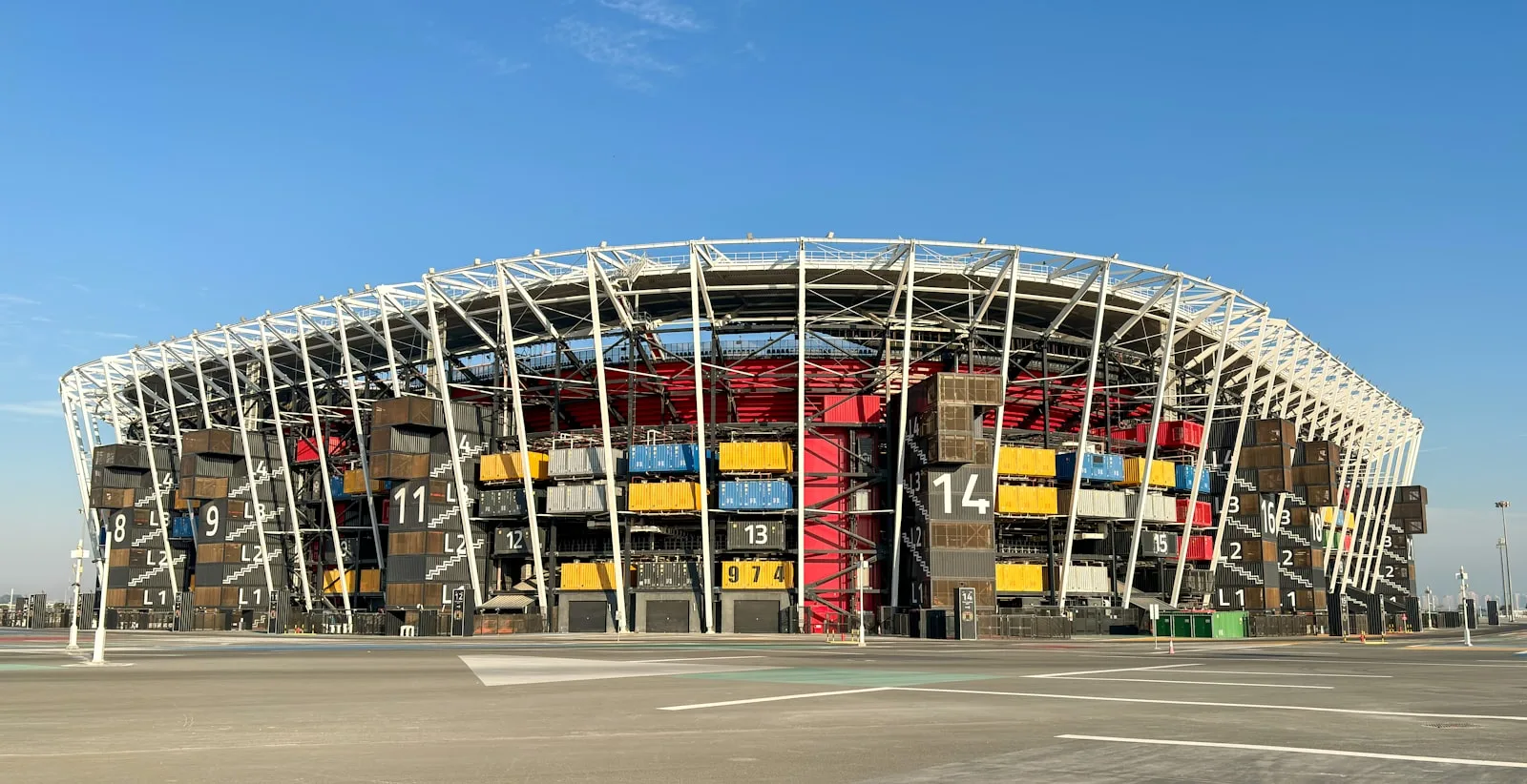
| Stadium 974 | Doha | 2021 | Never emptied | Built to be dismantled | Still standing, still used |
Start with the last column. Only three of the eight are a building sitting empty right now: Herndon, the Astrodome and Miami Marine Stadium. The other five are gone or going, back under construction, or never emptied at all. Type “abandoned” into a search box and you get four different fates filed under one word, and it helps to know which one you’re looking at.
Why stadiums get abandoned
Stadiums get abandoned in four ways, and the eight on this page cover all of them. Nobody sets out to do it. The owner runs out of money, the building fails, the tenant leaves, or the event it was built for ends.
The money ran out at two of them. Morris Brown College sold Herndon to address its debts, and Valencia CF stopped work on Nou Mestalla in February 2009 as the financial crisis and the club’s own debts bit. The building failed at two more: the Astrodome closed to the public in 2009 after code violations, and Miami Marine Stadium was declared unsafe after Hurricane Andrew in 1992. At the Silverdome and the old Highmark, the tenant left, the Lions for Ford Field in 2002 and the Bills for a new stadium across the street in 2026. And in Athens the event simply ended, which is the fate Qatar built Stadium 974 to avoid.
Only one of the eight was a surprise: Hurricane Andrew. A college’s debts don’t arrive overnight, and an Olympics has its closing date set years before the torch arrives.
Look at what the three still standing empty have in common. Nobody voted to let them rot. They went years, in Miami’s case 34 of them, without the money a decision costs. A padlock is cheaper than a renovation and cheaper than a demolition crew, so at Herndon, the Astrodome and Miami, somebody locked the gate and left the real question for whoever came next. Atlanta’s padlock has been on since 2014.
Herndon Stadium: Atlanta’s abandoned Olympic venue
Herndon Stadium, the Atlanta venue that hosted the 1996 Olympic field hockey finals, has sat padlocked since 2014, and that ought to be a bigger embarrassment than it is.
Herndon opened in 1948 at Morris Brown College. It was the home field for Morris Brown football and hosted high school football games, and in the early 2000s the Atlanta Beat, a professional women’s soccer team, played there briefly. For the 1996 Games it was rebuilt and renovated. It was never a giant, and after its turn at the Olympics it went back to being one college’s responsibility.
Stand at the fence on a weekday now and the place is quieter than a stadium has any right to be. The gates are chained and padlocked. Weeds have taken the field where those Olympic finals were played, and the walls carry coat after coat of other people’s spray paint. Somewhere under all of it is the bowl where Ray Charles set up on a rainy night, May 28, 1959, and recorded a live album. No one sells a ticket to that history now. You’d have to climb in to see it, and people do.
Morris Brown sold the stadium in 2014 to address its debts, and ownership has since passed to Clark Atlanta University. There was no storm here and no team leaving town, only a college that needed the money more than it needed a stadium.
The building has had one notable job since: in the 2024 film Civil War, it stood in as a refugee camp. There was talk of another. In 2023 an Atlanta council member and FIFA officials discussed reopening Herndon for the city’s 2026 World Cup matches, and by April 2025 nothing had come of it. Nothing about the stadium’s future is settled in either direction. The World Cup came to Mercedes-Benz Stadium and went, and Herndon’s gates stayed chained.
The Astrodome: too famous to demolish, too expensive to save
The Astrodome isn’t abandoned so much as stuck. Every option costs money, and the cheapest one means flattening a state landmark.
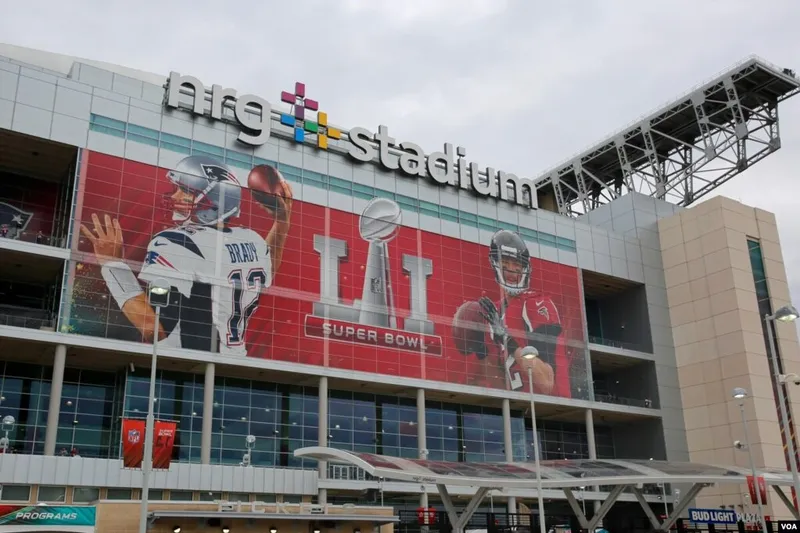
It opened in April 1965 with an exhibition baseball game on April 9, and it was known as the “Eighth Wonder of the World.” The Astros played their last game there in October 1999, and it hasn’t had a major-league tenant since. In 2009 it was closed to the public after code violations, and for the 17 years since it has sat locked, right next door to the current stadium at NRG Park. Drive in for a game and it’s still there, enormous and shut. Harris County still pays to keep a building nobody can enter.
Houston has had its chances to settle this. In November 2013, Harris County voters were asked for up to $217 million in bonds to turn the dome into an event space, and 53% said no. Since then the building has only gotten harder to touch. It went on the National Register of Historic Places in January 2014 and became a State Antiquities Landmark on January 27, 2017, which means any alteration needs state approval. A later county renovation plan won approval, then was shelved under County Judge Lina Hidalgo.
$750 million+ What Harris County’s study says it would cost just to make the Astrodome usable again, against about $55 million to tear it down.
The study came out in December 2025, and the detail is worse than the headline. The larger sum only buys basic working order, meaning plumbing, heating and cooling. Historic preservation isn’t in it, and the building would still be unsuitable for big college or pro sport. By our math the renovation estimate is nearly 14 times the demolition estimate.
Demolition means somebody putting their name on that order, and so far nobody has been willing to sign it. Interim County Administrator Jesse Dickerman said “it will not be financially feasible for Harris County to renovate the Astrodome without significant private investment.” Hidalgo, in January 2026, was shorter about it: “I would love to see it revived, but we can’t afford it.”
In August 2026 the nonprofit Astrodome Conservancy asked companies for adaptive-reuse ideas. It’s a polite way of asking whether anyone out there has a plan that pays.
Miami Marine Stadium: 34 years empty, and a vote to bring it back
Miami Marine Stadium is the one empty building on this page that’s coming back, and it took a ballot to get there.
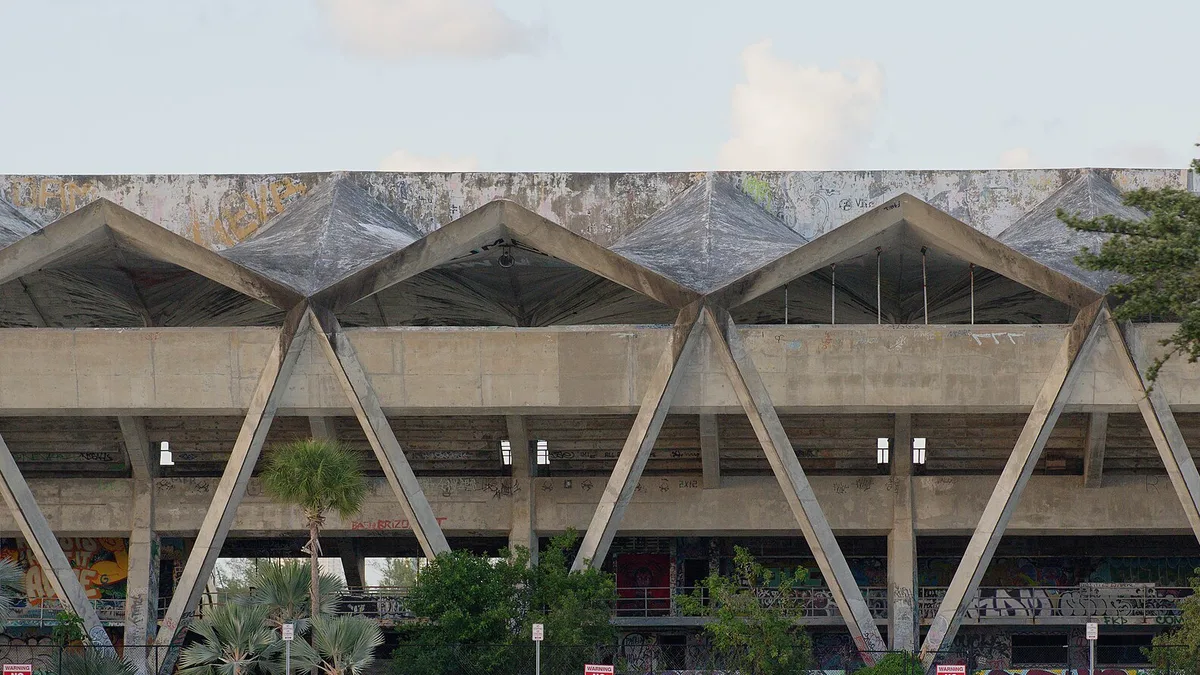
It was built in 1963 on Virginia Key for powerboat racing: 6,566 seats and a 326-foot folded concrete roof. According to the National Trust for Historic Preservation, that roof was the longest cantilevered concrete span on earth when it was built. The architect, Hilario Candela, was Cuban-born and 27 when he designed it.
Powerboats were the reason it existed, but the place took on other work. There were Easter sunrise services, and concerts on a floating stage with hundreds of boats gathered round. Jimmy Buffett played there and called it a “little cathedral of musical fun.” A Nixon campaign rally came through in 1972 with Sammy Davis Jr., and Elvis Presley’s 1967 film Clambake shot scenes there.
34 years How long Miami Marine Stadium has sat closed since Hurricane Andrew, as of 2026.
It was declared unsafe and closed in 1992, after Hurricane Andrew, and it’s been fenced off and covered in graffiti ever since. A kid born in Miami that year is in their thirties now and has never seen a boat race there.
The structure itself held up. Several studies found the stadium structurally safe; galvanized rebar had protected the concrete. In 2009 the National Trust named it one of America’s 11 Most Endangered Historic Places. None of that opened the gate.
The change came on August 18, 2026, when Miami voters approved a private operator to run the restored stadium, with more than 68 percent in favor. The agreement runs 40 years. The city keeps ownership and 93% of revenues, puts the event money toward repairs and upgrades, and pays the operator a management fee. What changed is that the events are now supposed to pay for the building, with professionals running them.
Don’t buy a ticket yet. The operator’s final plan still has to go back to the City Commission, nobody has given a reopening date, and the total cost hasn’t been determined. What gets built first is a “flex park” beside the stadium, tents and temporary structures meant to raise money for the full renovation. A concrete landmark’s comeback begins with tents.
Nou Mestalla: sixteen years as a concrete skeleton
Valencia’s Nou Mestalla spent almost sixteen years as a ruin on the city’s skyline, and it wasn’t even finished when it was abandoned.
Valencia CF broke ground in August 2007. By February 2009 the financial crisis and the club’s debts had caught up with the project, and work stopped with only the concrete bowl built. It stayed that way: no roof, no seats, weeds in the stands and graffiti around the base. Groundhoppers and urban explorers came to photograph it, and the club kept playing at the old Mestalla.
About €322 million The financing package that restarted Nou Mestalla after almost sixteen years as a shell.
Work resumed in January 2025, backed by a financing package of about €322 million, and the club will repay much of it by selling the old Mestalla site once it moves out. The ground Valencia never left is going to pay for the one it couldn’t finish. The target is summer 2027, at a planned 70,044 seats. The concrete hadn’t changed since 2009, and neither had the fans’ affection. What changed was a plan in which the old ground pays for the new one. Nostalgia, which had sixteen years to act, never poured a single column.
The Silverdome: how an abandoned NFL stadium ends
The Pontiac Silverdome got the ending that waits for an abandoned stadium nobody rescues, and it isn’t a restoration.
It opened in 1975 in Pontiac, Michigan, with about 80,000 seats and a build cost of $55.7 million. For years it got the big dates: Super Bowl XVI, matches at the 1994 World Cup, and in 1987 both WrestleMania III and a Pope John Paul II mass. Then the Lions left for Ford Field in 2002, and the building lost its main tenant.
$583,000 What Pontiac sold the Silverdome for in 2009, about 1% of the $55.7 million it cost to build.
In 2009 the city of Pontiac sold it at auction to a Canadian developer for $583,000, and that’s comparing 1975 dollars with 2009 ones, so the real share is smaller still. A city doesn’t let an NFL stadium go that cheaply by accident. It does it because an empty stadium is worth less, to the people responsible for it, than the trouble of keeping it.
The new owner never found a long-term user. A winter storm took the inflatable roof. On December 3, 2017, the implosion charges went off and the Silverdome was still there afterward: roughly 10% of the charges had failed because of a wiring problem, and the upper level stayed standing, a stadium nobody wanted refusing to fall down on cue. A second blast the next day brought it down, and excavators did most of the rest. The 127-acre site now holds an Amazon fulfillment center.
Is the old Highmark Stadium abandoned?
No. The old Highmark Stadium was replaced, and it’s coming down on a schedule, which is about as far from abandoned as a stadium gets.
The words get used as if they meant the same thing, and they don’t. An abandoned stadium is empty, still standing, and has no plan. A demolished one is gone, and a revived one is back in use. A stadium in the middle of demolition is the opposite of abandoned, because somebody made the decision.
The building in Orchard Park, New York, opened in 1973 as Rich Stadium and went through five names in 52 years, with 71,608 seats by the end. The Bills closed it on January 4, 2026, with a 35-8 win over the Jets. The power was cut that spring. What’s happening now is a phased mechanical demolition, with no implosion, and the site is due to be cleared by early 2027.
The new Highmark Stadium is directly across the street. Bills fans arriving for games in 2026 could watch the old one come apart piece by piece: 52 years of Sundays, dismantled in plain view. It’s a strange thing to pass on the way to your seat, and a healthy one. Nobody in Orchard Park is going to inherit a padlocked gate.
Abandoned Olympic and World Cup stadiums
The Athens 2004 venues are the Olympic ruins everybody photographs, and at Hellinikon the ruin isn’t how the story ends.
Ten years after the Games, in 2014, many of the venues sat abandoned, and others were getting by on the occasional conference or wedding. At the canoe-kayak venue the water had dried up and whole banks of seats had been removed, and out at Marathon the rowing center was overgrown. Those are the pictures people mean when they talk about Olympic ruins, and part of the record behind Los Angeles building no new permanent venues for 2028.
Then, at Hellinikon, somebody decided. From November 2021 the former Olympic Airways hangars there, converted into venues for 2004, were being demolished for the Ellinikon redevelopment. A lake is being built on the site of the old canoe-kayak venue, so water is coming back to the place where it dried up.
The World Cup has its own version: Brazil’s 2014 tournament left a national stadium in Brasília that ended up as a bus depot, one of the white elephants 2026 was built to avoid.
Qatar tried to design the problem away. Stadium 974 in Doha was built from shipping containers so it could be dismantled after the 2022 World Cup. A plan to move it to Maldonado, Uruguay, lapsed, and the stadium is still standing. It hosted the 2024 FIFA Intercontinental Cup and the 2025 FIFA Arab Cup. The stadium designed to disappear is the one that stayed.
Which abandoned stadiums come back
The abandoned stadiums that come back are the ones that find a plan that pays for itself. Sentiment can keep a stadium standing for decades. On this page it hasn’t reopened one.
Miami’s comeback runs on event money: the city keeps ownership and most of the revenue, and pays a professional operator to bring the events in. Valencia’s runs on real estate, with the old Mestalla site to be sold to pay off much of the cost of finishing the new one. Neither was saved by a benefactor, and neither was saved by love, though love is why there was still something standing to save. Harris County’s 2013 plan asked its voters to borrow up to $217 million for the dome, and they said no.
Run the others through the same test. The Silverdome never found a plan, and its site went to Amazon. The old Highmark never needed one, because its replacement was already built across the street, one of several new NFL stadiums taking over from old ones. Herndon is still waiting, and so is the Astrodome.
So the next time a photo of weeds in a grandstand stops you, skip the question of who loved the place. Ask what would pay for it.
The Astrodome is the one to watch. It’s the famous one and the expensive one: listed, landmarked, priced, and still undecided after 17 years. If the Conservancy’s call for ideas turns up the “significant private investment” the county says it needs, Houston gets something like Miami’s ending. If it doesn’t, the dome stays exactly as it is, a very large building waiting for someone to sign the check.
Sources
The Nou Mestalla, old Highmark Stadium, Stadium 974 and NRG Park facts come from our own stadium pages, linked in the text, which carry their own citations.
- Herndon Stadium: Atlanta History Center on the 1996 venue, the AJC on its past and future, Urbanize Atlanta a decade on. Opening, the Olympic finals, the 2014 sale, ownership and condition.
- The Astrodome: Handbook of Texas, Community Impact on the 2013 vote, KPRC on the county’s cost estimates, ABC13 on Hidalgo, January 2026, ABC13 on the Conservancy’s call, August 2026. Closure, the bond vote, landmark status, the 2025 study and what came next.
- Miami Marine Stadium: National Trust for Historic Preservation, WLRN on the August 2026 vote, AP via WUSF, the National Trust on the vote and next steps. Design, history, closure and the operator deal.
- Pontiac Silverdome: the Detroit Historical Society encyclopedia, WWE on WrestleMania III, ClickOnDetroit on the 2009 sale, Michigan Public on the sale and the roof, AP via KTVU on the failed implosion, AP via 6abc on the second blast, WHTC on the Amazon center. Build cost, events, sale price, roof, both blasts and the site today.
- Athens 2004: Reuters ten years on, Euronews ten years on, OT.gr on the Hellinikon demolition, Naftemporiki on the Ellinikon lake. The venues’ state in 2014 and the site since 2021.
- Civil War filming locations, ScreenRant. Herndon’s role as a refugee camp in the 2024 film.
Hero photo: Miami Marine Stadium by Wilfredor, CC0.
Facts were cross-referenced across at least two sources wherever possible. Where sources disagreed, on Herndon’s capacity, the Astrodome’s closure year and the Silverdome’s seating, we used the figure most sources agree on; the Astrodome study estimates are Harris County’s own, rounded.