In June and July, World Cup matches were played on real grass inside seven NFL stadiums that send NFL players out onto plastic. Crews laid the sod, the tournament ran on it, and then the crews came back and pulled it up. The turf went down again. The players’ union has a description for that: “a choice by certain NFL team owners to do for soccer players what they refuse to do for NFL players.”
This season, 16 of the NFL’s 30 stadiums play on natural grass and 14 play on artificial turf. Which side a player lands on has nothing to do with him. It was settled in a stadium decision he wasn’t part of, most often the one about the roof, and his knees live with the answer every home Sunday. The line falls where it does for reasons that are mostly about sunlight and scheduling, and this summer showed that a turf stadium can lay grass when it decides to.
Natural grass (16), including two hybrids
| Stadium | Team | Roof |
|---|---|---|
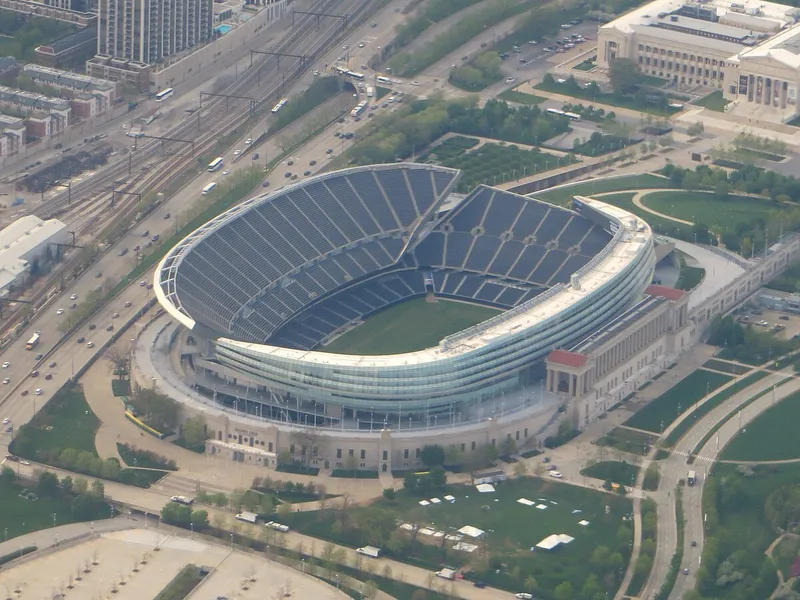
| Soldier Field | Chicago Bears | Open |
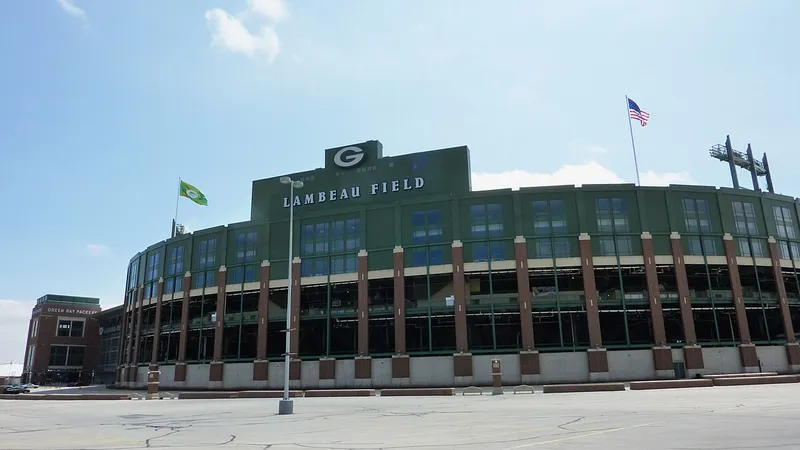
| Lambeau Field | Green Bay Packers | Open (hybrid grass) |
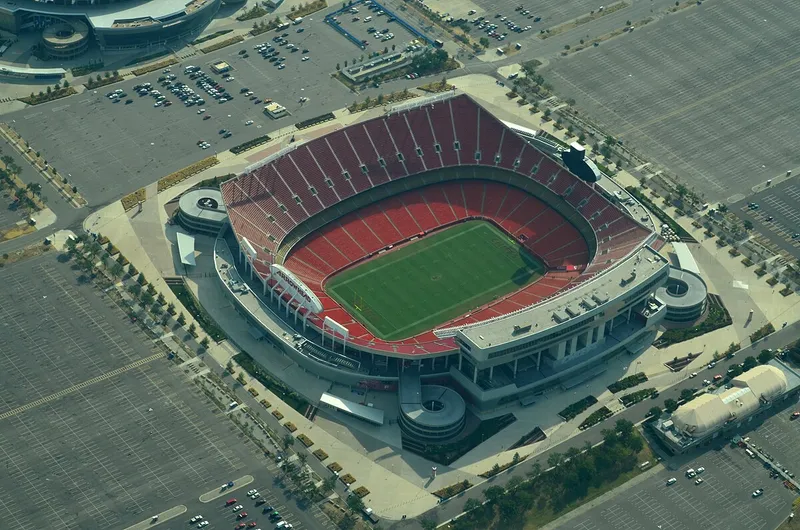
| Arrowhead Stadium | Kansas City Chiefs | Open |
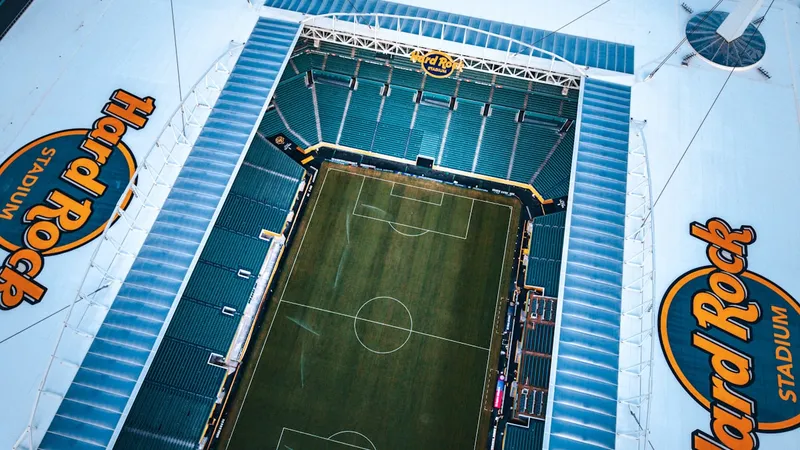
| Hard Rock Stadium | Miami Dolphins | Open, canopy |
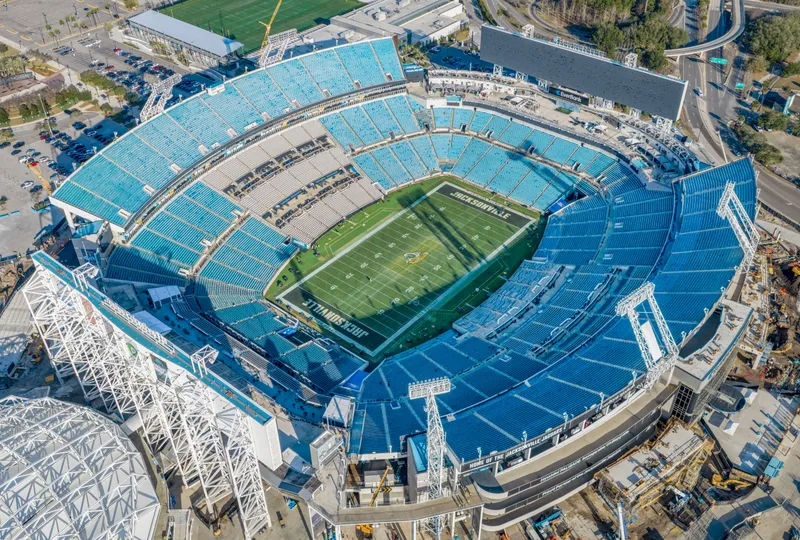
| EverBank Stadium | Jacksonville Jaguars | Open |
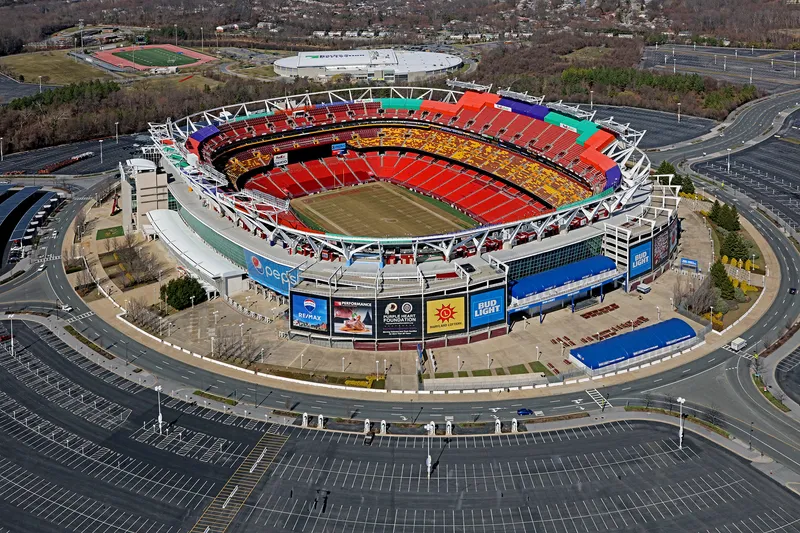
| Northwest Stadium | Washington Commanders | Open |
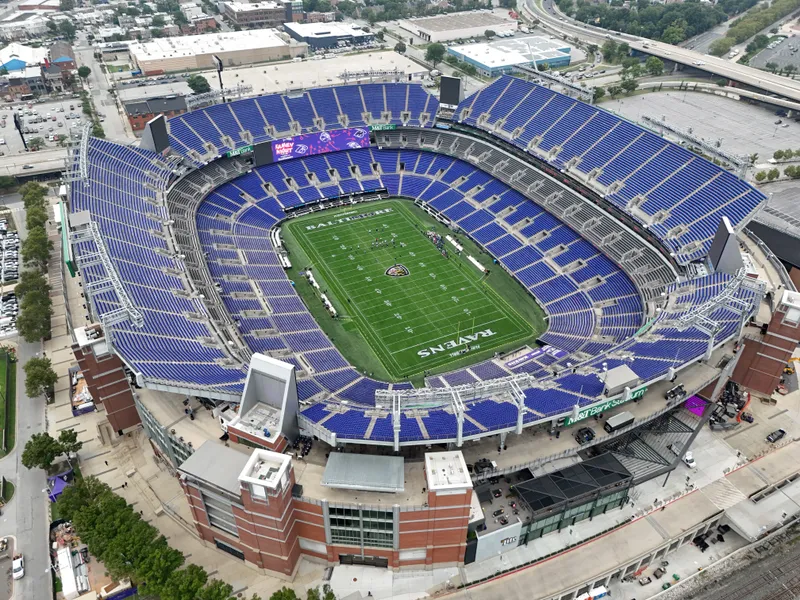
| M&T Bank Stadium | Baltimore Ravens | Open |
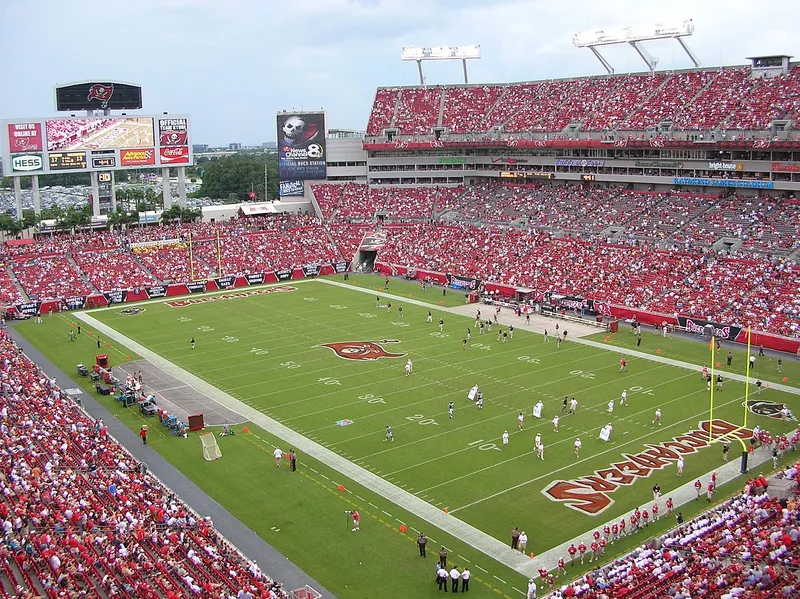
| Raymond James Stadium | Tampa Bay Buccaneers | Open |
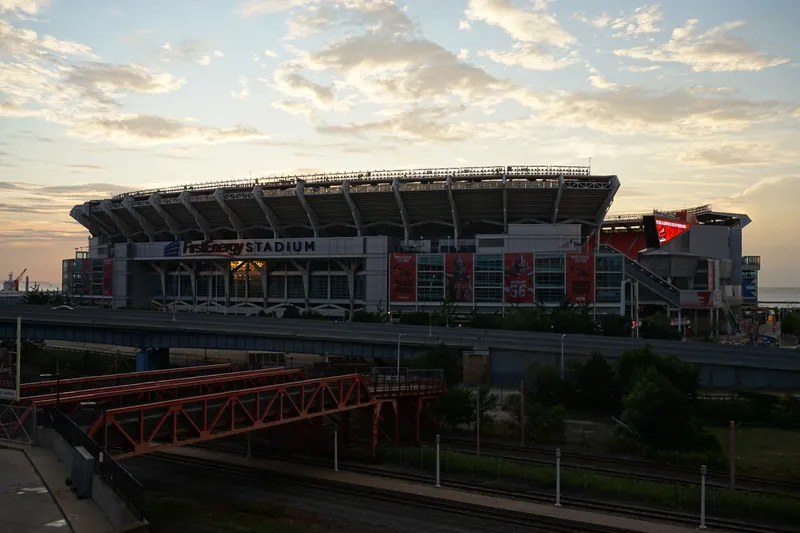
| Huntington Bank Field | Cleveland Browns | Open |
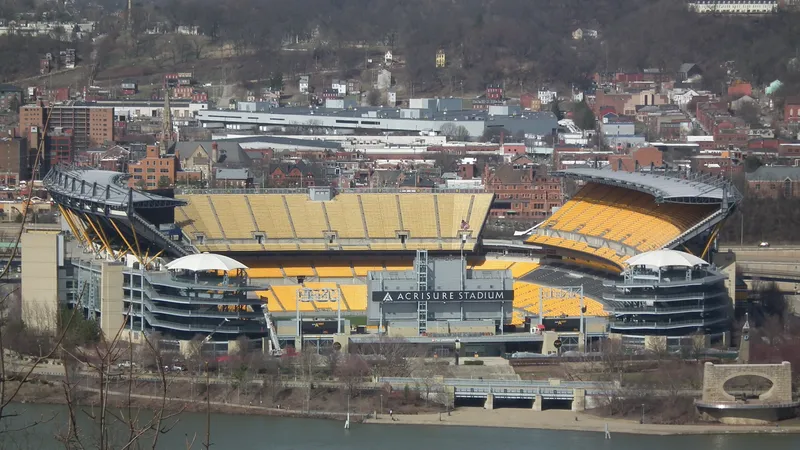
| Acrisure Stadium | Pittsburgh Steelers | Open |
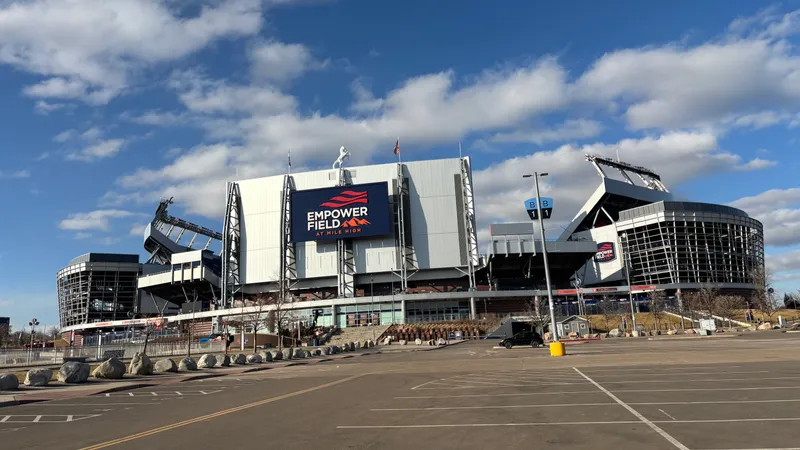
| Empower Field at Mile High | Denver Broncos | Open |
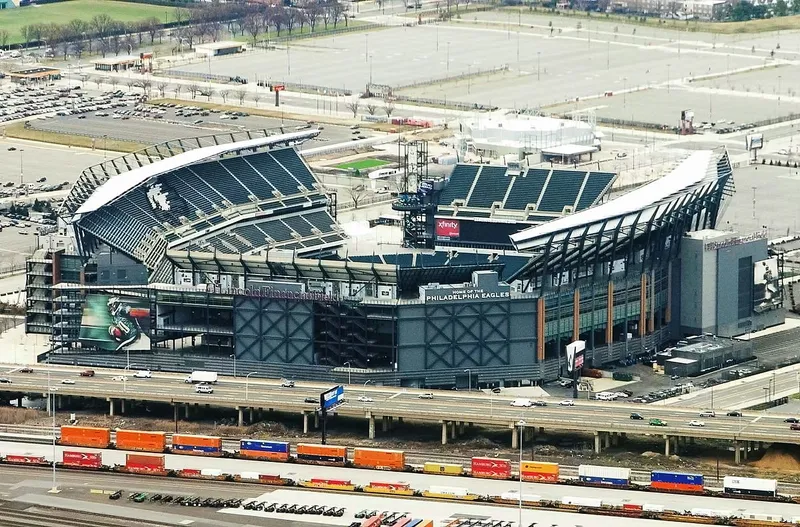
| Lincoln Financial Field | Philadelphia Eagles | Open (hybrid grass) |
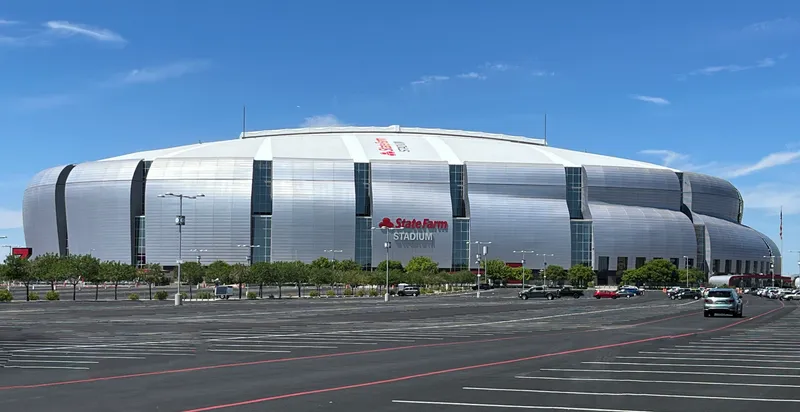
| State Farm Stadium | Arizona Cardinals | Retractable roof, roll-out grass tray |
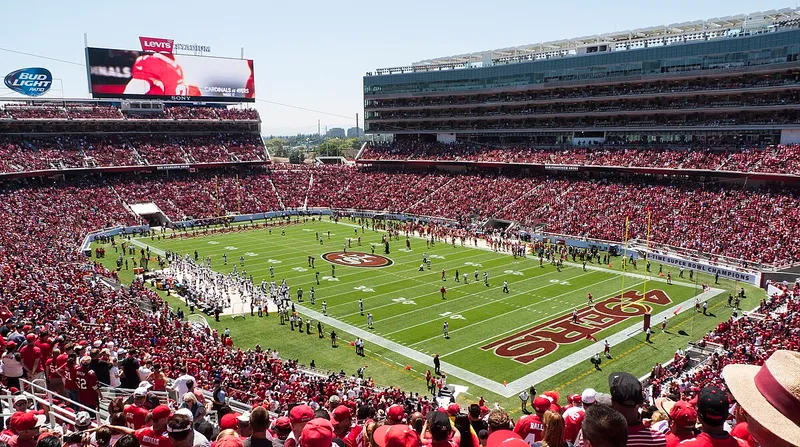
| Levi’s Stadium | San Francisco 49ers | Open |
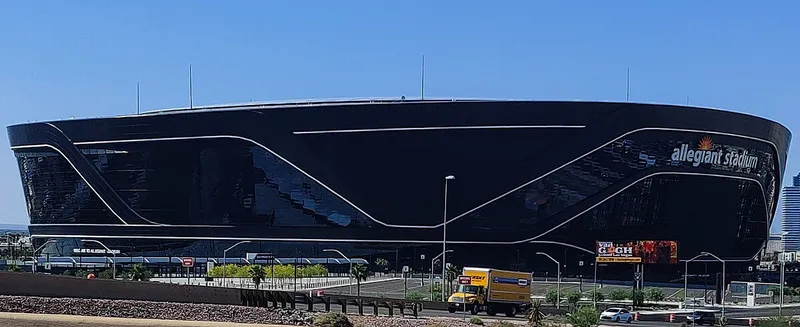
| Allegiant Stadium | Las Vegas Raiders | Dome, roll-out grass tray |
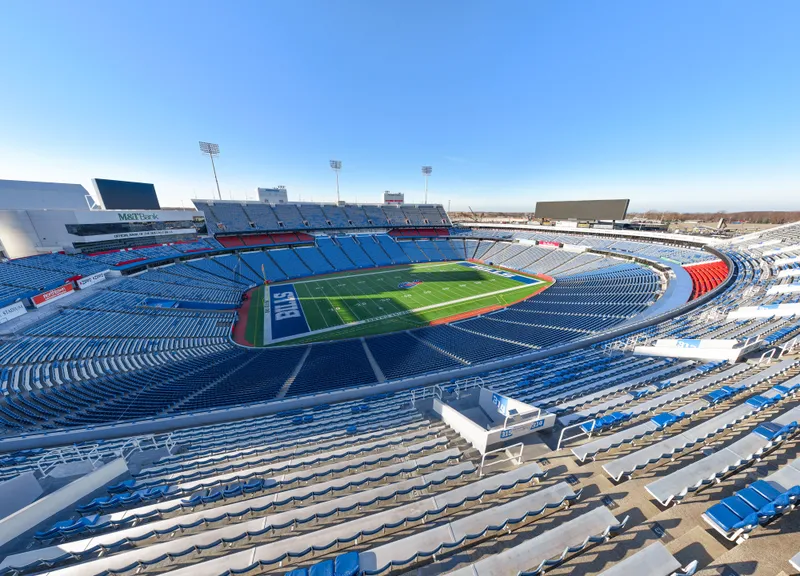
| Highmark Stadium | Buffalo Bills | Open, canopy |
Artificial turf (14)
| Stadium | Team | Roof |
|---|---|---|
| Caesars Superdome | New Orleans Saints | Dome |
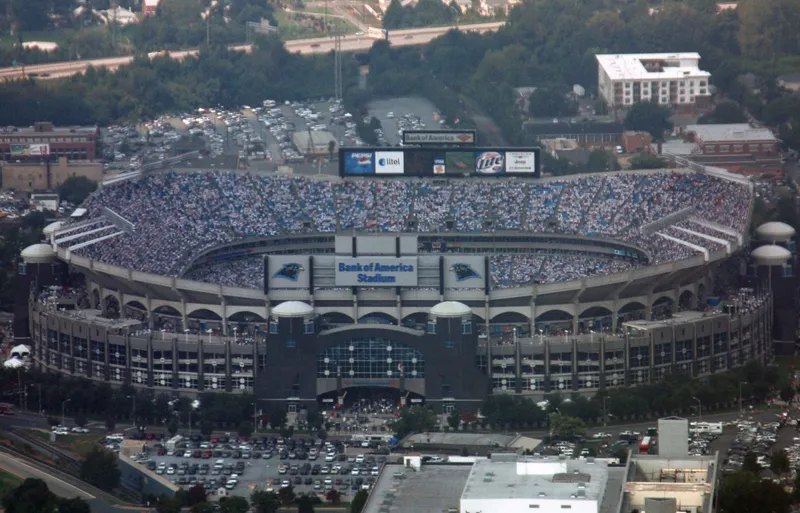
| Bank of America Stadium | Carolina Panthers | Open |
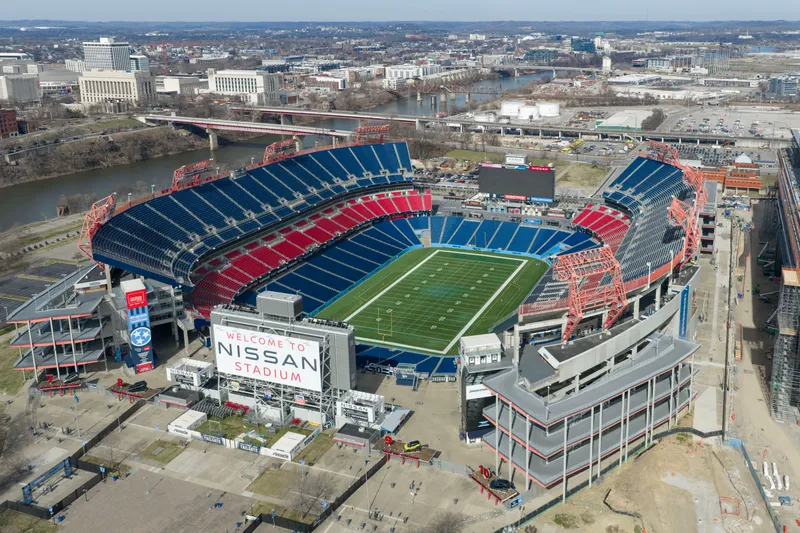
| Nissan Stadium | Tennessee Titans | Open |
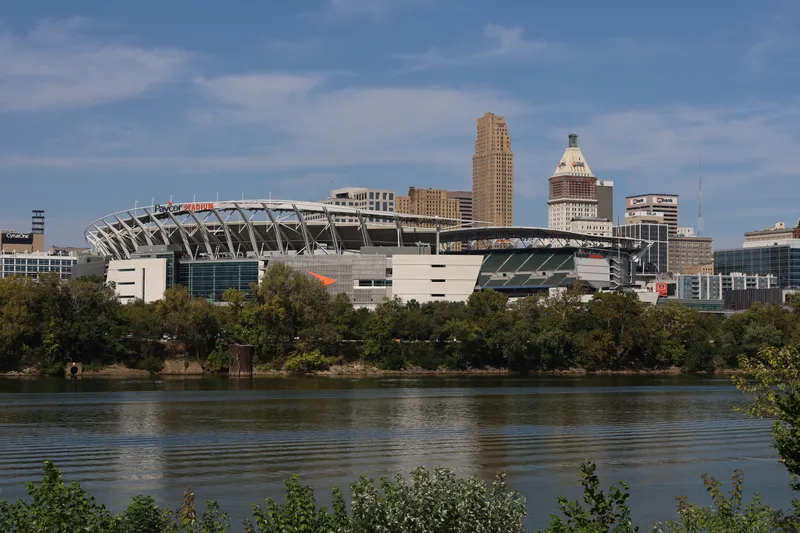
| Paycor Stadium | Cincinnati Bengals | Open |
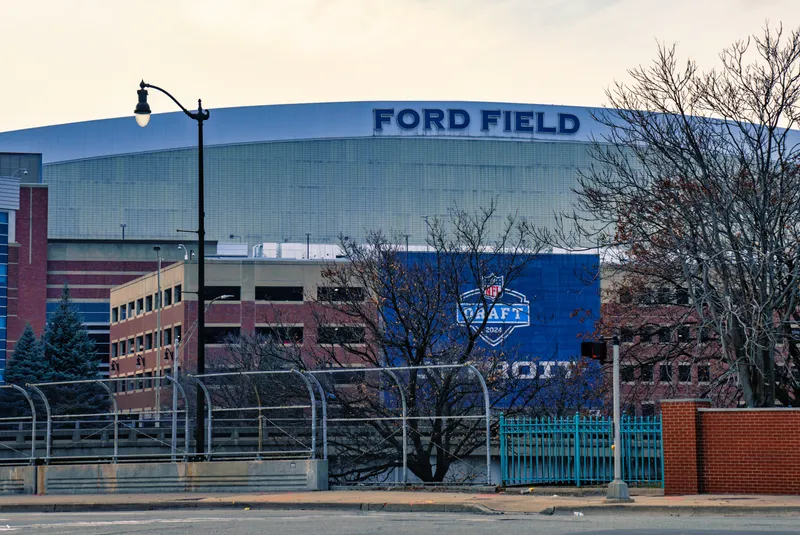
| Ford Field | Detroit Lions | Dome |
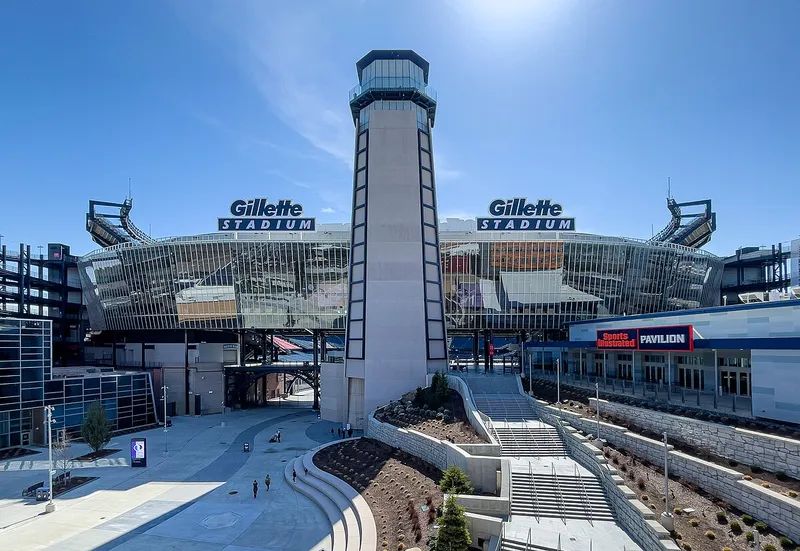
| Gillette Stadium | New England Patriots | Open |
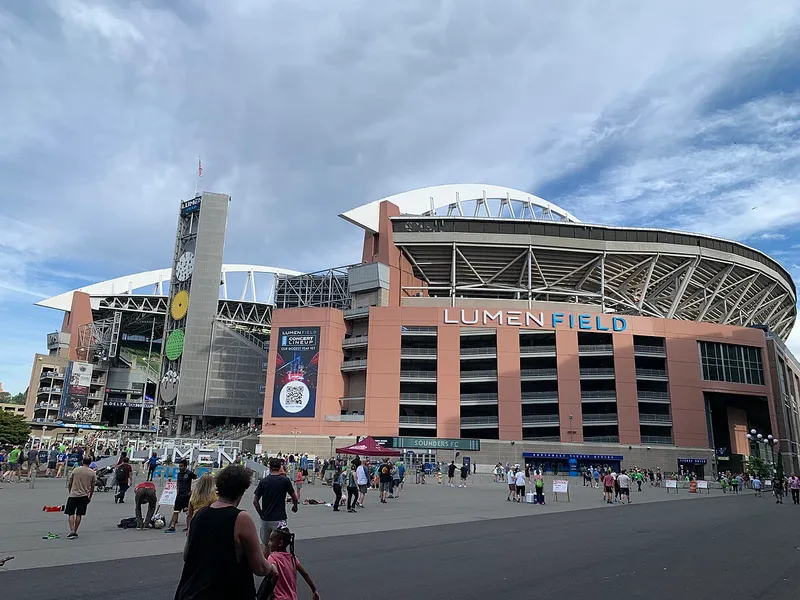
| Lumen Field | Seattle Seahawks | Open |
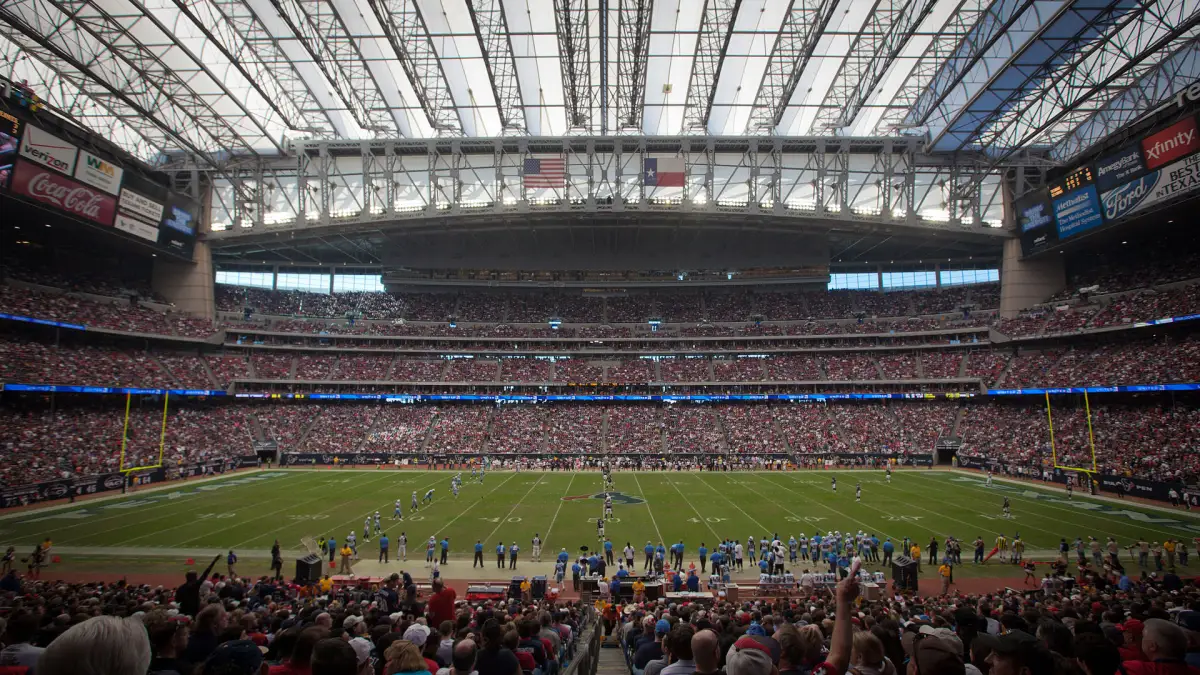
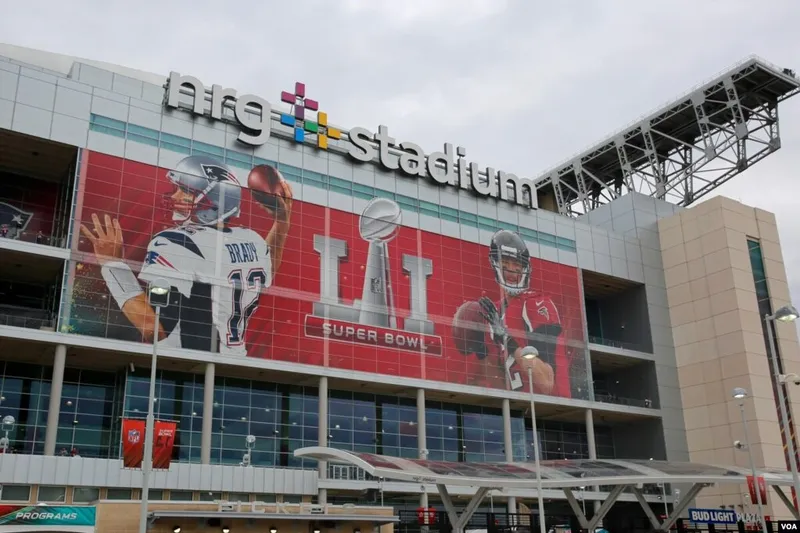
| NRG Stadium | Houston Texans | Retractable roof |
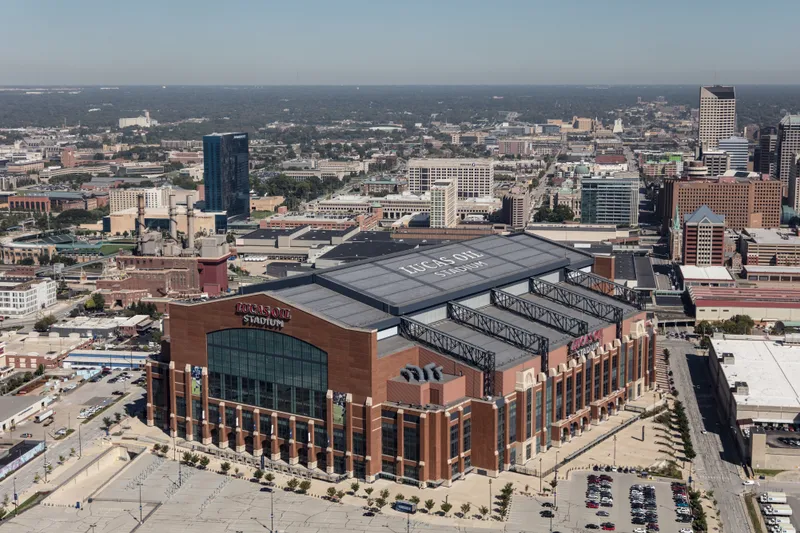
| Lucas Oil Stadium | Indianapolis Colts | Retractable roof |
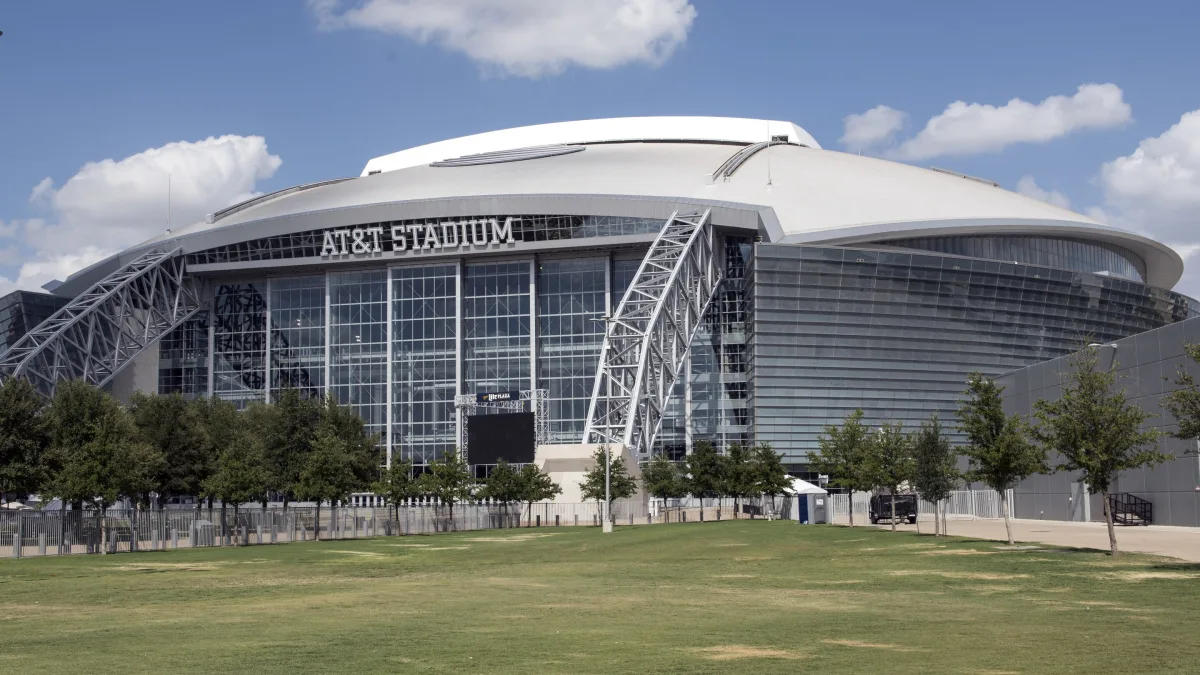
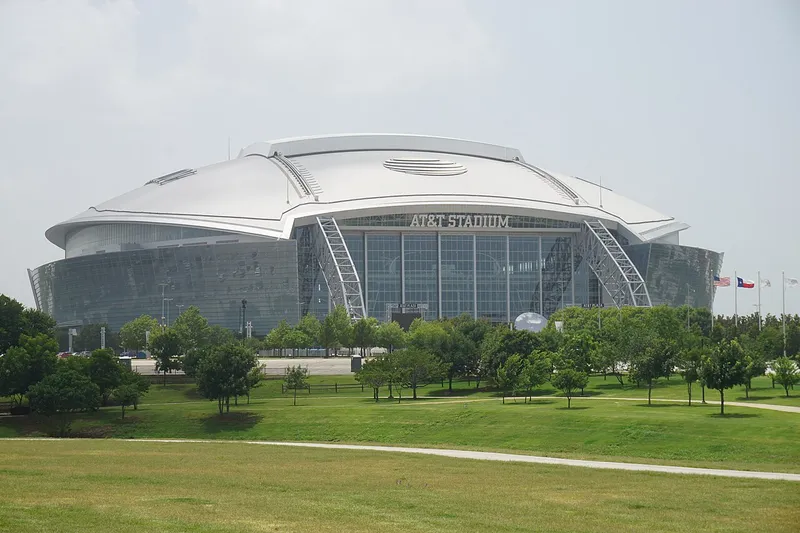
| AT&T Stadium | Dallas Cowboys | Retractable roof |
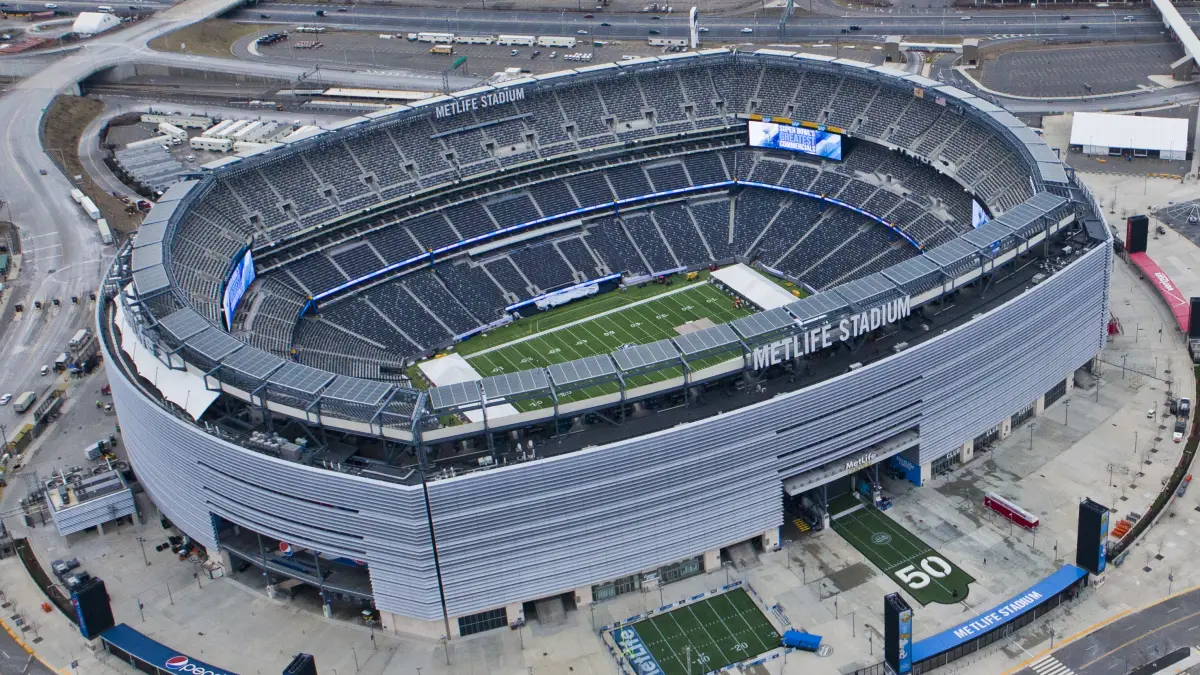
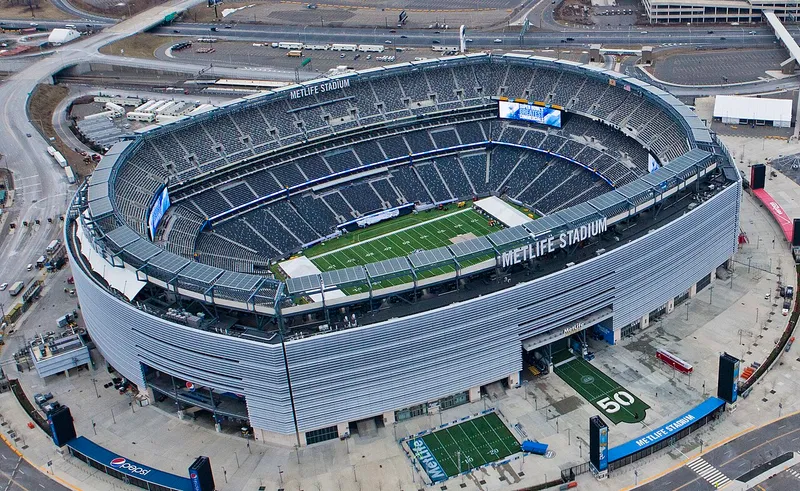
| MetLife Stadium | New York Giants and Jets | Open |
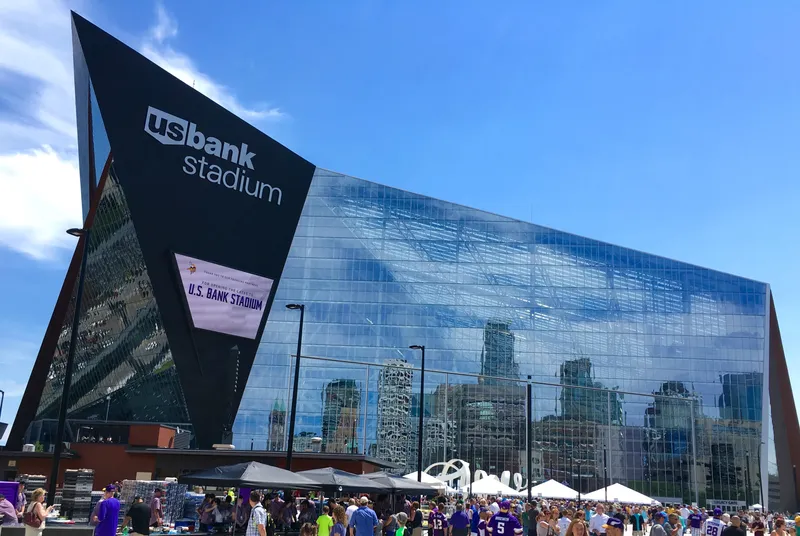
| U.S. Bank Stadium | Minnesota Vikings | Fixed roof |
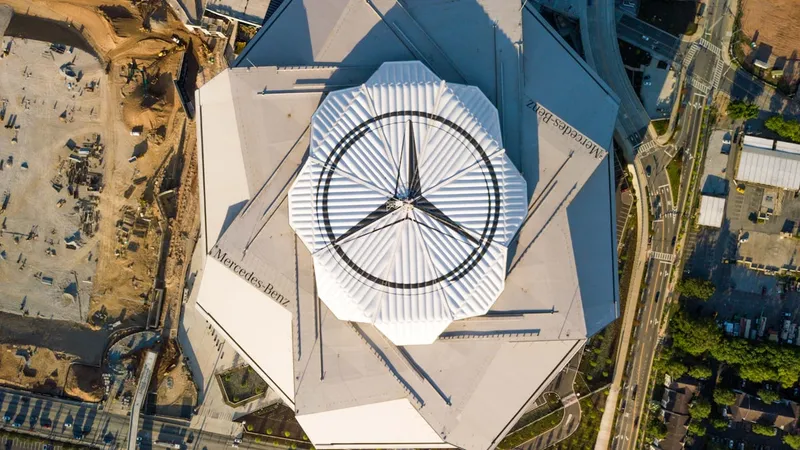
| Mercedes-Benz Stadium | Atlanta Falcons | Retractable roof |
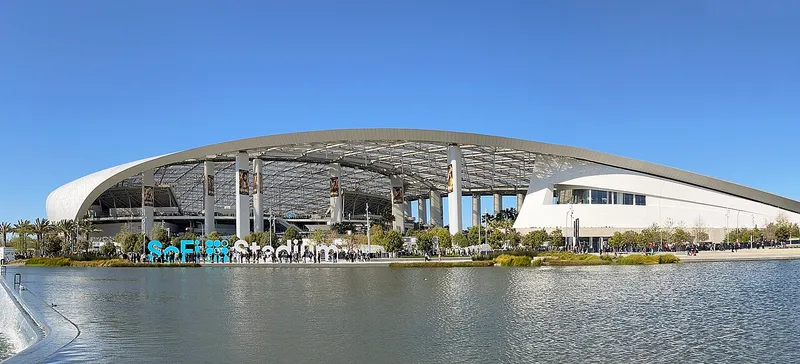
| SoFi Stadium | Los Angeles Rams and Chargers | Fixed canopy roof |
Which NFL stadiums have grass, and which have turf
The NFL is split almost exactly down the middle, and the line is drawn by roofs far more than by safety or tradition.
Sixteen stadiums are grass. Two of those are hybrids, which means real grass reinforced with synthetic fibers. Lambeau Field has played on one since January 2007, when Desso GrassMaster went in, and on a system called SISGrass since 2018. Lincoln Financial Field’s HERO hybrid is Kentucky bluegrass stitched with about 5% artificial fiber.
You’d guess the weather does the sorting. It doesn’t. Six of the seven coldest markets in the league play on grass, snow and all, and so do all three Florida teams. The frozen end of the map and the subtropical end made the same choice.
What sorts it is the lid. Ten NFL stadiums are covered, whether by a dome, a fixed roof or one that opens and closes, and eight of those are turf. The other two are grass for a single reason: the field leaves the building.
8 of 10 covered NFL stadiums play on artificial turf. The other two roll their grass outside.
That leaves six stadiums with no roof and no grass: Bank of America, Nissan, Paycor, Gillette, Lumen and MetLife. Nothing overhead is stopping any of them. A cornerback in Charlotte plants his foot on plastic under an open sky because somebody chose it for him. And three of those six played on grass this summer.
How the roof put turf in the NFL
Artificial turf exists because a roof killed the grass.
At the Astrodome, the roof panels threw so much glare that players couldn’t track pop flies. So the panels were painted. Then the grass underneath them died. Monsanto’s artificial grass went into the infield for the Astros’ home opener on April 18, 1966, and the outfield was converted by July 19. It was soon renamed AstroTurf. A whole category of playing surface began as a patch for a lighting problem.
It didn’t stay a patch. Of the 18 NFL stadiums built since 2000, 11 have artificial surfaces, and of the 12 older ones, 9 are grass. Lumen Field was the first NFL stadium to install FieldTurf, in 2002. A team that moved into a new building this century probably moved onto turf too.
Not everybody followed. Lincoln Financial Field replaced Veterans Stadium, whose artificial turf players had dreaded for thirty years, and the Eagles went the other way.
The movement hasn’t stopped, and lately it runs toward turf. Nissan Stadium in Nashville played on grass through 2022 and has had an artificial surface called Matrix Helix since 2023. Bank of America Stadium in Charlotte has had FieldTurf since 2021. Soldier Field changed too, but inside grass: Bermuda replaced Kentucky bluegrass in 2022 at the Bears’ request, a switch driven by head coach Matt Eberflus.
The domes went turf for the Astrodome’s reason. Grass needs sun, a roof takes it away, and once you paint the sky you have to fake the floor. Two stadiums looked at that problem and decided to take the grass to the sun instead.
Two stadiums that roll their grass outside
If you want grass in a covered stadium, you have to be willing to move the field.
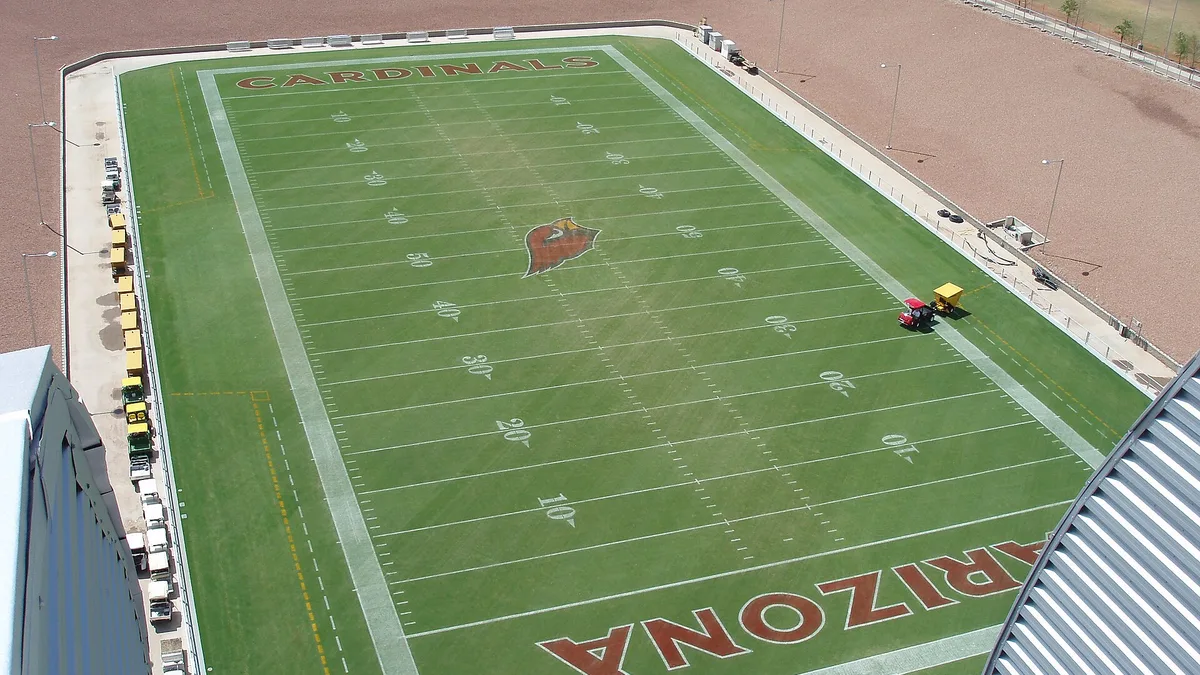
In Glendale, the field goes out to sunbathe. Between games the grass at State Farm Stadium, a Bermuda variety called Tifway 419, sits outside the south end of the building in the Arizona sun, on a steel-and-concrete tray that weighs about 19 million pounds. On game day, 76 electric motors drive it back inside on 542 wheels. The trip is 500 feet and takes about an hour. You could stroll alongside it and win. Then the roof closes over it. It’s a lot of machinery to keep a lawn alive, and nobody has found another way to put real grass under a roof in the NFL.
Las Vegas does the same thing under a dome. Allegiant Stadium’s natural grass sits on a 19-million-pound tray that rolls outdoors on 540 wheels.
Mark Davis, the Raiders’ owner, is plain about why. “I just always felt that football should be played on grass,” he said. “That’s for safety purposes, No. 1.” Once he learned a tray was possible, the matter was settled: “I wasn’t going to a stadium without it being grass once I knew that capability was there.” He didn’t pretend it was free, either. “Obviously, it added a lot of cost, but it’s worth it.” He didn’t put a number on it. An owner bought a moving field on principle and didn’t itemize the principle.
Atlanta gives the other answer. A Mercedes-Benz Stadium spokesperson said grass can’t be sustained there across the five-month season. There isn’t enough sunlight, there are too many events, and there’s no room for a tray. I believe that. You can’t bolt 19 million pounds of rolling lawn onto a building that wasn’t drawn around one.
So two owners built for grass, and Atlanta, the one covered stadium that has explained itself, says it can’t have it. In 2026 seven turf stadiums found a way anyway. They did it for someone else.
What the injury numbers say, and what the league says back
The players and the league have been reading the same injury data for a decade and coming to opposite conclusions.
The union put numbers on its case in 2020. JC Tretter, then the NFLPA’s president and a Browns center, laid out what the 2012-18 data showed: 28% more non-contact lower-extremity injuries on turf, with knee injuries 32% higher and foot and ankle injuries 69% higher. Nobody hit these players. They planted a foot and something gave. Tretter put it in one line: “When you’re on turf, it’s going to be your joint.”
Year to year, the gap wobbles. In 2021 the non-contact lower-extremity rate was .042 on turf and .041 on grass, as good as a tie. In 2022 it reopened, .048 against .035. Tretter said in 2023 that turf had been higher in “10 of the previous 11 years.” The NFL’s Jeff Miller said there were “no simple answers.”
Part of the fight was over one product. Slit film is a turf type whose blades are cut from a sheet of plastic film. “It needs to change immediately,” Richard Sherman said in November 2022. In 2023 three fields still had it: U.S. Bank, Lucas Oil and Paycor. It left the league when the Bengals replaced Paycor Stadium’s in 2024.
Then, on September 11, 2023, Aaron Rodgers tore his Achilles in his Jets debut, against the Bills at MetLife Stadium, on a newly installed artificial surface. The NFLPA’s Lloyd Howell called grass “the easiest decision the NFL can make.” He went further: “It makes no sense that stadiums can flip over to superior grass surfaces when the World Cup comes…”
He said it in 2023. The tournament was three years away.
The league’s side has gotten stronger since. In December 2025 the NFL’s Allen Sills said there were no “statistically significant differences” between surfaces. “The surface is only one driver,” he said. In September 2026 the AP reported no significant injury difference over the last three seasons, and that last season’s lower-extremity rate was about half the 2018-22 average. Half is a real improvement, and the league is entitled to point at it.
92% of NFL players who answered the NFLPA’s survey said they prefer grass.
So the numbers have narrowed and the players haven’t moved. Either nine in ten of the people who do this for a living are wrong about their own legs, or the injury report doesn’t capture everything a body knows on Monday morning. I know which I’d bet on. But a preference isn’t proof, and for years the league could treat the alternative as a thought experiment.
The summer seven turf stadiums went grass
For one summer in 2026, the argument stopped being hypothetical.
Eleven U.S. stadiums hosted World Cup matches, and all 11 played on grass. Seven of them normally use turf, so seven converted: Mercedes-Benz, AT&T, MetLife, Gillette, SoFi, NRG and Lumen. After the tournament, all seven switched back.
The grass itself was mostly a blend of 84% Kentucky bluegrass and 16% ryegrass. Most NFL grass is Bermuda.
Jerry Jones, whose AT&T Stadium was one of the seven, wasn’t tempted. “We have no belief that it’s any safer to play on a grass [field] or a turf,” he said, and keeping the grass was “never really in consideration.” AT&T’s World Cup grass was likely disposed of. A field good enough for a World Cup, probably bagged.
The league’s practical objection comes from Nick Pappas, its field director, and it’s a serious one. “We don’t want to put grass in that doesn’t meet the standard,” he said. His rule of thumb: “your recovery needs to outpace your usage.” A grass field lasts about seven events. Artificial turf lasts three to seven years. Pappas doubted Mercedes-Benz could get more than two or three games out of a grass field, and the calendar elsewhere is brutal. MetLife had concerts or NFL games on 12 of the 31 days of August.
It worked for a tournament. Pappas’ point is that a tournament isn’t a season, and he’s right. Both things are true. The question is who they’re true for. Under a roof in Atlanta, with no sun and no tray, the league has the better of it. At Gillette, Lumen and MetLife the sun comes free, and what stands in the way is a schedule somebody wrote. MetLife’s is the hardest of the three to rewrite, because two NFL teams, the Giants and the Jets, share that field with the concerts.
#WorthTheCost and the owners who already paid
The players have turned the World Cup into a slogan, and it’s a good one because it concedes the premise: yes, grass costs more.
The NFLPA launched #WorthTheCost around the World Cup final in July 2026, and Oren Burks gave it its cleanest line: “If it’s good enough for the World Cup, it’s good enough for NFL players.” Jonathan Taylor used the hashtag in September. Josh Allen didn’t need it. “If I could snap my fingers and make every field grass, that’s what I would do for sure,” he said.
The man running the campaign is more careful than the campaign. JC Tretter has been the NFLPA’s executive director since March 2026, and he isn’t asking for grass at any price. “We don’t want 30 Pittsburghs,” he said. Acrisure Stadium in Pittsburgh is grass, and its field has drawn persistent criticism. And of the World Cup fields: “They might be great for soccer. We don’t know if they’re great for football.”
That’s the union’s own leader conceding the league’s best point, that bad grass is no gift to anyone. I think it makes the rest of his case more believable.
The Bills’ new Highmark Stadium opened in 2026 on Kentucky bluegrass, and the team resodded after its final preseason game. Bills president Pete Guelli didn’t hedge: “if you’re really putting your players first, there’s no other choice but grass.”
Listen to how the two camps talk. Davis and Guelli describe grass as a cost they decided to pay. Atlanta describes it as impossible, and Jerry Jones as pointless. Nobody at Gillette, Lumen or MetLife has made that argument on the record, and after this summer it would be a hard one to make there. The trouble for the players is that four of the teams on grass today are planning a building with a roof.
The new roofs coming over four grass fields
The next shift in the split is going to come from roofs, and the World Cup has nothing to do with it.
Start in Cleveland. The Browns have broken ground on a domed stadium in Brook Park, scheduled to open for the 2029 season. It replaces Huntington Bank Field, where they play on grass. The Commanders’ new stadium at the RFK campus will have a roof and is expected to open in 2030, replacing Northwest Stadium, which is grass. In June 2026, the Bears’ board voted to advance a planned domed stadium in Hammond, Indiana, with the exact site still to be picked. That one would replace Soldier Field, which is grass too.
None of the three clubs has announced a surface.
So nobody can tell you what a Browns lineman will be standing on in 2029. The roofs already in the league give a hint, and it isn’t grass.
The fourth is Kansas City, and it’s the only one of the four that has said what it wants to play on. The new Chiefs stadium in Kansas City, Kansas, is set to open in 2031 under a fully enclosed roof, replacing Arrowhead, which is grass. Directly above the field sit more than 400,000 square feet of translucent panels made of a material called ETFE. As of July 2026 the club said no official decision had been made between grass and turf. “The team’s preference, however, is grass.”
That would be a third answer to grass under a roof. Arizona and Las Vegas take the field to the sun. Kansas City’s would leave the grass where it is, under panels that let the light through. It hasn’t been tried in this league, and the Chiefs haven’t committed to it. Translucent roofs aren’t new: Allegiant already has one and still rolls its grass outside, and U.S. Bank Stadium’s roof is 60% transparent ETFE over a turf field.
4 of today’s 16 grass stadiums are being replaced by covered buildings, due between 2029 and 2031.
What the 2028 field standard changes, and what it doesn’t
The league’s answer to all of this is a test, not a grass mandate.
In December 2025 the NFL announced that every stadium must meet new playing-surface performance standards by the 2028 season. New fields have to comply immediately, and existing stadiums get two years. The league said it has “no plans to require natural grass.” Fields get measured with a traction device called the BEAST and a firmness device called the STRIKE Impact Tester. Pappas described “a library of approved and accredited NFL fields” and a “red, yellow, green effect.”
Testing isn’t new. The Clegg hardness test drops a weight on the field, and the higher the number, the harder the landing. A field must read below 100g. Carolina’s read 150g in the pregame check on Christmas Eve 2022, half again over the line. The league let the game kick off as scheduled anyway, and the field didn’t get under 100g until late in the first half. A standard is worth what happens after a field fails it, and that day the answer was nothing.
150g Carolina’s field hardness before kickoff on Christmas Eve 2022, against a limit of 100g. The game started on time.
So the 2028 rule won’t move the line. It grades every field and lets turf pass.
Grass may gain in the open air. Six open-air stadiums play on turf, and three of them, Gillette, Lumen and MetLife, ran grass this summer. The World Cup final itself was played on MetLife’s. I think that’s where the players win a field back, if they win one anywhere.
But the bigger shift runs the other way. Four grass stadiums are going under roofs, and roofs have meant turf eight times out of ten. The split is shifting, and on present evidence it’s shifting toward turf.
Kansas City is the test of whether that has to be true. Arrowhead is open to the sky, and its crowd holds the Guinness record for the loudest roar at an outdoor stadium, 142.2 decibels. In 2031 that crowd moves indoors, and the club taking it there says it wants to keep the grass anyway. If the Chiefs can grow a field under that roof, any covered stadium that calls grass impossible has a harder case to make. If they can’t, the count keeps tipping toward turf, one new building at a time.
Sources
The stadium-by-stadium surfaces come from our own pages for each venue, linked in the tables above, and the stadium projects in Cleveland, Washington, Chicago and Kansas City are documented in our article on new NFL stadiums. The reporting behind everything else:
- The NFL’s 2028 playing-surface mandate, NFL.com. The league’s own announcement of the standards, the testing devices and its position on grass.
- NFL players overwhelmingly find grass the better choice, AP via PBS NewsHour. The 2026 count of 16 grass stadiums, field lifespans and the Bills’ and Josh Allen’s comments.
- ESPN: the World Cup grass debate, June 2026, slit film’s exit from the league, February 2024. The seven converted stadiums, Jerry Jones and Nick Pappas, and the end of slit film.
- Front Office Sports: the NFLPA calls out owners, June 2026, #WorthTheCost launches, July 2026. The union’s statement, the campaign, the World Cup grass blend and Atlanta’s reasons for staying on turf.
- The NFLPA’s case: Tretter on uneven field standards, NFLPA, the 2012-18 injury data, AP via FOX6, the 2021 and 2022 rates, CBS Sports, the union’s call after the Rodgers injury, CBS Sports. The union’s injury figures, the Clegg readings, and the Rodgers injury with Lloyd Howell’s 2023 statement.
- ProFootballTalk: Mark Davis on grass, the Chiefs’ grass preference. The Raiders owner’s case for building around a grass tray, and Kansas City’s undecided surface.
- Soldier Field’s grass: ABC7 Chicago, Bleacher Nation. The 2022 switch to Bermuda grass and who asked for it.
- The Rise and Fall of Artificial Turf, SABR. How the Astrodome’s grass died and when the first artificial field went in.
Hero photo: the Arizona Cardinals’ roll-out grass field outside State Farm Stadium by Acadman, CC BY 3.0.
Surface counts are for the 2026 NFL season and were cross-referenced across league, union and press reporting. Where outlets disagreed, on how many stadiums swapped for the World Cup and how many play on grass, we used the figure the most recent reporting and our own count of all 30 venues agree on.