For the first time in the tournament’s history, you can name the host of the next three World Cups without guessing. All of them are locked in, and all of them are strange in their own way. The one happening right now spans three countries. The next visits three continents. The one after that hands the whole thing to a single desert kingdom building 15 stadiums from scratch.
The World Cup used to move one country at a time. Now it moves in giant, sometimes controversial leaps, and the reason is simple: at 48 teams, the tournament has outgrown almost any nation trying to host it alone. So it sprawls, and each edition looks less like the last.
Here’s the full map of where football’s biggest event goes next, when each tournament happens, and how the next decade got so unusual.
The next three World Cups, at a glance:
- 2026 (June 11 to July 19): United States, Canada, and Mexico. 48 teams, 16 stadiums, final at MetLife.
- 2030: Spain, Portugal, and Morocco, plus centenary opening matches in Uruguay, Argentina, and Paraguay. Six countries, three continents.
- 2034: Saudi Arabia, alone, across 15 stadiums in five cities. Dates not yet set, likely a winter tournament.
- The through-line: 48 teams, ever-bigger footprints, and a lot more debate about who gets to host.
Three tournaments, three continents, one decade. Between 2026 and 2034, the World Cup will touch North America, Europe, Africa, South America, and the Middle East.
The 2026 World Cup: happening now, across North America
The 2026 World Cup is the one on your screen right now. It runs from June 11 to July 19, 2026, co-hosted by the United States, Canada, and Mexico, the first men’s World Cup ever shared by three countries and the first with 48 teams. It uses 16 stadiums, 11 in the United States, 3 in Mexico, and 2 in Canada, all of them existing NFL, MLS, or Liga MX grounds rather than new builds.
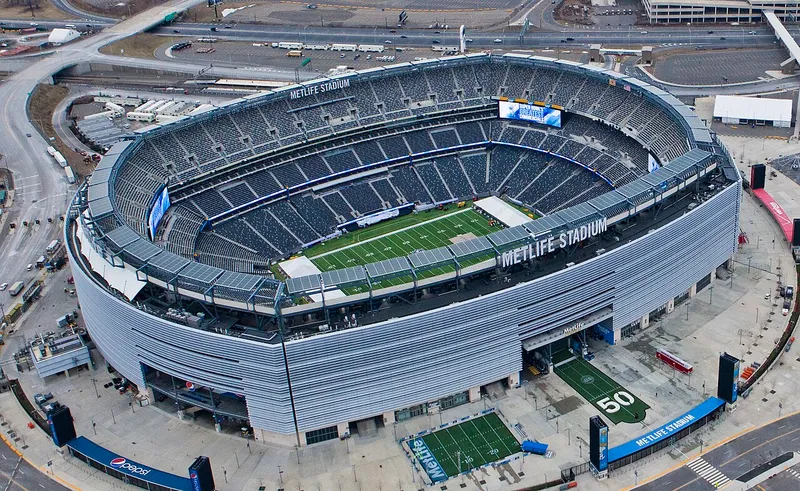
The final is set for MetLife Stadium near New York on July 19, while Estadio Azteca in Mexico City becomes the first stadium to host matches at three different World Cups. It’s a tournament defined by scale and by heat, played across a broiling North American summer where only three venues can fully air-condition their bowls. For the full picture of the current tournament, our World Cup 2026 hub tracks it venue by venue, and we’ve mapped out what happens to all 16 stadiums once it ends. At 104 matches across 39 days, it is already the largest World Cup ever staged, nearly double the 64-game tournaments of a decade ago, and it sets the template the next two will follow.
16 stadiums, zero new. The 2026 World Cup borrows existing NFL, MLS, and Liga MX venues instead of building any from scratch.
The 2030 World Cup: six countries, a hundred-year homecoming
Four years later, the tournament fractures across the map. The 2030 World Cup is hosted mainly by Spain, Portugal, and Morocco, but it opens with three “centenary” matches in South America, one each in Uruguay, Argentina, and Paraguay, marking 100 years since the first World Cup was held in Uruguay in 1930. Uruguay’s Estadio Centenario, the site of that 1930 final, stages the very first match before the tournament crosses the Atlantic.
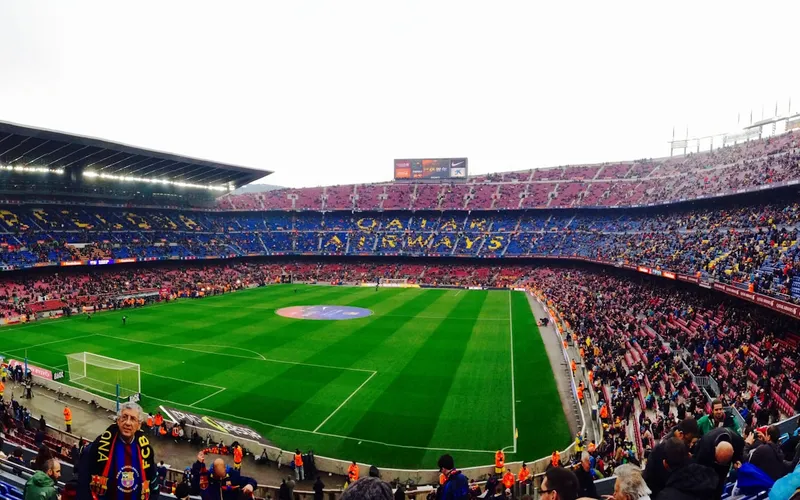
It’s the first World Cup ever spread across six countries and three continents, and the most geographically ambitious edition ever attempted. The stadiums range from the rebuilt Santiago Bernabeu and Spotify Camp Nou in Spain to Morocco’s planned Grand Stade Hassan II near Casablanca, designed for 115,000 and in line to be the biggest football stadium in the world. FIFA confirmed the whole arrangement in December 2024, and the final venue, a three-way race between Madrid, Barcelona, and Casablanca, is still undecided until around the end of 2026. That reach comes at a price. Environmental groups have attacked the three-continent format for the long-haul flights it forces on teams and fans, calling it at odds with FIFA’s own pledge to cut emissions, since a team could play its opener in Buenos Aires and then cross the Atlantic to continue in Europe.
6 host countries. The 2030 World Cup’s spread, from Spain, Portugal, and Morocco to opening matches in Uruguay, Argentina, and Paraguay.
The 2034 World Cup: Saudi Arabia goes all in
Then the tournament does the opposite of 2030. Instead of six countries sharing the load, one country takes all of it. Saudi Arabia hosts the 2034 World Cup alone, building or rebuilding 15 stadiums across five cities, including a 92,000-seat showpiece in Riyadh and a venue designed to sit 350 metres above the ground inside a planned linear megacity.
It’s the most ambitious stadium program in the tournament’s history and the most contested. Saudi Arabia won the hosting rights unopposed after Australia declined to bid, and human-rights groups including Amnesty International and Human Rights Watch condemned the award over labor conditions, the treatment of migrant workers, and restrictions on personal freedoms. Supporters cast it as part of the country’s Vision 2030 modernization. Either way, it will be the first 48-team World Cup held entirely within one nation. It is also the least settled of the three. Most of the 15 venues are still renderings, the tournament dates aren’t fixed, and even the megacity meant to hold the so-called sky stadium is being scaled back, so a great deal can still change between now and kickoff.
When is each next World Cup?
Two of the three dates are simple. The third is the tournament’s biggest open question.
| World Cup | Hosts | When |
|---|---|---|
| 2026 | USA, Canada, Mexico | June 11 to July 19, 2026 |
| 2030 | Spain, Portugal, Morocco (+ Uruguay, Argentina, Paraguay) | Mid-2030 (summer) |
| 2034 | Saudi Arabia | To be announced, likely winter, January 2035 widely reported |
The 2026 and 2030 tournaments follow the usual June-to-July slot. The 2034 edition can’t. Saudi summers push past 40°C, so FIFA is expected to move it into the cooler months, exactly as it did for Qatar 2022. Multiple reports point to January 2035, because the natural late-2034 window collides with Ramadan and the 2034 Asian Games in Riyadh, but as of mid-2026 FIFA has not confirmed a date, which leaves the calendar for the sport’s biggest single event partly blank almost a decade out.
48 teams. The field size from 2026 onward, up from 32, and the single biggest reason the tournament keeps outgrowing its hosts.
The through-line: bigger, broader, more contested
Line the three up and a pattern appears. The World Cup is getting larger, more spread out, and harder to award without a fight. The jump to 48 teams means a host now needs around 16 stadiums and the hotels, transport, and security to match, which is why 2026 needed a continent and 2030 needed half the planet. Saudi Arabia is the counterexample, absorbing all of it through sheer spending, and drawing the sharpest criticism of the three in the process. The bidding changed too. Both 2030 and 2034 were awarded to the only bidder left standing, confirmed by acclamation rather than a contested vote, which is part of why each landed with as much argument as celebration.
What’s remarkable is that all three are already decided, years in advance, which almost never used to happen. It gives fans an unusually clear horizon: North America now, a six-nation celebration in 2030, and a desert megaproject in 2034. After that the map opens up again, with 2038 expected to return to a more conventional single-region host. For fans, that rare certainty is its own reward. Knowing the next three hosts this far ahead means years to plan a trip, to watch stadiums rise from renderings into finished steel, and to follow qualifying with the destination already fixed. It almost never used to work this way, when hosts were named barely six or seven years out and the map beyond the next tournament was a blank. For now, the next decade of football is set, and no two stops on it look alike.
Sources
- FIFA: Extraordinary Congress appoints 2030 and 2034 hosts. The December 2024 decision confirming both future hosts.
- Wikipedia: 2026 FIFA World Cup. Dates, host countries, and the 16-venue, 48-team format.
- Wikipedia: 2030 FIFA World Cup. The six-country structure and centenary matches.
- Wikipedia: 2034 FIFA World Cup. Saudi Arabia’s stadiums, cities, and the undecided dates.
- Al Jazeera: Saudi Arabia named 2034 host, Morocco to co-stage 2030. The award and format details.
- ESPN: Saudi Arabia 2034 World Cup, what you need to know. The timing and heat question.
Host details were cross-referenced across FIFA releases and reputable reporting. Dates for 2030 and 2034 are given as officially confirmed or officially undecided, and the January 2035 possibility is labeled as reported rather than confirmed.
Hero photo: Jakarta International Stadium by RasyaAbhirama13, CC BY-SA 4.0, cropped.